
The Influence of Ancient Indian Philosophers on Educational Systems

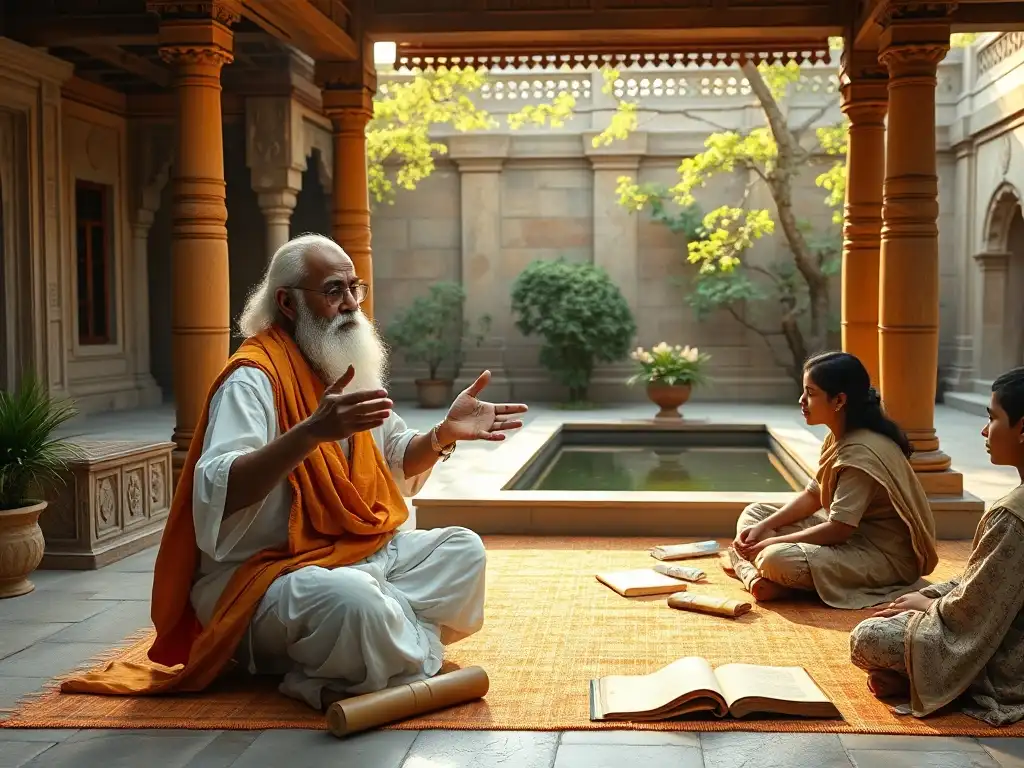
Welcome to Ancient India History, where we embark on a fascinating journey through the rich tapestry of ancient Indian civilizations. Here, we delve into the profound contributions of remarkable thinkers who shaped not just their time but the very foundations of education as we know it today. In our featured article, "The Influence of Ancient Indian Philosophers on Educational Systems," we explore how the wisdom of ancient Indian philosophers continues to resonate in modern educational paradigms.
Are you ready to uncover the secrets of a civilization that has profoundly impacted thought and learning across the globe? Join us as we unravel the legacy of these intellectual giants and their timeless insights!
Introduction to Ancient Indian Philosophers and Education
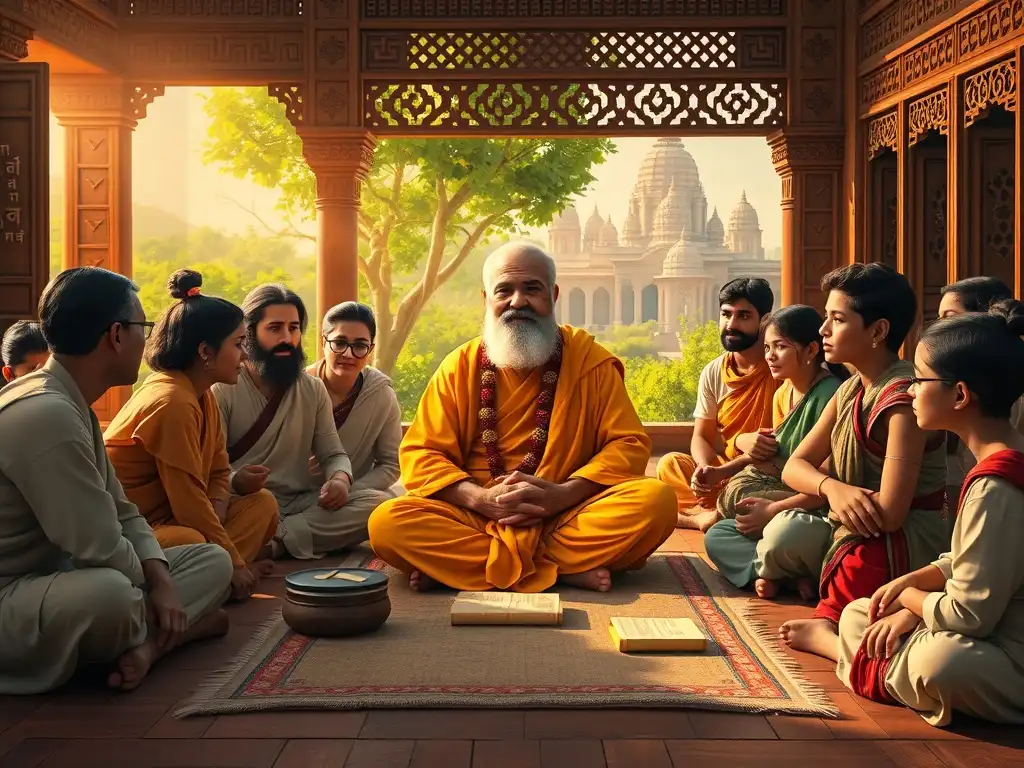
The educational landscape of ancient India was profoundly influenced by its philosophers, who laid the groundwork for a system that emphasized not only academic knowledge but also ethical and moral development. Ancient Indian philosophers such as Gautama Buddha, Chanakya, and Adi Shankaracharya contributed significantly to educational thought, advocating for a holistic approach that integrated philosophy, spirituality, and practical learning.
Their teachings and ideologies shaped the way education was perceived and implemented in various ancient Indian civilizations, from the early Indus Valley settlements to the flourishing Gupta Empire. Understanding their philosophies provides invaluable insights into the evolution of educational systems and the enduring legacy of their ideas in contemporary education.
The Role of Philosophy in Ancient Indian Education
Philosophy played a pivotal role in ancient Indian education, serving as both a foundation and a guiding principle. The ancient educational system was not merely focused on the transmission of knowledge; it was also concerned with the cultivation of wisdom and character. Key aspects of this philosophical influence included:
- Holistic Development: Education aimed at the overall development of an individual, encompassing intellectual, emotional, and spiritual dimensions.
- Moral and Ethical Instruction: Philosophers emphasized the importance of ethics, teaching students to discern right from wrong and cultivate virtues.
- Practical Application: Learning was not limited to theoretical knowledge; it included practical skills essential for daily life and governance.
This philosophical framework laid the groundwork for various educational institutions, including the famous Gurukuls and Nalanda University, where students engaged in dialogues, discussions, and debates, fostering a rich intellectual environment.
Overview of Key Ancient Indian Philosophers
The contributions of ancient Indian philosophers to education were diverse and profound. Here is a brief overview of some of the most influential figures:
- Gautama Buddha: His teachings emphasized mindfulness, ethical conduct, and the importance of inquiry in learning.
- Chanakya (Kautilya): A master strategist and educator, he advocated for practical knowledge and statecraft.
- Adi Shankaracharya: His philosophical inquiries into the nature of reality and self led to a deep understanding of consciousness and learning.
These philosophers not only influenced their contemporaries but also left a lasting legacy that continues to inform educational practices today.
Major Ancient Indian Philosophers and Their Educational Contributions
1. Gautama Buddha and the Concept of Learning
Gautama Buddha redefined the approach to learning by promoting an education grounded in inquiry and personal experience. He encouraged his disciples to question and explore rather than accept information passively. His teachings emphasized:
- Mindfulness: The practice of being present and fully engaged in the learning process.
- Ethical Living: The importance of integrating moral principles into education, focusing on compassion and empathy.
Buddha's educational philosophy laid the groundwork for a system that valued critical thinking and self-awareness, shaping the way education was approached in subsequent eras.
2. Chanakya (Kautilya) and Practical Learning
Chanakya, known for his strategic brilliance in politics and economics, advocated for a pragmatic approach to education. His contributions included:
- Statecraft and Governance: Emphasizing the importance of practical knowledge for rulers and administrators.
- Diverse Curriculum: Encouraging a well-rounded education that included subjects like economics, politics, and military strategy.
His work, Arthashastra, serves as a pivotal text that blends philosophy with practical education, illustrating the need for knowledge applicable to real-world challenges.
3. Adi Shankaracharya and Philosophical Education
Adi Shankaracharya was instrumental in shaping the philosophical discourse in ancient India. His contributions to education focused on:
- Advaita Vedanta: Promoting the non-dualistic philosophy that encourages students to seek deeper understanding of the self and the universe.
- Dialogical Learning: Advocating for debates and discussions as a means to explore complex philosophical concepts.
Shankaracharya’s emphasis on philosophical inquiry and the nature of reality has left an indelible mark on educational thought, influencing generations of learners to pursue wisdom beyond mere knowledge.
Educational Systems in Ancient India Influenced by Philosophers
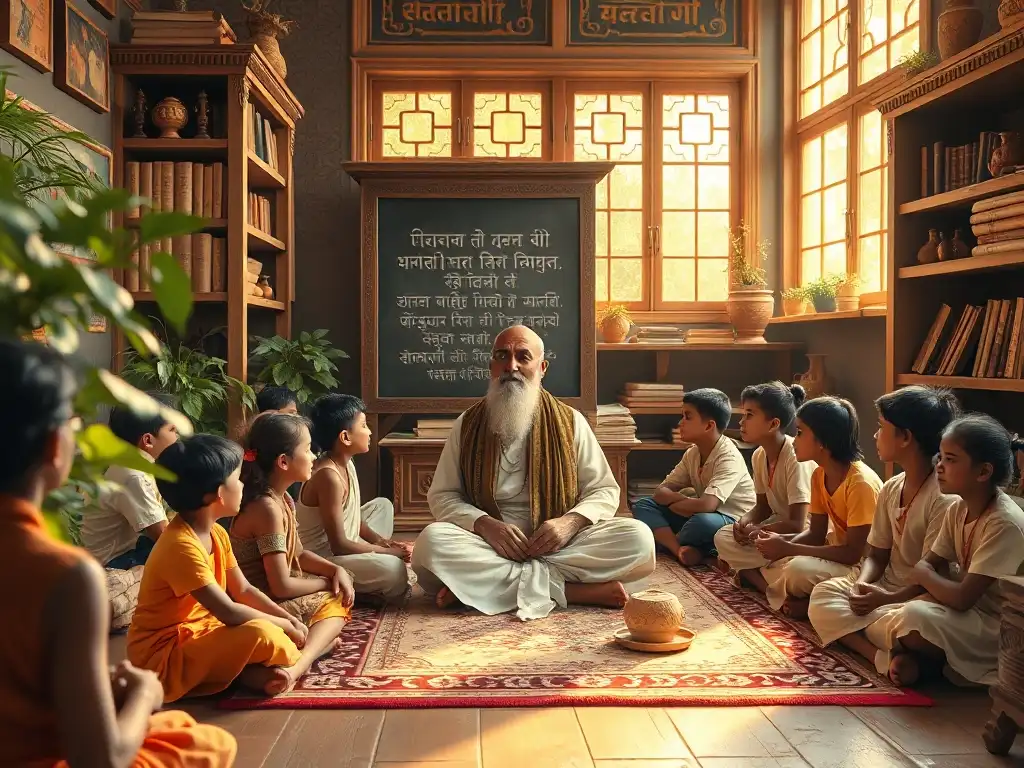
The educational systems in ancient India were profoundly influenced by the philosophical ideologies of notable thinkers. These philosophers didn't merely contribute to metaphysical discourse; they actively shaped the structures and methodologies of education in their time. The emergence of various educational systems can be traced back to these philosophies, which emphasized holistic learning, moral development, and the pursuit of knowledge as a means to attain self-realization and societal harmony.
Ancient Indian philosophers such as Chanakya, Gautama Buddha, and Adi Shankaracharya articulated ideas that permeated the educational landscape, influencing the roles of teachers and students, the content of education, and the overall objectives of learning. The focus on experiential learning, critical thinking, and ethical education reflected their beliefs about the importance of knowledge in cultivating not only individual character but also a responsible and enlightened society.
The Gurukul System: A Model of Ancient Education
The Gurukul system stands as a quintessential model of education in ancient India, characterized by its unique teacher-student relationship and immersive learning environment. In this system, students, known as shishyas, would reside with their guru (teacher) in a secluded place, often in the guru’s home or an ashram. This arrangement fostered deep, personal engagement in the learning process.
Education in a Gurukul was holistic, encompassing not only academic subjects such as Vedas, mathematics, and grammar but also practical knowledge, including arts, music, and vocational skills. The guru played a pivotal role, providing mentorship and guidance, while the shishyas engaged in discussions, debates, and collaborative learning, promoting critical thinking and intellect.
Furthermore, the Gurukul system was rooted in the principles of dharma (righteousness) and karma (action), emphasizing moral and ethical values alongside academic achievement. This focus on character-building contributed to the cultivation of well-rounded individuals capable of contributing positively to society.
The Nalanda University: A Beacon of Learning
Nalanda University, one of the first residential universities in the world, epitomized the flowering of education in ancient India. Founded in the 5th century CE, it attracted scholars from various regions, including Tibet, China, Korea, and Mongolia. The university was not only a center for philosophical studies but also a hub for diverse disciplines, including medicine, astronomy, and mathematics.
The curriculum at Nalanda was comprehensive, integrating the teachings of various ancient Indian philosophers such as Nagarjuna and Vasubandhu, alongside Buddhist and Jain philosophies. The university emphasized rational inquiry and debate, encouraging students to question established norms and explore various perspectives.
Nalanda's unique system of education fostered an environment of intellectual exchange and cultural interaction, influencing educational systems beyond India. Its legacy continues to inspire modern educational practices that champion critical thinking, interdisciplinary studies, and the pursuit of knowledge as a lifelong endeavor.
Comparative Analysis of Educational Philosophies
The educational philosophies of ancient India present a rich tapestry that contrasts sharply with their Western counterparts. Understanding these differences and similarities can provide a broader perspective on the evolution of educational thought.
Differences Between Ancient Indian Educational Philosophies and Western Philosophies
One of the most significant differences between ancient Indian and Western educational philosophies lies in their underlying objectives. Ancient Indian education was often centered around personal growth, spiritual development, and the pursuit of dharma, whereas Western philosophies have historically emphasized individualism, empirical reasoning, and material success.
Moreover, the pedagogical approach in ancient India was largely experiential and relational, focusing on mentorship and dialogue within the Gurukul system. In contrast, Western education has tended to prioritize formalized structures, standardized curricula, and an emphasis on competition and examination.
Furthermore, ancient Indian philosophers advocated for a holistic view of knowledge, encompassing both the material and spiritual, while Western educational systems traditionally compartmentalized knowledge into distinct disciplines. This holistic approach in ancient India fostered a more integrated understanding of humanity and the universe.
Similarities in Educational Practices Across Cultures
Despite the differences, there are notable similarities in educational practices across ancient Indian and Western cultures. Both traditions recognized the importance of the teacher-student relationship, valuing mentorship as a critical component of the learning process.
Additionally, the emphasis on dialogue and debate as a means of fostering understanding is a common thread. In both cultures, education was seen as a collaborative endeavor, encouraging students to engage with material actively and develop their critical thinking skills.
Moreover, the use of storytelling and oral traditions in education is prevalent in both ancient Indian and Western practices. These methods not only facilitated the transmission of knowledge but also helped to instill moral values and cultural heritage, highlighting the universal nature of education as a tool for both personal and societal development.
Lasting Impact of Ancient Indian Philosophers on Modern Education
The contributions of ancient Indian philosophers have profoundly shaped the foundations of modern educational systems. Philosophers such as Gautama Buddha, Mahavira, and the thinkers of the Vedic tradition laid down principles that transcended their era. Their emphasis on inquiry, critical thinking, and holistic education resonates deeply in contemporary pedagogical practices.
The ancient Indian educational approach focused on learning as a lifelong journey, encouraging not just the acquisition of knowledge but also ethical and moral development. This holistic view promotes the idea that education should nurture the mind, body, and spirit, advocating for a more integrated system than the often compartmentalized approach seen in modern education.
Moreover, the Gurukul system, where students lived with their teachers, emphasized mentorship and personalized learning—a model that is gaining renewed interest in today’s educational discourse. The lasting impact can be observed in the increasing incorporation of experiential learning, student-centered approaches, and the importance of teacher-student relationships in modern curricula.
Contemporary Educational Practices Inspired by Ancient Indian Philosophy
Modern educational practices have begun to embrace several concepts derived from ancient Indian philosophical thought. For instance, the idea of Samskaras, or formative experiences, underlines the importance of character development alongside academic learning. Schools today are increasingly integrating social-emotional learning (SEL) programs that prioritize emotional intelligence, echoing the ancient Indian belief in the importance of nurturing the inner self.
Furthermore, the ancient practice of Dharma, which advocates for duty and ethical living, is being reinterpreted in educational settings to instill values of responsibility and community service among students. Projects that involve community engagement and service learning are prevalent in various educational institutions, reflecting this philosophical influence.
The use of storytelling as a pedagogical tool, rooted in India's rich tradition of oral narratives, is also gaining traction. Educators are recognizing that storytelling not only transmits knowledge but also fosters creativity and critical thinking, allowing students to engage with content in a meaningful way.
The Influence of Ancient Indian Philosophical Thought on Global Education Systems
The philosophical insights of ancient Indian thinkers have not only influenced Indian educational practices but have also permeated global education systems. Concepts such as Yoga, emphasizing the connection between mind and body, have found their way into educational curricula worldwide, promoting well-being and mindfulness among students.
Moreover, the ancient Indian emphasis on debate and dialogue as a means of learning has inspired educational frameworks in various cultures. The Socratic method, which encourages critical questioning and dialogue, resonates with the Indian method of Shastrartha, where discussions were held to explore philosophical questions comprehensively.
In countries like Japan, the holistic approaches to education that emphasize respect for nature, community, and moral education can be traced back to similar ancient Indian philosophies. This cross-cultural exchange highlights the universality of ancient Indian educational principles, showcasing their relevance and adaptability in diverse contexts.
Conclusion: The Legacy of Ancient Indian Philosophers in Education
The legacy of ancient Indian philosophers in education is a testament to the enduring power of their ideas. Their philosophies laid a framework that not only valued knowledge but also the ethical and moral dimensions of learning. This holistic approach serves as a crucial reminder that education is not merely about information transmission but about shaping individuals who are capable of contributing positively to society.
The insights from these ancient thinkers continue to inspire educators and policymakers as they strive to create inclusive and nurturing educational environments. By recognizing and integrating these philosophies, modern educational systems can better address the complexities of learning in a rapidly changing world.
Reflection on the Importance of Philosophical Foundations in Education
Philosophical foundations play a crucial role in shaping educational practices and policies. The insights from ancient Indian philosophers emphasize the need for a reflective approach to education that considers not only the intellectual but also the emotional and ethical dimensions of learning. This holistic perspective is essential for developing well-rounded individuals who can navigate the complexities of modern society.
Incorporating philosophical thought into education encourages critical inquiry, ethical reasoning, and a sense of community among learners. As educators reflect on these foundational philosophies, they can create more inclusive and meaningful educational experiences that resonate with students’ diverse backgrounds and aspirations.
Future Directions for Educational Systems Inspired by Ancient Indian Thought
Looking ahead, educational systems can draw rich insights from ancient Indian philosophy to adapt to the evolving needs of 21st-century learners. Emphasizing experiential learning, collaborative practices, and a focus on emotional and ethical development can enhance educational outcomes.
Future educational frameworks could benefit from integrating ancient practices like Sankhya, which promotes self-awareness and introspection, and Vedanta, which encourages a quest for knowledge and truth. By incorporating these principles, educators can cultivate environments that foster innovation, creativity, and resilience.
Ultimately, the wisdom of ancient Indian philosophers offers a profound resource for reimagining education, encouraging systems that prioritize not just academic excellence but also the holistic development of individuals. As we continue to explore these rich philosophical traditions, we can create educational environments that prepare students for a complex and interconnected world.
- Introduction to Ancient Indian Philosophers and Education
- The Role of Philosophy in Ancient Indian Education
- Overview of Key Ancient Indian Philosophers
- Major Ancient Indian Philosophers and Their Educational Contributions
- Educational Systems in Ancient India Influenced by Philosophers
- Comparative Analysis of Educational Philosophies
- Lasting Impact of Ancient Indian Philosophers on Modern Education
- Conclusion: The Legacy of Ancient Indian Philosophers in Education
- What role did ancient Indian philosophers play in education?
- How did the Indus Valley Civilization contribute to education?
- What were the main contributions of the Gupta Empire to education?
- How did religion influence educational philosophies in ancient India?
- Why is the study of ancient Indian philosophers' education important today?
Frequently Asked Questions
What role did ancient Indian philosophers play in education?
Ancient Indian philosophers significantly influenced educational systems by promoting critical thinking, debate, and moral education. Their teachings emphasized the importance of knowledge and wisdom in personal and societal development.
How did the Indus Valley Civilization contribute to education?
The Indus Valley Civilization laid the groundwork for education by establishing early writing systems and urban planning. These advancements facilitated the transmission of knowledge and cultural practices.
What were the main contributions of the Gupta Empire to education?
During the Gupta Empire, there was a notable emphasis on higher learning and the establishment of universities like Nalanda, which became centers for studying subjects such as philosophy, mathematics, and astronomy.
How did religion influence educational philosophies in ancient India?
Religion played a crucial role in shaping educational philosophies, as many teachings were derived from religious texts. Philosophers integrated spiritual and ethical principles into the curriculum, fostering a holistic approach to education.
Why is the study of ancient Indian philosophers' education important today?
Studying ancient Indian philosophers' education is vital for understanding the foundations of modern educational systems and the role of philosophy in promoting critical thinking and moral values, which remain relevant in contemporary education.
Final Reflection: The Enduring Legacy of Ancient Indian Philosophers in Education
The insights of ancient Indian philosophers on education resonate profoundly in today's world, where the quest for knowledge and wisdom remains paramount. Their teachings, which emphasized holistic development, critical thinking, and the pursuit of truth, are more relevant than ever as we navigate an increasingly complex and interconnected global landscape. The foundational principles laid down by these thinkers challenge us to rethink our educational paradigms and strive for a system that nurtures not just intellect but also character and ethics.
The influence of these philosophers extends far beyond historical texts; they continue to shape the cultural and social fabric of our educational systems. Their emphasis on experiential learning and self-discovery fosters a deeper connection between students and their learning journeys. As Mahatma Gandhi once said, Live as if you were to die tomorrow. Learn as if you were to live forever.
This quote encapsulates the essence of the ancient Indian approach to education, reminding us that learning is a lifelong endeavor that transcends the confines of formal schooling.
As we reflect on the teachings of ancient Indian philosophers, let us embrace the call to action they inspire within us. Consider how you can integrate their wisdom into your own learning experiences and those of others around you. Whether through fostering a love for inquiry, encouraging ethical discussions, or promoting a balanced approach to education, each of us has the power to contribute to a more enlightened and compassionate educational landscape. Together, let us honor the legacy of these great thinkers by cultivating an environment where knowledge flourishes and wisdom prevails.
Unlock the Wisdom of Ancient Learning!
Thank you for your interest in exploring the profound influence of ancient Indian philosophers on today’s educational systems. We hope you found the insights enlightening and inspiring! Now, let’s take that knowledge and transform it into action.
Here are a few steps you can take to expand your understanding and share this wisdom with others:
- Dive deeper into ancient philosophies by reading classic texts from influential figures such as Chanakya or the Upanishads—discover how their teachings can apply to modern education.
- Join a local discussion group or online forum that focuses on educational reforms influenced by historical philosophies to share ideas and insights.
- Share your thoughts on social media about how ancient philosophies can enhance your educational experiences or improve the curriculum in schools. Use the hashtag **#AncientWisdomInEducation**!
What aspects of ancient Indian philosophy do you believe could create the most meaningful change in modern education today?