
The Historical Role of Monks and Scholars in Southern India’s Development


Welcome to Ancient India History, where we embark on a fascinating journey through the rich tapestry of India's past. In this exploration, we shine a light on the pivotal figures who shaped the course of civilization— Monks and Scholars in Southern India. Discover how these remarkable individuals not only preserved knowledge but also influenced the cultural and intellectual landscape of their time.
As you delve into our main article, "The Historical Role of Monks and Scholars in Southern India’s Development," prepare to unlock the secrets of a region that played a crucial role in the evolution of ancient Indian society. Join us as we uncover the stories and legacies that continue to inspire and intrigue historians and enthusiasts alike!
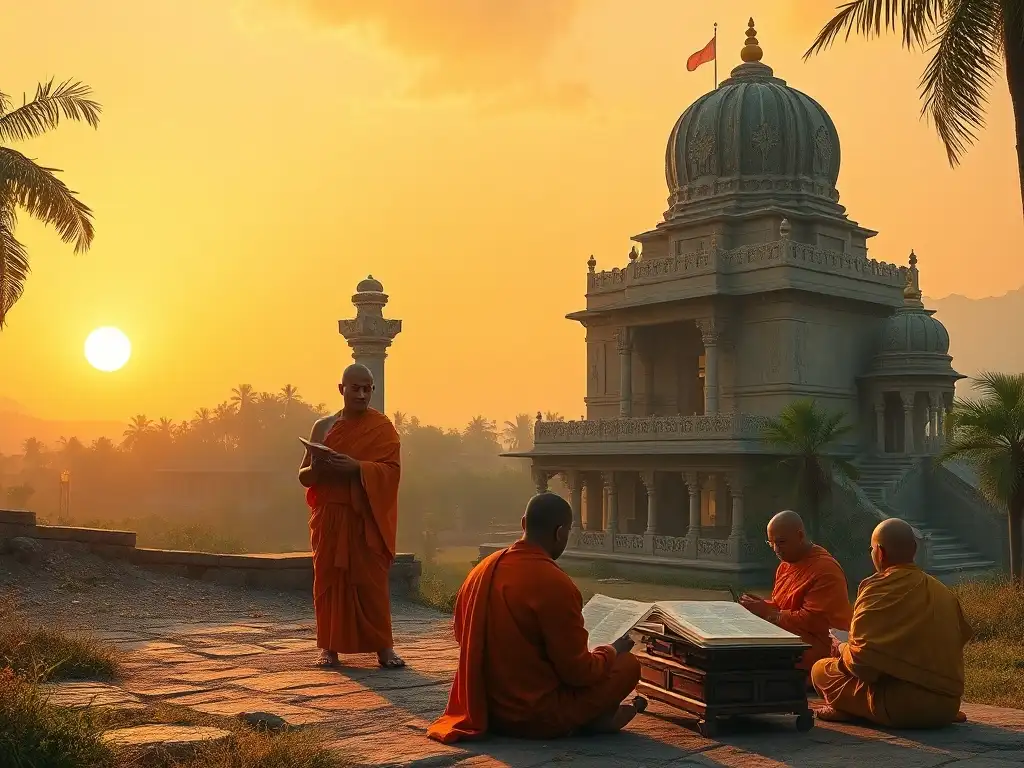
Introduction to Monks and Scholars in Southern India
The historical landscape of Southern India is intricately woven with the contributions of monks and scholars, whose intellectual and spiritual pursuits played a pivotal role in shaping the region's development. From the ancient period through the medieval era, these figures not only contributed to the propagation of religious beliefs but also advanced education, literature, and philosophy.
Their influence extended beyond the confines of monasteries, leaving an indelible mark on the cultural and social fabric of Southern India. As we explore this rich tapestry, we will examine the historical context, the emergence of monastic orders, and the philosophies that guided these influential communities.
Overview of Southern India’s Historical Context
Southern India has a long and diverse history characterized by the rise and fall of various dynasties, including the Cholas, Pandyas, and the Vijayanagara Empire. The region’s historical context is marked by:
- Geographical Diversity: Encompassing coastal plains, mountain ranges, and fertile river valleys, Southern India provided an ideal environment for agricultural and trade activities.
- Religious Pluralism: The coexistence of Hinduism, Buddhism, and Jainism fostered a rich intellectual discourse, encouraging monks and scholars to engage in philosophical debates and spiritual practices.
- Cultural Exchange: Southern India served as a crossroads for trade routes connecting the east and west, facilitating the exchange of ideas, art, and literature.
This vibrant historical backdrop created a fertile ground for monastic and scholarly activities, enabling them to flourish in society.
Importance of Monastic and Scholarly Contributions
The contributions of monks and scholars in Southern India were multifaceted and significant:
- Education and Learning: Monastic schools became centers of learning, attracting students from various regions. These institutions were instrumental in preserving ancient texts and promoting literacy.
- Philosophical Development: Scholars engaged in the exploration of philosophical concepts, leading to the evolution of various schools of thought that influenced spiritual practices and social norms.
- Cultural Preservation: Through their writings and teachings, monks and scholars preserved the region's rich cultural heritage, including literature, art, and rituals, ensuring continuity across generations.
Their roles as educators, philosophers, and custodians of culture positioned them as key figures in Southern India’s historical narrative.
The Emergence of Monastic Orders in Southern India
The establishment of monastic orders in Southern India marked a significant turning point in the region's spiritual and educational landscape. These communities not only adhered to their religious beliefs but also actively participated in societal development.
Early Monastic Communities and Their Influence
The origins of monasticism in Southern India can be traced back to the early centuries CE, with the formation of communities that dedicated themselves to spiritual practices and the dissemination of knowledge. Key characteristics of these communities included:
- Ascetic Practices: Monks often engaged in asceticism, promoting simplicity and detachment from material possessions, which attracted followers seeking spiritual enlightenment.
- Community Living: Monastic communities fostered a sense of belonging and mutual support, enabling the sharing of resources and knowledge.
- Engagement with Society: These early monks often acted as mediators between the spiritual and temporal realms, advising rulers and engaging in social reform.
The influence of these communities laid the groundwork for more structured monastic orders that emerged later.
Key Monastic Orders and Their Philosophies
Several monastic orders emerged in Southern India, each with distinct philosophies and contributions:
- The Shaiva Order: Focused on the worship of Lord Shiva, this order emphasized the importance of devotion and ascetic practices.
- The Bhakti Movement: This movement, characterized by personal devotion to a deity, encouraged inclusivity and sought to bridge the gap between different social classes.
- The Buddhist Sangha: Although its prominence waned in later centuries, the Buddhist community played a crucial role in spreading ideas of compassion and non-attachment.
These orders not only shaped religious practices but also contributed to the socio-political dynamics of Southern India, influencing governance, education, and community welfare.
The historical role of monks and scholars in Southern India encapsulates a vital aspect of the region's development, reflecting a blend of spiritual pursuit and intellectual growth that continues to resonate today.
Contributions of Monks to Southern Indian Culture
Southern India has a rich tapestry of culture woven by the contributions of monks who played a pivotal role in shaping its social, religious, and intellectual landscape. These monks, often affiliated with various Buddhist and Hindu traditions, were not only spiritual leaders but also custodians of knowledge, artists, and architects. Their influence extended far beyond monasteries and temples, permeating the daily lives of the populace and leaving an indelible mark on the region’s heritage.
Preservation of Texts and Knowledge
One of the most significant contributions of monks in Southern India was their role in the preservation of ancient texts and knowledge. Monasteries served as centers of learning where monks meticulously copied, annotated, and safeguarded philosophical, religious, and literary works. For instance, the Siddhanta texts of Jainism and the Vedic scriptures were preserved by dedicated monks who recognized the importance of these works in maintaining cultural continuity.
Furthermore, many monks were instrumental in translating and disseminating knowledge across languages and regions, ensuring that wisdom from various schools of thought was accessible to a broader audience. This preservation was crucial, especially during periods of political upheaval, where the threat of loss loomed large over classical texts.
Role in Promoting Religion and Spirituality
Monks in Southern India actively promoted various religious practices and spiritual teachings, particularly those of Buddhism and Hinduism. Their efforts included organizing religious gatherings, leading rituals, and engaging in philosophical debates that attracted followers. For example, the Theravada and Mahayana traditions found enthusiastic proponents among monks who traveled across the region, spreading their teachings and establishing monasteries.
Additionally, monks often played a mediating role between different communities, fostering an environment of dialogue and understanding. This promotion of spirituality not only strengthened religious affiliations but also contributed to the social cohesion of diverse groups within Southern India.
Impact on Art and Architecture
The artistic contributions of monks in Southern India are evident in the region's unique architectural styles and art forms. Many monasteries and temples, such as those found in Kanchipuram and Mahabalipuram, showcase intricate carvings and sculptures that reflect the spiritual and artistic sensibilities of the time. Monks commissioned these works, often serving as patrons of artists who created stunning representations of deities and mythological narratives.
Moreover, the architectural innovations introduced by monks, including the rock-cut caves and monolithic structures, had lasting impacts on Southern Indian architecture. These structures not only served as places of worship but also as spaces for community gatherings and cultural exchange, thus enriching the local heritage.
Scholars: The Intellectual Pillars of Southern India
While monks were crucial in the spiritual and cultural realms, scholars emerged as the intellectual beacons of Southern India. Their contributions to philosophy, literature, and education laid the groundwork for a vibrant academic tradition that influenced generations. Scholars engaged in critical thinking, debate, and the exploration of knowledge across various disciplines, thereby shaping the intellectual landscape of the region.
Prominent Scholars and Their Works
Southern India has been home to many illustrious scholars whose works have had a profound impact on Indian thought. Figures such as Adi Shankaracharya, who consolidated the doctrine of Advaita Vedanta, and Valluvar, the author of the Tirukkural, exemplify the intellectual prowess found in this region. Their writings not only addressed spiritual and ethical questions but also provided comprehensive frameworks for understanding the human experience.
Other notable scholars included Ramanuja, who contributed to the field of theology and philosophy through his works on Vishishtadvaita, and Madhava, who laid the foundations of mathematical analysis and calculus in the Kerala School of Astronomy and Mathematics. The diversity of their contributions showcases the rich intellectual heritage of Southern India.
The Role of Scholars in Education and Learning
Scholars were instrumental in establishing educational institutions that became centers of learning in Southern India. Gurukulas and mathas served as hubs where students were trained in various fields, including philosophy, grammar, mathematics, and astronomy. Scholars not only imparted knowledge but also engaged students in rigorous debates, fostering critical thinking and intellectual curiosity.
The educational methods employed by these scholars emphasized oral traditions, with texts being memorized and recited, ensuring that knowledge was preserved and transmitted effectively. This commitment to education facilitated the growth of a literate society that valued intellectual pursuits.
Influence of Scholars on Political and Social Structures
The intellectual contributions of scholars in Southern India extended into the political and social spheres, where their ideas influenced governance and societal norms. Scholars often served as advisors to kings and rulers, providing counsel on ethical governance, social justice, and religious tolerance. Their writings on statecraft, such as those found in the Arthashastra and similar texts, guided political leaders in their governance.
Furthermore, scholars played a crucial role in social reform movements, advocating for changes that promoted equality and justice. Through their teachings and public discourse, they challenged existing social hierarchies and encouraged a more inclusive society, thereby shaping the moral and ethical framework of Southern Indian civilization.
Interaction Between Monks and Scholars

The interaction between monks and scholars in Southern India played a pivotal role in shaping the region's cultural and intellectual landscape. Monastic institutions, particularly those affiliated with Buddhism and Jainism, served as centers for learning and philosophical discourse. Scholars, on the other hand, contributed their insights and knowledge, creating a rich tapestry of ideas that influenced various aspects of life in Southern India.
Monks, revered for their spiritual practices and ascetic lifestyles, often engaged in dialogues with scholars, who were typically well-versed in literature, science, and philosophy. This exchange fostered an environment conducive to intellectual growth and spiritual exploration. Notably, this collaboration was not limited to any single tradition; it encompassed a diverse range of beliefs and practices, including Hinduism, Buddhism, and Jainism, further enriching the intellectual heritage of the region.
In addition to theological discussions, monks and scholars engaged in practical matters, such as agriculture, medicine, and governance, demonstrating their commitment to societal well-being. This interaction not only facilitated the preservation of ancient texts but also encouraged the development of new ideas and methodologies, which were essential for the progress of Southern India.
Collaborative Efforts in Knowledge Dissemination
The collaborative efforts between monks and scholars significantly contributed to the dissemination of knowledge across Southern India. Monks played a crucial role in the transmission of sacred texts, both religious and philosophical, often copying and preserving manuscripts that would otherwise have been lost to time. Their dedication to maintaining libraries and scriptoria enabled the continuity of education and scholarship.
Scholars, in turn, utilized these resources to teach and propagate various fields of knowledge, including mathematics, astronomy, and medicine. They organized lectures, discussions, and debates, making learning accessible to a broader audience. This partnership was crucial in the establishment of educational institutions, such as the famous Nalanda and Vikramashila monasteries, which attracted students from far and wide.
Additionally, the monks’ emphasis on moral and ethical teachings complemented the scholarly pursuits, creating a holistic approach to education that integrated spiritual, intellectual, and practical knowledge. This synergy fostered a culture of inquiry and innovation, laying the groundwork for future advancements in Southern India's academic landscape.
The Symbiotic Relationship: Religion and Education
The relationship between religion and education in Southern India was profoundly symbiotic, particularly through the roles of monks and scholars. Monastic establishments served as both spiritual and educational hubs, where religious teachings were intertwined with academic inquiry. This duality allowed for a comprehensive understanding of life that encompassed both the material and the spiritual.
Monks often acted as educators, imparting religious knowledge while simultaneously encouraging scholarly pursuits among their disciples. The education provided was not limited to religious texts; it extended to secular subjects, fostering a well-rounded intellectual development. This holistic education model was particularly effective in nurturing leaders and thinkers who could navigate both religious and worldly affairs.
Moreover, the patronage of local rulers and wealthy benefactors further enhanced this relationship, as they supported monastic institutions in exchange for spiritual guidance and wisdom. This interconnectedness between state and religion ensured that educational initiatives aligned with societal values and needs, ultimately contributing to the overall development of Southern Indian civilization.
The Legacy of Monks and Scholars in Southern India
The legacy left by monks and scholars in Southern India is evident in various facets of modern society, from education systems to cultural practices. Their contribution to preserving knowledge and fostering intellectual discourse laid the foundation for future generations to build upon. The emphasis on learning and spiritual growth established by these early figures continues to resonate in contemporary Southern Indian culture.
Lasting Impact on Modern Southern Indian Society
The impact of monks and scholars on modern Southern Indian society can be observed in the region's robust educational framework. Many contemporary universities and colleges draw inspiration from ancient educational practices, emphasizing a blend of secular and spiritual knowledge. This legacy is particularly evident in the prominence of Hindu philosophy, which remains a cornerstone of education in various institutions.
Furthermore, the ethical and moral teachings propagated by these early thinkers continue to influence societal values. Concepts such as compassion, duty, and respect for knowledge are deeply embedded in the cultural fabric of Southern India, guiding personal and communal conduct.
In addition, the rich literary tradition established by monks and scholars has given rise to a vibrant cultural scene, where literature, arts, and philosophy thrive. The works of ancient poets and philosophers are celebrated and studied, fostering a sense of identity and continuity within the region.
Ongoing Influence in Contemporary Culture and Education
The ongoing influence of monks and scholars in Southern India is palpable in contemporary culture, particularly in the realms of education and spirituality. Modern educational institutions often incorporate teachings inspired by ancient philosophies, promoting critical thinking and ethical reasoning among students. This approach not only honors the legacy of past scholars but also prepares individuals to tackle contemporary challenges.
Moreover, the spiritual practices and rituals established by monks continue to play a significant role in the daily lives of many. Temples, monasteries, and cultural festivals serve as vital centers for community engagement and cultural preservation, reflecting the enduring significance of their contributions.
The historical role of monks and scholars in Southern India has left an indelible mark on the region's development. Their collaborative efforts in knowledge dissemination, the symbiotic relationship between religion and education, and the lasting impact on modern society collectively illustrate the importance of these figures in shaping a rich and diverse cultural heritage.
Conclusion
The historical role of monks and scholars in Southern India presents a fascinating narrative of intellectual and spiritual development that shaped the region's cultural landscape. Their contributions were pivotal in various spheres, including education, religion, social reform, and the arts. By fostering a spirit of inquiry and innovation, these learned individuals not only preserved ancient knowledge but also laid the groundwork for future generations to build upon.
Summary of the Contributions of Monks and Scholars
Monks and scholars in Southern India played multifaceted roles that significantly influenced the region's development. They were instrumental in:
- Educational Institutions: Establishing centers of learning, such as the renowned universities of Nalanda and Kanchi, which attracted students from across Asia. These institutions became hubs of knowledge, promoting subjects ranging from philosophy to mathematics.
- Religious and Cultural Preservation: Through their teachings and writings, monks upheld and transmitted the rich traditions of Hinduism and Buddhism. They compiled texts, contributed to the understanding of scriptures, and propagated various philosophies, ensuring the continuity of cultural identity.
- Social Reform: Many monks took on the responsibility of addressing social issues, advocating for equality, and challenging caste hierarchies. Their teachings often emphasized compassion, ethical living, and community service, leading to significant social changes.
- Art and Literature: Scholars and monks were also patrons of the arts, fostering a rich tradition of literature and visual arts. Their influence is evident in the intricate temple carvings, classical dance forms, and lyrical poetry that emerged during their time.
These contributions collectively enriched the social, religious, and cultural fabric of Southern India, establishing a legacy that resonates even today.
Final Thoughts on Their Importance in Southern India’s Development
The importance of monks and scholars in Southern India's development cannot be overstated. They were not only custodians of knowledge but also catalysts for change. Their ability to blend spirituality with intellectual pursuits created a unique environment where diverse ideas could flourish.
As Southern India continues to navigate the complexities of modernity, reflecting on the legacies of these historical figures offers valuable insights. Understanding their role highlights the importance of education, cultural preservation, and social responsibility—principles that remain relevant in contemporary society. The enduring impact of monks and scholars serves as a reminder of how intellectual and spiritual leaders can shape the course of history and inspire future generations to pursue wisdom and compassion.
- Introduction to Monks and Scholars in Southern India
- The Emergence of Monastic Orders in Southern India
- Contributions of Monks to Southern Indian Culture
- Scholars: The Intellectual Pillars of Southern India
- Interaction Between Monks and Scholars
- The Legacy of Monks and Scholars in Southern India
- Conclusion
- What was the role of monks and scholars in Southern India?
- How did Buddhism and Jainism influence Southern India?
- What contributions did monastic institutions make to society?
- How did the Gupta Empire impact monks and scholars in Southern India?
- What legacy did scholars and monks leave in Southern India today?
Frequently Asked Questions
What was the role of monks and scholars in Southern India?
Monks and scholars played a crucial role in the development of Southern India by contributing to education, philosophy, and spirituality, fostering a rich cultural environment.
How did Buddhism and Jainism influence Southern India?
The spread of Buddhism and Jainism introduced new philosophical ideas and practices, significantly impacting the social structure and cultural identity of the region.
What contributions did monastic institutions make to society?
Monastic institutions served as centers for learning and scholarship, preserving texts and knowledge that would later influence various aspects of Indian civilization.
How did the Gupta Empire impact monks and scholars in Southern India?
The Gupta Empire promoted education and scholarship, leading to a flourishing of intellectual pursuits in Southern India, where monks and scholars contributed to advancements in mathematics, astronomy, and literature.
What legacy did scholars and monks leave in Southern India today?
The legacy of scholars and monks is evident in the region's temples, literature, and educational traditions, which continue to shape its cultural landscape and spiritual practices.
Final Reflection: The Enduring Legacy of Monks and Scholars in Southern India
The historical contributions of monks and scholars in Southern India remain profoundly relevant today, as their influence shapes our understanding of culture, education, and spirituality. In a world increasingly driven by technology and rapid change, the wisdom and teachings of these figures serve as a reminder of the importance of knowledge and community in fostering societal growth. Their legacy is not merely a relic of the past but a guiding light for contemporary society, urging us to reflect on the values of learning, compassion, and service.
The impact of monks and scholars extends beyond their immediate historical context, continuing to resonate in the cultural and social fabric of Southern India. Their commitment to education and spiritual development laid the groundwork for institutions that thrive today, nurturing generations of thinkers and leaders. As the renowned scholar Swami Vivekananda once said, Education is the manifestation of the perfection already in man.
This sentiment encapsulates the essence of the monks' and scholars' contributions, emphasizing that the pursuit of knowledge is a lifelong journey that enriches both the individual and society as a whole.
As we contemplate the lessons imparted by these remarkable figures, I invite you to reflect on your own journey of learning and growth. Consider how you can embody the spirit of inquiry and service that monks and scholars exemplified. Whether through sharing knowledge, engaging in community service, or simply fostering a mindset of curiosity, each of us has the power to contribute to the ongoing development of our society. Let us honor the legacy of these historical figures by actively participating in the cultivation of wisdom and compassion in our own lives and communities.
Ignite Your Passion for History!
Thank you for joining us on this enlightening journey through the pivotal role that monks and scholars played in the development of Southern India. We hope this exploration has enriched your understanding of how these influential figures shaped societies and cultures. Now, it’s time to take action and delve deeper!
- Dive into further research: Explore local libraries or online archives for texts on the scholarly traditions of Southern India and their impact on contemporary society.
- Join a discussion group: Engage with fellow history enthusiasts by participating in forums or online communities dedicated to the study of Indian history.
- Share your findings: Write a blog post or update your social media about what you learned today—your insights may inspire others!
What aspect of the contributions made by monks and scholars to Southern India's history fascinates you the most?