
The Significance of Planetary Motion in Ancient Indian Astronomy


Welcome to Ancient India History, where we embark on a fascinating journey through the rich tapestry of time, exploring the profound contributions of ancient Indian civilizations. Today, we delve into the captivating world of Ancient Indian astronomy, uncovering the significance of planetary motion that shaped not only scientific thought but also cultural practices in this remarkable era.
As we unravel the mysteries of the cosmos through the lens of ancient scholars, prepare to be intrigued by how their insights continue to influence our understanding of the universe today. Join us in this exploration and let the stars guide your curiosity!

Introduction to Ancient Indian Astronomy
Ancient Indian astronomy is a fascinating domain that showcases the rich intellectual heritage of the Indian subcontinent. Spanning thousands of years, this field reflects the profound understanding that ancient scholars had regarding celestial phenomena. The study of planetary motion, in particular, holds immense significance, as it not only contributed to the development of precise astronomical calculations but also influenced various aspects of daily life, including agriculture, navigation, and religious practices. This article aims to explore the nuances of ancient Indian astronomy significance, focusing on the pivotal role that planetary motion played in shaping the astronomical knowledge of the time.
Overview of Ancient Indian Astronomy Significance
The significance of ancient Indian astronomy can be understood through several key aspects:
- Cultural Integration: Astronomy was deeply intertwined with religion and philosophy, influencing rituals, calendars, and societal norms.
- Mathematical Innovations: The need to accurately predict celestial events led to remarkable advancements in mathematics, including the concepts of zero and infinity.
- Scientific Contributions: Ancient Indian astronomers made substantial contributions to the understanding of planetary orbits, eclipses, and the mechanics of celestial bodies, which laid the groundwork for later scientific inquiries.
The Role of Planetary Motion in Early Astronomy
Planetary motion was central to the astronomical studies of ancient India. Scholars meticulously observed the movements of celestial bodies, leading to:
- Accurate Calendars: The positions of planets were used to create calendars that aligned with agricultural cycles, ensuring better crop yields.
- Predictive Models: By understanding the patterns of planetary motion, astronomers were able to predict eclipses and other celestial events with remarkable accuracy.
- Astrological Significance: Planetary positions were believed to influence human affairs, leading to the development of astrology as an integral part of cultural practices.
Historical Context of Astronomy in Ancient India
To fully appreciate the significance of planetary motion in ancient Indian astronomy, it is essential to explore the historical context in which these astronomical practices flourished.
Timeline of Key Developments in Ancient Indian Astronomy
| Period | Key Developments |
|---|---|
| Indus Valley Civilization (c. 3300–1300 BCE) | Early astronomical observations and calendar systems |
| Vedic Period (c. 1500–500 BCE) | Integration of astronomy with religious practices and rituals |
| Classical Period (c. 200 BCE–1200 CE) | Development of mathematical astronomy, including Aryabhata's work |
| Medieval Period (c. 1200–1800 CE) | Synthesis of Islamic and Indian astronomical knowledge |
Influential Thinkers and Texts in Astronomy
Several prominent figures and texts emerged in the realm of ancient Indian astronomy:
- Aryabhata: One of the first mathematicians to introduce the concept of planetary motion, Aryabhata’s work laid the foundation for future developments.
- Brahmagupta: His contributions to planetary calculations and the introduction of algorithms for astronomical computations were groundbreaking.
- Surya Siddhanta: This ancient text compiled vast astronomical knowledge and served as a reference for subsequent astronomical studies.
Through these advancements, ancient Indian astronomy not only demonstrated the significance of planetary motion but also highlighted the civilization's dedication to understanding the cosmos. The legacy of these astronomical practices continues to inspire contemporary scholars and enthusiasts alike.
Understanding Planetary Motion in Ancient Indian Astronomy
Planetary motion played a crucial role in the development of ancient Indian astronomy, reflecting the civilization's profound interest in celestial phenomena. The ancient Indians meticulously observed celestial bodies, leading to the formulation of various models that described their movements. The understanding of planetary motion was not merely academic; it had practical implications for agriculture, navigation, and religious rituals. Astronomers sought to comprehend the cycles of celestial bodies to create accurate calendars, which were essential for determining auspicious dates for events and festivals.
The significance of planetary motion in ancient Indian astronomy can be traced back to the foundational texts such as the Surya Siddhanta and Aryabhatiya. These texts articulated complex mathematical relationships and provided methods for calculating the positions of planets with remarkable precision. The ancient Indians utilized both observational and theoretical knowledge, blending empirical data with philosophical insights, making their contributions unique in the broader context of global astronomy.
Principles of Planetary Motion According to Ancient Texts
Ancient Indian texts highlighted several principles regarding planetary motion, emphasizing both geometrical and mathematical frameworks. The Surya Siddhanta, one of the seminal works in Indian astronomy, introduced the concept of the Earth's rotation and its implications for the apparent motion of celestial bodies. This text outlined the epicycles, or circular paths, that planets followed, which was a crucial idea in explaining retrograde motion.
Furthermore, the principles also included the use of sine and cosine functions to predict planetary positions. The text provided formulas for calculating the distances and velocities of planets, showcasing an advanced understanding of celestial mechanics. The period of a planet's revolution around the Sun was meticulously calculated, demonstrating the sophistication of ancient Indian astronomy in grasping complex astronomical phenomena.
The Influence of Greek Astronomy on Indian Concepts of Planetary Motion
The interaction between Greek and Indian astronomy significantly shaped ancient Indian concepts of planetary motion. This influence began around the early centuries of the Common Era when Indian scholars encountered Greek astronomical texts, particularly during the period of the Indo-Greek kingdoms. The adoption of Greek models, including the Ptolemaic system, brought new ideas about the structure of the universe and the arrangement of celestial bodies.
Indian astronomers integrated these Greek concepts with their own observations, leading to a unique synthesis of astronomical knowledge. For example, Aryabhata’s work reflected a blend of Greek influence and indigenous understanding, marking a pivotal point in the evolution of Indian astronomy. The adaptation of Greek astronomical principles provided a framework that enhanced the accuracy of planetary predictions and solidified the significance of planetary motion in ancient Indian scientific thought.
Key Contributions of Ancient Indian Astronomers
Ancient Indian astronomers made remarkable strides in understanding planetary motion, and their contributions laid the groundwork for future astronomical studies. The work of notable figures such as Aryabhata, Brahmagupta, and Varahamihira exemplifies the sophisticated nature of ancient Indian astronomy and its enduring legacy.
Aryabhata's Contributions to Planetary Motion and Astronomy
Aryabhata, one of the most celebrated figures in ancient Indian astronomy, made significant contributions that transformed the understanding of planetary motion. In his seminal work, the Aryabhatiya, Aryabhata introduced innovative concepts such as the rotation of the Earth on its axis, which explained the apparent movement of stars and planets across the sky. He also provided accurate calculations for the length of the solar year, asserting it to be about 365.358 days.
His methods for calculating the positions of planets were groundbreaking, employing a combination of geometric and algebraic techniques. Aryabhata’s use of sine functions to calculate the distances of celestial bodies showcased his mathematical prowess and laid the foundation for future astronomers to build upon. His influence extended beyond India, impacting astronomical thought in other cultures as well.
Brahmagupta's Theories and Their Significance
Brahmagupta, another pivotal figure in ancient Indian astronomy, further advanced the understanding of planetary motion in his work Brahmasphutasiddhanta. He presented a systematic approach to planetary positions, providing rules for calculating eclipses and planetary conjunctions. One of his notable contributions was the introduction of algorithms for determining the positions of planets based on time intervals, which reflected a sophisticated grasp of mathematical concepts.
Brahmagupta also emphasized the importance of zero as a placeholder, a concept that facilitated complex calculations involving planetary motion. His insights into the nature of gravitational attraction, although not fully developed, hinted at a scientific approach to understanding celestial dynamics, marking a significant step forward in the study of astronomy.
Varahamihira's Contributions and Their Impact on Astronomy
Varahamihira made invaluable contributions to ancient Indian astronomy, particularly in the realms of planetary motion and astrology. His work, the Brihat Samhita, compiled extensive knowledge on various subjects, including astronomy, meteorology, and agriculture. Varahamihira expanded upon the ideas of his predecessors, providing detailed descriptions of planetary motions and their impacts on terrestrial events.
He introduced the concept of planetary periods and their effects on human affairs, combining astronomical observations with astrological interpretations. His predictions regarding eclipses and planetary alignments were remarkably accurate for the time, further solidifying the stature of ancient Indian astronomy. Varahamihira's holistic approach, integrating astronomy with astrology and natural sciences, left a lasting influence on the field, demonstrating the interconnectedness of knowledge in ancient India.
The Significance of Planetary Motion in Ancient Indian Culture
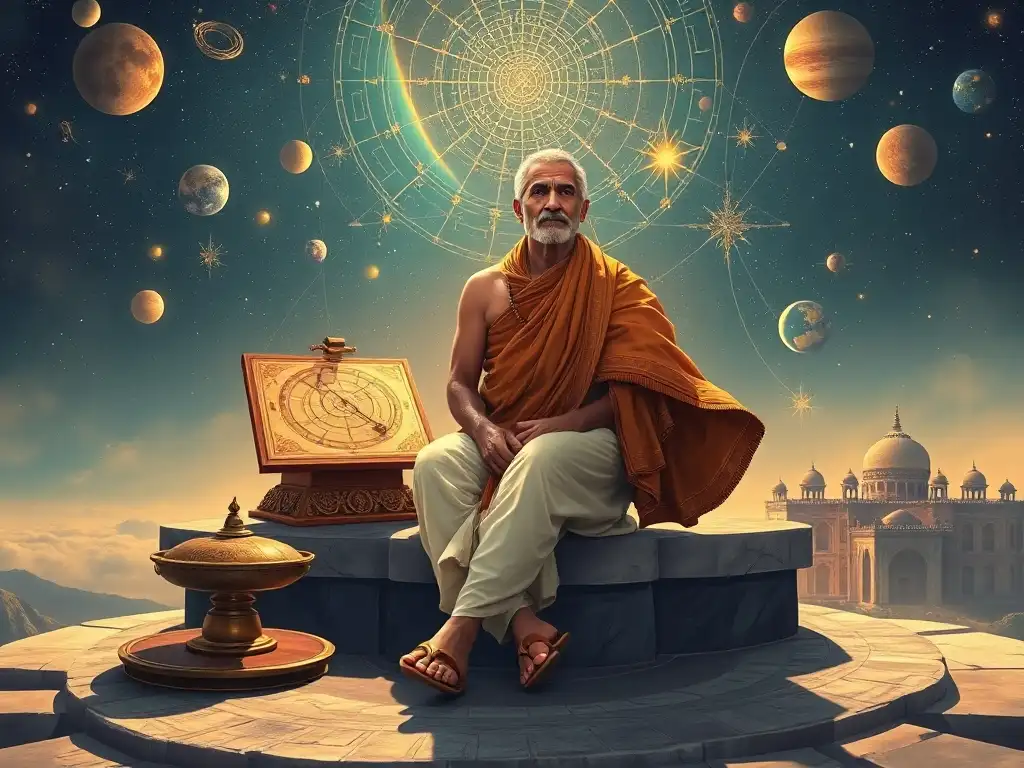
The study of planetary motion played a crucial role in shaping various aspects of ancient Indian culture, including religion, agriculture, and societal norms. Ancient Indian astronomers meticulously observed celestial phenomena and developed sophisticated models to explain the movements of planets. This knowledge not only enhanced their understanding of the cosmos but also influenced daily life and spiritual practices.
The alignment of planets was thought to hold significant meaning, affecting everything from the timing of festivals to agricultural cycles. As a result, the integration of astronomy into various cultural practices established a harmonious relationship between celestial events and earthly activities. This intertwining of science and culture illustrated the profound respect and reverence ancient Indians held for the cosmos, which they perceived as a reflection of divine order.
Planetary Influence on Calendar Systems and Agriculture
Ancient Indian calendars were deeply rooted in astronomical observations, particularly of planetary movements. The lunar and solar cycles were crucial in determining the months and seasons, directly impacting agricultural activities. Farmers relied on these calendars to time sowing and harvesting, ensuring that their crops thrived in sync with the changing seasons.
For instance, the Hindu calendar, or Vikram Samvat, incorporates the position of celestial bodies to delineate auspicious days for planting and harvesting. Additionally, festivals such as Makar Sankranti, which marks the transition of the sun into Capricorn, were celebrated based on astronomical alignments. This not only exemplifies the practical applications of planetary motion in agriculture but also highlights the cultural significance placed on these celestial events.
Astrological Beliefs and Their Relation to Planetary Motion
Astrology, an integral part of ancient Indian culture, was deeply influenced by the understanding of planetary motion. The positions of planets at the time of an individual's birth were believed to shape their personality and destiny. This belief system, known as Jyotish, or Vedic astrology, relied on precise calculations of planetary positions to create horoscopes and predict future events.
Ancient texts such as the Surya Siddhanta and the Brahmagupta’s Brahmasphutasiddhanta elaborated on the mathematical principles governing planetary movements. These texts provided guidelines for astrologers to interpret celestial alignments, thus reinforcing the importance of astronomy in spiritual and daily life. The linkage between astrology and planetary motion not only reflects the intellectual achievements of ancient Indian astronomers but also underscores the cultural significance of celestial phenomena in shaping personal and societal narratives.
Comparative Analysis of Ancient Indian and Other Civilizations
The study of planetary motion in ancient India can be viewed through a comparative lens, particularly when juxtaposed with other ancient civilizations such as the Greeks and the Mesopotamians. Understanding these differences and similarities sheds light on the unique contributions of ancient Indian astronomy.
Contrasting Ancient Indian Astronomy with Greek Astronomy
Ancient Indian astronomy differed significantly from its Greek counterpart in both methodology and philosophical approach. While Greek astronomers like Ptolemy focused on geocentric models, placing Earth at the center of the universe, Indian astronomers were more inclined to develop a heliocentric perspective, as seen in the works of Aryabhata.
Moreover, Indian astronomers emphasized the cyclical nature of planetary movements, incorporating observations into their astrological frameworks, whereas Greek astronomy leaned heavily on geometric principles. This divergence in focus highlights the distinct cultural contexts in which these astronomical traditions developed, showcasing the rich tapestry of human understanding of the cosmos.
Similarities and Differences in Planetary Motion Theories
Despite the differences, there were notable similarities between ancient Indian and other civilizations in their understanding of planetary motion. Both cultures observed celestial bodies and recognized their influence on earthly phenomena, such as seasons and agricultural cycles. However, the methodologies used to describe these motions varied significantly.
For instance, while Indian astronomers utilized intricate calculations and astronomical tables to predict planetary positions, other civilizations often relied on simpler observational techniques. The concept of retrograde motion was understood in both traditions, yet the explanations varied, with Indian astronomers incorporating these movements into their astrological practices, while Greeks focused on geometric interpretations.
This comparative analysis underscores the diverse approaches to understanding planetary motion across cultures, revealing a shared human curiosity about the cosmos while highlighting the unique contributions of ancient Indian astronomy.
Conclusion: Legacy of Ancient Indian Astronomy
The legacy of ancient Indian astronomy is profound, influencing not only the scientific community in its time but also leaving a lasting impact on modern astronomical practices and theories. The meticulous observations of planetary motion by ancient Indian astronomers, such as Aryabhata and Brahmagupta, laid the groundwork for future studies, merging empirical observations with theoretical frameworks. They pioneered concepts such as the heliocentric model, long before it became widely accepted in the Western world.
Moreover, the integration of mathematics in astronomy, particularly through the development of trigonometry and algebra, showcases the advanced understanding that ancient Indian scholars possessed regarding celestial phenomena. This legacy continues to inspire contemporary research and educational endeavors in the field of astronomy, highlighting the importance of cultural contributions to scientific progress.
Lasting Impact of Planetary Motion Studies on Modern Astronomy
The studies of planetary motion conducted by ancient Indian astronomers have had a significant and enduring impact on modern astronomy. Their precise calculations and observations, documented in texts such as the "Aryabhatiya" and "Siddhanta Shiromani," provided foundational knowledge that later astronomers built upon.
- Mathematical Innovations: Ancient Indian scholars employed innovative mathematical techniques to describe planetary motion, which can be seen in the algorithms used in contemporary celestial mechanics.
- Astronomical Instruments: The development of tools and instruments such as the gnomon (for measuring time) and astrolabes was influenced by early Indian practices, emphasizing the blend of observation and technology.
- Cultural Exchange: The transmission of knowledge through trade routes facilitated the exchange of ideas between Indian and Islamic astronomers, leading to a synthesis of knowledge that enriched both traditions.
Today, the principles derived from ancient Indian studies continue to inform modern astronomical research, showcasing the timeless relevance of their work.
Reflection on the Significance of Ancient Indian Astronomy in Today’s Context
In today’s context, the significance of ancient Indian astronomy extends beyond mere historical interest; it serves as a reminder of the rich intellectual traditions that contributed to the global understanding of the cosmos. By reflecting on the methods and insights of ancient astronomers, contemporary society can appreciate the depth of knowledge that existed long before modern science.
- Cultural Heritage: Recognizing the contributions of ancient Indian astronomers fosters a sense of pride in cultural heritage, emphasizing the role of diverse civilizations in shaping scientific thought.
- Interdisciplinary Approach: The integration of astronomy with mathematics, philosophy, and spirituality in ancient India encourages an interdisciplinary approach to education and research today.
- Inspiration for Future Generations: Understanding the achievements of ancient scholars can inspire future generations to explore the universe, pushing the boundaries of what we know.
The significance of ancient Indian astronomy, therefore, lies not only in its historical achievements but also in its continuing relevance and inspiration for future scientific exploration.
References
Key Texts and Resources on Ancient Indian Astronomy
- Aryabhatiya by Aryabhata - A seminal text that outlines various astronomical theories and mathematical principles.
- Siddhanta Shiromani by Bhaskara II - A key work that elaborates on planetary motion and eclipses.
- Brahmasphutasiddhanta by Brahmagupta - This text includes significant contributions on arithmetic and astronomy.
- Surya Siddhanta - An ancient astronomical treatise that describes planetary positions and calendars.
Suggested Further Reading on Planetary Motion and Its Significance
- "The History of Indian Astronomy" by C. V. Vaidya - A comprehensive overview of the developments in Indian astronomy through the ages.
- "Ancient Indian Mathematics and Astronomy" by A. K. Bag - This book explores the intertwined evolution of mathematics and astronomy in ancient India.
- "Astronomy in Ancient India" by S. R. Sarma - A detailed analysis of astronomical practices and their implications in ancient Indian culture.
- "The Influence of Indian Astronomy on the Islamic World" by M. Rahman - An examination of how ancient Indian astronomical concepts were transmitted and transformed in the Islamic world.
These texts and resources provide a deeper understanding of the significance of planetary motion in ancient Indian astronomy and its lasting impact on the field.
- Introduction to Ancient Indian Astronomy
- Historical Context of Astronomy in Ancient India
- Understanding Planetary Motion in Ancient Indian Astronomy
- Key Contributions of Ancient Indian Astronomers
- The Significance of Planetary Motion in Ancient Indian Culture
- Comparative Analysis of Ancient Indian and Other Civilizations
- Conclusion: Legacy of Ancient Indian Astronomy
- References
- What was the significance of planetary motion in ancient Indian astronomy?
- How did ancient Indian astronomers contribute to the understanding of planetary motion?
- What texts are key to understanding ancient Indian astronomy?
- How did ancient Indian astronomy influence other cultures?
- What role did astrology play in ancient Indian astronomy?
Frequently Asked Questions
What was the significance of planetary motion in ancient Indian astronomy?
The significance of planetary motion in ancient Indian astronomy lies in its influence on calendar systems, agricultural practices, and astrological predictions, showcasing the advanced understanding of the cosmos.
How did ancient Indian astronomers contribute to the understanding of planetary motion?
Ancient Indian astronomers, such as Aryabhata, developed mathematical models and calculations that accurately described planetary orbits and motions, paving the way for future astronomical studies.
What texts are key to understanding ancient Indian astronomy?
Key texts like the Surya Siddhanta and Aryabhatiya provide insights into ancient Indian observations and theories regarding celestial bodies and their movements, reflecting their advanced knowledge.
How did ancient Indian astronomy influence other cultures?
The findings and methodologies in ancient Indian astronomy were shared with neighboring cultures, influencing Islamic astronomy and later European thought during the Renaissance, demonstrating its global impact.
What role did astrology play in ancient Indian astronomy?
Astrology was deeply intertwined with ancient Indian astronomy, as it was used to interpret planetary positions for religious, cultural, and personal guidance, highlighting the holistic approach to understanding the cosmos.
Final Reflection: The Enduring Legacy of Ancient Indian Astronomy
The exploration of planetary motion in ancient Indian astronomy reveals a profound understanding of the cosmos that resonates with our modern scientific inquiries. Today, as we grapple with the complexities of space and time, the insights gained from ancient scholars remind us that the quest for knowledge is timeless. The meticulous observations and calculations made by these astronomers were not merely academic; they were foundational in shaping our comprehension of the universe. Their legacy continues to inspire contemporary scientists and enthusiasts alike, emphasizing that the pursuit of knowledge transcends generations.
The impact of ancient Indian astronomy extends far beyond its historical context, influencing cultural and social paradigms even today. The intricate relationship between celestial movements and earthly phenomena reflects a deep-seated connection between humanity and the cosmos. As we navigate our lives, the rhythms of nature and the stars still guide us, echoing the wisdom of those who came before. The stars are not just points of light; they are the threads that weave the fabric of our existence.
This perspective invites us to appreciate the significance of ancient knowledge in our ongoing journey of discovery and understanding.
As we reflect on the significance of ancient Indian astronomy, I invite you to consider how these timeless lessons can be applied in your own life. Embrace the curiosity that drives exploration, and let the wisdom of the past inform your understanding of the present and future. Whether through stargazing, studying the natural world, or simply contemplating your place in the universe, take a moment to connect with the celestial wonders above. The legacy of ancient astronomers beckons us to look up, to wonder, and to seek knowledge in all its forms.
Unveil the Wonders of Ancient Indian Astronomy!
Thank you for taking the time to explore the fascinating world of planetary motion in ancient Indian astronomy with us. You've uncovered valuable insights into how these celestial observations shaped our understanding of the universe. Now, let’s turn this knowledge into action!
Here are some inspiring steps you can take next:
- Dive Deeper: Explore research articles or books on ancient astronomical practices and their cultural significance. Your journey into knowledge doesn’t have to stop here—discover even more!
- Share the Knowledge: Discuss what you've learned with friends or in online communities. Start a conversation about ancient Indian astronomy! It’s a fantastic way to ignite curiosity and inspire others.
- Visit a Planetarium or Observatory: Experience the night sky through the lens of astronomy! Find a local planetarium and attend a public viewing night to marvel at celestial bodies, just as the ancient astronomers did.
What aspect of ancient Indian astronomy inspires you the most, and how will you use this knowledge to expand your understanding of the cosmos?