
The Intersection of Mathematics and Metallurgy in Ancient Indian Innovations

Welcome to Ancient India History, where we embark on a fascinating journey through the rich tapestry of ancient Indian civilizations. Here, we delve into the remarkable innovations that shaped not only the subcontinent but also the world. In our featured article, "The Intersection of Mathematics and Metallurgy in Ancient Indian Innovations," we uncover the groundbreaking contributions of ancient Indian scholars and craftsmen.
Prepare to be amazed as we reveal how these two fields intertwined to create unparalleled advancements that still influence modern technology. Are you ready to explore the secrets of ancient Indian mathematics and metallurgy? Dive in and discover the legacy that continues to inspire innovation today!
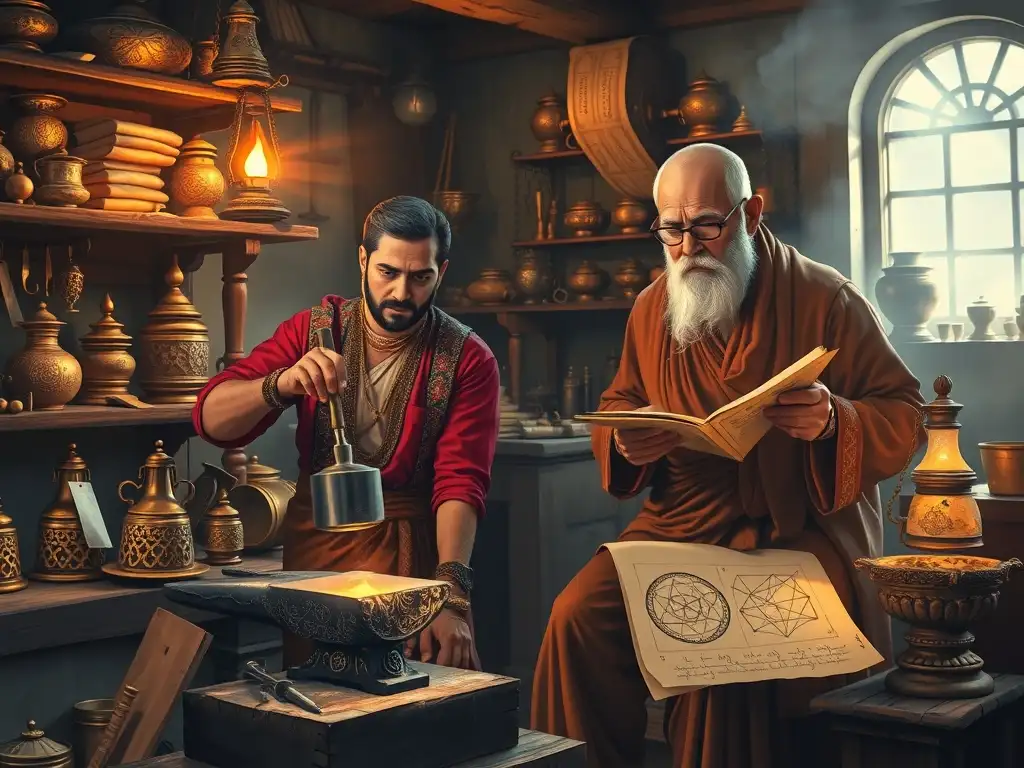
The intertwining of mathematics and metallurgy in ancient India is a fascinating exploration of how these two fields contributed to the remarkable advancements of early Indian civilizations. From the precise calculations needed for metal extraction and crafting to the theoretical frameworks underpinning these practices, mathematics played a pivotal role in shaping the metallurgical innovations of ancient India.
This article delves into the historical context of ancient Indian mathematics and metallurgy, examining how mathematicians and their works influenced metallurgical techniques, ultimately contributing to the rich tapestry of technological progress in the region. By understanding these connections, we can appreciate the sophisticated knowledge systems that flourished in ancient India and their lasting impact on both local and global technological landscapes.
Introduction to Ancient Indian Mathematics and Metallurgy
Overview of Ancient Indian Innovations
Ancient India was a cradle of innovation, particularly in the realms of mathematics and metallurgy. The Indus Valley Civilization, recognized for its urban planning and advanced drainage systems, laid the groundwork for future scientific developments. Notably, the extraction and processing of metals like copper, bronze, and iron were significant achievements, which were deeply rooted in mathematical principles. The interplay of these disciplines allowed craftsmen to enhance their techniques, leading to the production of intricate metalwork and tools that were crucial for daily life and trade.
- Key Innovations:
- Development of advanced metallurgical techniques
- Precision in crafting tools and ornaments
- Use of mathematical calculations for metal ratios and alloying
Importance of Mathematics in Metallurgy
Mathematics served as the backbone of metallurgical practices in ancient India. Craftsmen utilized mathematical concepts to measure, calculate, and optimize their production processes. This included:
- Geometry for designing tools and structures
- Arithmetic for determining quantities of materials
- Algebra for formulating equations related to heat treatment and alloy compositions
The mathematical principles not only enhanced the quality of metals produced but also facilitated innovations such as the Wootz steel process, which showcased remarkable strength and durability, setting a standard that would influence metallurgy worldwide.
Historical Context of Mathematics in Ancient India
Key Mathematical Texts and Their Contributions
The rich tradition of mathematics in ancient India is captured in several seminal texts. Works such as Aryabhatiya by Aryabhata and Brahmasphutasiddhanta by Brahmagupta laid foundational principles of arithmetic, geometry, and algebra. These texts not only addressed theoretical aspects but also provided practical applications relevant to metallurgy:
- Aryabhatiya: Introduced concepts of trigonometry and calculations essential for astronomical observations, which were crucial for timing metallurgical processes.
- Brahmasphutasiddhanta: Discussed the properties of numbers and provided algorithms that could be applied in metallurgical contexts.
Notable Mathematicians and Their Influence on Metallurgy
Several mathematicians made significant contributions that directly or indirectly influenced metallurgical practices:
- Aryabhata: His work on astronomy and mathematics included methods for calculating areas and volumes, which were vital in designing furnaces and other metallurgical equipment.
- Brahmagupta: Pioneered techniques in algebra that helped in understanding the chemical interactions during metal processing.
These scholars not only advanced mathematical thought but also established a framework that informed the technological practices of their time, showcasing the profound impact of ancient Indian mathematics on the evolution of metallurgy.
By examining these historical intersections, we can better appreciate the sophisticated technological innovations achieved by ancient Indian civilizations and their enduring legacy in the fields of mathematics and metallurgy.
The Role of Mathematics in Metallurgical Processes
Mathematics played a pivotal role in the development of metallurgy in ancient India, influencing various processes from metal extraction to the creation of complex alloys. The understanding of mathematical principles allowed ancient metallurgists to optimize their techniques, improving efficiency and quality. By applying mathematical reasoning, they were able to predict outcomes, calculate proportions, and analyze the properties of different metals and their interactions.
The integration of mathematics into metallurgical practices also facilitated advancements in metalworking techniques. This included the precise measurement of materials, which was essential for achieving the desired characteristics in metal products. Moreover, mathematical calculations were fundamental in determining the ideal temperatures for smelting and alloying, ensuring that the processes yielded the best results.
Mathematical Techniques Used in Metal Extraction
Ancient Indian metallurgists employed various mathematical techniques to enhance metal extraction processes. One of the key methods involved the use of ratios and proportions to determine the optimal quantities of raw materials needed for successful smelting. For instance, they meticulously calculated the amounts of ore, flux, and fuel required, ensuring the right balance to maximize metal yield.
Additionally, ancient texts suggest that they used arithmetic and geometric principles to refine their extraction methods. The application of geometry was particularly important in designing furnaces and kilns, as these structures needed to maintain specific shapes and dimensions to achieve efficient heat distribution. Such calculations not only improved the extraction process but also contributed to the overall efficiency of metallurgical operations.
Geometry in Metalworking: Tools and Techniques
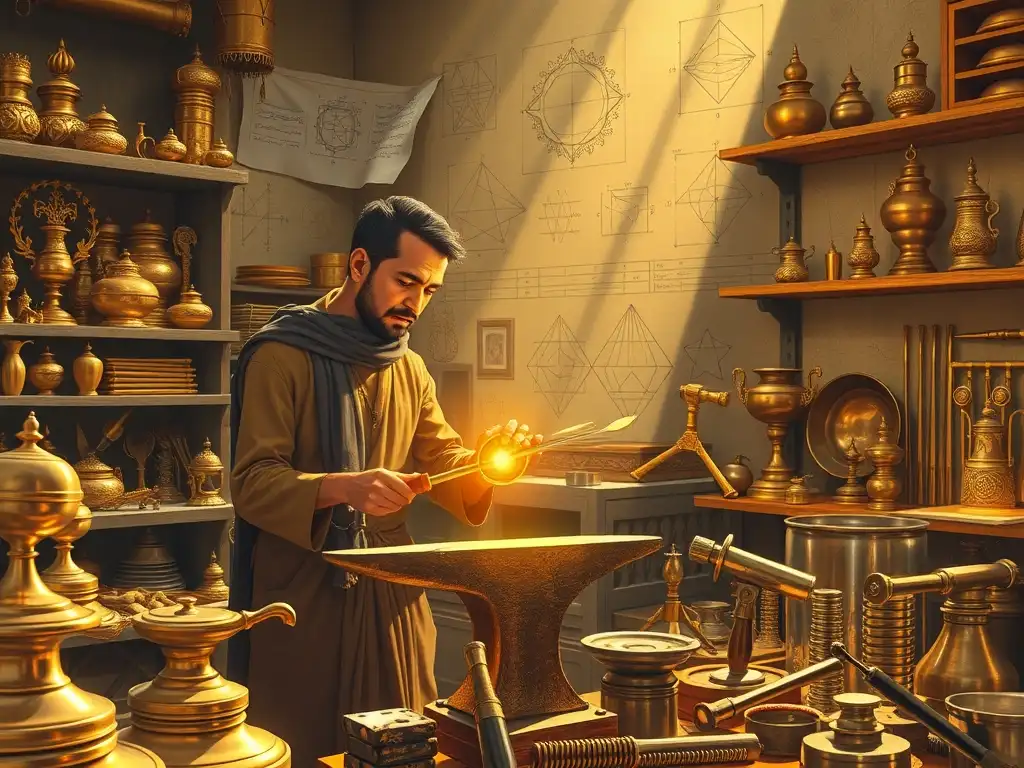
Geometry was integral to the metalworking techniques of ancient India, influencing the design and functionality of tools used in metal fabrication. Blacksmiths and artisans applied geometric principles to create tools with precise shapes and sizes, ensuring they could effectively work with various metals. The use of angles, arcs, and curves facilitated the development of specialized tools, such as chisels, hammers, and anvils.
Furthermore, the layout of workshops and the arrangement of tools were often governed by geometric concepts. This organization allowed craftsmen to streamline their processes, improving productivity and safety. Techniques such as symmetry and proportion not only enhanced the aesthetic appeal of metal objects but also played a crucial role in their structural integrity.
Innovations in Metallurgy Influenced by Mathematical Concepts
The interplay between mathematics and metallurgy in ancient India led to numerous innovations that significantly advanced the field. One notable area of development was the creation of advanced alloys, which often required intricate calculations to achieve the desired properties. By understanding the mathematical relationships between different metals, ancient metallurgists could develop alloys that exhibited superior strength, durability, and resistance to corrosion.
Additionally, the mathematical formulation of these alloys paved the way for new applications in various industries, from weaponry to decorative arts. This innovative spirit underscored the importance of mathematics as a tool for discovery and experimentation in metallurgy.
Advanced Alloys and Their Mathematical Formulations
The formulation of advanced alloys in ancient India was a sophisticated process that heavily relied on mathematical principles. Metallurgists utilized their knowledge of ratios to create specific compositions, combining metals like copper, tin, and zinc to produce bronze and brass. These alloys were prized for their enhanced properties, such as improved hardness and resistance to wear.
Calculations involving the melting points and mixing ratios of different metals were crucial in this process. By applying mathematical methods, artisans could predict how various combinations would behave under different conditions, allowing them to tailor alloys for specific applications. This meticulous attention to mathematical detail ensured that the resulting products met the high standards of quality and functionality required by ancient Indian society.
Architectural Applications: Math in Ancient Indian Structures
Mathematics also found its application in the architectural feats of ancient India, where metallurgical advancements were leveraged to construct impressive structures. The principles of geometry were essential in the design and building of temples, fortifications, and public works. Architects employed mathematical calculations to determine proportions, symmetry, and load distribution, ensuring that structures were not only aesthetically pleasing but also structurally sound.
Moreover, the integration of metallurgy in construction materials, such as iron beams and bronze fittings, showcased the application of mathematical concepts in enhancing the durability and functionality of buildings. The precision achieved through mathematical techniques allowed ancient Indian architects to create enduring monuments that continue to impress modern observers, reflecting the sophisticated understanding of both mathematics and metallurgy in their time.
Case Studies of Ancient Indian Metallurgy
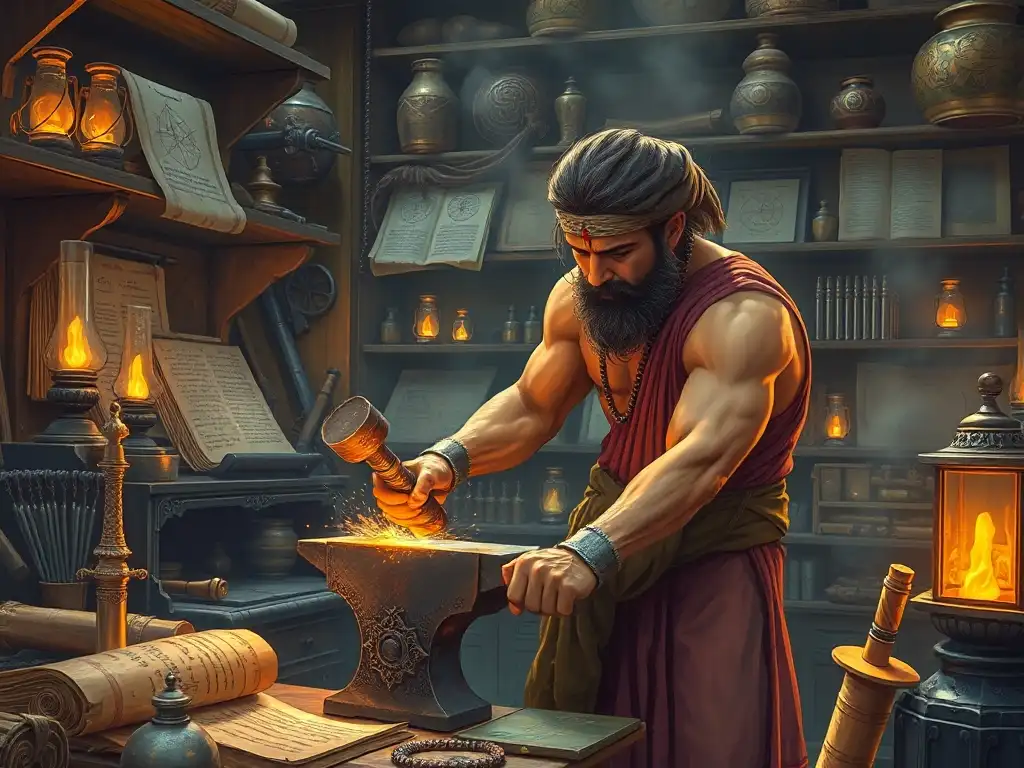
Ancient Indian metallurgy showcases remarkable advancements that were rooted in both practical applications and mathematical principles. The case studies of various artifacts and structures reveal the sophisticated techniques employed by ancient Indian metallurgists. These innovations were not only pivotal in their time but also laid the groundwork for future developments in metallurgy around the world.
One of the most significant aspects of ancient Indian metallurgy is the interplay between mathematics and the various metallurgical processes. Mathematicians of the era understood the importance of measurement, proportion, and the properties of metals, which allowed them to refine techniques for smelting, alloying, and shaping metals. This section highlights notable examples that exemplify the intersection of these fields.
The Iron Pillar of Delhi: An Engineering Marvel
The Iron Pillar of Delhi, standing at approximately 7 meters tall and weighing over 6 tons, is a testament to the advanced metallurgical skills of ancient India. Dating back to the 4th century CE, this pillar is composed primarily of wrought iron and is renowned for its resistance to rust, which has puzzled scientists for centuries.
The engineering of the Iron Pillar showcases remarkable mathematical precision. Its construction involved the use of advanced techniques for creating high-purity iron through a process known as bloomery smelting. This process required an understanding of iron's melting point and the optimal temperatures for smelting, highlighting the significant role of temperature measurement and control — a mathematical application in metallurgy.
Additionally, the pillar's alignment with the magnetic north suggests that ancient Indian metallurgists employed mathematical principles to ensure its verticality and stability. The fact that this pillar has survived for over 1,600 years without major corrosion speaks volumes about the sophisticated alloying techniques and surface treatments that were employed, possibly involving calculations to create a protective patina.
Bronze Age Metallurgy: Techniques and Mathematical Applications
The Bronze Age in ancient India, roughly between 3300 BCE and 1300 BCE, saw significant developments in metallurgy, particularly in the creation of bronze, an alloy of copper and tin. This era is characterized by the use of advanced casting techniques and the mathematical principles that governed them.
Mathematical applications were essential in determining the precise ratios of copper and tin to produce bronze of varying hardness and properties. Artisans utilized formulas to create alloys that met specific functional requirements for tools, weapons, and ornaments. The use of molds, which required precise measurements and designs, further exemplifies the integration of mathematical concepts in metallurgy.
Moreover, ancient Indian texts, such as the "Arthashastra," indicate a systematic approach to metallurgy, suggesting the use of geometrical calculations to optimize the shapes of tools and weapons. The understanding of volume and surface area was crucial in designing effective molds for casting, demonstrating the deep-rooted relationship between mathematics and metallurgy during the Bronze Age.
Comparison of Ancient Indian Metallurgy with Other Civilizations
The development of metallurgy in ancient India can be viewed through the lens of comparisons with other contemporary civilizations, such as Mesopotamia and China. These comparisons reveal distinct approaches to metallurgical practices and the mathematical principles that underpinned them.
Metallurgical Practices in Ancient India vs. Mesopotamia
Metallurgy in ancient India and Mesopotamia both played significant roles in the advancement of technology, but their practices differed in techniques and material applications. While Mesopotamia is known for its early use of bronze and its development of bronze casting techniques, ancient India made notable advancements in the production of iron and the creation of high-quality steel.
In Mesopotamia, metallurgy was often limited to the production of specific items like tools and weapons, with less focus on the purity of metals. In contrast, ancient Indian metallurgists emphasized the production of high-purity metals, such as the iron used in the Iron Pillar of Delhi. This focus on quality often involved mathematical calculations to ensure proper alloy compositions and the optimal conditions for smelting.
Furthermore, the application of mathematics in measurements and ratios was more pronounced in ancient Indian practices, which allowed for more sophisticated metallurgical processes. The detailed understanding of material properties and the methods for refining metals in India set it apart from Mesopotamian practices, highlighting a rich tradition of metallurgical innovation.
Mathematical Approaches in Indian Metallurgy vs. Chinese Metallurgy
Ancient Indian and Chinese metallurgies developed independently, yet both civilizations made significant contributions to the field. In China, metallurgy advanced through the use of high-temperature furnaces and advanced casting techniques for bronze and iron. Chinese metallurgists utilized mathematical principles in the design of their furnaces and in the alloying processes.
However, ancient Indian metallurgists distinguished themselves through their focus on the properties of metals and the integration of mathematics into their production techniques. For instance, Indian texts provided detailed instructions on the proportions of metals required for various applications, showcasing a systematic approach to metallurgy.
While both cultures utilized mathematical principles in their metallurgical practices, the Indian approach often included more rigorous experimentation and documentation of results. This emphasis on empirical knowledge led to innovations such as the production of wootz steel, which was highly prized for its strength and durability, and required precise control over temperature and alloy composition.
While both ancient Indian and Chinese metallurgies made significant strides, the distinct mathematical applications and innovative practices in ancient India highlight a unique approach that contributed to its rich metallurgical heritage.
Conclusion: Legacy of Ancient Indian Mathematics and Metallurgy
The interplay between mathematics and metallurgy in ancient India established a robust foundation for future advancements in both fields. The innovations from this era did not merely serve immediate practical purposes; they laid the groundwork for subsequent developments in metallurgy and mathematical theory. Ancient Indian mathematicians, such as Aryabhata and Brahmagupta, made significant strides in number theory and algebra, which were crucial for refining metallurgical processes. The precise measurements and calculations necessary for metallurgy were advanced by these mathematical principles, enabling artisans to create superior alloys and implement more effective smelting techniques.
The legacy of ancient Indian mathematics and metallurgy continues to resonate today. Modern metallurgists and mathematicians recognize the historical significance of these contributions, as they not only enhanced technological capabilities but also influenced cultural and scientific developments across the globe. The understanding of geometry and algebra that flourished in ancient India remains integral to contemporary practices in various engineering fields, demonstrating the timeless nature of these innovations.
Lasting Impact on Modern Metallurgy and Mathematics
The impact of ancient Indian mathematics and metallurgy extends into modern practices in several profound ways:
- Advanced Alloys: The knowledge of alloy compositions from ancient texts has informed modern metallurgical practices, particularly in creating alloys with specific properties for various applications, including aerospace and automotive industries.
- Mathematical Techniques: Techniques developed during ancient times, such as methods for calculating volumes and areas, continue to be utilized in engineering and architecture today.
- Cultural Heritage: The historical context of these advancements contributes to a rich cultural heritage, enhancing our understanding of human achievement in science and technology.
These elements highlight the interplay between mathematics and metallurgy as a pivotal chapter in the history of science, influencing both theoretical frameworks and practical applications in the modern world.
Future Research Directions in Ancient Technologies
The exploration of ancient Indian mathematics and metallurgy presents numerous avenues for future research:
- Interdisciplinary Studies: Scholars could benefit from collaborative research that integrates archaeology, history, and materials science to better understand the technological advancements of ancient civilizations.
- Comparative Analyses: Investigating similarities and differences between ancient Indian practices and those of other civilizations, such as the Chinese and Mesopotamian, could yield insights into the global exchange of knowledge and technology.
- Preservation of Artifacts: Continued efforts to preserve and analyze ancient artifacts using modern scientific techniques may reveal further details about the metallurgical processes and mathematical concepts utilized by ancient Indian craftsmen.
These research directions hold the potential to deepen our understanding of ancient technologies and their relevance to contemporary society.
References for Further Reading on Ancient Indian Mathematics and Metallurgy
Key Texts and Resources
- "The History of Mathematics: A Brief Course" by Roger L. Cooke: - This comprehensive text provides an overview of mathematical developments, including those from ancient India.
- "Indian Mathematics: An Introduction" by Kim Plofker: - A thorough exploration of the mathematical concepts developed in ancient India and their implications.
- "Metallurgy in Ancient India" by R. W. C. De Silva - Focuses on the metallurgical techniques and innovations of ancient Indian civilizations.
Academic Journals and Articles on Metallurgy in Ancient India
- Journal of Historical Metallurgy - Features articles on ancient metallurgical practices and their historical significance.
- Indian Journal of History of Science - Publishes research on various aspects of science in India, including mathematics and metallurgy.
- "The Influence of Indian Mathematical Innovations on Western Mathematics" - An article examining the transfer of mathematical knowledge from ancient India to the West, highlighting its significance in the development of metallurgy.
By delving into these resources, readers can further explore the rich history of ancient Indian mathematics and metallurgy and appreciate their lasting contributions to modern science and technology.
- Introduction to Ancient Indian Mathematics and Metallurgy
- Historical Context of Mathematics in Ancient India
- The Role of Mathematics in Metallurgical Processes
- Mathematical Techniques Used in Metal Extraction
- Geometry in Metalworking: Tools and Techniques
- Innovations in Metallurgy Influenced by Mathematical Concepts
- Advanced Alloys and Their Mathematical Formulations
- Architectural Applications: Math in Ancient Indian Structures
- Case Studies of Ancient Indian Metallurgy
- Comparison of Ancient Indian Metallurgy with Other Civilizations
- Conclusion: Legacy of Ancient Indian Mathematics and Metallurgy
- References for Further Reading on Ancient Indian Mathematics and Metallurgy
- What are the key contributions of ancient Indian mathematics?
- How did metallurgy evolve in ancient India?
- What is the significance of the Indus Valley civilization in these fields?
- How did ancient Indian innovations influence other cultures?
- What role did the Gupta Empire play in the advancement of these fields?
Frequently Asked Questions
What are the key contributions of ancient Indian mathematics?
Ancient Indian mathematics is known for developing concepts such as zero, the decimal system, and advanced geometry. These innovations laid the groundwork for modern mathematics.
How did metallurgy evolve in ancient India?
Metallurgy in ancient India evolved through the refinement of techniques for producing high-quality metals like iron and steel. Notable achievements include the creation of Wootz steel, known for its durability.
What is the significance of the Indus Valley civilization in these fields?
The Indus Valley civilization showcased advanced urban planning and craftsmanship, including early mathematical concepts evident in their architectural layouts and tools, as well as metalworking techniques that were revolutionary for their time.
How did ancient Indian innovations influence other cultures?
Ancient Indian innovations in mathematics and metallurgy significantly influenced various cultures through trade routes, spreading knowledge and techniques that were integrated into other civilizations, particularly in Arab and European societies.
What role did the Gupta Empire play in the advancement of these fields?
The Gupta Empire is often referred to as the Golden Age of India, where mathematics flourished, leading to significant developments in algebra and geometry, alongside advancements in metallurgical practices that produced remarkable artifacts.
Final Reflection: The Enduring Legacy of Ancient Indian Mathematics and Metallurgy
The intricate relationship between mathematics and metallurgy in ancient India serves as a testament to the brilliance of human ingenuity. Today, as we navigate a world increasingly reliant on technology and innovation, the foundational principles established by ancient Indian scholars continue to resonate. The precision of mathematical calculations and the advanced techniques in metallurgy not only laid the groundwork for future advancements but also remind us of the timeless nature of knowledge. This legacy is not just historical; it is a beacon guiding our contemporary pursuits in science and engineering.
The influence of ancient Indian mathematics and metallurgy extends far beyond their time, shaping the cultural and scientific landscape of the world. From the intricate designs of metal artifacts to the mathematical concepts that underpin modern engineering, these innovations have left an indelible mark on various fields. As we reflect on this rich heritage, we are reminded of the words of the great mathematician Aryabhata: Mathematics is the language of the universe.
This perspective encourages us to appreciate the interconnectedness of disciplines and the importance of cross-pollination of ideas in fostering progress.
As we stand at the crossroads of tradition and modernity, I invite you to reflect on the lessons drawn from the ancient Indian approach to mathematics and metallurgy. Consider how these principles can inspire your own journey, whether in academic pursuits, creative endeavors, or everyday problem-solving. Let the ingenuity of our ancestors motivate you to explore, innovate, and contribute to the ever-evolving tapestry of knowledge. Embrace the challenge of applying these timeless lessons in your life, and in doing so, honor the legacy of those who came before us.
Unleash the Secrets of Ancient Innovation!
Thank you for joining us on this fascinating journey through the intersection of mathematics and metallurgy in ancient Indian innovations. We hope you’ve gained valuable insights into how these disciplines shaped advancements in technology and culture. Now, it's time to take what you've learned and turn inspiration into action!
Here’s how you can dive deeper:
- Explore Local Exhibits: Visit a museum or exhibition that highlights ancient engineering or metallurgy. Observe artifacts that illustrate these innovations firsthand.
- Share Your Knowledge: Discuss the intriguing connections you’ve discovered with friends and family. Utilize social media to spark conversations about the remarkable achievements of ancient Indian technology!
- Join a Community: Seek out online forums or local groups that focus on ancient history. Connect with others who share your passion and exchange ideas about further discoveries.
What aspect of ancient Indian metallurgy and mathematics excites you the most? How do you believe these innovations continue to influence modern technology?