
The Upanishads and the Nature of Reality: Philosophical Explorations


Welcome to Ancient India History, where we embark on a captivating journey through the rich tapestry of ancient Indian civilizations. Here, you’ll discover the profound insights of Upanishads philosophy and how it shaped the very fabric of thought in ancient India. As we delve into "The Upanishads and the Nature of Reality: Philosophical Explorations," prepare to uncover the mysteries that lie at the heart of these ancient texts.
What does reality truly mean in the context of ancient wisdom? Join us as we explore the philosophical depths and cultural significance of the Upanishads, and ignite your curiosity about the remarkable contributions of ancient Indian religions. Your adventure into the past begins now!
The Upanishads stand as a monumental testament to the philosophical inquiries of ancient Indian civilizations, delving deep into the fundamental questions of existence, consciousness, and the nature of reality. Composed between 800 and 400 BCE, these sacred texts form the concluding part of the Vedas and are instrumental in shaping the spiritual and philosophical landscape of Hinduism. With a profound exploration of concepts such as Brahman (the ultimate reality) and Atman (the individual self), the Upanishads invite readers to engage in a reflective dialogue about the essence of life and the universe.
In this article, we will embark on a journey to unravel the intricate philosophies delineated in the Upanishads and their enduring impact on ancient Indian thought. We will examine their contributions to metaphysical discussions, the relationship between the self and the cosmos, and how these ideas resonate within the broader context of ancient Indian religions. By understanding the Upanishads' philosophy, we can gain insight into the spiritual heritage and intellectual traditions that have influenced generations of thinkers and seekers.
The Historical Context of the Upanishads
The Upanishads emerged in a period marked by significant social and religious transformations in ancient India. As the Vedic society evolved, the focus shifted from ritualistic practices to philosophical contemplation. This transition heralded a new era of inquiry, where sages and scholars sought to understand the underlying principles governing existence.
Core Philosophical Concepts
The Upanishads introduce several key philosophical concepts that are crucial to understanding their teachings. These include:
- Brahman: The ultimate, unchanging reality that transcends the physical universe.
- Atman: The individual self or soul, which is ultimately identical to Brahman.
- Maya: The illusion of the material world, which obscures the true nature of reality.
- Karma: The principle of cause and effect that governs moral actions and their consequences.
The Influence of Upanishadic Philosophy
The philosophical explorations presented in the Upanishads have profoundly influenced not only Hinduism but also other Indian religions such as Buddhism and Jainism. The emphasis on introspection, meditation, and the search for truth continues to resonate in spiritual practices today.
Conclusion
Through a meticulous examination of the Upanishads, we uncover a rich tapestry of philosophical thought that speaks to the essence of human existence and our quest for understanding. As we delve into this exploration, we invite you to reflect on the timeless wisdom contained within these ancient texts and consider their relevance in our contemporary lives.
- The Historical Context of the Upanishads
- Core Philosophical Concepts
- The Influence of Upanishadic Philosophy
- Conclusion
Introduction to Upanishads Philosophy and Ancient India
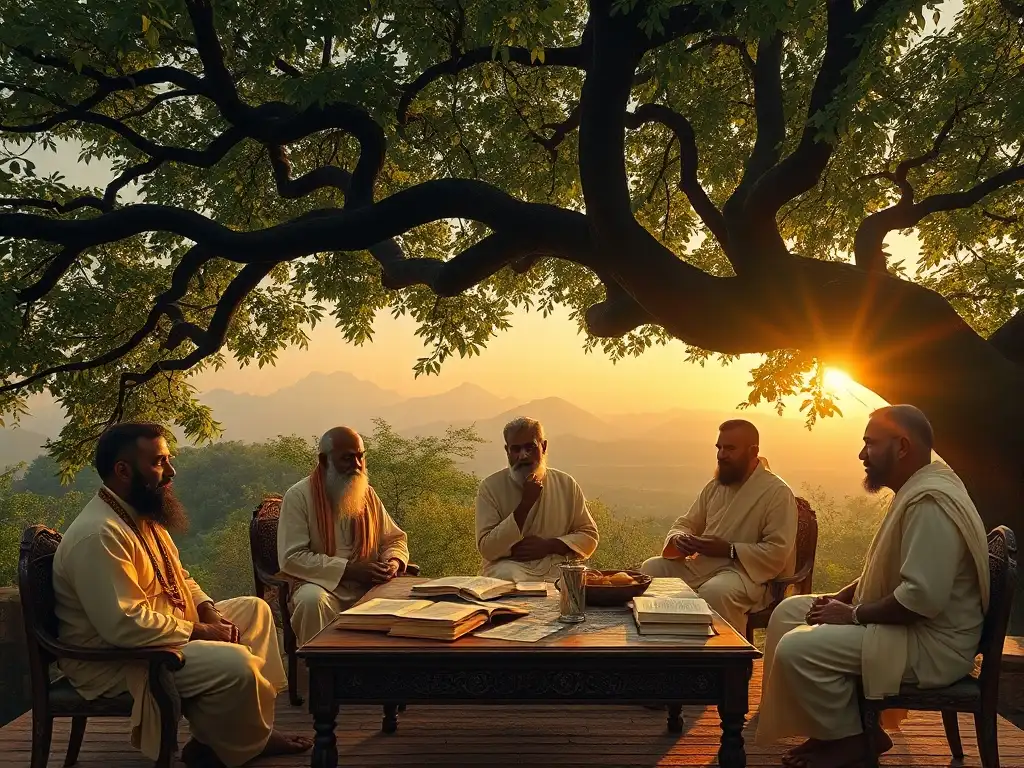
The Upanishads form a crucial part of ancient Indian philosophy, serving as a bridge between the Vedic texts and the later developments in Hindu thought. This collection of philosophical writings, composed around 800-400 BCE, delves into intricate concepts regarding the nature of reality, the self (Atman), and the ultimate reality (Brahman). The Upanishads philosophy encapsulates a transformative worldview that has influenced not only religious practices but also metaphysical thought in ancient India and beyond.
Overview of the Upanishads
The Upanishads are a genre of texts that explore metaphysical questions and spiritual ideas, emerging as a culmination of Vedic thought. They are often regarded as the philosophical backbone of Hinduism, containing dialogues, meditative practices, and teachings that guide individuals in their pursuit of knowledge and self-realization.
Key features of the Upanishads include:
- Non-dualism: The central theme revolves around the understanding that Atman and Brahman are ultimately one, promoting a non-dualistic view of existence.
- Meditation and Self-Realization: The texts advocate for introspection and meditative practices as means to comprehend the true nature of the self and the universe.
- Ethical Living: The Upanishads emphasize living a life in accordance with Dharma, which involves righteousness and moral duties.
Some notable Upanishads include the Chandogya Upanishad, the Brihadaranyaka Upanishad, and the Isha Upanishad, each contributing unique insights into philosophical discourse.
Significance of Upanishads in Ancient Indian Philosophy
The Upanishads hold a paramount position in ancient Indian philosophy for several reasons:
- Philosophical Foundations: They lay the groundwork for various schools of thought in Hindu philosophy, including Vedanta, which interprets the ultimate reality and the nature of consciousness.
- Influence on Other Traditions: The philosophical ideas within the Upanishads influenced not only Hinduism but also Buddhism and Jainism, shaping the spiritual landscape of ancient India.
- Dialogue with Reality: The Upanishads engage in profound dialogues about the nature of existence, the cosmos, and the human experience, prompting critical thinking and introspection among scholars and practitioners.
The Upanishads redefine the relationship between the individual and the cosmos, encouraging seekers to explore their inner realities and understand their place within the universe.
The Relationship Between Upanishads and Hinduism
The Upanishads are integral to Hinduism, serving as a key source of its philosophical and spiritual teachings. Their relationship with Hinduism can be understood through the following aspects:
- Scriptural Authority: The Upanishads are considered part of the "Shruti" literature, which refers to texts that are heard or revealed. This status gives them a foundational authority in the spiritual and philosophical discourse of Hinduism.
- Rituals and Practices: While the Vedas primarily focus on rituals and hymns, the Upanishads shift the emphasis towards contemplation and philosophical inquiry, influencing the spiritual practices within Hinduism.
- The Quest for Moksha: The Upanishads articulate the concept of Moksha (liberation) and provide insights into the paths one may take to attain it, thus offering a framework for the spiritual aspirations of practitioners.
The Upanishads philosophy and ancient India are intertwined, with the Upanishads serving as a cornerstone of philosophical thought that has shaped the spiritual and cultural identity of Hinduism. By exploring these ancient texts, one can gain a deeper understanding of the metaphysical questions that continue to resonate in contemporary discussions on reality and existence.
Historical Context of the Upanishads
The Timeframe of the Upanishads in Ancient India
The Upanishads, a cornerstone of Indian philosophy, emerged during a transformative period in ancient Indian history, generally dated between 800 BCE and 200 BCE. This era, often referred to as the Axial Age, marked significant shifts in spiritual and philosophical thought across various cultures worldwide. The Upanishads are considered the concluding part of the Vedic texts, reflecting a transition from ritualistic practices to more introspective and philosophical inquiries.
The earliest Upanishads, like the Brahmananda Upanishad and the Chandogya Upanishad, can be traced back to around 800–600 BCE. Over the centuries, subsequent texts continued to build on these foundational ideas. Scholars often categorize the Upanishads into two groups: the primary Upanishads, which include the oldest texts, and the later Upanishads, composed as the philosophical discourse evolved.
This period was characterized by the emergence of various philosophical schools and the rise of heterodox movements that questioned established Vedic traditions. The Upanishads reflect this intellectual ferment, presenting a synthesis of thought that challenged materialism and embraced metaphysical exploration.
Influences on Upanishadic Thought from Earlier Texts
The philosophical landscape of the Upanishads did not arise in isolation; it was significantly shaped by earlier Vedic texts and cultural practices. The Vedas, consisting of the Rigveda, Yajurveda, Samaveda, and Atharvaveda, laid the groundwork for the spiritual concepts that would later be explored in the Upanishads.
- Vedic Rituals and Cosmology: Early Vedic literature emphasized rituals and sacrifices (yajnas), aimed at appeasing deities. However, the Upanishads began to reinterpret these rituals, suggesting that their true essence lay in understanding the Brahman (universal consciousness) rather than mere external rites.
- Philosophical Concepts: Key metaphysical concepts such as Atman (the individual self) and Brahman were further developed in the Upanishads. These ideas can be traced back to earlier Vedic texts, but the Upanishads provided a deeper philosophical interpretation, positing that the individual self is ultimately one with the universal self.
- Dialogue with Other Traditions: The Upanishadic philosophers were also influenced by emerging philosophical schools, including Jainism and Buddhism, which challenged the orthodoxy of Vedic thought. The interactions between these traditions enriched the philosophical discourse, fostering a more nuanced understanding of reality and existence.
The Cultural and Religious Landscape of Ancient India
The Upanishads emerged in a vibrant cultural and religious milieu characterized by diversity and complexity. Ancient India was home to numerous spiritual traditions, and the Upanishadic philosophy can be seen as a response to the prevailing ideas of the time.
- Social Structure: The caste system, which organized society into hierarchical groups, influenced the accessibility of philosophical teachings. While the Upanishads were initially the domain of the Brahmins, over time, their ideas transcended caste boundaries, appealing to a broader audience seeking spiritual enlightenment.
- Religious Practices: The Upanishads challenged the ritualistic focus of the Vedic religion, advocating for personal experience and introspection. This shift paved the way for new spiritual practices, such as meditation and contemplation, which emphasized direct experience of the divine.
- Intellectual Exchange: The period saw great intellectual exchange, with various schools of thought emerging, including Sankhya, Yoga, and Vedanta. The Upanishads influenced these schools, and their ideas became foundational to later developments in Hindu philosophy.
The Upanishads represent a significant evolution in ancient Indian thought, reflecting a complex interplay of historical, cultural, and philosophical influences. Their exploration of the nature of reality continues to resonate, offering profound insights into human existence and consciousness.
Core Philosophical Concepts in the Upanishads
The Upanishads, foundational texts of Indian philosophy, delve into profound metaphysical questions concerning the nature of existence, reality, and the self. These ancient scriptures shift the focus from ritualistic practices to introspective and philosophical inquiries, thereby laying the groundwork for various schools of thought in ancient Indian philosophy. Understanding the core philosophical concepts within the Upanishads is essential for grasping their enduring influence on Hinduism and the broader spectrum of ancient Indian intellectual traditions.
The Concept of Brahman in Upanishads Philosophy
Brahman is the ultimate, unchanging reality in the Upanishads, often described as the source of all existence. It transcends the physical universe and is characterized by infinite consciousness, bliss, and existence. The Upanishads articulate Brahman through various descriptions, emphasizing its formless and all-pervasive nature.
- Key Attributes of Brahman:
- Nirguna Brahman: This aspect of Brahman is without attributes, representing the pure essence of reality beyond human comprehension.
- Saguna Brahman: Here, Brahman is understood with attributes, allowing devotees to relate to the divine through personal forms, such as deities.
The profound realization that Brahman is the essence of all things leads to the famous Upanishadic phrase "Tat Tvam Asi" (That Thou Art), affirming the interconnectedness of the individual self (Atman) and the universal essence (Brahman). This realization forms a cornerstone of Upanishadic philosophy, encouraging seekers to explore the depths of their own consciousness to discover their unity with the cosmos.
Atman and Its Relation to Reality
Atman, often translated as the "self" or "soul," is a pivotal concept in Upanishadic philosophy. It represents the true essence of an individual, distinct from the physical body and mind. The exploration of Atman leads to profound insights about the nature of existence and reality.
- Key Insights into Atman:
- Eternal and Unchanging: Unlike the physical body, which is subject to birth and death, Atman is considered eternal and immutable.
- Unity with Brahman: The Upanishads assert that understanding Atman is essential for realizing its identity with Brahman. This realization of unity is the ultimate goal of spiritual practice.
The relationship between Atman and Brahman is succinctly captured in the phrase "Aham Brahmasmi" (I am Brahman), which encapsulates the essence of self-realization in the Upanishads. This philosophical stance challenges the perception of individuality, inviting seekers to transcend the ego and recognize their inherent connection to the universal reality.
The Nature of Maya: Illusion and Reality
Maya, often translated as "illusion," is a crucial concept in Upanishadic philosophy that delineates the distinction between the perceived world and the ultimate reality. The Upanishads explore how the sensory world, though seemingly real, is ultimately transient and deceptive.
- Characteristics of Maya:
- Veil of Perception: Maya acts as a veil, obscuring the true nature of reality and leading individuals to identify with the material world rather than the spiritual essence.
- Duality and Multiplicity: The illusion of Maya creates a dualistic perception of reality, where distinctions between self and other, good and evil, and pleasure and pain emerge.
The Upanishads encourage the seeker to discern the nature of Maya, recognizing it as a transient phenomenon that distracts from the pursuit of spiritual truth. By transcending Maya through meditation and self-inquiry, individuals can awaken to the underlying unity of existence, ultimately realizing that the apparent multiplicity is an expression of the singular Brahman.
The exploration of these core philosophical concepts in the Upanishads—Brahman, Atman, and Maya—offers profound insights into the nature of reality and existence, forming the foundation of Upanishads philosophy and its enduring significance in ancient Indian thought.
The Upanishads and Metaphysical Questions
The Upanishads, a collection of ancient Indian texts that form the philosophical backbone of Hinduism, delve deeply into metaphysical inquiries that have shaped the spiritual landscape of India. These texts, composed between 800 and 200 BCE, explore the fundamental nature of reality, the self, and the universe. Through profound reflections and dialogues, they provide insights that continue to resonate in contemporary philosophical discourse.
In the context of Upanishads philosophy and ancient India, these texts not only articulate complex ideas about existence but also serve as a bridge linking the material and spiritual realms. Their teachings challenge readers to contemplate the essence of being and the interconnections that bind all forms of life.
Exploring the Nature of Existence
The Upanishads raise pivotal questions surrounding the nature of existence. They introduce the concept of Brahman, the ultimate reality that is omnipresent and transcends all forms. A key assertion in the Upanishads is that Brahman is both immanent and transcendent, meaning that it exists within the universe while also being beyond it.
An essential passage from the Chandogya Upanishad states:
In the beginning, there was the One without a second. It is from this One that all existence arises.
This perspective emphasizes that everything in the cosmos is interconnected and emanates from a singular source. This notion is further explored through the idea of Maya, which refers to the illusory nature of the material world, suggesting that our perceptions may deceive us about the true nature of reality.
To illustrate the Upanishadic exploration of existence, consider the following table that outlines key concepts:
| Concept | Definition |
|---|---|
| Brahman | The ultimate reality and source of all existence. |
| Atman | The individual self or soul that is ultimately identical to Brahman. |
| Maya | The illusion that obscures the true nature of reality. |
| Moksha | Liberation or realization of oneness with Brahman. |
The Question of Self and Identity in Upanishadic Thought
A central theme in Upanishadic philosophy is the exploration of the self, or Atman, and its relationship to the universal essence, Brahman. The famous maxim "Tat Tvam Asi" (That Thou Art) encapsulates this relationship, asserting that the individual soul is not separate from the divine.
The Mandukya Upanishad articulates a profound insight into the nature of the self, delineating the four states of consciousness: waking, dreaming, deep sleep, and the transcendental state of Turiya. Each state reflects different aspects of existence, with Turiya representing the ultimate realization of unity with Brahman.
This exploration leads to critical questions regarding identity:
- What constitutes the essence of the self?
- How do the transient experiences of life relate to the eternal truth of Atman?
The Upanishads encourage deep introspection and meditative practices to uncover the layers of identity that mask the true self. This philosophical inquiry is foundational for those seeking understanding in the realms of spirituality and self-realization.
Understanding the Relationship Between the Individual and the Cosmos
The Upanishads present a holistic vision of existence wherein the individual self (Atman) and the cosmos (Brahman) are inherently connected. This relationship highlights the idea that understanding oneself is tantamount to understanding the universe.
In the Isavasya Upanishad, it is stated:
All this—whatever exists in this changing universe—should be covered by the Lord. Protect the self by renunciation. Lust not after any man’s wealth.
This verse underscores the interconnectedness of all beings and the importance of living in harmony with the cosmos. The Upanishads advocate for recognizing one’s place within the greater whole, encouraging ethical living and selfless actions that contribute to universal well-being.
Moreover, the Upanishads suggest that realization of this connection can lead to Moksha, or liberation from the cycle of birth and rebirth (samsara). This understanding is vital for a comprehensive grasp of Upanishads philosophy and ancient India, as it invites individuals to transcend their limited identities and embrace a more expansive view of existence.
The Upanishads offer profound philosophical explorations that question the very fabric of reality, self, and cosmic unity. These teachings remain pivotal in understanding the rich tapestry of ancient Indian thought and its enduring relevance in contemporary philosophy.
Upanishads Philosophy and Its Impact on Later Indian Thought
Influence on Hindu Philosophy and Schools of Thought
The Upanishads, regarded as the culmination of Vedic thought, have profoundly influenced Hindu philosophy and the emergence of various schools of thought. They introduce key concepts such as Brahman (the ultimate reality) and Atman (the individual soul), forming the foundation for later philosophical discourse.
- Advaita Vedanta:
- Founded by Adi Shankaracharya, this school emphasizes the non-duality of Brahman and Atman, asserting that they are fundamentally the same. The Upanishads serve as primary texts for this philosophy, particularly the Chandogya Upanishad and Mandukya Upanishad, which elucidate the concept of tat tvam asi (that thou art).
- Dvaita Vedanta:
- In contrast, Madhvacharya’s Dvaita Vedanta posits a dualistic relationship between the individual soul and God. While it acknowledges the Upanishads, it interprets them differently, focusing on the distinctness between Atman and Brahman.
- Sankhya and Yoga:
- These systems, articulated by Kapila and Patanjali respectively, adopt concepts from the Upanishads to explain the nature of reality and the path to liberation (moksha). The idea of pratyahara (withdrawal of the senses) in Yoga echoes the Upanishadic emphasis on inner realization.
The influence of the Upanishads is evident in the philosophical debates that arose in medieval India, contributing to a rich tapestry of thought that sought to reconcile ancient wisdom with contemporary questions about existence, knowledge, and the divine.
The Role of Upanishads in Shaping Modern Indian Philosophy
The Upanishads have not only shaped ancient Indian thought but have also played a crucial role in the development of modern Indian philosophy. Their resurgence in the 19th and 20th centuries catalyzed a renewed interest in indigenous philosophical traditions.
- Ramakrishna and Vivekananda:
- These figures revitalized the Upanishadic discourse, framing it as a global philosophy of spirituality and universalism. They emphasized the relevance of Upanishadic teachings for contemporary issues, such as social reform and interfaith dialogue.
- Mahatma Gandhi:
- Gandhi drew upon the Upanishads to articulate his philosophy of non-violence (ahimsa) and truth (satya). He viewed these texts as a source of ethical guidance, merging spiritual principles with practical activism.
- Contemporary Thinkers:
- Modern philosophers like Jiddu Krishnamurti and Aurobindo have explored Upanishadic ideas, integrating them into their own frameworks. Their works continue to inspire a dialogue between ancient wisdom and modern existential dilemmas.
The Upanishads have thus provided a philosophical foundation that resonates with contemporary concerns, fostering a dialogue between tradition and modernity.
Comparisons with Other Philosophical Traditions
When examining the philosophy of the Upanishads, it is beneficial to compare it with other philosophical traditions to understand its unique contributions and similarities.
- Buddhism:
- While both the Upanishads and Buddhism address the nature of reality and suffering, their approaches differ significantly. The Upanishadic philosophy holds an eternal soul (Atman), whereas Buddhism denies the existence of a permanent self (anatta). This fundamental difference shapes their respective paths toward enlightenment.
- Greek Philosophy:
- The Upanishads share some thematic parallels with ancient Greek philosophy, especially in their inquiries into the nature of existence. Philosophers like Heraclitus and Plato grappled with concepts of change and the ideal forms. The Upanishadic idea of Brahman as the underlying reality resonates with Plato’s theory of forms.
- Taoism:
- Similarities can also be drawn with Taoism, particularly in the emphasis on the interconnectedness of all things. Both traditions advocate for a return to a natural state of being and understanding the ultimate reality beyond dualistic thinking.
The Upanishads philosophy stands as a pivotal element in the landscape of ancient Indian thought, influencing not just Hindu philosophy but also engaging in meaningful discourse with other philosophical traditions across the world.
The Relevance of Upanishadic Teachings Today
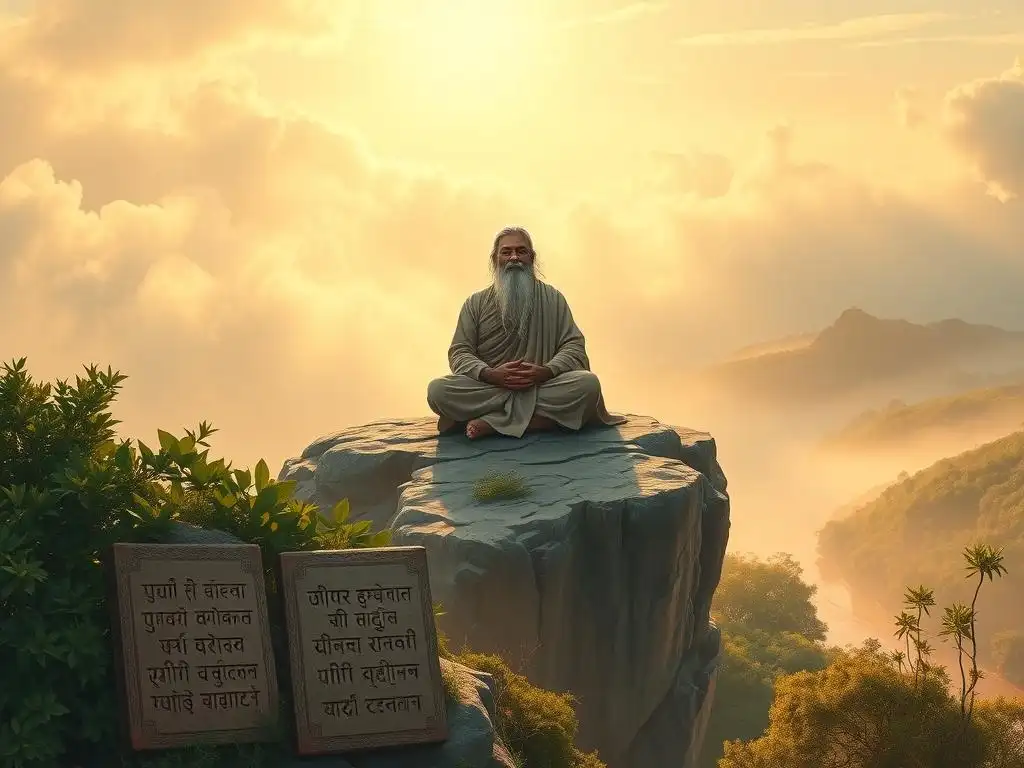
The Upanishads, ancient texts that form the philosophical foundation of Hinduism, continue to resonate deeply within contemporary society. Their teachings, which delve into the nature of reality, self, and the universe, offer profound insights that remain relevant across various dimensions of modern life. By exploring the essence of existence and the interconnectedness of all beings, the Upanishads provide a philosophical framework that can guide individuals in their quest for meaning and understanding.
Practical Applications of Upanishadic Philosophy
The practical applications of Upanishadic philosophy are manifold, influencing various aspects of personal and communal life. Here are some key areas where these teachings have found relevance:
- Meditation and Mindfulness: The Upanishads emphasize the importance of meditation as a means to attain self-realization and inner peace. Practices such as Dhyana (meditative contemplation) help in cultivating mindfulness, which is increasingly recognized in contemporary psychology as beneficial for mental health.
- Ethical Living: The concept of Dharma, or righteous living, as articulated in the Upanishads, encourages individuals to act in harmony with universal principles. This ethical framework can guide personal decision-making and promote social responsibility.
- Interconnectedness: The Upanishadic assertion that "Tat Tvam Asi" (You are that) highlights the unity of all existence. This understanding fosters compassion and empathy, encouraging individuals to act in ways that benefit not just themselves but the larger community and environment.
How Upanishads Inform Contemporary Spiritual Practices
In today's spiritual landscape, the teachings of the Upanishads inform a variety of practices that transcend traditional boundaries. Several contemporary movements draw directly from Upanishadic wisdom:
- Yoga and Spirituality: Many modern yoga practices incorporate principles derived from the Upanishads, focusing not just on physical postures but also on the spiritual dimensions of practice. This holistic approach is designed to foster a deeper connection to oneself and the universe.
- Non-Dualism: The philosophy of Advaita Vedanta, rooted in the Upanishads, emphasizes non-duality, which has gained traction among spiritual seekers worldwide. This perspective encourages individuals to look beyond dualistic notions of self and other, fostering a greater sense of oneness.
- Personal Growth Workshops: Many contemporary personal growth and transformation workshops integrate Upanishadic teachings to help individuals explore their true nature. By emphasizing self-inquiry and reflection, these workshops align with the Upanishadic method of seeking knowledge through introspection.
The Universal Themes in Upanishads Philosophy
The Upanishads embody several universal themes that resonate across cultures and philosophical systems:
- The Nature of Reality: The exploration of what constitutes reality is a central theme in the Upanishads. The distinction between the empirical world ( Maya) and the ultimate reality ( Brahman) invites individuals to question their perceptions and beliefs about existence.
- Self-Realization: The quest for self-knowledge is pivotal in Upanishadic thought. The texts assert that understanding the true self ( Atman) leads to liberation ( Moksha). This pursuit of self-realization is echoed in various philosophical traditions worldwide, making it a universally relatable concept.
- Unity and Diversity: The Upanishads articulate a vision of unity within diversity, highlighting that while individual forms may differ, the essence of all beings is the same. This theme contributes to dialogues on global ethics and environmental sustainability, emphasizing interconnectedness.
The teachings of the Upanishads not only shape the spiritual landscape of ancient India but also continue to influence contemporary thought and practice, making their philosophy profoundly relevant across time and space.
Conclusion: The Enduring Legacy of Upanishads in Ancient Indian Philosophy
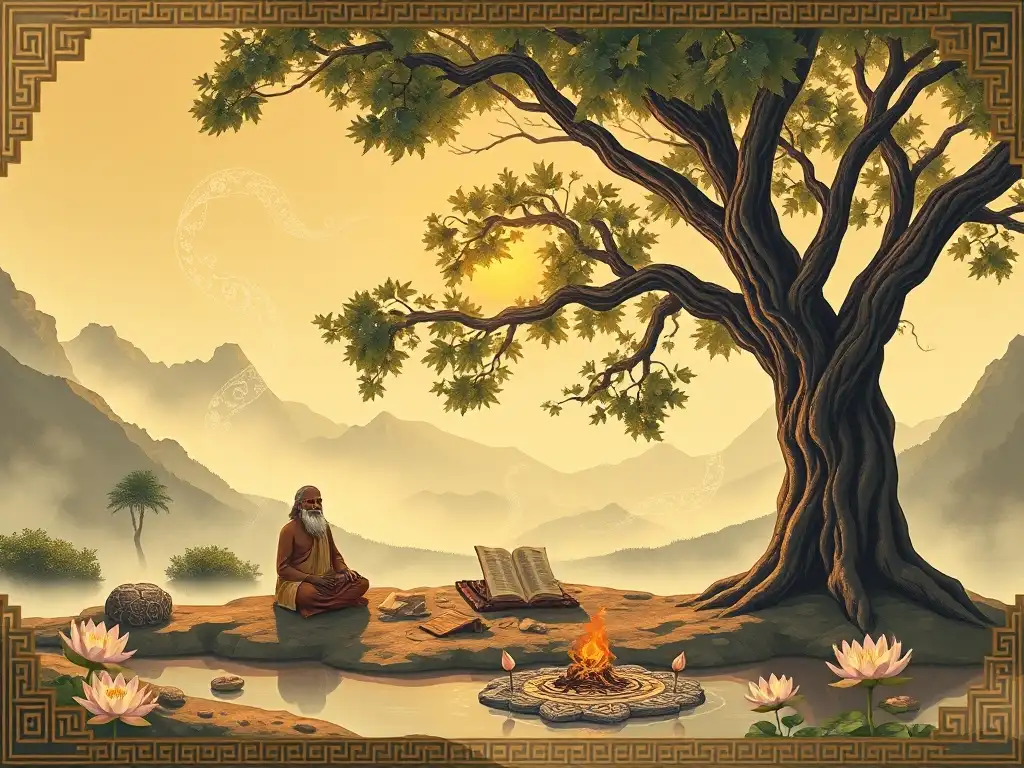
Summary of Key Insights from the Upanishads
The Upanishads, revered as the philosophical backbone of ancient Indian thought, present a profound exploration of the nature of reality, the self, and the universe. These texts, composed between 800 and 400 BCE, encapsulate a range of ideas that resonate deeply within the fabric of Hindu philosophy. Here are some key insights derived from the Upanishads:
- Brahman and Atman: One of the central tenets of Upanishadic philosophy is the relationship between Brahman (the ultimate reality) and Atman (the individual self). The famous phrase "Tat Tvam Asi" (That Thou Art) emphasizes the non-duality of these concepts, suggesting that realizing one's true self leads to understanding the all-encompassing Brahman.
- Meditation and Knowledge: The Upanishads advocate for meditation (dhyana) as a means to attain spiritual knowledge and enlightenment. Texts such as the Chandogya Upanishad illustrate how introspection and self-realization facilitate a deeper understanding of existence.
- Karma and Rebirth: Another crucial aspect highlighted in the Upanishads is the law of karma, which posits that one's actions in this life directly influence future incarnations. This interconnectedness underpins the ethical dimension of the philosophy, urging individuals to lead a life of righteousness (dharma).
- The Nature of Reality: The Upanishads challenge conventional perceptions of reality, positing that the material world is transient (maya) and urging seekers to look beyond physical existence to grasp the eternal truth. The Mandukya Upanishad, for instance, introduces the concept of the four states of consciousness, illustrating the layered nature of reality.
Through these insights, the Upanishads not only provide a philosophical framework but also serve as a spiritual guide for seekers of truth.
Final Thoughts on the Nature of Reality as Explored in Upanishads
The Upanishads have left an indelible mark on ancient Indian philosophy and continue to inspire contemporary thought. Their exploration of the nature of reality invites readers to question and reflect on profound existential themes. By engaging with these texts, one can appreciate the rich tapestry of ideas that shaped not only Hinduism but also the broader philosophical landscape of India.
The teachings of the Upanishads encourage a journey inward, leading to self-discovery and a deeper connection with the universe. As a result, they foster an understanding that transcends mere intellectual engagement, promoting a lived experience of the philosophies articulated within their verses.
Ultimately, the Upanishads stand as a testament to the enduring quest for knowledge and enlightenment, reinforcing the belief that the nature of reality is an ever-unfolding mystery, inviting exploration and contemplation. The synthesis of metaphysical inquiry and practical spirituality found within these texts continues to resonate, affirming their significance in the study of ancient Indian philosophy and their relevance in discussions of the Upanishads philosophy and ancient India today.
Further Reading and Resources on Upanishads and Ancient Indian Philosophy
Recommended Texts on Upanishads
The Upanishads are a cornerstone of Indian philosophical thought, offering profound insights into the nature of reality, the self, and the universe. For those interested in delving deeper into Upanishadic philosophy, here are some recommended texts:
- "The Upanishads" translated by Eknath Easwaran
- This translation is known for its accessibility and clarity, making it a great starting point for readers new to the subject. Easwaran provides helpful context and commentary, bridging ancient wisdom with contemporary understanding.
- "The Principal Upanishads" by S. Radhakrishnan
- A classic compilation that includes translations and interpretations of the most significant Upanishads. Radhakrishnan’s philosophical insights and historical context enrich the reader’s understanding of these ancient texts.
- "The Upanishads: A New Translation" by Patrick Olivelle
- This modern translation focuses on the critical and scholarly aspects of the Upanishads, providing readers with an authentic experience of the original texts while situating them within their historical context.
- "The Essence of the Upanishads: A Key to Indian Philosophy" by Swami Satchidananda
- This book distills the core teachings of the Upanishads, making complex ideas more accessible. It emphasizes the practical applications of Upanishadic philosophy in daily life.
- "The Upanishads" by Juan Mascaró
- A poetic translation that captures the lyrical quality of the original texts. Mascaró’s work is celebrated for its spiritual depth and literary merit, appealing to both scholars and general readers.
Online Resources for Deeper Exploration of Upanishadic Thought
The digital landscape offers a wealth of resources for those eager to explore Upanishadic philosophy further. Here are some notable online platforms that provide valuable insights and discussions:
- Stanford Encyclopedia of Philosophy
- This resource features comprehensive entries on the Upanishads, including detailed analyses of key philosophical concepts, historical context, and influential thinkers associated with Upanishadic thought.
- Internet Archive
- A treasure trove of digitized texts, including various translations and interpretations of the Upanishads. Users can access historical editions and contemporary writings for free.
- Academia.edu
- A platform where scholars share research papers on Indian philosophy. Here, you can find articles specifically discussing the Upanishads, their philosophical implications, and their impact on later Indian thought.
- YouTube Lectures and Discussions
- Numerous educational channels feature lectures by scholars and practitioners of Indian philosophy. These discussions often break down complex Upanishadic concepts and relate them to modern philosophical questions.
- Podcasts on Indian Philosophy
- Several podcasts delve into the teachings of the Upanishads, exploring themes such as consciousness, the nature of reality, and the self. These audio resources can offer unique interpretations and lively discussions on ancient texts.
By engaging with these texts and resources, readers can gain a richer understanding of Upanishadic philosophy and its enduring influence on ancient Indian thought and spirituality.
Frequently Asked Questions
What are the Upanishads?
The Upanishads are ancient Indian texts that form the philosophical basis of Hinduism. They explore the nature of reality, the self, and the ultimate purpose of life.
How do the Upanishads relate to ancient Indian philosophy?
The Upanishads represent a pivotal point in ancient Indian philosophy, marking a transition from ritualistic practices to deeper spiritual inquiry and introspection about the nature of existence.
What themes are explored in the Upanishads?
Key themes include the concept of Brahman (the ultimate reality), Atman (the self), and the interconnectedness of all beings, reflecting a profound understanding of existence and consciousness.
How did the Upanishads influence later Indian thought?
The Upanishads laid the groundwork for later philosophical movements, including Vedanta, and have significantly influenced various schools of Indian philosophy, spirituality, and ethics.
Can the Upanishads be considered a guide for modern life?
Yes, the philosophies found in the Upanishads offer insights into self-realization and living a meaningful life, making them relevant for contemporary spiritual seekers and individuals exploring their inner reality.
Final Reflection: Embracing the Wisdom of the Upanishads in Modern Life
The exploration of Upanishads philosophy and ancient India reveals profound insights that resonate deeply with our contemporary quest for understanding reality. In a world increasingly dominated by materialism and superficial distractions, the teachings of the Upanishads remind us of the importance of introspection and the pursuit of deeper truths. These ancient texts challenge us to look beyond the surface and engage with the essence of existence, urging us to seek a connection with the universal consciousness that binds us all.
The influence of the Upanishads extends far beyond their historical context, shaping not only philosophical discourse but also the cultural and spiritual landscape of our time. Their teachings encourage us to question the nature of reality and our place within it, fostering a sense of unity and interconnectedness. As the philosopher Aldous Huxley once said, “The Upanishads are the most important and profound of all the scriptures of mankind.” This quote encapsulates the enduring relevance of these texts, as they continue to inspire seekers of truth and wisdom across the globe.
As we reflect on the timeless lessons of the Upanishads, I invite you to consider how these teachings can be woven into your own life. Take a moment to pause, contemplate, and explore your inner self, seeking the deeper meanings that lie beneath the surface of everyday existence.
By embracing the philosophy of the Upanishads, we can cultivate a more profound understanding of reality, fostering a sense of peace and purpose that transcends the chaos of modern life. Let us embark on this journey of self-discovery and connection, allowing the wisdom of ancient India to guide us toward a more enlightened future.
Unveil the Depth of Reality Through Action!
Thank you for diving into the fascinating world of the Upanishads and exploring the nature of reality with us. Your journey into this profound philosophical realm is just the beginning! Now, it’s time to take what you’ve learned and transform it into action.
Here are some steps you can take to deepen your understanding and engage with this rich philosophical tradition:
- Reflect on your personal beliefs: Spend a moment journaling about how the concepts from the Upanishads resonate with your own understanding of reality. Consider how these insights can influence your daily life and decisions.
- Join a discussion group: Connect with others who share an interest in philosophy! Seek out local or online communities where you can share insights and engage in meaningful conversations about the themes explored in the Upanishads.
- Explore further readings: Find reputable translations or commentaries on the Upanishads and delve deeper into the wisdom they offer. Challenge yourself to uncover interpretations that resonate with you or surprise you.
What new perspectives did the Upanishads spark within you, and how will you apply these ideas to your life moving forward?