Hinduism - Philosophical Aspects
Ancient Indian Religions
308 articles in this topic
Start here
Read more about this topic
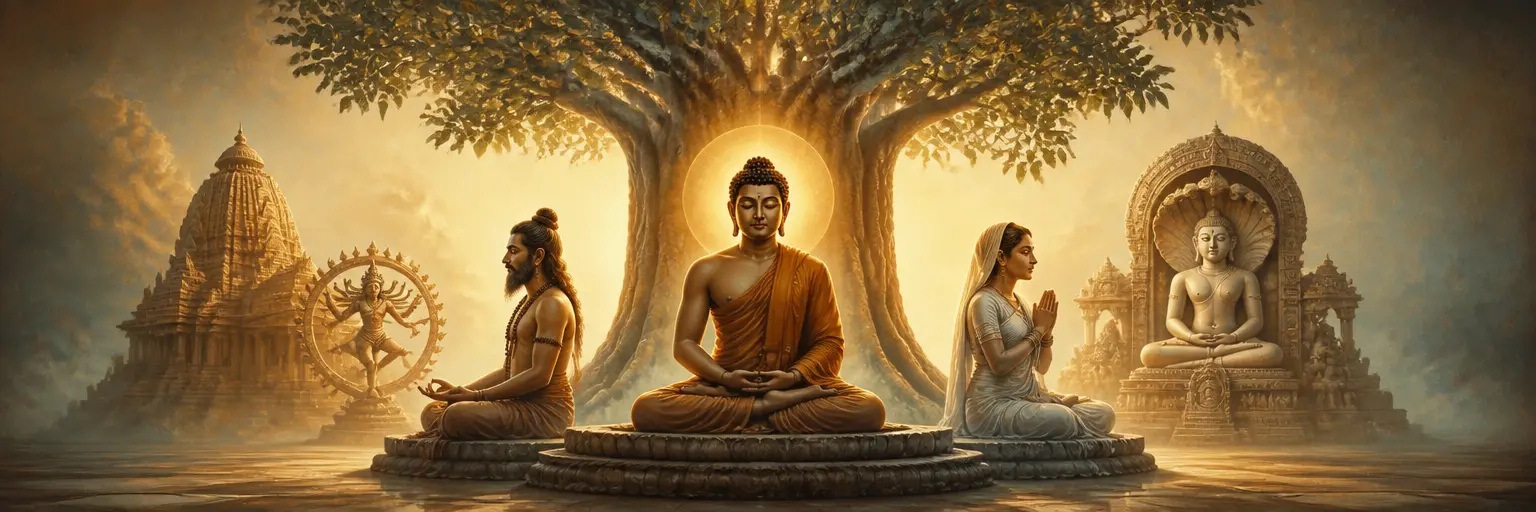
Explore Ancient Indian Religions and discover the spiritual traditions that shaped India’s history, philosophy, art, and society. Learn about the origins and spread of Buddhism, the wisdom of Hindu scriptures, influential philosophical ideas, and Jainism’s enduring principles of nonviolence and liberation. 🪷📜 Gain valuable insight into the beliefs, texts, teachers, and cultural contributions that defined ancient Indian civilization.
More in Ancient Indian Religions

Buddhism - Teachings and Spread
The Spiritual Journey of a Buddhist: From Learning to Enlightenment
Hinduism - Scriptures (Vedas, Upanishads)
The Vedic Tradition of Chanting: Its Importance in Hindu Worship
Buddhism - Key Figures
The Teachings of Maitreya: The Future Buddha and His Significance
Hinduism - Scriptures (Vedas, Upanishads)
The Role of Meditation in Vedic and Upanishadic Teachings
Hinduism - Scriptures (Vedas, Upanishads)
Yajurveda: The Art of Sacrifice and Its Spiritual Significance
Buddhism - Key Figures
The Role of the Bodhisattvas: Key Figures in the Mahayana Tradition

Buddhism - Teachings and Spread
The Role of Silence in Buddhism: Finding Peace Amidst Chaos
Buddhism - Key Figures
The Historical Impact of Chanakya on Buddhist Thought and Governance
Ancient Indian Religions offer a fascinating view into the spiritual, philosophical, and cultural development of ancient India. From the ritual traditions of the Vedic period to the rise of Buddhism and Jainism, these religious systems shaped Indian society, literature, art, ethics, politics, and everyday life for thousands of years.
This category explores the history of ancient Indian religions through reliable, accessible guides on Hinduism, Buddhism, and Jainism. Discover the teachings of the Buddha, the lives of influential Buddhist figures, the wisdom of the Vedas and Upanishads, the major schools of Indian philosophy, and the principles that define Jainism. Whether you are studying ancient India, exploring Indian religious history, or seeking a deeper understanding of South Asian civilization, these resources provide valuable historical context and insight.
🪷 Buddhism - Teachings and Spread
Explore the central teachings of Buddhism, including the Four Noble Truths, the Noble Eightfold Path, karma, rebirth, meditation, and nirvana. This subcategory explains how Buddhist ideas developed in ancient India during the sixth and fifth centuries BCE and how they offered new approaches to ethics, suffering, spiritual practice, and liberation.
Readers can also learn how Buddhism spread from the Gangetic plains across India and into Sri Lanka, Central Asia, Southeast Asia, China, and other regions. Discover the importance of monastic communities, royal patronage, trade routes, Buddhist councils, stupas, monasteries, and the role of Emperor Ashoka in the expansion of Buddhism.
📜 Buddhism - Key Figures
Meet the important personalities who shaped Buddhist history, beginning with Siddhartha Gautama, the historical Buddha. Articles in this section examine his early life, renunciation, enlightenment at Bodh Gaya, first sermon at Sarnath, and the formation of the Buddhist Sangha.
This subcategory also highlights influential disciples, teachers, rulers, missionaries, and thinkers such as Mahakashyapa, Ananda, Sariputta, Moggaliputta Tissa, and Ashoka. Learn how these figures preserved Buddhist teachings, supported monastic institutions, guided communities, and helped Buddhism become a major world religion.
🕉️ Hinduism - Scriptures (Vedas, Upanishads)
Discover the earliest and most influential Hindu scriptures, including the Rigveda, Samaveda, Yajurveda, Atharvaveda, Brahmanas, Aranyakas, and Upanishads. This section explains the structure, themes, rituals, hymns, and religious ideas found in ancient Vedic literature.
Readers will also explore how the Upanishads transformed religious thought by emphasizing concepts such as Brahman, Atman, karma, rebirth, and moksha. Understand the historical development of Vedic religion, the importance of oral tradition, and the lasting influence of these scriptures on Hindu philosophy and Indian culture.
🧘 Hinduism - Philosophical Aspects
Ancient Indian philosophy developed a rich range of ideas about reality, knowledge, consciousness, morality, and liberation. This subcategory introduces major Hindu philosophical traditions, including Vedanta, Samkhya, Yoga, Nyaya, Vaisheshika, and Mimamsa, while explaining their distinctive views in clear language.
Explore essential concepts such as dharma, karma, moksha, maya, meditation, self-knowledge, and the relationship between the individual self and ultimate reality. These articles show how philosophical debates influenced religious practice, education, literature, political thought, and the intellectual history of ancient India.
☸️ Jainism - Principles and History
Learn about Jainism, one of ancient India’s oldest religious traditions, and its emphasis on ahimsa, or non-violence. This section examines the teachings of the Tirthankaras, especially Vardhamana Mahavira, as well as Jain principles such as aparigraha, anekantavada, asceticism, karma, and spiritual liberation.
Readers can follow the history of Jainism from its early development in northern India to its growth under the support of merchants, urban communities, and regional rulers. Discover Jain monastic traditions, sacred literature, temple culture, artistic contributions, and the continuing influence of Jain ethics on Indian society.
❓ Frequently Asked Questions About Ancient Indian Religions
What are the main ancient Indian religions?
The main religious traditions covered in ancient Indian history are Hinduism, Buddhism, and Jainism. These traditions developed over different periods but shared important ideas such as karma, rebirth, ethical conduct, meditation, and liberation.
How did Buddhism begin in ancient India?
Buddhism began with Siddhartha Gautama, who attained enlightenment and became known as the Buddha. He taught the Four Noble Truths and the Noble Eightfold Path, establishing a monastic and lay community in northern India.
What are the Vedas and Upanishads?
The Vedas are among the oldest sacred texts of Hinduism and contain hymns, ritual instructions, and religious knowledge. The Upanishads are later philosophical texts that explore subjects such as Brahman, Atman, karma, and moksha.
What are the central principles of Jainism?
Jainism emphasizes non-violence, truth, non-stealing, celibacy, and non-attachment. Its most widely recognized principle is ahimsa, which requires avoiding harm to living beings and encourages compassion, self-discipline, and responsible conduct.
Why are ancient Indian religions important in history?
Ancient Indian religions influenced law, education, art, architecture, literature, social institutions, philosophy, and international cultural exchange. Their teachings continue to shape religious practice and philosophical discussion in India and around the world.
Related topics