
The Silk Road’s Cultural Melting Pot: Where Indian and Chinese Traditions Converged

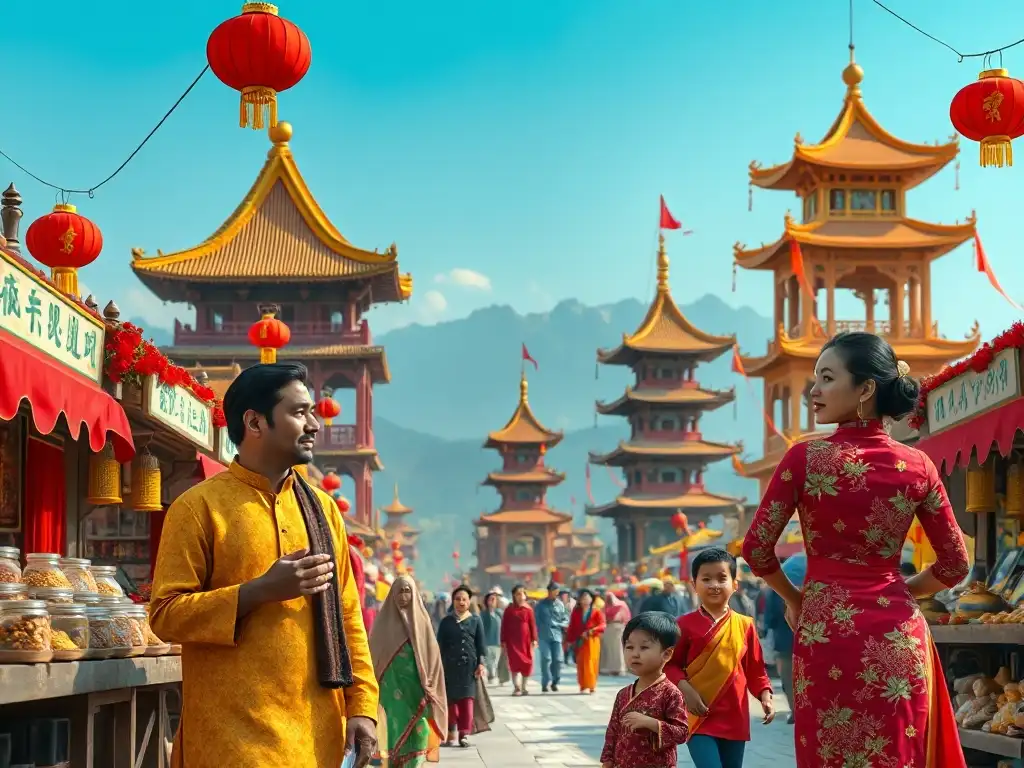
Welcome to Ancient India History, your gateway to the fascinating tapestry of India's rich past! Here, we delve deep into the cultural crossroads that shaped ancient civilizations, and today, we invite you to explore the intriguing dynamics of Indian-Chinese cultural exchange. In our feature article, "The Silk Road’s Cultural Melting Pot: Where Indian and Chinese Traditions Converged," you'll uncover the profound interactions and shared influences that emerged along this legendary trade route.
Prepare to embark on a journey through time that reveals how these two great cultures intertwined, enriching each other’s legacies. Are you ready to discover the stories that lie at the heart of this vibrant exchange?
Introduction to Indian Chinese Cultural Exchange
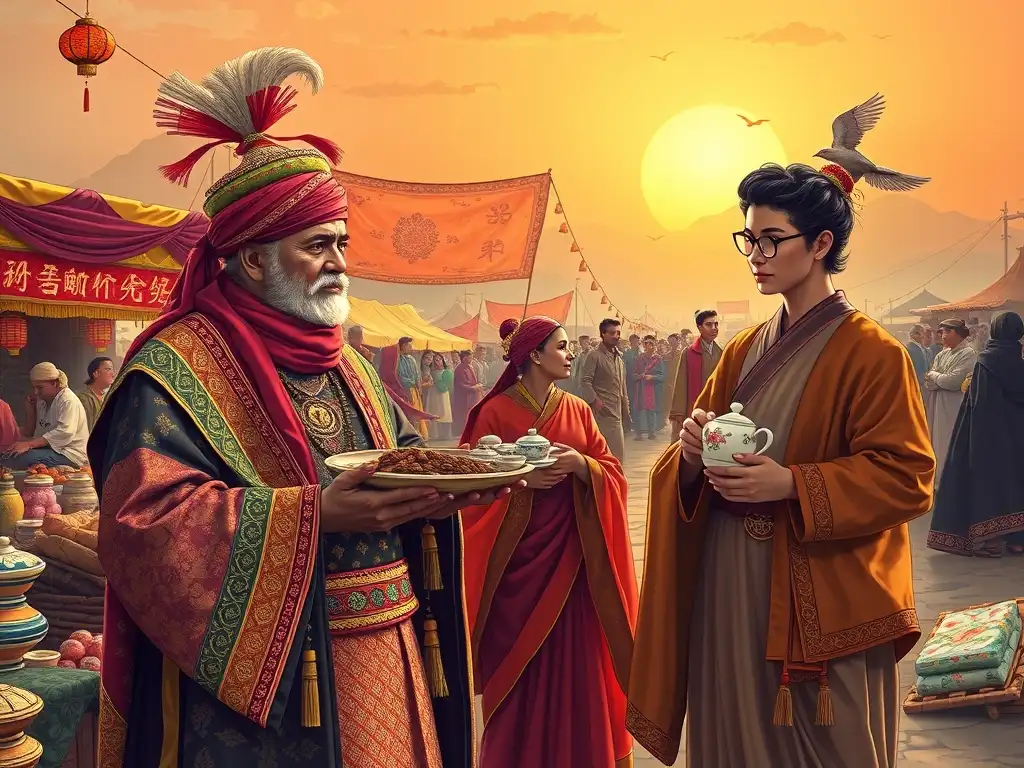
The Indian-Chinese cultural exchange is a fascinating narrative that reflects centuries of interaction between two of the world's oldest civilizations. The Silk Road, a network of trade routes connecting the East and West, served as a vital conduit for not only the exchange of goods but also ideas, philosophies, and artistic expressions.
This article delves into the rich tapestry of interactions between India and China, exploring how these encounters shaped their respective cultures and contributed to a profound mutual influence. By examining the historical significance of the Silk Road and its role as a cultural melting pot, we can better understand the complexities of this enduring relationship.
Overview of the Silk Road's Significance
The Silk Road was more than just a trade route; it was a gateway for cultural exchange that spanned thousands of miles, linking diverse civilizations. Established around the 2nd century BCE, this network facilitated the movement of commodities such as silk, spices, and precious stones, but it also enabled the flow of knowledge, religion, and art.
- Trade Goods: Among the most sought-after products were silk from China and spices from India, which were highly valued in markets across the globe.
- Cultural Exchange: Ideas and innovations, including religious philosophies like Buddhism, traveled along these routes, enriching the cultures they encountered.
The Silk Road's significance lies in its ability to foster connections that transcended geographical boundaries, allowing for a profound exchange of cultural elements.
Importance of Cultural Interactions between India and China
The cultural interactions between India and China were pivotal in shaping not only their own societies but also the wider world.
- Buddhism: One of the most notable exchanges was the spread of Buddhism from India to China, which transformed Chinese spiritual life and led to the development of unique Chinese schools of thought.
- Art and Literature: Artistic styles, literary forms, and philosophical ideas were shared and adapted, creating a rich blend of traditions that influenced both cultures.
These interactions underscore the importance of mutual respect and understanding, demonstrating how diverse traditions can converge to create a more enriched human experience.
Historical Context of the Silk Road
To truly appreciate the Indian-Chinese cultural exchange, it is crucial to understand the historical context of the Silk Road. This section explores the emergence of the trade routes and the key periods that defined Indian-Chinese exchanges.
The Emergence of the Silk Road Trade Routes
The Silk Road's origins can be traced back to the Han Dynasty in China (206 BCE – 220 CE), when the need for trade with the West prompted the establishment of these routes. Key factors influenced its development:
- Trade Demand: The growing desire for luxury goods spurred merchants to seek new markets.
- Political Stability: The Pax Sinica provided a stable environment for trade to flourish, allowing for safer passage across vast distances.
As a result, the Silk Road evolved into a crucial trade network that facilitated exchanges between India, China, and beyond.
Key Historical Periods of Indian-Chinese Exchanges
Several historical periods were instrumental in shaping the Indian-Chinese exchanges along the Silk Road:
- Early Encounters (2nd Century BCE - 1st Century CE): Initial contacts primarily involved trade and the introduction of Buddhism.
- The Gupta Empire (4th - 6th Century CE): This era saw a flourishing of Indian culture and further spread of Buddhism to China.
- Tang Dynasty (618 - 907 CE): A golden age for cultural exchange, marked by significant diplomatic missions and trade activities.
- Yuan Dynasty (1271 - 1368 CE): Increased contact due to the Mongol Empire's expansion, leading to greater cultural and commercial exchanges.
These periods highlight the dynamic nature of Indian-Chinese interactions, showcasing their profound impact on the cultural landscapes of both civilizations.
Indian Influences on Chinese Culture
The cultural exchange between India and China along the Silk Road significantly shaped both civilizations. This interaction facilitated the transmission of various aspects of Indian culture, including religious practices, art, architecture, and philosophy. As trade caravans traversed the vast landscapes, they carried not only goods but also ideas, beliefs, and customs that enriched both Indian and Chinese societies. The convergence of these two ancient cultures fostered a unique melting pot of traditions, leading to profound influences that are still evident today.
Introduction of Indian Religious Practices in China
One of the most significant contributions of Indian culture to China was the introduction of Buddhism. Initially spread by Indian missionaries and traders during the Han Dynasty (206 BCE – 220 CE), Buddhism began to take root in Chinese society. The establishment of Buddhist monasteries facilitated the translation of sacred texts and the adaptation of Indian spiritual practices into Chinese contexts.
Chinese Buddhism, particularly during the Tang Dynasty (618-907 CE), saw a blend of indigenous beliefs with Indian religious philosophies. The teachings of figures like Bodhidharma, who is credited with introducing Zen Buddhism, exemplify how Indian religious practices were reinterpreted and integrated within Chinese culture. This period marked a profound spiritual exchange, leading to the development of unique syncretic forms of Buddhism that resonated with Chinese cosmology and aesthetics.
Impact of Indian Art and Architecture on Chinese Traditions
The artistic influence of India on China is particularly notable in the realm of sculpture and painting. Indian styles, characterized by intricate carvings and symbolic representations, found their way into Chinese art during the early centuries of the Common Era. The introduction of the stupa, a dome-shaped structure used for Buddhist worship, is a prime example of this influence.
In addition to architectural forms, Indian motifs and iconography greatly impacted Chinese painting. The depiction of Buddhist themes and figures, such as the Bodhisattvas, became prevalent, adopting Indian stylistic elements that merged with traditional Chinese aesthetics. This cross-cultural interaction led to the evolution of a distinct artistic language that celebrated both Indian and Chinese heritage.
The Role of Buddhism in Fostering Cultural Exchange
Buddhism served as a critical conduit for cultural exchange between India and China. As Buddhist monks traveled along the Silk Road, they not only disseminated religious teachings but also engaged in dialogues about philosophy, ethics, and governance. These exchanges promoted mutual understanding and respect between the two cultures.
The establishment of the Silk Road facilitated the movement of texts, artifacts, and scholars, creating a vibrant network of cultural interactions. Important translations of Buddhist scriptures from Sanskrit to Chinese were undertaken, leading to the development of a rich philosophical discourse that integrated Indian metaphysics with Chinese thought. This cultural synergy laid the groundwork for later intellectual exchanges, enriching both societies.
Chinese Influences on Indian Culture
The interaction between Indian and Chinese civilizations was not one-sided; China also imparted significant cultural influences on India. Chinese philosophical ideas, artistic expressions, and scientific advancements found their way into Indian thought, contributing to the rich tapestry of Indian culture.
Introduction of Chinese Philosophical Ideas in India
Chinese philosophy, particularly Confucianism and Daoism, left an indelible mark on Indian thought. The principles of harmony, ethics, and the importance of community inherent in Confucian teachings resonated with Indian ideas about dharma and social responsibility.
During the Tang and Song Dynasties, Indian scholars began to engage with Chinese philosophical texts, leading to a cross-pollination of ideas. This intellectual exchange fostered a broader understanding of ethics, governance, and human relationships, influencing thinkers in India and contributing to a more holistic worldview.
Influence of Chinese Art and Technology on Indian Society
Chinese advancements in art and technology also played a pivotal role in shaping Indian society. The introduction of Chinese inventions, such as paper and printing techniques, significantly impacted Indian literature and education. These technologies facilitated the dissemination of knowledge and artistic expression, allowing for a flourishing of cultural production.
In addition, the aesthetic influence of Chinese landscape painting and pottery techniques can be observed in certain Indian artistic traditions. The incorporation of Chinese motifs and styles into local crafts exemplifies the dynamic nature of cultural exchange that characterized the Silk Road interactions.
The Exchange of Scientific Knowledge between India and China
The Silk Road was also a vital conduit for the exchange of scientific knowledge between India and China. Indian contributions to mathematics, astronomy, and medicine were integrated with Chinese practices, leading to mutual advancements in these fields.
For instance, Indian numerals and the concept of zero were introduced to China, revolutionizing mathematical calculations and paving the way for further developments in the field. Conversely, Chinese medicinal practices and herbal knowledge enriched Indian traditional medicine, creating a more comprehensive approach to health and healing in both cultures. This exchange of scientific ideas exemplifies how cross-cultural interactions can lead to significant advancements in human understanding and progress.
Case Studies of Indian-Chinese Cultural Exchange
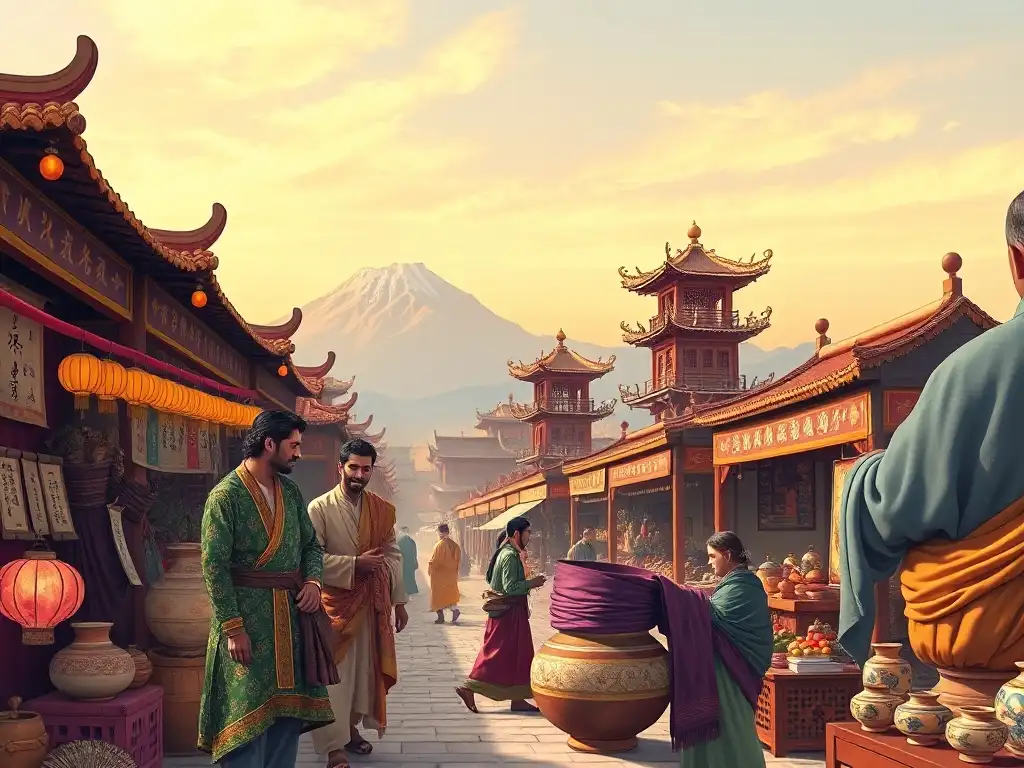
The Silk Road served as a vital conduit for cultural exchange between India and China, fostering unique interactions that shaped both civilizations. One prominent case study is the exchange of religious beliefs, particularly the spread of Buddhism from India to China. During the Han Dynasty (206 BCE – 220 CE), Buddhist missionaries traveled along the Silk Road, establishing monasteries and spreading teachings that would profoundly influence Chinese philosophy, art, and literature.
Another significant case study is the trade of textiles and spices. Indian traders brought exquisite fabrics such as silk and cotton, which were highly sought after in China. In return, they acquired valuable Chinese goods like porcelain and tea. This exchange not only enriched the economies of both regions but also introduced new artistic techniques and motifs, blending Indian and Chinese styles in textiles and ceramics.
Exploration of Key Trade Cities Along the Silk Road
Several key trade cities along the Silk Road played crucial roles in facilitating Indian-Chinese cultural exchange.
- Taxila: Located in present-day Pakistan, Taxila was a prominent center of learning and commerce, where Indian merchants interacted with traders from Central Asia and China. The city's universities attracted scholars from various regions, fostering an environment of intellectual exchange.
- Khotan: This oasis city in modern-day Xinjiang served as a significant hub for silk trade. Khotan was instrumental in the dissemination of Buddhism into China, as many Indian monks traveled through this region, bringing texts and teachings that would later be translated into Chinese.
- Chang'an (Xi'an): As the eastern terminus of the Silk Road, Chang'an was a cosmopolitan city where diverse cultures coexisted. Indian merchants settled here, contributing to the cultural tapestry of the city and influencing local cuisine, fashion, and artistic expressions.
Specific Examples of Cultural Artifacts and Their Significance
Several artifacts exemplify the rich cultural exchange between India and China along the Silk Road:
- Buddhist Statues: Statues like the Gandhara Buddhas, created in northern India, showcase a blend of Hellenistic and Indian artistic influences. These sculptures were exported to China, where they inspired local artisans and contributed to the development of Chinese Buddhist art.
- Silk Textiles: The intricate patterns and vibrant colors of Indian silk textiles, such as brocade, were highly prized in Chinese markets. These fabrics not only served practical purposes but also became symbols of status and wealth in Chinese society.
- Manuscripts: Buddhist texts, originally written in Sanskrit, were translated into Chinese during this period. These manuscripts, such as the Heart Sutra, played a crucial role in the dissemination of Buddhist philosophy throughout East Asia.
Notable Historical Figures in Indian-Chinese Exchanges
Several historical figures stand out in the narrative of Indian-Chinese cultural exchange:
- Xuanzang (Hsuan-tsang): A Chinese Buddhist monk and traveler, Xuanzang journeyed to India in the 7th century to acquire Buddhist texts. His accounts of Indian culture, religion, and geography, documented in "Great Tang Records on the Western Regions," provided valuable insights into the Indian civilization of his time.
- Kumarajiva: An influential Indian Buddhist scholar who traveled to China in the 4th century, Kumarajiva was instrumental in translating key Buddhist texts into Chinese. His translations significantly impacted the development of Chinese Buddhism and contributed to the cultural synthesis between India and China.
- Fa Xian: Another notable Chinese monk, Fa Xian traveled to India in the early 5th century to collect Buddhist scriptures. His travelogue provides critical information about Indian society, customs, and the state of Buddhism during that period.
The Legacy of Indian Chinese Cultural Exchange
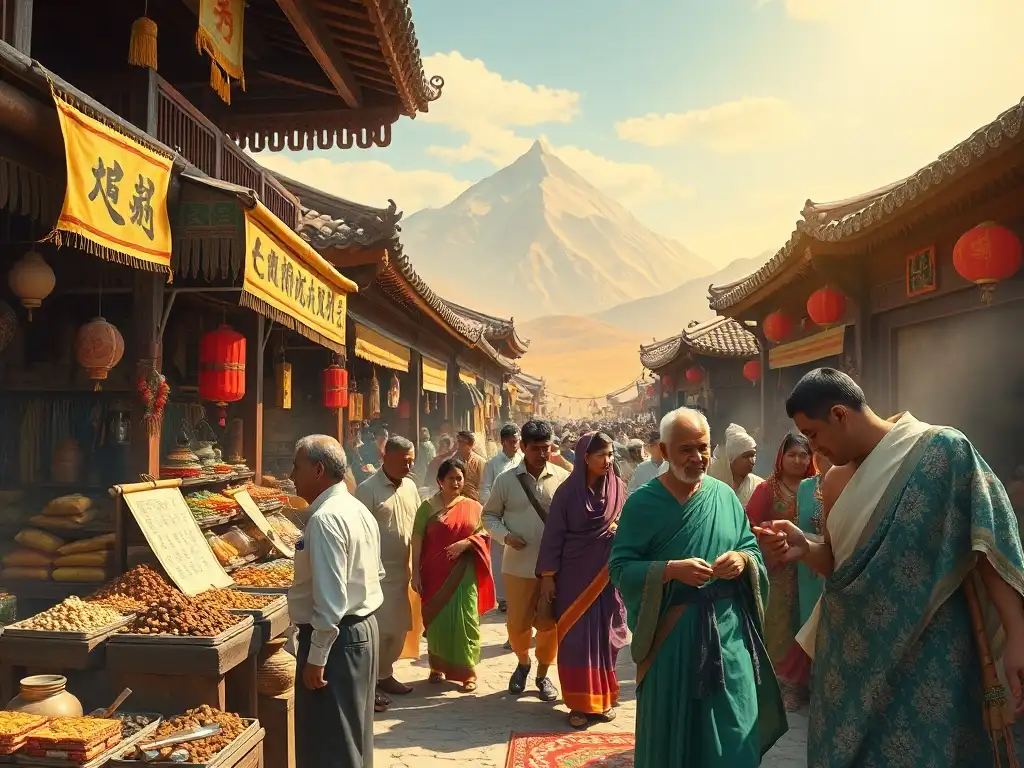
The cultural exchange between India and China along the Silk Road has left an indelible mark on both civilizations, influencing their development in various ways.
Long-lasting Effects on Modern Indian and Chinese Cultures
The enduring legacy of Indian-Chinese cultural exchange is evident in modern times. Elements of Buddhism still play a significant role in the spiritual lives of millions in both countries. Festivals, art forms, and philosophies originating from this exchange continue to thrive, showcasing the blend of traditions.
In terms of cuisine, dishes such as noodles in China and various Indian spices reflect the historical trade of food items. The culinary practices that emerged from these exchanges have shaped the gastronomic identities of both nations, creating a rich tapestry of flavors and cooking techniques that continue to evolve.
The Role of Indian Chinese Cultural Exchange in Global History
The Indian-Chinese cultural exchange along the Silk Road is a pivotal chapter in global history. It illustrates the importance of trade routes as vehicles for not only economic prosperity but also the sharing of ideas, beliefs, and artistic expressions. This dynamic interaction laid the groundwork for future exchanges between East and West, influencing subsequent cultural dialogues and shaping the world’s cultural landscape.
The legacy of Indian-Chinese cultural exchange remains relevant today, reminding us of the profound connections forged through trade, travel, and shared knowledge, which continue to resonate through the ages.
Conclusion: The Enduring Impact of the Silk Road's Cultural Melting Pot
The Silk Road, a vast network of trade routes, served as a crucial conduit for cultural exchange between India and China, leading to significant transformations in both civilizations. This historical intersection allowed for the sharing of ideas, art, religion, and technology, which fostered a rich tapestry of interactions that shaped the cultural landscapes of both nations. The enduring impact of these exchanges can still be observed today, as they laid the groundwork for mutual respect and understanding between the two cultures.
The exchange of goods such as silk, spices, and precious stones was accompanied by the transfer of knowledge and artistic influences. Indian mathematicians and astronomers, for instance, traveled to China, imparting their understanding of zero and advanced astronomical techniques, which revolutionized Chinese science. Similarly, Buddhist monks journeyed from India to China, spreading Buddhist philosophy and practices that would deeply influence Chinese culture and religion.
The legacy of the Silk Road extends beyond mere trade; it symbolizes the profound interconnectedness of civilizations. The art and architecture from both cultures began to reflect a blend of styles, showcasing motifs and techniques that were inspired by their interactions. This cultural melting pot not only enriched the societies involved but also paved the way for a more integrated world.
Reflection on the Significance of Cultural Exchange
Cultural exchange is a vital component of human history, and the interactions between Indian and Chinese civilizations via the Silk Road exemplify its importance. Such exchanges foster a sense of shared identity and understanding, allowing societies to learn from each other’s strengths and traditions. The blend of Indian and Chinese philosophies, particularly through the lens of Buddhism, showcases how ideas can transcend geographic boundaries and influence diverse populations.
Moreover, the significance of this cultural exchange is reflected in the arts, literature, and religious practices that emerged during this period. For example, the introduction of Indian art forms into Chinese painting led to new styles and techniques, while the adaptation of Chinese elements into Indian architecture produced unique structures that embody both traditions. The synthesis of these cultures not only enriched individual societies but also contributed to a greater global cultural heritage.
In a world that is increasingly interconnected, the lessons learned from the Silk Road remind us of the power of cultural exchange in fostering collaboration, empathy, and innovation. By acknowledging and celebrating our shared histories, we can build more inclusive societies that appreciate the diversity of human experiences.
The Future of Indian and Chinese Cultural Interactions
As globalization continues to shape the world, the future of Indian and Chinese cultural interactions holds significant promise. The historical ties established through the Silk Road can serve as a foundation for renewed collaboration in various fields, including trade, arts, education, and technology. The mutual respect cultivated through centuries of exchange can facilitate ongoing dialogue and understanding between the two nations.
In recent years, initiatives such as cultural festivals, academic exchanges, and joint research projects have emerged to strengthen the connections between India and China. These efforts not only honor the rich heritage of past interactions but also pave the way for innovative collaborations that address contemporary challenges. For instance, shared interests in sustainable development and environmental conservation can lead to joint initiatives that benefit both countries and set an example for global cooperation.
Furthermore, the rise of digital technology has opened new avenues for cultural exchange. Online platforms enable artists, scholars, and entrepreneurs from India and China to connect, collaborate, and share their work with a global audience. This digital revolution presents an opportunity to foster a deeper appreciation of each culture's contributions while inviting new ideas and perspectives.
The future of Indian and Chinese cultural interactions is bright, promising a continuous exchange of ideas that can enhance the richness of both civilizations. By embracing their interconnected past and nurturing their relationship, these nations can lead the way in creating a more harmonious and culturally enriched world.
- Introduction to Indian Chinese Cultural Exchange
- Historical Context of the Silk Road
- Indian Influences on Chinese Culture
- Chinese Influences on Indian Culture
- Case Studies of Indian-Chinese Cultural Exchange
- Exploration of Key Trade Cities Along the Silk Road
- Specific Examples of Cultural Artifacts and Their Significance
- Notable Historical Figures in Indian-Chinese Exchanges
- The Legacy of Indian Chinese Cultural Exchange
- Conclusion: The Enduring Impact of the Silk Road's Cultural Melting Pot
- Reflection on the Significance of Cultural Exchange
- The Future of Indian and Chinese Cultural Interactions
- What was the significance of the Silk Road in Indian and Chinese cultural exchange?
- How did Indian traditions influence Chinese culture along the Silk Road?
- What role did trade play in fostering cultural exchange between India and China?
- Can you provide examples of artistic influences from India to China?
- How did the Gupta Empire contribute to this cultural exchange?
Frequently Asked Questions
What was the significance of the Silk Road in Indian and Chinese cultural exchange?
The Silk Road served as a vital trade route that facilitated the exchange of not only goods but also ideas, beliefs, and cultural practices between Indian and Chinese civilizations.
How did Indian traditions influence Chinese culture along the Silk Road?
Indian traditions, including Buddhism, spread into China, significantly impacting its culture, philosophy, and art, leading to the development of new spiritual practices and literary works.
What role did trade play in fostering cultural exchange between India and China?
Trade along the Silk Road was essential for the cultural exchange, as merchants and travelers not only exchanged goods but also shared knowledge, technologies, and artistic styles.
Can you provide examples of artistic influences from India to China?
Notable examples include the Buddhist art that emerged in China, heavily influenced by Indian sculptures and iconography, leading to a unique fusion of styles that reflected both cultures.
How did the Gupta Empire contribute to this cultural exchange?
During the Gupta Empire, India became a center of trade, science, and culture, promoting greater interaction with China and enhancing the exchange of ideas in areas like mathematics, astronomy, and literature.
Final Reflection: Embracing the Legacy of Indian-Chinese Cultural Exchange
The convergence of Indian and Chinese traditions along the Silk Road serves as a powerful reminder of our interconnectedness in today's globalized world. As we navigate through an era marked by rapid cultural exchanges and globalization, the historical significance of this ancient trade route underscores the importance of understanding and appreciating diverse cultures. The Silk Road was not merely a pathway for goods; it was a vibrant tapestry woven from the threads of shared knowledge, beliefs, and artistic expressions that continue to influence societies today.
Cultural exchange is not a relic of the past; it is a living, breathing phenomenon that shapes our identities and communities. The rich interactions between Indian and Chinese civilizations have left an indelible mark on art, philosophy, and spirituality, fostering a spirit of collaboration and mutual respect. As we reflect on this legacy, we are reminded of the words of the philosopher Confucius: Real knowledge is to know the extent of one's ignorance.
This acknowledgment of our shared history encourages us to embrace the complexities of cultural exchange and to learn from one another in our quest for understanding.
As we look to the future, let us take inspiration from the Silk Road's legacy of unity and collaboration. I invite you to reflect on your own cultural experiences and consider how you can contribute to the ongoing dialogue between diverse traditions. Whether through art, cuisine, language, or shared values, every small act of cultural appreciation can foster greater harmony in our increasingly interconnected world. Together, we can continue to build bridges that honor the past while paving the way for a more inclusive and enriched future.
Unveil the Treasures of Cultural Exchange Today!
Thank you for diving into the rich tapestry of the Silk Road, where Indian and Chinese traditions beautifully converged. You've uncovered fascinating insights into how these cultures shaped one another. Now, let’s transform that knowledge into action!
Here’s how you can continue your journey of exploration:
- Dive Deeper: Explore the unique traditions or artworks that developed along the Silk Road. Consider visiting a local museum or browsing online exhibits to bring history to life!
- Share Your Discoveries: Engage in discussions about your findings with friends or on social media. Start a conversation about cultural exchange and share your favorite aspects of the interactions between Indian and Chinese cultures.
- Join a Community: Participate in online forums or groups dedicated to the study of the Silk Road. Connect with fellow history enthusiasts to exchange ideas and learn together.
What aspect of Indian and Chinese culture from the Silk Road intrigues you the most, and how can you incorporate that knowledge into your daily life?