
Art and Aesthetics: Indian Influences on Chinese Painting and Sculpture

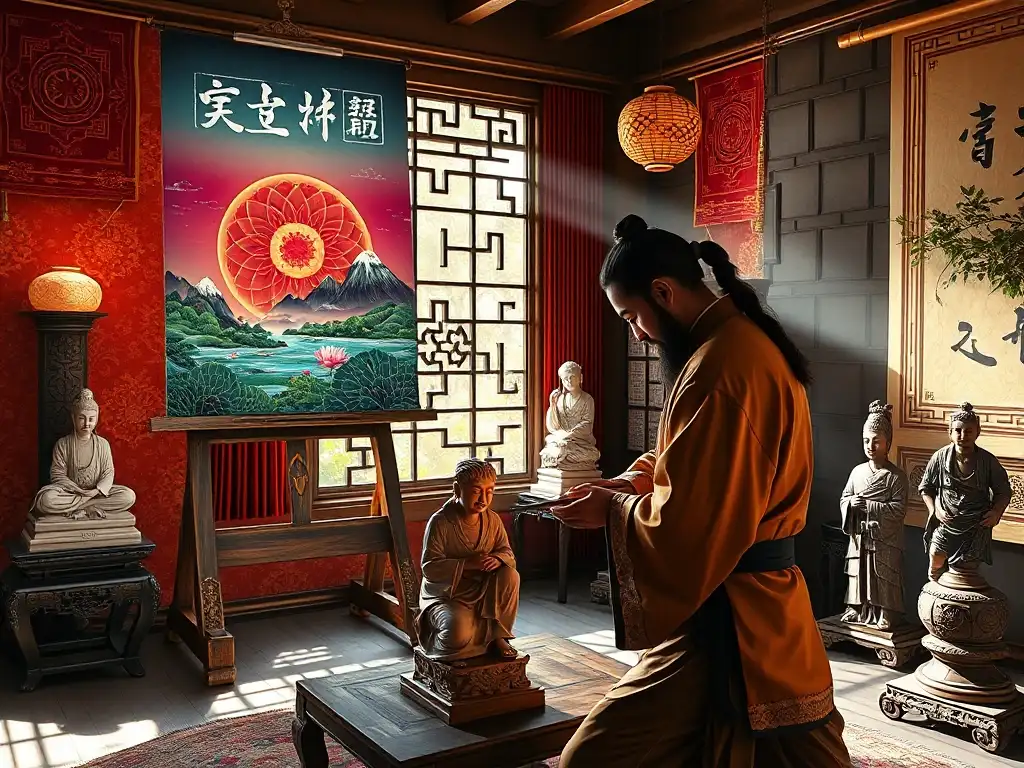
Welcome to Ancient India History, where we embark on a fascinating journey through the vibrant tapestry of India's past. In this exploration, we delve into the profound interactions with other civilizations that have shaped not only India but also the world beyond its borders. One particularly captivating aspect is the Indian influences on Chinese art, a topic we unravel in our latest article, "Art and Aesthetics: Indian Influences on Chinese Painting and Sculpture."
Discover how the rich aesthetics of ancient Indian culture made their way across continents, leaving an indelible mark on Chinese artistry. Join us as we uncover the intricate connections that define our shared heritage and inspire a deeper understanding of history.
- Introduction to Indian Influences on Chinese Art
- Historical Context of Indian and Chinese Artistic Exchanges
- Key Elements of Indian Influences on Chinese Painting
- The Impact of Indian Sculpture on Chinese Artistry
- Regional Variations: Indian Influences in Different Chinese Provinces
- Case Studies: Notable Works Reflecting Indian Influences
- Conclusion: The Lasting Legacy of Indian Influences on Chinese Art
-
Frequently Asked Questions
- What are the main Indian influences on Chinese art?
- How did Buddhism contribute to this artistic exchange?
- Which periods saw significant Indian influence in Chinese art?
- Are there specific artworks that exemplify this influence?
- What is the significance of studying Indian influences on Chinese painting and sculpture?
- Final Reflection: The Enduring Legacy of Indian Influences on Chinese Art
- Unveil the Richness of Cultural Exchange!
Introduction to Indian Influences on Chinese Art
The exchange between ancient Indian and Chinese civilizations has been a significant aspect of their respective histories, particularly in the realms of art and aesthetics. As two of the oldest cultures in the world, both India and China have developed rich artistic traditions that reflect their unique philosophies, religious beliefs, and social structures. The influences between these two great civilizations have resulted in a fascinating blend of styles and themes, particularly evident in various forms of painting and sculpture.
This article explores the profound impact that Indian aesthetics and artistic practices have had on Chinese art, shedding light on how these exchanges have shaped cultural expressions across Asia. By examining the nuances of this influence, we can appreciate the depth of interaction between these ancient societies and the enduring legacy of their artistic collaborations.
Overview of Indian Art and Aesthetics
Indian art is characterized by its diversity, intricacy, and spiritual depth. From the early Indus Valley Civilization, which showcased remarkable urban planning and craftsmanship, to the vast array of sculptures and paintings during the Gupta Empire, Indian art has evolved through various phases. Key features include:
- Religious Themes: Predominantly influenced by Hinduism, Buddhism, and Jainism, Indian art often depicts deities, narratives from scriptures, and scenes from religious texts.
- Symbolism and Color: Use of vibrant colors and symbolic representation is prevalent, with each hue carrying specific meanings and associations.
- Stylistic Variations: Different regions in India have developed distinct styles, such as the intricate miniatures of Mughal art and the grand sculptures found in temple complexes like Khajuraho.
The emergence of Buddhism in India played a crucial role in the dissemination of Indian artistic styles beyond its borders, particularly to China. As Buddhist missionaries traveled along trade routes, they brought along not only religious teachings but also artistic techniques that would influence Chinese aesthetics.
Significance of Indian Influences in Chinese Culture
The significance of Indian influences on Chinese art cannot be overstated. These exchanges marked a crucial period of cultural syncretism that enriched Chinese artistic practices. Some key aspects include:
- Buddhist Art: The arrival of Buddhism in China, along with its artistic expressions, saw a dramatic transformation in Chinese sculpture and painting. Indian styles of depicting the Buddha and Bodhisattvas were adapted to suit Chinese sensibilities, leading to the development of unique styles such as the Northern Wei and Tang dynasties' sculptures.
- Iconography and Themes: Indian artistic motifs, such as the lotus flower and mandalas, found their way into Chinese art, symbolizing purity and enlightenment. These elements fostered a deeper philosophical connection between the two cultures.
- Cultural Exchange: The Silk Road facilitated not only trade but also cultural and artistic exchanges. As Indian artisans and scholars traveled to China, they shared their techniques, leading to innovations in Chinese painting and sculpture that incorporated Indian aesthetics.
Overall, the impact of Indian influences on Chinese art highlights the profound interconnectedness of ancient civilizations and the power of art as a medium for cultural exchange. This exploration not only enriches our understanding of artistic traditions but also underscores the importance of cross-cultural dialogues throughout history.
Historical Context of Indian and Chinese Artistic Exchanges
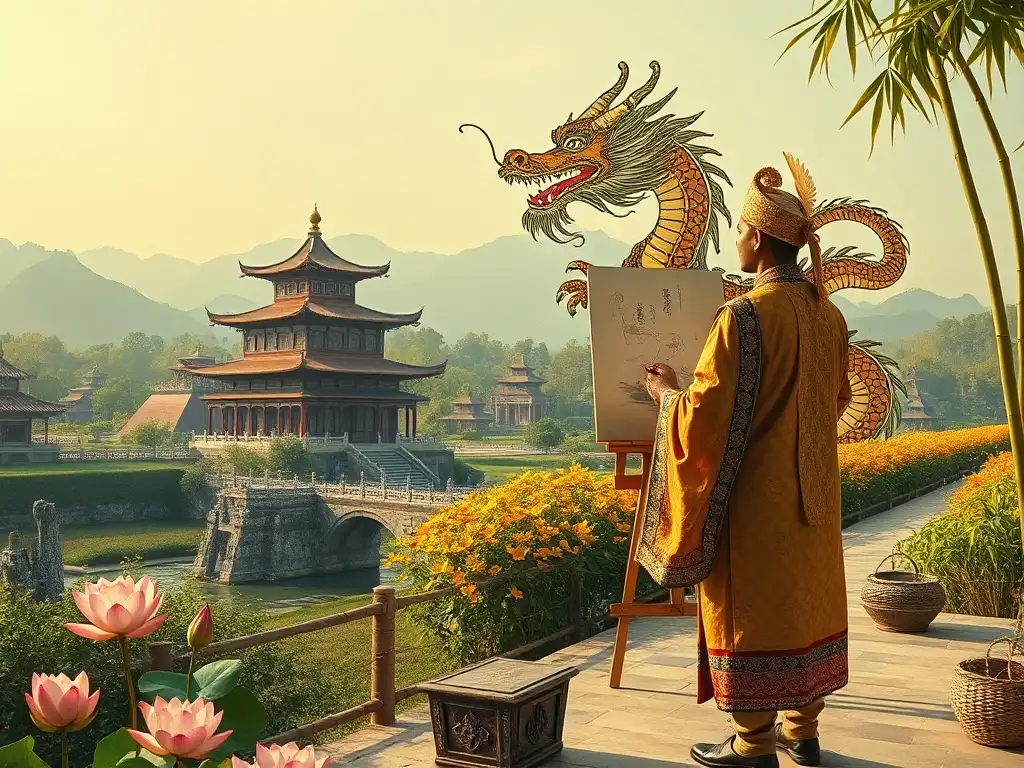
The artistic exchanges between India and China have their roots in ancient civilizations that engaged in a rich tapestry of trade, culture, and religion. This historical context reveals how Indian influences on Chinese art emerged through various interactions, fostering a unique blend of styles and techniques that shaped the artistic landscape of both regions.
Early Interactions between India and China
The interactions between India and China can be traced back to as early as the 2nd century BCE. Initial contact was primarily facilitated through trade, where merchants exchanged not only goods but also ideas and artistic practices. Notable accounts, such as those by the Chinese monk Xuanzang in the 7th century CE, highlight how Indian art forms began to permeate into Chinese culture, particularly through the introduction of Buddhist art.
- Buddhism as a Cultural Bridge:
- The spread of Buddhism from India to China played a pivotal role in the artistic dialogue. Indian rulers, such as Emperor Ashoka, sent missionaries to the East, fostering the establishment of Buddhist monasteries which became centers of learning and artistic expression.
- Iconography associated with Buddhism, including the depiction of the Buddha and Bodhisattvas, found its way into Chinese painting and sculpture, often integrating local styles and motifs.
- Sculptural Influences:
- The Gandhara and Mathura schools of sculpture, known for their intricate carvings, significantly impacted Chinese artistic practices. The stylistic nuances, such as the representation of drapery and facial expressions, were adopted and adapted by Chinese artisans.
- For example, the serene expressions and elaborate postures of Buddhist statues in China reflect the Indian techniques that emphasized spiritual calmness and meditative states.
Trade Routes: The Silk Road and Beyond
The Silk Road, a network of trade routes that connected the East and West, served as a vital conduit for the exchange of not just commodities but also artistic ideas and techniques.
- Cultural Conduit:
- The Silk Road facilitated the movement of artisans and scholars between India and China, leading to a confluence of artistic styles. This cultural exchange allowed the fusion of Indian themes with Chinese artistic sensibilities.
| Trade Goods | Cultural Influences |
|---|---|
| Spices | Introduction of vibrant colors in paintings |
| Textiles | Patterns and motifs in fabric arts |
| Sculpture | Techniques in stone and wood carving |
- Artistic Techniques:
- The transmission of artistic techniques, such as the use of frescoes and mural painting, can be traced back along these trade routes. Indian artisans introduced new methods of painting that were later incorporated into Chinese art forms, leading to a distinct evolution in Chinese landscape painting.
Cultural Exchanges in Ancient Times
Cultural exchanges during ancient times were not limited to trade; they encompassed various aspects of life, including religion, philosophy, and art.
- Philosophical and Religious Dialogue:
- The interactions between Indian and Chinese philosophers contributed to a shared understanding of aesthetics that influenced artistic expression. The integration of Indian philosophies, such as those found in Hinduism and Buddhism, enriched Chinese artistic narratives.
- Artistic Collaborations:
- Collaborative artistic endeavors emerged, such as the translation of Buddhist texts, which often included detailed illustrations that reflected Indian artistic traditions. These collaborations laid the groundwork for a hybrid art form that celebrated both cultures.
- Influence on Chinese Aesthetics:
- Indian influences on Chinese art can be seen in the use of vibrant colors, intricate patterns, and themes of nature. The representation of flora and fauna in Chinese paintings often draws inspiration from Indian motifs, showcasing the profound impact of Indian aesthetics.
The historical exchanges between Indian and Chinese civilizations served as a fertile ground for artistic evolution. The influences manifested in various art forms continue to resonate in contemporary artistic practices, reflecting the enduring legacy of these ancient interactions.
Key Elements of Indian Influences on Chinese Painting
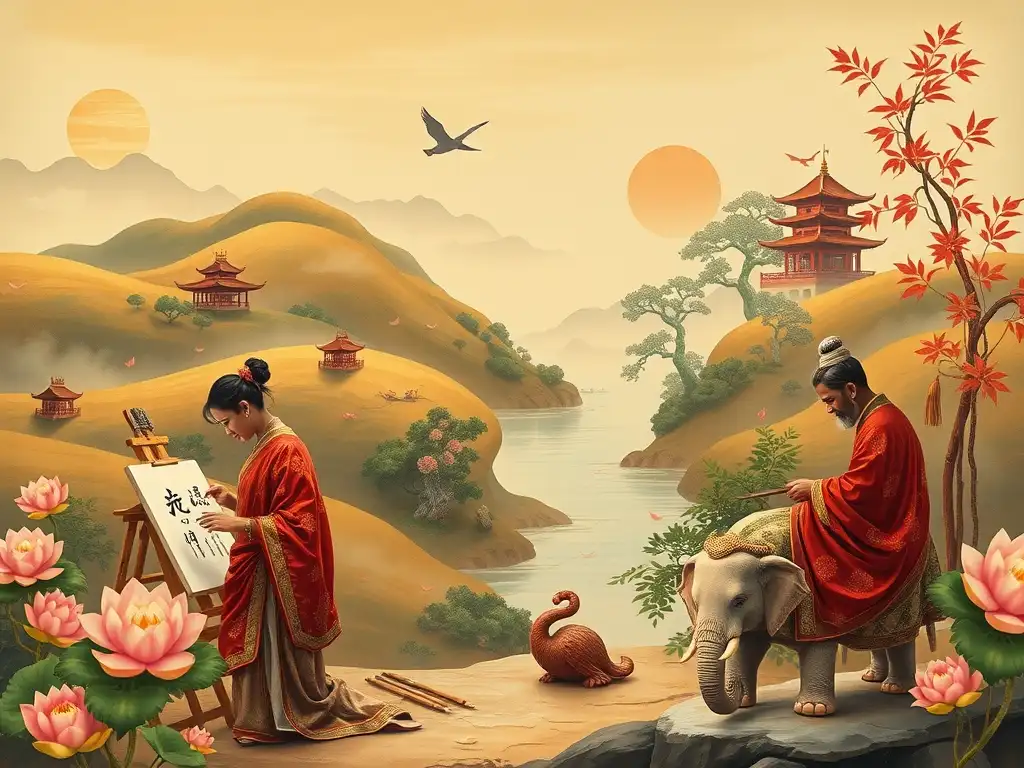
The artistic exchanges between India and China have significantly shaped the aesthetics and methodologies of Chinese painting. These influences, which emerged through trade routes, religious interactions, and cultural exchanges, are evident in various aspects of Chinese art. Understanding the key elements of Indian influences on Chinese painting allows us to appreciate the depth of this intercultural dialogue.
Stylistic Adaptations in Chinese Painting
One of the most pronounced Indian influences on Chinese painting is the adaptation of stylistic elements. Indian art, particularly during the Gupta period, emphasized line, color, and form in ways that resonated with Chinese artists.
- Linear Precision: Indian paintings often feature intricate line work that defines figures and landscapes. This technique was embraced by Chinese artists, leading to a more defined and delicate approach in their own works.
- Color Palette: The vibrant colors used in Indian art, derived from natural pigments, inspired Chinese painters to explore richer palettes. This shift can be seen in the use of bold reds, deep blues, and golden hues that became prevalent in later Chinese artworks.
- Composition Techniques: The use of symmetrical compositions and balanced arrangements in Indian painting influenced the layout of Chinese paintings. Artists began to incorporate a more organized structure in their works, enhancing the overall harmony and balance.
Iconography and Themes Borrowed from Indian Art
Indian art is rich with symbolic meanings and themes, many of which were absorbed into Chinese artistic practices. This borrowing of iconography can be observed in several key areas:
- Buddhist Imagery: The spread of Buddhism from India to China brought with it a wealth of iconography. The depiction of the Buddha and Bodhisattvas in various poses and forms became integral to Chinese religious art.
- Mythological Narratives: Many themes from Indian epics, such as the Ramayana and Mahabharata, found their way into Chinese storytelling through painting. These narratives influenced the portrayal of heroic figures and moral dilemmas in Chinese art.
- Nature and Spirituality: Indian artists often depicted nature as a reflection of the divine. This concept influenced Chinese landscape painting, which emphasizes the spiritual connection between humans and nature, evident in the works of artists like Fan Kuan.
Notable Chinese Painters Influenced by Indian Techniques
Several prominent Chinese painters have drawn inspiration from Indian techniques, showcasing the profound impact of Indian influences on Chinese art.
- Gu Kaizhi (344–406 CE): Often regarded as the father of Chinese figure painting, Gu Kaizhi’s works reflect the elegance and delicate lines characteristic of Indian art. His narrative style and attention to detail can be traced back to Indian influences.
- Li Cheng (919–967 CE): A major figure in landscape painting, Li Cheng incorporated Indian perspectives on nature, emphasizing ethereal beauty and spiritual depth. His landscapes often evoke the same transcendental qualities found in Indian art.
- Zhang Daqian (1899–1983 CE): A modern artist known for his versatility, Zhang Daqian’s works show a fusion of traditional Chinese techniques with Indian styles. His vibrant color palette and expressive brushwork resonate with the aesthetics of Indian painting.
The Indian influences on Chinese art are multifaceted, encompassing stylistic adaptations, thematic borrowings, and the contributions of notable artists. This rich tapestry of cultural exchange highlights the interconnectedness of civilizations and the enduring legacy of Indian aesthetics in shaping the visual language of Chinese painting.
The Impact of Indian Sculpture on Chinese Artistry
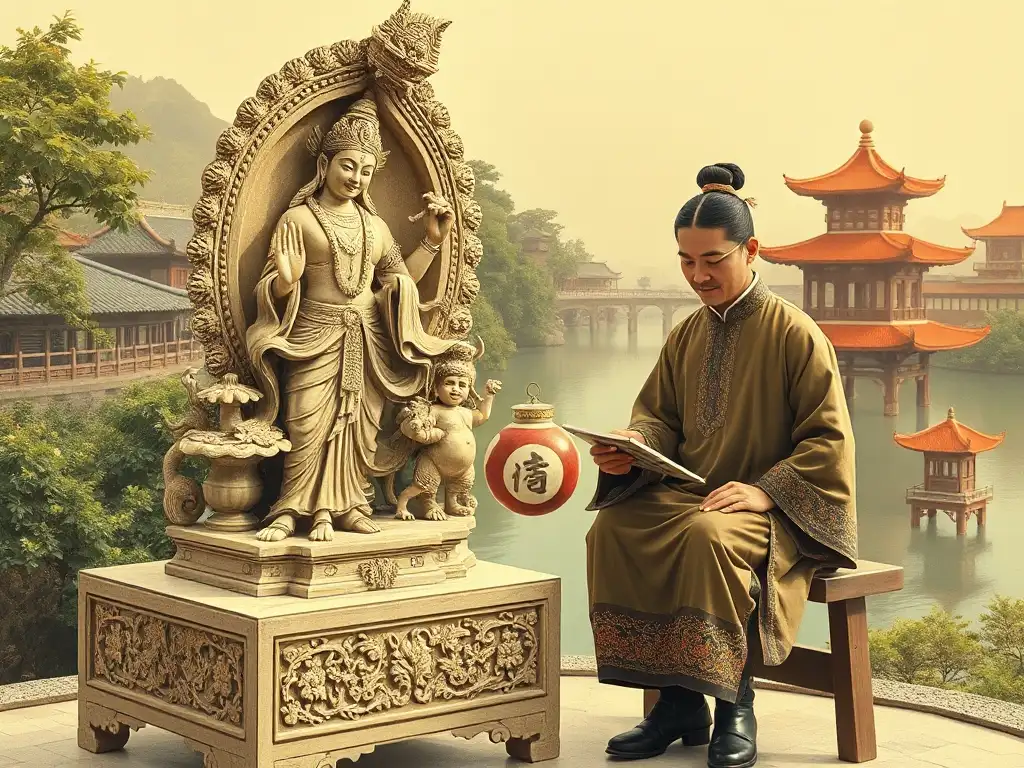
Indian Sculptural Techniques Adopted by Chinese Artists
The transference of artistic techniques from India to China is a significant aspect of the evolution of Chinese art, particularly in sculpture. Indian sculptural techniques, which were characterized by intricate detailing and a focus on spiritual representation, found their way into Chinese practices through several routes, including trade, pilgrimage, and cultural exchanges along the Silk Road.
One notable technique was the use of high relief sculpture, which allowed artists to create figures that appeared to emerge dramatically from the background. This technique, prevalent in Indian temples, was crucial in conveying the dynamic movement of deities and narratives. Chinese artists adopted this method, particularly during the Han Dynasty (206 BCE – 220 CE), leading to a revolution in the way figures were portrayed.
Additionally, the application of drapery and the depiction of fabric in sculptures saw a marked improvement with Indian influences. Indian sculptors meticulously carved folds and textures, imbuing their figures with a sense of realism that was previously less emphasized in Chinese art. This attention to detail offered Chinese artists new ways to depict the human form, enhancing the emotional expressiveness of their sculptures.
The aesthetic principles of symmetry and proportion, fundamental in Indian art, also influenced Chinese sculptors. The balance achieved in Indian sculptures, achieved through careful planning and execution, was integrated into Chinese artistic practices, resulting in a more harmonious representation of figures in stone and bronze.
Religious Influences: Buddhism and Hinduism in Chinese Sculpture
The introduction of Indian religious philosophies, particularly Buddhism and Hinduism, played a pivotal role in shaping Chinese sculpture. As Buddhism spread from India to China around the 1st century CE, it brought with it a plethora of artistic conventions that transformed Chinese spiritual art.
Indian Buddhist art emphasized the depiction of the Buddha and bodhisattvas, characterized by serene expressions and elongated forms. These representations inspired Chinese artists, who began to create their own interpretations of Buddhist figures, particularly during the Tang Dynasty (618–907 CE). The famous Yungang Grottoes and Longmen Grottoes stand as testaments to the profound Indian influence, showcasing intricate carvings of Buddhist deities that embody both Indian stylistic elements and localized adaptations.
Moreover, Hindu motifs, such as the lotus flower and the portrayal of divine couples, also found their way into Chinese art. The lotus, symbolizing purity and enlightenment, became a common element in Chinese Buddhist sculpture, representing the spiritual journey toward enlightenment. The fusion of these religious influences contributed to a unique artistic language that resonated deeply with the Chinese populace, facilitating a richer spiritual narrative.
Comparison of Indian and Chinese Sculptural Styles
While Indian and Chinese sculpture share a common ground influenced by cultural exchanges, they exhibit distinct styles that reflect their respective philosophical and aesthetic values.
Indian sculpture is often characterized by:
- Complex Iconography: Indian sculptures frequently depict a variety of deities and mythological narratives, which serve not only decorative purposes but also convey deeper spiritual meanings.
- Dynamic Poses: The figures are often depicted in intricate poses, showcasing movement and emotion, which invite the viewer to engage with the narrative.
- Symbolic Elements: Indian art is rich in symbols, with each detail carrying significant meaning, from the gestures of hands (mudras) to the facial expressions of the figures.
Conversely, Chinese sculpture typically emphasizes:
- Simplicity and Harmony: Chinese sculptures often favor a more restrained aesthetic, focusing on balance and harmony rather than intricate detail.
- Stoic Expression: The figures in Chinese art tend to have more subdued expressions, reflecting the philosophical underpinnings of Confucianism and Taoism that prioritize inner peace and restraint.
- Naturalism: While Indian art often leans towards stylization, Chinese sculptures gradually evolved to embrace naturalism, particularly during the later periods of artistic development.
The interplay of Indian influences on Chinese art, particularly in sculpture, reveals a rich tapestry of cultural exchange. The techniques, religious narratives, and stylistic elements adopted from Indian art not only enriched Chinese sculpture but also fostered a unique artistic identity that continues to resonate in contemporary art forms.
Regional Variations: Indian Influences in Different Chinese Provinces
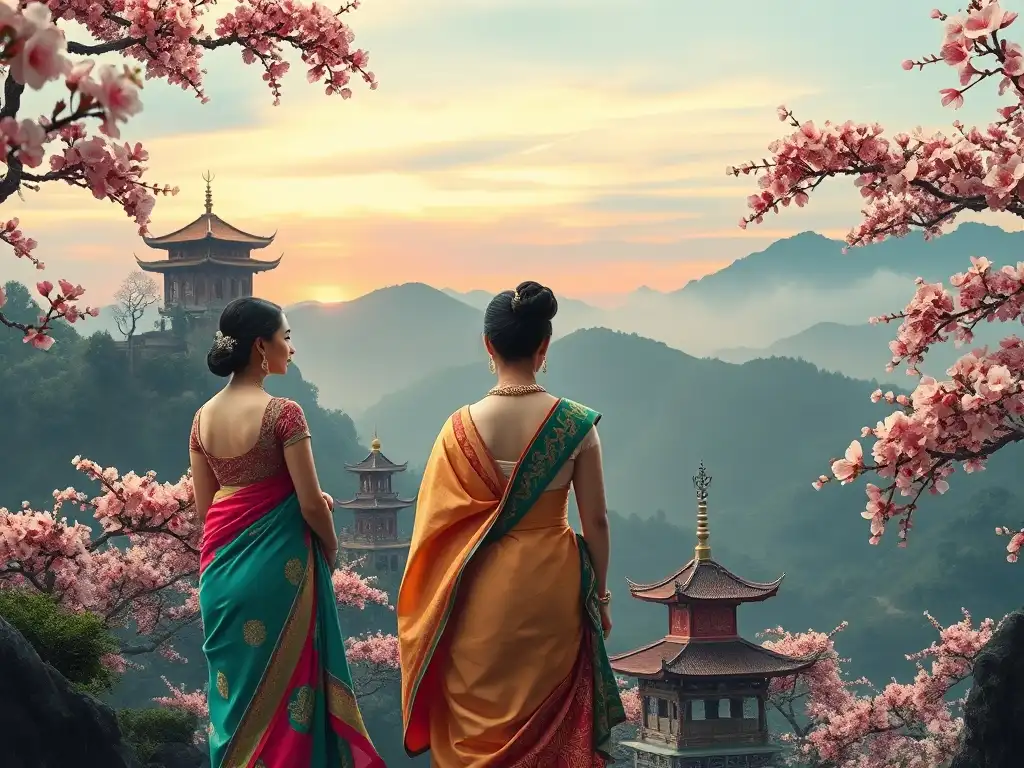
The interaction between Indian and Chinese civilizations has led to a rich tapestry of art that reflects shared and divergent cultural values. The influence of Indian art is particularly pronounced across various Chinese provinces, each adapting and integrating these foreign elements into their local artistic traditions. This section explores how Indian influences on Chinese art manifest uniquely in both Northern and Southern China.
The Spread of Indian Art in Northern China
In Northern China, the introduction of Indian art can be traced back to the early centuries of the Common Era, largely facilitated by trade routes such as the Silk Road. This exchange enabled not only the movement of goods but also of ideas and artistic techniques. The most notable impact is seen in the development of Buddhist art, particularly during the Northern Dynasties (386-581 CE).
- Buddhist Sculpture: The Indian influence is evident in the stylistic features of Buddhist sculptures. For instance, the famous Yungang Grottoes, carved in the 5th century, showcase figures with elongated limbs and serene expressions, reminiscent of Indian iconography. These sculptures often depict bodhisattvas and Buddhas in poses that align closely with Indian traditions.
- Architectural Elements: Indian stupas and mandapas (pillared halls) inspired the architectural designs of Northern Chinese Buddhist temples. The integration of these elements can be seen in the construction of pagodas, which, while evolving into a distinctly Chinese structure, retain features akin to Indian stupas.
- Paintings and Murals: The murals found in Northern Chinese caves, such as those at Dunhuang, highlight the blending of Indian themes with local artistic styles. Many of these murals depict scenes from the Jataka tales, illustrating the lives of the Buddha in a manner that reflects both Indian narratives and Chinese artistic conventions.
This regional variation showcases how Indian influences on Chinese art were not merely adopted but transformed into a unique Northern Chinese aesthetic that reflect local tastes and spiritual beliefs.
Southern China: A Unique Blend of Indian and Local Styles
In contrast to Northern China, the southern provinces exhibit a different approach to Indian influences on art. Southern China, particularly regions like Guangdong and Fujian, has a history of maritime trade that facilitated cultural exchanges with India, leading to a distinctive blend of Indian and local artistic styles.
- Cantonese Temples: The temples in Southern China, especially those in Canton, demonstrate a fascinating fusion of Indian motifs and local architectural styles. The incorporation of intricate carvings and sculptures that depict Indian deities alongside traditional Chinese figures exemplifies this blending of cultures. For example, the use of vibrant colors and dynamic poses in temple sculptures echoes Indian artistry while remaining rooted in Chinese traditions.
- Ceramics and Textiles: The influence of Indian aesthetics is also apparent in Southern Chinese ceramics and textiles. The introduction of Indian designs, such as floral patterns and intricate geometric motifs, can be observed in porcelain and silk fabrics produced in regions like Jingdezhen. These items often feature a combination of Indian and Chinese artistic sensibilities, creating a unique Southern aesthetic.
- Influence on Local Artisans: The interaction between Indian and local artisans in Southern China led to the establishment of workshops where techniques and styles were exchanged. This collaboration resulted in a vibrant artistic community that produced works reflecting both Indian influences and local traditions, evident in the diverse styles of painting and sculpture.
The Indian influences on Chinese art manifest distinctly across the northern and southern provinces, showcasing a rich interplay of cultural elements that have evolved over centuries. The regional variations illustrate how local contexts can shape and redefine artistic traditions, creating a unique artistic heritage that celebrates both Indian and Chinese contributions.
Case Studies: Notable Works Reflecting Indian Influences
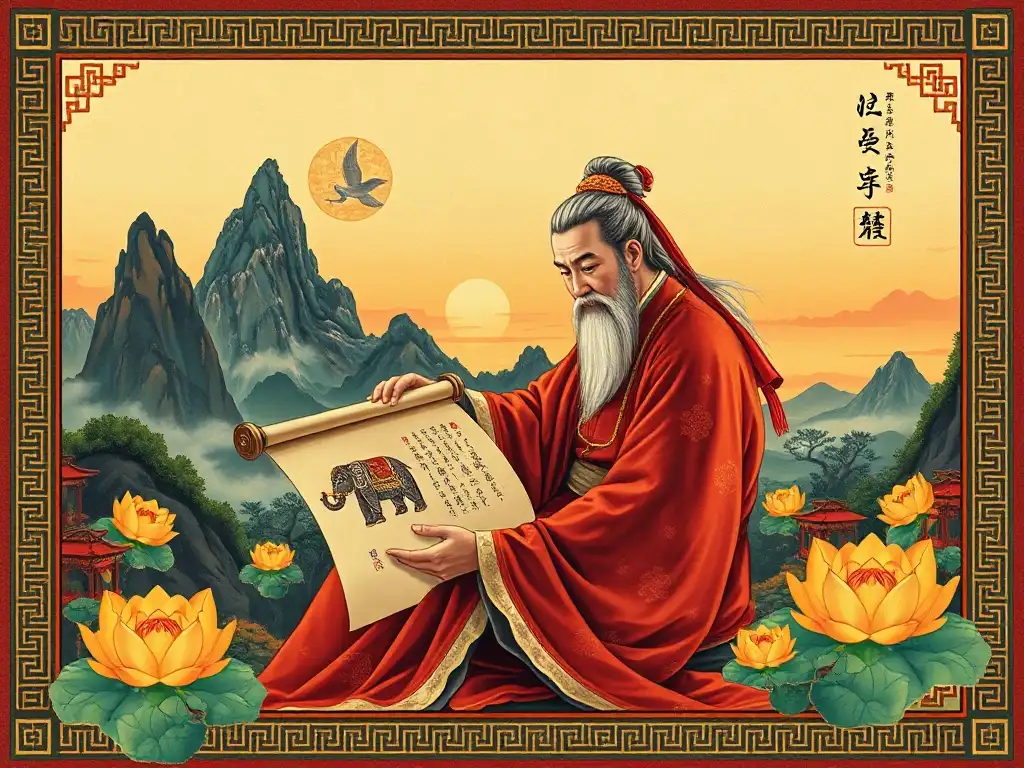
Analysis of Specific Chinese Paintings with Indian Characteristics
The influence of Indian art on Chinese painting is evident in several iconic works, which showcase the blending of styles and themes. One prominent example is the "Buddha in the Garden", a painting attributed to the Tang Dynasty. This artwork illustrates the serene representation of Buddha, reminiscent of the Indian art during the Mauryan period. The use of soft colors and the naturalistic portrayal of the surrounding flora mirror the Indian technique of depicting divine figures within lush landscapes.
Another significant piece is the "Amitabha Buddha" painting, which originated from the Dunhuang cave murals. Here, we see a fusion of Indian iconography and Chinese artistic techniques. The flowing robes and the intricate details on the Buddha's attire reflect the craftsmanship seen in Indian sculptures, while the overall composition adheres to traditional Chinese aesthetics. This underscores the cross-cultural exchange that enriched both artistic traditions.
Key Characteristics in Chinese Paintings Influenced by Indian Art:
- Figure Representation: Indian influences often emphasize the spiritual and serene demeanor of figures, contrasting with the more dynamic representations typical in earlier Chinese art.
- Color Palette: The use of vibrant colors, particularly golds and reds, is a notable characteristic that has roots in Indian paintings.
- Symbolism: Indian motifs, such as lotus flowers and mandalas, frequently appear in Chinese artworks, symbolizing purity and spiritual awakening.
Examination of Chinese Sculptures with Indian Aesthetic Roots
Chinese sculpture has also absorbed significant elements from Indian art, particularly during the periods of Buddhist expansion. One striking example is the "Sakyamuni Buddha" statue from the Northern Wei Dynasty. This sculpture exhibits the characteristic features of Indian art, such as the elongated earlobes and the serene facial expressions that convey a sense of enlightenment. The drapery of the robes is intricately carved, echoing the flowing lines found in Indian sculptures.
Another notable case is the "Avalokiteshvara", a bodhisattva figure that showcases the synthesis of Indian and Chinese styles. The depiction of Avalokiteshvara in a multi-armed form is heavily influenced by Indian iconography, where the bodhisattva is often represented with numerous arms to symbolize compassion and the ability to assist multiple beings simultaneously. The detailed craftsmanship in the facial features and the adornment of jewelry highlight the merging of Indian aesthetics with local techniques.
Distinct Features of Chinese Sculptures with Indian Influence:
- Facial Expressions: The serene and contemplative expressions of figures are indicative of Indian spiritual art, demonstrating a shared cultural reverence for enlightenment.
- Adornments and Drapery: The elaborate jewelry and flowing garments in these sculptures reflect Indian artistic conventions while adapting to Chinese stylistic preferences.
- Themes of Compassion and Enlightenment: Many sculptures emphasize themes central to Buddhism, showcasing a shared philosophical foundation that transcends cultural boundaries.
The exploration of Chinese paintings and sculptures reveals a rich tapestry of artistic influences stemming from ancient Indian traditions. These case studies not only highlight the aesthetic characteristics but also underscore the profound connections between these two great civilizations, enriching our understanding of their historical interactions.
Conclusion: The Lasting Legacy of Indian Influences on Chinese Art
The artistic relationship between India and China has produced an enduring legacy that continues to inspire and influence contemporary art. The exchange of ideas, techniques, and motifs has resulted in a rich tapestry of cultural synthesis, where Indian influences on Chinese art are prominently displayed in various forms, from painting to sculpture. This legacy is not merely historical; it remains relevant in understanding the evolution of artistic expression across borders.
Reflection on Cross-Cultural Artistic Exchanges
Cross-cultural artistic exchanges between India and China flourished particularly during the early centuries of the Common Era, primarily facilitated by trade routes such as the Silk Road. This interaction allowed for the transfer of not just goods but also philosophies, religious beliefs, and artistic practices.
- Buddhism as a Catalyst: The introduction of Buddhism from India to China was a significant event that deeply impacted Chinese art. Indian artistic styles, such as the depiction of Buddha and bodhisattvas, were adapted into Chinese sculpture, leading to distinctive representations that blended local traditions with Indian influences.
- Shared Motifs and Themes: Many themes and motifs found in Indian art, such as intricate floral designs, mythological narratives, and the use of vibrant colors, were absorbed into Chinese art forms. This fusion is evident in the decorative elements of Chinese ceramics and textiles, showcasing a beautiful amalgamation of Indian aesthetics.
- Continued Dialogues: The dialogue between Indian and Chinese artists did not cease after the initial exchanges; instead, it evolved. Subsequent dynasties in China continued to draw inspiration from Indian styles, particularly during periods of openness and cross-cultural appreciation, such as the Tang Dynasty.
Importance of Understanding Indian Influences for Modern Art Studies
Understanding the Indian influences on Chinese art is crucial for modern art studies for several reasons:
- Cultural Awareness: By studying these influences, contemporary artists and historians gain insight into the complexities of cultural interactions. This awareness fosters a deeper appreciation for the interconnectedness of civilizations.
- Artistic Techniques and Innovations: Analyzing the techniques that traveled from India to China allows art scholars to trace innovations in mediums and methods. For instance, the use of certain pigments and the techniques of stone carving were enriched through Indian expertise.
- Inspirations for Contemporary Artists: Current artists can draw inspiration from this rich history of exchange. By incorporating elements of both Indian and Chinese traditions, modern art can reflect a more global perspective, enriching the contemporary art landscape.
- Preserving Historical Context: In the context of a globalized world, understanding the historical nuances behind artistic influences helps preserve the integrity of both Indian and Chinese artistic traditions. It allows for a respectful dialogue that honors the past while looking toward the future.
The legacy of Indian influences on Chinese art exemplifies the profound capacity of cultural exchange to shape artistic traditions. Recognizing and appreciating these influences is essential not only for historical scholarship but also for enriching the future of art in a global context.
Frequently Asked Questions
What are the main Indian influences on Chinese art?
Indian influences on Chinese art primarily include the adoption of Buddhist themes, styles, and techniques, particularly in sculpture and painting during the spread of Buddhism along trade routes.
How did Buddhism contribute to this artistic exchange?
Buddhism served as a major conduit for cultural exchange, introducing Indian artistic motifs, iconography, and narratives that were adapted by Chinese artists, enhancing their own artistic expressions.
Which periods saw significant Indian influence in Chinese art?
The Tang Dynasty (618-907 CE) and the Song Dynasty (960-1279 CE) were particularly notable for Indian influences, as Buddhist art flourished during these times, integrating Indian styles into Chinese practices.
Are there specific artworks that exemplify this influence?
Yes, notable examples include the Buddhist cave paintings at Dunhuang and Sancai (three-color) glazed pottery, which showcase Indian stylistic elements fused with traditional Chinese techniques.
What is the significance of studying Indian influences on Chinese painting and sculpture?
Understanding these influences highlights the cross-cultural interactions in ancient times, illustrating how art serves as a reflection of historical connections and shared beliefs between different civilizations.
Final Reflection: The Enduring Legacy of Indian Influences on Chinese Art
The exploration of Indian influences on Chinese art reveals a profound connection that transcends time and geography. As we navigate through the rich tapestry of history, it becomes evident that these artistic exchanges have not only shaped the visual landscape of China but have also fostered a deeper understanding of cultural dialogue. The intricate patterns, spiritual themes, and stylistic elements that emerged from this cross-cultural interaction continue to resonate in contemporary art, reminding us that creativity knows no borders.
Cultural exchanges are the lifeblood of artistic innovation. The impact of Indian aesthetics on Chinese painting and sculpture is a testament to the power of collaboration and shared inspiration. This influence is not merely historical; it is a living legacy that informs modern artistic practices and encourages artists to draw from diverse traditions. As the renowned artist Ai Weiwei once said, Art is a reflection of society, and it is through understanding our past that we can shape our future.
This sentiment underscores the importance of recognizing and honoring the interconnectedness of our artistic heritage.
As we reflect on the lessons drawn from the interplay of Indian and Chinese art, I invite you to consider how these influences can inspire your own creative journey. Embrace the beauty of cultural diversity and let it inform your perspective. Whether you are an artist, a student, or an enthusiast of art, take a moment to explore the rich narratives that shape our world. By acknowledging the past and its influences, we can cultivate a more inclusive and vibrant future for art that celebrates the myriad voices that contribute to our shared human experience.
Unveil the Richness of Cultural Exchange!
Thank you for exploring the fascinating connections between Indian influences on Chinese art and culture! You've uncovered the beauty of shared histories and how these artistic narratives can inspire us today. Now, let’s take the next step toward deepening your understanding and appreciation of this vibrant legacy.
Here are some actions you can take:
- Dive Deeper: Explore a variety of art pieces that reveal the intricate relationship between Indian and Chinese aesthetics in museums or online galleries.
- Share Your Insights: Discuss the themes that resonated with you most with friends or in online forums to inspire others about this cultural connection.
- Create Your Own Art: Experiment with blending Indian and Chinese artistic styles in your own creative projects, whether it’s painting, digital art, or sculpture!
Which aspect of this cultural exchange inspires you the most, and how do you plan to share it with others?