
The Indus Valley's Contribution to Mathematics: Daily Applications and Innovations

Welcome to Ancient India History, where we embark on a journey through the rich tapestry of ancient Indian civilizations! Here, we delve into the remarkable contributions that shaped the course of history, culture, and knowledge. Today, we spotlight the Indus Valley mathematics contributions, a fascinating exploration of how this ancient civilization laid the groundwork for mathematical thought and daily applications that resonate even today.
Prepare to uncover the innovations that emerged from the banks of the Indus River and discover how they continue to influence us. Dive in, as we unravel the mysteries and achievements of the Indus Valley, captivating your imagination and enriching your understanding of this incredible era!
Introduction to Indus Valley Mathematics Contributions
The Indus Valley Civilization, one of the world's earliest urban societies, flourished around 2500 BCE in what is now Pakistan and northwest India. Renowned for its advanced urban planning, sophisticated drainage systems, and extensive trade networks, this civilization also made significant contributions to mathematics that have had lasting impacts on various aspects of daily life and society.
The Indus Valley mathematics contributions encompassed practical applications that facilitated commerce, architecture, and agriculture, showcasing a deep understanding of numerical concepts and geometric principles. As we delve into the mathematical practices of the Indus Valley, we will uncover how these early innovations laid the groundwork for future developments in mathematics and influenced neighboring cultures.
Overview of the Indus Valley Civilization
The Indus Valley Civilization, also known as the Harappan Civilization, reached its zenith between 2600 and 1900 BCE, covering a vast area that included major urban centers like Harappa and Mohenjo-Daro. This civilization is notable for its remarkable achievements, including:
- Urban Planning: Cities were meticulously organized, featuring grid layouts, sophisticated drainage systems, and standardized brick sizes.
- Trade and Economy: The civilization engaged in extensive trade with distant regions, utilizing a system of weights and measures that indicates advanced mathematical understanding.
- Cultural Contributions: Artifacts such as seals and pottery reveal a rich cultural life, with indications of social structure and governance.
The mathematical prowess exhibited by the Indus Valley people reflects their ability to navigate complex societal needs and enhance their day-to-day living.
Importance of Mathematics in Ancient Societies
Mathematics has always played a crucial role in the development of societies, serving as the foundation for various domains such as:
- Commerce: Accurate calculations were essential for trade, taxation, and resource management.
- Architecture: Understanding geometry and measurements was vital for constructing buildings and infrastructure.
- Astronomy: Early civilizations used mathematical principles to predict celestial events and create calendars.
In the context of the Indus Valley Civilization, mathematics was not merely an abstract discipline; it was a practical tool that facilitated the functioning and growth of their sophisticated society.
Historical Context of Mathematics in the Indus Valley
The mathematical practices of the Indus Valley Civilization were unique, characterized by their practical applications in daily life. As we explore the historical context, it becomes evident that the advancement of mathematics was interwoven with various aspects of their culture and technology.
Evidence of Mathematical Practices in Indus Valley Civilization
Archaeological findings provide compelling evidence of mathematical practices in the Indus Valley, including:
- Weights and Measures: Standardized weights made from stone, often in various shapes, suggest a systematic approach to trade and commerce.
- Grid Layouts: The precise planning of cities indicates knowledge of geometry and spatial reasoning.
- Seals and Inscriptions: Some seals feature symbols that may represent numerical values, hinting at a form of record-keeping.
These artifacts illustrate that the inhabitants of the Indus Valley employed mathematics for practical purposes, showcasing their innovative spirit and intellectual capabilities.
Key Innovations and Discoveries in Indus Valley Mathematics
The Indus Valley Civilization is credited with several mathematical innovations that laid the groundwork for later developments:
- Decimal System: Evidence suggests the use of a decimal counting system, which was essential for trade and construction.
- Geometry: The urban planning of cities demonstrates an understanding of geometric principles, with features such as right angles and symmetrical layouts.
- Agricultural Techniques: Mathematical calculations were likely employed in irrigation and crop management, crucial for sustaining their agrarian society.
These key innovations reflect a sophisticated understanding of mathematics that not only supported their civilization but also contributed to the broader evolution of mathematical thought in the ancient world.
Daily Applications of Mathematics in the Indus Valley
The Indus Valley Civilization, one of the world's earliest urban cultures, showcased impressive advancements in mathematics that played a vital role in daily life. The application of mathematical concepts was not merely theoretical; it was deeply integrated into various aspects of society, including trade, architecture, agriculture, and urban planning. The practical uses of mathematics facilitated the growth of cities like Harappa and Mohenjo-Daro, enabling efficient management of resources and infrastructure.
Measurement Systems Used in Trade and Commerce
Trade and commerce thrived in the Indus Valley, necessitating the development of sophisticated measurement systems. Merchants relied on standardized weights and measures to ensure fair transactions. Archaeological findings reveal that the Indus Valley people utilized a decimal system, with weights often made of stone in standardized increments. These weights, which include units such as the "mohana" and "shatamana," showcase an early understanding of mathematical principles.
Additionally, the use of measuring rods, often marked with units, facilitated the accurate measurement of commodities, such as grain, textiles, and metalwork. This meticulous approach to trade not only enhanced economic activities but also laid the groundwork for future advancements in commerce.
Architectural Innovations and Geometric Principles
The architectural marvels of the Indus Valley Civilization reflect an advanced understanding of geometric principles. The cities were planned with an emphasis on symmetry and organization, featuring grid layouts that were meticulously measured. The use of standardized bricks, often in ratios of 1:2:4, indicates a sophisticated grasp of proportions and ratios.
Furthermore, structures such as the Great Bath in Mohenjo-Daro exhibit the application of mathematics in ensuring drainage and water management through precise engineering. The careful planning and construction of public buildings highlight the significance of mathematics in architectural innovations, contributing to the civilization's durability and functionality.
Agricultural Practices and Land Measurement Techniques
Agriculture was the backbone of the Indus Valley economy, and mathematics played a crucial role in its management. The civilization practiced advanced techniques for land measurement, which were essential for crop cultivation and irrigation. Evidence suggests that farmers used a grid system to delineate fields, allowing for efficient planning of crop rotation and resource allocation.
The use of mathematical calculations in irrigation systems, such as canals and wells, further illustrates the practicality of mathematics in agriculture. By accurately measuring land and water flow, the Indus Valley inhabitants maximized their agricultural yield, ensuring food security and sustainability.
Innovations in Indus Valley Mathematics
The Indus Valley Civilization was not only a hub of practical mathematics but also a pioneer in mathematical innovations that influenced later cultures. The civilization's contributions laid the foundation for various mathematical concepts that would resonate through history.
Development of Numerical Systems and Symbols
One of the most significant contributions of the Indus Valley Civilization to mathematics was the development of a numerical system and symbols. Archaeologists have uncovered seals and inscriptions that depict a series of symbols, believed to represent numbers. While the exact meaning of these symbols remains partially deciphered, their existence indicates a structured approach to numerical representation.
The use of these symbols extended beyond mere counting; they were likely utilized in trade, record-keeping, and possibly even in early forms of written communication. This innovative numerical system highlights the intellectual legacy of the Indus Valley, influencing subsequent civilizations in their mathematical pursuits.
The Role of Mathematics in Urban Planning and Infrastructure
Mathematics played a pivotal role in the urban planning and infrastructure of the Indus Valley cities. The intricate layout of the cities, including street grids and drainage systems, demonstrates advanced mathematical thinking. The planning of residential areas, public spaces, and sanitation facilities required precise measurements and calculations to maintain order and efficiency.
Moreover, the alignment of buildings and streets with cardinal directions suggests an understanding of geometry and spatial orientation. This level of planning contributed to the overall functionality of the cities, showcasing the critical role of mathematics in urban development.
Contributions to Weights and Measures in Trade
The Indus Valley Civilization's advancements in weights and measures were essential for facilitating trade and commerce. The civilization established a comprehensive system of weights, which was crucial for ensuring accurate transactions among merchants. This system included a variety of standardized weights made from materials like stone and metal, calibrated to specific measurements.
The meticulous design of these weights not only enhanced trade efficiency but also promoted trust and reliability in commercial exchanges. By standardizing weights and measures, the Indus Valley people laid the groundwork for future economic systems, influencing trade practices in subsequent civilizations.
Comparison with Other Ancient Civilizations
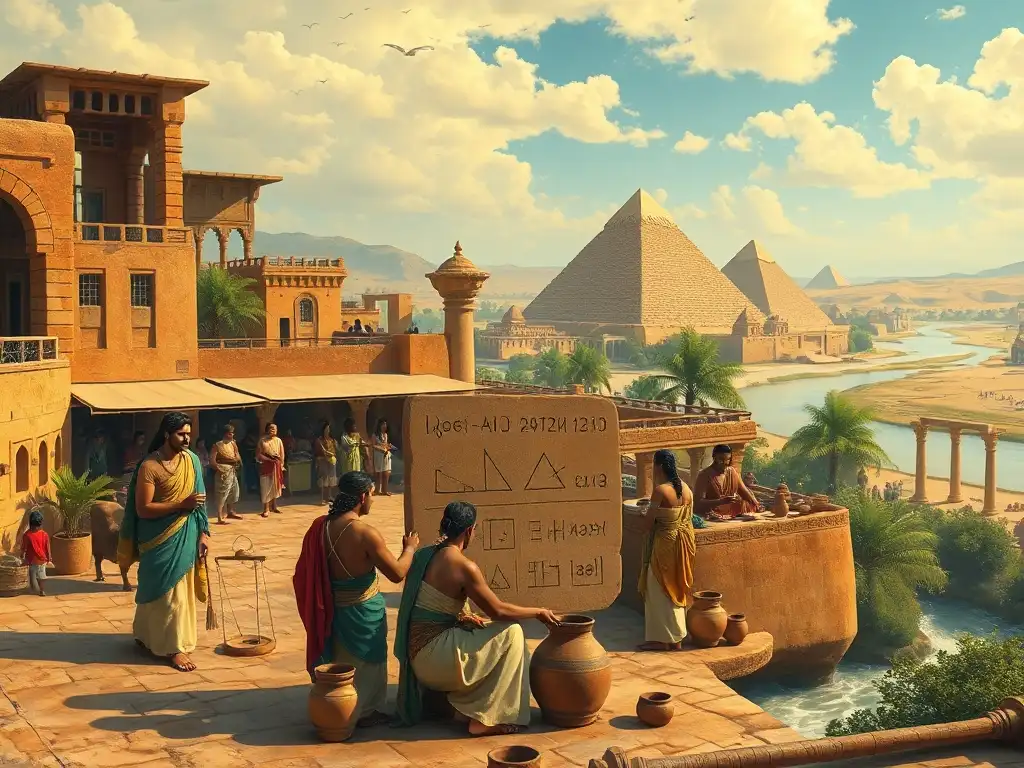
The mathematical innovations of the Indus Valley Civilization can be better appreciated when compared to those from other ancient civilizations, such as Mesopotamia and Egypt. Each culture had its own unique approach to mathematics, heavily influenced by their societal needs, geographical contexts, and available resources. A comparative analysis reveals both similarities and distinctive characteristics in their mathematical contributions.
Indus Valley Mathematics vs. Mesopotamian Mathematics
The Mesopotamians are often credited with some of the earliest mathematical developments, including the use of a base-60 (sexagesimal) system. In contrast, the Indus Valley Civilization utilized a more practical approach, focusing primarily on measurements and trade. While Mesopotamian mathematics was heavily tied to astronomy and administrative record-keeping, the Indus Valley’s application of mathematics revolved around daily life and urban planning.
- Measurement Systems: The Indus Valley employed a standardized system of weights and measures, which facilitated trade and commerce. This system was more refined and practical for daily use compared to Mesopotamian systems, which were often more theoretical.
- Urban Planning: The grid-like urban planning of Indus Valley cities such as Mohenjo-Daro and Harappa indicates advanced mathematical knowledge, especially in geometry and spatial organization. In contrast, Mesopotamian cities were less systematically laid out.
Despite these differences, both civilizations shared an understanding of the importance of mathematics in administration and trade, reflecting a common thread in ancient societal development.
Indus Valley Contributions Compared to Ancient Egyptian Innovations
Egyptian mathematics is known for its contributions to geometry, especially in the context of architecture and land surveying. The Indus Valley Civilization, however, showcased a broader application of mathematics in daily life, particularly in trade and urban infrastructure.
- Geometry and Architecture: While the Egyptians utilized geometry to construct monumental structures like the pyramids, the Indus Valley's focus was on the layout of cities, drainage systems, and standardized brick sizes. This indicates a practical application of mathematical principles to ensure functionality and sustainability.
- Record Keeping: The Egyptians used hieroglyphs and a system of numeration for their record-keeping, while the Indus Valley is believed to have developed a form of script that may have encoded numerical information. However, the extent and nature of this script remain largely undeciphered, making direct comparisons challenging.
Overall, while both civilizations made significant contributions to mathematics, the Indus Valley's innovations were more directly tied to daily life and urban management, showcasing a unique approach to mathematical applications.
Lasting Impact of Indus Valley Mathematics
The mathematical contributions of the Indus Valley Civilization have had a lasting impact, not only on subsequent Indian developments but also on modern applications in various fields. Understanding this legacy sheds light on how ancient practices can continue to influence contemporary society.
Influence on Later Indian Mathematical Developments
The foundation laid by the Indus Valley Civilization significantly influenced later developments in Indian mathematics, particularly during the classical period. The emphasis on measurement and practical applications can be traced through several key advancements:
- Decimal System: The use of standardized weights and measures in the Indus Valley likely contributed to the later development of the decimal system in India. This system became integral to mathematics and commerce, allowing for more sophisticated calculations and trade practices.
- Geometry in Architecture: The principles of geometry employed in the urban planning of Indus Valley cities can be seen in later Indian architecture, particularly in temple constructions and city layouts, where precise measurements and symmetry were essential.
The enduring legacy of the Indus Valley's mathematical practices can be seen in the works of later mathematicians like Aryabhata and Brahmagupta, who built upon these foundational concepts.
Indus Valley Contributions in Modern Contexts
Today, the mathematical contributions of the Indus Valley Civilization continue to resonate in various modern contexts. Understanding their innovations offers insights into contemporary practices in fields such as urban planning, engineering, and commerce.
- Urban Planning: The principles of organized urban layouts pioneered by the Indus Valley can be observed in modern city planning, where efficient use of space and infrastructure is crucial for sustainability.
- Measurement and Trade: The standardized weights and measures established by the Indus Valley have parallels in today's global trade systems, promoting fairness and efficiency in commerce.
Incorporating these ancient mathematical principles into modern practices reaffirms the timeless relevance of the Indus Valley's contributions, highlighting their significant role in shaping the trajectory of mathematics both historically and in contemporary society.
Conclusion: The Legacy of Indus Valley Mathematics
The Indus Valley Civilization, flourishing around 2500 BCE, made significant strides in mathematics that have had a lasting impact on subsequent cultures and societies. Their contributions are not merely relics of the past but vital elements of mathematical heritage that continue to influence modern mathematics. The innovative practices of the Indus Valley people in areas such as geometry, measurement, and record-keeping laid foundational principles for future mathematical developments. The careful design of their urban layouts, the sophisticated weighing scales, and the standardized weights indicate a high level of mathematical understanding and application in their daily lives.
Their legacy is evident in the mathematical systems that emerged later in Indian history and even in contemporary practices. The precision in their trade measurements and the strategic planning of their cities underscore the importance of mathematics in both governance and commerce. As scholars continue to unravel the complexities of Indus Valley mathematics, it becomes increasingly clear that their innovations not only contributed to their civilization's success but also established enduring principles that would resonate throughout history.
Summary of Key Contributions and Innovations
The Indus Valley Civilization's contributions to mathematics can be summarized as follows:
- Standardization of Weights and Measures: The uniformity of weights used in trade indicates an advanced understanding of measurement, essential for commerce.
- Geometry in Urban Planning: The meticulous layout of cities like Mohenjo-Daro and Harappa showcases geometric principles applied to urban design and architecture.
- Mathematical Record-Keeping: Evidence of inscriptions on seals suggests the use of symbols and potentially an early form of numerical notation.
- Use of the Decimal System: The innovative use of a decimal system in weights and measures demonstrates an advanced numerical understanding, which is a cornerstone of modern mathematics.
These key contributions highlight the sophistication of mathematical thought in the Indus Valley and its critical role in everyday life.
The Importance of Preserving Ancient Mathematical Knowledge
Preserving the mathematical knowledge of the Indus Valley is crucial for several reasons. Firstly, it provides insight into the cognitive abilities and problem-solving skills of ancient societies. Understanding how these early mathematicians approached numerical challenges can enrich our comprehension of the evolution of mathematical thought. Secondly, it emphasizes the interconnectedness of cultures throughout history; the mathematical advancements of the Indus Valley influenced later civilizations, including those in ancient Greece and beyond.
Moreover, by studying ancient mathematical practices, modern mathematicians and historians can draw parallels to contemporary issues in mathematics education and application. This preservation aids not only in academic pursuits but also in fostering a sense of cultural identity and continuity, reminding us of the rich intellectual heritage that shapes our understanding of mathematics today.
References for Further Reading
Suggested Books on Indus Valley Civilization
-
"The Indus Civilization: A Contemporary Perspective" by Jane McIntosh
This book provides a comprehensive overview of the Indus Valley Civilization, including its contributions to various fields, including mathematics.
-
"Indus Valley Civilization: An Interdisciplinary Approach" by Shereen Ratnagar
An insightful exploration of the socio-economic and cultural aspects of the Indus Valley, highlighting its mathematical innovations.
-
"Mathematics in Ancient India" by Kim Plofker
This book examines the development of mathematical ideas in ancient India, including influences from the Indus Valley.
Academic Articles on Ancient Indian Mathematics
-
"Mathematical Practices in the Indus Valley Civilization" by R. N. Rao
An academic study detailing the mathematical techniques employed in the Indus Valley and their implications for trade and urban planning.
-
"The Decimal System and Its Early Applications in the Indus Valley" by V. K. Sharma
This article explores the origins and uses of the decimal system within the context of the Indus Valley, linking it to later developments in Indian mathematics.
-
"Geometric Patterns in Indus Valley Urban Planning" by A. B. Desai
A scholarly examination of the geometric principles evident in the city layouts of the Indus Valley, enhancing our understanding of their mathematical capabilities.
- Introduction to Indus Valley Mathematics Contributions
- Historical Context of Mathematics in the Indus Valley
- Daily Applications of Mathematics in the Indus Valley
- Innovations in Indus Valley Mathematics
- Comparison with Other Ancient Civilizations
- Lasting Impact of Indus Valley Mathematics
- Conclusion: The Legacy of Indus Valley Mathematics
- References for Further Reading
- What were the primary mathematical contributions of the Indus Valley civilization?
- How did the Indus Valley people apply mathematics in their daily lives?
- What innovations in geometry originated from the Indus Valley?
- How does the Indus Valley influence modern mathematics?
- What role did mathematics play in the overall culture of the Indus Valley civilization?
Frequently Asked Questions
What were the primary mathematical contributions of the Indus Valley civilization?
The Indus Valley civilization is known for its advanced mathematical concepts, including the use of geometry and measuring techniques for urban planning and construction.
How did the Indus Valley people apply mathematics in their daily lives?
The people of the Indus Valley applied mathematics in various ways, such as in trade, land measurement, and architecture, which showcased their sophisticated understanding of numbers.
What innovations in geometry originated from the Indus Valley?
Innovations in geometry from the Indus Valley include the use of grid systems for city layouts and the incorporation of standardized weights and measures, which facilitated trade.
How does the Indus Valley influence modern mathematics?
The Indus Valley's methodologies laid a foundation for later mathematical principles, influencing the development of numerical systems and mathematical operations in subsequent ancient cultures.
What role did mathematics play in the overall culture of the Indus Valley civilization?
Mathematics was integral to the Indus Valley culture, reflecting their advancements in urban planning, agriculture, and trade, which highlighted their innovative spirit and organizational skills.
Final Reflection: The Enduring Legacy of Indus Valley Mathematics
The contributions of the Indus Valley civilization to mathematics are not just relics of the past; they are foundational elements that continue to shape our daily lives. From the intricate systems of measurement to the early concepts of geometry, the innovations of this ancient society resonate in modern mathematical practices and applications. Their ability to integrate mathematics into everyday activities serves as a powerful reminder of the importance of numerical literacy in our contemporary world.
Culture and society are profoundly influenced by the mathematical principles established by the Indus Valley civilization. Their methods of trade, construction, and urban planning laid the groundwork for future generations to build upon. As we navigate through a world increasingly driven by data and technology, it is essential to recognize the roots of our mathematical understanding. Mathematics is the language in which God has written the universe.
– Galileo Galilei. This quote encapsulates the timeless nature of mathematics, echoing the significance of the Indus Valley's contributions that continue to inspire and inform our understanding of the world.
As you reflect on the remarkable achievements of the Indus Valley civilization, consider how these ancient mathematical concepts can influence your own life. Embrace the lessons of innovation and practicality that they impart, and seek to apply mathematical thinking in your daily decisions. Whether it’s through budgeting, planning, or problem-solving, let the legacy of Indus Valley mathematics guide you toward a more structured and insightful approach to the challenges you face. The past is not merely history; it is a wellspring of wisdom that can illuminate our paths forward.
Unveil the Wonders of Ancient Mathematics!
Thank you for exploring the fascinating contributions of the Indus Valley to the world of mathematics! We hope you found inspiration in how their innovative spirit continues to influence our daily lives. Now, it's time to take what you've learned and put it into action.
Here are some practical steps to deepen your appreciation and understanding of ancient mathematical concepts:
- Start a Daily Math Challenge: Incorporate simple mathematical exercises into your day, inspired by ancient techniques. Share your results or progress with friends!
- Explore Further: Dive into more articles on ancient innovations in mathematics to expand your knowledge. Consider researching the significant contributions from various ancient civilizations as well.
- Join the Conversation: Engage in online forums or social media groups focused on history and mathematics. Share your thoughts on how ancient methods can enhance modern problem-solving.
How can the mathematical principles from the Indus Valley transform your daily problem-solving approach?