
Astronomy and the Gupta Empire: Mapping the Stars of Ancient India


Welcome to Ancient India History, where we embark on a captivating journey through the rich tapestry of ancient Indian civilizations. Here, we delve into the remarkable contributions that have shaped our understanding of the world, with a special focus on the Gupta Empire. In our featured article, “Astronomy and the Gupta Empire: Mapping the Stars of Ancient India,” we explore the groundbreaking advancements in astronomy that emerged during this golden age.
What celestial wonders did the Gupta scholars unveil, and how did their observations influence future generations? Join us as we unlock the mysteries of the stars and uncover the profound legacy of a civilization that continues to inspire curiosity and knowledge.
- Introduction to Gupta Empire Astronomy Contributions
- Historical Context of Astronomy in the Gupta Empire
- Prominent Astronomers of the Gupta Period
- Key Contributions of Gupta Empire Astronomy
- The Impact of Gupta Astronomy on Later Civilizations
- Legacy of Gupta Empire Astronomy
- Conclusion: The Gupta Empire's Lasting Influence on Astronomy
-
Frequently Asked Questions
- What were the key astronomy contributions of the Gupta Empire?
- How did Gupta scholars influence later astronomical research?
- What tools or instruments did the Gupta Empire use for astronomy?
- How did the cultural context of the Gupta period affect astronomy?
- What was the impact of Gupta astronomy on later civilizations?
- Final Reflection: Illuminating the Cosmos of the Gupta Empire
- Unveil the Cosmos of the Gupta Empire!
Introduction to Gupta Empire Astronomy Contributions
The Gupta Empire, often referred to as the Golden Age of India, was a remarkable period in ancient history that laid the groundwork for many scientific and cultural advancements. Among these, astronomy emerged as a significant field, reflecting the civilization's profound understanding of the cosmos.
The contributions of the Gupta Empire to astronomy not only enriched the scientific knowledge of the time but also influenced future generations, both in India and beyond. This article delves into the remarkable achievements in astronomy during the Gupta period, showcasing how these ancient scholars mapped the stars and significantly contributed to our understanding of the universe.
Overview of the Gupta Empire
The Gupta Empire flourished from approximately 320 to 550 CE in what is now northern India. Founded by Maharaja Sri Gupta, this era is characterized by a unified political structure, extensive trade networks, and a flourishing of arts and sciences. Historians often regard this period as a pinnacle of cultural and intellectual activity, marked by significant advancements in various fields, including mathematics, literature, and, notably, astronomy.
Key aspects of the Gupta Empire include:
- Political Stability: Under rulers like Chandragupta II and Samudragupta, the empire experienced relative peace and stability, allowing for cultural and scientific pursuits.
- Cultural Flourishing: The Gupta period saw the creation of renowned works in literature, such as Kalidasa's plays, as well as advancements in fine arts, sculpture, and architecture.
- Scientific Progress: Scholars like Aryabhata and Varahamihira emerged during this time, making groundbreaking contributions to mathematics and astronomy.
The achievements in astronomy during this golden age laid a foundation for future explorations and discoveries that would resonate through centuries.
The Importance of Astronomy in Ancient India
Astronomy in ancient India was not merely a scientific endeavor; it was deeply intertwined with cultural, religious, and agricultural practices. The stars and celestial bodies played a crucial role in guiding various aspects of daily life, from navigation and timekeeping to seasonal agricultural cycles.
Key points highlighting the importance of astronomy include:
- Religious Significance: Celestial phenomena were often associated with deities and played a role in religious rituals and festivals.
- Agricultural Planning: Knowledge of celestial cycles was vital for determining the best times for sowing and harvesting crops.
- Navigation and Trade: Understanding the stars aided in maritime navigation, crucial for trade routes that connected India with distant lands.
During the Gupta Empire, scholars developed sophisticated astronomical instruments and techniques, enabling them to make significant contributions to the field. Their work would eventually influence not only Indian society but also the broader scientific community across the globe.
Historical Context of Astronomy in the Gupta Empire

The Gupta Empire, often hailed as the "Golden Age" of ancient India, spanned from approximately 320 to 550 CE. This period was marked by significant advancements across various fields, including science, mathematics, and astronomy. The Gupta rulers fostered an environment that encouraged intellectual pursuits, leading to remarkable contributions in astronomical knowledge and practices.
During this era, astronomy was not merely an academic discipline; it played a crucial role in various aspects of daily life and governance. The alignment of celestial bodies was often linked to agricultural cycles, religious observances, and even political decisions. The Gupta astronomers sought to understand the cosmos, using their observations to create calendars that dictated the timing of festivals and agricultural activities.
The Gupta period saw the fusion of traditional Vedic astronomy with new astronomical ideas from Hellenistic influences. Scholars engaged in extensive studies and observations, leading to a greater understanding of celestial phenomena. Cities like Pataliputra became vibrant centers of learning, where astronomers, mathematicians, and philosophers collaborated.
The Role of Astronomy in Ancient Indian Society
In ancient Indian society, astronomy held immense significance. It was interwoven with religion, culture, and practical life. Here are several key aspects demonstrating its importance:
- Agriculture: Farmers relied on astronomical observations to determine the best times for planting and harvesting. The lunar calendar was especially influential in agrarian societies, guiding agricultural practices based on celestial cycles.
- Religious Practices: Many religious rituals were aligned with celestial events. Festivals were often celebrated during specific lunar phases, and temples were designed with astronomical orientations to align with celestial bodies.
- Navigation and Trade: Astronomical knowledge aided in navigation, particularly for maritime trade. Sailors used the stars to chart their courses, ensuring safe passage across vast distances.
- Cultural Identity: Astronomy was a source of pride and cultural identity. The Gupta Empire’s advancements in astronomy contributed to a sense of accomplishment and intellectual prestige, reinforcing the civilization's status in the broader ancient world.
Key Astronomical Texts from the Gupta Era
The Gupta Empire produced several significant astronomical texts that laid the foundation for future studies in the field. Some of the most notable works include:
- Aryabhatiya by Aryabhata (circa 476–550 CE):
- This seminal work encompasses a range of subjects, including mathematics and astronomy. Aryabhata introduced concepts such as the rotation of the Earth on its axis and calculated the circumference of the Earth with remarkable accuracy.
- He also proposed a heliocentric model of the solar system, emphasizing the importance of observing celestial bodies to understand their movements.
- Surya Siddhanta:
- This ancient text, attributed to an unknown author, is a comprehensive treatise on astronomy and mathematics. It provides detailed calculations of planetary positions and eclipses, emphasizing the significance of accurate astronomical observations.
- The Surya Siddhanta also introduced the concept of time measurement, including the division of time into smaller units, which became fundamental to later astronomical studies.
- Brahmasphutasiddhanta by Brahmagupta (circa 598 CE):
- This influential work not only advanced astronomical knowledge but also integrated mathematics with astronomy. Brahmagupta's ideas on zero and negative numbers significantly impacted both fields.
- His discussions on planetary motion and eclipses further enriched the astronomical understanding during the Gupta period.
The contributions of Gupta Empire astronomy were pivotal in shaping the future of Indian astronomy and left an indelible mark on the scientific advancements of subsequent civilizations. The legacy of these texts and their authors continues to resonate in modern astronomy, showcasing the brilliance of ancient Indian scholars.
Prominent Astronomers of the Gupta Period

The Gupta Empire, often referred to as the Golden Age of India, witnessed remarkable advancements in various fields, including astronomy. This era was characterized by the contributions of several prominent astronomers whose works not only laid the foundation for future scientific endeavors but also enriched the cultural tapestry of ancient India. Among them, Aryabhata and Varahamihira stand out for their groundbreaking contributions to astronomy and astrology.
Aryabhata: The Pioneer of Gupta Astronomy
Major Works and Discoveries
Aryabhata, born in 476 CE, is celebrated as one of the first major figures in Indian mathematics and astronomy. His seminal work, the Aryabhatiya, was composed at the young age of 23 and encompasses a wide range of topics, from arithmetic to astronomy.
In the Aryabhatiya, Aryabhata introduced several revolutionary concepts, including:
- The Concept of Zero: Aryabhata was one of the earliest mathematicians to use a positional number system that included a symbol for zero, which later became fundamental in mathematics.
- The Earth's Rotation: He proposed that the Earth rotates on its axis, which was a radical departure from the prevailing belief that celestial bodies revolved around a stationary Earth.
- The Calculation of the Value of Pi: Aryabhata calculated the value of π (pi) to be approximately 3.1416, which was remarkably accurate for his time.
His astronomical calculations included the determination of the length of the solar year, which he estimated to be 365.358 days, and he also provided methods to calculate the positions of the planets.
Aryabhata's Influence on Later Astronomers
Aryabhata's contributions had a profound impact on subsequent generations of astronomers in India and beyond. His works were translated into Arabic in the 8th century, influencing Islamic scholars and contributing to the development of astronomy in the Islamic Golden Age. Notable astronomers such as Brahmagupta and Bhaskara II built upon Aryabhata's findings, further refining astronomical models and calculations.
His emphasis on empirical observation and mathematical rigor set a standard that resonated through the ages, establishing a scientific tradition that would inspire many future astronomers.
Varahamihira: Contributions to Astronomy and Astrology
The Brihat Samhita and Its Significance
Varahamihira, another luminary of the Gupta period, flourished around the 6th century CE. His most notable work, the Brihat Samhita, is an encyclopedic text that covers a multitude of subjects including astronomy, astrology, geography, and architecture.
The Brihat Samhita is significant for its comprehensive approach to astrology and its integration with astronomical phenomena. Key features of this work include:
- Astrological Predictions: Varahamihira emphasized the importance of astronomy in astrology, providing extensive guidelines on how celestial movements influence terrestrial events.
- Weather Forecasting: He made early contributions to meteorology, discussing various atmospheric phenomena and their implications on agriculture and daily life.
- Surveys of Cities: The text includes descriptions of cities and towns, reflecting an understanding of geography intertwined with astronomical observations.
Varahamihira's Innovations in Astronomical Predictions
Varahamihira's innovative approach to astronomical predictions involved the use of mathematical calculations to forecast celestial events. He developed methods for predicting eclipses and planetary conjunctions, which were critical for both agricultural planning and religious observances in ancient Indian society.
His work also laid the groundwork for later advancements in both astronomy and astrology, with his principles guiding subsequent scholars in their exploration of celestial phenomena. Varahamihira's fusion of astronomy and astrology exemplifies the holistic nature of Gupta-era science, wherein disciplines were interconnected and mutually reinforcing.
The contributions of Aryabhata and Varahamihira during the Gupta Empire underscore the significant advancements in astronomy that characterized this Golden Age of Indian civilization. Their works not only enriched the field of astronomy but also established a legacy that influenced scientific thought for centuries to come.
Key Contributions of Gupta Empire Astronomy

The Gupta Empire, often heralded as the Golden Age of India, made significant strides in various fields, particularly astronomy. Scholars during this period built upon the rich traditions of earlier civilizations and introduced groundbreaking concepts and inventions that shaped the understanding of the cosmos. This section highlights the key contributions of Gupta Empire astronomy, focusing on the development of astronomical instruments, advances in celestial calculations, and the innovative concept of the heliocentric model.
Development of Astronomical Instruments
The Gupta period saw remarkable advancements in the design and construction of astronomical instruments. These instruments were crucial for observing celestial bodies and making accurate measurements. Two notable instruments developed during this time were the astrolabe and the shanku (a type of gnomon).
- Astrolabe: This versatile instrument allowed astronomers to measure the altitude of stars and planets, facilitating the calculation of time and geographical latitude. Its usage spread beyond India, influencing practices in the Islamic world and Europe.
- Shanku: Primarily used for solar observations, the shanku was a simple yet effective tool for determining the sun's position throughout the day. By casting a shadow, astronomers could ascertain solar time, thereby enhancing the accuracy of their astronomical calculations.
These instruments not only improved observational capabilities but also laid the groundwork for future developments in the field of astronomy.
Advances in Celestial Calculations
During the Gupta Empire, astronomers made significant advancements in celestial calculations, particularly in understanding planetary motion and timekeeping. A pioneering figure in this realm was Aryabhata, whose work laid the foundation for later astronomical studies.
- Planetary Motion: Aryabhata proposed a model that accurately described the movement of planets across the sky. He introduced the concept of epicycles, which explained the apparent retrograde motion of planets, a topic that would later be crucial in the development of heliocentric theories.
- Timekeeping: The Gupta astronomers further refined the calculation of the length of the solar year. Aryabhata calculated the solar year to be approximately 365.358 days, which was remarkably close to the modern value of 365.2425 days. This precision in timekeeping was vital for agricultural practices and religious observances.
These advancements in celestial calculations exemplify the scientific rigor and innovative spirit of the Gupta Empire, positioning it as a leader in astronomical knowledge during ancient times.
The Concept of the Heliocentric Model
One of the most revolutionary contributions of Gupta astronomy was the early formulation of the heliocentric model, which posited that the Earth revolves around the sun. Although this concept was not fully developed until later, the seeds were planted during the Gupta period.
- Aryabhata's Insights: Aryabhata's writings hinted at heliocentric ideas when he described the Earth's rotation on its axis. He recognized that the apparent movement of celestial bodies was due to the Earth’s rotation rather than the movement of the heavens. This insight was a significant departure from the geocentric models prevalent in earlier civilizations.
- Influence on Future Thinkers: The heliocentric model laid the groundwork for later astronomers, including those in the Islamic Golden Age and eventually Renaissance Europe. The acknowledgment of Earth's motion was pivotal in challenging established astronomical paradigms and fostering a more accurate understanding of the universe.
The Gupta Empire's contributions to astronomy were foundational, influencing not only Indian thought but also the broader trajectory of astronomical science. The development of instruments, advances in calculations, and the embryonic ideas of heliocentrism underscore the Empire's role in the history of astronomy.
The Impact of Gupta Astronomy on Later Civilizations

The Gupta Empire, often referred to as the Golden Age of India, made remarkable contributions to various fields, including astronomy. The advancements in this discipline during the Gupta period not only shaped Indian scientific thought but also left a lasting impact on civilizations that followed. This section explores how the astronomical achievements of the Gupta Empire influenced later cultures, particularly Islamic astronomy and the scientific renaissance in Europe.
Influence on Islamic Astronomy
The Gupta Empire's astronomical discoveries significantly influenced Islamic scholars during the medieval period. As the Islamic Golden Age unfolded, scholars such as Al-Battani and Al-Khwarizmi built upon the works of Indian astronomers.
- Translation Movements: Many texts from the Gupta period, including those by Aryabhata and Brahmagupta, were translated into Arabic. This facilitated the exchange of knowledge and the assimilation of Indian mathematical concepts, such as the decimal system and the concepts of zero.
- Siddhanta Influence: The Siddhanta, a set of astronomical texts originating from the Gupta Empire, was particularly influential. Islamic astronomers adopted and modified these texts, enriching their own astronomical practices. For example, Al-Battani utilized Aryabhata's calculations to refine the measurement of the solar year.
- Star Catalogs: Gupta astronomers created comprehensive star catalogs, which were later referenced by Islamic astronomers. The inclusion of precise celestial coordinates allowed for enhanced navigation and contributed to the development of astrolabes, essential tools in Islamic astronomy.
The cross-cultural exchanges led to a synthesis of knowledge that not only advanced Islamic astronomy but also set the stage for future developments in Europe.
Contributions to the Renaissance of Science in Europe
The rediscovery and translation of ancient texts from the Gupta Empire during the European Renaissance played a pivotal role in shaping modern science. The impact of Gupta astronomy can be traced through several key developments:
- Mathematical Innovations: The introduction of the decimal system and the concept of zero were crucial to the advancements in mathematics during the Renaissance. European scholars, influenced by Indian mathematics, began to embrace these concepts, leading to significant developments in mathematical calculations.
- Astronomical Models: The heliocentric models proposed by Indian astronomers, although not fully adopted until later, laid the groundwork for the acceptance of the Copernican model in Europe. The understanding of planetary motions developed by Gupta astronomers was instrumental in challenging the geocentric views prevalent in medieval Europe.
- Scientific Methodology: The analytical approach of Gupta astronomers, emphasizing observation and calculation, resonated with the emerging scientific methodologies of the Renaissance. This emphasis on empirical evidence and logical reasoning became foundational to the scientific revolution.
The contributions of the Gupta Empire to astronomy and mathematics not only enriched their own civilization but also catalyzed transformations in Islamic and European scientific thought. As these ideas permeated through cultures, they collectively advanced humanity's understanding of the cosmos, reflecting the enduring legacy of Gupta Empire astronomy contributions.
Legacy of Gupta Empire Astronomy
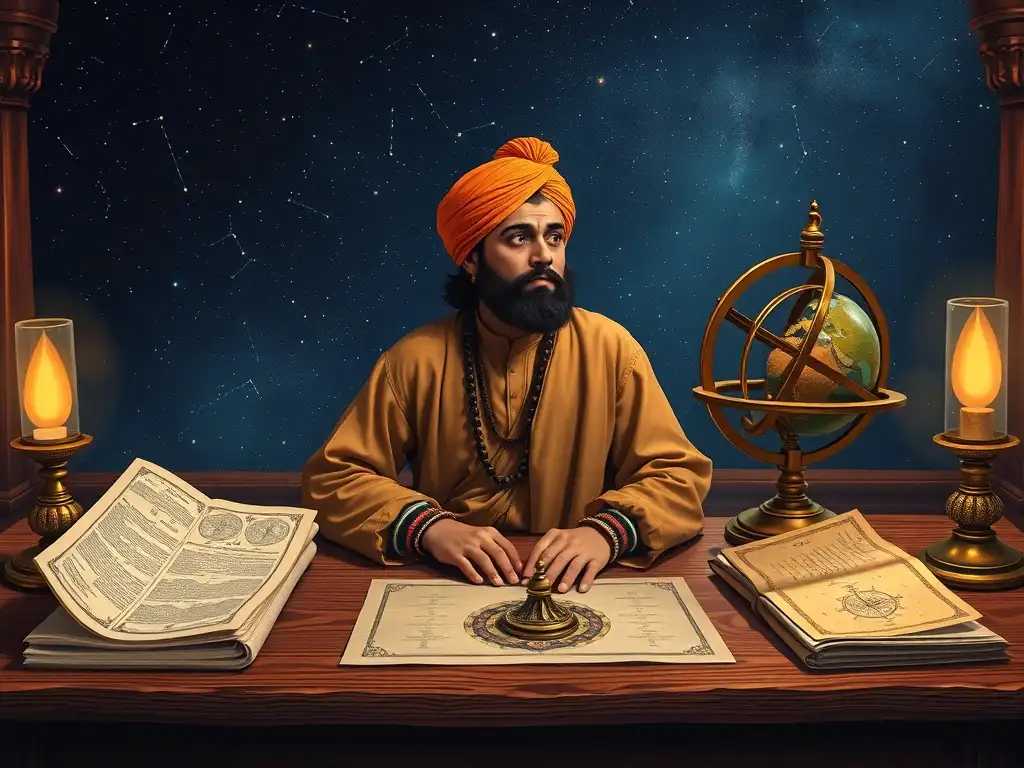
The Gupta Empire, often heralded as a Golden Age in Indian history, made monumental contributions to various fields, with astronomy being one of the most significant. The advancements during this period not only improved the understanding of celestial phenomena but also laid the foundation for future astronomical studies in India and beyond.
The Enduring Significance of Gupta Innovations
The innovations in astronomy during the Gupta Empire were characterized by a blend of observational prowess and mathematical ingenuity. Astronomers like Aryabhata and Varahamihira were at the forefront of these advancements, introducing concepts that were revolutionary for their time.
- Aryabhata's Contributions:
- Aryabhata (476–550 CE) is perhaps the most renowned astronomer of this era. His seminal work, the Aryabhatiya, covered various aspects of mathematics and astronomy. Some of his key contributions include:
- Calculation of the Earth's circumference: Aryabhata estimated it to be about 39,968 kilometers, remarkably close to modern measurements.
- Explanation of the lunar phases: He articulated how the moon shines by reflecting sunlight and detailed the reasons for lunar eclipses.
- Aryabhata (476–550 CE) is perhaps the most renowned astronomer of this era. His seminal work, the Aryabhatiya, covered various aspects of mathematics and astronomy. Some of his key contributions include:
- Varahamihira's Works:
- Varahamihira (505–587 CE) authored the Brihat Samhita, an encyclopedic work that encompassed not only astronomy but also astrology, meteorology, and architecture. His contributions included:
- The identification of various planetary motions and their effects on terrestrial phenomena.
- The introduction of astrological calculations that integrated astronomical data with cultural practices.
- Varahamihira (505–587 CE) authored the Brihat Samhita, an encyclopedic work that encompassed not only astronomy but also astrology, meteorology, and architecture. His contributions included:
The legacy of these innovations is evident in the precision of astronomical calculations and the methodologies developed for celestial observations. The Gupta period's understanding of astronomy significantly influenced subsequent generations, including the works of later Indian astronomers and mathematicians.
Modern Perspectives on Ancient Indian Astronomy
Today, the contributions of the Gupta Empire to astronomy are recognized as pivotal in the history of science. Scholars and researchers are increasingly appreciating the sophistication of ancient Indian astronomy, which often goes unacknowledged in mainstream historical narratives.
- Global Influence:
- The works of Gupta astronomers have been found to resonate across various cultures. For instance, Aryabhata's methods for calculating planetary positions influenced Islamic and European astronomers during the medieval period. The transmission of this knowledge is a testament to the Gupta Empire's impact on global scientific development.
- Recent Discoveries:
- Modern archaeologists and historians continue to uncover evidence of ancient observatories and texts that highlight the advanced state of Indian astronomy. The alignment of certain ancient structures with celestial bodies suggests a sophisticated understanding of astronomy that was practically applied in daily life.
- Integration with Modern Science:
- Contemporary scientists are exploring ancient texts to find insights into mathematical techniques that could be relevant today. The precision of calculations and methods developed during the Gupta period provides valuable lessons for modern astronomical research.
The Gupta Empire's contributions to astronomy are not only a testament to their intellectual achievements but also serve as a bridge connecting ancient knowledge with contemporary science. As we continue to explore this rich legacy, the significance of Gupta astronomy remains a fascinating area of study, reflecting the empire's profound influence on the trajectory of astronomical thought throughout history.
Conclusion: The Gupta Empire's Lasting Influence on Astronomy
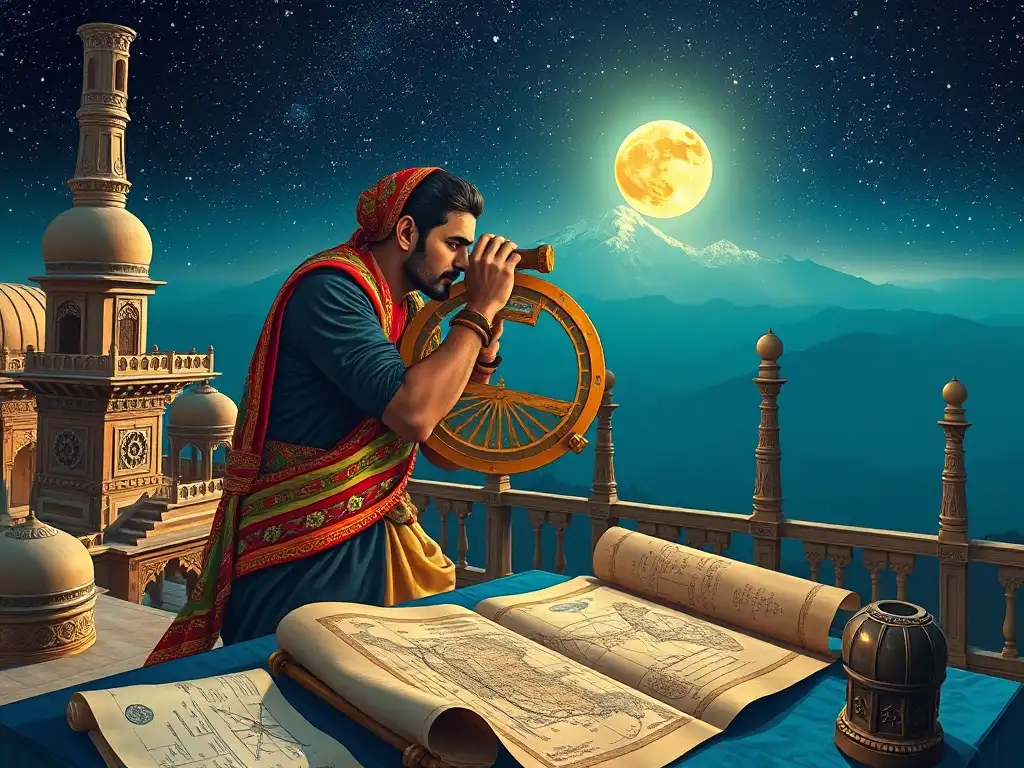
The Gupta Empire, often referred to as the Golden Age of India, stands out for its remarkable contributions to various fields, particularly in astronomy. This period, which spanned from approximately 320 to 550 CE, witnessed an unprecedented flourishing of scientific inquiry and intellectual development. The advancements in astronomy during this era not only laid the groundwork for future explorations but also showcased the Gupta scholars’ profound understanding of celestial phenomena.
Reflection on Gupta Empire Astronomy Contributions
The Gupta Empire's contributions to astronomy can be seen through the works of eminent scholars like Aryabhata and Varahamihira. Aryabhata’s seminal work, the Aryabhatiya, introduced innovative concepts that reshaped the understanding of astronomy in several ways:
- Heliocentric Ideas: Aryabhata proposed that the Earth rotates on its axis, a revolutionary idea that challenged the geocentric models prevalent at the time. This was a significant leap in understanding the nature of planetary motion.
- Accurate Calculations: He accurately calculated the circumference of the Earth, estimating it to be about 39,968 kilometers. His methods demonstrated advanced mathematical techniques, including the use of zero and place value systems.
- Astronomical Tables: Aryabhata also created tables that predicted the positions of celestial bodies, which facilitated navigation and timekeeping. This was crucial for both practical day-to-day activities and for ceremonial purposes.
Varahamihira’s contributions further enriched Gupta astronomy. His work, Brihat Samhita, compiled extensive knowledge on various subjects, including astrology, meteorology, and natural phenomena. Through detailed observations and calculations, he provided insights into:
- Eclipses: Varahamihira meticulously documented solar and lunar eclipses, offering explanations based on empirical observations.
- Planetary Motion: His theories on the movements of planets provided a framework that influenced subsequent Indian and Islamic astronomers.
These contributions reflect a sophisticated understanding of astronomy that combined observation with mathematical precision, setting a standard for future generations.
The Importance of Preserving Ancient Knowledge
Preserving the astronomical knowledge of the Gupta Empire is vital for several reasons. Firstly, it allows modern scholars to appreciate the historical context and evolution of astronomical thought. Understanding the foundations laid by Gupta astronomers can illuminate the trajectory of scientific progress across cultures.
Moreover, the preservation of ancient texts and manuscripts ensures that future generations can learn from the insights of past scholars. Initiatives to digitize and translate these works can make this knowledge accessible globally, fostering a broader appreciation of ancient Indian contributions to science.
Finally, promoting awareness of the Gupta Empire's achievements can inspire contemporary scientific inquiry and innovation. By recognizing and valuing the intellectual heritage of ancient civilizations, we can cultivate a more inclusive narrative of the history of science, celebrating the diverse contributions that have shaped our understanding of the universe.
The Gupta Empire's astronomy contributions are a testament to the era's intellectual vigor and remain relevant to both historical scholarship and contemporary scientific discourse. The legacy of Gupta scholars not only enriches our understanding of astronomy but also exemplifies the importance of preserving ancient knowledge for future exploration and discovery.
Frequently Asked Questions
What were the key astronomy contributions of the Gupta Empire?
The Gupta Empire made significant advancements in astronomy, including the development of accurate calendar systems and the understanding of planetary motions, which laid the groundwork for future astronomical studies.
How did Gupta scholars influence later astronomical research?
Gupta scholars, like Aryabhata, introduced innovative ideas such as the heliocentric theory and calculations of earth's circumference, which greatly influenced both Indian and global astronomy.
What tools or instruments did the Gupta Empire use for astronomy?
The Gupta Empire utilized various astronomical instruments, such as the gnomon for measuring shadow lengths and the armillary sphere for observing celestial bodies, enhancing their ability to study the stars.
How did the cultural context of the Gupta period affect astronomy?
The cultural context of the Gupta period fostered a climate of intellectual inquiry and patronage, allowing scholars to explore and document astronomical phenomena, thus enriching the scientific legacy of ancient India.
What was the impact of Gupta astronomy on later civilizations?
Gupta astronomy had a profound impact on later civilizations, including Islamic and European scholars, who translated and built upon Gupta texts, thereby disseminating Indian astronomical knowledge across the world.
Final Reflection: Illuminating the Cosmos of the Gupta Empire
The contributions of the Gupta Empire to astronomy are not merely historical footnotes; they are a testament to humanity's enduring quest for knowledge and understanding of the universe. In an age where science and technology are at the forefront of our lives, the groundbreaking work of ancient Indian astronomers reminds us of the timeless nature of curiosity and exploration. The Gupta Empire's advancements in astronomy laid the groundwork for future generations, showcasing how the pursuit of knowledge can transcend time and culture.
The influence of Gupta astronomy is still felt today, as it continues to inspire modern scientists and enthusiasts alike. The intricate calculations and celestial observations made by scholars like Aryabhata and Varahamihira have shaped our understanding of the cosmos and the principles of mathematics. Their work serves as a bridge connecting ancient wisdom with contemporary science. The study of the stars is not just about the cosmos; it is about understanding our place in it.
This quote encapsulates the essence of how the Gupta Empire's contributions resonate with our current scientific endeavors and our quest for identity in the vast universe.
As we reflect on the astronomical achievements of the Gupta Empire, let us embrace the spirit of inquiry that defined this remarkable period. I invite you to explore the stars in your own life—whether through scientific study, artistic expression, or philosophical contemplation. Consider how the lessons from the past can guide us in our present and future pursuits. By fostering a sense of wonder and curiosity, we can continue to chart our own paths through the cosmos, inspired by the brilliance of those who came before us.
Unveil the Cosmos of the Gupta Empire!
Thank you for diving deep into the fascinating world of astronomy during the Gupta Empire! Your interest in this rich history not only enhances your understanding but also connects you to the ancient marvels of India. Ready to explore further? Here’s how you can continue this cosmic journey:
- Engage with our interactive star map: Discover the celestial wonders as seen by the Gupta astronomers and create your own stargazing experience!
- Share your newfound knowledge with friends or family: Start a conversation about the impact of ancient Indian astronomy!
- Join our community forum: Connect with fellow history enthusiasts to discuss insights on the Gupta Empire’s contributions to science and culture!
What insights about the stars and their significance to ancient societies have captivated your imagination?