
The Use of Coinage in the Maurya Empire: Political Symbolism and Economic Control


Welcome to Ancient India History, where we embark on a fascinating journey through the rich tapestry of ancient Indian civilizations. From the awe-inspiring Indus Valley to the illustrious Gupta Empire, our exploration unveils the cultural depth and remarkable contributions that shaped an entire era.
In our featured article, "The Use of Coinage in the Maurya Empire: Political Symbolism and Economic Control," we delve into the intriguing world of coinage in Maurya Empire history, revealing how currency served not just as a medium of exchange but also as a powerful tool for political expression and economic governance. Get ready to uncover the secrets of a civilization that used coins to reflect their identity and authority—continue reading to discover more!
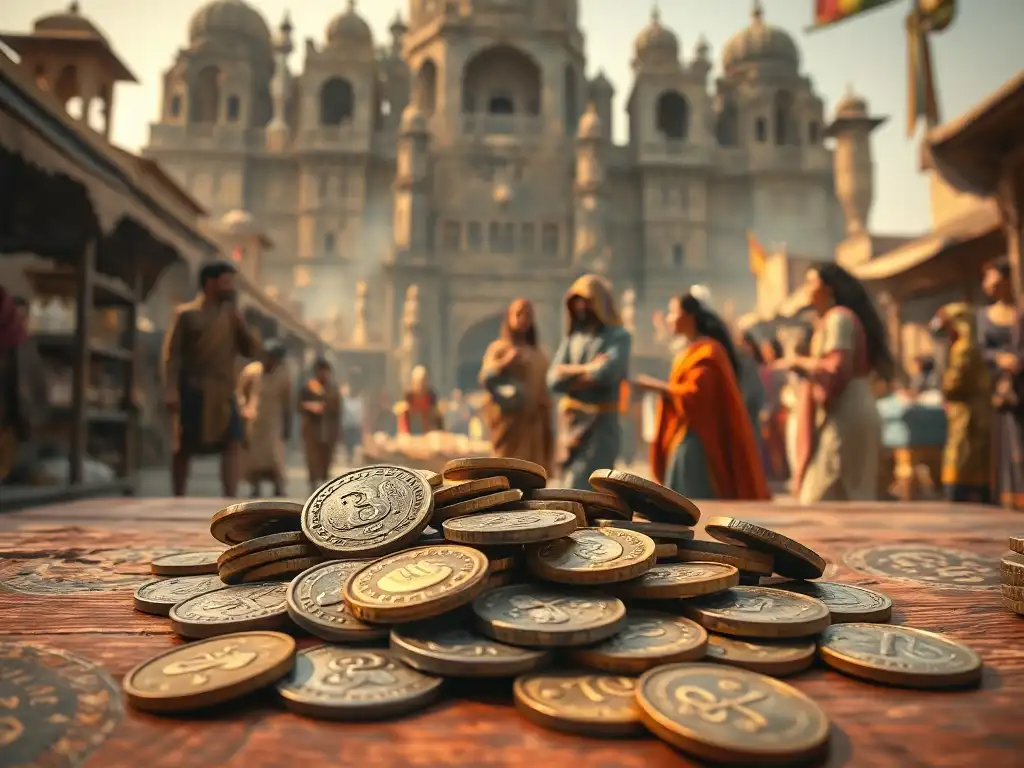
Introduction to Coinage in Maurya Empire History
The Maurya Empire, one of the most influential and expansive empires in ancient Indian history, utilized coinage not only as a medium of exchange but also as a critical tool for asserting political power and economic control. Coinage in Maurya Empire history reflects the sophisticated economic systems and the complex socio-political landscape of the time.
From the reign of Chandragupta Maurya to that of his grandson Ashoka, the evolution of coinage played a pivotal role in facilitating trade, enhancing political legitimacy, and symbolizing the empire's authority. Understanding the use of coinage in this context provides valuable insights into how the Maurya Empire managed its vast territories and diverse populations.
Overview of the Maurya Empire's Economic System
The economic system of the Maurya Empire was characterized by a blend of agriculture, trade, and state control. The following points highlight the key aspects of this system:
- Agricultural Base: The empire relied heavily on agriculture, with fertile lands in regions like the Ganges Valley producing surplus crops.
- Trade Networks: Extensive trade routes connected the Maurya Empire with various regions, facilitating the exchange of goods such as textiles, spices, and precious metals.
- State Intervention: The government played an active role in regulating markets, taxing trade, and maintaining infrastructure to support economic activities.
This structured economic system laid the groundwork for the introduction and standardization of coinage, which would further enhance trade and economic stability.
Importance of Coinage in Ancient Indian Civilizations
Coinage holds significant importance in ancient Indian civilizations for several reasons:
- Facilitated Trade: Coins provided a standardized medium for trade, simplifying transactions and promoting commerce.
- Economic Control: By controlling the minting of coins, rulers could regulate the economy, influence inflation, and manage resources effectively.
- Cultural Symbolism: Coins often featured symbols and images that reflected the power and ideology of the ruling class, serving as a means of propaganda.
The Maurya Empire's embrace of coinage exemplified these principles, highlighting its role in shaping the economic and political landscape of ancient India.
Historical Context of Coinage in the Maurya Empire
Development of Coinage in Ancient India
The history of coinage in ancient India predates the Maurya Empire, with evidence of early coinage, such as punch-marked coins, emerging around the 6th century BCE. This early form of currency laid the foundation for the more sophisticated coins that would later be minted during the Maurya period. The development of coinage involved:
- Materials Used: Initially, coins were made of various metals, including silver, copper, and gold, with silver being the most commonly used material for trade.
- Minting Techniques: The Mauryan period saw advancements in minting techniques, allowing for more uniform and intricate designs.
These developments not only facilitated trade within the empire but also established a network of economic relationships with neighboring regions.
The Role of Coinage in the Maurya Empire's Expansion
As the Maurya Empire expanded, coinage played a crucial role in establishing economic dominance:
- Standardization of Currency: The introduction of a standardized currency helped unify the diverse regions within the empire, promoting internal trade and economic integration.
- Support for Military Campaigns: Revenue generated from trade and taxes collected in the form of coins funded military expeditions, enabling the empire to expand its territory.
- Symbol of Authority: Coins minted during the Maurya period often bore the images of emperors and deities, reinforcing the political legitimacy of the rulers and their divine right to govern.
The use of coinage in the Maurya Empire was a multifaceted tool that facilitated economic control, symbolized political power, and contributed to the empire's expansion, making it a significant aspect of Maurya Empire history.
Political Symbolism of Mauryan Coinage
The Maurya Empire, one of the most significant empires in ancient Indian history, utilized coinage not only as a medium of economic exchange but also as a powerful symbol of political authority. The coins produced during this period carried intricate designs and inscriptions that conveyed messages about the emperor’s legitimacy, divine favor, and control over the realm. Through the art of coinage, the Mauryan rulers crafted a narrative that intertwined their political power with cultural identity, effectively using coins as tools of statecraft.
Representation of Authority and Power in Coin Design
The design of Mauryan coins was a deliberate reflection of the emperor's authority and the empire's grandeur. Coins typically featured images of the ruling monarch, often depicted in a regal pose alongside symbols of power such as elephants, lions, and celestial motifs. For instance, the presence of the lion, which is associated with strength and sovereignty, served to reinforce the emperor's status as the protector and ruler of the people. The inscriptions on the coins further solidified this representation, with titles such as "Chakravartin" (universal ruler) enhancing the perceived legitimacy of the ruler.
Moreover, the craftsmanship of the coins—often made of high-quality metals—signified the wealth and stability of the empire. The careful attention to detail in the coin design was not merely aesthetic; it was a calculated strategy to instill a sense of pride and loyalty among the subjects, reminding them of their ruler's divine right to govern.
Use of Coins as Tools for Political Propaganda
Coinage in the Maurya Empire also served as a crucial instrument for political propaganda. The systematic minting and circulation of coins allowed the Mauryan rulers to disseminate their ideologies and foster a sense of unity among the diverse populations within the empire. Coins were often distributed during significant state events or festivals, reinforcing the ruler’s presence and authority in the public consciousness.
Furthermore, the use of coins inscribed with messages of prosperity and peace created a narrative that aligned the ruler's interests with those of the populace. This propaganda was particularly effective in maintaining social order and promoting the legitimacy of the Mauryan rule, especially during times of political unrest or challenges to authority.
Analysis of Iconography on Mauryan Coins
The iconography present on Mauryan coins is rich with meaning and provides valuable insights into the cultural and political landscape of the time. Many coins featured motifs derived from Buddhist symbolism, reflecting the empire's patronage of Buddhism under Emperor Ashoka. The depiction of the Dharma Wheel, for instance, symbolized the promotion of dharma (moral law) and the emperor’s commitment to righteous governance.
Additionally, the variety of animals represented, such as horses and bulls, signified not only the empire's agrarian roots but also the values associated with strength, fertility, and prosperity. Each coin acted as a miniature canvas that conveyed complex ideas about governance, spirituality, and the socio-economic fabric of the Maurya Empire. This rich tapestry of iconography underscores the strategic use of coinage in communicating the empire’s ideology and reinforcing the ruler’s image.
Economic Control through Coinage in the Maurya Empire
Coinage played a pivotal role in the economic framework of the Maurya Empire, facilitating trade and commerce while allowing the state to exert control over economic activities. The introduction of standardized currency was integral to the empire's administrative efficiency and economic development, reflecting the interconnection between political stability and economic prosperity.
Standardization and Regulation of Currency
One of the most significant contributions of the Maurya Empire to economic history was the establishment of a standardized currency system. This standardization ensured that coins were uniformly weighted and valued, reducing the complexities associated with trade. By regulating the currency, the Mauryan state was able to foster a sense of trust among traders and consumers, thereby enhancing commercial interactions.
The use of a consistent coinage system also facilitated taxation and revenue collection, allowing the empire to maintain its administrative machinery and fund public projects. This regulation of currency exemplified the Mauryan rulers’ understanding of the economic landscape, enabling them to implement policies that supported both state revenues and public welfare.
Impact of Coinage on Trade and Commerce
The introduction of coinage had a transformative impact on trade and commerce within the Maurya Empire. Coins served as a convenient medium of exchange, promoting local and long-distance trade networks. With the establishment of coinage, merchants could engage in transactions with greater ease, leading to increased market activities and trade expansion.
The Maurya Empire's strategic location along key trade routes further amplified the benefits of coinage, as it facilitated commerce between different regions. The circulation of Mauryan coins across the subcontinent and beyond not only stimulated economic growth but also fostered cultural exchanges, contributing to the empire’s prominence in the ancient world.
The Role of the State in Minting and Distribution
The Mauryan state played an essential role in the minting and distribution of coinage, ensuring that the currency circulated effectively throughout the empire. The state established mints in various regions, overseeing the production process to maintain quality and standardization. This centralized control over minting was crucial for preventing counterfeiting and ensuring the integrity of the currency.
Furthermore, the distribution of coins was strategically managed to meet the economic needs of different regions, allowing for localized economies to flourish while maintaining overall cohesion within the empire. By controlling the minting and distribution processes, the Mauryan rulers could influence economic dynamics, regulate trade practices, and ensure that the currency served its intended purposes effectively, ultimately reinforcing both political and economic stability within the empire.
Comparison of Mauryan Coinage with Other Ancient Civilizations

The Mauryan Empire, flourishing from 322 to 185 BCE, is notable for its innovative use of coinage, which served as a significant tool for political symbolism and economic control. When comparing Mauryan coinage with other ancient civilizations, several key distinctions and similarities emerge, illustrating the broader context of economic practices in the ancient world.
Coinage in the Indus Valley Civilization
The Indus Valley Civilization (circa 3300–1300 BCE) is among the earliest known urban cultures, characterized by advanced city planning and trade practices. However, it is essential to note that the Indus Valley did not use coinage in the same manner as later civilizations. Instead, they relied on barter systems and possibly standardized weights for trade, as evidenced by the discovery of weights and measures at sites like Mohenjo-Daro and Harappa.
While there is some evidence of seals used for trade, these seals functioned more as administrative tools than as currency. The lack of a formal coinage system in the Indus Valley contrasts sharply with the Mauryan Empire, where coins actively facilitated trade and served as instruments of state propaganda, showcasing the authority of the emperor.
Comparison with Coinage in the Gupta Empire
The Gupta Empire (circa 320 to 550 CE) succeeded the Mauryan Empire and is often referred to as a "Golden Age" of India. Gupta coinage exhibited significant advancements, including intricate designs and the use of gold coins, known as "dinara." Unlike the Mauryan coins, which were primarily silver and copper, Gupta coins reflected a more sophisticated artistic style and a greater emphasis on individual rulers rather than a centralized imperial authority.
Moreover, the Gupta coins often featured deities and motifs that celebrated the cultural and religious ethos of the time. In contrast, Mauryan coins primarily carried symbols like the "lion capital" and inscriptions that reinforced the legitimacy of the ruling power. This shift in coinage reflects the evolving political dynamics and cultural values between the two empires, with the Gupta period emphasizing personal patronage and religious devotion.
Influences from Persian and Greek Coinage
The Mauryan Empire's coinage was significantly influenced by the coinage systems of contemporary Persian and Greek civilizations. Following Alexander the Great's invasion of India, there was an exchange of cultural and economic ideas that shaped Mauryan currency. Persian coinage, particularly the use of the "daric," introduced the concept of standardized currency which the Mauryans adapted to their needs.
Moreover, the Greek influence is evident in the coins that featured Hellenistic designs, blending local motifs with foreign artistry. The introduction of gold coinage in the Mauryan Empire can be traced back to these influences, as the use of precious metals became more prominent during this period. This fusion of styles and practices not only enriched Mauryan coinage but also highlighted the interconnectedness of ancient civilizations.
Legacy of Mauryan Coinage in Indian History
The legacy of Mauryan coinage extends far beyond its immediate economic functions; it played a critical role in shaping the future of Indian currency systems and political structures. The Mauryan approach set a precedent for the use of coinage as a means to assert power and control over vast territories.
Evolution of Currency Systems Post-Maurya Empire
Following the decline of the Mauryan Empire, India witnessed significant changes in its currency systems. The introduction of regional coinages became common, with various dynasties issuing their own currencies that often mirrored the styles and symbols established by the Mauryans. This evolution led to a diverse range of coin types, materials, and inscriptions across different regions, reflecting local governance and economic conditions.
The coins from later periods often drew inspiration from Mauryan designs, maintaining the tradition of using currency as a political tool and a medium for trade. The use of coins continued to evolve, with the introduction of new materials and designs that further enriched the Indian monetary landscape.
Influence on Later Indian Dynasties and Coinage Practices
The impact of Mauryan coinage on subsequent Indian dynasties cannot be overstated. The concept of coinage as a symbol of authority and a mechanism for economic control persisted throughout Indian history. Dynasties such as the Kushans and the later Rajput states adopted and adapted Mauryan practices, integrating them into their own systems of governance.
Additionally, the symbolic use of coins in religious and cultural contexts became more pronounced. Coins featuring deities, local symbols, and significant historical events emerged as a means of cultural expression, continuing the tradition initiated by the Mauryans. The enduring legacy of Mauryan coinage thus lies not only in its immediate economic implications but also in its profound influence on the political and cultural evolution of Indian civilization.
Conclusion: The Significance of Coinage in Maurya Empire History
The Maurya Empire, one of the most significant ancient Indian civilizations, utilized coinage not merely as a medium of exchange but as a powerful tool for political symbolism and economic control. The coins minted during this period reflected the empire's extensive trade networks, administrative sophistication, and the authority of its rulers. Understanding the role of coinage in Maurya Empire history provides deeper insights into the empire's political strategies and economic foundations.
Summary of Key Points on Political and Economic Role
- Political Symbolism: Coinage in the Maurya Empire served as a symbol of the emperor's power and legitimacy. The imagery and inscriptions on coins often depicted the ruler's authority, reinforcing their divine right to govern. For instance, coins featuring the image of Emperor Ashoka or symbols such as the lion and the chakra conveyed messages of strength and unity, solidifying the emperor's position.
- Economic Control: The standardized coins facilitated trade across vast distances, enhancing economic stability and integration within the empire. The use of a uniform currency reduced transaction costs and encouraged commerce, leading to increased wealth and resources for the state. This economic control allowed the Mauryan administration to efficiently collect taxes and manage state expenditures.
- Cultural Exchange: The exchange of coins also fostered cultural interactions between different regions. As trade flourished, so did the exchange of ideas, art, and technology, contributing to the rich tapestry of ancient Indian civilization. Coins bearing inscriptions in various languages highlighted the diversity of the empire and its inclusiveness.
Final Thoughts on the Importance of Coinage in Ancient Indian Civilizations
The study of coinage in the Maurya Empire is essential for understanding the broader narrative of ancient Indian civilizations. Coins are not merely objects of economic value; they encapsulate the political ideologies, cultural exchanges, and economic strategies of their time. The Maurya Empire's sophisticated approach to coinage reflects its role as a pioneering force in the development of trade and governance in ancient India.
By examining the significance of coinage, scholars can gain valuable insights into the operational frameworks of ancient empires, their interactions with neighboring cultures, and their lasting impact on subsequent Indian history. Ultimately, the coins of the Maurya Empire serve as historical artifacts that connect us to the rich legacy of ancient Indian civilizations, illustrating the intricate relationship between economy and politics that defined the era.
- Introduction to Coinage in Maurya Empire History
- Historical Context of Coinage in the Maurya Empire
- Political Symbolism of Mauryan Coinage
- Economic Control through Coinage in the Maurya Empire
- Comparison of Mauryan Coinage with Other Ancient Civilizations
- Legacy of Mauryan Coinage in Indian History
- Conclusion: The Significance of Coinage in Maurya Empire History
- What was the significance of coinage in the Maurya Empire?
- How did the Maurya Empire influence coinage practices?
- What materials were primarily used for coinage in the Maurya Empire?
- How did the introduction of coinage affect the Maurya Empire's economy?
- What symbols were often featured on Mauryan coins?
Frequently Asked Questions
What was the significance of coinage in the Maurya Empire?
Coinage in the Maurya Empire served as a political symbol of authority and a tool for economic control, facilitating trade and commerce across the vast empire.
How did the Maurya Empire influence coinage practices?
The Maurya Empire established standardized coinage practices, which enhanced trade and unified the economic landscape, making transactions more efficient.
What materials were primarily used for coinage in the Maurya Empire?
The Maurya Empire predominantly used silver, gold, and copper for their coins, each representing different values and contributing to the empire's wealth.
How did the introduction of coinage affect the Maurya Empire's economy?
The introduction of coinage allowed for greater economic stability, promoting trade routes and enabling easier taxation, which ultimately strengthened the empire's economic structure.
What symbols were often featured on Mauryan coins?
Mauryan coins typically featured symbols such as the chakra and lotus, which conveyed political messages and reflected the empire's cultural values and religious beliefs.
Final Reflection: The Enduring Legacy of Coinage in the Maurya Empire
The exploration of coinage in Maurya Empire history reveals not only the sophisticated economic strategies of ancient India but also the profound political symbolism embedded within these coins. Today, as we navigate a world increasingly defined by digital currencies and economic globalization, the lessons from the Maurya Empire resonate more than ever. The intricate relationship between coinage and state power reminds us that currency is not merely a medium of exchange but a reflection of societal values and governance.
The impact of Mauryan coinage extends far beyond its historical context; it has shaped our understanding of economic systems and political authority throughout the ages. The coins of the Maurya Empire were not just tools for trade; they were instruments of unity and identity. Their designs and inscriptions conveyed messages of power, legitimacy, and cultural significance that continue to influence modern economic practices. As historian Romila Thapar noted, Coins are the silent witnesses of history, speaking volumes about the society that produced them.
This observation underscores the importance of understanding the past to appreciate the complexities of our present.
As we reflect on the significance of coinage in the Maurya Empire, I invite you to consider how the principles of economic control and political symbolism apply to our lives today. What messages do our modern currencies convey about our values and priorities? How can we harness the lessons of the past to foster a more equitable and just economic landscape? Let us take inspiration from the Maurya Empire and strive to create a future where our economic choices reflect our collective aspirations for a better world.
Unveil the Rich Legacy of the Maurya Empire!
Thank you for diving into the fascinating world of the Maurya Empire with us! You’ve explored the profound impact of coinage as a tool for political symbolism and economic control. Now, it's time to take that knowledge a step further and engage with this rich history.
Here are some actions you can take to deepen your understanding and connect with this remarkable era:
- Explore additional resources: Visit museums or online platforms dedicated to ancient Indian history to see artifacts and coin replicas that once circulated in the Maurya Empire.
- Join the conversation: Share your thoughts with fellow history enthusiasts in forums or social media groups focused on ancient civilizations.
- Start your own research project: Investigate the economic systems of various ancient empires and compare their use of currency—what similarities and differences do you discover?
What aspect of the Maurya Empire's coinage fascinates you the most: its political significance or its economic implications? We’d love to hear your insights!