
The Importance of Teaching Numerical Systems in Ancient Indian Education


Welcome to Ancient India History, where we embark on an enthralling journey through the rich tapestry of ancient Indian civilizations. As we delve into the Importance of Teaching Numerical Systems in Ancient Indian Education, prepare to uncover the profound influence these early mathematical concepts had on not just education, but also the very fabric of society. What secrets did the numerical systems hold?
How did they shape the intellectual landscape of their time? Join us as we explore these questions and more, illuminating the remarkable contributions to mathematics that continue to resonate today. Your adventure into the depths of history starts here!
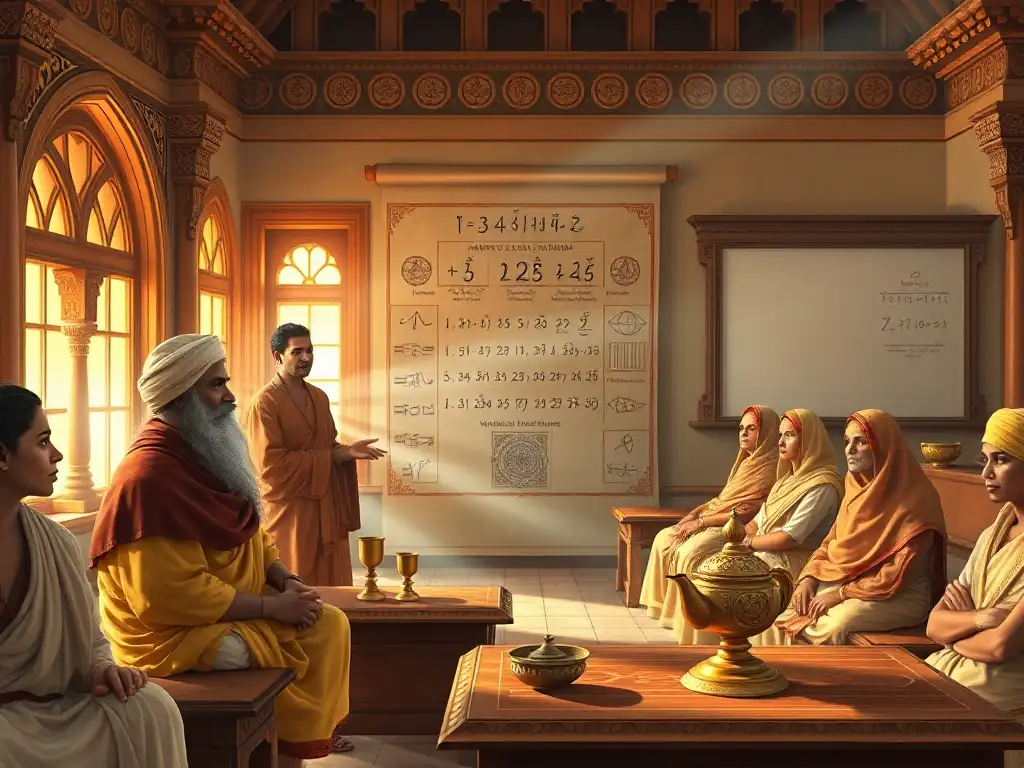
Introduction to Ancient Indian Numerical Systems Education
In the realm of mathematics, ancient Indian civilizations have made substantial contributions that continue to influence modern mathematical principles and practices. Understanding the importance of teaching numerical systems in ancient Indian education is crucial for appreciating how these systems shaped not only regional but also global mathematical thought. This article delves into the intricacies of ancient Indian numerical systems, their educational frameworks, and the profound impact of these systems on mathematics and culture.
Overview of Ancient Indian Education
Ancient Indian education was not merely about rote learning; it emphasized a holistic approach to knowledge that encompassed philosophy, science, arts, and mathematics. Educational institutions called Gurukuls and Viharas served as centers for learning, where students engaged in discussions and practical applications of numerical systems. The curriculum often included:
- Mathematics: Basic arithmetic to advanced concepts.
- Astronomy: Calculation of planetary movements.
- Architecture: Understanding geometry for construction.
This multifaceted education system laid the groundwork for the sophisticated numerical systems that emerged in ancient India.
Significance of Numerical Systems in Ancient Cultures
Numerical systems serve as the backbone of any civilization's ability to conduct trade, manage resources, and develop scientific knowledge. In ancient India, the development of sophisticated numerical systems facilitated:
- Trade and Commerce: Accurate calculations were essential for transactions.
- Astronomical Observations: Precise measurements allowed for advancements in astronomy.
- Philosophical Calculations: Numerical systems were often integrated into philosophical and spiritual texts.
The impact of these systems on daily life and scholarly pursuits underscores their significance in ancient Indian culture.
Historical Context of Numerical Systems in Ancient India
Development of Numerical Systems in Ancient India
The history of numerical systems in ancient India can be traced back to the Indus Valley Civilization, where early forms of counting and record-keeping emerged. As time progressed, the ancient Indians developed a more refined numerical system, which included:
- The Decimal System: A base-10 system that laid the foundation for modern mathematics.
- Zero and Place Value: Innovations that revolutionized numerical representation.
This development marked a significant advancement that would later influence mathematical practices worldwide.
Influence of Vedic Texts on Mathematics and Education
The Vedic texts, particularly the Sulbasutras, played a pivotal role in shaping mathematical education in ancient India. These texts not only outlined practical applications of mathematics in rituals and construction but also contributed theoretical knowledge that would become foundational for future mathematical thought. Key concepts derived from these texts include:
- Geometric Principles: Formulations for constructing altars and other structures.
- Algebraic Methods: Early techniques for solving equations.
The teachings embedded in these texts highlight the intricate relationship between education and mathematics in ancient Indian culture, emphasizing the importance of numerical systems in shaping intellectual pursuits.
By examining the historical significance and educational frameworks surrounding ancient Indian numerical systems, we can gain insights into their lasting impact on mathematics and education, both in India and beyond.
Key Components of Ancient Indian Numerical Systems

Ancient Indian numerical systems were a sophisticated blend of mathematical concepts that laid the groundwork for future developments in mathematics. These systems encompassed various key components, including the use of positional notation, the introduction of zero, and the employment of different numerical bases. Each of these components contributed significantly to the efficiency and complexity of mathematical calculations in ancient India.
One of the most notable aspects of ancient Indian numerical systems was the introduction of the decimal system, which is based on the base-10 structure. This system not only simplified calculations but also allowed for the representation of large numbers with relative ease. The concept of zero as a placeholder was revolutionary, enabling mathematicians to perform calculations more effectively and paving the way for algebra and advanced mathematics.
Additionally, ancient Indian mathematicians utilized various other bases, including base-20 and base-60 systems, which were particularly prominent in specific regions and contexts. These systems showcased the diversity and depth of mathematical thought in ancient India, illustrating the civilization's advanced understanding of numerical concepts.
Base-10 and Other Numerical Bases Used
The base-10 system, also known as the decimal system, was a cornerstone of ancient Indian mathematics. It allowed for the representation of numbers using ten distinct digits: 0, 1, 2, 3, 4, 5, 6, 7, 8, and 9. This system facilitated the easy manipulation of numbers, enabling mathematicians to perform addition, subtraction, multiplication, and division with greater efficiency. The use of place value in the base-10 system meant that the value of a digit was determined by its position, which was a significant advancement in the field of mathematics.
In addition to base-10, other numerical bases were also utilized in ancient India. For example, the base-20 system was used by certain communities and reflected the counting system based on the number of fingers. Similarly, the base-60 system, which is still used today in measuring time and angles, was prominent in ancient mathematical texts. These variations in numerical bases demonstrated the adaptability of ancient Indian mathematicians and their ability to tailor numerical systems to specific cultural and practical needs.
Symbols and Notations in Ancient Indian Mathematics
Symbols and notations were critical in the development of ancient Indian numerical systems. The use of symbols allowed mathematicians to represent complex ideas and calculations succinctly. Notably, the Brahmi numerals, which emerged around the 3rd century BCE, are among the earliest known symbols used to denote numbers in ancient India. These symbols evolved over time and eventually influenced the development of the modern numeral system.
Moreover, ancient Indian mathematicians employed various notational systems to convey mathematical concepts clearly. For instance, the use of a dot to represent zero and the adoption of specific symbols for operations such as addition and subtraction contributed to a more structured approach to mathematics. Mathematical texts, such as the "Aryabhatiya" by Aryabhata, showcased these symbols and notations, emphasizing their importance in the education and dissemination of mathematical knowledge.
Teaching Methods in Ancient Indian Education
Teaching methods in ancient India were diverse and reflected the cultural and practical needs of the society. The education system emphasized a holistic approach to learning, encompassing not only theoretical knowledge but also practical applications. This was particularly evident in the teaching of numerical systems, where various methods were employed to ensure that students grasped the concepts effectively.
Oral Tradition and Its Role in Learning Numerical Systems
Oral tradition played a pivotal role in the transmission of knowledge in ancient Indian education. Before the widespread use of written texts, knowledge, including numerical systems, was passed down through generations via oral teachings. This method of learning encouraged active participation and engagement, as students were required to memorize and recite mathematical concepts and calculations.
The use of oral tradition allowed for the reinforcement of learning through repetition and practice. Teachers would often employ stories, rhymes, and mnemonic devices to help students remember complex numerical concepts. This method not only made learning enjoyable but also ensured that mathematical knowledge was preserved and transmitted accurately across generations.
Use of Practical Applications in Numeracy Education
Practical applications were integral to the teaching of numerical systems in ancient India. Education was often tied to real-life situations, and students learned mathematics through hands-on experiences and practical tasks. For instance, merchants and traders would teach numerical concepts through commerce, helping students understand calculations in the context of buying and selling goods.
Additionally, ancient texts often included practical problems and scenarios that students would solve, thus emphasizing the importance of applying theoretical knowledge to real-world situations. This approach not only enhanced students' understanding of numerical systems but also prepared them for practical challenges they would encounter in daily life, thereby making mathematics relevant and applicable.
The teaching of numerical systems in ancient Indian education was characterized by its rich methodologies, including the use of oral traditions and practical applications. These approaches not only facilitated the understanding of complex mathematical concepts but also contributed to the overall development of mathematical thought in ancient India.
Impact of Numerical Systems Education on Ancient Indian Society
The education of numerical systems in ancient India played a crucial role in shaping society and fostering intellectual growth. It established a foundation for various disciplines, including commerce, science, and philosophy. The emphasis on mathematics and numerical literacy not only equipped individuals with essential skills for daily life but also cultivated a culture of inquiry and logical reasoning.
In ancient educational institutions, such as the Gurukul system, students were taught the principles of arithmetic, geometry, and algebra, which were integral to their understanding of the world. This education facilitated advancements in various fields and contributed to the development of a sophisticated society. The ability to perform calculations and understand numerical concepts enabled individuals to engage in governance, agriculture, and engineering, thus enhancing the overall quality of life.
Moreover, the impact of numerical systems education extended beyond mere calculation; it fostered a sense of community and collaboration. The sharing of knowledge facilitated trade, cultural exchanges, and the establishment of social structures based on mutual understanding and respect. As a result, numerical literacy became a vital tool for the progress of ancient Indian civilization.
Mathematical Contributions to Science and Astronomy
Ancient Indian numerical systems significantly influenced the fields of science and astronomy. Pioneering mathematicians such as Aryabhata and Brahmagupta made remarkable contributions to these domains, showcasing the importance of numerical education in advancing scientific knowledge.
For instance, Aryabhata's work on the approximation of π (pi) and his understanding of place value systems laid the groundwork for future mathematicians. His calculations of solar and lunar eclipses demonstrated the practical applications of numerical systems in astronomy. Similarly, Brahmagupta's rules for arithmetic operations and his work on quadratic equations provided valuable insights that propelled mathematical thought forward.
Additionally, the Indian numeral system, which included the concept of zero, revolutionized mathematical calculations. This innovation not only simplified complex computations but also facilitated the development of advanced astronomical models. The integration of mathematics and astronomy in ancient India exemplifies how numerical systems education contributed to a deeper understanding of the universe and the laws governing it.
Influence on Trade and Economic Practices
The education of numerical systems in ancient India was instrumental in shaping trade and economic practices. With a burgeoning economy that relied on agriculture, crafts, and trade, the need for accurate calculations and record-keeping became paramount.
Merchants and traders were educated in arithmetic and accounting, enabling them to manage transactions efficiently. The use of standardized weights and measures, along with numerically based pricing systems, facilitated trade across regions, fostering economic growth. Additionally, the widespread adoption of the decimal system allowed for greater precision in financial dealings, thus enhancing trust and reliability in commerce.
Moreover, the impact of numerical systems education extended to taxation and resource management. Rulers employed mathematicians to assess land value and calculate tax obligations, ensuring efficient governance. This integration of numerical education into economic practices exemplified its significance in the prosperity and stability of ancient Indian society.
Comparison with Other Ancient Civilizations
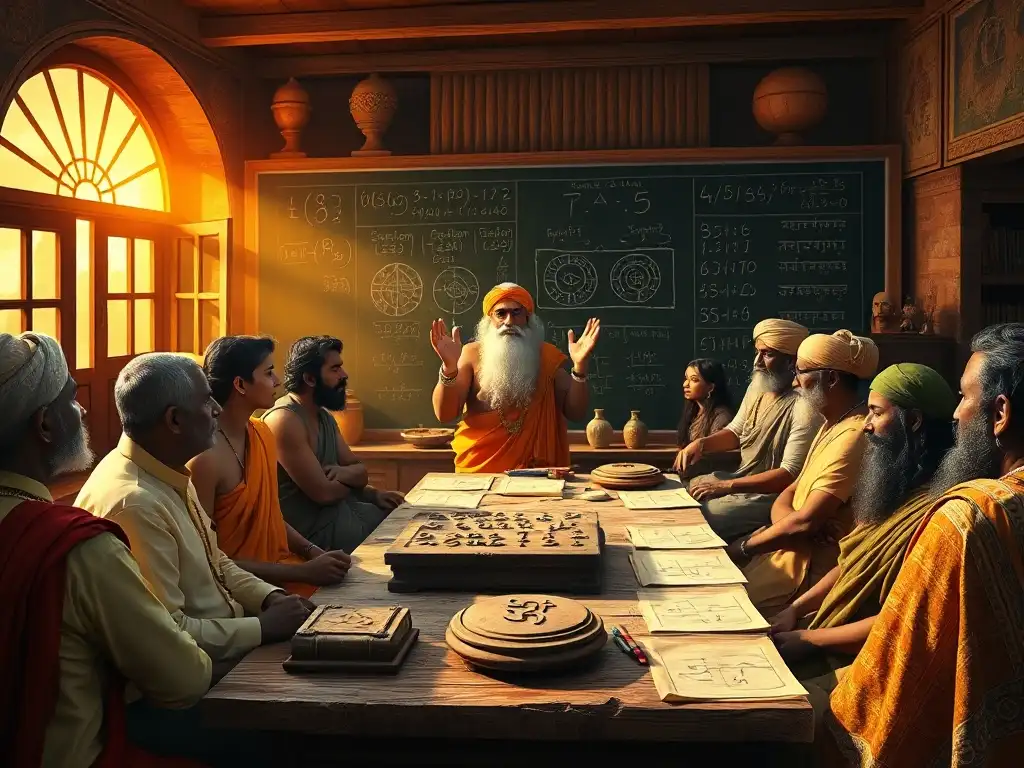
The numerical systems education in ancient India can be compared with that of other ancient civilizations, revealing both similarities and unique characteristics. While various cultures developed their numerical systems, the methodologies and applications often differed significantly.
Similarities with Mesopotamian and Egyptian Numerical Systems
Ancient Indian numerical systems shared some similarities with those of Mesopotamia and Egypt. For instance, all three civilizations employed a base system for mathematics, facilitating the representation of large numbers. The Babylonians utilized a sexagesimal (base-60) system, while the Egyptians used a decimal-based system for their calculations.
Moreover, like their Indian counterparts, both Mesopotamian and Egyptian societies recognized the importance of arithmetic in trade, agriculture, and administration. Record-keeping through numerical systems was a common practice, aiding in the governance and economic management of these civilizations.
However, while these cultures laid the groundwork for numerical education, it was the Indian innovation of zero and the decimal place-value system that distinguished its approach and allowed for more sophisticated calculations.
Unique Features of Ancient Indian Numerical Education
Ancient Indian numerical education was characterized by several unique features that set it apart from other civilizations. One of the most notable aspects was the early adoption and formalization of the concept of zero, which revolutionized mathematical calculations and problem-solving. This innovation enabled mathematicians to perform complex operations more efficiently than their contemporaries.
Another distinctive feature was the holistic approach to education, where mathematics was interwoven with philosophy, astronomy, and other disciplines. This interconnectedness encouraged students to explore mathematical concepts in relation to the natural world, fostering a deeper understanding of both mathematics and its applications.
Additionally, the use of mnemonic devices and oral traditions in teaching numerical systems emphasized the importance of memory and verbal skills in ancient Indian education. This method not only preserved knowledge across generations but also highlighted the cultural significance of mathematics in society.
The unique characteristics of ancient Indian numerical education, combined with its innovative contributions, underscore its vital role in the development of mathematics and its applications in various fields.
Legacy of Ancient Indian Numerical Systems Education
The legacy of ancient Indian numerical systems education is profound and far-reaching, influencing not only the local cultures but also the global mathematical landscape. From the sophisticated place-value systems used by the Indus Valley Civilization to the intricate mathematical concepts developed during the Gupta Empire, ancient Indian scholars laid the groundwork for a numerical system that was both practical and innovative.
The contributions of mathematicians such as Aryabhata and Brahmagupta emphasized the importance of zero as a numeral, enabling complex calculations that were previously unimaginable. This innovation allowed for more advanced mathematical operations and the development of algebra, which was essential in various fields, including astronomy and commerce. Through their educational practices, ancient Indian civilizations emphasized the importance of numerical literacy, integrating it into various aspects of life, such as trade, governance, and scientific inquiry.
As a result, the educational methods employed in ancient India fostered a deep respect for mathematics, promoting a culture where numerical systems were not only taught but celebrated. This legacy continues to inspire contemporary educational frameworks, underscoring the significance of teaching numerical systems to future generations.
Long-term Impact on Mathematics and Education
The long-term impact of ancient Indian numerical systems education is evident in several key areas. First, the introduction of the decimal system, along with the concept of zero, revolutionized mathematical computation. This system was not only more efficient than previous methods but also laid the foundation for modern mathematics and arithmetic as we know it today.
Moreover, the pedagogical approaches of ancient Indian educators emphasized problem-solving, logical reasoning, and critical thinking. These methods encouraged students to engage with mathematics actively, which is a practice that many modern educational systems strive to emulate. The inclusion of practical applications in the teaching of mathematics, such as in trade and astronomy, ensured that students appreciated the relevance of numerical systems in everyday life.
Another significant aspect is the influence of ancient Indian texts, such as the Aryabhatiya and the Brahmasphutasiddhanta, which have been referenced and studied by mathematicians and educators worldwide. The mathematical principles outlined in these texts continue to be relevant, contributing to the ongoing discourse on mathematical education and its methods.
Influence on Modern Numerical Systems and Education Practices
The influence of ancient Indian numerical systems on modern practices can be seen in various educational curriculums around the world. The concept of zero as a placeholder in the decimal system has become fundamental in mathematics, enabling significant advancements in various scientific fields. Furthermore, the techniques developed for arithmetic operations, including addition, subtraction, multiplication, and division, are still taught in classrooms today.
In addition to numerical concepts, the ancient Indian approach to education, which emphasized exploration and understanding, has inspired modern educational philosophies. Current pedagogical trends that advocate for inquiry-based learning and the integration of real-world applications in mathematics can trace their roots back to ancient Indian methods.
Additionally, the global spread of the Hindu-Arabic numeral system, which originated from ancient Indian mathematics, demonstrates the lasting impact of these early numerical systems on contemporary society. Today, educators are increasingly recognizing the importance of integrating historical perspectives on mathematics into their teaching practices, promoting a more comprehensive understanding of the subject.
Conclusion
Recap of the Importance of Teaching Numerical Systems
The teaching of numerical systems in ancient India was not merely an academic exercise; it was a vital component of the civilization's cultural and intellectual identity. The numerical systems developed by ancient Indian scholars provided the tools necessary for advancements in science, trade, and everyday life. By teaching these systems, educators fostered a generation of thinkers who contributed significantly to the global body of mathematical knowledge.
The legacy of this educational practice underscores the importance of incorporating historical numerical systems into modern curricula, not only to honor the contributions of ancient civilizations but also to enhance contemporary mathematical understanding.
Future Perspectives on Understanding Ancient Indian Numerical Systems Education
Looking ahead, there is a pressing need to further explore and understand ancient Indian numerical systems education and its methodologies. This exploration can provide valuable insights into effective teaching practices that promote mathematical literacy.
Future research can focus on examining educational texts, artifacts, and practices from ancient India, drawing connections to modern pedagogical theories. By integrating this historical perspective with current educational frameworks, we can cultivate a more enriched learning environment for students today, ensuring that the legacy of ancient Indian numerical systems continues to influence and inspire future generations.
- Introduction to Ancient Indian Numerical Systems Education
- Overview of Ancient Indian Education
- Significance of Numerical Systems in Ancient Cultures
- Historical Context of Numerical Systems in Ancient India
- Key Components of Ancient Indian Numerical Systems
- Teaching Methods in Ancient Indian Education
- Impact of Numerical Systems Education on Ancient Indian Society
- Comparison with Other Ancient Civilizations
- Legacy of Ancient Indian Numerical Systems Education
- Conclusion
- What are the main numerical systems used in ancient India?
- How did ancient Indian education incorporate numerical systems?
- Why is it important to teach ancient Indian numerical systems today?
- What contributions did ancient Indian scholars make to mathematics?
- How can ancient Indian numerical systems be integrated into modern education?
Frequently Asked Questions
What are the main numerical systems used in ancient India?
Ancient India utilized various numerical systems, most notably the Hindu-Arabic numeral system, which introduced the concept of zero and a place-value system that revolutionized mathematics.
How did ancient Indian education incorporate numerical systems?
Education in ancient India emphasized mathematical concepts through texts like the Sulbasutras, which taught practical applications of numerical systems, including geometry in temple construction.
Why is it important to teach ancient Indian numerical systems today?
Teaching ancient Indian numerical systems helps students appreciate the historical significance of mathematics and the cultural contributions of India to global education and science.
What contributions did ancient Indian scholars make to mathematics?
Scholars like Aryabhata and Brahmagupta made significant advancements in algebra, geometry, and the concept of zero, influencing mathematical practices worldwide.
How can ancient Indian numerical systems be integrated into modern education?
Integrating ancient Indian numerical systems can be achieved through curricular inclusion, hands-on activities, and exploring the cultural context of mathematics, fostering a deeper understanding of its evolution.
Final Reflection: The Enduring Legacy of Ancient Indian Numerical Systems Education
The significance of teaching numerical systems in ancient Indian education resonates profoundly in today's world, where mathematical literacy is essential for navigating our increasingly complex society. The wisdom embedded in these ancient practices not only laid the groundwork for modern mathematics but also highlights the importance of a holistic educational approach that integrates cultural heritage with practical skills. As we continue to grapple with educational disparities and the need for innovative teaching methods, the lessons from ancient Indian numerical systems remain strikingly relevant.
The influence of ancient Indian numerical systems extends far beyond historical curiosity; it shapes our cultural and social landscape in profound ways. These systems fostered critical thinking and problem-solving skills, which are crucial in today’s fast-paced environment. As we look back, we can see how these educational practices encouraged a deep understanding of mathematics that transcended rote memorization. Education is the most powerful weapon which you can use to change the world.
– Nelson Mandela. This quote encapsulates the transformative power of education, reminding us that the foundations laid by ancient scholars continue to empower future generations.
As we reflect on the lessons of ancient Indian numerical systems, I invite you to consider how these principles can be applied in your own life and community. Embrace the richness of diverse educational traditions and advocate for a learning environment that values critical thinking and cultural heritage. Let us honor the legacy of ancient educators by fostering a love for mathematics that transcends mere numbers, inspiring curiosity and creativity in ourselves and those around us. Together, we can build a future where the wisdom of the past informs the innovations of tomorrow.
Embrace the Legacy of Ancient Numerical Wisdom!
Thank you for immersing yourself in the fascinating world of ancient Indian education and its numerical systems! We've explored the profound impact these mathematical foundations have had on our world today. Now, let’s take meaningful steps to carry this legacy forward.
Here’s how you can actively engage with this rich history:
- Dive Deeper into Research: Explore books and articles on ancient Indian mathematics. Consider joining a local or online study group to discuss your findings.
- Share Your Insights: Spread the word! Write a blog post or share your thoughts on social media about how ancient numerical systems influence modern mathematics.
- Incorporate History into Education: If you’re an educator, think about integrating lessons on ancient Indian numerical systems into your curriculum. Inspire your students with this incredible heritage!
What’s one thing you found most surprising about ancient Indian numerical systems, and how do you think it can influence our understanding of mathematics today?