
The Mathematics of Ancient Indian Music: Harmonizing Science and Art

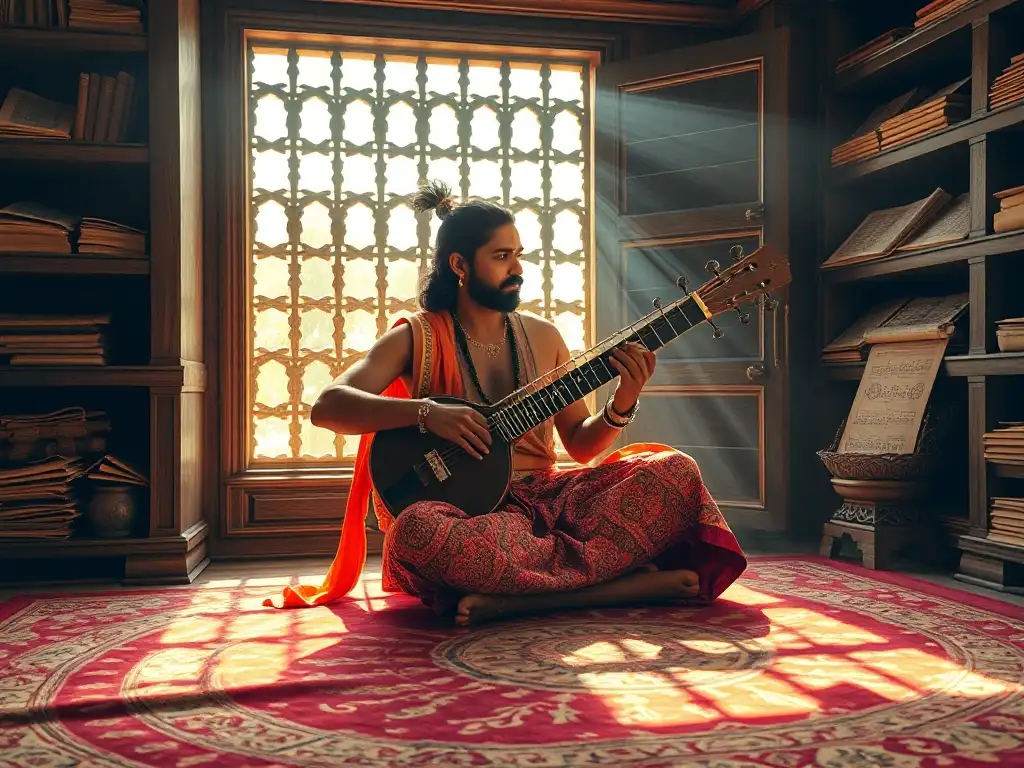
Welcome to Ancient India History, where we embark on a captivating journey through the rich tapestry of India's past! In this exploration, we uncover the fascinating interplay between music and mathematics in ancient Indian civilizations. Did you know that the principles of harmonics were intricately woven into the musical traditions of the time? Join us as we delve into the mathematics of ancient Indian music and discover how these two seemingly disparate realms harmonized to create a legacy that resonates even today. Prepare to be intrigued and inspired as we unveil the secrets of this extraordinary fusion!

Introduction to Ancient Indian Music and Mathematics
The intersection of music and mathematics has long been a subject of fascination, particularly in the context of ancient cultures. In the rich tapestry of ancient Indian civilization, this relationship is not only profound but also intricately woven into the very fabric of its artistic and scientific expressions.
Ancient Indian music, characterized by its intricate rhythms and melodies, serves as a testament to the remarkable mathematical principles that underpin its structure. From the foundational concepts of scale and rhythm to the complex algorithms used in compositions, the synergy between ancient Indian music and mathematics reflects a sophisticated understanding of both art and science.
This article aims to explore the mathematical frameworks that shaped ancient Indian music, shedding light on how these principles were not merely tools for composition but also avenues for deeper philosophical inquiry. By delving into the historical context of music and mathematics in ancient India, we can better appreciate how these fields harmonized to create a unique cultural legacy that resonates even today.
Overview of Ancient Indian Music
Ancient Indian music, often categorized into two main traditions— Hindustani and Carnatic—boasts a rich history that spans thousands of years. This music is characterized by its use of ragas (melodic frameworks) and talas (rhythmic cycles), which are deeply rooted in the mathematical understanding of sound.
- Ragas: These are not just mere scales but are associated with specific emotions, times of the day, and even seasons. Each raga comprises a specific set of notes and rules for ascending and descending, reflecting a mathematical precision in its formulation.
- Talas: The rhythmic aspect of ancient Indian music is categorized into various cycles, which can be broken down into smaller units or beats. This cyclical nature of rhythm often involves intricate patterns that can be described mathematically.
The Role of Mathematics in Music Theory
Mathematics plays a pivotal role in understanding the theory of music in ancient India. The ancient texts that detail musical theory, such as the Natya Shastra and Sangeet Ratnakara, illustrate how mathematical concepts were applied to achieve harmony and balance in musical compositions.
- Frequency and Pitch: The relationship between different musical notes can be described using ratios, where the frequency of a note determines its pitch. For example, doubling the frequency results in a note that is an octave higher.
- Rhythmic Patterns: The mathematical division of beats and the concept of metre in music are foundational to creating complex compositions. The use of permutations and combinations in rhythmic cycles demonstrates a sophisticated level of mathematical understanding.
Historical Context of Ancient Indian Music
Evolution of Music in Ancient India
The evolution of music in ancient India is marked by significant developments from the Vedic period through the Gupta Empire. Initially, music was primarily a part of religious rituals and ceremonies, with the Samaveda being one of the earliest texts to highlight musical notations. Over time, music became a central aspect of cultural life, leading to the formation of distinct styles and schools of thought.
- Vedic Period: The origins of ancient Indian music can be traced back to the Vedic hymns, where chanting forms the basis of musical expression. The mathematical precision of the Vedic chants laid the groundwork for future musical theories.
- Classical Period: During the Gupta Empire, music flourished as a refined art form. Scholars and musicians began to explore the theoretical aspects of music, leading to the codification of rules and principles that govern musical practice.
Key Texts on Music and Mathematics in Ancient India
Several seminal texts provide insight into the relationship between music and mathematics in ancient India. Among them, the Natya Shastra by Bharata Muni and the Sangeet Ratnakara by Sharangadev are particularly notable. These texts compile various aspects of music theory, including mathematical ratios, rhythmic cycles, and melodic structures.
- Natya Shastra: This comprehensive treatise on performing arts discusses the integration of music, dance, and drama, illustrating how mathematical principles are embedded in performance practices.
- Sangeet Ratnakara: Considered one of the most authoritative texts on music, it elaborates on ragas, talas, and their mathematical relationships, serving as a crucial reference for musicians and scholars alike.
Through these texts, we gain a clearer understanding of how ancient Indian musicians and scholars harnessed mathematical concepts to elevate their art, paving the way for future generations to explore this unique confluence of science and creativity.
Fundamental Concepts of Music and Mathematics
The intersection of music and mathematics in ancient Indian culture is profound and intricate. At its core, music is a structured arrangement of sounds, and mathematics provides the essential framework for understanding these arrangements. Ancient Indian scholars believed that the universe was governed by mathematical laws, and this belief extended to the realm of music.
In ancient Indian music, the svara (musical note) can be associated with specific frequencies, and these frequencies can be quantified mathematically. The use of specific scales, known as ragas, is founded on the concept of pitches arranged in a particular order. The mathematical relationships between these pitches create a complex yet harmonious system that embodies both aesthetic and scientific principles.
Moreover, the tala (rhythmic cycles) in Indian music is another crucial element that integrates mathematical concepts. The cycles are often structured in a way that can be analyzed through mathematics, demonstrating how rhythm aligns with numerical patterns. The combination of these elements showcases how ancient Indian musicians viewed their art as a reflection of the mathematical order of the cosmos.
The Relationship Between Sound and Mathematical Ratios
The relationship between sound and mathematical ratios is foundational in the study of ancient Indian music. Pythagorean tuning, which is based on the division of strings and the ratios of the lengths of vibrating strings, parallels concepts found in Indian musical theory. For example, the octave is defined as a doubling of frequency, while the fifth is represented by a frequency ratio of 3:2.
In ancient Indian texts, such as the Natya Shastra and the Bharata's Natyashastra, scholars documented these ratios, linking them directly to the creation of ragas. Each raga corresponds to specific emotional expressions and time cycles, with the mathematical ratios helping to establish the correct pitches and intervals. The understanding of these ratios allowed musicians to create complex melodies that were both mathematically sound and artistically profound.
Furthermore, the use of microtones, or shruti, in Indian music adds another layer of complexity. The precise measurement of these microtones can also be expressed mathematically, allowing for a richer and more nuanced musical experience. This relationship emphasizes how ancient Indian musicians harmonized their artistic expression with mathematical precision.
The Importance of Rhythm and Time Signatures in Ancient Indian Music
Rhythm plays a vital role in ancient Indian music, serving as a framework that supports melodic expressions. The concept of tala encompasses various rhythmic cycles, each defined by specific time signatures. These cycles dictate the flow of the music and provide a structure for improvisation and composition.
Each tala has a unique arrangement of beats, often denoted in a mathematical format. For instance, the Teentaal, one of the most popular talas, consists of 16 beats divided into four equal sections. Musicians must navigate these divisions skillfully, employing mathematics to understand both the timing and the relationships between beats.
The mathematical nature of rhythm is evident in the way musicians practice and perform. The use of bols (mnemonic syllables) to vocalize rhythms highlights the systematic approach to timing, reinforcing the connection between mathematics and music. The ability to conceptualize rhythm mathematically allows musicians to create intricate patterns that enhance the overall musical experience.
Mathematical Patterns in Raga and Tala
The exploration of mathematical patterns within raga and tala reveals the depth of ancient Indian musical theory. These patterns are not merely artistic; they are grounded in mathematical principles that dictate how music is composed and performed.
Understanding Raga: The Melodic Framework
Ragas are the melodic frameworks of Indian music, characterized by specific notes and their relationships. Each raga encompasses a set of notes, known as svaras, which are arranged according to particular ascending and descending patterns. The mathematical relationships between these notes can be analyzed in terms of intervals and scales, providing a foundation for the emotional and aesthetic qualities of the music.
For example, a raga may utilize a pentatonic scale (five notes) that can be represented mathematically by identifying the intervals between the notes. This systematic approach to melody allows musicians to create complex compositions while adhering to the fundamental principles that govern the raga.
Additionally, ragas are often associated with specific times of day and seasons, reflecting the belief that certain melodies resonate with particular cosmic energies. This connection between mathematics, time, and emotion illustrates the holistic perspective of ancient Indian music.
Exploring Tala: The Rhythmic Cycle
Tala serves as the rhythmic backbone of Indian music, offering structure and coherence to performances. Each tala is defined by a specific number of beats and subdivisions, which can be expressed mathematically. The arrangement of these beats creates a cycle that repeats throughout a performance, allowing for intricate variations and improvisations.
The analysis of tala reveals its mathematical complexity. For instance, different talas can have varying lengths and patterns, such as the Ektaal (12 beats) or the Dhamar (14 beats). Musicians must master these patterns, utilizing their understanding of mathematics to navigate the cycles and create captivating rhythms.
The interplay between tala and raga is crucial, as the rhythm enhances the melodic contours of the raga. This synergy demonstrates the profound relationship between mathematics and music, where both elements converge to create a cohesive artistic expression.
Mathematical Structures in Raga and Tala
The mathematical structures found in both raga and tala highlight the intricate relationships between melody and rhythm. The use of symmetry, repetition, and variation are essential components that can be analyzed through mathematical lenses.
For instance, the concept of symmetric patterns in tala allows musicians to create variations that maintain the underlying structure while exploring new creative avenues. This symmetry can be quantified mathematically, revealing the underlying order that governs the artistic expression.
Moreover, the interplay of ragas and talas can be seen as a cyclical relationship, where the mathematical principles that define one influence the other. Musicians often employ improvisation within these frameworks, relying on their mathematical understanding to maintain coherence and creativity.
The mathematical structures within raga and tala exemplify the seamless integration of science and art in ancient Indian music. This harmonious relationship continues to inspire musicians and scholars today, emphasizing the timeless nature of these concepts.
The Influence of Ancient Indian Mathematicians on Music
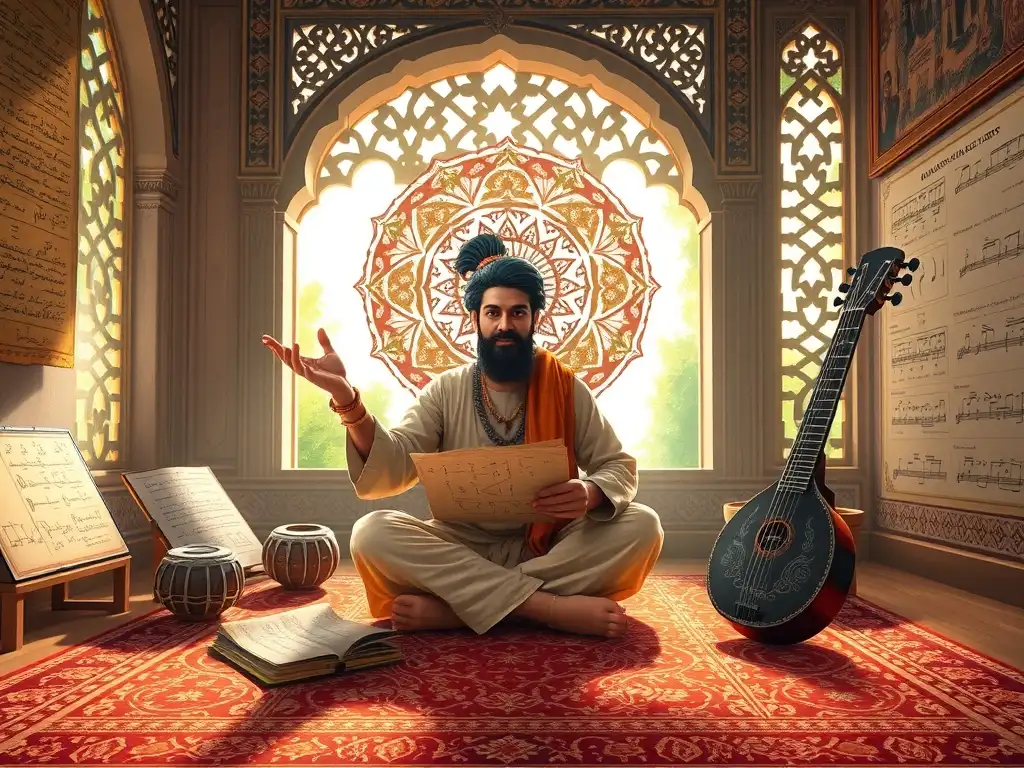
The relationship between mathematics and music in ancient India is a profound testament to the intellectual achievements of its scholars. Ancient Indian mathematicians not only contributed to the development of mathematical principles but also applied these to the realm of music, crafting a unique synergy that shaped the musical landscape of the time. This interplay is evident in the systematic approach to rhythm (tala) and melody (raga), where mathematical ratios dictate the structure and form of compositions.
Prominent figures such as Bharata Muni and Aryabhata laid the groundwork for integrating mathematical concepts into music theory. Their insights into the cyclical nature of rhythm and the harmonic relationships in melodies illustrate a sophisticated understanding of how numerical patterns can govern artistic expression. This fusion of mathematics and music not only enriched the cultural fabric of ancient India but also established foundational principles that would influence subsequent generations of musicians and mathematicians alike.
Contributions of Bharata Muni and the Natya Shastra
Bharata Muni, the revered author of the Natya Shastra, is a pivotal figure in the study of ancient Indian music and performing arts. His work, dating back to around the 2nd century BCE, is a comprehensive treatise that outlines various aspects of theater, dance, and music, emphasizing the importance of rhythm and structure. Bharata Muni's exploration of the concept of tala, which refers to the rhythmic cycle, is particularly noteworthy.
He classified tala into distinct categories based on numerical patterns, which directly correlates with mathematics. For instance, he described the tala system in detail, including its subdivisions and how they relate to musical phrases. This mathematical approach to rhythm allowed musicians to create intricate compositions that adhered to specific cycles, enhancing the overall aesthetic experience. Furthermore, Bharata's emphasis on the emotional expression of music, linked to mathematical precision, highlights the dual nature of ancient Indian arts as both a science and an emotional language.
The Impact of Aryabhata on Music Theory and Mathematics
Aryabhata, one of the most celebrated mathematicians and astronomers of ancient India, made significant contributions that impacted music theory. His seminal work, the Aryabhatiya, composed in 499 CE, not only addressed mathematical concepts such as algebra and trigonometry but also touched upon musical elements. Aryabhata’s understanding of sound, as explained through his mathematical formulations, provided a framework for musicians to explore the acoustics of different instruments.
He introduced the concept of ratios in musical intervals, which laid the foundation for later developments in Indian classical music. The mathematical ratios he described, such as those corresponding to the harmonic series, are critical in defining the relationships between notes within a scale. Aryabhata's insights fostered a deeper understanding of how mathematical principles could be utilized to create harmonious music, thereby establishing a lasting legacy that bridged the gap between mathematics and the art of sound.
The Intersection of Astronomy and Music Mathematics
The ancient Indian worldview often intertwined music with the cosmos, reflecting a belief in the harmony of the universe. This intersection of astronomy and music mathematics is exemplified by the way astronomical phenomena influenced musical practices and theories. Ancient Indian scholars recognized that the movements of celestial bodies could be linked to rhythmic and melodic structures, creating a holistic approach to understanding both the heavens and the art of music.
Astronomical Influences on Ancient Indian Music
Astronomy played a crucial role in shaping the musical traditions of ancient India. The observation of celestial movements, such as the cycles of planets and the changing seasons, was not merely a scientific endeavor but also a source of inspiration for musical composition. For instance, many ragas (melodic frameworks) were associated with specific times of the day or seasons, reflecting the belief that music could evoke the qualities of celestial events.
Furthermore, ancient texts often describe the alignment of musical performances with astronomical occurrences, such as solstices and eclipses. This practice of synchronizing music with celestial events not only enhanced the spiritual experience of the audience but also demonstrated the mathematical precision involved in timing and rhythm. The incorporation of astronomical cycles into musical theory underscores the interconnectedness of science, art, and spirituality in ancient Indian culture.
Synchronizing Celestial Events with Musical Composition
The synchronization of celestial events with musical composition highlights the sophisticated understanding ancient Indian musicians had regarding cycles and patterns. Musicians would often compose pieces that reflected astronomical phenomena, such as the phases of the moon or the position of stars. This practice was more than a mere artistic choice; it was an exploration of the underlying mathematical principles that govern both music and the cosmos.
For example, the natyashastra mentions how specific ragas can be played during particular celestial events to enhance the emotional and spiritual impact of the performance. The mathematical ratios derived from astronomical observations informed the rhythmic structures (tala) and melodic phrases (raga) used in compositions. This intricate relationship between music and astronomy not only enriched the artistic expression of the time but also solidified the view of music as a reflection of cosmic order, showcasing the profound harmony between science and art in ancient Indian civilization.
Case Studies in Ancient Indian Music and Mathematics
Ancient Indian music is a rich tapestry woven with intricate mathematical principles. Throughout history, various case studies reveal how mathematics underpins the structure of music, particularly through the concept of raga. Each raga, a melodic framework for improvisation and composition, is characterized by specific note sequences and emotional expressions, which can be analyzed mathematically. For instance, the Raga Yaman is based on the Kalyan scale and employs a specific arrangement of seven notes (swaras). The intervals between these notes can be expressed in ratios, highlighting the mathematical relationships inherent in music.
Another fascinating case study is the Natya Shastra, an ancient Indian treatise on performing arts written by Bharata Muni. This work intricately describes the relationship between music, mathematics, and dance, emphasizing how rhythmic patterns (tala) are constructed using mathematical divisions. The tala system showcases various cycles, such as Teentaal (16 beats) and Ektaal (12 beats), where each cycle can be broken down into smaller units, revealing a sophisticated mathematical framework.
Analysis of Specific Ragas and Their Mathematical Foundations
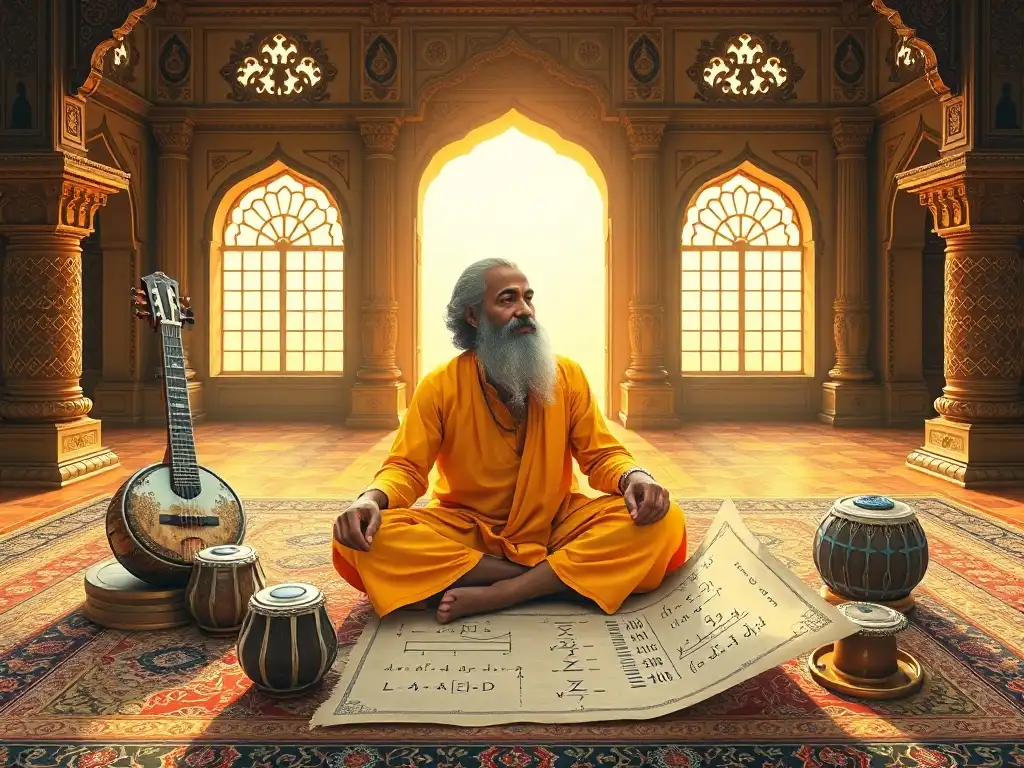
Ragas not only embody melodic beauty but also mathematical precision. For instance, the Raga Bhimpalasi is often analyzed in terms of its use of specific intervals, known as swara-vishesh, which dictate how the notes should be rendered and their emotional impact. The intervals of the raga can be defined using whole number ratios, such as 1:2 for the octave and 3:2 for the perfect fifth.
In a more intricate analysis, the Raga Darbari Kanada employs microtonal variations that can be precisely measured. The use of shrutis—the smallest intervals in Indian classical music—can be mapped mathematically, revealing a complex structure that resonates with the harmonic series. This deep connection between mathematics and music not only enhances the aesthetic experience but also provides a framework for understanding the underlying principles of sound production and perception.
The Role of Mathematics in Traditional Indian Instruments
Traditional Indian instruments such as the sitar, tabla, and mridangam demonstrate the application of mathematical principles in their construction and performance. The sitar, for example, is built with specific proportions that affect its tonal quality. The lengths of the strings and the spacing of the frets are calculated to produce precise pitches, allowing musicians to explore a wide range of ragas.
Similarly, in the tabla, the composition of strokes (bols) follows mathematical patterns, with each stroke corresponding to a specific sound. The theka, or rhythmic pattern, is constructed using a combination of these strokes that adhere to particular time signatures. The intricate relationship between rhythm and mathematics is further emphasized through the use of akshara, or syllables, which can be arranged in complex sequences to create rhythmic cycles that resonate with mathematical symmetry.
Conclusion: The Legacy of Ancient Indian Music and Mathematics
The interplay of mathematics and music in ancient India has left an indelible mark on the global musical landscape. By integrating mathematical principles into musical composition and performance, ancient Indian musicians were able to create sophisticated systems that resonate with audiences even today. This legacy is evident in various forms of contemporary music, where the principles of harmony, rhythm, and scale continue to evolve while retaining their mathematical roots.
Lasting Impact on Modern Music Theory
The mathematical foundations of ancient Indian music have influenced modern music theory significantly. Concepts such as scale construction, interval relationships, and rhythmic patterns that originated in ancient Indian practices are now integral to contemporary music education. The study of ragas has found its way into Western musicology, inspiring musicians and composers to explore new dimensions of sound and harmony. Additionally, the mathematical approaches to rhythm can be seen in genres such as jazz and electronic music, where complex time signatures and improvisational techniques echo ancient Indian traditions.
The Ongoing Relevance of Ancient Indian Music in Contemporary Culture
Today, ancient Indian music continues to resonate within contemporary culture, bridging the gap between science and art. Music festivals and cultural gatherings celebrate this heritage, allowing new generations to engage with its rich mathematical and artistic nuances. Furthermore, the global fusion of music styles often incorporates elements of Indian ragas and rhythms, showcasing their timeless relevance. As contemporary artists draw inspiration from ancient traditions, the legacy of ancient Indian music and mathematics serves as a powerful reminder of the profound connections between these two disciplines, fostering a deeper appreciation for the beauty of this harmonious relationship.
- Introduction to Ancient Indian Music and Mathematics
- Historical Context of Ancient Indian Music
- Fundamental Concepts of Music and Mathematics
- Mathematical Patterns in Raga and Tala
- The Influence of Ancient Indian Mathematicians on Music
- The Intersection of Astronomy and Music Mathematics
- Case Studies in Ancient Indian Music and Mathematics
- Analysis of Specific Ragas and Their Mathematical Foundations
- The Role of Mathematics in Traditional Indian Instruments
- Conclusion: The Legacy of Ancient Indian Music and Mathematics
- What is the significance of ancient Indian music in relation to mathematics?
- How did ancient Indian musicians use mathematics in their compositions?
- Were there any prominent mathematicians in ancient India who contributed to music theory?
- How does ancient Indian music influence modern mathematical concepts?
- What role did the Gupta Empire play in the development of music and mathematics?
Frequently Asked Questions
What is the significance of ancient Indian music in relation to mathematics?
Ancient Indian music is closely linked to mathematics through its rhythm and scales, which often incorporate geometric patterns that reflect mathematical principles.
How did ancient Indian musicians use mathematics in their compositions?
Musicians utilized mathematical ratios to create harmonious ragas and talas, establishing a framework where intervals and timing were precisely calculated for musical expression.
Were there any prominent mathematicians in ancient India who contributed to music theory?
Yes, notable figures like Bharata Muni and Matanga made significant contributions to music theory, integrating mathematical concepts into the study of ragas and melodies.
How does ancient Indian music influence modern mathematical concepts?
Ancient Indian music has laid the groundwork for understanding frequency, sound waves, and vibrations, which are essential in modern mathematics and physics related to sound.
What role did the Gupta Empire play in the development of music and mathematics?
The Gupta Empire was a golden age for arts and sciences, fostering an environment where music and mathematics thrived, resulting in rich cultural advancements that blended science with art.
Final Reflection: The Harmonious Intersection of Ancient Indian Music and Mathematics
In exploring the intricate relationship between ancient Indian music and mathematics, we uncover a profound connection that resonates deeply in today's world. The mathematical principles that underpin the melodies and rhythms of ancient Indian music not only highlight the ingenuity of past civilizations but also serve as a reminder of the timeless nature of art and science. As we navigate a modern landscape increasingly driven by technology, the fusion of these disciplines remains as relevant as ever, offering a rich tapestry of knowledge that inspires creativity and innovation.
The influence of this intersection extends beyond mere academic interest; it shapes our cultural and social landscape in significant ways. The rhythms of ancient Indian music echo through contemporary compositions, reminding us of our shared heritage and the universal language of sound. As we engage with these musical traditions, we are invited to reflect on the mathematical precision that gives them life. Music is the shorthand of emotion,
said Leo Tolstoy, emphasizing how deeply intertwined our emotional experiences are with the structures that define them. This ongoing dialogue between mathematics and music continues to inspire artists, mathematicians, and listeners alike, fostering a deeper appreciation for the beauty that arises from their union.
As we conclude this exploration, I invite you to reflect on the lessons embedded in the mathematics of ancient Indian music. Consider how you might incorporate the principles of harmony and balance into your own life, whether through creative expression, analytical thinking, or simply appreciating the art around you. Let the legacy of these ancient traditions inspire you to seek connections in your own pursuits, reminding you that the worlds of science and art are not separate but rather intertwined threads of the human experience. Embrace this harmony, and allow it to guide your journey forward.
Unveil the Rhythm: Dive Deeper into Ancient Indian Music!
Thank you for exploring the fascinating realm where mathematics meets music in ancient India! We hope you’ve uncovered the intricate connections that harmonize science and art, offering you a fresh perspective on this rich cultural heritage. Now, let’s take your newfound knowledge further with some actionable steps!
- Join a local music workshop to experience the principles of ancient Indian music firsthand. Feel the pulse of rhythm and melody as you immerse yourself in the experience!
- Share your insights from this article with friends or on social media. Let’s spread the appreciation for ancient Indian music and inspire others to recognize its beauty!
- Explore reputable online courses focused on the mathematical patterns found in music. You might discover a new passion that beautifully blends logic and creativity!
What aspect of ancient Indian music fascinated you the most, and how do you plan to explore it further?