
Ancient Indian Law and Its Influence on Neighboring Civilizations


Welcome to Ancient India History, where we delve into the rich tapestry of civilizations that shaped one of the world's oldest cultures. In today's exploration, we shine a spotlight on the intriguing Ancient Indian legal systems, uncovering their profound influence not only within the subcontinent but also on neighboring civilizations.
What did the laws of ancient India entail, and how did they resonate beyond its borders? Join us as we unravel these questions and more, opening the door to a fascinating journey through time that promises to enrich your understanding of legal traditions that laid the groundwork for modern societies.
- Introduction to Ancient Indian Legal Systems
- Historical Context of Ancient Indian Legal Systems
- Prominent Ancient Indian Legal Texts
- Core Principles of Ancient Indian Legal Systems
- Influence of Ancient Indian Legal Systems on Neighboring Civilizations
- Modern Implications of Ancient Indian Legal Systems
- Conclusion
-
Frequently Asked Questions
- What are the key features of ancient Indian legal systems?
- How did ancient Indian law influence neighboring civilizations?
- What role did religion play in ancient Indian legal systems?
- Were there any notable legal texts in ancient India?
- How did the Gupta Empire contribute to the evolution of ancient Indian law?
- Final Reflection: The Enduring Legacy of Ancient Indian Legal Systems
- Unveil the Secrets of Ancient Indian Law!
Introduction to Ancient Indian Legal Systems
The ancient Indian legal systems are a fascinating tapestry woven into the rich fabric of India’s history, reflecting the philosophical, social, and cultural dynamics of the time. From the sophisticated urban planning of the Indus Valley Civilization to the moral and ethical guidelines laid down in texts like the Manu Smriti, these legal frameworks not only governed the lives of individuals but also shaped the very foundations of society.
This article delves into the intricacies of ancient Indian law, exploring its structure, principles, and the profound influence it exerted on neighboring civilizations. Understanding these ancient legal systems is crucial, as they provide insights into the socio-political milieu of the time and the evolution of legal thought in the Indian subcontinent.
Overview of Ancient Indian Law
Ancient India was home to a variety of legal systems, each characterized by distinct principles and practices. These systems were not merely codifications of law; they encompassed moral codes, social norms, and religious decrees. The primary sources of ancient Indian law include:
- Dharmashastras: Texts that articulate the duties and rights of individuals according to their social class and stage of life. The Manu Smriti is one of the most notable examples, outlining laws on various aspects of life, including family, property, and social conduct.
- Customary Laws: Local traditions and customs that played a significant role in everyday legal practices, often varying from region to region.
- Judicial Precedents: Decisions made by wise rulers and local courts which established legal norms and influenced subsequent judgments.
The ancient legal systems were deeply intertwined with the caste system, beliefs, and values of the time. They provided a framework for justice that was both practical and moral, aiming to maintain social order and harmony.
Significance of Legal Texts in Ancient India
The legal texts of ancient India hold immense significance, serving as key historical documents that illuminate the legal, social, and ethical landscapes of their time. Some of the reasons these texts are valued include:
- Cultural Reflection: They encapsulate the values and beliefs of ancient Indian society, revealing how law was perceived and practiced.
- Historical Insight: Legal texts serve as primary sources for historians, providing evidence of legal thought, governance, and the evolution of social norms over centuries.
- Influence on Neighboring Cultures: The principles found in ancient Indian legal systems influenced neighboring civilizations, such as those in Southeast Asia, where elements of Indian law were integrated into local governance systems.
The ancient Indian legal systems, encapsulated in foundational texts like the Manu Smriti, not only guided the lives of individuals in ancient India but also left a lasting legacy on the legal frameworks of subsequent societies. Understanding these influences can enrich our appreciation of the complexities of ancient Indian civilization and its contributions to global legal thought.
Historical Context of Ancient Indian Legal Systems

The historical context of ancient Indian legal systems is crucial for understanding how these frameworks evolved and influenced neighboring civilizations. The roots of Indian legal traditions can be traced back to the Vedic period (c. 1500–500 BCE), when oral traditions and rituals played a significant role in governance and law. The transition from oral to written texts marked a pivotal moment in the evolution of legal frameworks.
Evolution of Legal Frameworks in Ancient India
The evolution of legal frameworks in ancient India was characterized by a gradual transition from customary practices to codified laws.
- Vedic Period (1500-500 BCE):
- The earliest legal principles stemmed from the Vedas, which contained guidelines on morality, duties, and social conduct.
- The concept of Dharma, or duty, was central, influencing the moral and ethical dimensions of law.
- Post-Vedic Period:
- The emergence of the Smritis (texts of tradition) in this period marked a significant shift.
- Manusmriti, one of the most influential texts, provided detailed rules governing various aspects of life, including family law, property rights, and criminal justice.
- Mauryan Empire (322-185 BCE):
- The Mauryan period saw the establishment of a more structured legal system, influenced by the need for administrative uniformity across a vast empire.
- Emperor Ashoka’s edicts emphasized moral governance and the administration of justice, reflecting the integration of Buddhist principles into legal practices.
- Gupta Empire (c. 240-550 CE):
- This period is often regarded as the Golden Age of India, where legal systems became more codified and systematic.
- The Nitisara and Arthashastra by Kautilya elaborated on statecraft, law, and economic principles, showcasing a sophisticated understanding of governance.
Key Periods Influencing Legal Development
Several key periods significantly influenced the development of ancient Indian legal systems:
| Period | Key Contributions |
|---|---|
| Vedic Period | Establishment of Dharma and moral guidelines |
| Post-Vedic Period | Codification of laws in texts like Manusmriti |
| Mauryan Empire | Legal uniformity and moral governance under Ashoka |
| Gupta Empire | Sophisticated legal texts that integrated statecraft and law |
The Dharma Shastras developed during these periods provided the framework for social order and justice, with a focus on righteousness and ethical governance. These texts not only shaped legal thought in ancient India but also served as a reference for other civilizations in the region, influencing their legal systems and practices.
The influence of ancient Indian legal systems extended beyond its borders, with neighboring cultures adopting various elements of these laws, demonstrating the interconnectedness of ancient civilizations. Emphasizing justice, ethics, and social responsibility, the ancient Indian legal traditions remain a testament to the rich cultural heritage that continues to resonate in modern legal frameworks.
Prominent Ancient Indian Legal Texts

Manu Smriti: The Foundation of Ancient Indian Law
The Manu Smriti, often referred to as the Manusmṛti or the Laws of Manu, is a foundational text in ancient Indian legal systems. Composed around 200 BCE to 200 CE, this text serves as a comprehensive guide to dharma (moral law and duty) and provides insight into the social, legal, and spiritual responsibilities of individuals within ancient Indian society.
- Structure and Content:
- The Manu Smriti is divided into twelve chapters, covering a wide range of topics:
- Dharma: Ethical principles governing individual behavior.
- Varna: The classification of society into four main classes (Brahmins, Kshatriyas, Vaishyas, and Shudras).
- Family Law: Guidelines on marriage, inheritance, and women's rights.
- Criminal Law: Provisions for various offenses and corresponding punishments.
- The Manu Smriti is divided into twelve chapters, covering a wide range of topics:
- Legal Norms and Social Order:
- The text emphasizes the importance of maintaining social order through prescribed duties and responsibilities. For instance, it elaborates on the concept of Karma, suggesting that one's actions directly influence their future, thus reinforcing moral conduct within society.
- Impact and Legacy:
- The Manu Smriti has had a profound influence on subsequent legal texts and practices in India. Its principles were integrated into various regional laws and continue to resonate in modern discussions on legal and ethical frameworks.
In addition to the Manu Smriti, other significant legal texts contributed to the development of ancient Indian legal systems:
- Yajnavalkya Smriti:
- Composed in the early centuries of the Common Era, the Yajnavalkya Smriti is notable for its systematic approach to law and its emphasis on the role of the king in upholding justice.
- Key Features:
- It focuses on both civil and criminal laws, offering clearer and more concise regulations compared to the Manu Smriti.
- The text introduces the concept of precedents, which highlights the importance of past judicial decisions in contemporary law.
- Narada Smriti:
- The Narada Smriti, attributed to the sage Narada, provides insights into procedural law and legal administration.
- Key Contributions:
- It discusses the roles of judges and legal practitioners, emphasizing the need for fairness and integrity in legal proceedings.
- The text also addresses issues related to property rights and contracts, making it a vital resource for understanding ancient commercial law.
Comparative Analysis of Ancient Indian Legal Texts
A comparative analysis of the prominent ancient Indian legal texts reveals both similarities and differences that illustrate the evolution of legal thought in India:
| Aspect | Manu Smriti | Yajnavalkya Smriti | Narada Smriti |
|---|---|---|---|
| Date of Composition | 200 BCE - 200 CE | Early Common Era | Circa 200 CE |
| Focus | Comprehensive dharma principles | Systematic legal principles | Procedural law and administration |
| Social Hierarchy | Strict varna system | More flexible interpretations | Emphasis on fairness in law |
| Judicial Precedents | Minimal mention | Introduced the concept | Discussed role of judges |
The Manu Smriti establishes the foundation of ancient Indian legal thought, while the Yajnavalkya Smriti and Narada Smriti refine and expand upon these ideas, addressing practical aspects of legal systems. Together, these texts form a rich tapestry of ancient Indian jurisprudence that has influenced not only Indian law but also provided insights into legal practices in neighboring civilizations.
The study of ancient Indian legal systems through these texts reveals a complex interplay of ethics, social order, and legal administration that continues to resonate today.
Core Principles of Ancient Indian Legal Systems

Dharma: The Concept of Law and Morality
In ancient India, the concept of Dharma served as the foundation for legal systems and societal norms. Dharma encapsulated a blend of law, ethics, and moral responsibilities, guiding individuals in their duties towards family, society, and the universe. It was not merely a set of rules but a comprehensive framework that defined righteousness and justice.
Dharma was articulated in various ancient texts, most notably the Manu Smriti, which established guidelines for different classes of society, including the Brahmins (priests), Kshatriyas (warriors), Vaishyas (merchants), and Shudras (laborers). Each class had specific dharmas, which dictated their conduct, duties, and legal responsibilities. This stratification highlighted how deeply intertwined law and morality were in ancient Indian thought.
Moreover, Dharma was not static; it evolved in response to societal changes and local customs. The idea that legal principles could adapt to the context was crucial, allowing for a flexible interpretation of justice. Thus, Dharma emphasized ethical behavior, fairness, and the welfare of the community, making it a cornerstone of ancient Indian legal philosophy.
Justice and Fairness in Ancient Indian Jurisprudence
Justice in ancient Indian jurisprudence was rooted in the principles of equity and fairness. The ancient texts often illustrate a profound understanding of the need for balance in administering justice. The judicial process was characterized by the involvement of local elders or village assemblies, known as panchayats, which played a critical role in dispute resolution.
Key aspects of justice in ancient India included:
- Restorative Justice: Rather than purely punitive measures, the focus was on restoring harmony within the community. Offenders were often encouraged to make amends and rectify their wrongs.
- Case-by-Case Consideration: Legal decisions were made on a case-by-case basis, taking into account the specific circumstances, intentions, and societal impact. This approach allowed for a nuanced understanding of justice.
- Public Participation: The community was actively involved in the legal process, ensuring that justice was not only administered but perceived as fair by the society at large. This participatory approach fostered a sense of collective responsibility and accountability.
The emphasis on fairness in ancient Indian jurisprudence reflects a sophisticated understanding of human behavior and societal relationships, promoting a legal culture that valued harmony over mere compliance with the law.
The Role of Customary Law
Customary law, or Samaanya Law, played a vital role alongside written legal texts in ancient India. It encompassed unwritten rules and practices that had evolved over generations, reflecting the traditions and values of specific communities. Customary law was particularly significant in rural areas, where local customs often held more authority than formal legislation.
Characteristics of Customary Law:
- Local Relevance: Customary laws were tailored to the specific needs and circumstances of a community, making them highly relevant and practical. This adaptability ensured that legal norms resonated with everyday life.
- Oral Tradition: Many customary laws were passed down orally, emphasizing the importance of community consensus and shared values. This oral transmission allowed for flexibility in interpretation and application.
- Integration with Formal Law: While written texts like the Manu Smriti provided a framework, customary laws often filled in the gaps, allowing for a more comprehensive legal system. Courts frequently considered customary practices when adjudicating disputes.
Customary law was essential in ancient India's legal landscape, complementing formal legal texts and reflecting the dynamic interplay between tradition and law. Its role underscores the importance of cultural context in shaping legal systems, particularly in societies where written laws were still developing.
Influence of Ancient Indian Legal Systems on Neighboring Civilizations
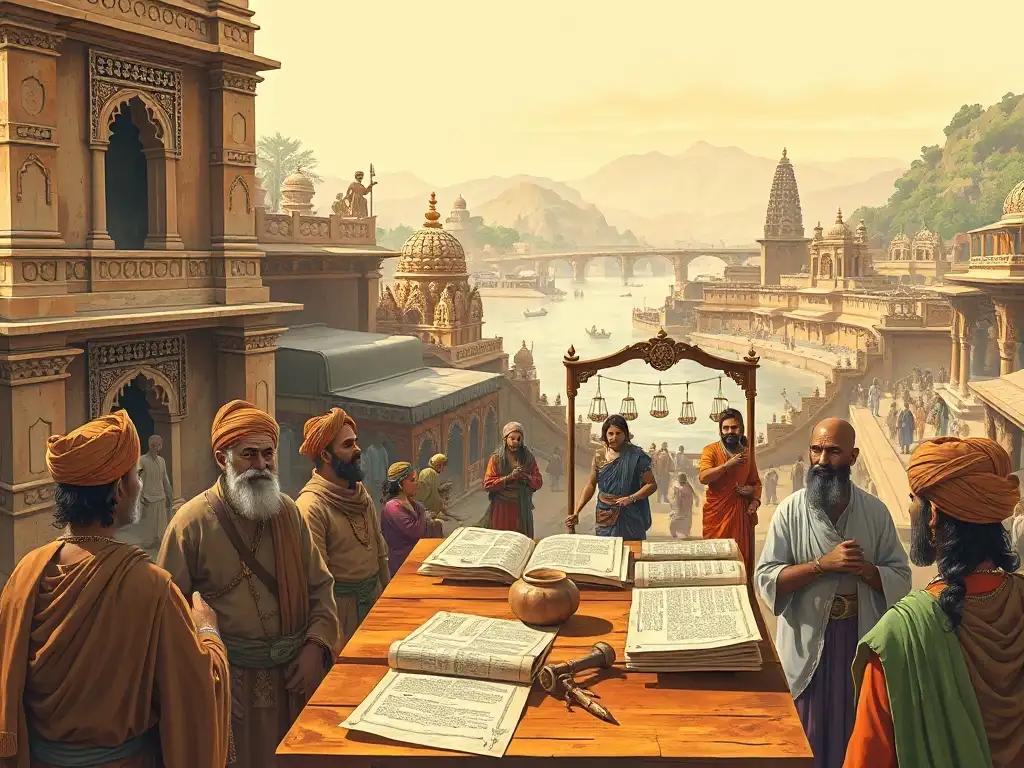
Impact on Legal Practices in Southeast Asia
Ancient Indian legal systems, particularly encapsulated in texts like the Manu Smriti, significantly influenced the development of legal frameworks in Southeast Asia. This impact is evident in several key areas:
- Hindu Legal Concepts: The adoption of Hindu legal principles, especially those relating to property, marriage, and inheritance, can be traced back to the early interactions between Indian traders and Southeast Asian kingdoms. For instance, the concepts of dharma (moral law) and karma (action and consequence) found resonance in the legal systems of countries like Bali and Java, where local customs blended with these Indian philosophies.
- Legal Texts: The transmission of Indian texts had a profound effect on Southeast Asian legal codes. Historical evidence suggests that texts such as the Manu Smriti were translated and adapted to fit local customs. This led to the establishment of a legal framework that was both rooted in Indian thought and responsive to local needs.
- Royal Edicts: Kings in several Southeast Asian regions, such as the Khmer Empire and Srivijaya, often issued legal edicts that mirrored the principles found in Indian texts. For instance, the Kambuja Dharmasastra, a legal text of the Khmer, reflected the influence of Indian jurisprudence, showcasing the integration of Indian legal philosophy with local governance.
Influence on Persian and Hellenistic Legal Thought
The legal systems of ancient India were not confined to its immediate geographical boundaries; they also impacted the legal thought of Persian and Hellenistic civilizations.
- Persian Legal Practices: The Achaemenid Empire (c. 550–330 BCE) was known for its administrative sophistication. The Persian legal system incorporated various elements from the Indian legal tradition, particularly in areas concerning governance and ethics. The concept of justice as a moral duty, as articulated in Indian texts, influenced Persian rulers, prompting them to adopt more humane legal practices.
- Hellenistic Adaptations: Following Alexander the Great's conquest of parts of India, there was a notable exchange of ideas between Greek and Indian philosophers. Legal concepts from Indian tradition were introduced into Hellenistic thought, particularly the ideas surrounding equity and justice. For example, the Roman legal scholar Ulpian was influenced by Indian notions of fair judgment and the importance of intent in legal proceedings.
- Shared Philosophical Underpinnings: The dialogues between Indian, Persian, and Hellenistic scholars fostered a rich tapestry of legal thought that emphasized rhetoric, logic, and ethics. This cross-pollination led to more sophisticated legal principles that would later influence Islamic jurisprudence and European law.
Cross-Cultural Exchanges: Trade and Law
The interaction facilitated by trade routes played a crucial role in the dissemination of ancient Indian legal systems across various civilizations.
- Maritime Trade Networks: The Indian Ocean trade routes connected India with Southeast Asia, the Middle East, and beyond. Merchants traveling these routes brought not only goods but also legal practices and concepts. The establishment of trade agreements often required legal mechanisms that drew on Indian legal traditions, ensuring fair trade practices and conflict resolution.
- Legal Customs in Trade Agreements: Various ancient trade agreements reflect the incorporation of Indian legal principles. For instance, contracts established in the ports of Southeast Asia frequently included clauses that mirrored Indian legal customs, such as arbitration processes that emphasized mutual respect and fairness.
- Cultural Exchanges and Adaptation: The blending of legal systems through trade led to the adaptation of Indian legal principles in local contexts. This resulted in a unique synthesis of legal customs that utilized Indian concepts while catering to local cultures. The enduring legacy of these exchanges is evident in the continued relevance of these legal traditions in contemporary Southeast Asian legal systems.
The ancient Indian legal systems have left a profound mark on the legal practices of neighboring civilizations, shaping their legal traditions and fostering a rich cross-cultural dialogue that continues to evolve today.
Modern Implications of Ancient Indian Legal Systems

Relevance of Ancient Indian Law in Contemporary Legal Frameworks
Ancient Indian legal systems, particularly those derived from texts such as the Manu Smriti, have had a profound influence on the development of contemporary legal frameworks in India and beyond. The principles outlined in these texts provide a foundational understanding of justice, governance, and societal order.
- Legal Philosophy and Ethics:
- Ancient Indian law emphasized Dharma (moral law), which continues to be a guiding principle in modern jurisprudence. The concept of Dharma embodies not only legal obligations but also ethical responsibilities, influencing contemporary discussions around justice and morality in law.
- Rights and Duties:
- The Manu Smriti and other texts articulate a complex interplay between rights and duties, suggesting that personal rights are often contingent upon fulfilling societal obligations. This duality is mirrored in modern legal systems that recognize both individual rights and the responsibilities of citizens towards the community.
- Judicial Processes:
- The ancient legal systems introduced various mechanisms for dispute resolution, including arbitration and mediation, which are now being revisited in modern legal practices. The emphasis on alternative dispute resolution reflects a continual relevance of these ancient practices in today’s legal landscape.
- Influence on Neighboring Cultures:
- The legal principles established in ancient India have also impacted neighboring civilizations, particularly in Southeast Asia. Countries like Indonesia and Thailand incorporated elements of Indian law, showcasing the historical significance of Indian legal thought in shaping regional legal systems.
Preservation and Adaptation of Ancient Legal Principles in Modern India
The transition from ancient Indian legal systems to contemporary practices in India is marked by both preservation and adaptation. While modernization has led to significant changes, many ancient principles remain embedded in the fabric of Indian law.
- Integration into the Constitution:
- The Indian Constitution, enacted in 1950, reflects several principles derived from ancient legal texts. Concepts such as social justice, equality, and the duty of the state to uphold individual rights resonate with the teachings found in texts like the Arthashastra and the Manu Smriti.
- Family Law:
- Personal laws in India, especially related to marriage, inheritance, and divorce, often draw from ancient customs and texts. For instance, Hindu personal law is significantly influenced by the Manu Smriti, highlighting the ongoing relevance of these ancient codes in the daily lives of millions.
- Judicial Interpretation:
- Contemporary courts frequently reference ancient legal texts to interpret laws and adjudicate cases. This practice underscores the enduring legacy of ancient Indian legal thought, as judges grapple with modern dilemmas using principles rooted in historical context.
- Cultural Practices:
- Many societal norms and customs in India today reflect ancient legal principles, especially in rural areas where traditional practices are still observed. These customs often act as informal legal systems, showcasing the resilience of ancient legal frameworks alongside formal legal structures.
The influence of ancient Indian legal systems is palpable in modern India, where the rich tapestry of historical legal thought continues to shape contemporary governance and societal norms. The dialogue between past and present remains a vital aspect of understanding the evolution of law in India.
Conclusion

Summary of Ancient Indian Legal Systems and Their Legacy
Ancient Indian legal systems, particularly as articulated in texts such as the Manu Smriti, played a pivotal role in shaping the legal landscape of India and beyond. These systems were not monolithic; they evolved over time, adapting to the social, economic, and cultural contexts of various regions. Key features of these legal frameworks included:
- Dharma: Central to ancient Indian law, Dharma encompassed moral duties, responsibilities, and ethical conduct. It provided a framework for justice that was deeply rooted in the societal values of the time.
- Customary Laws: Different regions had their own customary laws, which were recognized and respected within their communities. This diversity allowed for a more localized approach to justice, accommodating the unique traditions and practices of various groups.
- Judicial Procedures: Ancient texts outline methods of dispute resolution, including the roles of village councils (panchayats) and the importance of witness testimonies, reflecting a sophisticated understanding of justice and fairness.
The legacy of these legal systems can be traced through various historical epochs, influencing subsequent legal codes and practices in India and neighboring civilizations. For instance, elements of ancient Indian law can be seen in the legal frameworks of Southeast Asia, where Hindu and Buddhist influences permeated local customs and legal practices.
Reflection on the Continued Influence of Ancient Indian Law on Global Legal Practices
The influence of ancient Indian legal systems extends far beyond the borders of India, impacting legal thought and practice in various parts of the world. Some noteworthy reflections include:
- Integration into Modern Legal Frameworks: Many contemporary legal principles can be traced back to ancient Indian texts. Concepts such as justice, equity, and the rule of law have roots in the teachings of ancient sages and legal scholars.
- Cultural Exchange and Adaptation: As ancient Indian civilizations interacted with neighboring cultures through trade and conquest, their legal ideas were exchanged and adapted. This exchange enriched the legal traditions of regions such as Persia, Greece, and even parts of Africa, demonstrating the global reach of these ancient systems.
- Continued Relevance: Modern legal scholars and practitioners often revisit ancient legal texts to draw insights on governance, social justice, and ethical legal practices. The principles found in Manu Smriti and other texts continue to resonate in discussions about law and morality today.
Ancient Indian legal systems not only laid the groundwork for India’s legal heritage but also contributed significantly to global legal practices. Their enduring legacy is a testament to the sophistication and depth of thought present in ancient Indian civilization, highlighting the interconnectedness of human legal development throughout history.
Frequently Asked Questions
What are the key features of ancient Indian legal systems?
The ancient Indian legal systems were characterized by a blend of religious and secular laws. They included customary practices, codified laws, and were influenced by texts such as the Manusmriti.
How did ancient Indian law influence neighboring civilizations?
Ancient Indian law significantly influenced neighboring civilizations through cultural exchanges, particularly in Southeast Asia, where Indian legal principles were integrated into their own systems, promoting a legal framework based on equity and justice.
What role did religion play in ancient Indian legal systems?
Religion played a crucial role in shaping ancient Indian legal systems, as many laws were derived from religious texts. This integration often emphasized moral duties and the social order, linking law with spiritual beliefs.
Were there any notable legal texts in ancient India?
Yes, notable legal texts such as the Dharmashastras and the Arthashastra provided comprehensive guidelines on various aspects of law, governance, and administration, influencing the judicial and administrative practices of the time.
How did the Gupta Empire contribute to the evolution of ancient Indian law?
The Gupta Empire fostered a period of legal consolidation and refinement, promoting codified laws and the establishment of a more structured judicial system. This era saw the emergence of legal scholars who contributed to the development of legal philosophy.
Final Reflection: The Enduring Legacy of Ancient Indian Legal Systems
The exploration of ancient Indian legal systems reveals their profound influence on neighboring civilizations, underscoring the timeless relevance of these legal frameworks in shaping societal norms and governance. As we navigate the complexities of modern law and justice, it becomes increasingly clear that the principles established in ancient India continue to resonate, reminding us of the foundational role that law plays in the development of human civilization.
Cultural and social landscapes across Asia have been significantly shaped by the tenets of ancient Indian law, which emphasized justice, morality, and social order. The echoes of these legal systems can be seen in various contemporary practices and legal codes, fostering a sense of continuity and shared heritage among nations. The law is the foundation of society; it is the thread that binds us together.
This quote encapsulates the essence of how ancient legal principles have woven themselves into the fabric of modern societies, influencing everything from governance to interpersonal relationships.
As you reflect on the lessons drawn from ancient Indian legal systems, consider how these principles can inspire your own understanding of justice and ethics in today’s world. Embrace the opportunity to learn from the past and apply these timeless values in your daily life, fostering a more just and equitable society. Let the wisdom of our ancestors guide your actions and thoughts, as we collectively strive to build a future that honors the rich legacy of legal thought and practice.
Unveil the Secrets of Ancient Indian Law!
Thank you for diving deep into the fascinating world of Ancient Indian Law! You've gained insights into how its principles echoed through time and influenced neighboring civilizations. Now, it's time to take those insights further and discover how you can connect with this rich heritage.
Here’s how you can engage with the remarkable legacy of Ancient Indian Law:
- Explore the intricate details of specific laws and their societal impacts by visiting our extensive collection of articles and resources on our website.
- Share your findings and thoughts with friends or on social media to raise awareness about this important topic—your voice can spark curiosity!
- Join our community forum to engage in discussions with like-minded individuals, exchange opinions, and learn together.
What aspect of Ancient Indian Law intrigues you the most, and how do you believe it has influenced modern legal systems around the world?