
The Role of Trade Routes During Chandragupta Maurya's Empire


Welcome to Ancient India History, where we embark on a fascinating journey through the rich tapestry of India’s past. In this exploration, we delve into the pivotal role of Chandragupta Maurya and the intricate trade routes that shaped his empire's prosperity and influence. Discover how these pathways not only facilitated commerce but also transformed cultural exchanges and established connections that transcended borders. Ready to uncover the secrets of ancient trade and its impact on civilization? Let’s dive deeper into the legacy of one of history's key figures!
Introduction to Chandragupta Maurya and His Empire
Chandragupta Maurya, the founder of the Maurya Empire in ancient India, played a pivotal role in unifying the Indian subcontinent under one centralized administration. His reign, which spanned from approximately 321 to 297 BCE, marked a significant transformation in the political and economic landscape of the region.
Chandragupta's rise to power, aided by his mentor Chanakya, was not only marked by military conquests but also by the establishment of robust trade networks that facilitated economic prosperity. This article delves into the Chandragupta Maurya trade routes and their critical role in fostering commerce, culture, and communication across vast distances, contributing to the flourishing of his empire.
Overview of Chandragupta Maurya's Reign
Chandragupta Maurya's reign was characterized by remarkable achievements in administration, military strategy, and economic development. He effectively overthrew the Nanda dynasty and established the Maurya Empire, which extended across northern India. His governance was marked by the implementation of innovative policies that promoted trade and agriculture, as well as the construction of infrastructure that facilitated economic activities. The Mauryan Empire became a hub for trade, connecting various regions and enabling the exchange of goods, culture, and ideas.
Importance of Trade in Ancient India
Trade has always been a vital component of ancient Indian civilization, serving as a conduit for cultural exchange and economic growth. The bustling marketplaces of ancient cities reflected the diversity of products—from spices and textiles to precious stones and metals. The importance of trade during Chandragupta's reign cannot be overstated, as it not only supported the empire's economy but also enhanced diplomatic relations with neighboring regions. Furthermore, trade routes played a crucial role in the spread of ideas, religions, and technologies, contributing to the overall cultural richness of the Mauryan Empire.
Understanding Trade Routes in the Mauryan Period
Definition and Significance of Trade Routes
Trade routes refer to the established paths that merchants and traders used to transport goods across regions. In the context of the Mauryan period, these routes were not merely channels for commerce; they were crucial arteries of interaction that facilitated the movement of people, culture, and technology. The significance of trade routes during Chandragupta Maurya's empire lies in their ability to connect distant lands, enhance economic stability, and foster cultural exchanges that enriched the empire's heritage.
Major Trade Routes During Chandragupta Maurya's Empire
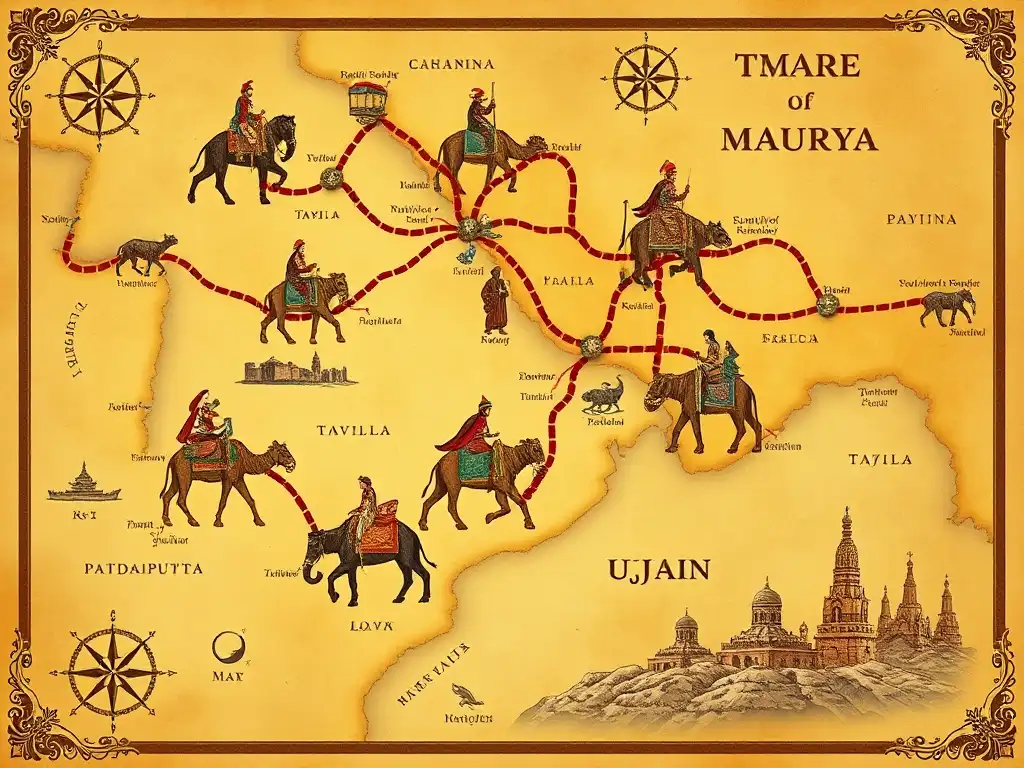
During Chandragupta Maurya's reign, several major trade routes emerged, significantly impacting the economic and cultural landscape of the time. These included:
- The Northern Trade Route: Connecting the Maurya Empire with Central Asia and beyond, facilitating the exchange of silk, spices, and precious metals.
- The Eastern Trade Route: Linking the empire with regions in Southeast Asia, promoting trade in textiles and agricultural products.
- The Southern Trade Route: Extending towards the Deccan Plateau and the southern coasts, enabling maritime trade and interaction with other civilizations.
These trade routes were essential for the prosperity of the Mauryan Empire, enabling the flow of goods and fostering a vibrant culture that thrived on diversity and exchange.
Key Trade Goods and Commodities
The Mauryan Empire, under the rule of Chandragupta Maurya (circa 321-297 BCE), was characterized by a vibrant trade network that facilitated the exchange of various goods and commodities. The strategic positioning of the empire, which spanned a significant portion of the Indian subcontinent, allowed for the cultivation and distribution of an array of products that were highly sought after both domestically and internationally.
Overview of Goods Traded in the Mauryan Empire
The key trade goods of the Mauryan Empire included agricultural products, textiles, precious metals, and luxury items. Some of the most notable commodities were:
- Spices: India was renowned for its diverse spices, such as black pepper, cardamom, and turmeric, which were not only used in local cuisine but also exported to far-off lands.
- Textiles: The production of cotton and silk textiles flourished, with intricate designs that drew admiration from foreign traders.
- Metals: Gold, silver, and iron were significant trade commodities. The iron produced in the region was particularly valued for its quality and utility in tools and weapons.
- Agricultural Products: Wheat, rice, and pulses formed the staple diet of the population and were traded extensively.
These goods were transported along various trade routes, including overland paths and maritime routes, fostering connections between regions and enabling economic prosperity.
Influence of Trade Goods on Economy and Culture
The variety of goods traded during Chandragupta Maurya's reign had a profound impact on the economy and culture of the empire. The trade not only enhanced wealth but also facilitated the development of urban centers, where markets thrived and craftspeople could engage in specialized production.
- Economic Prosperity: The influx of wealth from trade allowed for increased patronage of the arts and infrastructure, leading to the construction of roads, irrigation systems, and public buildings.
- Cultural Influence: As people engaged in trade, they brought with them diverse cultural practices, ideas, and technologies. This resulted in a rich cultural tapestry that blended local traditions with foreign influences, evident in art, religion, and daily life.
The Impact of Trade Routes on Society
The extensive trade routes established during the Mauryan Empire had significant repercussions on society, affecting everything from economic dynamics to cultural interactions. These routes connected various regions within the empire and beyond, promoting not only commerce but also the exchange of ideas and beliefs.
Economic Growth and Development
The trade routes facilitated the movement of goods across vast distances, leading to remarkable economic growth. Major trade routes included:
- The Grand Trunk Road: Connecting the eastern and western parts of the empire, this road enabled the efficient movement of goods and people.
- Maritime Routes: With access to the Arabian Sea and the Indian Ocean, the Mauryan Empire engaged in maritime trade with distant lands such as Persia and Southeast Asia.
The economic development spurred by these routes resulted in increased agricultural production, the rise of merchant classes, and the establishment of trading hubs. Cities like Pataliputra became bustling centers of trade, attracting merchants from various regions.
Cultural Exchange and Its Effects
The trade routes were not solely conduits for goods; they were also pathways for cultural exchange. As traders traveled, they exchanged not just products but also ideas, philosophies, and religious beliefs, significantly influencing the cultural landscape of the empire.
- Spread of Religions: Buddhism and Jainism, both of which emerged in the region, found followers along trade routes, leading to their dissemination across the Indian subcontinent and beyond.
- Art and Architecture: The interaction between different cultures led to the development of unique artistic styles and architectural forms, as seen in the stupas and pillars that adorned cities throughout the empire.
Overall, the trade routes during Chandragupta Maurya's Empire were instrumental in shaping a dynamic and interconnected society, fostering economic prosperity and cultural richness that laid the foundation for future Indian civilizations.
The Role of Trade Routes in Political Expansion
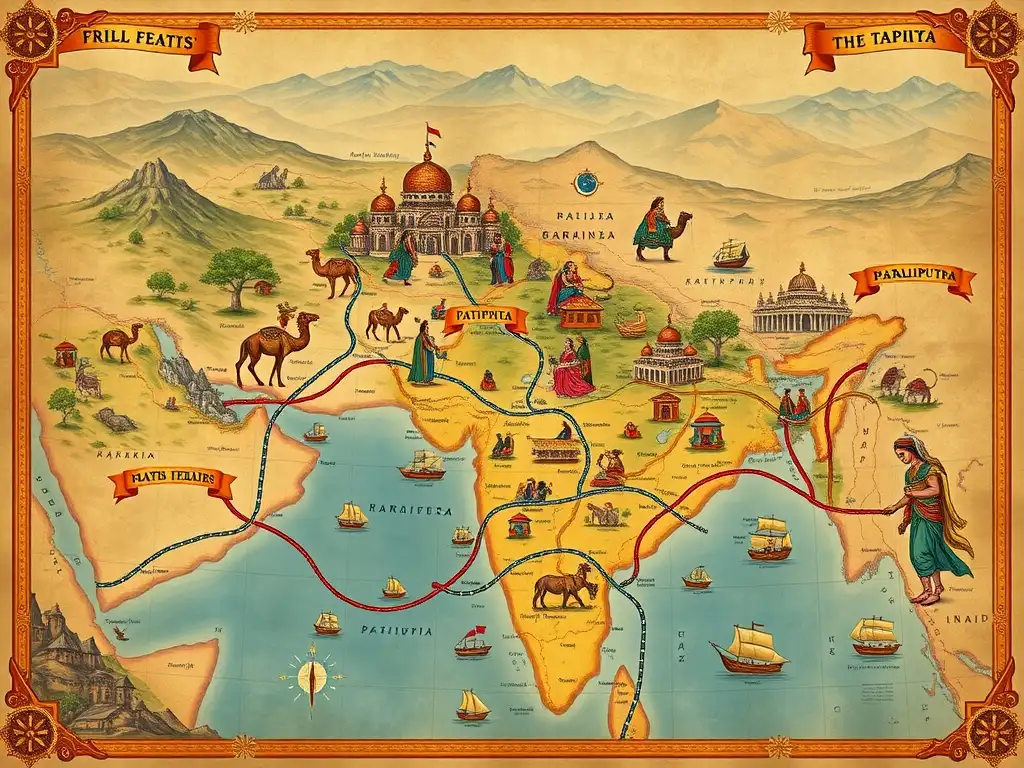
During the reign of Chandragupta Maurya, trade routes played a crucial role in the political expansion of his empire. The Mauryan Empire, established around 322 BCE, leveraged key trade routes not only for economic prosperity but also to solidify its power and influence across the Indian subcontinent. These routes facilitated the movement of goods, culture, and ideas, enabling Chandragupta to strengthen his authority and integrate various regions into his empire.
The strategic positioning of the Mauryan Empire allowed it to control major land and maritime trade routes that connected the East and West. By dominating these pathways, Chandragupta could encourage trade, which in turn attracted merchants and settlers, thus expanding the empire's economic base. This economic foundation was crucial for financing military campaigns and administrative structures, ultimately supporting the empire's growth and stability.
Strategic Importance of Trade Routes for Empire Building
The trade routes during Chandragupta Maurya's time were not merely conduits for commerce; they were instrumental in the empire's territorial expansion. Key routes such as the Grand Trunk Road facilitated the movement of troops and resources, enabling rapid military responses to threats and opportunities. This infrastructure allowed the Mauryan Empire to project its power efficiently across vast distances.
Moreover, the strategic control of trade routes also maximized tax revenues. Merchants traveling along these routes paid taxes or tolls, which provided a significant income stream for the Mauryan state. Additionally, these routes served as channels for the dissemination of culture and ideas, helping to unify the diverse populations within the empire under a common political and cultural framework.
Trade as a Tool for Diplomacy and Alliances
Chandragupta Maurya utilized trade routes as a diplomatic tool to forge alliances with neighboring kingdoms. By promoting trade agreements, he could establish peaceful relations that benefited both parties economically. These alliances often came with mutual defense pacts, enhancing the security of the Mauryan Empire.
Moreover, trade facilitated exchanges not only of goods but also of ideas and political practices. Such interactions allowed Chandragupta to gather intelligence about rival states and their political dynamics, aiding in more informed decision-making. This diplomatic engagement through trade was vital for maintaining stability and expanding the Mauryan influence over time.
Challenges Faced by Trade Routes

Despite their importance, the trade routes during Chandragupta Maurya's rule were fraught with challenges that could undermine their effectiveness. Geographic and political obstacles, as well as security issues, posed significant threats to trade and, by extension, to the stability of the empire.
Geographic and Political Obstacles
The vast geography of the Indian subcontinent presented numerous challenges for trade routes. Mountain ranges, dense forests, and arid deserts often obstructed direct paths, making travel difficult and time-consuming. This geographical complexity required the Mauryan administration to invest in infrastructure development, such as well-maintained roads and way stations, to facilitate trade.
Additionally, political fragmentation in some regions led to conflicts that disrupted trade. Rival kingdoms or local chieftains could impose tariffs or blockades that hindered the movement of goods. The Mauryan Empire had to navigate these political landscapes carefully, engaging in diplomacy to ensure the safety and efficiency of trade routes.
Security Issues and Banditry
Security was a paramount concern for traders during the Mauryan era. Banditry was prevalent along many trade routes, as criminals took advantage of the vulnerability of traveling merchants. The threat of robbery not only deterred trade but also posed risks to the empire's economic stability.
Chandragupta Maurya recognized the need for security along these routes and implemented measures to protect merchants. This included deploying military forces to patrol trade routes, establishing safe passage agreements, and fostering local law enforcement to deter banditry. By addressing these security issues, the Mauryan Empire could enhance trade, ensuring the flow of goods and resources essential for its continued expansion and prosperity.
The Legacy of Chandragupta Maurya's Trade Routes
Chandragupta Maurya's reign marked a significant turning point in the history of trade in ancient India. The establishment of a vast empire that stretched across northern India allowed for the development and expansion of trade routes that connected various regions, facilitating the movement of goods, culture, and ideas. These trade routes not only enhanced economic prosperity but also played a pivotal role in establishing diplomatic relations with neighboring kingdoms.
The Mauryan Empire's strategic positioning along these trade routes enabled merchants to transport goods such as textiles, spices, and precious stones, thereby boosting local economies. The roads and waterways created during this period laid the groundwork for future trade networks, which continued to flourish long after Chandragupta’s reign.
Moreover, the legacy of these trade routes is evident in the subsequent cultural exchanges that occurred, as the flow of goods was often accompanied by the exchange of knowledge and beliefs. This legacy highlights how trade routes served as conduits for not only commerce but also for the spread of innovations and ideologies that shaped Indian civilization.
Influence on Subsequent Indian Empires
The trade routes established during Chandragupta Maurya's time had a profound influence on subsequent Indian empires, particularly the Gupta Empire. The Gupta rulers capitalized on the existing trade networks, enhancing them to facilitate trade across a broader geographical area. This led to increased economic interaction with regions beyond India, including Central Asia and Southeast Asia.
The integration of trade routes also fostered a sense of unity among diverse regions, allowing for a shared cultural identity that transcended local boundaries. For instance, the flourishing trade in silk, spices, and other commodities helped sustain the economy of the Gupta Empire, which in turn supported advancements in arts, science, and philosophy. The roads laid down during Chandragupta's reign thus became vital arteries of commerce for future generations, enabling a continuity of trade practices that would influence the Indian subcontinent long into the medieval period.
Long-Term Impact on Indian Trade Networks
The long-term impact of Chandragupta Maurya's trade routes extended well beyond his empire's immediate borders. These routes became essential components of larger trade networks that connected India to the broader world, including the Silk Road and maritime routes to the East. The ability to trade with distant lands not only enriched the Indian economy but also facilitated the exchange of ideas and cultural practices.
Over time, these trade routes contributed to the development of urban centers such as Pataliputra, which became major hubs of commerce and culture. The prosperity generated by trade attracted scholars, artists, and traders from various regions, further enhancing the cultural richness of India. The establishment of standardized weights and measures and the introduction of coinage during this period also streamlined trade, making it more efficient and widespread.
As a result, the foundations laid by Chandragupta Maurya in terms of trade routes were instrumental in shaping the economic landscape of India, allowing it to thrive as a significant player in global trade networks for centuries to come.
Conclusion
Summary of the Importance of Trade Routes in Chandragupta Maurya's Empire
The trade routes established during Chandragupta Maurya's Empire were crucial for fostering economic growth, cultural exchange, and political stability. These routes not only enabled the flow of goods and resources but also served as channels for the dissemination of ideas and innovations. The Mauryan Empire's strategic investments in infrastructure, such as roads and ports, facilitated trade and contributed to the empire's overall strength and cohesion.
Final Thoughts on Trade's Role in Ancient Indian History
Trade was a vital component of ancient Indian civilization, particularly during the reign of Chandragupta Maurya. The legacy of his trade routes continues to resonate in the historical narrative of India, highlighting the interconnectedness of economies and cultures. Understanding the role of trade routes during this period offers valuable insights into the complexities of ancient Indian history and reinforces the importance of commerce in shaping the trajectory of civilizations. As we explore the rich tapestry of India's past, it is clear that trade was not merely a means of economic exchange but a catalyst for cultural evolution and unity.
- Introduction to Chandragupta Maurya and His Empire
- Understanding Trade Routes in the Mauryan Period
- Key Trade Goods and Commodities
- The Impact of Trade Routes on Society
- The Role of Trade Routes in Political Expansion
- Strategic Importance of Trade Routes for Empire Building
- Trade as a Tool for Diplomacy and Alliances
- Challenges Faced by Trade Routes
- The Legacy of Chandragupta Maurya's Trade Routes
- Conclusion
- What were the main trade routes during Chandragupta Maurya's Empire?
- How did trade routes impact the economy of Chandragupta Maurya's Empire?
- What goods were commonly traded along these routes?
- How did Chandragupta Maurya secure and manage these trade routes?
- What was the significance of trade routes in the cultural exchange during this period?
Frequently Asked Questions
What were the main trade routes during Chandragupta Maurya's Empire?
The main trade routes included the Grand Trunk Road and several river routes that facilitated trade between the Indus Valley and other regions, enhancing economic prosperity.
How did trade routes impact the economy of Chandragupta Maurya's Empire?
The trade routes significantly boosted the economy by promoting commerce and enabling the exchange of goods, leading to increased wealth and resources for the empire.
What goods were commonly traded along these routes?
Merchants traded a variety of goods, including spices, textiles, and precious metals, which were highly valued both domestically and internationally.
How did Chandragupta Maurya secure and manage these trade routes?
Chandragupta Maurya implemented strong administrative measures and established a military presence to protect the trade routes, ensuring safe and secure passage for merchants.
What was the significance of trade routes in the cultural exchange during this period?
The trade routes facilitated cultural exchange, allowing for the spread of ideas, religions, and artistic expressions, which enriched the diverse heritage of ancient India.
Final Reflection: The Enduring Legacy of Chandragupta Maurya's Trade Routes
The significance of trade routes during Chandragupta Maurya's Empire cannot be overstated; they were the lifeblood of economic prosperity and cultural exchange. Today, as we navigate a globalized world, the principles established by these ancient pathways resonate profoundly. The interconnectedness of societies, driven by trade, remains a cornerstone of our modern economies and cultural interactions. The lessons learned from the strategic establishment and maintenance of these routes during the Mauryan era are as relevant now as they were then, reminding us of the power of commerce in shaping civilizations.
Clearly, the impact of these trade routes extends beyond mere economic transactions; they fostered a rich tapestry of cultural and social exchanges that continue to influence our world. The legacy of Chandragupta Maurya's vision is evident in how trade can bridge divides and create a sense of shared identity among diverse peoples. As the historian R. C. Majumdar aptly stated, The Mauryan Empire was not merely a political entity; it was a cultural phenomenon that thrived on the exchange of ideas and goods.
This observation underscores the importance of trade routes as conduits for not just commerce, but also for the dissemination of knowledge and culture.
As we reflect on the lessons from Chandragupta Maurya's trade routes, let us consider how we can apply these insights in our own lives. Embrace the spirit of connection and collaboration in your personal and professional endeavors. Whether through fostering relationships across cultures or engaging in meaningful exchanges within your community, remember that every interaction has the potential to enrich your life and the lives of others. In a world that often feels divided, let us take inspiration from the past and work towards building our own networks of understanding and cooperation.
Unveil the Secrets of Ancient Trade!
Thank you for exploring the pivotal role of trade routes during the reign of Chandragupta Maurya! You’ve uncovered not just historical facts but valuable insights into how commerce shaped civilizations. Now, it’s time to take action and delve deeper into this fascinating era.
Here are some steps you can take to further enrich your understanding:
- Join a discussion group focused on Ancient Indian history to share your thoughts and learn from fellow enthusiasts.
- Visit relevant historical sites or museums that showcase artifacts from the Mauryan Empire. Engaging with these remnants of the past can deepen your appreciation.
- Consider exploring additional literature that examines trade dynamics in ancient civilizations; gaining knowledge opens new pathways!
What insights have you gained about the impact of trade on society during this transformative period? We’d love to hear your thoughts!