
The Philosophy of NonDualism in the Upanishads: A Pathway to Understanding

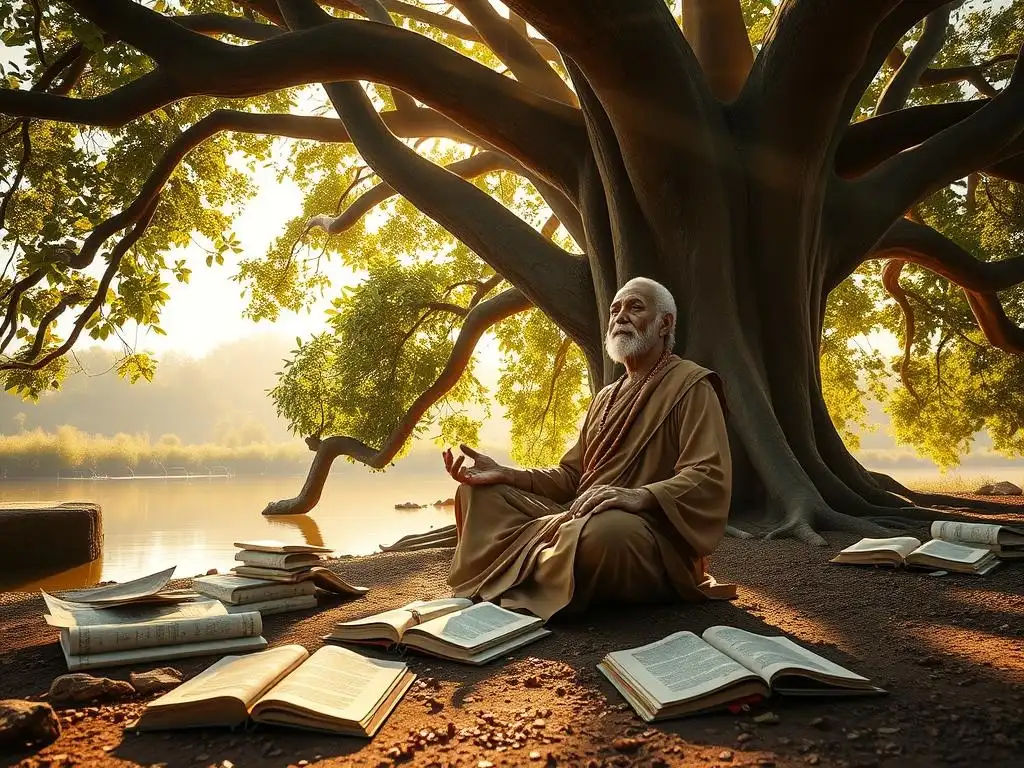
Welcome to Ancient India History, where we embark on a journey through the intricate tapestry of ancient Indian civilizations. Here, we delve into the rich heritage and profound contributions that have shaped our understanding of the world. In our featured article, “The Philosophy of NonDualism in the Upanishads: A Pathway to Understanding,” we invite you to explore the depths of nondualist thought that emerged from these sacred texts.
What insights can these ancient philosophies offer us today? Join us as we uncover the timeless wisdom of the Upanishads and discover how they continue to influence our modern lives. Your adventure into the past begins now!

The Philosophy of NonDualism, or Advaita, as explored in the Upanishads, represents a profound aspect of ancient Indian thought that continues to influence contemporary spiritual and philosophical discourse. This article delves into the intricate layers of NonDualism as articulated in these sacred texts, revealing how this philosophical framework offers a pathway to understanding the nature of reality, the self, and the universe. By examining the origins, historical context, and key themes of NonDualism within the Upanishads, we aim to highlight its significance in Hindu philosophy and its enduring relevance in the pursuit of spiritual enlightenment.
Introduction to NonDualism
Definition of NonDualism
NonDualism is a philosophical concept that posits the essential oneness of existence, suggesting that the apparent duality of the self and the universe is an illusion. This perspective emphasizes the unity of the individual soul (Atman) and the ultimate reality (Brahman), asserting that realization of this truth leads to liberation (moksha) from the cycle of birth and death (samsara). It invites practitioners to transcend the limitations of the material world and recognize their intrinsic connection to the cosmos.
Historical Context of NonDualism in Ancient India
The roots of NonDualism can be traced back to Vedic texts, but it was in the Upanishads, composed around 800-200 BCE, that this philosophy was systematically articulated. The Upanishads emerged during a period of significant spiritual exploration in ancient India, characterized by a shift from ritualistic practices to introspective understanding. Philosophers and sages sought to answer profound questions about existence, consciousness, and the nature of reality, leading to the development of various schools of thought, with NonDualism becoming one of the most influential.
The Upanishads: An Overview
Importance of the Upanishads in Hindu Philosophy
The Upanishads are often regarded as the culmination of Vedic thought, serving as a bridge between the ritualistic practices of the Vedas and the philosophical inquiries of later Hindu traditions. They are considered authoritative texts, encapsulating the essence of Hindu philosophy and spirituality. The teachings within the Upanishads emphasize meditation, ethical living, and the pursuit of knowledge, positioning them as essential readings for anyone seeking to understand the depths of Hindu thought.
Key Themes and Concepts in the Upanishads
The Upanishads explore several pivotal themes related to NonDualism, such as:
- Atman and Brahman: The fundamental assertion that the individual soul (Atman) is identical to the ultimate reality (Brahman).
- Maya: The concept of illusion, which suggests that worldly perceptions obscure the understanding of true reality.
- Meditation and Self-Realization: Practices aimed at transcending the ego and experiencing the unity of existence.
These themes not only contribute to the philosophical discourse but also provide practical guidance for spiritual seekers aiming to attain enlightenment and liberation.
By exploring the Philosophy of NonDualism in the Upanishads, we can gain valuable insights into the nature of self, reality, and the transcendental journey toward understanding.
Core Principles of NonDualism
The Philosophy of NonDualism in the Upanishads is a profound exploration of reality, consciousness, and the self. At its core, NonDualism, or Advaita, posits that there is no fundamental separation between the individual soul (Atman) and the ultimate reality (Brahman). This philosophy challenges the dualistic notions of existence, where the self is distinct from the universe. Instead, it emphasizes unity, suggesting that all beings are manifestations of the same underlying reality.
Key principles of NonDualism include:
- Unity of Existence: NonDualism asserts that all forms of life share a common essence. This interconnectedness implies that the suffering of one is the suffering of all.
- Self-Realization: The Upanishads advocate for a journey inward to discover the true nature of the self. Realizing one's identity as Atman leads to liberation (Moksha) from the cycle of birth and death (Samsara).
- Transcending Dualistic Thinking: The philosophy encourages individuals to move beyond the dichotomies of pleasure and pain, good and evil, and existence and non-existence.
This pathway to understanding reveals a deeper truth about existence, urging practitioners to see beyond superficial distinctions and embrace the oneness of all.
The Concept of Brahman and Atman
Central to the Philosophy of NonDualism in the Upanishads is the relationship between Brahman and Atman. Brahman is the ultimate, unchanging reality, the source of all that exists, while Atman refers to the individual self or soul. The Upanishads explore the intimate connection between these two concepts, stating that Atman is, in essence, Brahman.
This relationship is expressed in the famous Mahavakya (great saying) from the Chandogya Upanishad: "Tat Tvam Asi," which translates to "That Thou Art." This phrase encapsulates the essence of NonDualism, emphasizing that the individual self is not separate from the universal consciousness.
The realization of this unity leads to spiritual awakening, where one understands that the perceived diversity of the world is an illusion (Maya). By transcending this illusion, individuals can experience the ultimate truth of their existence as unified with Brahman, fostering a sense of peace and liberation.
The Illusion of Maya: Understanding Reality
In the context of NonDualism, Maya refers to the illusion that creates a false perception of duality in the world. It is the veil that obscures the true nature of reality, leading individuals to believe in the separation between the self and the universe. The Upanishads articulate that Maya is responsible for the transient nature of the physical world, where appearances can be deceptive.
Understanding Maya is crucial for anyone seeking to grasp the principles of NonDualism. The Upanishads suggest that while the material world may seem real, it is ultimately ephemeral and not reflective of the eternal truth of Brahman. This perspective encourages practitioners to cultivate discernment and wisdom, recognizing the temporary nature of worldly experiences and aspirations.
By seeing through the illusion of Maya, individuals can shift their focus from external distractions to the pursuit of self-knowledge and spiritual growth. This journey leads to the realization that beyond the transient experiences lies a unified, eternal essence that is the foundation of all existence.
The Interconnectedness of All Beings
The Philosophy of NonDualism in the Upanishads also emphasizes the interconnectedness of all beings. This principle highlights that every individual is a manifestation of the same cosmic reality, Brahman. The Upanishads articulate that the distinction between self and others is an illusion created by ignorance (Avidya).
This interconnectedness is reflected in the ethical implications of NonDualism. Recognizing that all beings share a common essence fosters compassion, empathy, and a sense of responsibility towards others. It encourages individuals to act with kindness and understanding, as harming another is tantamount to harming oneself.
Moreover, this understanding promotes the idea of universal love and acceptance, transcending boundaries of race, religion, and culture. It inspires a holistic view of life, where one sees the divine presence in every being and respects the interconnected web of existence.
Major Upanishads Exploring NonDualism
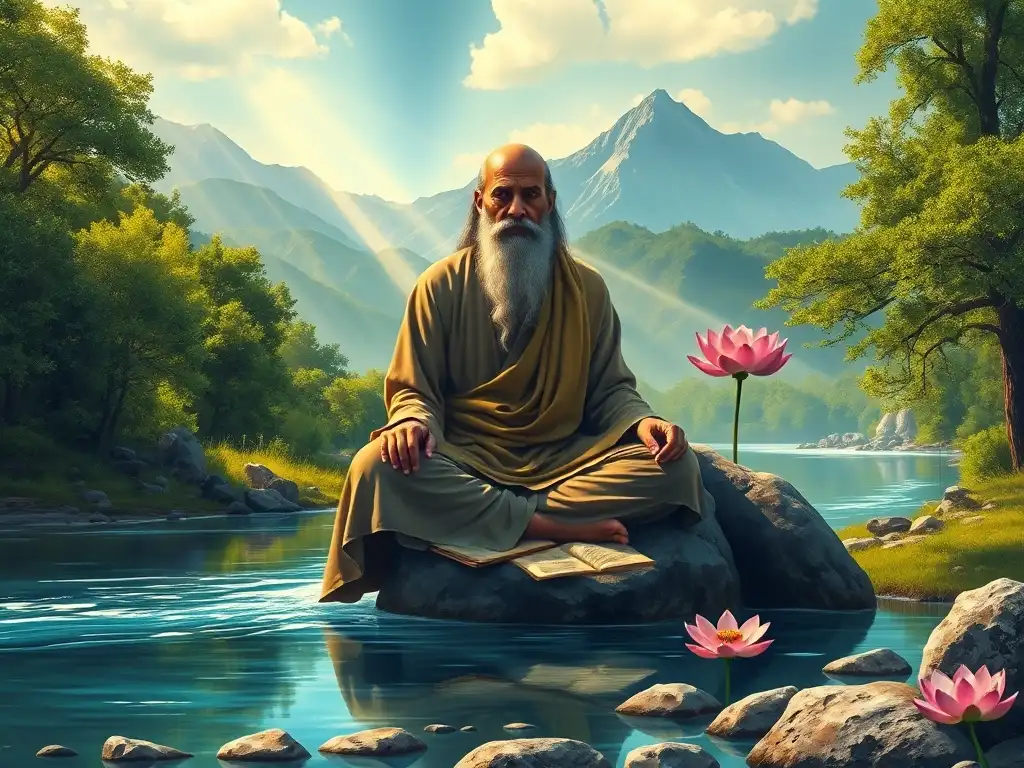
The exploration of NonDualism is richly represented in several key Upanishads, each offering unique insights into the nature of reality and self.
Chandogya Upanishad: Insights on NonDualism
The Chandogya Upanishad is one of the oldest and most important Upanishads, providing profound insights into NonDualism. It introduces the concept of Brahman and emphasizes the essential unity between Atman and Brahman through its famous Mahavakya, "Tat Tvam Asi."
This Upanishad explores various meditative practices that lead to the realization of one's true nature. It discusses the significance of sound (Nada) and the power of meditation in achieving self-realization. The Chandogya Upanishad encourages seekers to delve deep into their consciousness and experience the oneness of existence.
Furthermore, it illustrates the relationship between the macrocosm (the universe) and microcosm (the individual), reinforcing the idea that understanding oneself leads to understanding the universe.
Mandukya Upanishad: The Nature of Reality
The Mandukya Upanishad presents a concise yet profound exploration of NonDualism, focusing on the concept of AUM (Om), which symbolizes the essence of the universe. It elucidates the four states of consciousness: waking (Jagrat), dreaming (Svapna), deep sleep (Sushupti), and the transcendent state (Turiya), which represents the ultimate reality.
Through these states, the Mandukya Upanishad explains that while the first three states are transient and subject to change, Turiya remains constant and unchanging, embodying the essence of Brahman. This Upanishad reinforces the idea that true understanding transcends the fluctuating nature of experiences and leads to the recognition of the eternal, unifying truth of existence.
Taittiriya Upanishad: The Layers of Existence
The Taittiriya Upanishad delves into the concept of the five sheaths (Pancha Kosha) that encompass human existence, illustrating the layers through which individuals can explore their true nature. These sheaths include the physical body (Annamaya Kosha), life force (Pranamaya Kosha), mind (Manomaya Kosha), intellect (Vijnanamaya Kosha), and bliss (Anandamaya Kosha).
By understanding and transcending these layers, seekers are encouraged to reach the ultimate reality of Brahman. The Taittiriya Upanishad emphasizes the journey inward, guiding practitioners through self-inquiry and meditation to realize their identity with the infinite.
The Taittiriya Upanishad encapsulates the essence of NonDualism by demonstrating that the realization of Brahman is the culmination of understanding the intricate layers of existence, ultimately leading to spiritual liberation.
The Pathway to Understanding NonDualism
The Philosophy of NonDualism in the Upanishads serves as a profound pathway toward understanding the nature of reality and the self. NonDualism, or Advaita, posits that there is no fundamental separation between the individual soul (Atman) and the ultimate reality (Brahman). This philosophy invites seekers to transcend the dualistic perceptions of existence, encouraging a deeper exploration of consciousness and the essence of being. Through this lens, practitioners are guided to discover the interconnectedness of all life, emphasizing that the distinctions we observe in the material world are ultimately illusions (Maya).
The Upanishads articulate various pathways to grasp NonDualism, including meditation, ethical living, and philosophical inquiry. They encourage individuals to question their assumptions about self and reality, leading to transformative experiences that reveal the unity underlying diversity. By embracing the teachings of the Upanishads, individuals embark on a journey of self-discovery that can ultimately culminate in liberation (Moksha) from the cycle of birth and rebirth (Samsara).
Meditation and Self-Realization
Meditation serves as a pivotal practice in the pursuit of NonDualism outlined in the Upanishads. It provides a structured method for individuals to quiet the mind and turn their attention inward, facilitating a direct experience of the true self. Through techniques such as Pratyahara (withdrawal of the senses) and Dhyana (focused meditation), practitioners engage in deep introspection that fosters self-realization.
The Upanishadic texts emphasize the importance of recognizing the distinction between the transient nature of the physical body and the eternal essence of Atman. The ultimate goal of meditation is to experience the oneness of Atman with Brahman, where the boundaries of individuality dissolve, and a profound sense of peace and clarity emerges. This state of realization can lead to a permanent shift in consciousness, enabling individuals to navigate life with greater wisdom and compassion.
The Role of Guru and Teachings in NonDualism
In the exploration of NonDualism, the role of a Guru (teacher) is paramount. The Upanishads underscore the significance of receiving guidance from a knowledgeable and enlightened teacher who can illuminate the path to understanding. A Guru provides personal insights, helps clarify philosophical concepts, and fosters an experiential understanding of NonDualism.
The relationship between the Guru and disciple is often likened to a light illuminating the darkness of ignorance. Through teachings that encompass both scriptural knowledge and experiential practices, the Guru assists the seeker in overcoming obstacles to realization, guiding them toward the transformative experience of unity with Brahman. This mentorship is seen as essential, as it bridges the gap between intellectual comprehension and actual realization, leading to a more profound integration of NonDualist principles in the seeker’s life.
Practical Applications of NonDualism in Daily Life
Embracing the Philosophy of NonDualism in daily life can lead to transformative changes in perception and behavior. Practitioners are encouraged to cultivate mindfulness and awareness, recognizing that their thoughts, actions, and interactions are reflections of the underlying unity of existence.
Some practical applications include:
- Compassion and Empathy: Understanding NonDualism fosters a sense of interconnectedness, prompting individuals to act with compassion towards others, seeing them as extensions of themselves.
- Detachment from Ego: By recognizing the illusory nature of the ego, individuals can navigate life’s challenges with greater equanimity, reducing stress and anxiety.
- Mindful Living: Incorporating mindfulness into daily activities allows practitioners to remain present, appreciating the beauty of each moment without attachment to outcomes.
- Ethical Conduct: NonDualist principles encourage ethical behavior, as individuals understand that harmful actions towards others ultimately affect their own spiritual journey.
These practical applications not only enhance personal well-being but also contribute to the collective harmony of society, embodying the essence of NonDualism in everyday life.
Comparative Analysis of NonDualism and Other Philosophies
The Philosophy of NonDualism in the Upanishads invites comparison with other philosophical systems, providing a broader context for understanding its unique contributions to spiritual thought. By examining NonDualism alongside Dualism, Buddhism, and modern spiritual practices, we gain insights into its distinctive characteristics and enduring relevance.
NonDualism vs. Dualism in Hindu Thought
NonDualism stands in contrast to Dualism, particularly within Hindu thought, where the latter emphasizes a fundamental separation between the individual soul and the divine. In Dualist philosophies, such as those articulated by the Dvaita school of Vedanta, the distinction between Atman and Brahman is maintained, viewing them as separate entities that interact but do not merge.
In contrast, NonDualism asserts that this separation is an illusion, advocating for the realization of unity between the individual and the divine. This philosophical divergence shapes the spiritual practices and understandings of liberation, with NonDualism advocating for direct realization of oneness, while Dualism often emphasizes devotion and surrender to a personal deity.
NonDualism in Comparison with Buddhism
While NonDualism and Buddhism share common ground in exploring the nature of reality and the self, they diverge in their approaches and conclusions. NonDualism, particularly as presented in the Upanishads, posits the existence of a permanent, unchanging self (Atman) that is identical to the ultimate reality (Brahman). In contrast, Buddhism teaches the doctrine of Anatta, or no-self, emphasizing that the concept of a permanent self is an illusion.
Both philosophies aim to alleviate suffering and ignorance, yet they offer different methodologies and goals for spiritual practice. NonDualism encourages the realization of unity with Brahman, while Buddhism focuses on the cessation of desire and attachment through the Noble Eightfold Path, leading to Nirvana, a state beyond suffering.
Influence of NonDualism on Modern Spirituality
The Philosophy of NonDualism in the Upanishads has had a profound influence on modern spiritual movements, resonating with contemporary seekers who yearn for deeper understanding and connection. Concepts of unity and interconnectedness found in NonDualism have been integrated into various spiritual practices globally, transcending cultural and religious boundaries.
Modern spiritual teachers and authors frequently draw upon NonDualist principles, emphasizing the importance of direct experience over dogma. The rise of mindfulness, meditation, and holistic approaches to well-being reflects the enduring relevance of NonDualist thought in addressing contemporary existential questions. As individuals seek meaning in an increasingly complex world, the teachings of the Upanishads offer a timeless and transformative pathway toward understanding the essence of existence and the self.
Challenges and Misunderstandings of NonDualism
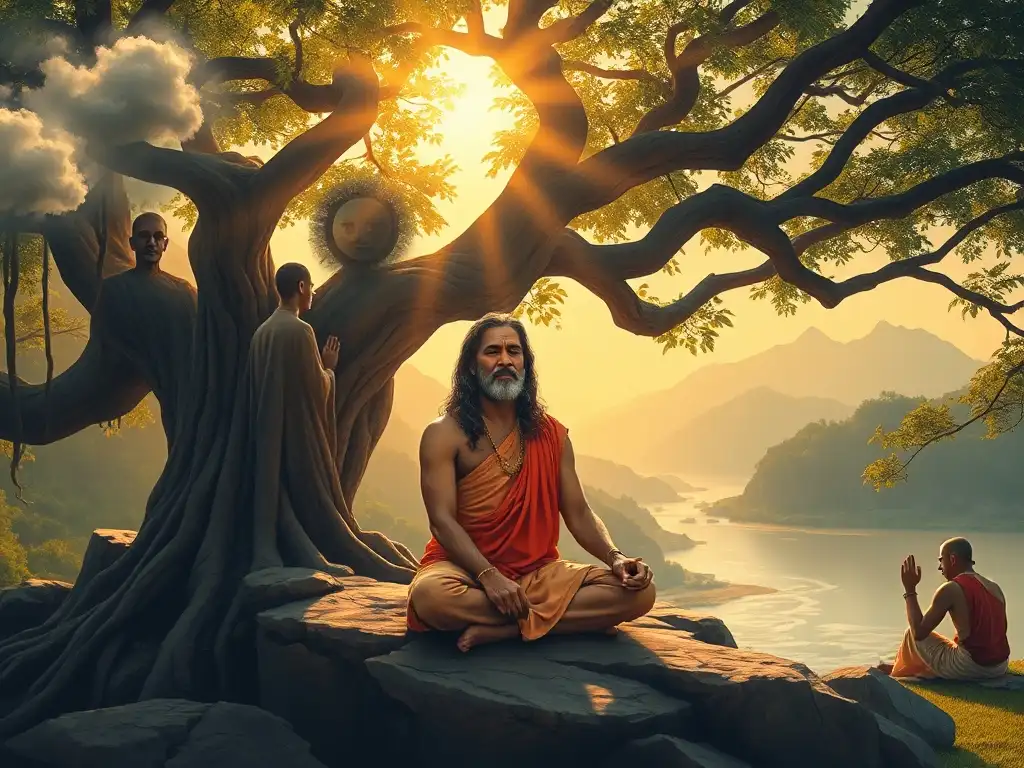
The philosophy of NonDualism, especially as articulated in the Upanishads, faces several challenges and misunderstandings in both scholarly and popular contexts. These challenges often stem from the abstract nature of NonDualist concepts, which can be difficult to grasp for those unfamiliar with the philosophical and spiritual traditions of ancient India.
One significant challenge is the tendency to oversimplify NonDualism into a binary framework where everything is either one or the other. Many people interpret NonDualism as a rejection of the material world, viewing it as mere illusion (Maya) without recognizing the nuanced understanding of reality that NonDualism offers. This misunderstanding can lead to a dismissal of the philosophy as impractical or irrelevant in contemporary life.
Common Misconceptions about NonDualism
Several misconceptions about NonDualism hinder a deeper understanding of its teachings:
- NonDualism Denies the Physical World: Many believe that NonDualism advocates for an escape from the material world. In reality, it emphasizes the interconnectedness of all existence, asserting that the physical and the spiritual are aspects of the same reality.
- All is Illusion: While the Upanishads discuss Maya, the term is often misunderstood to mean that everything is simply unreal. Instead, Maya refers to the deceptive nature of perception, highlighting that our understanding of reality can be clouded by ignorance.
- NonDualism is Nihilistic: Some interpret NonDualism as a philosophy that promotes a sense of hopelessness or meaninglessness. However, it actually encourages individuals to find deeper meaning and unity in life through the realization of the self's true nature.
The Complexity of NonDualist Thought
NonDualism is not a monolithic doctrine; it encompasses a variety of interpretations and schools of thought. The complexity arises from its philosophical depth, which integrates metaphysics, epistemology, and ethics. The Upanishads articulate a vision where the Atman (individual self) and Brahman (universal consciousness) are ultimately one, yet the journey to realizing this truth is layered and intricate.
Different texts and thinkers present varying perspectives on the path toward this realization, leading to diverse interpretations within the NonDualist framework. The emphasis on meditation, introspection, and ethical living as pathways to understanding further complicates simplistic interpretations. Thus, embracing the multifaceted nature of NonDualism is essential for a comprehensive grasp of its teachings.
Conclusion: The Relevance of NonDualism Today
In the modern context, the philosophy of NonDualism remains remarkably relevant, offering insights that resonate with contemporary spiritual seekers and philosophers alike. As individuals grapple with issues of identity, purpose, and connection in an increasingly fragmented world, the teachings of the Upanishads provide a profound framework for understanding the self in relation to the cosmos.
Contemporary Interpretations of NonDualism
Today, NonDualism is interpreted through various lenses, including psychology, spirituality, and even quantum physics. Contemporary spiritual leaders often draw upon NonDualist principles to foster a sense of unity and interconnectedness among individuals. Furthermore, NonDualism has influenced numerous modern spiritual practices, including mindfulness and meditation, which emphasize awareness of the present moment and the dissolution of ego-based separations.
NonDualism as a Path to Inner Peace and Understanding
NonDualism offers a pathway to inner peace by encouraging individuals to transcend the illusion of separateness. Through practices such as meditation and self-inquiry, one can cultivate an understanding of the self that is not bound by personal identity or societal expectations. This realization fosters a profound sense of connection to all beings, promoting empathy, compassion, and a shared sense of existence.
The philosophy of NonDualism in the Upanishads serves as a valuable guide for those seeking deeper understanding and harmony in a complex world, emphasizing that true peace comes from recognizing our inherent oneness with all that exists.
References and Further Reading
The study of non-dualism in the Upanishads is enriched by a variety of texts and resources that provide insights into its concepts, interpretations, and philosophical implications. Below are some notable references and further reading materials that can deepen understanding of this profound philosophical tradition.
Recommended Texts on NonDualism and the Upanishads
-
The Upanishads
A foundational text for understanding non-dualism, the Upanishads comprise a collection of philosophical writings that explore the nature of reality, the self (Atman), and the ultimate reality (Brahman). Key translations include:
- The Upanishads: A New Translation by Vernon Katz and Robert A. F. Thurman
- The Essence of the Upanishads: A Key to Indian Philosophy by Eknath Easwaran
-
Advaita Vedanta: A Philosophical Reconstruction
Written by Adriano C. P. de Souza, this text provides a contemporary analysis of Advaita Vedanta, emphasizing its non-dualistic philosophy and its roots in the Upanishads.
-
The Heart of the Upanishads
In this book, Swami Sivananda distills the essence of the Upanishadic teachings on non-dualism, making complex ideas accessible to a broader audience.
-
The Non-Duality of the Self: A Philosophical Inquiry
This work by John Grimes explores the philosophical underpinnings of non-dualism, discussing its implications in both historical and contemporary contexts.
-
The Philosophy of the Upanishads
Written by S. Radhakrishnan, this classic text examines the philosophical themes present in the Upanishads and their relevance to modern thought.
Additional Resources for Exploring Ancient Indian Philosophy
-
Online Courses and Lectures
Platforms like edX and Coursera offer courses on Indian philosophy that delve into the teachings of the Upanishads and the concept of non-dualism. These courses often feature lectures from leading scholars in the field.
-
Documentaries and Talks
Various documentaries explore the philosophical traditions of ancient India, including non-dualism. Notable examples include the PBS series "The Story of India" and talks by contemporary philosophers like Ravi Shankar and Eckhart Tolle that bridge ancient wisdom with modern perspectives.
-
Academic Journals
Journals such as the Journal of Indian Philosophy and Philosophy East and West frequently publish articles that analyze the concepts of non-dualism in the context of the Upanishads, offering scholarly insights and interpretations.
-
Websites and Blogs
Numerous websites and blogs dedicated to Indian philosophy provide accessible articles, discussions, and resources on non-dualism and the Upanishads. Examples include The Hindu and Sanskrit & Indian Studies.
Utilizing these resources will enhance one's grasp of the philosophy of non-dualism in the Upanishads, facilitating a deeper appreciation of its significance in ancient Indian thought and its continuing relevance today.
- Introduction to NonDualism
- The Upanishads: An Overview
- Core Principles of NonDualism
- Major Upanishads Exploring NonDualism
- The Pathway to Understanding NonDualism
- Comparative Analysis of NonDualism and Other Philosophies
- Challenges and Misunderstandings of NonDualism
- Conclusion: The Relevance of NonDualism Today
- References and Further Reading
Frequently Asked Questions
What is Non-Dualism in the context of the Upanishads?
Non-Dualism, or Advaita, is a core philosophical concept in the Upanishads that emphasizes the unity of the individual soul (Atman) and the universal soul (Brahman).
How do the Upanishads contribute to the understanding of Non-Dualism?
The Upanishads explore profound truths about existence, consciousness, and the ultimate reality, guiding readers to realize that individual identities are illusions and that true knowledge lies in oneness.
Can Non-Dualism be applied to modern life?
Yes, the principles of Non-Dualism can be applied to modern life by fostering a sense of connection, reducing ego, and promoting inner peace through the understanding of our shared existence.
What are the key texts within the Upanishads that discuss Non-Dualism?
Key texts include the Mandukya Upanishad, Chandogya Upanishad, and Brihadaranyaka Upanishad, which provide insightful teachings on the nature of reality and the relationship between Atman and Brahman.
How does Non-Dualism differ from other philosophies in India?
Unlike dualistic philosophies that emphasize separation between the self and the divine, Non-Dualism asserts that there is no fundamental distinction, promoting a view of ultimate unity in all existence.
Final Reflection: Embracing the Philosophy of NonDualism in the Upanishads
The exploration of the Philosophy of NonDualism in the Upanishads remains profoundly relevant today, as it invites us to transcend the illusions of separation and recognize our interconnectedness. In a world increasingly marked by division and conflict, the teachings of the Upanishads serve as a timeless reminder that the essence of existence is unity. This philosophy not only challenges our perceptions but also inspires a deeper understanding of ourselves and our place within the cosmos.
The influence of NonDualism extends far beyond ancient texts; it resonates within contemporary spiritual practices and philosophical discussions. As we navigate the complexities of modern life, the principles found in the Upanishads encourage us to cultivate awareness and compassion. The greatest gift of the Upanishads is the realization that we are not separate from the universe; we are the universe experiencing itself.
This profound insight continues to shape our cultural and social landscapes, urging us to embrace a holistic view of existence that fosters harmony and peace.
As you reflect on the teachings of NonDualism, consider how they can transform your daily life and interactions. Embrace the invitation to look beyond the surface, to recognize the shared essence in all beings, and to act with love and understanding. The journey toward realizing our interconnectedness is not just a philosophical pursuit; it is a call to action that can lead to profound personal and collective change. Let the wisdom of the Upanishads guide you as you navigate the path toward unity and enlightenment.
Unveil the Wisdom of Non-Dualism: Your Journey Awaits!
Thank you for diving deep into the enriching philosophy of non-dualism found in the Upanishads! By exploring these teachings, you've taken a significant step towards understanding the profound truths that can transform your perspective on life. Now, it’s time to take that insight and turn it into action.
- Engage with the Text: Choose a specific Upanishad that resonates with you. Reflect on its teachings and consider how they apply to your life.
- Join the Conversation: Share your thoughts and interpretations in our community forum at Ancient India History . Connecting with fellow seekers can help broaden your understanding.
- Practice Mindfulness: Incorporate a simple meditation or mindfulness practice into your daily routine to cultivate awareness and inner peace.
What aspect of non-dualism do you find most challenging or inspiring, and how will you apply it in your life?