
The Role of Trade Cities: How Indian Ports Connected with Chinese Markets

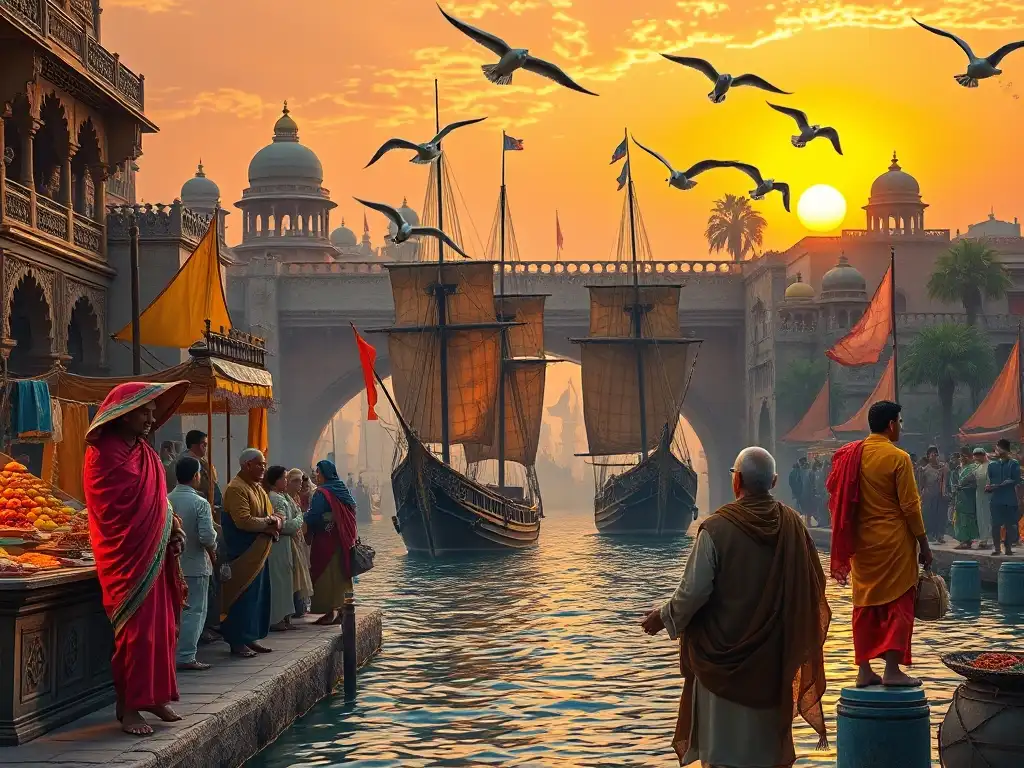
Welcome to Ancient India History, where we embark on an extraordinary journey through time to uncover the rich and diverse tapestry of ancient Indian civilizations. In this exploration, we shine a light on the main article that delves into the fascinating world of Ancient Indian trade cities—crucial hubs that not only flourished within the subcontinent but also served as vibrant bridges connecting Indian ports to far-reaching Chinese markets.
Discover how these bustling trade centers shaped cultural exchanges and influenced civilizations, inviting you to dive deeper into the intricate web of interactions that defined our past. Join us as we unlock the secrets of these remarkable cities and their pivotal role in the grand narrative of history!
Introduction to Ancient Indian Trade Cities
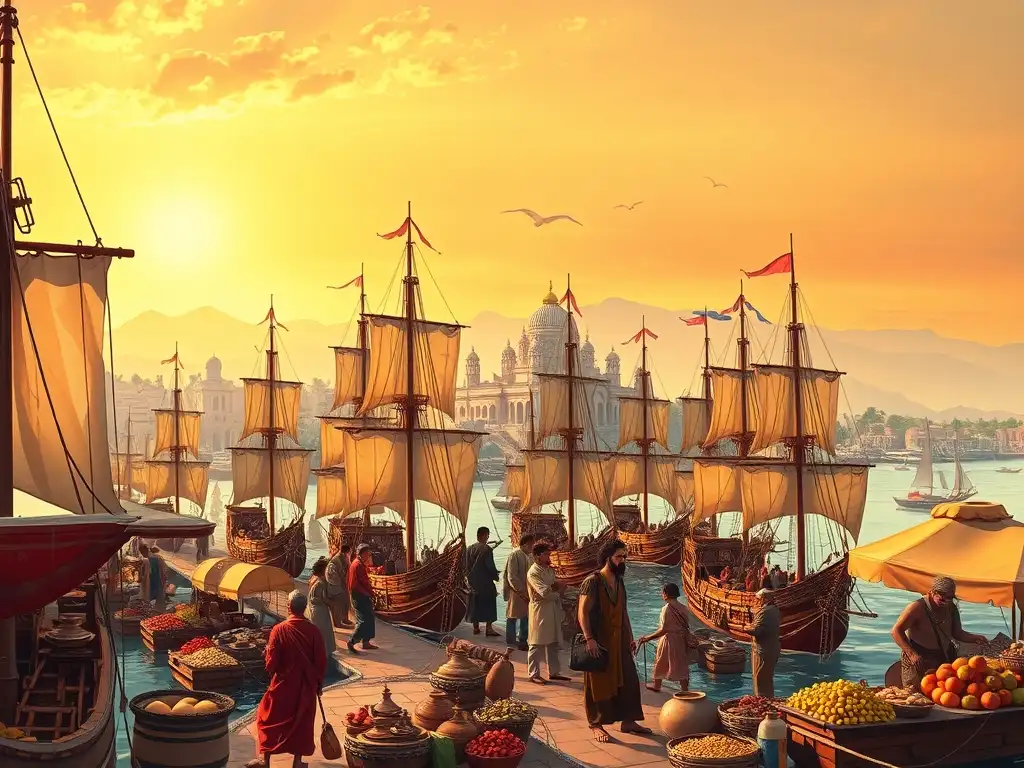
The exploration of ancient Indian trade cities reveals a fascinating tapestry of commerce, cultural exchange, and economic vitality that played a pivotal role in shaping the interactions between Indian and Chinese civilizations. These trade hubs were not merely centers of economic activity; they served as melting pots of cultural exchange, innovation, and diplomatic relations.
The ancient Indian trade cities facilitated the movement of goods, ideas, and technologies, significantly influencing both regional and global landscapes. This article will delve into the significance of these cities, their historical context, and the intricate web of trade that connected India with China, highlighting the enduring impact of these exchanges.
Overview of Trade Cities in Ancient India
Ancient India was home to numerous thriving trade cities, each contributing uniquely to the vast network of commerce that flourished across the subcontinent. Notable ports like Lothal, Surat, and Kalyan emerged as critical nodes in maritime trade, particularly with distant markets such as China. These cities were strategically located along trade routes that facilitated the exchange of valuable commodities, including spices, textiles, and precious metals.
- Lothal: Renowned for its advanced dockyard, Lothal was a crucial port of the Indus Valley Civilization, connecting maritime trade routes to regions as far as Mesopotamia.
- Surat: A major trading hub during the Mughal era, Surat became a significant port for the exchange of textiles and spices with both European and Asian markets.
- Kalyan: This port served as a gateway for trade with the Persian Gulf and the South East Asian markets, establishing connections that would last for centuries.
These cities not only facilitated economic transactions but also acted as cultural crossroads where diverse communities interacted, resulting in a rich exchange of ideas, beliefs, and practices.
Importance of Trade in Ancient Indian Civilization
Trade was fundamental to the prosperity and development of ancient Indian civilization. It played a crucial role in:
- Economic Growth: Trade boosted local economies, enhanced wealth distribution, and led to the rise of powerful merchant classes.
- Cultural Exchange: The flow of goods brought along cultural practices, religious beliefs, and artistic influences, enriching the social fabric of Indian society.
- Political Relations: Trade facilitated diplomatic ties, fostering alliances and interactions between kingdoms across the Indian subcontinent and beyond.
The legacy of these trade interactions continues to shape the historical narrative of ancient India, highlighting the importance of commerce in fostering connections between different cultures and civilizations.
Historical Context of Trade Relations
The Emergence of Trade Routes Between India and China
The establishment of trade routes between India and China can be traced back to ancient times, particularly during the Silk Road era. These routes were not limited to overland pathways; maritime routes also played a significant role in connecting these two great civilizations. Key factors influencing the emergence of these routes included:
- Geographical Advantages: The proximity of Indian ports to the South China Sea created optimal conditions for maritime trade.
- Demand for Goods: The Chinese demand for Indian textiles, spices, and gemstones spurred the development of trade networks.
- Cultural Diplomacy: The exchange of envoys and scholars between Indian and Chinese empires fostered mutual interests in commerce.
As these trade routes solidified, they became conduits for not just goods, but also ideas, technologies, and cultural practices that enriched both civilizations.
Key Historical Periods Influencing Trade Dynamics
Several historical periods significantly influenced the trade dynamics between India and China:
- Maurya and Gupta Empires: During these empires, trade flourished due to stable political conditions and the establishment of extensive trade networks.
- Tang Dynasty: The Tang Dynasty in China marked a high point in trade relations, as Chinese silk became highly sought after in Indian markets.
- Medieval Period: The rise of Islamic empires further transformed trade dynamics, introducing new goods and expanding trade networks to include regions of the Middle East and beyond.
Each of these periods contributed to the evolution of trade practices and the deepening of Indian-Chinese exchanges, laying the groundwork for the vibrant trade relationships that would continue for centuries.
Major Indian Ports and Their Significance
The ancient Indian trade cities played a pivotal role in shaping the economic landscape of the region, particularly through their strategic ports. These ports were not merely points of departure for goods; they were vibrant hubs of commerce, culture, and interaction with other civilizations, especially China. The significance of these ports extended beyond trade, influencing socio-economic structures and fostering cultural exchanges that have had lasting impacts.
Overview of Prominent Indian Ports
Several ports emerged as key players in ancient Indian trade, each with its unique contributions. Notable among them were:
- Lothal: Often referred to as one of the earliest ports in the Indus Valley Civilization, Lothal was notable for its well-planned dockyard, which facilitated maritime trade with various regions, including Mesopotamia and, later, China.
- Kaveripattinam: Located along the Coromandel Coast, this port was an essential trading center during the Sangam period. It served as a conduit for the exchange of goods such as spices and textiles with traders from Southeast Asia and China.
- Surat: Emerging as a prominent port in the Mughal era, Surat was instrumental in connecting India to European and Asian markets. Its trade routes allowed for the exchange of luxury goods, which included silks and spices, enhancing trade links with China.
- Cochin: Known for its natural harbor, Cochin became a significant port in the 12th century, facilitating trade with Arabian and Chinese merchants. The port was vital for the spice trade, which attracted traders from all over the world.
These ports were not just commercial centers but also melting pots of cultures, languages, and traditions, making them significant in the historical narrative of trade interactions.
Role of Ports in Facilitating Trade with China
The ports of ancient India facilitated extensive trade networks that connected Indian markets with Chinese ones. Through maritime routes, Indian ports acted as gateways for Chinese goods entering the Indian subcontinent, and vice versa.
- Maritime Trade Routes: Indian ports were integral to the maritime Silk Road, allowing for the flow of goods between India and China. The monsoon winds were particularly favorable for navigation, enabling merchants to time their journeys for maximum efficiency.
- Cultural Intermediaries: These ports served as cultural intermediaries, where not only goods were exchanged but also ideas, technologies, and philosophies. The spread of Buddhism from India to China is a notable example of such cultural exchange facilitated by traders.
- Economic Collaboration: The trade between Indian ports and Chinese markets fostered economic collaboration, allowing for the exchange of commodities that were beneficial to both regions. Indian traders often sought Chinese silk, while Chinese merchants were eager to acquire Indian spices and textiles.
The interconnectedness of these trade routes underscores the significance of Indian ports in facilitating not just commerce but also cultural and technological exchanges that enriched both civilizations.
Trade Goods Exchanged Between India and China
The trade between India and China was characterized by a diverse array of commodities that reflected the unique resources and demands of both regions. The exchange of these goods had profound implications for economic and cultural interactions.
Overview of Commodities Traded
The commodities traded between India and China included:
- Silk: One of the most sought-after goods from China, silk was a luxury item that found a ready market in India, where it was highly prized for its quality and beauty.
- Spices: India was known as the "land of spices," with goods like pepper, cardamom, and cinnamon being in high demand in Chinese markets. These spices were not only used for culinary purposes but also for medicinal and preservative applications.
- Textiles: Indian textiles, especially cotton and woven fabrics, were traded extensively. These textiles were often dyed with vibrant colors and intricate patterns, making them popular among Chinese merchants.
- Precious Stones and Metals: India was rich in gemstones, and these were traded for Chinese silver and gold, enhancing the wealth of both nations.
The variety of goods exchanged highlights the economic interdependence that developed through these trade routes.
Impact of Trade Goods on Cultural Exchange
The commodities exchanged between India and China were pivotal in shaping cultural dynamics. The influence of these trade goods extended beyond mere economic transactions, fostering significant cultural exchanges.
- Culinary Influences: The introduction of Indian spices into Chinese cuisine transformed food practices in China, leading to new culinary techniques and tastes. Conversely, Chinese practices and ingredients also influenced Indian cooking styles.
- Art and Craft: The textiles and patterns exchanged inspired artistic expressions in both cultures. The intricate designs of Indian textiles influenced Chinese embroidery, while Chinese motifs were adopted in Indian art.
- Philosophical Exchanges: The trade of goods often came with the exchange of ideas. As merchants traveled, they shared philosophies, religious beliefs, and cultural practices, leading to a mutual enrichment of both civilizations.
The impact of these trade goods was far-reaching, creating a tapestry of interactions that defined ancient Indian and Chinese societies. The legacy of this trade continues to influence cultural exchanges even in modern times.
The Role of Maritime Technology in Trade
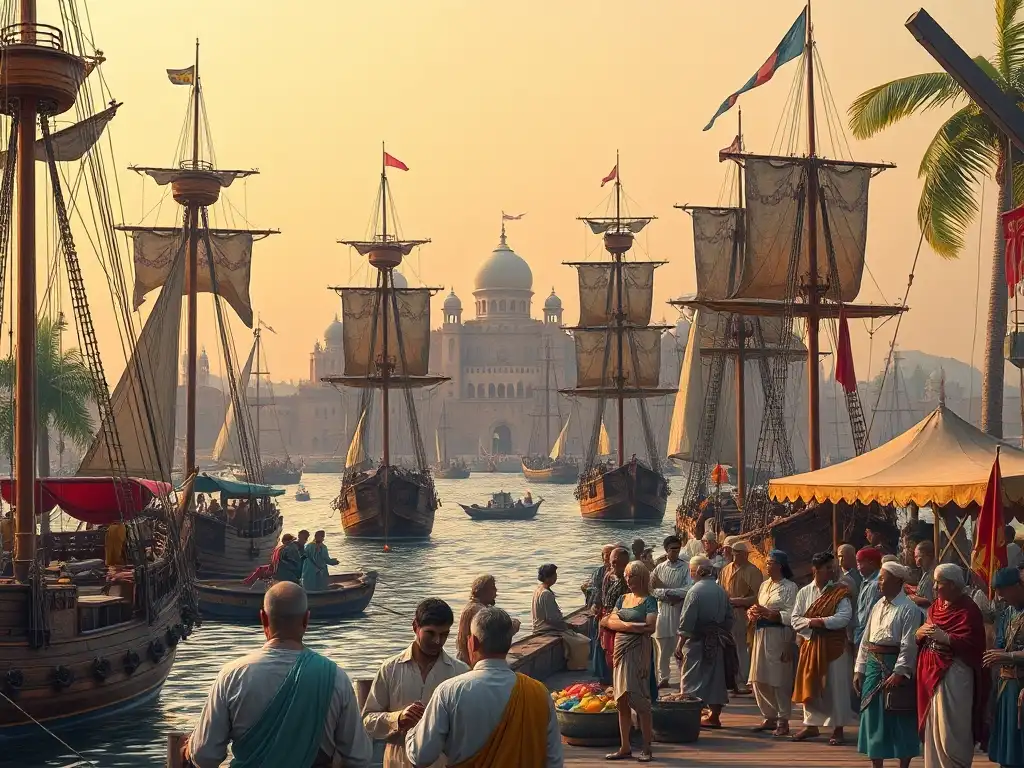
Maritime technology played a pivotal role in the development of trade cities in ancient India, enabling efficient connections between Indian ports and distant markets, including those in China. The advancements in shipbuilding and navigation not only facilitated the movement of goods but also fostered cultural exchanges that enriched civilizations on both sides of the Indian Ocean.
Innovations in Shipbuilding and Navigation
The evolution of shipbuilding techniques significantly impacted the ability of Indian traders to engage in maritime commerce. By the early centuries CE, Indian shipbuilders had mastered the art of constructing large, sturdy vessels capable of enduring long voyages across turbulent seas. These ships, often referred to as "dhows," were designed with a lateen sail that allowed for better maneuverability and speed, crucial for traversing the unpredictable monsoon winds.
Navigation techniques also saw remarkable advancements. Ancient mariners utilized the stars and ocean currents for guidance, coupled with a deep understanding of seasonal weather patterns. This knowledge was critical for timing voyages to coincide with favorable conditions, ensuring the safety of their journeys. The use of navigational tools such as the astrolabe and compasses further refined their capabilities, allowing merchants to establish regular trade routes that connected Indian ports like Calicut and Cochin with Chinese cities such as Guangzhou.
The Influence of Maritime Trade on Indian Economy
The bustling trade cities along the Indian coastline became vital economic hubs due to their strategic locations and robust maritime infrastructure. As trade flourished, these ports attracted a diverse population of merchants, artisans, and laborers, leading to significant urbanization and economic growth. The influx of goods, including silk, spices, and precious metals, transformed Indian markets and stimulated local industries.
Moreover, the maritime trade network established strong economic ties between India and China, leading to the exchange of not just commodities but also currency systems. The introduction of the Indian rupee, derived from early trade practices, played a crucial role in facilitating transactions across regions. This economic interconnection not only enriched the ruling dynasties but also elevated the standard of living for many inhabitants in these trade cities.
Cultural Exchanges Through Trade
Trade was not merely an economic activity; it was a powerful conduit for cultural exchanges that shaped the societies of ancient India and China. The interactions along trade routes led to a dynamic exchange of ideas, beliefs, and artistic expressions, underscoring the profound influence of commerce on cultural development.
Spread of Ideas and Religion Along Trade Routes
The trade routes that connected India and China served as channels for the dissemination of ideas and religious beliefs. Buddhism, for instance, spread from India to China through these maritime and overland networks, facilitated by traders and monks who traveled between the two regions. The establishment of Buddhist monasteries along key trade routes provided resting places for travelers and fostered the growth of communities devoted to the teachings of the Buddha.
Additionally, the exchange of philosophical ideas, particularly those related to governance, ethics, and cosmology, enriched both civilizations. The cross-pollination of concepts such as Confucianism and Indian philosophical thought contributed to a deeper understanding of governance, culture, and morality, which had lasting impacts on societal structures in both regions.
Artistic Influences: Indian and Chinese Interactions
The vibrant artistic traditions of ancient India and China were significantly influenced by their exchanges along trade routes. Indian traders brought with them not only goods but also artistic styles and motifs that left indelible marks on Chinese art. For example, Indian sculptures and architectural designs inspired Chinese Buddhist art, evident in the intricate carvings found in caves such as the Dunhuang Caves.
Conversely, Chinese artistic techniques and materials influenced Indian artisans, introducing new aesthetics and methods of production. The exchange of textiles, ceramics, and metalwork helped both cultures appreciate and incorporate each other's artistic heritage. This mutual influence enriched the artistic landscape of both civilizations, resulting in unique hybrids that celebrated their shared history and cultural identities.
The trade cities of ancient India were vital players in the maritime trade networks that connected India and China. Through advancements in maritime technology, robust economic interactions, and rich cultural exchanges, these cities became dynamic centers of commerce and culture, leaving a lasting legacy on the history of both regions.
Conclusion: The Legacy of Ancient Indian Trade Cities
The legacy of ancient Indian trade cities is profound, reflecting a vibrant tapestry of cultural, economic, and political exchanges that shaped not only the Indian subcontinent but also regions far beyond its shores. These trade hubs facilitated the movement of goods, ideas, and technologies, laying the groundwork for a complex network of intercontinental trade that connected India with China, the Middle East, and beyond.
The bustling ports of ancient India, such as Lothal, Bharukachchha, and Puhar, acted as vital links in these exchanges. They were not merely transit points but vibrant centers of commerce where merchants, artisans, and travelers converged. The wealth generated from trade helped to foster urban growth, artistic achievements, and the spread of religions, including Buddhism and Hinduism, which further influenced neighboring cultures.
The historical significance of these trade cities continues to resonate today. Their contributions to the development of trade practices, maritime navigation, and intercultural dialogue have left an indelible mark on modern economic frameworks and cultural understandings.
Lasting Impact on Modern Trade Relations
The ancient Indian trade cities have left a lasting impact on modern trade relations, influencing contemporary trading practices and international commerce. The strategic location of these ports facilitated not only the flow of goods but also the exchange of ideas and cultural practices, fostering a spirit of collaboration that resonates in today's globalized economy.
In many ways, the principles established by ancient Indian merchants, such as fair trade practices and the establishment of trade routes, continue to underpin international trade agreements. The emphasis on mutual benefit and respect for cultural diversity can be traced back to these early interactions between Indian and Chinese traders, which laid the groundwork for modern diplomatic relations.
Furthermore, the historical routes that connected Indian ports to Chinese markets have evolved into contemporary trade corridors, facilitating economic partnerships that benefit both nations. The enduring legacy of these ancient trade cities is evident in the growing economic ties between India and China, underscoring the importance of historical connections in shaping present-day commerce.
Reflections on the Cultural Heritage of Trade Cities
The cultural heritage of ancient Indian trade cities is rich and multifaceted, reflecting the diverse influences that emerged from centuries of interaction with other civilizations. These cities served not only as economic centers but as melting pots of cultural exchange, where diverse ethnic groups, languages, and traditions converged.
Artifacts unearthed from archaeological sites reveal a wealth of artistic expression, including pottery, textiles, and metalwork that showcase the skill and creativity of ancient artisans. The architectural styles of these trade cities often incorporated elements from various cultures, resulting in a unique fusion that is still evident in some contemporary Indian architecture.
Moreover, trade cities played a crucial role in the dissemination of religious and philosophical ideas. They were instrumental in the spread of Buddhism to China, influencing spiritual practices and cultural developments in East Asia. This cultural diffusion underscores the importance of these cities not only as economic hubs but as vital sources of knowledge and innovation that shaped civilizations across the globe.
References
Suggested Reading on Ancient Indian Trade and Cultural Exchanges
- "The Silk Routes: A New History for Children" by John S. Major: - This book provides an engaging overview of the historical trade routes, highlighting the significance of Indian trade cities.
- "India and China: A History of Cultural Exchanges" by Tansen Sen: - A comprehensive analysis of the cultural interactions between India and China throughout history.
- "The Ancient Indian Economy: The Role of Trade" by Ramesh Chandra Dutt: - An exploration of the economic systems in ancient India, focusing on trade practices and their implications.
Historical Sources on Indian Ports and Chinese Markets
- "The Periplus of the Erythraean Sea" - An ancient text that provides insights into trade routes and ports in the Indian Ocean, including detailed descriptions of Indian and Chinese trade interactions.
- "The Travels of Marco Polo" - Accounts from the famous explorer that detail his observations of trade practices and cultural exchanges between India and China during the 13th century.
- "Ancient Indian Ports: A Study of Trade and Commerce" by K. R. Qureshi: - A thorough examination of the archaeological and historical significance of Indian ports in the context of international trade, particularly with China.
- Introduction to Ancient Indian Trade Cities
- Historical Context of Trade Relations
- Major Indian Ports and Their Significance
- Trade Goods Exchanged Between India and China
- The Role of Maritime Technology in Trade
- Cultural Exchanges Through Trade
- Conclusion: The Legacy of Ancient Indian Trade Cities
- References
Frequently Asked Questions
What were the main trade cities in ancient India?
Ancient Indian trade cities included Taxila, Ujjain, and Pataliputra, which served as crucial hubs for commerce and cultural exchange with other regions.
How did ancient Indian trade cities connect with Chinese markets?
Ancient Indian trade cities utilized maritime routes and land routes, facilitating trade of goods like silks, spices, and precious stones between India and China.
What was the significance of ports in ancient Indian trade?
Ports such as Kalyan and Cochin played a pivotal role in connecting India to international markets, enhancing trade volume and fostering economic prosperity.
What goods were commonly traded between ancient India and China?
Key goods traded included textiles, spices, and metals, with India exporting valuable items to China in exchange for silk and other luxury products.
How did trade influence ancient Indian culture?
Trade led to cultural exchanges, introducing new ideas, religions, and art forms, which enriched the diverse cultural tapestry of ancient Indian civilizations.
Final Reflection: The Enduring Legacy of Ancient Indian Trade Cities
The intricate web of connections formed by ancient Indian trade cities with Chinese markets underscores the profound impact of commerce on cultural exchange and economic development. Today, as we navigate a globalized world, the lessons from these historical trade routes remind us of the importance of collaboration and mutual understanding across borders. The legacy of these ancient trade cities is not just a chapter in history; it is a testament to the power of trade in shaping societies and fostering relationships.
The influence of these trade cities extends far beyond their geographical boundaries, continuing to resonate in our modern cultural and social landscapes. The vibrant exchanges of goods, ideas, and traditions that occurred in these bustling ports laid the groundwork for the rich tapestry of cultural diversity we celebrate today. As historian K.N. Chaudhuri aptly noted, Trade is not merely an economic activity; it is a bridge that connects civilizations.
This enduring connection highlights how trade has historically been a catalyst for innovation, understanding, and cooperation among diverse cultures.
As we reflect on the significance of ancient Indian trade cities, let us embrace the spirit of connection that they embodied. Consider how you can foster collaboration and understanding in your own life, whether through cultural exchanges, supporting local businesses, or engaging in global dialogues. The lessons from the past are not just relics; they are guiding principles that can inspire us to build a more interconnected and harmonious future. Embrace the legacy of these ancient trade cities and let it inspire your journey toward fostering connections in our ever-evolving world.
Unveil the Power of Trade: Connect Nations, Build Futures!
Thank you for exploring the fascinating world of ancient trade cities with us! We've uncovered how Indian ports played a pivotal role in connecting with Chinese markets, revealing a rich tapestry of cultural and economic exchange. Now, it’s time to take this knowledge and turn it into action.
Here are a few ways you can further engage with this captivating topic:
- Dive deeper into this history: Read more about the specific trade routes used by Indian traders and their lasting impact on modern commerce. Explore our related articles for an enriched understanding!
- Share your insights: Discuss this article with friends or on social media. What surprised you the most about the connections between India and China? Your perspectives can spark inspiring conversations!
- Join our community: Subscribe to our newsletter for more intriguing insights into ancient trade practices. Connect with fellow history enthusiasts who share your passion!
How do you think the ancient trade connections between India and China might influence today's global commerce? **Share your thoughts and let's start a conversation! **