
Uncovering the Mysteries of Ancient Indian Algorithms and Numerical Techniques

Welcome to Ancient India History, where we embark on an enlightening journey through the rich tapestry of India's past. Dive deep into the fascinating world of ancient Indian algorithms history, a captivating exploration of the ingenious numerical techniques that laid the groundwork for modern mathematics. As we unveil the mysteries surrounding these remarkable contributions, you'll discover how ancient scholars not only shaped their own civilization but also impacted the global understanding of mathematics. Are you ready to unlock the secrets of the past and see how they influence our world today? Join us as we unravel this intricate story!
- Introduction to Ancient Indian Algorithms History
- Historical Context of Algorithms in Ancient India
- Key Ancient Indian Algorithms and Numerical Techniques
- The Influence of Ancient Indian Algorithms on Mathematics
- Conclusion: Legacy of Ancient Indian Algorithms
- Frequently Asked Questions
- Final Reflection: Embracing the Legacy of Ancient Indian Algorithms
- Unleash the Wisdom of Ancient Algorithms!
Introduction to Ancient Indian Algorithms History
The history of ancient Indian algorithms is a fascinating exploration of the mathematical prowess and innovative techniques developed by early Indian civilizations. From sophisticated methods of computation to the systematic approaches used in solving complex problems, ancient Indian mathematicians laid the groundwork for many modern mathematical principles.
This article delves into the rich tapestry of ancient Indian algorithms, highlighting their historical significance, cultural context, and contributions to the broader field of mathematics. By examining the evolution of numerical techniques from the Indus Valley Civilization to the Gupta Empire, we aim to uncover the mysteries behind these remarkable mathematical advancements and their lasting impact on the world.
Overview of Ancient Indian Mathematics
Ancient Indian mathematics is characterized by its diversity and depth, encompassing a range of topics from arithmetic and geometry to astronomy and algebra. Key texts such as the Sulbasutras and Aryabhatiya played pivotal roles in documenting and disseminating mathematical knowledge. Some notable features include:
- Decimal System: Ancient Indian mathematicians were among the first to use a place-value system with a base of ten, which is foundational for modern mathematics.
- Zero and Infinity: The concept of zero as a number was revolutionary, allowing for more complex calculations and the development of algebraic thinking.
- Algorithms: Techniques for calculation and problem-solving were formalized into algorithms, some of which are still used today.
These elements not only illustrate the sophistication of ancient Indian mathematics but also underscore its influence on later mathematical developments across the globe.
Importance of Algorithms in Ancient Indian Numerical Techniques
Algorithms in ancient India were more than just computational tools; they represented a profound understanding of numerical relationships and problem-solving strategies. Their significance can be understood through various aspects:
- Cultural Context: Mathematical practices were intertwined with religious and astronomical observations, showcasing the integration of mathematics into everyday life and spirituality.
- Practical Applications: Algorithms were used for various practical tasks such as land measurement, trade calculations, and construction, demonstrating their utility in real-world scenarios.
- Legacy: The algorithms developed during this period laid the foundation for future mathematical innovations, influencing scholars in the Islamic Golden Age and beyond.
The study of ancient Indian algorithms not only enriches our understanding of their numerical techniques but also highlights the ingenuity and creativity of ancient Indian mathematicians, whose contributions continue to resonate in contemporary mathematics.
Historical Context of Algorithms in Ancient India
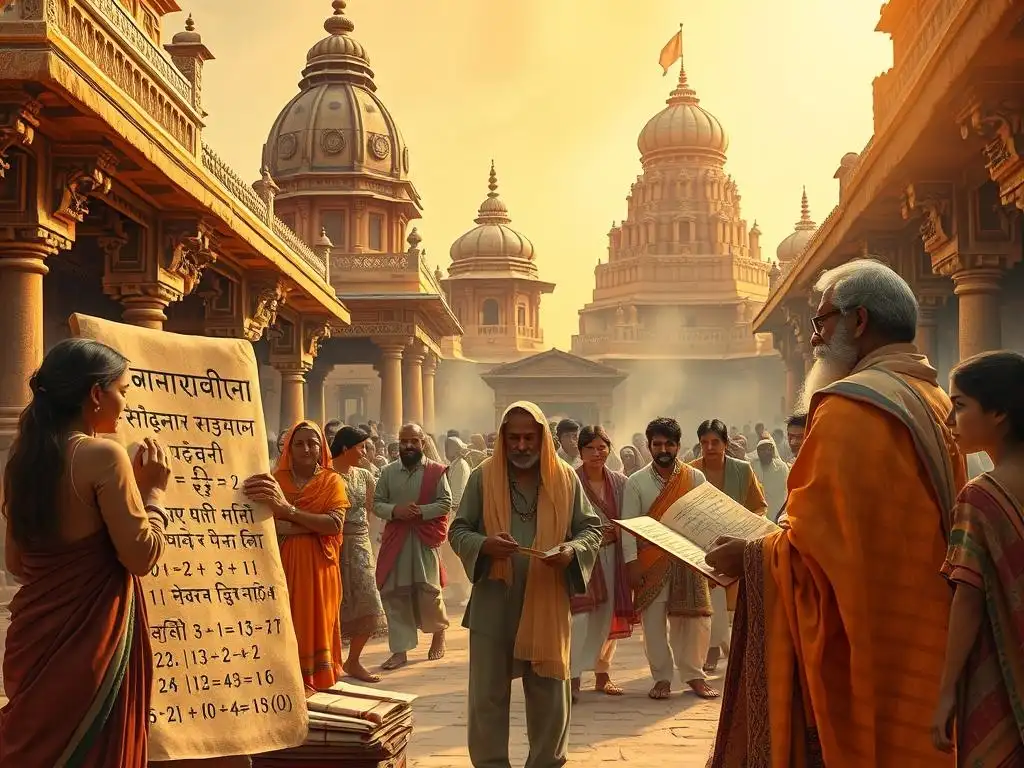
The history of algorithms in ancient India is deeply interwoven with the broader narrative of mathematical development within the region. From the sophisticated urban planning of the Indus Valley Civilization (c. 2600–1900 BCE) to the philosophical insights of Vedic texts, ancient Indian societies made significant contributions to mathematical thought and practices. These contributions laid the groundwork for what would evolve into a complex understanding of algorithms, providing tools for computation, astronomy, and commerce.
The term "algorithm" itself derives from the name of the Persian mathematician Al-Khwarizmi, who built on the mathematical foundations laid by earlier civilizations, including those in India. This relationship highlights the importance of cross-cultural exchanges in the evolution of mathematical techniques. The ancient Indian algorithms history reflects a rich tapestry of ideas that influenced not only the Indian subcontinent but also the world beyond.
The Indus Valley Civilization and Early Mathematical Practices
The Indus Valley Civilization is one of the earliest urban cultures in the world, known for its remarkable achievements in various domains, including mathematics. Archaeological findings suggest that the inhabitants of this civilization had a sophisticated understanding of measurement and geometry.
- Weights and Measures: The discovery of standardized weights and measures indicates that the Indus Valley people engaged in trade and construction with precision. This implies the use of algorithms for calculations related to trade, land measurement, and resource distribution.
- City Planning: The layout of cities like Harappa and Mohenjo-Daro reveals advanced knowledge of geometry and spatial organization. The grid-like patterns of streets and the use of right angles exemplify early algorithmic thinking in urban planning.
- Numerical Systems: Although the exact numerical system of the Indus Valley remains undeciphered, the presence of seals with symbols suggests that a form of written numeracy existed, facilitating counting and record-keeping.
The Indus Valley Civilization set a precedent for the mathematical practices that would later flourish during the Vedic period and beyond.
Vedic Mathematics: The Foundation of Ancient Indian Algorithms
Vedic Mathematics, derived from the ancient Indian scriptures known as the Vedas, represents a significant leap in the understanding of algorithms and numerical techniques. The insights from these texts reveal a systematic approach to arithmetic and geometry that would influence subsequent mathematical developments.
- Sutras and Sub-Sutras: The core of Vedic Mathematics consists of 16 sutras (aphorisms) that encapsulate various techniques for calculation. These sutras provide algorithms for performing arithmetic operations efficiently, such as multiplication, division, and extraction of roots. For instance, the sutra "Urdhva-Tiryagbhyam" (Vertically and Crosswise) describes a method for multiplying two numbers that is faster than the traditional long multiplication method.
- Mental Calculations: Vedic Mathematics emphasizes mental math techniques, allowing practitioners to perform complex calculations quickly. This ability is rooted in algorithmic processes that reduce the cognitive load and promote speed.
- Geometric Insights: The Vedic texts also include geometric principles that underpin algorithmic thinking in areas like trigonometry and spatial reasoning, further establishing the foundation for advanced mathematical concepts.
The Vedic period's emphasis on systematic calculation and algorithmic approaches significantly shaped the landscape of ancient Indian mathematics.
Contributions of Ancient Indian Scholars to Algorithms
Ancient Indian scholars made profound contributions to the field of algorithms, developing techniques that would be recognized and utilized long after their time.
- Brahmagupta (598–668 CE): His seminal work "Brahmasphutasiddhanta" introduced rules for arithmetic operations with negative numbers, zero, and the calculation of square roots, establishing algorithms that are still foundational in modern mathematics.
- Aryabhata (476–550 CE): In "Aryabhatiya," Aryabhata laid out algorithms for astronomical calculations and the computation of the value of π (pi). His work demonstrates an advanced understanding of mathematical principles and their applications, including timekeeping and celestial computations.
- Bhaskara II (1114–1185 CE): Known for his text "Lilavati," Bhaskara II expanded on earlier algorithms and introduced new methods for solving algebraic equations. His work emphasizes practical applications of mathematics in daily life, showcasing the utility of algorithms in various contexts.
- The Kerala School of Mathematics: In the late medieval period, this school made substantial advancements in calculus and infinite series, with mathematicians like Madhava of Sangamagrama developing early forms of algorithms for summation and approximation, paving the way for future mathematical discoveries.
The legacies of these scholars illustrate the rich tradition of algorithmic thought in ancient India, highlighting how their contributions shaped not only Indian mathematics but also the global mathematical landscape.
Key Ancient Indian Algorithms and Numerical Techniques

Ancient India boasts a rich tradition of mathematical innovation, particularly in the realm of algorithms and numerical techniques. These contributions laid the groundwork for future advancements in mathematics and science, influencing various fields such as astronomy, engineering, and architecture. This section explores some key algorithms and numerical techniques that emerged from ancient Indian civilizations, highlighting their significance and applications.
The Sulbasutras: Geometry and Measurement Algorithms
The Sulbasutras, composed between 800 and 200 BCE, are ancient texts that provide detailed instructions on constructing altars and rituals related to Vedic ceremonies. These texts reveal sophisticated understanding of geometry and measurement, showcasing several algorithms used for practical applications.
- Pythagorean Theorem:
- The Sulbasutras contain early forms of the Pythagorean theorem, presenting methods for constructing right-angled triangles. For instance, a common algorithm described is the construction of a square whose area equals the sum of the areas of two smaller squares.
- Area and Volume Calculations:
- These texts include formulas for calculating areas of various geometric shapes, such as squares, rectangles, and circles. For example, they provide a method for approximating the area of a circle by inscribing it within a square.
- Construction Techniques:
- The Sulbasutras detail the step-by-step processes for constructing complex geometrical figures using simple tools, demonstrating an early understanding of mathematical precision and measurement.
Overall, the algorithms found in the Sulbasutras exemplify the intersection of mathematics and ritual practices, showcasing a unique aspect of ancient Indian culture.
Aryabhata’s Contributions to Algorithms in Astronomy
Aryabhata, one of the most celebrated ancient Indian mathematicians and astronomers, made significant contributions to algorithms in the field of astronomy during the 5th century CE. His seminal work, the Aryabhatiya, presents various mathematical techniques that served both theoretical and practical purposes.
- The Aryabhata Algorithm for Time Calculation:
- Aryabhata introduced methods for calculating solar and lunar eclipses, employing algorithms that required knowledge of sine functions and cyclical patterns. His formulation for determining the positions of celestial bodies laid the groundwork for future astronomical studies.
- Place Value System:
- His work utilized a positional numeral system, which was revolutionary for its time. Aryabhata’s algorithm for calculations involved a systematic approach to place value, allowing for advanced arithmetic operations.
- Approximation of π:
- Aryabhata famously approximated π (pi) as 3.1416, demonstrating a profound understanding of circular geometry. His methods for calculating areas of circles and volumes of spheres showcased the practical application of algorithms in astronomy.
Aryabhata’s contributions not only enriched ancient Indian algorithms but also established a foundation for mathematical astronomy that influenced later scholars across the globe.
Brahmagupta’s Algorithm for Solving Quadratic Equations
Brahmagupta, a prominent mathematician of the 7th century CE, is renowned for his groundbreaking work in number theory and algebra. His text, the Brahmasphutasiddhanta, presents a comprehensive algorithm for solving quadratic equations, which was revolutionary for its time.
- General Solution for Quadratics:
- Brahmagupta formulated a general rule for solving quadratic equations of the form \( ax^2 + bx + c = 0 \). His algorithm involved calculating the discriminant and applying a systematic approach to find the roots, which laid the groundwork for modern algebraic techniques.
- Rules for Positive and Negative Solutions:
- Notably, Brahmagupta outlined rules for dealing with both positive and negative solutions. He recognized the importance of distinguishing between the two, thereby advancing the understanding of real and complex numbers.
- Practical Applications:
- The algorithms devised by Brahmagupta were not purely theoretical; they had practical applications in fields such as astronomy and commerce. His methods enabled accurate calculations for land measurement, trade, and various engineering projects.
Brahmagupta’s algorithm for solving quadratic equations represents a significant milestone in the history of mathematics, illustrating the depth and sophistication of ancient Indian algorithms.
Bhaskara II and the Development of Advanced Numerical Techniques
Bhaskara II, also known as Bhaskara Acharya, was one of the most influential mathematicians of ancient India, flourishing in the 12th century CE. His work marked a significant advancement in the field of mathematics, particularly in numerical techniques and algorithms. Born in Bijapur, Karnataka, Bhaskara II made substantial contributions that bridged the gap between arithmetic and algebra.
One of his most notable works, the "Lilavati," is a treatise on arithmetic and geometry. The text is not merely a mathematical manual; it is presented in the form of poetry, making it both educational and engaging. In "Lilavati," Bhaskara II introduced a variety of numerical techniques, including methods for solving linear and quadratic equations. His approach to algebra was innovative, emphasizing the importance of problem-solving and practical applications.
Key Contributions to Algorithms
Bhaskara II's work laid the groundwork for several algorithms that remain relevant in modern mathematics. Among his contributions:
- Interpolation Techniques: Bhaskara II developed methods for interpolation, allowing mathematicians to estimate values between known data points. This was particularly useful in astronomy and for calculating planetary positions.
- Indeterminate Equations: He worked extensively on indeterminate equations, particularly the well-known "Kuttaka" method, which provided systematic solutions for certain types of linear equations.
- Numerical Approximations: Bhaskara II also made use of numerical approximations for calculating square roots and other functions, providing algorithms that improved computational efficiency and accuracy.
The Impact of Bhaskara II's Work
The algorithms and numerical techniques formulated by Bhaskara II had a lasting impact on mathematics, influencing not only his contemporaries but also future generations of mathematicians in India and beyond. His works were later translated into Arabic and Latin, facilitating the spread of his ideas across different cultures and leading to advancements in the global mathematical community.
Furthermore, Bhaskara II's emphasis on practical applications of mathematics demonstrated a sophisticated understanding of the subject that transcended mere theoretical exploration. His algorithms were not only designed for academic purposes but were also intended for real-world applications, such as in commerce and astronomy.
Conclusion
Bhaskara II's contributions to the development of advanced numerical techniques and algorithms are a vital part of the ancient Indian algorithms history. His innovative methods and practical approach to problem-solving laid the groundwork for future advancements in mathematics. His legacy continues to be felt today, as modern mathematicians build upon the foundations he established over eight centuries ago.
The Influence of Ancient Indian Algorithms on Mathematics
The influence of ancient Indian algorithms on mathematics is profound and far-reaching. The term "algorithm" itself is derived from the name of the Persian mathematician Muhammad ibn Musa al-Khwarizmi, whose works were based on translations of Indian texts. Ancient Indian mathematicians, particularly from the Vedic period through to the Gupta Empire, made significant contributions that laid the groundwork for many mathematical concepts practiced today.
One of the most notable contributions was the development of the decimal place value system, which included the concept of zero. This revolutionary numeral system enabled more complex calculations and facilitated the expression of large numbers. Furthermore, ancient Indian mathematicians employed algorithms for operations such as addition, subtraction, multiplication, and division, which were systematically documented in texts like the Bakhshali Manuscript and Aryabhata's Aryabhatiya.
Transmission of Ancient Indian Mathematical Knowledge to Other Cultures
The transmission of ancient Indian mathematical knowledge to other cultures occurred through various channels, significantly impacting the development of mathematics in regions like the Middle East, Europe, and Southeast Asia.
- Trade Routes: The Silk Road and maritime trade routes facilitated the exchange of knowledge, where Indian merchants and scholars shared mathematical techniques with traders from other cultures.
- Translations: During the medieval period, many ancient Indian texts were translated into Arabic. Scholars such as al-Khwarizmi and al-Biruni played pivotal roles in adapting these texts and expanding upon their concepts.
- Educational Institutions: Ancient universities, such as Nalanda and Takshashila, attracted students from different parts of the world. This multicultural environment fostered the exchange of mathematical ideas that were later disseminated through various cultural lenses.
The impact of this transmission is evident in the adoption of the decimal system in Islamic mathematics and its eventual spread to Europe during the Renaissance.
The Role of Ancient Indian Algorithms in the Development of Modern Mathematics
Ancient Indian algorithms have played a crucial role in shaping modern mathematics, influencing numerous fields and methodologies. Key aspects include:
- Algebra: The systematic approach to solving equations was significantly influenced by the work of Brahmagupta, whose rules for dealing with positive and negative numbers are foundational to algebra today.
- Trigonometry: Indian mathematicians such as Aryabhata introduced sine and cosine functions, contributing to the development of trigonometry, which is essential for various applications in modern science and engineering.
- Calculus: The early concepts of infinitesimals and limits in the works of mathematicians like Bhaskara II laid the groundwork for calculus, predating its formal establishment in Europe by several centuries.
Ancient Indian algorithms not only enriched the mathematical landscape of their time but also provided a robust framework that continues to influence contemporary mathematical practices and theories. The enduring legacy of these contributions underscores the importance of studying ancient Indian algorithms in understanding the broader history of mathematics.
Conclusion: Legacy of Ancient Indian Algorithms
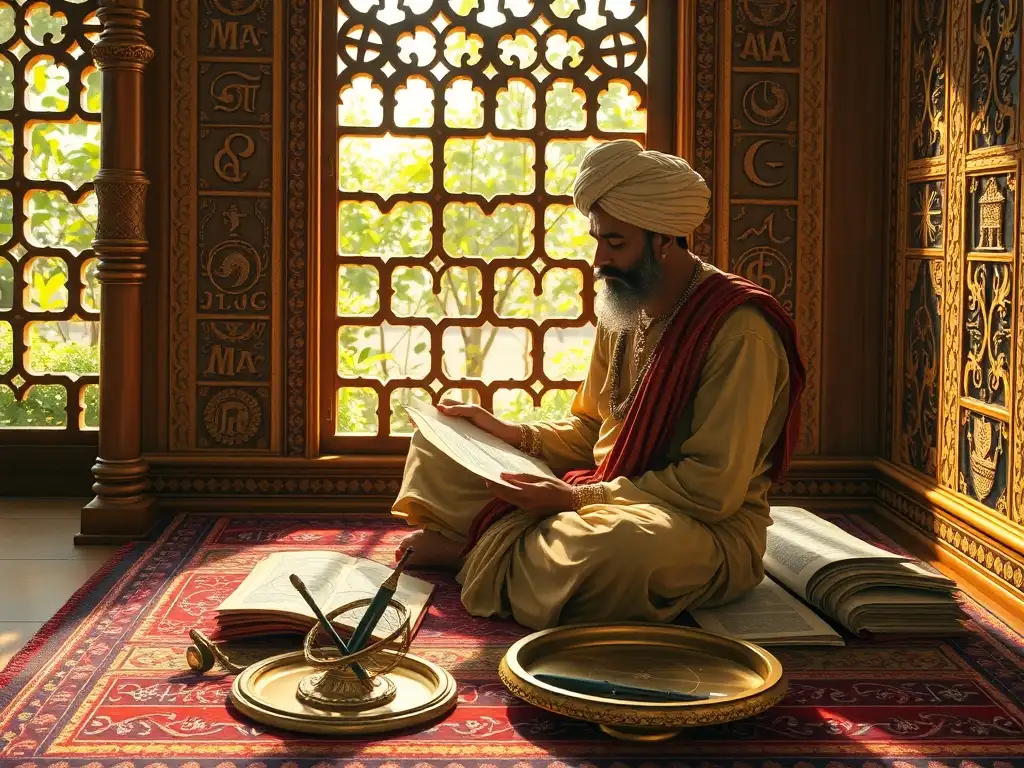
The legacy of ancient Indian algorithms is a testament to the profound impact that Indian mathematicians had on the development of mathematical thought across the globe. From the meticulous calculations of the Indus Valley Civilization to the sophisticated techniques formulated during the Gupta Empire, these algorithms laid the groundwork for many modern mathematical principles.
Ancient Indian scholars such as Aryabhata, Brahmagupta, and Bhaskara II contributed significantly to various fields, including arithmetic, algebra, and astronomy. Their works revealed a deep understanding of numerical systems and provided algorithms that addressed practical problems, such as land measurement, trade calculations, and astronomical predictions.
The preservation of these mathematical texts, written in Sanskrit and other languages, is crucial for understanding the evolution of mathematical concepts. The algorithms developed during ancient times not only influenced subsequent generations in India but also permeated through the Silk Road and into the Islamic Golden Age, shaping the mathematics of Europe and beyond.
Reflection on the Importance of Preserving Ancient Indian Mathematical Knowledge
Preserving ancient Indian mathematical knowledge is essential for several reasons:
- Cultural Heritage: The algorithms and techniques from ancient India are part of a rich cultural heritage that reflects the intellectual achievements of the civilization. This historical knowledge fosters a sense of identity and continuity, linking modern society with its ancient roots.
- Educational Value: The study of ancient Indian algorithms can enhance mathematical education by providing diverse perspectives on problem-solving. By integrating these historical techniques into contemporary curricula, educators can inspire students to appreciate the depth and breadth of mathematics as a discipline.
- Interdisciplinary Insights: The mathematical principles found in ancient texts often intersect with other fields such as astronomy, engineering, and philosophy. Understanding these connections can lead to a more holistic view of knowledge and encourage interdisciplinary research.
- Global Influence: Recognizing the contributions of ancient Indian mathematicians highlights the global nature of mathematical development. It fosters appreciation for the cross-cultural exchanges that have shaped mathematics, ultimately enriching our understanding of its history.
Future Research Directions in Ancient Indian Algorithms History
Future research in the field of ancient Indian algorithms history can take several promising directions:
- Textual Analysis: There is a need for comprehensive studies of existing manuscripts, many of which remain untranslated or inaccessible. Scholars can employ modern computational techniques to analyze these texts and uncover previously unnoticed algorithms and techniques.
- Comparative Studies: Comparative research between ancient Indian algorithms and those from other civilizations, such as the Greeks and Chinese, can shed light on commonalities and divergences in mathematical thought. This can enhance our understanding of how different cultures approached similar problems.
- Practical Applications: Investigating the practical applications of ancient algorithms in contemporary contexts, such as computer science or engineering, can provide valuable insights. For example, exploring how ancient Indian methods of numerical approximation can inform modern algorithms for numerical methods.
- Public Engagement: Engaging the public in the history of ancient Indian algorithms through workshops, seminars, and digital platforms can raise awareness and appreciation for this critical aspect of mathematics. Collaborative efforts between historians, mathematicians, and educators can make this knowledge accessible to broader audiences.
The study of ancient Indian algorithms not only contributes to the history of mathematics but also enriches our understanding of cultural and intellectual heritage. By preserving and researching these algorithms, we honor the legacy of those who laid the foundations for modern mathematical thought.
Frequently Asked Questions
What are ancient Indian algorithms?
Ancient Indian algorithms refer to mathematical procedures developed in India between the Indus Valley Civilization and the Gupta Empire, which laid the groundwork for modern mathematics.
How did ancient Indian algorithms influence mathematics?
The influence of ancient Indian algorithms is significant; they introduced concepts like zero, decimal systems, and various numerical techniques that shaped mathematics globally.
What are some examples of ancient Indian numerical techniques?
Examples include the Bakhshali manuscript's method for solving quadratic equations and Aryabhata's work on trigonometry and astronomical calculations.
Who were the key contributors to ancient Indian algorithms?
Key figures include Brahmagupta, who developed rules for arithmetic, and Bhaskara II, known for his work on algebra and calculations of planetary positions.
How is the study of ancient Indian algorithms relevant today?
The study of ancient Indian algorithms is crucial for understanding the evolution of mathematical thought and its applications in modern technology and computational methods.
Final Reflection: Embracing the Legacy of Ancient Indian Algorithms
The exploration of ancient Indian algorithms and numerical techniques reveals their profound relevance in today's technological landscape. As we navigate an era dominated by data and computation, the wisdom embedded in these historical methods offers not only insight but also inspiration for modern problem-solving. The intricate systems devised by ancient mathematicians remind us that innovation is often rooted in the past, and understanding this legacy can illuminate our path forward in a rapidly evolving world.
Cultural and social landscapes are continually shaped by the ideas and innovations of those who came before us. The algorithms developed in ancient India were not merely academic exercises; they were practical tools that transformed commerce, astronomy, and daily life. Their influence persists, as contemporary mathematicians and computer scientists draw from these foundational concepts to address modern challenges. Mathematics knows no races or geographic boundaries; for mathematics, the cultural world is one country.
– David Hilbert. This quote encapsulates the universal nature of mathematical discovery, emphasizing that the contributions of ancient Indian scholars are a shared heritage that transcends borders.
As we reflect on the lessons of ancient Indian algorithms, let us invite ourselves to embrace curiosity and innovation in our own lives. Consider how the principles of these historical techniques can inspire your approach to problem-solving, whether in your personal endeavors or professional pursuits. By honoring the wisdom of the past, we can cultivate a future where creativity and analytical thinking flourish, reminding us that the mysteries of ancient knowledge are not just relics but vital components of our ongoing journey toward understanding and advancement.
Unleash the Wisdom of Ancient Algorithms!
Thank you for joining us on this enlightening journey through the fascinating world of ancient Indian algorithms and numerical techniques. You’ve gained valuable insights into the ingenuity of these mathematical marvels and their impact on modern computation. Now, it's time to take that knowledge further!
Here’s how you can delve deeper and share the legacy of these ancient techniques:
- Explore more: Visit our article library to uncover additional intriguing insights about ancient mathematicians and their remarkable contributions to the field.
- Engage with the community: Share this article with friends or on social media platforms, and discuss how ancient Indian techniques are relevant in today’s world.
- Dare to discover: Try incorporating these algorithms into your own problem-solving strategies—look for real-world applications in your daily work or studies!
What new perspectives did you uncover from the ancient algorithms, and how might they inspire your current approach to mathematics or technology?