
The Intersection of Mathematics and Spirituality: The Concept of Zero in Ancient India

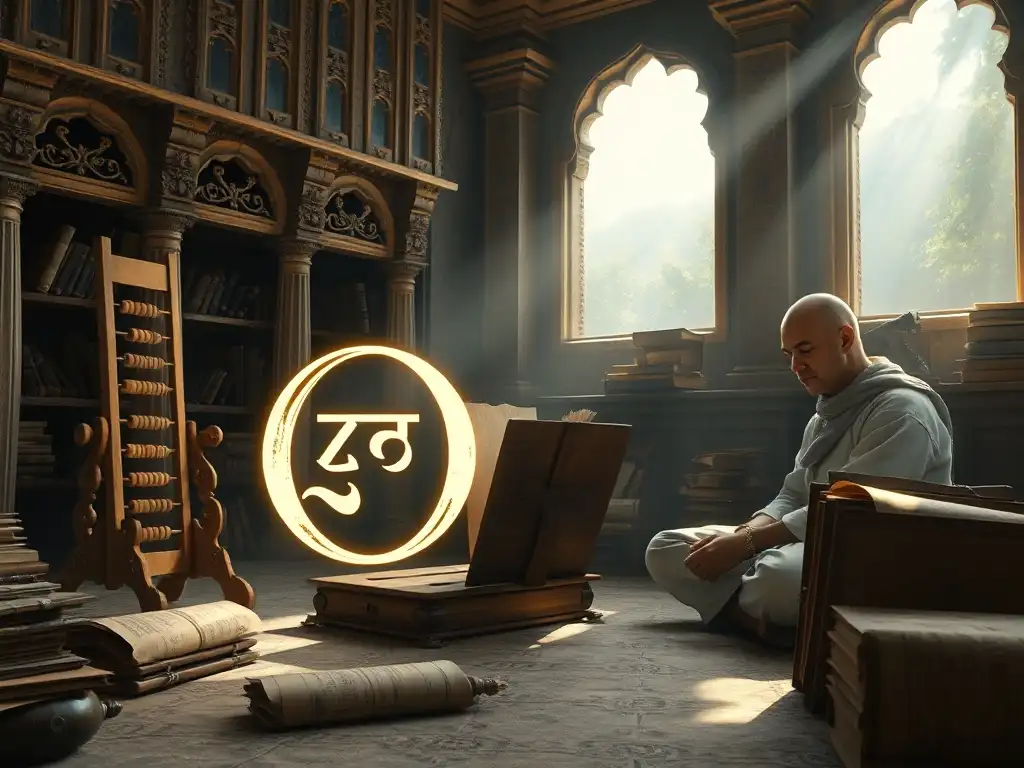
Welcome to Ancient India History, where we embark on a fascinating journey through the rich tapestry of ancient Indian civilizations. In our exploration today, we delve into the revolutionary zero concept in ancient India, a profound idea that not only transformed mathematics but also bridged the realms of spirituality and science. How did this seemingly simple numeral come to hold such monumental significance?
Join us as we uncover the intriguing story behind this mathematical marvel and its enduring impact on the world. Prepare to be captivated by the elegance of ancient thought and the depth of cultural contributions that continue to resonate today!

Introduction to the Concept of Zero in Ancient India
The concept of zero is one of the most profound and transformative ideas in mathematics, fundamentally altering the way we understand numbers and calculations. In the context of ancient India, the zero concept not only served as a mathematical tool but also intertwined with the spiritual and philosophical beliefs of the time.
Ancient Indian civilizations, particularly during the Gupta Empire, made significant contributions to mathematics, with zero symbolizing the absence of quantity as well as the potential for infinite possibilities. This article delves into the rich history of the zero concept in ancient India, exploring its evolution, significance, and the unique intersection between mathematics and spirituality that characterized this transformative period.
The Historical Significance of Zero
The historical significance of zero in ancient India cannot be overstated. Often referred to as "shunya," which translates to "void" or "empty," zero was not merely a placeholder in a numerical system but a concept that represented profound philosophical ideas. It allowed for the representation of nothingness, a theme prevalent in various Indian philosophies and religions.
- Mathematical Breakthroughs: The introduction of zero facilitated advancements in arithmetic, algebra, and calculus. It enabled the development of the positional number system, which is still in use today.
- Cultural Impact: The acceptance and incorporation of zero into mathematical practices reflect the broader cultural and intellectual climate of ancient India, where science, spirituality, and philosophy were deeply intertwined.
Overview of Ancient Indian Civilizations and Mathematics
Ancient Indian civilizations, including the Indus Valley Civilization and later the Maurya and Gupta Empires, laid the groundwork for significant mathematical advancements. Mathematics in ancient India was not merely a practical tool; it was a field of inquiry that encompassed theoretical concepts and spiritual reflection.
- Indus Valley Civilization: Early signs of mathematical understanding can be traced back to this civilization, with evidence of standardized weights and measures.
- Gupta Empire: This period is often referred to as the "Golden Age of India," where scholars like Aryabhata made groundbreaking contributions, including the formalization of the zero concept.
The Evolution of the Zero Concept
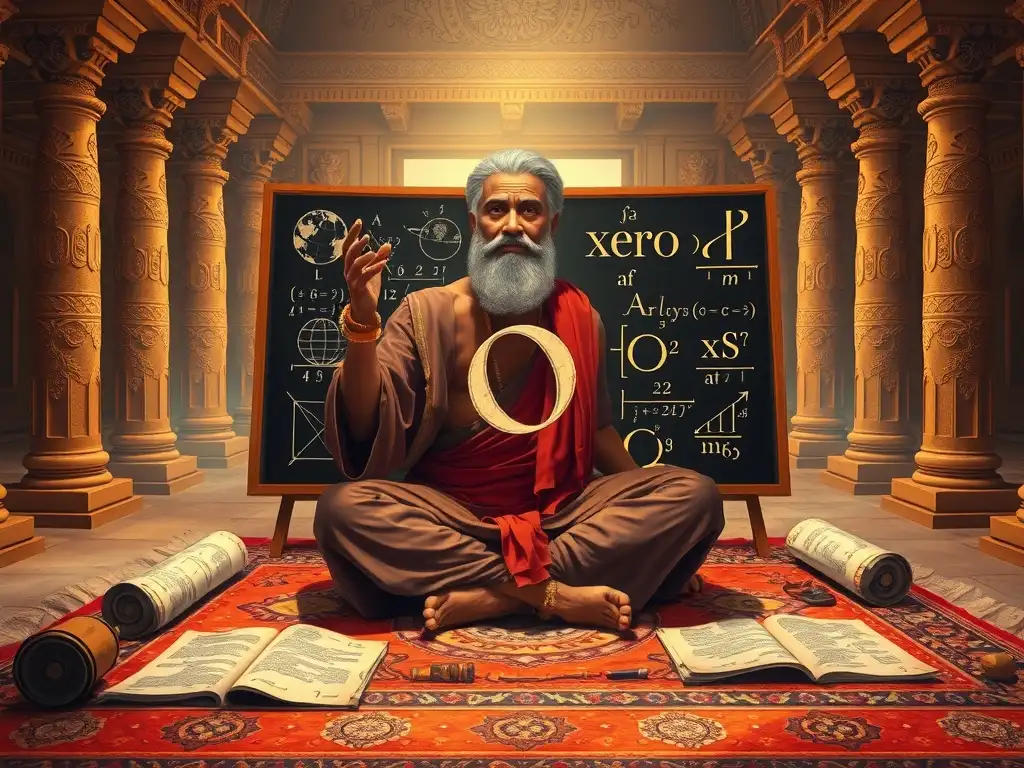
The evolution of the zero concept in ancient India illustrates a journey from practical necessity to an abstract philosophical idea. This transformation played a crucial role in mathematics and beyond.
Early Representations of Zero in Indian Culture
Early representations of zero in Indian culture can be traced through various artifacts and texts. The mathematical treatises of the time, such as the Bakhshali Manuscript, provide insight into how zero was conceptualized and utilized.
- Symbolic Representation: The use of a dot or a small circle often represented zero, highlighting its function as both a number and a philosophical idea.
- Philosophical Context: The idea of void and emptiness resonated with spiritual practices, especially in Hinduism and Buddhism, where nothingness was seen as integral to understanding the cosmos.
The Role of Mathematics in Ancient Indian Society
Mathematics held a central role in ancient Indian society, influencing various aspects of life, from astronomy to architecture. The integration of the zero concept revolutionized these fields.
- Astronomy: The accuracy of astronomical calculations improved significantly with the use of zero, allowing for more precise predictions of celestial events.
- Architecture and Art: The mathematical principles derived from the zero concept influenced temple architecture and artistic creations, showcasing the seamless blend of mathematics and spirituality.
The exploration of the zero concept in ancient India reveals a rich tapestry of mathematics interwoven with spiritual and philosophical themes. This article will delve deeper into each aspect, uncovering the profound impact that this seemingly simple numeral has had on the world.
The Spiritual Dimension of Zero
In ancient Indian philosophy, the concept of zero transcended mere numerical value, embodying profound spiritual significance. Zero, or "shunya," is often associated with the idea of emptiness and the void, which plays a central role in various spiritual and philosophical traditions in India. This emptiness is not merely a lack of something but represents a state of potentiality, a fertile ground from which all existence arises. In this context, zero symbolizes the infinite possibilities of creation, reflecting the cyclic nature of life and the universe.
The spiritual dimension of zero can be observed in the teachings of various philosophical schools, including Jainism and Buddhism, where the concept of void is pivotal. In these traditions, shunya is viewed as a state of enlightenment, free from the attachments and desires that bind the soul. The realization of this emptiness leads to liberation (moksha), emphasizing the transcendence of material existence. Thus, zero becomes a bridge between the material and spiritual realms, illustrating how mathematical concepts can reflect deeper truths about existence.
Zero as a Symbol in Hindu Philosophy
Within Hindu philosophy, zero has been interpreted as a symbol of the ultimate reality, often linked to the concept of Brahman, the unchanging, infinite source of all creation. The Upanishads, ancient texts that explore metaphysical concepts, describe Brahman as both the source of everything and the essence that pervades the universe. In this light, zero embodies the idea that from nothingness comes all that exists, highlighting the cyclical nature of creation, preservation, and dissolution.
Moreover, the duality of creation and destruction is mirrored in the symbol of zero. It represents not just the absence of quantity but also the potential for infinite possibilities. The philosophical implications of zero extend into practices such as meditation, where the goal is often to achieve a state of mental emptiness, allowing for a deeper connection with the universe. This transformative journey echoes the mathematical implications of zero, where it serves as a foundational element in various calculations, paving the way for advancements in mathematics that intertwine with spiritual insights.
The Connection Between Mathematics and Spirituality in Ancient Texts
Ancient Indian texts often reveal a profound connection between mathematics and spirituality, with mathematics serving as a tool to understand the universe's underlying principles. The concept of zero exemplifies this relationship; it is not just a numerical symbol but a representation of cosmic truths. Texts such as the Brahmasphutasiddhanta by Brahmagupta and Aryabhatiya by Aryabhata demonstrate how mathematical principles were intertwined with philosophical inquiries.
In these texts, calculations involving zero were often discussed in a metaphysical context, illustrating how mathematical operations could reflect spiritual ideas. For instance, Brahmagupta's rules for arithmetic involving zero were not only practical but also metaphorically tied to the cycle of life and death, creation and dissolution. This duality suggests that the understanding of zero was seen as essential for grasping the nature of reality itself, bridging the gap between the material world and spiritual enlightenment.
Key Figures in the Development of Zero
The evolution of the zero concept in ancient India cannot be discussed without acknowledging the influential mathematicians who contributed to its development. Aryabhata and Brahmagupta are two such key figures whose works laid the groundwork for the mathematical understanding of zero, merging numerical innovation with philosophical insights.
Aryabhata and His Contributions to Mathematics
Aryabhata, one of the earliest and most renowned Indian mathematicians, made significant contributions to the field, particularly in the understanding and application of zero. In his seminal work, Aryabhatiya, he introduced the use of zero as a placeholder, which allowed for more complex calculations and a clearer representation of numbers. This innovation was crucial in the history of mathematics, as it paved the way for the decimal system that is still in use today.
Moreover, Aryabhata's work included methods for calculating the area of a triangle and the volume of a sphere, demonstrating the practical applications of zero in geometry and measurement. His recognition of zero as not just a numeral but an essential component of mathematics marked a revolutionary shift in mathematical thought, linking it closely with astronomical calculations and furthering the intersection of mathematics and spirituality.
Brahmagupta's Theories on Zero and Its Use in Calculations
Brahmagupta, a later mathematician, further expanded upon Aryabhata’s ideas in his treatise Brahmasphutasiddhanta. He is credited with formalizing the rules for arithmetic operations involving zero, such as addition, subtraction, and division. His approach to zero was groundbreaking; he described the implications of performing operations with zero and established guidelines to avoid misconceptions that could arise from its usage.
One of Brahmagupta's notable contributions was his elucidation of the concept of zero as a distinct number, which could be manipulated arithmetically. He famously stated that subtracting a number from itself yields zero, and he also addressed the complexities of division by zero, highlighting both the mathematical and philosophical challenges it posed. Brahmagupta's theories not only advanced mathematical practices in ancient India but also reinforced the spiritual significance of zero as a symbol of the infinite and the void, linking numerical and cosmic concepts in a profound manner.
The Mathematical Implications of Zero

The concept of zero, originating in ancient India, represents a pivotal development in mathematics, fundamentally altering how numbers are perceived and manipulated. Zero serves not only as a placeholder but also as a numeric value that enables a variety of mathematical operations. Its introduction allowed for the development of more sophisticated arithmetic systems, particularly through the facilitation of calculations involving large numbers and complex equations.
One of the primary implications of zero is its role in the decimal system, which is built on place value. By using zero as a placeholder, mathematicians could differentiate between numbers such as 10, 100, and 1,000, enhancing clarity and precision in numerical representation. Additionally, zero plays a crucial role in the formulation of algebra, enabling the development of equations and the expression of mathematical relationships in a more abstract form.
The philosophical implications of zero also extend into spiritual realms, as it embodies concepts of emptiness and potential, reflecting the duality of existence in ancient Indian thought. This intersection of mathematics and spirituality highlights the depth of the zero concept in ancient Indian civilization.
Zero in Arithmetic: Addition, Subtraction, and Beyond
Zero's introduction into arithmetic transformed basic operations such as addition and subtraction. When added to any number, zero does not change the value of that number, which is articulated mathematically as:
\[ a + 0 = a \]
Furthermore, zero serves as the identity element for addition, allowing for the seamless integration of zero in various mathematical operations. During subtraction, zero assumes a unique role, as subtracting zero from any number yields the original number:
\[ a - 0 = a \]
The concept of zero also extends to multiplication and division. While any number multiplied by zero results in zero, division by zero presents challenges and is mathematically undefined. This complexity highlights the nuanced role that zero plays in arithmetic and its implications for more advanced mathematical theories.
Beyond basic arithmetic, the introduction of zero paved the way for the development of algebra and calculus. The ability to manipulate zero in equations allows for the exploration of limits, continuity, and the formulation of functions that are foundational to modern mathematics.
The Concept of Null and Its Mathematical Applications
In mathematics, the concept of null, often represented by zero, signifies the absence of quantity or value. This idea is crucial in various fields such as set theory, calculus, and computer science. In set theory, the empty set, denoted by ∅, is a foundational concept that illustrates the idea of nullity.
In calculus, the notion of limits approaches zero, allowing mathematicians to explore the behavior of functions as they approach a particular point. This leads to the development of derivatives and integrals, which are essential for understanding change and accumulation in various mathematical contexts.
Moreover, in computer science, zero plays a fundamental role in programming and data representation. The binary system, which underlies all computer operations, relies heavily on the concept of zero and one, demonstrating its significance beyond traditional mathematics.
The versatility of the null concept illustrates its importance across diverse mathematical disciplines, underscoring how ancient Indian insights contributed to modern mathematical frameworks.
The Global Influence of the Zero Concept from Ancient India
The introduction of the zero concept in ancient India had far-reaching implications, influencing mathematics and science across the globe. Its transmission to other cultures facilitated the development of advanced mathematical concepts and practices that shaped the course of human knowledge.
Transmission of Zero to the Islamic World
The journey of zero from ancient India to the Islamic world is a remarkable narrative of cultural exchange. During the 7th century, Indian mathematicians and scholars began to interact with Persian and Arab intellectuals, sharing knowledge that included the numeral system and the concept of zero. This exchange was facilitated by trade routes and the translation of texts, particularly the works of prominent Indian mathematicians like Brahmagupta.
The Islamic scholars embraced the concept of zero, integrating it into their mathematical systems. They recognized its significance in calculations, leading to the refinement of arithmetic and algebra. Notable figures such as Al-Khwarizmi played a crucial role in disseminating these ideas, which eventually reached Europe through translations of Arabic mathematical texts.
The Impact of Indian Mathematics on the Western World
The influence of Indian mathematics, particularly the concept of zero, was monumental in shaping Western mathematics. By the 12th century, the introduction of the Hindu-Arabic numeral system, which included zero, transformed European mathematics, replacing the cumbersome Roman numeral system.
As European mathematicians began to adopt these concepts, the foundation for modern mathematics was laid. The ability to perform calculations with zero enabled advancements in algebra, calculus, and mathematical notation, which are essential to contemporary mathematics and science.
The legacy of the zero concept in ancient India is profound, illustrating how a single mathematical innovation can transcend cultures and epochs, ultimately enriching the global understanding of mathematics and its applications. As we delve into this history, we recognize zero not just as a number, but as a transformative idea that continues to shape our world.
Conclusion: The Legacy of Zero in Mathematics and Spirituality
The concept of zero, originating from ancient India, represents a profound intersection of mathematics and spirituality that has shaped both disciplines significantly. This seemingly simple numeral encapsulates complex philosophical ideas about existence and non-existence, making it a fundamental element not only in mathematics but also in the spiritual and cultural fabric of India. The introduction of zero facilitated the development of advanced mathematical concepts, enabling the formulation of complex equations and the progress of mathematics into the digital age.
Moreover, the philosophical implications of zero challenge us to consider the nature of reality and the void. It embodies the duality of existence, suggesting that absence can hold as much significance as presence. This duality resonates deeply within spiritual traditions, emphasizing meditation and introspection, where the concept of emptiness is vital for achieving higher states of consciousness. As we reflect on the legacy of zero, we see it as a symbol of the interconnectedness between the material and spiritual worlds, revealing how ancient insights continue to influence contemporary thought.
The Lasting Impact of the Zero Concept in Modern Mathematics
The introduction of zero has revolutionized modern mathematics, serving as the cornerstone of numerical systems used today. The positional decimal system, developed in India, allows for the efficient representation of large numbers and plays a crucial role in various fields, including science, engineering, and finance.
- Computational Efficiency: The use of zero simplifies arithmetic operations, making calculations easier and more efficient. For instance, the ability to denote a placeholder in positional notation allows for the clear representation of values like 1050, distinguishing it from 105.
- Algebra and Calculus: Zero is instrumental in the development of algebraic expressions and calculus. Concepts such as limits, derivatives, and integrals often hinge on the understanding of zero, especially when approaching values asymptotically.
- Technological Advancements: The digital revolution, heavily reliant on binary code (which uses only 0s and 1s), owes its existence to the early mathematical principles introduced by Indian mathematicians. This binary system underpins all modern computing, highlighting the profound and lasting influence of the zero concept.
The impact of zero extends beyond mere numerical value; it has reshaped our understanding of mathematics itself.
Reflections on the Intersection of Mathematics and Spirituality Today
In contemporary society, the intersection of mathematics and spirituality continues to provoke thought and inspire inquiry. As we engage with the concept of zero, we find that it serves as a metaphor for exploring deeper philosophical questions about existence, consciousness, and the universe.
- Meditation and Mindfulness: Many spiritual practices emphasize the importance of "emptying the mind," mirroring the mathematical idea of zero as a point of balance. This connection invites practitioners to explore the spaces between thoughts, akin to the role of zero in numerical systems.
- Philosophical Inquiry: The discussions surrounding the nature of nothingness have gained traction in both philosophical and scientific debates. Scholars and spiritual leaders alike contemplate the implications of zero, questioning what it means to exist in a universe that can also embody absence.
- Interdisciplinary Studies: The blending of mathematics and spirituality has led to interdisciplinary studies that examine how ancient concepts can inform modern problems. By reflecting on the teachings of ancient Indian mathematicians, contemporary thinkers can explore new paradigms of knowledge that integrate both logical reasoning and spiritual understanding.
The legacy of the zero concept in ancient India extends far beyond mathematics, influencing spiritual thought and inviting ongoing reflection on the nature of reality. As we continue to explore this intersection, we uncover layers of meaning that resonate through both disciplines, enriching our understanding of the world and ourselves.
- Introduction to the Concept of Zero in Ancient India
- The Historical Significance of Zero
- Overview of Ancient Indian Civilizations and Mathematics
- The Evolution of the Zero Concept
- The Spiritual Dimension of Zero
- Key Figures in the Development of Zero
- The Mathematical Implications of Zero
- The Global Influence of the Zero Concept from Ancient India
- Conclusion: The Legacy of Zero in Mathematics and Spirituality
- What is the zero concept in ancient India?
- How did ancient Indian scholars contribute to the development of mathematics?
- Why is the zero concept considered a spiritual as well as a mathematical concept?
- What role did the Gupta Empire play in advancing mathematical ideas in ancient India?
- How did the introduction of zero influence global mathematics?
Frequently Asked Questions
What is the zero concept in ancient India?
The zero concept in ancient India refers to the mathematical innovation of representing zero as a distinct number, which was crucial for the development of mathematics and was first documented in ancient Indian texts.
How did ancient Indian scholars contribute to the development of mathematics?
Ancient Indian scholars made significant contributions, including the introduction of the decimal system, the concept of zero, and various mathematical principles that influenced later civilizations.
Why is the zero concept considered a spiritual as well as a mathematical concept?
In ancient Indian philosophy, the zero concept symbolizes void or nothingness, aligning with spiritual beliefs about the universe's nature and the cycle of creation and destruction.
What role did the Gupta Empire play in advancing mathematical ideas in ancient India?
The Gupta Empire was a golden age for science and mathematics, fostering intellectual pursuits and leading to breakthroughs like the formal acceptance of zero and its use in calculations.
How did the introduction of zero influence global mathematics?
The introduction of zero from ancient India revolutionized mathematics globally, enabling complex calculations, the development of algebra, and advancements in various scientific fields throughout history.
Final Reflection: The Profound Significance of Zero in Ancient India
The exploration of the zero concept in ancient India reveals its profound relevance in today’s world, illustrating how a simple numeral can embody complex philosophical ideas. The journey through mathematics and spirituality not only highlights the ingenuity of ancient scholars but also underscores the interconnectedness of knowledge across disciplines. As we navigate an increasingly complex world, the essence of zero serves as a reminder of the importance of balance, potential, and the infinite possibilities that arise from emptiness.
Culture and society have been significantly shaped by the zero concept, influencing not just mathematics but also our understanding of existence and the universe. The philosophical implications of zero challenge us to reconsider our perceptions of nothingness and fullness, urging us to find meaning in both. As the mathematician and philosopher Alfred North Whitehead once said, Mathematics is the science of patterns.
This notion resonates deeply with the spiritual insights derived from the concept of zero, inviting us to recognize the patterns that connect our lives, thoughts, and beliefs.
As we reflect on the lessons embedded in the zero concept, I encourage you to consider how you can apply these insights in your own life. Embrace the potential that lies in the spaces between thoughts and actions, and recognize that sometimes, it is in the void that we find the greatest opportunities for growth and understanding. Let the legacy of ancient Indian thinkers inspire you to explore the intersections of knowledge, spirituality, and creativity, and may you carry the wisdom of zero into your own journey of discovery.
Unveil the Mysteries of Zero in Your Journey!
Thank you for delving into the fascinating intersection of mathematics and spirituality through the lens of ancient India. Your exploration of the concept of zero has undoubtedly illuminated its profound significance in both mathematics and the spiritual realm. Now, it’s time to elevate your understanding even further!
Here are some impactful actions you can take:
- Engage with zero: Experiment with mathematical concepts that incorporate zero in your daily life; reflect on how it shapes your understanding of emptiness and potential.
- Share your insights: Discuss the spiritual implications of zero with friends or on social media, sparking conversations about its historical importance.
- Explore further: Investigate other mathematical ideas that carry spiritual meaning—consider starting a reading group or joining an online community centered on the intersection of mathematics and spirituality.
What aspect of zero from ancient India's spiritual journey resonates most with you, and how do you envision incorporating that insight into your own life?