
How Sanskrit Language Development Mirrors Social Change in India

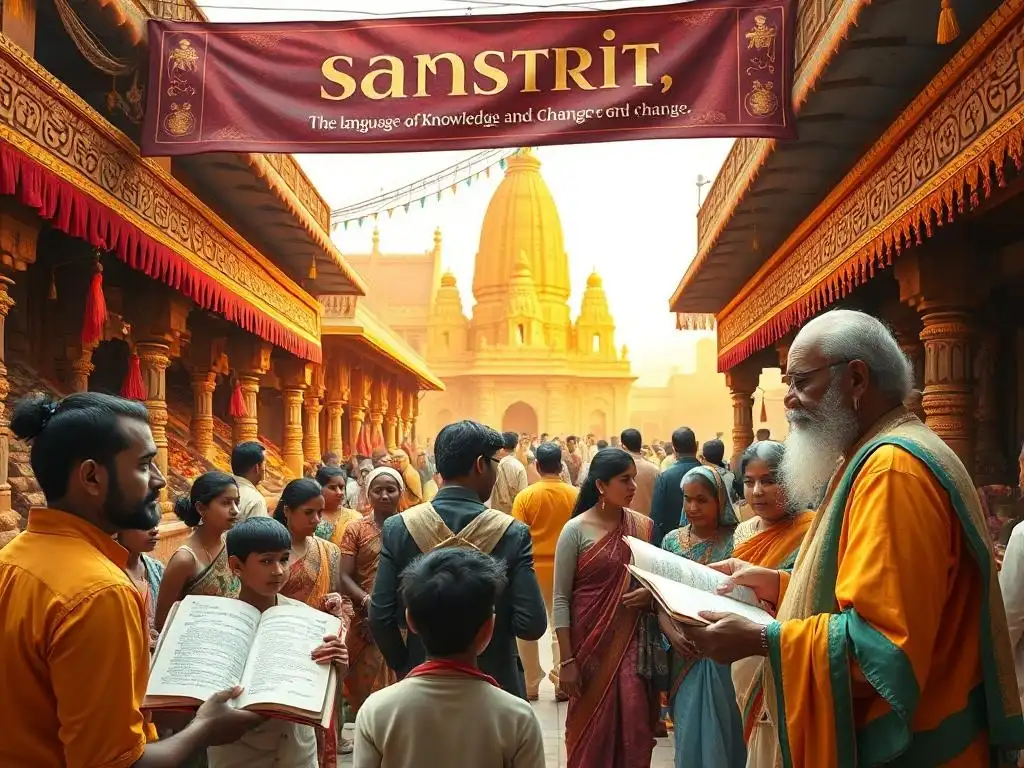
Welcome to Ancient India History, where we embark on a fascinating journey through the rich tapestry of India's past! Here, we dive deep into the profound connections between language and culture, exploring how the development of the Sanskrit language has not only shaped communication but has also mirrored the transformative social changes throughout Indian history. Unravel the threads of time as we examine the pivotal role Sanskrit played in the evolution of society, from the ancient Indus Valley to the illustrious Gupta Empire.
Curious about how these linguistic shifts reflect broader societal transformations? Join us as we uncover the intricate relationship between Sanskrit and social change in our enlightening article!
- Introduction to Sanskrit Language and Social Change in India
- Historical Context of Sanskrit Language Development
- Sanskrit Language as a Reflection of Social Change
- The Impact of Political Changes on Sanskrit Language
- Cultural Shifts and Their Effect on Sanskrit
- The Decline of Sanskrit and Its Modern Implications
- Conclusion: The Interplay of Sanskrit Language and Social Change
- References and Further Reading on Sanskrit Language and Social Change
-
Frequently Asked Questions
- What is the significance of the Sanskrit language in ancient India?
- How did the development of Sanskrit correlate with social changes?
- In what ways did Sanskrit literature influence social structures?
- What role did Sanskrit play in the Gupta Empire?
- How has the perception of Sanskrit changed in contemporary India?
- Final Reflection: The Sanskrit Language as a Mirror of Social Change
- Unveil the Transformative Power of Sanskrit Today!
The development of the Sanskrit language is a fascinating reflection of the broader social, cultural, and political transformations that have shaped India throughout its ancient history. As one of the oldest languages still in use today, Sanskrit is not only a linguistic treasure but also a vital component of India's rich heritage.
Its evolution provides insight into the changing dynamics of society, as it was influenced by and, in turn, influenced various historical developments. This article will explore the intricate relationship between the Sanskrit language and social change in India, illustrating how linguistic shifts mirror the complexities of societal transformation, from the early Indus Valley civilization through to the Gupta Empire.
Brief Overview of Sanskrit Language
Sanskrit, often referred to as the "liturgical language" of Hinduism, Buddhism, and Jainism, boasts a history that dates back over three thousand years. As a member of the Indo-Aryan branch of the Indo-European language family, it has undergone significant transformations. Originally attested in the Vedas, the oldest sacred texts of Hinduism, Sanskrit has evolved through various stages:
- Vedic Sanskrit: The earliest form, found in the Vedas (circa 1500–500 BCE).
- Classical Sanskrit: Standardized around the 4th century BCE through the grammar of Panini, renowned for its linguistic precision and complexity.
- Post-Classical Sanskrit: Used in various texts, including philosophical, scientific, and poetic works, until the medieval period.
The language's versatility and rich vocabulary have enabled it to express profound philosophical concepts, making it an essential medium for intellectual discourse.
Importance of Studying Language Development
Understanding the development of the Sanskrit language is crucial for several reasons:
- Cultural Identity: Language is a key marker of cultural identity. Sanskrit not only reflects the thoughts and beliefs of ancient Indian civilizations but also serves as a foundation for many modern Indian languages.
- Historical Context: The evolution of Sanskrit provides insights into the historical contexts in which it was used, revealing how language adapts to reflect societal norms, values, and changes.
- Linguistic Influence: Sanskrit has influenced numerous languages across Asia and beyond, contributing to vocabulary, syntax, and linguistic structure. Studying its development helps in understanding language evolution and borrowing across cultures.
Connection Between Language and Society
The interplay between language and society is a dynamic and reciprocal relationship. In ancient India, as social structures evolved—shaped by factors such as economic changes, religious developments, and political shifts—so too did the Sanskrit language. Key aspects of this connection include:
- Social Stratification: Sanskrit's use was initially limited to the priestly and scholarly classes, reflecting the social hierarchy of ancient Indian society. Over time, as various movements emerged (e.g., Buddhism and Jainism), the accessibility of Sanskrit was challenged, leading to the emergence of vernacular languages.
- Cultural Exchange: As trade routes expanded and cultural exchanges took place, Sanskrit absorbed elements from other languages, enriching its lexicon and fostering inclusivity.
- Political Influence: The patronage of rulers and empires, such as the Maurya and Gupta dynasties, played a pivotal role in the promotion of Sanskrit, linking language development to political power and cultural renaissance.
Through the lens of the Sanskrit language, we can better understand how societal changes and linguistic evolution are intertwined, shedding light on the broader narrative of ancient India's history.
Historical Context of Sanskrit Language Development

Evolution of Sanskrit from Vedic to Classical
The evolution of Sanskrit is a fascinating journey that reflects the social and cultural transformations of ancient India. Sanskrit began its life as Vedic Sanskrit, the language of the Vedas, which were composed between 1500 and 500 BCE. This early form of Sanskrit was primarily used in religious contexts, encapsulating hymns, rituals, and philosophical texts.
As time progressed, Sanskrit underwent significant changes, leading to the emergence of Classical Sanskrit around the 4th century BCE. This transition was marked by the codification of grammar by Panini, whose work Ashtadhyayi established a formalized structure that governed the language. The shift from Vedic to Classical Sanskrit mirrored a broader cultural evolution:
- Religious Practices: The transition reflected a move from oral traditions to written texts, which was instrumental in the spread of knowledge.
- Literary Expansion: Classical Sanskrit became the medium for a plethora of literary works, including epics like the Mahabharata and Ramayana, as well as philosophical treatises and scientific texts.
- Cultural Identity: As a prestigious language, Sanskrit began to serve as a unifying cultural force across diverse regions, facilitating communication among various social strata.
This evolution illustrates not just linguistic change but also the shifting priorities and values of society during these transformative periods.
Key Periods in Sanskrit History
The history of Sanskrit can be divided into distinct periods, each characterized by unique developments in literature, linguistics, and cultural expression. These key periods are:
- Vedic Period (1500 - 500 BCE):
- Dominated by the composition of the Vedas.
- Focused on ritualistic and spiritual literature.
- Language was highly poetic and often complex.
- Epic Period (500 BCE - 300 CE):
- Marked by the creation of great epics like the Mahabharata and Ramayana.
- Sanskrit began to be used as a literary language across various regions.
- The language saw a simplification in structure while expanding its vocabulary.
- Classical Period (300 - 1200 CE):
- Flourishing of poetry, drama, and scholarly works.
- Panini's grammar set a standard for Classical Sanskrit.
- The emergence of significant philosophical schools, including Buddhism and Jainism.
- Medieval Period (1200 - 1800 CE):
- Sanskrit faced competition from regional languages.
- However, it remained influential in scholarly and religious contexts.
- Continued to thrive in the realms of philosophy and science.
- Modern Period (1800 CE - Present):
- Sanskrit began to be studied in academic institutions globally.
- Revival movements emerged, emphasizing its relevance in modern linguistics and culture.
- Ongoing interest in ancient texts promotes a renewed appreciation for Sanskrit.
These periods not only highlight the linguistic evolution but also reflect the broader social changes that influenced Sanskrit's role in Indian civilization.
The development of the Sanskrit language was inextricably linked to the evolving social structures of ancient India. Each era contributed to shaping the language's use, prestige, and accessibility:
- Brahminical Society:
- In the early Vedic period, Sanskrit was primarily the domain of the Brahmins, the priestly class. They were the custodians of sacred knowledge, and the language served as a tool for religious rites and rituals.
- This exclusivity fostered a hierarchical structure, limiting Sanskrit's reach to the elite.
- Emergence of the Kshatriyas:
- As kingdoms formed, the Kshatriya class (warriors and rulers) began to engage with Sanskrit, using it in administration and governance.
- Sanskrit became a symbol of power, associated with royal patronage and authority.
- Rise of Trade and Cultural Exchange:
- With increased trade and cultural interactions, particularly during the Gupta Empire, Sanskrit began to permeate into other societal layers.
- Merchants and scholars started using Sanskrit for commerce and intellectual exchanges, broadening its influence.
- Impact of Regional Languages:
- As regional languages developed, Sanskrit faced challenges in maintaining its dominance. Nevertheless, it influenced many vernaculars, leading to a rich tapestry of linguistic diversity.
- This resulted in a cultural synthesis, where Sanskrit coexisted with local languages, enriching them and adapting to changing societal needs.
- Modern Adaptations:
- In contemporary India, Sanskrit is often seen as a heritage language, with renewed interest in its study and application in education and cultural revival.
- Social movements have sought to democratize access to Sanskrit knowledge, breaking down historical barriers.
The interplay between Sanskrit and social structures illustrates how language evolves in response to the dynamics of society, reflecting changes in power, culture, and identity throughout Indian history.
The evolution of the Sanskrit language offers profound insights into the social transformations that occurred throughout ancient India. Linguistic features in Sanskrit not only reflect changes in syntax and vocabulary but also serve as indicators of the broader social and cultural shifts.
- Morphological Changes:
- The development of new grammatical forms and the simplification of others demonstrate the dynamic nature of Sanskrit, paralleling the societal shifts towards more structured social hierarchies.
- For instance, the transition from Vedic Sanskrit to Classical Sanskrit involved a reduction in the use of complex inflections, which could hint at a move towards standardization in social practices.
- Lexical Expansion:
- The introduction of terms related to commerce, governance, and social roles during the Mauryan and Gupta periods illustrates the increasing complexity of societal structures.
- Words such as dharma (duty, law) and artha (wealth, purpose) not only enriched the lexicon but also reflected emerging philosophical ideas central to the social fabric of the time.
- Semantic Shifts:
- As social conditions evolved, so did the meanings of certain words. For instance, the term kshatriya originally referred to warriors but later encompassed a broader spectrum of rulers and administrators, showcasing the intertwining of social class and language.
Influence of Religion and Philosophy on Sanskrit
Religion and philosophy have played pivotal roles in shaping the Sanskrit language, reflecting the evolving belief systems and societal values of ancient India.
- Sacred Texts and Ritual Language:
- The earliest forms of Sanskrit were closely linked to Vedic rituals and hymns. The religious significance of these texts necessitated precision in language, highlighting the influence of religious practices on linguistic development.
- Texts such as the Rigveda and the Upanishads not only serve as linguistic artifacts but also as cultural milestones, encapsulating the spiritual philosophies of their time.
- Philosophical Contributions:
- The rise of philosophical schools, such as those articulated by thinkers like Adi Shankaracharya and Gautama Buddha, enriched Sanskrit with new concepts and terminologies. This development mirrored the broader social quest for knowledge and understanding.
- Terms like moksha (liberation) and karma (action) gained prominence, reflecting a shift in societal values towards spiritual and ethical considerations.
- Literary Flourishing:
- The Gupta period marked a golden age for Sanskrit literature, with the composition of significant works such as Kalidasa's Shakuntala and Bhasa's plays. This literary boom was not merely a reflection of artistic expression but also indicated a society that valued education, arts, and philosophy.
- The themes explored in these texts often mirrored contemporary social issues, thereby creating a dialogue between language and societal transformation.
Role of Sanskrit in Ancient Indian Texts and Literature
Sanskrit's role in ancient Indian texts and literature is foundational to understanding the nuances of social change throughout history.
- Historical Documentation:
- Sanskrit served as the primary medium for documenting history, governance, and societal norms. Works such as the Arthashastra by Kautilya provide insights into the political and economic structures of ancient India.
- These texts not only recorded events but also reflected the values and priorities of the society at the time, illustrating how language served as a vehicle for cultural transmission.
- Epic Narratives:
- The Mahabharata and Ramayana, two of the most significant epics written in Sanskrit, encapsulate the moral dilemmas, social hierarchies, and ethical questions faced by ancient societies.
- The characters and their journeys reflect the complexities of human experience, showcasing how social change influenced literary themes and character development.
- Cultural Identity:
- Sanskrit literature fostered a sense of cultural identity among the various regions of ancient India. As a unifying language, it transcended local dialects and became a symbol of scholarly and religious authority.
- The preservation of texts in Sanskrit allowed for the continuity of cultural practices, despite the social changes that occurred over centuries.
In sum, the Sanskrit language not only evolved alongside social change in ancient India but also played a crucial role in documenting, shaping, and reflecting the intricate tapestry of Indian civilization. The interplay between language and society illustrates the profound impact of cultural, religious, and philosophical influences on the development of one of the world's oldest languages.
The Impact of Political Changes on Sanskrit Language

Political changes throughout Indian history have significantly influenced the development and evolution of the Sanskrit language. These shifts not only affected the political landscape but also transformed societal structures, which in turn impacted linguistic practices. As different empires rose and fell, their policies, patronage of arts, and cultural exchanges played a crucial role in shaping Sanskrit.
Sanskrit Language Development During the Mauryan Empire
The Mauryan Empire (c. 322-185 BCE) marks one of the most pivotal periods in the development of the Sanskrit language. Under the reign of Chandragupta Maurya and his grandson Ashoka, Sanskrit emerged as a language of administration and culture, establishing a foundation for its prominence in subsequent centuries.
- Standardization of Texts:
- The Mauryan period saw the emergence of significant texts that were composed in Sanskrit. The Edicts of Ashoka, inscribed in Prakrit but influenced by Sanskrit, were disseminated throughout the empire.
- This standardization facilitated the spread of Sanskrit, promoting literacy and cultural cohesion across diverse regions.
- Patronage of Scholars:
- The Mauryan rulers actively supported scholars and poets, leading to an environment where Sanskrit literature thrived.
- Works such as the Mahabharata and Ramayana, although compiled later, were rooted in the oral traditions that were flourishing during this period.
- Cultural Exchange:
- The vast Mauryan Empire enabled interactions with foreign cultures, particularly through trade routes.
- These exchanges enriched Sanskrit by incorporating elements from other languages, reflecting the dynamic nature of social change and linguistic evolution.
Influence of Regional Kingdoms on Sanskrit Variations
As the Mauryan Empire declined, numerous regional kingdoms emerged, each contributing to the diversification of the Sanskrit language. This period saw the rise of various dynasties, such as the Satavahanas, Guptas, and later the Chalukyas, each influencing the linguistic landscape in unique ways.
- Localized Dialects and Scripts:
- Different regions developed their own dialects of Sanskrit, leading to variations in pronunciation and vocabulary.
- For example, the Kannada and Telugu scripts were influenced by Sanskrit, reflecting local linguistic characteristics while retaining the essence of the original language.
- Literature and Poetry:
- The regional kingdoms patronized literature in Sanskrit, leading to the emergence of regional literary forms and styles.
- Works like the Kavyas and Natakas demonstrated how local themes and stories were articulated through Sanskrit, showcasing the adaptability of the language.
- Religious Influence:
- The rise of different religious sects, including Buddhism and Jainism, influenced Sanskrit literature.
- Texts like the Puranas and Sutras were composed during this time, further embedding Sanskrit in the spiritual and cultural fabric of various communities.
The development of Sanskrit during the later periods of ancient India was closely intertwined with the emergence of new social classes and the changing dynamics of society. As urban centers flourished and trade expanded, new classes began to adopt and adapt Sanskrit for their needs.
- Brahminical Influence:
- The Brahmins, as custodians of knowledge and rituals, played a pivotal role in the preservation and promotion of Sanskrit.
- Their authority in religious and educational spheres reinforced the language's status while simultaneously creating a distinct social hierarchy.
- Integration of Non-Brahminical Voices:
- With the rise of new social classes, such as merchant and artisan communities, there was an increasing demand for Sanskrit texts that addressed their interests and concerns.
- This led to a more inclusive approach in literature, where themes of trade, commerce, and daily life began to be explored in Sanskrit texts.
- Cultural Synthesis:
- The interaction between different social classes facilitated a synthesis of ideas, resulting in a rich tapestry of thought expressed through Sanskrit.
- This blending of perspectives contributed to the language's adaptability and continued relevance in various social contexts.
The development of the Sanskrit language is a testament to the profound impact of political changes and societal transformations throughout ancient India. Each era added layers of complexity to the language, reflecting the dynamic interplay between power, culture, and social structure. As we explore the rich history of Sanskrit, it becomes evident that its evolution is not merely a linguistic phenomenon but a mirror of the broader changes that shaped ancient Indian civilization.
Cultural Shifts and Their Effect on Sanskrit

Cultural shifts throughout ancient Indian history have had profound implications for the development and evolution of the Sanskrit language. As societies transitioned through various stages—geographically, culturally, and politically—Sanskrit adapted, reflecting these changes while simultaneously influencing the very fabric of Indian civilization. The ability of Sanskrit to absorb and integrate diverse cultural elements is a testament to its resilience and significance in shaping social dynamics.
Integration of Local Dialects and Sanskrit
One of the most notable aspects of Sanskrit's evolution is its interaction with local dialects across the Indian subcontinent. Throughout history, the emergence of various regional languages has facilitated a rich tapestry of linguistic diversity, often leading to the integration of local dialects into the Sanskrit lexicon.
- Regional Influence: As different regions developed their own linguistic identities, Sanskrit borrowed vocabulary and stylistic elements, enriching itself and reflecting the cultural nuances of the local populations. For instance, languages such as Prakrit and Apabhramsha emerged as vernaculars that coexisted with Sanskrit, often used in literature and poetry, which in turn influenced the classical language.
- Literary Works: The literary contributions of poets and playwrights, such as Kalidasa and Bhasa, demonstrate how local idioms were woven into their Sanskrit compositions. This integration not only enhanced the accessibility of Sanskrit literature but also ensured its relevance in a linguistically diverse society.
- Cultural Exchange: The exchange of ideas and cultural practices, particularly during trade and political interactions, further facilitated the blending of dialects with Sanskrit. This cross-pollination of languages fostered a more inclusive environment for communication, allowing Sanskrit to maintain its status as a scholarly and liturgical language while also resonating with the common populace.
The Role of Sanskrit in Art, Music, and Performance
Sanskrit's influence extends beyond mere communication; it has been a vital component of India's artistic traditions, playing a crucial role in the realms of art, music, and performance.
- Sacred Texts and Rituals: Many of the rituals and practices in ancient India were codified in Sanskrit texts, such as the Vedas and Upanishads. These texts provided not only the linguistic framework for spiritual practices but also enriched the philosophical underpinnings of Indian art forms.
- Classical Music and Dance: The terminology of classical music and dance is heavily rooted in Sanskrit, with many terms and concepts derived from it. For example, the Natya Shastra, a foundational text on performing arts attributed to Bharata Muni, outlines the principles of drama and dance in Sanskrit, establishing a canon that continues to influence contemporary practices.
- Visual Arts: Sanskrit inscriptions on sculptures and temples often narrate stories from epics like the Mahabharata and Ramayana, showcasing how the language serves as a bridge between the visual and performative arts. The thematic richness of Sanskrit literature has inspired countless works of art, manifesting the intertwined nature of language and aesthetic expression.
The evolution of Sanskrit is also closely tied to the social structures and hierarchies prevalent in ancient Indian society. Gender roles and caste systems have played a significant part in determining who could access and engage with Sanskrit.
- Gender Dynamics: Traditionally, Sanskrit was predominantly the purview of male scholars and priests, creating a barrier for women in terms of education and literacy. However, there were notable exceptions, such as the poet Vemana, who challenged these norms and used Sanskrit to express themes of devotion and social commentary.
- Caste and Education: The caste system influenced educational opportunities, with higher castes having greater access to Sanskrit learning. The ramifications of this exclusivity meant that the language often served to reinforce existing social hierarchies rather than challenge them.
- Modern Reinterpretations: In contemporary times, there is a growing movement to reclaim Sanskrit as a means of empowerment for marginalized groups, including women and lower castes. This shift reflects broader social changes, as individuals seek to redefine their identities through engagement with this ancient language.
The development of the Sanskrit language is a dynamic reflection of the cultural, artistic, and social transformations in ancient India. Its ability to adapt and integrate diverse influences underscores its significance as a vehicle for expressing the complexities of Indian civilization.
The Decline of Sanskrit and Its Modern Implications

Factors Leading to the Decrease of Sanskrit Usage
The decline of the Sanskrit language can be attributed to various interrelated factors that emerged over centuries. Here are some of the most significant:
- Political Changes:
- The decline of powerful empires, such as the Gupta Empire, led to a fragmentation of authority and a shift in regional languages.
- With the rise of local dialects and languages, Sanskrit began to lose its status as the lingua franca of the educated elite.
- Cultural Shifts:
- As regional identities strengthened, vernacular languages like Hindi, Bengali, and Tamil began to flourish.
- The cultural patronage shifted from Sanskrit scholars to local poets and writers, who wrote in the vernacular, further diminishing Sanskrit’s prominence.
- Colonial Influence:
- British colonial rule introduced English as the medium of education and administration, overshadowing traditional languages, including Sanskrit.
- Educational reforms in the 19th century promoted English and local languages at the expense of Sanskrit, leading to a decline in its study and usage.
- Modernization and Globalization:
- The advent of modern technology and globalization has led to a preference for languages that facilitate international communication, such as English.
- This trend further marginalized Sanskrit, which is often perceived as a historical language with limited practical application in contemporary society.
Contemporary Relevance of Sanskrit Language
Despite its decline, Sanskrit remains relevant in several areas today:
- Cultural Heritage:
- Sanskrit is integral to the study of ancient Indian texts, including religious scriptures, philosophy, and literature. It serves as a key to understanding the cultural and spiritual heritage of India.
- Linguistic Studies:
- Scholars and linguists study Sanskrit to explore the roots of many modern languages, particularly Indo-European languages. Its complex grammar and rich vocabulary provide insights into language evolution.
- Yoga and Ayurveda:
- The terminology of Yoga and Ayurveda is deeply rooted in Sanskrit. As global interest in these fields grows, so does the appreciation for the language, with many practitioners learning Sanskrit terms and phrases.
- Revival Movements:
- There is a growing interest in reviving Sanskrit through educational initiatives, workshops, and online courses, making it accessible to a broader audience.
Revival efforts for Sanskrit have taken various forms, each carrying significant social implications:
- Educational Initiatives:
- Schools and universities are starting to incorporate Sanskrit into their curricula, aiming to foster a new generation of speakers and scholars. This effort can enhance cultural pride and awareness among youth.
- Public Awareness Campaigns:
- Organizations and cultural groups are conducting workshops, seminars, and public readings to promote Sanskrit literature and philosophy, thereby encouraging communal engagement with this ancient language.
- Integration with Technology:
- The development of digital platforms and applications for learning Sanskrit has made the language more accessible. This can lead to a resurgence in interest and practical use in day-to-day communication.
- Cultural Identity:
- The revival of Sanskrit is often linked to a broader movement of cultural nationalism in India. Emphasizing Sanskrit as a symbol of heritage contributes to a renewed sense of identity among various communities.
- Interfaith Dialogue:
- As Sanskrit is central to many Indian religions, its revival can foster interfaith dialogue and understanding, bridging gaps between diverse cultural and religious groups.
While the Sanskrit language has experienced significant decline, contemporary efforts to revive it are crucial not only for the preservation of cultural heritage but also for fostering social cohesion and identity in the modern context. The interplay between the Sanskrit language and social change continues to evolve, reflecting the dynamic nature of Indian society.
Summary of Key Points
The development of the Sanskrit language has been intricately linked to the social changes that have occurred throughout Indian history. Key points of this relationship include:
- Historical Context: Sanskrit emerged in the ancient period as a means of communication among scholars and priests, reflecting the societal hierarchy and the importance of religion and philosophy in everyday life.
- Literary Contributions: The extensive body of literature written in Sanskrit, including epics like the Mahabharata and Ramayana, showcases the values, beliefs, and social norms of ancient Indian society. These texts often mirrored the societal changes and moral dilemmas of their times.
- Cultural Transmission: As Sanskrit flourished, it became a vehicle for disseminating various cultural practices, philosophical ideas, and scientific knowledge, thereby influencing and shaping social structures.
- Decline and Revival: The decline of Sanskrit usage in everyday life and its relegation to scholarly and religious contexts in later periods is indicative of broader social transformations. Yet, the revival movements in the modern era highlight the ongoing relevance of Sanskrit as a symbol of cultural identity.
In essence, the evolution of the Sanskrit language is not merely a linguistic phenomenon but is deeply entwined with the socio-political landscape of India, from ancient times through the present day.
Final Thoughts on the Importance of Understanding Sanskrit's Role in Society
Understanding the Sanskrit language and social change is crucial for several reasons:
- Cultural Heritage: Sanskrit serves as a key to unlock the vast cultural heritage of India. By studying its evolution, we gain insights into the values, traditions, and philosophies that have shaped Indian civilization.
- Social Identity: The revival of interest in Sanskrit in contemporary society reflects a desire to reconnect with cultural roots. This resurgence is often accompanied by discussions around national identity and cultural pride.
- Interdisciplinary Relevance: The study of Sanskrit and its social implications invites interdisciplinary exploration, linking linguistics, history, sociology, and anthropology. This holistic view enriches our understanding of ancient and modern societies.
- Global Influence: As the influence of ancient Indian culture extends beyond borders, understanding Sanskrit's role can foster greater appreciation for its contributions to world literature, philosophy, and linguistics.
The interplay between the Sanskrit language and social change provides a rich field for exploration that not only enhances our knowledge of ancient India but also informs contemporary discussions on identity, culture, and society. By delving into this relationship, we acknowledge the profound impact of language on the evolution of human thought and social structures.
Recommended Books
-
"The Sanskrit Language: An Introduction" by Michael Witzel
This comprehensive guide offers insights into the historical development of Sanskrit and its influence on Indian society. It explores the intricate relationship between the language and the changing social landscape throughout different periods.
-
"Sanskrit and the Evolution of Indian Culture" by R. N. Dandekar
Dandekar's work emphasizes the role of Sanskrit in shaping cultural identities in ancient India. The book delves into how language development reflects social hierarchies and transformations within Indian civilizations.
-
"Language and Society in India: A Sociolinguistic Perspective" by R. S. Gupta
This book provides a sociolinguistic analysis of how languages, including Sanskrit, have evolved alongside societal changes in India. It discusses the implications of language on identity, power dynamics, and cultural continuity.
-
"Sanskrit and Its Role in Indian Philosophy" by J. N. Mohanty
Mohanty explores the philosophical dimensions of Sanskrit, demonstrating how the language has been pivotal in articulating social and ethical concepts that resonate through various periods of Indian history.
Relevant Academic Journals and Articles
-
Journal of South Asian Languages and Linguistics
This journal publishes research that examines the relationships between language and social change in South Asia. It includes studies on the impact of Sanskrit in various sociocultural contexts.
-
"Sanskrit and Society: A Historical Perspective" by A. Sharma, Asian Studies Review
Sharma's article analyzes how Sanskrit language development reflects broader societal structures and transformations, offering a detailed historical perspective on its role in shaping social norms.
-
"The Impact of Sanskrit on Indian Society" by P. K. Desai, International Journal of Indian Languages
This paper investigates the interplay between the Sanskrit language and the evolving social fabric of India, illustrating how linguistic shifts correspond to significant cultural changes.
Online Resources for Further Exploration
-
Digital Library of India
An extensive repository of texts, including ancient manuscripts and modern interpretations of Sanskrit literature, allows readers to explore the historical context of the language's development.
-
Sanskrit Heritage Site
This resource provides a wealth of information on Sanskrit grammar, literature, and its social implications. It includes tutorials and articles that delve into the intricacies of the language and its historical significance.
-
The Sanskrit Language and Culture Blog
This blog features articles and discussions on various aspects of Sanskrit and its role in Indian society, highlighting current research and fostering community engagement in the exploration of this ancient language.
By utilizing these references, readers can gain a deeper understanding of the intricate relationship between the Sanskrit language and social change in India, uncovering the layers of history that shape contemporary perspectives on this vital aspect of ancient Indian civilization.
Frequently Asked Questions
What is the significance of the Sanskrit language in ancient India?
The Sanskrit language served as a cultural and scholarly vehicle that facilitated the transmission of ideas, literature, and philosophies, reflecting the evolving social hierarchies and norms of ancient Indian society.
As Sanskrit evolved, it mirrored the social changes in India, such as the rise of Brahmanical traditions and the interplay between various castes, ultimately influencing educational systems and literary expressions.
Sanskrit literature, including texts like the Vedas and Upanishads, played a crucial role in establishing and reinforcing social structures by codifying norms, rituals, and philosophical ideas that guided caste dynamics and roles in society.
What role did Sanskrit play in the Gupta Empire?
During the Gupta Empire, Sanskrit became the language of administration, literature, and art, fostering a cultural renaissance that reflected the Empire's political stability and intellectual growth, thereby impacting social change.
How has the perception of Sanskrit changed in contemporary India?
In modern India, Sanskrit is often viewed as a symbol of heritage and identity, sparking movements to revive its use, which is indicative of a broader social change toward valuing historical and cultural roots.
The evolution of the Sanskrit language is not just a linguistic journey; it is a profound reflection of the social changes that have shaped India over centuries. Today, as we witness rapid globalization and cultural shifts, understanding how Sanskrit has adapted and transformed can provide invaluable insights into the broader narrative of Indian society. The resilience of this ancient language amidst modern challenges underscores its significance in preserving cultural heritage while embracing change.
The impact of the Sanskrit language extends beyond mere words; it encapsulates the very essence of India's cultural identity and social evolution. As we explore the rich tapestry of Sanskrit literature, philosophy, and its role in education, we recognize its ongoing influence in contemporary discourse. Language is the road map of a culture. It tells you where its people come from and where they are going.
This quote resonates deeply as it highlights the critical role of language in shaping societal values and norms, reminding us that Sanskrit is not just a relic of the past but a living testament to India's dynamic cultural landscape.
As we conclude this exploration, I invite you to reflect on your own relationship with language and culture. Consider how the lessons learned from the Sanskrit language can inspire you to engage with your own heritage and the social changes around you. Whether through learning, teaching, or simply appreciating the beauty of linguistic diversity, let us all contribute to the ongoing dialogue about identity and transformation in our rapidly changing world. Embrace the power of language as a tool for connection and understanding, and let it guide you in your journey of personal and collective growth.
Unveil the Transformative Power of Sanskrit Today!
Thank you for exploring the fascinating relationship between the development of the Sanskrit language and its impact on social change in India! Your interest not only deepens your understanding but also honors a vital aspect of our cultural heritage.
Now, it’s time to take what you've learned and put it into action:
- Engage with Sanskrit: Begin your journey by learning the basics of Sanskrit through online resources or local classes. This will enhance your appreciation of this ancient language!
- Share Your Insights: Discuss your newfound knowledge with friends or in social media groups focused on Indian history and culture. Let’s spark meaningful conversations!
- Explore Further: Discover more about other influential languages in India and their societal impact by visiting our additional articles or resources.
As you reflect on the journey of Sanskrit, consider this: How does understanding the evolution of languages influence your perspective on modern social changes? We invite you to share your thoughts below!