
How Prakrit Languages Help Us Understand Ancient Indian Culture

Welcome to Ancient India History, where we embark on a fascinating journey through time to uncover the rich tapestry of cultures and civilizations that shaped ancient India. In our featured article, “How Prakrit Languages Help Us Understand Ancient Indian Culture,” we delve into the intriguing world of Prakrit languages—a vital key to unlocking the mysteries of social dynamics, art, and philosophy that thrived from the Indus Valley to the Gupta Empire.
Prepare to be captivated as we reveal how these languages not only influenced communication but also left an indelible mark on the cultural landscape of ancient India. Join us as we explore the profound connections between language and the heritage that continues to inspire us today!
- Introduction to Prakrit Languages and Ancient India
- Historical Background of Prakrit Languages
- Prakrit Languages as Cultural Artifacts
- Linguistic Features of Prakrit Languages
- Prakrit Languages and Social Structure
- Archaeological Evidence of Prakrit Languages
- Prakrit Languages and Their Impact on Modern Understanding
- Conclusion: The Importance of Prakrit Languages in Understanding Ancient Indian Civilizations
- Frequently Asked Questions
- Final Reflection: Unveiling the Threads of Ancient India Through Prakrit Languages
- Unlock the Secrets of Ancient Wisdom!
Introduction to Prakrit Languages and Ancient India
Understanding the intricate tapestry of ancient Indian civilization requires a deep dive into its languages, particularly the Prakrit languages. These languages, which flourished alongside Sanskrit, provide invaluable insights into the social, cultural, and philosophical underpinnings of ancient India.
The Prakrit languages serve as a bridge to the past, illuminating the everyday lives of people, their beliefs, and their interactions across various regions. By exploring the evolution and significance of Prakrit, we can gain a richer understanding of the diverse cultural landscape that characterized ancient India, from the formative period of the Indus Valley civilization to the sophisticated society of the Gupta Empire.
Overview of Prakrit Languages
Prakrit languages refer to a group of Middle Indo-Aryan languages that evolved from Sanskrit and were spoken in various regions of ancient India. Unlike the highly formalized Sanskrit, Prakrit languages were more accessible and reflective of everyday speech. The most notable among these languages include:
- Pali: Primarily associated with the Theravada Buddhist texts and teachings.
- Ardhamagadhi: The language of the Jain scriptures.
- Shauraseni: Spoken in the region of present-day Madhya Pradesh and Rajasthan.
These languages were instrumental in the dissemination of religious and philosophical ideas, as they were used in literary works, inscriptions, and religious texts that reached a wider audience. Understanding the characteristics and evolution of Prakrit languages provides a foundational perspective on the linguistic diversity of ancient India and its cultural implications.
Significance of Prakrit in Ancient Indian Context
The significance of Prakrit languages extends beyond mere communication; they played a crucial role in shaping the cultural and intellectual landscape of ancient India. Here are some key aspects of their importance:
- Cultural Expression: Prakrit languages were the medium for a vast body of literature, including poetry, drama, and religious texts. This literature reflects the daily lives, societal norms, and philosophical thoughts of ancient Indians, offering a window into their world.
- Religious Influence: Both Jainism and Buddhism utilized Prakrit languages to convey their teachings. These languages made religious texts more accessible to the general populace, facilitating the spread of these religions and their ideologies.
- Linguistic Development: The study of Prakrit languages helps linguists trace the evolution of Indo-Aryan languages, shedding light on how languages adapt and transform over time. This understanding is essential for comprehending the linguistic heritage of modern Indian languages.
- Historical Insights: Inscriptions and manuscripts in Prakrit provide critical historical data about various dynasties, trade routes, and cultural exchanges, enriching our understanding of ancient Indian history.
By examining the role of Prakrit languages in these contexts, we can appreciate their contributions to the rich cultural mosaic of ancient India and their lasting influence on the region's linguistic heritage.
Historical Background of Prakrit Languages
The Prakrit languages are a group of Middle Indo-Aryan languages that emerged during the early centuries of the Common Era. They played a crucial role in the cultural and linguistic landscape of ancient India, serving as the vernacular tongues for various social strata and regions. This historical background showcases how Prakrit languages reflect the socio-political and cultural dynamics of ancient Indian civilization.
The term "Prakrit" itself means "natural" or "ordinary," contrasting with "Sanskrit," which denotes a more formal and scholarly language. Prakrit languages arose from the dialectical variations of Sanskrit, evolving through various influences including regional languages, local customs, and the sociopolitical milieu of ancient India. They were utilized in diverse literary forms, including poetry, drama, and religious texts, which contributed to the accessibility of literature and philosophy for the common person.
During the Mauryan Empire (322–185 BCE), we see the earliest substantial evidence of Prakrit languages in inscriptions like the Edicts of Ashoka, where they served as a medium for disseminating Buddhist messages across India. As the centuries progressed, the use of Prakrit languages became more pronounced in the texts of Jainism and Buddhism, with significant contributions from notable figures like the poet Kalidasa, who utilized Prakrit in his dramas.
The rich tapestry of Prakrit languages reveals insights into the daily lives, beliefs, and interactions of ancient Indian societies, making them indispensable to understanding ancient Indian culture.
Evolution of Prakrit Languages in Ancient India
The evolution of Prakrit languages can be traced through several historical phases, beginning with their roots in the earlier Vedic and Sanskrit traditions. The transition from Sanskrit to Prakrit occurred due to several factors:
- Cultural Shifts: The rise of urban centers and the need for a more accessible form of communication among diverse populations led to the adoption of Prakrit languages.
- Religious Influence: The spread of Buddhism and Jainism greatly facilitated the use of Prakrit, as these religions emphasized teachings that were relatable to the general populace.
- Literary Developments: Prakrit became a prominent literary language in ancient Indian drama and poetry, allowing for richer expressions of everyday emotions and experiences.
As a result, Prakrit languages began to diversify significantly, culminating in various dialects that catered to different regions and communities.
Major Dialects of Prakrit Languages
The Prakrit languages comprise several dialects, each with unique characteristics and cultural significance. The three most prominent dialects include:
Ardhamagadhi
Ardhamagadhi is a significant Prakrit dialect primarily associated with Jain literature. It is renowned for its clarity and expressiveness, making it an ideal vehicle for conveying philosophical teachings and religious narratives. Key features of Ardhamagadhi include:
- Literary Contributions: Many Jain texts, including the Tattvartha Sutra, are written in Ardhamagadhi, reflecting its importance in Jain religious discourse.
- Phonetic Characteristics: The dialect showcases a simplified phonetic structure compared to its Sanskrit counterpart, making it more accessible to laypeople.
- Cultural Context: Ardhamagadhi encapsulates the beliefs, practices, and societal norms of the Jain community, offering insights into their historical development.
Maharashtri
Maharashtri is another prominent Prakrit dialect, primarily spoken in the western regions of India, notably in Maharashtra. Its evolution is marked by:
- Historical Usage: Maharashtri became a popular medium for poetry and drama during the early medieval period, significantly influencing subsequent Marathi literature.
- Literary Forms: The dialect is characterized by its use in the Ghazals and Songs, which reflect the cultural ethos of the region.
- Linguistic Features: Maharashtri exhibits a fusion of phonetic elements from both Sanskrit and local dialects, contributing to its unique sound and rhythm.
Shauraseni
Shauraseni is a Prakrit dialect that flourished in the north-central region of ancient India. It is particularly noted for its contributions to classical Indian drama and poetry. Key aspects include:
- Cultural Impact: Shauraseni was the language of choice for many plays and poetic works, including those by Kalidasa, thus playing a crucial role in the development of Indian aesthetics.
- Geographical Spread: This dialect was widely spoken in regions that now comprise parts of Punjab and Rajasthan, showcasing the linguistic diversity of ancient India.
- Phonological Traits: Shauraseni is characterized by its distinct pronunciation patterns, which set it apart from other Prakrit dialects, adding richness to its literary output.
The exploration of these dialects reveals the intricate weave of language and culture in ancient India, highlighting how Prakrit languages not only facilitated communication but also preserved the diverse heritage of Indian civilization.
Prakrit Languages as Cultural Artifacts

The Prakrit languages serve as invaluable cultural artifacts that provide insight into the social, religious, and literary landscapes of ancient India. Emerging around the 6th century BCE, these languages were a vernacular counterpart to the more formalized Sanskrit, reflecting the everyday speech of the common people. Prakrit languages, including Ardhamagadhi, Maharashtri, and Shauraseni, encapsulate the dynamism of ancient Indian society and contribute significantly to our understanding of its cultural heritage.
The usage of Prakrit in various forms of literature, inscriptions, and religious texts allows historians and linguists to reconstruct the socio-cultural context of ancient India. They reveal not only linguistic evolution but also the cultural exchanges and interactions that shaped the region. The study of these languages thus unlocks a treasure trove of knowledge about the customs, beliefs, and practices of the time.
Role of Prakrit in Ancient Indian Literature
Prakrit languages played a crucial role in the literary traditions of ancient India. Unlike Sanskrit, which was predominantly associated with Brahmanical texts and the elite, Prakrit was more accessible to the general populace, fostering a rich literary culture. This accessibility enabled a broader range of voices to be heard, allowing for the expression of diverse themes and ideas.
Prakrit literature encompasses a wide array of genres, including poetry, drama, and prose. The language's fluidity and expressive potential made it a favorite among poets and playwrights, who employed it to depict the nuances of love, nature, and human emotions. The literature produced in Prakrit not only served as entertainment but also as a medium for philosophical exploration, social commentary, and cultural expression.
Key Literary Works in Prakrit
Several key literary works from the ancient period are composed in Prakrit, showcasing its significance in the cultural fabric of the time. Notable examples include:
- "Ashvaghosha's Buddhacharita": An epic poem detailing the life of Buddha, it employs a mix of Sanskrit and Prakrit to convey its profound themes.
- "Panchatantra": A collection of fables and moral tales, originally written in Sanskrit but later translated into Prakrit, emphasizing the language’s role in storytelling.
- "Natyashastra": While primarily a Sanskrit text, it includes extensive references to the Prakrit language, especially in the context of drama, highlighting its dramatic potential.
These works not only highlight the literary richness of Prakrit but also illustrate how these narratives reflect the values and beliefs of ancient Indian society.
Influence of Prakrit on Sanskrit Literature
The relationship between Prakrit and Sanskrit is symbiotic; while Sanskrit is often viewed as the language of the elite, Prakrit has significantly influenced Sanskrit literature. Many Sanskrit playwrights and poets incorporated Prakrit into their works to enhance authenticity and relatability. This blend allowed for a richer character portrayal and more engaging narratives.
Moreover, the use of Prakrit in Sanskrit texts often served to differentiate between social classes, with noble characters typically speaking Sanskrit and commoners using Prakrit. This linguistic distinction provided a layered understanding of social hierarchies and cultural dynamics within ancient Indian narratives.
Prakrit Languages in Religious Texts
The Prakrit languages are also pivotal in the realm of religious literature, particularly within Jain and Buddhist traditions. These languages facilitated the dissemination of religious teachings among laypeople, making spiritual concepts more accessible and relatable.
The translation of religious texts into Prakrit ensured that the teachings reached a wider audience, fostering the growth of these faiths across various strata of society.
Jain Literature in Prakrit
Jain literature is rich in Prakrit texts, reflecting the philosophies and teachings of Jainism. Key texts include:
- "Agamas": The canonical scriptures of Jainism, many of which were composed in Ardhamagadhi, a dialect of Prakrit.
- "Samavayanga": A significant Jain text detailing the principles of Jain philosophy, written in a form of Prakrit.
These texts not only articulate the fundamental tenets of Jainism but also illustrate the language's flexibility in discussing complex philosophical ideas.
Buddhist Scriptures in Pali and Prakrit
Buddhism also utilized Prakrit languages, particularly Pali, to convey its teachings. Pali, often considered a Prakrit dialect, became the lingua franca of Buddhist scriptures. Important texts include:
- "Tipitaka": The foundational scripture of Theravada Buddhism, composed in Pali, it captures the essence of Buddha's teachings.
- "Jataka Tales": Stories of the previous lives of the Buddha, often recorded in both Pali and Prakrit, emphasizing moral lessons and ethical conduct.
The usage of Prakrit and Pali in these scriptures enabled the rapid spread of Buddhism across regions, as they were more relatable to the common people compared to the more formal Sanskrit texts.
Prakrit languages are not merely linguistic constructs but are pivotal in understanding the cultural, religious, and literary tapestry of ancient India. Their study reveals the intricate connections between language, society, and culture, offering a deeper appreciation of the richness of ancient Indian civilization.
Linguistic Features of Prakrit Languages
Prakrit languages, a group of Middle Indo-Aryan languages, play a crucial role in understanding the linguistic landscape of ancient India. Characterized by their unique phonetic, grammatical, and lexical features, these languages provide insights into the cultural and social dynamics of their time. This section delves into the distinct linguistic characteristics that define Prakrit languages and their significance in the study of ancient Indian culture.
Phonetics and Phonology of Prakrit
The phonetics and phonology of Prakrit languages exhibit notable variations from their predecessor, Sanskrit. Unlike Sanskrit, which has a fixed set of phonemes, Prakrit languages are more flexible in their pronunciation, leading to regional dialects with distinct phonetic traits.
- Vowel System: Prakrit languages typically simplify the complex vowel system found in Sanskrit. They often reduce the number of vowel sounds, which makes pronunciation more accessible. For example, the distinction between long and short vowels is often blurred.
- Consonant Clusters: Prakrit languages tend to avoid complex consonant clusters that are prevalent in Sanskrit. This simplification aids in easier articulation and reflects the oral traditions prevalent in ancient Indian society.
- Sound Changes: Various sound changes, such as the shift from retroflex sounds to dental sounds, are common in Prakrit. This phenomenon illustrates the evolution of languages in response to the phonetic tendencies of speakers.
These phonetic features not only facilitate easier communication but also highlight the diverse linguistic practices in different regions of ancient India, revealing how language evolved to meet the needs of its speakers.
Grammatical Structure and Syntax
The grammatical structure and syntax of Prakrit languages show significant divergence from Sanskrit, reflecting the dialectical variations and simplifications that occurred over time.
- Morphological Simplicity: Prakrit languages exhibit a less complex morphological structure compared to Sanskrit. For instance, they often use fewer cases and a simplified system of verb conjugation. This reduction allows for more straightforward sentence construction and comprehension.
- Word Order: While Sanskrit often follows a flexible word order due to its rich inflection, Prakrit languages tend to adopt a more fixed subject-object-verb (SOV) order. This consistency aids in clarity and comprehension, especially in oral traditions.
- Use of Particles: Prakrit languages frequently utilize particles to indicate tense, mood, and aspect rather than relying heavily on inflection. This feature reflects a more pragmatic approach to communication, aligning with the everyday usage of language among the common populace.
These grammatical characteristics underscore the practicality of Prakrit languages, making them a vital medium for expressing cultural and social narratives in ancient India.
Lexical Borrowings and Influence from Other Languages
The lexicon of Prakrit languages is a rich tapestry woven from various linguistic influences, showcasing the interactions between different cultures in ancient India.
- Sanskrit Influence: Despite being distinct from Sanskrit, Prakrit languages have borrowed extensively from it, especially in the domains of literature, religion, and philosophy. Many terms related to religious practices, rituals, and philosophical concepts originate from Sanskrit but have been adapted into Prakrit forms.
- Regional Dialects: Prakrit languages also reflect the influence of regional dialects and languages. For example, terms from local languages, such as Dravidian languages, are evident in vocabulary, highlighting the interactions between diverse linguistic communities.
- Foreign Influences: Trade and invasions led to the introduction of foreign words into Prakrit languages. Greek and Persian influences, particularly during the Mauryan and Gupta periods, contributed to the richness of the Prakrit lexicon, providing evidence of cultural exchange and interaction.
By examining the lexical borrowings within Prakrit languages, scholars can trace the historical connections and cultural exchanges that shaped ancient Indian civilization. This linguistic diversity not only enriches the study of language but also offers a window into the socio-political and cultural dynamics of the time.
Use of Prakrit Languages in Ancient Indian Society
The Prakrit languages played a crucial role in shaping the social structure of ancient Indian society. Emerging around the 3rd century BCE, these vernacular languages served as the medium for communication among various strata of society, facilitating interaction between the elite and the common people. Unlike Sanskrit, which was primarily reserved for religious and scholarly texts, Prakrit was more accessible and widely spoken.
- Literary Development: Prakrit languages fostered a rich tradition of literature that reflected the lives and concerns of ordinary people. The Gatha Saptashati, a collection of verses, is an excellent example, showcasing themes ranging from love to social issues. This literary output not only enriched cultural discourse but also provided insights into the societal norms and values of the time.
- Religious Influence: The use of Prakrit languages in religious texts, especially in Jain and Buddhist scriptures, illustrates their significance in spiritual and philosophical discussions. The Dhammapada, for instance, was composed in a Prakrit dialect, making Buddhist teachings accessible to a broader audience. This democratization of knowledge contributed to the spread of religious ideas and practices among various social classes.
- Administrative Functions: Prakrit languages were also employed in administrative contexts. In regions like the Mauryan Empire, inscriptions in Prakrit were used to communicate royal edicts and governance policies, bridging the gap between rulers and the ruled.
Prakrit Languages and Regional Identity
Prakrit languages were instrumental in forming regional identities within ancient India, reflecting the diverse cultures and traditions across different geographical areas. The linguistic diversity found in Prakrit dialects highlights the localized identities that contributed to the rich tapestry of ancient Indian civilization.
- Dialectal Variations: Each region developed its own Prakrit dialect, such as Ardhamagadhi in the eastern parts and Maharashtri in the western regions. These dialects not only facilitated communication but also fostered a sense of belonging and pride among local populations.
- Cultural Expressions: The literature and folk traditions expressed in various Prakrit dialects capture the unique cultural practices of different communities. For example, the Natyashastra, attributed to Bharata Muni, discusses theatrical forms that incorporated local dialects, blending performance art with regional narratives.
- Socio-Political Dynamics: The regional usage of Prakrit languages also played a role in shaping political identities. Local rulers often adopted the vernacular to connect with their subjects, enhancing their legitimacy and fostering loyalty among the populace. This strategic use of language helped solidify power structures based on local customs and traditions.
The Prakrit languages not only served as tools for communication but also played a pivotal role in defining social structures and regional identities in ancient India. Their impact is evident in literature, religion, and politics, contributing significantly to our understanding of ancient Indian culture.
Archaeological Evidence of Prakrit Languages
Inscriptions and Epigraphs in Prakrit
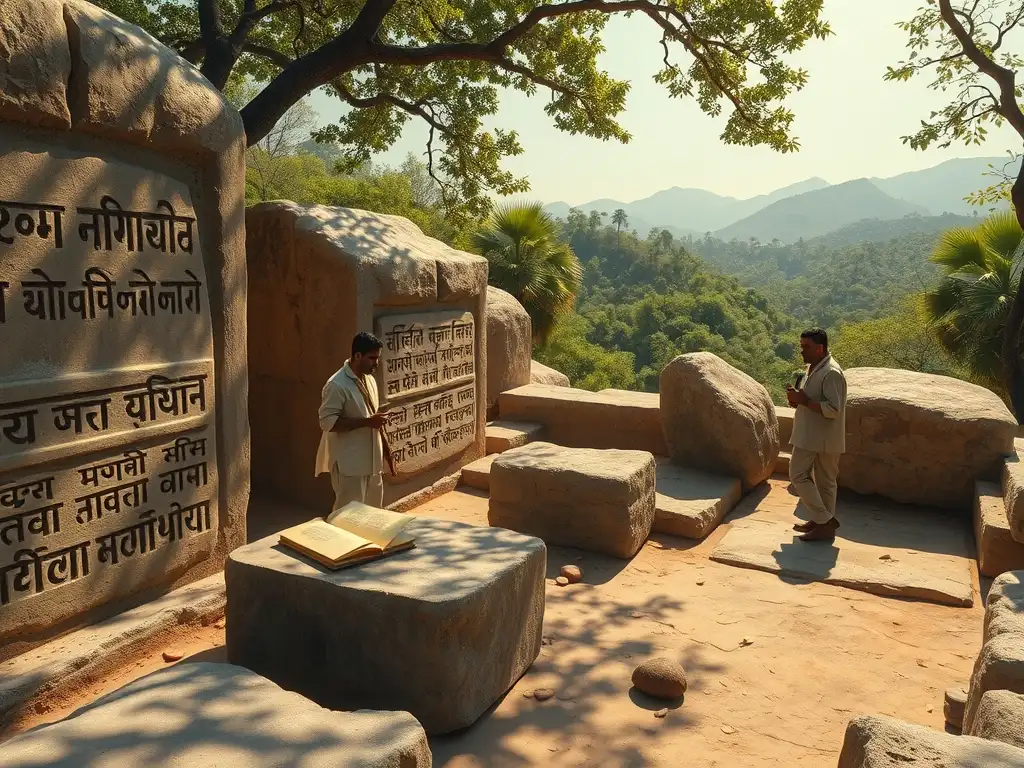
Inscriptions and epigraphs serve as vital sources for understanding the Prakrit languages and their significance in ancient Indian culture. Dating back to the 3rd century BCE, these inscriptions provide insight into various aspects of society, including governance, religious practices, and daily life. Notable examples include the Ashoka Edicts, which were inscribed in multiple languages, including Prakrit. These edicts were instrumental in disseminating Buddhist teachings and reinforcing the ethical principles of the Mauryan Empire.
The Kharosthi script, primarily used in the northwest regions of ancient India, is one of the scripts employed to write Prakrit. This script, along with Brahmi, offers a glimpse into the regional variations of the language. Inscriptions found at sites like Taxila and Bactria highlight the cultural exchanges between Indian and Central Asian civilizations, emphasizing the role of Prakrit in trade and diplomacy.
Moreover, the Brahmi inscriptions found in places such as Sanchi and Bharhut showcase the evolution of Prakrit over time. These inscriptions often contain religious dedications, commemorative texts, and social contracts, indicating how language functioned as a tool for unity and identity among diverse populations.
Artifacts Reflecting Prakrit Linguistic Culture
Artifacts from ancient India provide a tangible link to the Prakrit languages, revealing the intricate relationship between language, culture, and daily life. Pottery, seals, and sculptures often exhibit inscriptions in Prakrit, demonstrating its use in various domains. For instance, the inscribed seals of the Indus Valley Civilization, while primarily in the Indus script, show early linguistic practices that may have influenced the later development of Prakrit languages.
The Ajanta Caves present a remarkable collection of frescoes and sculptures that depict scenes from Buddhist texts written in Prakrit. These artworks not only illustrate the linguistic diversity of the time but also reflect the cultural and religious sentiments prevalent in ancient Indian society. The narratives painted on the walls serve as visual representations of stories that were commonly expressed in Prakrit literature.
Additionally, everyday objects such as coins from the Mauryan and Gupta periods often bear inscriptions in Prakrit, indicating the language’s role in commerce and governance. The presence of Prakrit on these artifacts suggests that it was not merely a literary language but also a practical means of communication in various aspects of life.
The archaeological evidence of Prakrit languages, through inscriptions, epigraphs, and cultural artifacts, provides invaluable insights into the linguistic landscape of ancient India. This evidence not only aids in understanding the evolution of Prakrit but also illuminates the rich tapestry of life, culture, and identity in ancient Indian civilizations.
Prakrit Languages and Their Impact on Modern Understanding
How Prakrit Languages Enhance Our Knowledge of Ancient Indian Culture
Prakrit languages, a group of Middle Indo-Aryan languages, play a significant role in bridging the understanding of ancient Indian culture. Emerging around the 3rd century BCE, these languages were spoken across various regions of India and served as the medium for numerous literary, philosophical, and religious texts. Here are some key aspects of how Prakrit languages contribute to our knowledge of ancient Indian culture:
- Cultural Context: Prakrit languages provide insights into the daily life, social structures, and cultural practices of ancient Indian societies. The use of Prakrit in plays and literature, such as those by the playwright Kalidasa, reflects the ethos and values of the time.
- Religious Texts: Many early Buddhist texts were composed in Prakrit, particularly in the form of Pali. This allows scholars to trace the evolution of religious thought and practices in ancient India. The Tipitaka, or Pali Canon, contains extensive teachings of the Buddha, which are crucial for understanding early Buddhism.
- Linguistic Evolution: The study of Prakrit languages helps linguists understand the transition from Sanskrit to the vernacular languages of modern India. This evolution is significant as it showcases how languages developed in response to social and cultural changes.
- Art and Architecture: Prakrit inscriptions found in ancient temples and monuments provide evidence of the artistic expressions and architectural styles prevalent during various periods. For instance, the inscriptions in Prakrit at the Ajanta Caves offer a glimpse into the artistic endeavors and Buddhist influences of the time.
The Legacy of Prakrit Languages in Contemporary Studies
The legacy of Prakrit languages extends beyond historical understanding; they continue to influence contemporary studies in various fields. Here are some notable areas where this impact is evident:
- Linguistic Research: Scholars studying the historical linguistics of the Indian subcontinent often explore Prakrit languages to understand their grammatical structures and vocabulary. This research enhances our comprehension of language development in the region.
- Cultural Studies: The influence of Prakrit on regional languages and dialects is a focal point for researchers in cultural studies. By examining Prakrit literature, they can trace cultural exchanges and interactions among different communities in ancient India.
- Philosophy and Ethics: The philosophical texts written in Prakrit contribute to the understanding of ethical and moral frameworks in ancient Indian thought. Texts exploring concepts such as dharma and karma offer valuable insights into the philosophical discourse of the time.
- Interdisciplinary Approaches: Contemporary scholars often employ interdisciplinary methodologies, integrating archaeology, anthropology, and linguistics to analyze Prakrit languages. This holistic approach allows for a richer understanding of the ancient Indian civilization.
Prakrit languages are not just relics of the past; they are vital keys that unlock a deeper understanding of ancient Indian culture, providing valuable insights into its languages, literature, and the societies that thrived in the subcontinent. Their legacy continues to shape contemporary academic discourse and cultural appreciation, affirming their significance in the study of ancient India.
Conclusion: The Importance of Prakrit Languages in Understanding Ancient Indian Civilizations
The study of Prakrit languages provides invaluable insights into the cultural, social, and historical contexts of ancient Indian civilizations. These languages, which include various dialects spoken across different regions, serve as a bridge connecting contemporary scholars with the past. Through the lens of Prakrit, we are able to unravel the complexities of societal norms, religious beliefs, and everyday life in ancient India.
The significance of Prakrit languages extends beyond mere linguistic study; they encapsulate the essence of ancient Indian thought and practices. As scholars analyze inscriptions, literary texts, and poetic works written in Prakrit, they can construct a more nuanced understanding of the interactions among diverse communities, including the influence of Buddhism and Jainism. The rich lexicon of Prakrit also highlights the evolution of language and its role in the dissemination of ideas.
Summary of Key Points
- Linguistic Diversity: Prakrit languages showcase the linguistic diversity of ancient India, with variations that reflect regional dialects and cultural influences.
- Cultural Insights: Texts written in Prakrit provide a window into the social and cultural life of ancient Indian societies, revealing customs, traditions, and norms.
- Religious Significance: The use of Prakrit in religious texts, particularly in Buddhism and Jainism, underscores its importance in understanding the spiritual landscape of ancient India.
- Literary Contributions: Prakrit literature, including plays and poetry, reflects the artistic expressions and intellectual pursuits of the time, contributing to our understanding of ancient Indian aesthetics.
- Historical Context: The study of Prakrit languages aids historians in reconstructing the historical timeline of ancient Indian civilizations, including trade, migration, and cultural exchange.
Future Research Directions on Prakrit and Ancient India
Future research on Prakrit languages and their contributions to ancient India can take several promising directions:
- Comparative Linguistics: Scholars can explore the relationships between Prakrit and other ancient languages, such as Sanskrit and Avestan, to track linguistic evolution and influence.
- Archaeological Evidence: Integration of archaeological findings with Prakrit inscriptions can deepen our understanding of the socio-political landscape of ancient cities.
- Digital Humanities: Utilizing digital tools and databases can facilitate the analysis of Prakrit texts, allowing for broader access and interdisciplinary collaboration.
- Regional Studies: Focusing on specific regions where Prakrit was spoken can illuminate local variations and adaptations of the language, shedding light on regional cultures.
- Cultural Exchange: Investigating the cross-cultural exchanges between ancient India and neighboring civilizations through the study of Prakrit can reveal the interconnectedness of ancient societies.
The Prakrit languages are a vital key to unlocking the rich tapestry of ancient Indian culture, and ongoing research in this field promises to enhance our understanding of the complexities of historical narratives.
Frequently Asked Questions
What are Prakrit languages?
Prakrit languages are a group of Middle Indo-Aryan languages that were spoken in ancient India, serving as a medium for literature, philosophy, and daily communication during various periods.
How did Prakrit languages contribute to our understanding of ancient Indian culture?
The study of Prakrit languages provides insights into the social structure, religious practices, and daily life of ancient Indian civilizations, reflecting their diversity and richness.
What role did Prakrit languages play in literature?
Prakrit languages were used in many literary works, including plays and poetry, which showcased the artistic expressions and cultural values of ancient India.
Prakrit languages evolved from Sanskrit and served as a more accessible form of communication for the common people, while Sanskrit remained the language of scholarship and religion.
Why is it important to study Prakrit languages today?
Studying Prakrit languages helps us uncover the linguistic evolution of the Indian subcontinent and offers valuable context to the historical, cultural, and religious narratives of ancient India.
Final Reflection: Unveiling the Threads of Ancient India Through Prakrit Languages
The exploration of Prakrit languages and their role in understanding ancient Indian culture is not merely an academic pursuit; it is a vital key to unlocking the rich tapestry of our shared heritage. Today, as we navigate a world increasingly defined by globalization and cultural exchange, the significance of these languages resonates more than ever. They serve as a bridge connecting us to the past, revealing the nuances of thought, expression, and identity that shaped ancient Indian society. In a time when cultural understanding is paramount, the study of Prakrit languages offers profound insights into our collective human experience.
The impact of Prakrit languages extends far beyond historical linguistics; they continue to influence our cultural and social landscape today. As we delve into the literature, philosophy, and art of ancient India, we find that these languages encapsulate the essence of a civilization that valued diversity and dialogue. This ongoing relevance is beautifully summarized in the words of renowned linguist and historian, Languages are the vessels of culture, carrying the wisdom of generations.
By embracing the study of Prakrit languages, we not only honor our ancestors but also enrich our understanding of contemporary society, fostering a deeper appreciation for the complexities of human expression.
As we conclude this exploration, I invite you to reflect on the lessons embedded within the study of Prakrit languages and ancient India. Consider how these insights can inspire your own journey of cultural exploration and understanding. Let the stories and wisdom of the past guide you in your interactions with the diverse tapestry of cultures that surround you today. Embrace the opportunity to learn from history, and in doing so, contribute to a more interconnected and empathetic world.
Unlock the Secrets of Ancient Wisdom!
Thank you for diving into the fascinating world of Prakrit languages and their pivotal role in unraveling ancient Indian culture! Your curiosity not only helps preserve history but also enriches your understanding of a vibrant past. Now, let's put that knowledge to use!
Here are some empowering actions you can take:
- Delve deeper: Explore ancient texts or their translations to see how they reflect the social dynamics of their time.
- Join the conversation: Share your insights and favorite discoveries in our community forum—let's learn together!
- Bring history to life: Organize or participate in local discussions or workshops that focus on ancient languages and cultures.
What new understanding of ancient Indian culture has inspired you the most, and how will you share that passion with others?