
The Mathematical Techniques of Ancient Indian Architects

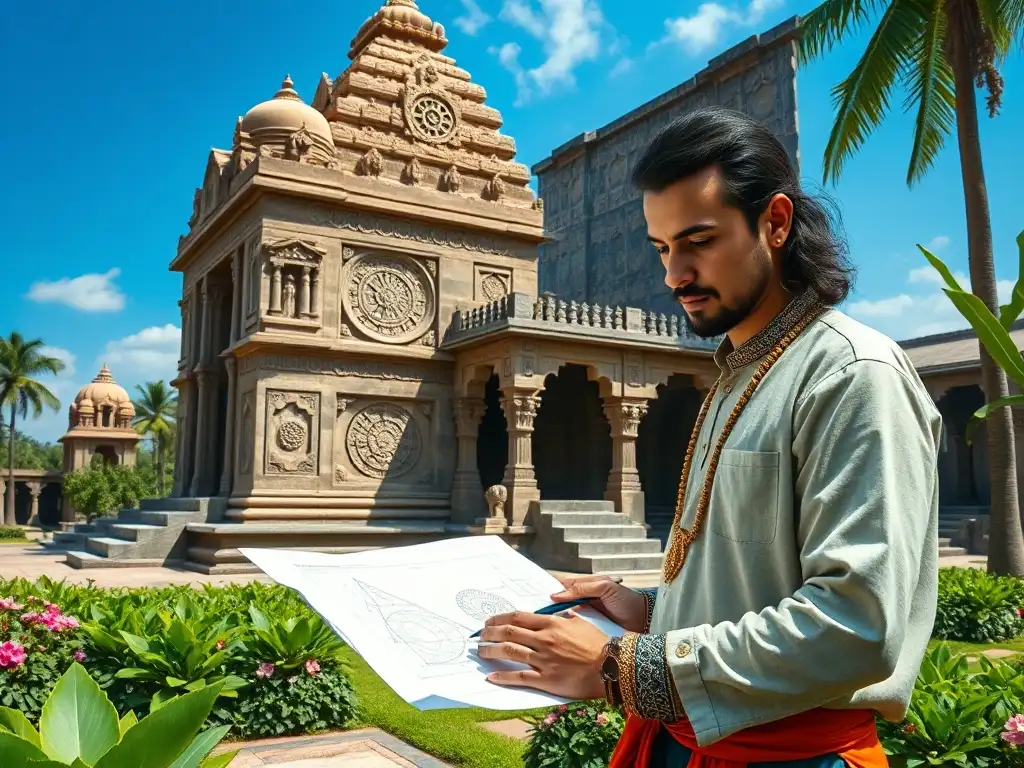
Welcome to Ancient India History, where we delve into the rich tapestry of ancient Indian civilizations, unveiling their remarkable contributions to art, culture, and science. In today’s exploration, we invite you to discover the fascinating world of Ancient Indian architectural mathematics. How did the architects of the past blend creativity with precision to create awe-inspiring structures that have stood the test of time? Uncover the mathematical techniques that powered their ingenuity and shaped the landscapes of history. Let curiosity guide you as we journey through the intricate relationship between mathematics and architecture in ancient India!
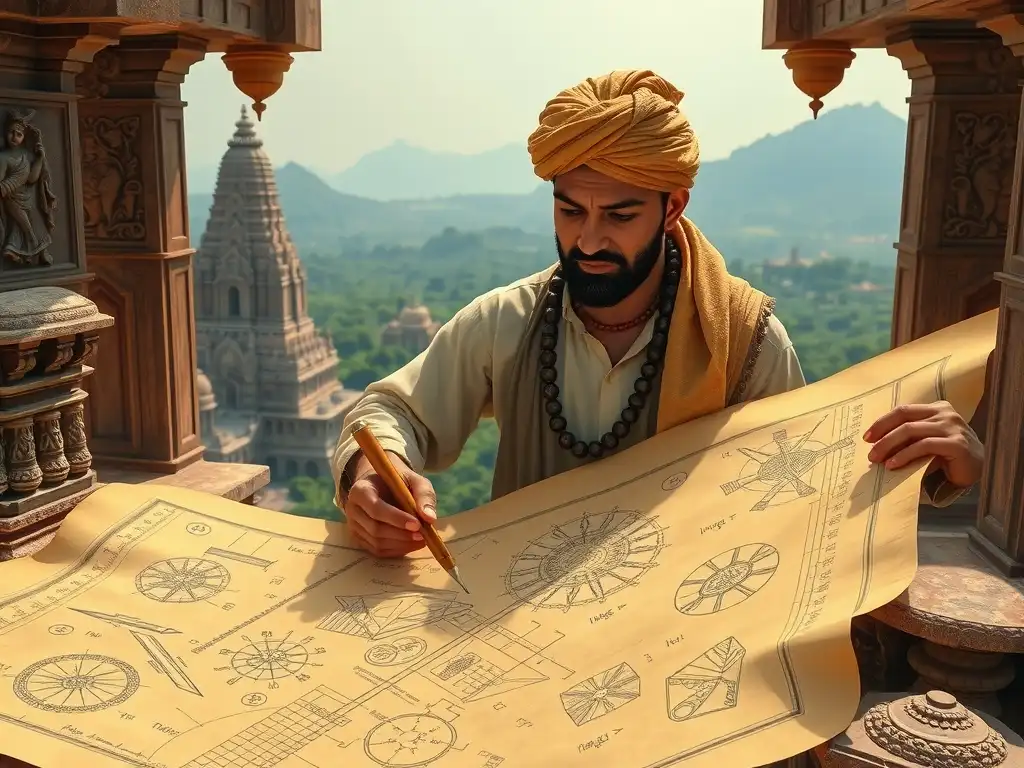
Introduction to Ancient Indian Architectural Mathematics
The architectural marvels of ancient India are not only a testament to the aesthetic sensibilities of their creators but also showcase the profound mathematical techniques employed in their construction. Ancient Indian architectural mathematics encompasses a rich tapestry of concepts derived from geometry, arithmetic, and astronomy, which were essential for the design and execution of structures ranging from temples to palaces. This article explores how ancient Indian architects harnessed these mathematical principles, contributing significantly to the field of architecture and influencing future generations.
Overview of Ancient Indian Mathematics
Ancient Indian mathematics was characterized by its innovative approaches and practical applications. Math was not merely an abstract discipline but a vital tool used in various fields, especially architecture. Key concepts included:
- Geometry: The study of shapes and their properties was crucial for planning architectural designs.
- Arithmetic: Fundamental calculations played a pivotal role in resource management and material estimation.
- Trigonometry: Used for understanding angles and distances, particularly in temple constructions and astronomical observations.
The amalgamation of these mathematical branches made it possible to achieve precision and grandeur in architectural projects.
Importance of Mathematics in Architecture
Mathematics served as the backbone of ancient Indian architecture, ensuring structural integrity and aesthetic harmony. The reliance on mathematical principles can be observed in several ways:
- Proportions and Ratios: Ancient Indian architects employed specific ratios to create visually appealing structures. For instance, the golden ratio can be seen in many temple designs.
- Symmetry and Layout: Mathematical symmetry was crucial for the overall aesthetic appeal, influencing the layout of buildings and their decorative elements.
- Astronomical Alignments: Many structures were designed with astronomical considerations, where mathematical calculations helped in aligning temples with celestial bodies.
Historical Context of Architecture in Ancient India
Understanding the historical context of architecture in ancient India is essential to appreciate the mathematical techniques employed by architects. Different periods and civilizations contributed uniquely to the evolution of architectural styles and methods.
Key Periods of Architectural Development
- Indus Valley Civilization (c. 3300–1300 BCE):
- Known for its advanced urban planning and drainage systems, showcasing early mathematical applications in city layouts.
- Maurya Empire (c. 322–185 BCE):
- Marked by monumental structures like the Ashoka Pillars, which demonstrate precise measurements and engravings.
- Gupta Empire (c. 240–550 CE):
- A golden age of art and architecture, noted for intricate temple designs that utilized advanced mathematical concepts.
Influential Civilizations and Their Contributions
- Indus Valley Civilization: Pioneered urban planning using grid layouts, reflecting an understanding of geometry.
- Mauryan Architects: Employed large-scale construction techniques, integrating mathematical principles for stability and aesthetics.
- Gupta Empire Artisans: Created intricate carvings and temple designs, showcasing the application of advanced geometry and symmetry.
The mathematical techniques of ancient Indian architects not only reflect the sophistication of their civilization but also highlight the integral role of mathematics in shaping their architectural legacy.
Core Mathematical Concepts Used by Ancient Indian Architects
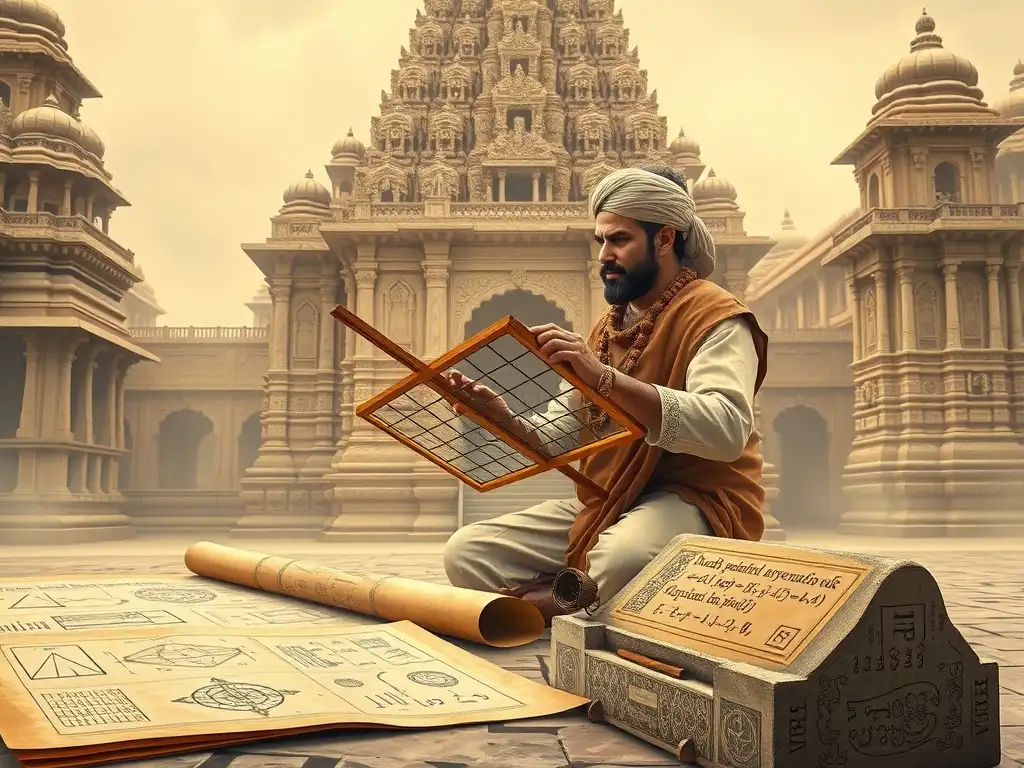
Ancient Indian architects were remarkable for their sophisticated understanding of various mathematical concepts, which they skillfully applied in their architectural designs. The core mathematical techniques included geometry, arithmetic, and algebra. These concepts were not merely theoretical; they were intricately woven into the fabric of architectural practice, allowing architects to create structures that were not only aesthetically pleasing but also structurally sound.
The use of geometry in laying out building plans was essential. Architects employed principles of symmetry and proportion, ensuring that buildings were harmonious in appearance. Additionally, arithmetic techniques played a critical role in measurements and material calculations, allowing for precision in construction. Algebra, though less commonly recognized, facilitated complex design problems, enabling architects to solve for unknowns in spatial layouts and material requirements.
The combination of these mathematical techniques laid the groundwork for some of the most iconic structures in ancient India, demonstrating a deep understanding of mathematics as a practical tool in architecture.
Geometry in Ancient Indian Architecture
Geometry was a fundamental aspect of ancient Indian architecture, influencing everything from the layout of temples to the design of palaces. Ancient architects utilized geometric principles to create intricate designs featuring symmetry and proportion. One notable example is the use of the Vastu Shastra, an ancient Indian treatise on architecture that emphasizes the importance of geometric shapes, orientations, and alignments in construction.
Shapes such as squares, rectangles, and circles were employed to symbolize various cosmic and spiritual elements. The construction of temples often involved precise geometric calculations to achieve a balanced and harmonious appearance, reflecting the belief in the divine order of the universe.
Moreover, the Siddhanta Siromani, a 10th-century text by the mathematician and astronomer Bhaskara II, illustrates how geometry was applied in architectural contexts, with detailed explanations of geometric figures and their properties. This text not only influenced architecture but also served as a reference for future generations, showcasing the lasting impact of geometric principles.
Arithmetic Techniques in Construction
Arithmetic techniques were crucial for the successful execution of architectural projects in ancient India. Architects and builders relied on arithmetic for measuring lengths, areas, and volumes, ensuring that materials were used efficiently and structures were built accurately. The use of simple arithmetic operations such as addition, subtraction, multiplication, and division allowed for precise calculations in planning and material sourcing.
One important aspect of arithmetic in construction was the concept of unit measurement. Ancient Indian builders often employed standardized units, such as the Hasta (a measure roughly equivalent to a foot), which facilitated consistency in construction practices across various projects.
Additionally, ancient texts like the Manasara, a treatise on architecture, provide insights into how arithmetic was utilized in the context of building design, detailing the calculations necessary for proportions, dimensions, and ratios in architectural elements. This knowledge enabled architects to create structures that could withstand the test of time.
Use of Algebra in Architectural Design
While algebra is often overshadowed by geometry and arithmetic in discussions about ancient architecture, it played a significant role in architectural design as well. Ancient Indian architects employed algebraic techniques to solve complex problems related to spatial arrangements and material requirements.
For instance, architects would use algebraic equations to determine the unknown dimensions of structures based on known measurements and ratios. This approach allowed them to optimize designs and ensure that structures were both functional and aesthetically pleasing.
The Brahmagupta’s Brahmasphutasiddhanta, an important 7th-century work, contains elements of algebra that were relevant to architectural design, particularly in solving quadratic equations and understanding the relationships between various dimensions. This knowledge was vital for creating sophisticated architectural forms, such as intricate arches and domes.
Notable Ancient Indian Architects and Their Works
Ancient India was home to many remarkable architects who made significant contributions to the field of architecture through their innovative techniques and designs. Their works not only reflect the mastery of mathematical principles but also embody the rich cultural heritage of the time.
Prominent figures such as Vishwakarma and Bhoja are often celebrated for their architectural genius, whose legacies continue to inspire modern architecture. Their contributions highlight the intersection of mathematics, art, and spirituality in ancient Indian architecture.
Case Study: Vishwakarma and the Construction of Temples
Vishwakarma, revered as the divine architect and engineer in Hindu mythology, is credited with the design and construction of numerous temples and palatial structures. His works are characterized by meticulous planning and intricate details, showcasing his profound understanding of mathematics and geometry.
One of his most famous creations is the Brihadeeswarar Temple in Thanjavur, a UNESCO World Heritage Site. This temple exemplifies the use of precise geometric layouts and intricate carvings, reflecting the architectural techniques of the time. The temple's massive vimana (tower) was constructed with remarkable engineering skills, showcasing an understanding of both arithmetic and geometry.
Vishwakarma's methodologies included calculating proportions and utilizing symmetrical designs that adhered to the principles of Vastu Shastra, ensuring that the structures were not only functional but also spiritually significant. His legacy as a master architect has left an indelible mark on ancient Indian architecture, inspiring generations of builders.
Innovations in Architectural Mathematics by Bhoja
Bhoja, a 10th-century king and polymath, made significant strides in the field of architectural mathematics. He authored the Samrat Prithviraj Raso, a treatise that encompassed various domains, including architecture, mathematics, and astronomy. Bhoja's work emphasized the importance of mathematical precision in architectural design and construction.
His innovations included advanced techniques in geometry and the application of algebraic methods to solve complex architectural challenges. Bhoja's architectural projects, such as the Ujjain's Bhojshala, demonstrate his ability to blend artistic vision with mathematical principles, resulting in structures that were both grand and functional.
Bhoja's emphasis on mathematics in architecture not only advanced the state of building practices in his time but also influenced future scholars and architects in their pursuit of integrating science with art. His legacy continues to resonate in discussions about ancient Indian architectural mathematics, highlighting the expertise and ingenuity of ancient Indian architects.
The Influence of Vedic Mathematics on Architecture
Vedic mathematics, rooted in the ancient Indian scriptures known as the Vedas, has profoundly influenced various fields, including architecture. This mathematical system emphasizes mental calculation and the use of sutras (aphorisms) that provide shortcuts to solve complex problems. Architects in ancient India harnessed these techniques to create structures that were not only aesthetically pleasing but also built with precision and harmony. The principles of Vedic mathematics facilitated the understanding of proportions, ratios, and geometrical shapes, which played a crucial role in the design and construction of temples, monuments, and cities.
The application of Vedic mathematics in architecture allowed architects to align structures with cosmic principles, reflecting the interconnectedness of the universe and human creations. By incorporating mathematical ratios such as the golden ratio and Fibonacci sequences, ancient builders were able to create visually harmonious and functionally sound designs. This mathematical foundation also ensured that structures were resilient, capable of withstanding the test of time.
Principles of Vedic Mathematics Applicable to Architecture
The principles of Vedic mathematics offer several techniques that can be directly applied to architectural design:
- Sutras for Simplification: The various sutras enable architects to simplify complex calculations involving measurements, angles, and areas, making the design process more efficient.
- Geometric Constructions: Techniques such as the construction of squares, circles, and triangles are foundational in architectural layouts. Vedic mathematics provides methods for creating these shapes accurately.
- Proportionality: The emphasis on ratios in Vedic mathematics helps architects maintain proportionality in their designs, ensuring that each element complements the others within the structure.
- Symmetry and Aesthetics: Vedic principles encourage the use of symmetry, which is crucial in creating aesthetically pleasing buildings. This symmetry often resonates with the natural order found in the universe.
These principles not only enhance the technical aspects of design but also infuse the structures with philosophical and spiritual significance, connecting them to the broader cosmos.
Case Examples of Vedic Techniques in Architectural Design
Several ancient Indian architectural marvels exemplify the application of Vedic mathematical techniques:
- The Sun Temple at Konark: This temple, dedicated to the sun god Surya, showcases intricate carvings and geometrical forms that align with the principles of Vedic mathematics. The structure's design incorporates circular and square elements, reflecting symmetry and harmony.
- The Meenakshi Temple in Madurai: Known for its majestic gopurams (gateway towers), the temple's layout demonstrates the use of ratios and proportions derived from Vedic mathematics. The precise alignment of the gopurams with the cardinal directions also highlights the astronomical knowledge of the architects.
- The Kanchipuram Temples: These temples exhibit sophisticated engineering techniques, with their designs based on Vedic principles. The use of geometric patterns in the floor plans and elevation designs illustrates the application of mathematical concepts in creating structures that are not only functional but also spiritually significant.
Architectural Landmarks Reflecting Mathematical Precision
Ancient Indian architecture is rich with landmarks that showcase mathematical precision and aesthetic brilliance. These structures often embody the intersection of art and science, with architects employing advanced mathematical techniques to achieve their vision. By analyzing these landmarks, we can gain insights into the sophisticated understanding of mathematics that ancient Indian architects possessed.
Analysis of the Brihadeeswarar Temple
The Brihadeeswarar Temple, located in Thanjavur, is a remarkable example of the application of mathematical precision in architecture. Completed in the 11th century during the Chola dynasty, this UNESCO World Heritage Site showcases the grandeur of ancient Indian architectural techniques. The temple features a massive vimana (tower) that rises to a height of approximately 66 meters, demonstrating exceptional engineering prowess.
The design of the temple incorporates principles of geometry and symmetry. The layout is based on a square plan, a common feature in Vedic architecture, which symbolizes stability and harmony. The proportions of the temple elements, from the towering gopuram to the intricately carved pillars, reflect a meticulous understanding of mathematical ratios. Additionally, the alignment of the temple with the cardinal directions demonstrates the integration of astronomical knowledge into architectural design, further emphasizing its mathematical foundation.
Patterns and Symmetry in Ancient Indian Architecture
Patterns and symmetry are fundamental aspects of ancient Indian architecture that highlight the mathematical techniques employed by architects. These designs are not merely decorative; they serve to create a sense of order and balance within the structures.
- Geometric Patterns: Many temples and monuments feature intricate geometric patterns that are derived from Vedic mathematical concepts. These patterns often include repeated motifs and tessellations, showcasing the architects' understanding of spatial relationships.
- Symmetrical Layouts: The layout of numerous ancient Indian cities and temples reflects a commitment to symmetry. For example, the layout of the ancient city of Mohenjo-Daro exemplifies a grid pattern, demonstrating the advanced urban planning that incorporated mathematical principles.
- Astronomical Alignments: Several architectural structures are aligned with celestial bodies, showcasing the architects' knowledge of astronomy. These alignments often enhance the aesthetic appeal of the structures while providing functional benefits, such as natural light optimization.
By examining these aspects, it becomes evident that the legacy of ancient Indian architectural mathematics is not only a testament to their engineering capabilities but also a reflection of their deep philosophical and cultural beliefs.
Comparison of Ancient Indian Architectural Mathematics with Other Civilizations

The mathematical techniques employed by ancient Indian architects demonstrate a sophisticated understanding of geometry, symmetry, and proportion, akin to, yet distinct from, those found in other ancient civilizations. While the Egyptians and Greeks also made significant advancements in architectural mathematics, the unique applications and philosophies of ancient India set it apart. Notably, ancient Indian mathematics was deeply intertwined with cosmological beliefs, religious practices, and a profound appreciation for aesthetics, which influenced how structures were designed and constructed.
Mathematical Techniques in Ancient Egyptian Architecture
Ancient Egyptian architecture is renowned for its monumental structures, including the Pyramids of Giza and temples like Karnak. The Egyptians utilized a form of geometry that emphasized proportion and alignment with celestial bodies. This is evident in the pyramid's design, which reflects precise calculations involving the golden ratio and pi. They employed a unit known as the "royal cubit," which was approximately 52.3 centimeters, to standardize measurements.
The Egyptians also demonstrated a remarkable understanding of basic trigonometry in the construction of their temples, ensuring that the layouts were oriented to cardinal points. Their use of simple tools such as ropes and plumb bobs enabled them to achieve remarkable accuracy in their constructions, although their approaches lacked the algebraic techniques that characterized ancient Indian practices.
Architectural Mathematics of the Greek Civilization
The Greeks advanced architectural mathematics with a focus on ratio and proportion, particularly through the introduction of the golden ratio, which was considered aesthetically pleasing. Greek architects, such as those who designed the Parthenon, meticulously applied mathematical principles to achieve harmony in their structures. The use of columns, entablatures, and the overall layout of buildings were governed by strict mathematical rules.
Greek mathematicians like Euclid and Archimedes contributed to the understanding of geometry, which influenced architectural design. Their principles laid the groundwork for later architectural practices, and their emphasis on symmetry and balance can be seen in many structures. However, the Greeks did not incorporate the same religious or cosmological significance in their mathematical techniques as the ancient Indians, which led to different architectural expression and priorities.
The Legacy of Ancient Indian Architectural Mathematics
The architectural mathematics of ancient India left a profound legacy that resonates in both historical contexts and contemporary architectural practices. The integration of mathematical principles with spiritual beliefs resulted in structures that not only served practical purposes but also conveyed deeper meanings and aesthetics.
Influence on Modern Architecture
The principles of ancient Indian architectural mathematics, particularly those relating to symmetry and proportion, continue to influence modern architecture. Contemporary architects often draw inspiration from the meticulous designs of ancient Indian temples and palaces, which incorporate complex geometrical patterns and alignments with celestial bodies.
Modern interpretations of these ancient techniques can be seen in the use of Vastu Shastra, a traditional Indian architectural system that emphasizes harmony and balance within structures. This holistic approach to design not only prioritizes aesthetic values but also considers the environmental and spiritual aspects of living spaces, demonstrating the enduring relevance of ancient Indian architectural mathematics.
Preservation of Ancient Techniques in Contemporary Design
In recent years, there has been a renewed interest in preserving and revitalizing ancient Indian architectural techniques. Initiatives to restore historical sites often involve employing traditional methods and materials that reflect the mathematical sophistication of ancient builders. This preservation effort not only safeguards cultural heritage but also educates modern architects on sustainable practices rooted in ancient wisdom.
Architectural schools and institutions are increasingly incorporating studies of ancient Indian mathematics into their curricula, fostering a greater appreciation for these techniques. By blending ancient knowledge with contemporary design challenges, architects today are finding innovative ways to honor the mathematical legacy of ancient India while creating structures that meet modern needs.
Conclusion
The exploration of ancient Indian architectural mathematics reveals a sophisticated understanding of geometry, measurement, and astronomy that significantly contributed to the architectural marvels of the time. From the precise calculations used in temple construction to the innovative use of proportions and symmetry, ancient Indian architects demonstrated advanced mathematical techniques that not only served functional purposes but also embodied the cultural and spiritual beliefs of their civilizations. This intricate blend of mathematics and architecture not only reflects the ingenuity of ancient Indian scholars but also highlights their ability to harmonize science with art.
In reflecting on the rich mathematical heritage that underpins ancient Indian architecture, it becomes evident that these techniques were not merely tools but were deeply integrated into the social and cultural fabric. The legacies of ancient Indian architects continue to inspire modern architectural practices, reminding us of the timeless relevance of these mathematical principles.
Summary of Key Points on Ancient Indian Architectural Mathematics
- Advanced Geometry: Ancient Indian architects utilized complex geometric principles in the design of structures, demonstrating an understanding of shapes and forms that was ahead of their time.
- Measurement Techniques: The use of standardized measurements, such as the hasta (cubit) and pramanas (proportions), allowed for precision in construction, ensuring structural integrity and aesthetic appeal.
- Astronomical Alignments: Many ancient structures are aligned with celestial bodies, indicating that architects incorporated astronomical observations into their designs, which was essential for ritualistic practices.
- Sacred Geometry: The incorporation of sacred geometry principles reflects the philosophical and religious contexts of architectural designs, with specific shapes and numbers believed to embody divine significance.
- Influence of Texts: Classical texts such as the Vastu Shastra and Manasara provide insights into the mathematical techniques employed by architects, serving as crucial guides for construction.
Future Research Directions in Ancient Indian Architectural Studies
Future research in ancient Indian architectural studies promises to uncover further complexities and nuances in the mathematical techniques employed by ancient architects. Potential avenues for exploration include:
- Interdisciplinary Studies: Collaborating with fields such as archaeology, history, and cultural studies to create a more comprehensive understanding of the socio-cultural influences on architectural mathematics.
- Comparative Analysis: Conducting comparative studies between ancient Indian architectural practices and those from other civilizations, such as ancient Greece or Egypt, to identify unique features and shared methodologies.
- Technological Advancements: Investigating how modern technology, such as 3D modeling and computational geometry, can be used to reconstruct ancient architectural designs and understand their mathematical foundations.
- Preservation of Heritage: Focusing on the preservation of ancient structures and the mathematics behind their design to ensure that this rich heritage is not lost to time.
- Public Education: Promoting awareness of ancient Indian architectural mathematics through educational programs and exhibitions to inspire future generations and cultivate appreciation for this vital aspect of India's cultural heritage.
By pursuing these research directions, scholars can continue to unveil the depth of ancient Indian architectural mathematics and its enduring legacy in the world of architecture and beyond.
- Introduction to Ancient Indian Architectural Mathematics
- Overview of Ancient Indian Mathematics
- Importance of Mathematics in Architecture
- Historical Context of Architecture in Ancient India
- Core Mathematical Concepts Used by Ancient Indian Architects
- Notable Ancient Indian Architects and Their Works
- The Influence of Vedic Mathematics on Architecture
- Architectural Landmarks Reflecting Mathematical Precision
- Comparison of Ancient Indian Architectural Mathematics with Other Civilizations
- The Legacy of Ancient Indian Architectural Mathematics
- Conclusion
- What are the main contributions of ancient Indian architectural mathematics?
- How did ancient Indian architects use mathematical principles in their designs?
- What role did the Indus Valley Civilization play in the development of architectural mathematics?
- Can you give examples of structures that reflect mathematical techniques in ancient India?
- How did the Gupta Empire influence architectural mathematics?
Frequently Asked Questions
What are the main contributions of ancient Indian architectural mathematics?
Ancient Indian architectural mathematics provided innovative techniques for constructing intricate structures, emphasizing geometry and proportion, notably seen in temples and urban planning.
How did ancient Indian architects use mathematical principles in their designs?
Architects utilized mathematical principles such as symmetry, geometry, and ratios to achieve aesthetic balance and structural integrity in their buildings.
What role did the Indus Valley Civilization play in the development of architectural mathematics?
The Indus Valley Civilization is known for its advanced urban planning and drainage systems, showcasing early applications of mathematical concepts in city layouts.
Can you give examples of structures that reflect mathematical techniques in ancient India?
Examples include the Brihadeeswarar Temple and the Sun Temple at Konark, both of which demonstrate sophisticated use of geometry and proportions in their design.
How did the Gupta Empire influence architectural mathematics?
During the Gupta Empire, there was a significant advancement in architectural mathematics, leading to more complex designs and the establishment of mathematical texts that influenced later civilizations.
Final Reflection: The Enduring Legacy of Ancient Indian Architectural Mathematics
The mathematical techniques of ancient Indian architects are not just relics of the past; they are a testament to the brilliance of human ingenuity that continues to resonate in today's architectural practices. The intricate calculations and geometric principles employed by these architects laid the groundwork for modern design and construction, showcasing how ancient wisdom can inform contemporary methodologies. This connection between past and present highlights the timeless nature of mathematics as a universal language that transcends cultures and epochs.
The influence of ancient Indian architectural mathematics extends far beyond mere structures; it has shaped cultural identity and societal values. The precision and beauty found in temples and palaces reflect a deep understanding of both form and function, inspiring generations of architects and engineers. As we navigate the complexities of modern architecture, we can draw from this rich heritage to create spaces that honor both aesthetics and sustainability. Architecture is the thoughtful making of space.
– Louis Kahn. This quote encapsulates the essence of how ancient techniques can guide us in crafting environments that resonate with purpose and beauty.
As we reflect on the lessons from ancient Indian architectural mathematics, let us embrace the challenge of integrating these timeless principles into our own lives and work. Consider how you can apply the wisdom of the past to innovate in the present, whether in your personal projects or professional endeavors. By doing so, we not only honor the legacy of those who came before us but also contribute to a future where architecture continues to inspire and uplift humanity.
Unveil the Secrets of Ancient Indian Architecture!
Thank you for exploring the captivating world of ancient Indian architectural techniques! We hope you gained valuable insights into the incredible mathematical skills employed by these visionary architects. Now, let’s take that inspiration a step further!
Here are some engaging ways to immerse yourself even deeper into this rich history:
- Explore ancient texts and resources—dive into original manuscripts to discover how these techniques have shaped modern architecture.
- Share your newfound knowledge with friends or family! Start a discussion about the impact of mathematics across various cultures.
- Connect with a local museum or an online community dedicated to Indian history—exchange thoughts and learn from others who share your passion!
What aspect of ancient Indian architecture inspires you the most, and how do you perceive its influence on contemporary architectural designs?