
The Mythology of Stars: How Ancient Indians Interpreted the Cosmos

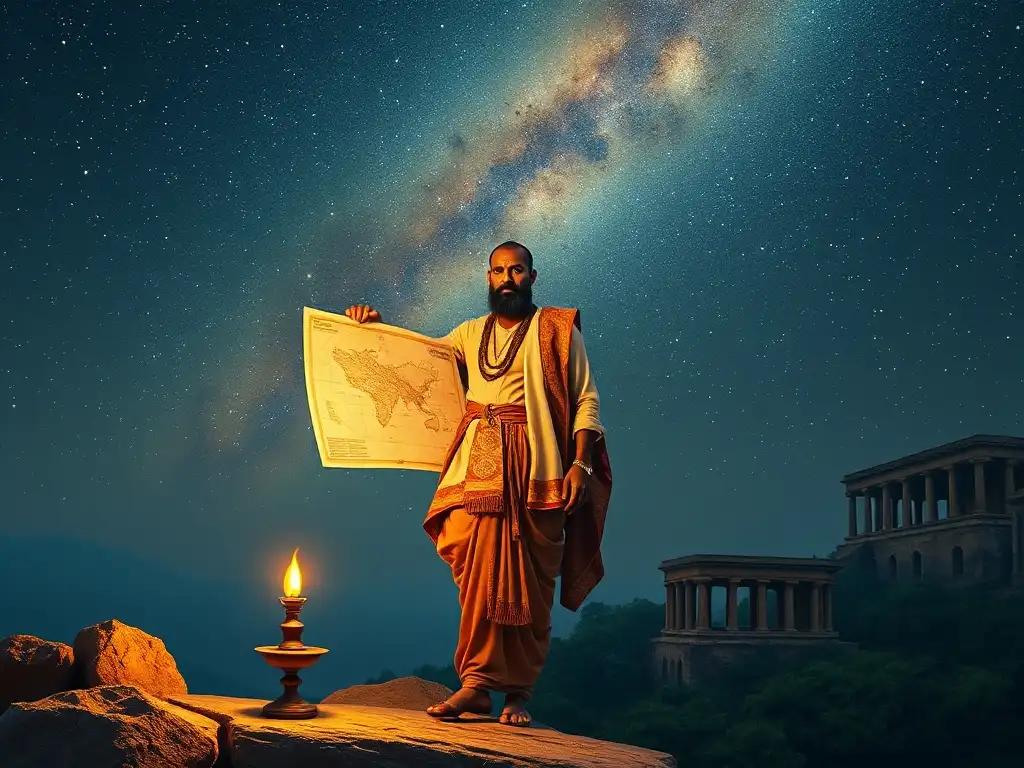
Welcome to Ancient India History, where we embark on a fascinating journey through the rich tapestry of ancient Indian civilizations. Here, we delve into the intricate relationship between science and mythology, as we explore the captivating realm of Ancient Indian astronomy and mythology. In our featured article, The Mythology of Stars: How Ancient Indians Interpreted the Cosmos, you’ll uncover how the ancients gazed at the night sky, weaving stories that transcended mere observation to become a profound connection to the universe.
Prepare to be intrigued and inspired as you discover how these celestial narratives shaped the culture and scientific thought of their time. Join us and let the stars guide your exploration!
Introduction to Ancient Indian Astronomy and Mythology
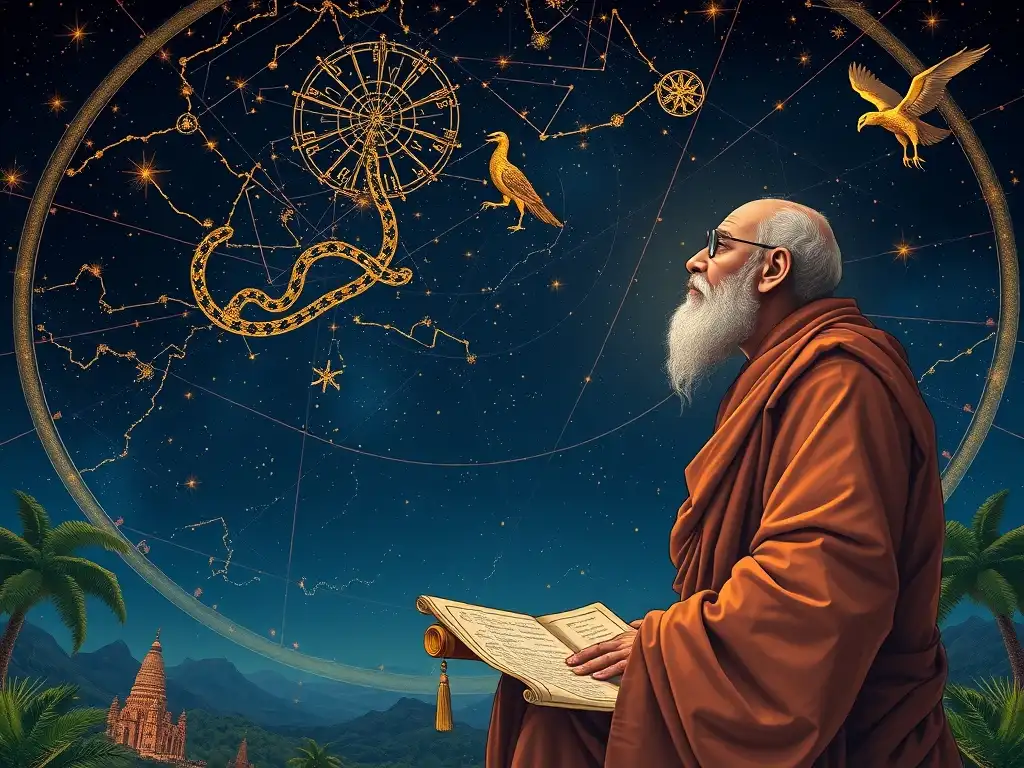
The cosmos has always been a source of wonder and intrigue for humanity, and ancient Indian civilizations were no exception. As the stars twinkled in the night sky, our ancestors looked up and sought to understand the universe's mysteries. Ancient Indian astronomy and mythology intertwined in profound ways, influencing not only scientific thought but also cultural practices and spiritual beliefs.
From the intricate observations of celestial bodies to the rich mythological narratives woven around them, the ancient Indians developed a sophisticated understanding of the cosmos. This article explores how stars were perceived, interpreted, and integrated into the very fabric of ancient Indian civilization, highlighting the remarkable contributions of scholars and sages who laid the groundwork for future astronomical studies.
The Role of Stars in Ancient Indian Civilization
The stars held a central place in the lives of ancient Indians, serving various functions that extended beyond mere navigation or timekeeping. They were deeply embedded in the cultural, religious, and scientific aspects of society.
Cultural Significance of Stars
Stars were not just celestial objects but also symbols of stories, deities, and moral lessons in ancient India. The night sky became a canvas upon which legends were painted, revealing the interconnectedness between the heavens and human experience.
- Mythological Narratives: Many stars were personified as gods and goddesses, with tales that explained their positions and movements. For instance, the constellation of Ursa Major is linked to the myth of the seven sages, or Saptarishi, who were believed to guide humanity.
- Calendar and Festivals: Celestial events dictated the agricultural calendar, with festivals timed according to lunar phases and the positions of stars. The harvest celebrations often coincided with specific constellations, reinforcing the bond between celestial phenomena and terrestrial life.
- Art and Literature: Astronomy influenced art forms, from temple carvings to poetry. Ancient texts like the "Rigveda" and "Mahabharata" contain references to celestial bodies, indicating the significance of stars in shaping cultural narratives.
The Intersection of Astronomy and Religion
In ancient India, the realms of science and spirituality were rarely separate; instead, they coexisted in a harmonious relationship.
- Astrology and Cosmology: Astronomy was closely linked with astrology, where celestial movements were believed to influence human destinies. This belief system led to the development of detailed astrological charts, which continue to hold significance in modern Indian culture.
- Religious Practices: Rituals and ceremonies were often aligned with astronomical events, such as eclipses or solstices. These practices not only reflected an understanding of celestial cycles but also reinforced the belief that the cosmos was imbued with divine significance.
- Philosophical Insights: Ancient texts like the "Surya Siddhanta" exemplify the blend of scientific inquiry and philosophical exploration. These texts delve into mathematical calculations while simultaneously pondering the nature of existence and the universe.
The exploration of ancient Indian astronomy and mythology reveals a sophisticated worldview where stars were seen as guides, protectors, and storytellers. This rich tapestry of beliefs and knowledge not only shaped ancient Indian civilization but also laid the foundation for future astronomical advancements.
Major Astronomical Texts in Ancient India
Ancient India has a rich legacy of astronomical texts that played a significant role in the development of astronomy and the interpretation of celestial phenomena. These texts not only contributed to the scientific understanding of the cosmos but also intertwined with mythology, illustrating how ancient Indians perceived their place in the universe.
Among the most influential works are the Surya Siddhanta, the Aryabhatiya, and other texts that have laid the groundwork for future astronomical studies. These texts encapsulated knowledge about planetary movements, eclipses, and the nature of celestial bodies, reflecting a sophisticated understanding of the cosmos that combined observation with philosophical inquiry.
Surya Siddhanta: The Sun's Role in Ancient Indian Astronomy
The Surya Siddhanta, composed around the 4th to 5th century CE, is one of the earliest and most significant astronomical texts in ancient India. Attributed to an anonymous author, it provides detailed calculations related to the solar system, including the length of the year, the distances of celestial bodies, and the timing of eclipses.
One of the key aspects of the Surya Siddhanta is its emphasis on the Sun's central role in celestial mechanics. The text describes the solar year as comprising 365.258758 days, a remarkably accurate figure for its time. The text also introduces the concept of Siddhanta, which refers to established principles in astronomy, highlighting the importance of empirical observations in validating theoretical constructs.
Furthermore, the Surya Siddhanta interweaves mythology with astronomy by associating planetary movements with various deities, demonstrating how celestial phenomena were often seen as manifestations of divine activity in ancient Indian culture.
Aryabhata and His Contributions to Astronomy
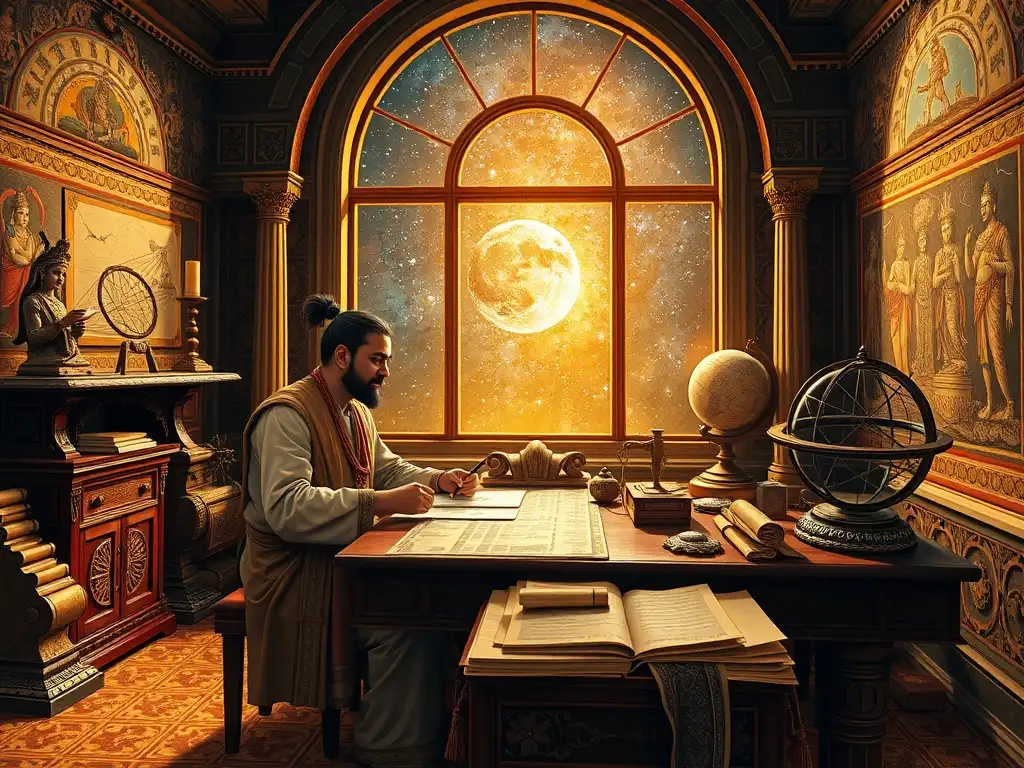
Aryabhata, a prominent mathematician and astronomer of the 5th century CE, made groundbreaking contributions that greatly advanced the field of astronomy in ancient India. His seminal work, the Aryabhatiya, synthesized earlier astronomical knowledge and presented innovative ideas that laid the foundation for subsequent developments in the discipline.
Aryabhata's model of the solar system was revolutionary; he proposed that the Earth rotates on its axis, explaining the apparent daily motion of the stars. This was a departure from the geocentric view prevalent in many ancient cultures. Additionally, Aryabhata calculated the circumference of the Earth with remarkable precision and provided methods for predicting eclipses. His work emphasized the importance of arithmetic, algebra, and trigonometry, which were essential tools in astronomical calculations.
Aryabhata’s influence extended beyond astronomy; his methods and concepts were integral to the development of mathematics in India, demonstrating the interconnectedness of these fields in ancient Indian scholarship.
Constellations and Their Mythological Interpretations
In ancient Indian astronomy, constellations were not merely patterns of stars; they were deeply embedded in the cultural and mythological narratives of the time. Each constellation, known as a Rashi, was associated with specific deities, stories, and agricultural cycles, creating a rich tapestry of interpretations that connected the cosmos with earthly life.
The ancient Indians identified numerous constellations, many of which correspond to the twelve zodiac signs recognized in Western astrology. However, their interpretations were uniquely influenced by local myths and legends, reflecting the spiritual significance attributed to the stars and their movements. This connection between astronomy and mythology illustrates how ancient Indians sought meaning in the cosmos, viewing it as a reflection of their beliefs and experiences.
Major Constellations in Ancient Indian Astronomy
The major constellations in ancient Indian astronomy include Rohini, Krithika, and Ashwini, each with distinct characteristics and associated myths.
- Rohini: Often linked to the agricultural cycle, Rohini is associated with abundance and fertility. Its prominence in the night sky was seen as a harbinger of prosperity.
- Krithika: This constellation is linked to the six Pleiades stars and is often associated with the warrior goddess Kartikeya, symbolizing strength and valor.
- Ashwini: Representing the twin horsemen, this constellation symbolizes speed and agility, connected to healing and the divine physicians.
Each of these constellations was not only used for navigation and timing agricultural activities but also played a role in religious and cultural practices, further intertwining the scientific and spiritual aspects of ancient Indian life.
The Nakshatras: Lunar Mansions and Their Meanings
The Nakshatras, or lunar mansions, are a crucial aspect of ancient Indian astronomy, comprising 27 divisions of the ecliptic. Each Nakshatra spans approximately 13 degrees and is named after a prominent star or a grouping of stars within its region.
Each Nakshatra is imbued with specific meanings and is associated with various deities, attributes, and characteristics that influence human behavior and destiny. For example:
- Ashwini: Associated with health and healing, it is believed to bring auspiciousness and quick results.
- Rohini: Linked to prosperity and abundance, it is considered favorable for agricultural endeavors.
- Mula: Representing the root or the essence of things, Mula is associated with transformation and seeking deeper truths.
The Nakshatras played a vital role in astrological practices, influencing everything from personal horoscopes to agricultural calendars. This intricate system illustrates how ancient Indians viewed the cosmos as a dynamic interplay of celestial phenomena and human affairs, emphasizing a holistic understanding of the universe.
Ancient Indian Astronomical Instruments
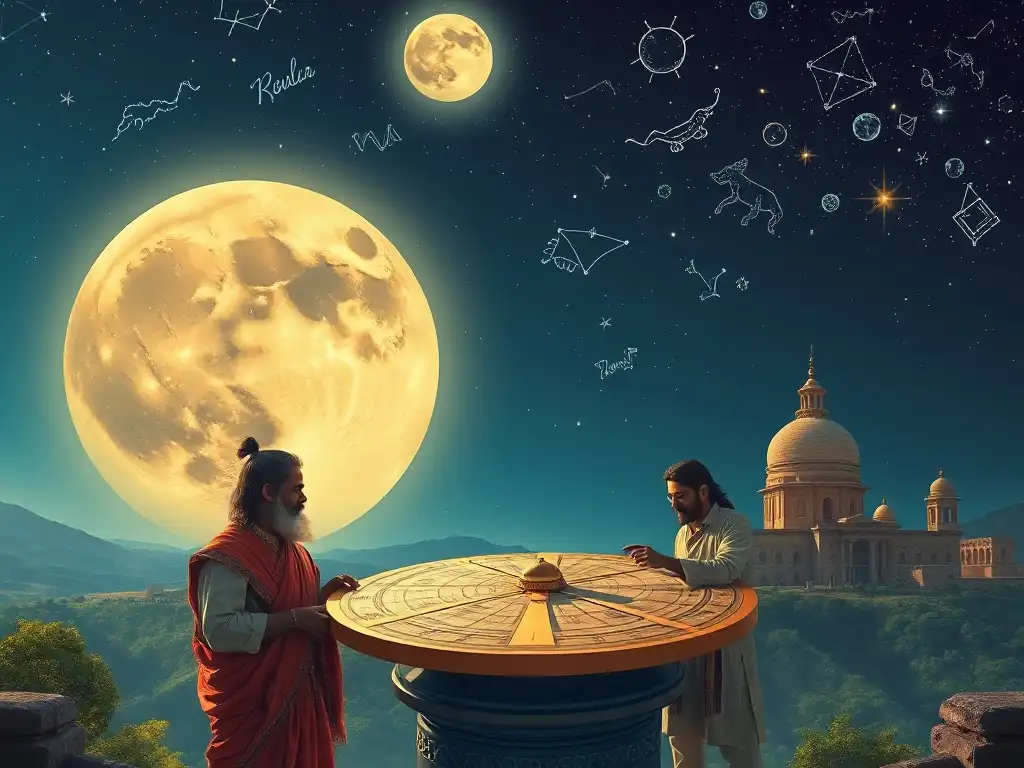
Ancient Indian astronomers exhibited a remarkable understanding of the cosmos, and they developed a variety of sophisticated instruments to observe celestial phenomena. These instruments were crucial for tracking the movements of stars, planets, and other celestial bodies. Some of the most notable instruments included the Jantar Mantar, a collection of architectural astronomical observatories built in the 18th century, and various sundials, astrolabes, and gnomons which were extensively used for measuring time and celestial angles.
The Jantar Mantar observatories, particularly those in Jaipur and Delhi, featured large instruments like the Samrat Yantra (a giant sundial) and the Jaipur’s Sundial, which allowed astronomers to make precise calculations of time based on the position of the sun. Ancient texts such as the Surya Siddhanta detail the construction and use of these instruments, showcasing the ingenuity and mathematical prowess of ancient Indian scholars.
Tools Used by Ancient Indian Astronomers
The tools utilized by ancient Indian astronomers were diverse and intricately designed. Some key instruments included:
- Gnomon: A simple yet effective tool used to measure the sun's shadow, which provided insights into the time of day and seasonal changes.
- Astrolabe: This instrument helped astronomers determine the positions of celestial bodies. It could also be used to calculate time and latitude.
- Rama Yantra: A device specifically designed for measuring the altitude of celestial bodies, allowing astronomers to track their movements accurately.
- Chakra: A circular instrument used for measuring angles in the sky.
These tools were not only functional but also represented the advanced mathematical knowledge of ancient Indian civilization, revealing a deep connection between astronomy and their religious and philosophical beliefs.
Innovations and Techniques in Ancient Indian Astronomy
Ancient Indian astronomy was characterized by significant innovations and techniques that laid the groundwork for future astronomical studies. One major advancement was the concept of zero and the decimal system, which revolutionized mathematical calculations. This allowed astronomers to perform complex computations with greater ease.
Additionally, ancient Indian scholars employed observational techniques that were ahead of their time. They meticulously recorded celestial events, such as eclipses and planetary conjunctions, and compiled extensive astronomical tables. These records were used not only for practical navigation and agriculture but also for astrological predictions that held cultural significance.
The integration of mythology and astronomy was another innovative aspect. Celestial bodies were often personified in ancient texts, linking them to deities and mythological narratives, which helped in understanding their movements and significance in everyday life.
The Legacy of Ancient Indian Astronomy and Mythology
The legacy of ancient Indian astronomy and mythology is profound, influencing not only neighboring cultures but also laying the groundwork for modern astronomical practices. The meticulous observations and mathematical formulations developed by ancient Indian astronomers set the stage for later advancements in the field.
Influence on Later Astronomical Developments
The principles and findings of ancient Indian astronomy had a lasting impact on subsequent civilizations. Scholars such as Aryabhata and Varahamihira contributed to the understanding of planetary motion and eclipses, which were later adopted and expanded upon by Islamic astronomers during the medieval period. The knowledge was transmitted through translations of texts and the establishment of astronomical centers across the globe.
Moreover, the integration of astronomy with astrology in ancient Indian culture influenced various traditions, including those in the Middle East and Europe, where astrological practices began to intertwine with scientific observations. This cross-cultural exchange significantly shaped the course of astronomical development in the centuries that followed.
The Continuing Relevance of Ancient Indian Myths
Ancient Indian myths continue to hold relevance in contemporary culture and spirituality, serving as a bridge between the past and present. The stories of celestial bodies, such as the myth of the seven sages (Saptarishi) associated with the stars, retain their significance in modern Indian society, influencing rituals and festivals.
Furthermore, these myths are often utilized in educational contexts to introduce concepts of astronomy to younger generations. The rich narratives provide a framework for understanding complex astronomical phenomena, making the subject more accessible and engaging. By examining the interplay between mythology and astronomy, one can appreciate how ancient Indian civilizations interpreted the cosmos, fostering a sense of wonder and curiosity that endures to this day.
Through continued exploration of these themes, we can further understand the intricate relationship between ancient Indian astronomy and mythology, emphasizing their significance in both historical and modern contexts.
Conclusion: The Enduring Fascination with Ancient Indian Astronomy and Mythology
The exploration of ancient Indian astronomy and mythology reveals a profound connection between the cosmos and the cultural fabric of Indian civilization. The meticulous observations of celestial bodies and the systematization of these observations into intricate mythological narratives not only underscore the scientific prowess of ancient Indian scholars but also reflect the philosophical and spiritual beliefs of the time.
These ancient interpretations of the stars served multiple purposes: they guided agricultural practices, informed religious rituals, and provided a cosmic framework through which people understood their existence and roles in the universe. The celestial narratives, intertwined with deities and natural phenomena, created a rich tapestry of stories that captivated the imagination of generations.
Moreover, the legacy of ancient Indian astronomy continues to resonate today. Modern astronomers and historians still draw inspiration from the astrological texts and astronomical treatises that emerged from the ancient Indian context. The methodologies developed during that era laid foundations for future scientific inquiry, highlighting an enduring fascination that transcends time. As we delve deeper into the cosmos, we are reminded of the ancient wisdom that sought to decode the mysteries of the universe, bridging the gap between science and mythology.
References and Further Reading
- M. R. Vahia et al. (2009). Ancient Indian Astronomy: The Role of the Stars in Indian Culture. This book offers a comprehensive overview of how celestial observations influenced ancient Indian life and thought.
- K. R. N. Rao (1995). Astronomy and Astrology in Ancient India: A Historical Perspective. This work delves into the distinctions and connections between astronomy and astrology in ancient Indian texts.
- R. S. Sharma (2002). Indian Astronomy: A Historical Perspective. This text examines the evolution of astronomical knowledge in India, providing insights into historical texts and their interpretations.
- C. V. Radhakrishnan (2013). The Cosmos in Indian Mythology. This book explores the intricate links between mythological narratives and astronomical phenomena in ancient Indian culture.
- A. B. Bhattacharya (2010). The Wisdom of the Stars: Ancient Indian Perspectives on Astronomy and Mythology. A fascinating read that highlights the philosophical implications of celestial observations in ancient India.
These references provide a rich foundation for further exploration of the enduring legacy of ancient Indian astronomy and mythology, illuminating the ways in which ancient civilizations interpreted the cosmos and its significance in human life.
- Introduction to Ancient Indian Astronomy and Mythology
- The Role of Stars in Ancient Indian Civilization
- Major Astronomical Texts in Ancient India
- Surya Siddhanta: The Sun's Role in Ancient Indian Astronomy
- Aryabhata and His Contributions to Astronomy
- Constellations and Their Mythological Interpretations
- Major Constellations in Ancient Indian Astronomy
- The Nakshatras: Lunar Mansions and Their Meanings
- Ancient Indian Astronomical Instruments
- The Legacy of Ancient Indian Astronomy and Mythology
- Conclusion: The Enduring Fascination with Ancient Indian Astronomy and Mythology
- References and Further Reading
- What are the main themes explored in ancient Indian astronomy?
- How did ancient Indians interpret celestial bodies?
- What contributions did ancient Indian astronomers make to the field?
- How does mythology relate to the understanding of stars in ancient India?
- Why is studying ancient Indian astronomy important today?
Frequently Asked Questions
What are the main themes explored in ancient Indian astronomy?
Ancient Indian astronomy focused on understanding the cosmos, celestial movements, and their influence on daily life, often intertwined with mythology and spiritual beliefs.
How did ancient Indians interpret celestial bodies?
Celestial bodies were often seen as manifestations of deities or symbols of mythological narratives, linking astronomical phenomena to cultural stories and religious practices.
What contributions did ancient Indian astronomers make to the field?
Ancient Indian astronomers developed advanced mathematical techniques and astronomical tools, significantly influencing later studies in both India and the Islamic Golden Age.
How does mythology relate to the understanding of stars in ancient India?
Mythology provided a framework for interpreting the stars and planets, with legends and epics explaining their significance, often reflecting societal values and natural phenomena.
Why is studying ancient Indian astronomy important today?
Studying ancient Indian astronomy offers insights into the intellectual heritage of India, showcasing the interconnectedness of science, culture, and mythology that continues to resonate in modern times.
Final Reflection: The Cosmic Tapestry of Ancient Indian Wisdom
The exploration of Ancient Indian astronomy and mythology reveals a profound connection between the celestial bodies and human existence, illustrating how our ancestors interpreted the cosmos not merely as a backdrop but as a living narrative intertwined with their daily lives. Today, as we grapple with the complexities of modern science and the vastness of the universe, we are reminded that these ancient interpretations offer a unique lens through which we can understand our place in the cosmos.
The stars, once seen as deities and symbols of fate, continue to inspire awe and wonder, urging us to look up and reflect on our own journeys.
The influence of ancient Indian astronomy and mythology is still palpable in contemporary culture, shaping our understanding of time, seasons, and even spirituality. This rich tapestry of stories and beliefs not only informs our scientific pursuits but also enriches our cultural identity. As we navigate the challenges of the present, the wisdom of the past serves as a guiding light. The cosmos is within us. We are made of star-stuff. We are a way for the universe to know itself.
– Carl Sagan. This quote resonates deeply, reminding us that the ancient narratives are not just relics of history but living philosophies that continue to shape our worldview.
As we conclude this exploration, I invite you to reflect on how the lessons from ancient Indian astronomy and mythology can inform your own life. Consider how the stories of the stars can inspire you to seek deeper connections with the universe and with each other.
Embrace the idea that, like the ancient sages, you too can find meaning in the cosmos, allowing it to guide your path and enrich your understanding of existence. Let the stars be a reminder that we are all part of a grand narrative, one that invites us to dream, explore, and connect with the infinite.
Unveil the Secrets of Ancient Indian Cosmos!
Thank you for taking the time to explore the rich tapestry of how ancient Indians interpreted the cosmos. You've uncovered fascinating insights into mythology, astronomy, and the connection between cultures and the stars. Now, it's time to take your curiosity to the next level!
Consider these enlightening next steps:
- Dive deeper: Read more books or articles on ancient Indian astronomy and mythology to broaden your understanding of their celestial interpretations.
- Join the conversation: Share your thoughts or questions in our comments section below; we love hearing from you!
- Connect with fellow enthusiasts: Explore our community forums to discuss insights and discoveries about the ancient Indian universe—exchange ideas and foster new friendships!
What cosmic mysteries do you wish to unravel next, and how might they connect you to the profound wisdom of ancient India?