
The Legacy of Ancient Indian Philosophers in Contemporary Ethical Debates


Welcome to Ancient India History, where we embark on a fascinating journey through the rich tapestry of one of the world's oldest civilizations. In this exploration, we delve deep into Ancient Indian philosophy and ethics, uncovering the profound insights that have shaped contemporary ethical debates. What wisdom can the great thinkers of the past offer us today? Join us as we unravel the legacy of ancient Indian philosophers and discover how their teachings continue to resonate in our modern world. Prepare to be intrigued and inspired!

Introduction to Ancient Indian Philosophy and Ethics
Ancient Indian philosophy encompasses a profound and diverse range of thoughts, ideas, and ethical frameworks that have significantly influenced not only the Indian subcontinent but also the wider world. From the teachings found in the Vedas to the discourses of the Upanishads and the intricate debates of the later philosophical schools, ancient Indian thought delves deep into the nature of existence, morality, and the pursuit of knowledge.
This rich tapestry of philosophical inquiry introduces various ethical principles that continue to resonate in contemporary discussions on morality and ethics. The legacy of these ancient thinkers provides valuable insights into modern ethical debates, addressing questions around duty (dharma), non-violence (ahimsa), and the nature of the self.
Overview of Ancient Indian Philosophy
Ancient Indian philosophy is characterized by its pluralistic nature, incorporating diverse schools of thought such as Vedanta, Samkhya, Nyaya, and Jainism. Each of these schools contributes unique perspectives on ethics and morality. The foundational texts, including the Upanishads, Bhagavad Gita, and various sutras, explore fundamental questions of existence, consciousness, and the ethical implications of human actions.
- Key features of ancient Indian philosophy include:
- The concept of dharma, which refers to the moral order and duty.
- The practice of yoga as a means to attain ethical living and self-realization.
- The emphasis on ahimsa, or non-violence, as a core ethical principle.
Consequently, ancient Indian philosophy serves not just as a historical narrative but as a living dialogue that informs contemporary ethical frameworks.
Importance of Ethics in Ancient Indian Thought
Ethics in ancient Indian philosophy is not merely theoretical; it is deeply embedded in the cultural and spiritual practices of the time. Ethical considerations were integral to discussions on governance, social behavior, and personal conduct. The moral frameworks proposed by ancient philosophers addressed the dilemmas faced by individuals in their personal and communal lives.
- Significant ethical themes include:
- The interdependence of individual actions and societal wellbeing.
- The pursuit of moksha, or liberation, through ethical living.
- The reconciliation of personal desires with communal responsibilities.
These themes continue to be relevant today, as they provide guidance in navigating complex ethical dilemmas in various fields, including politics, business, and personal relationships.
Key Ancient Indian Philosophers and Their Ethical Contributions
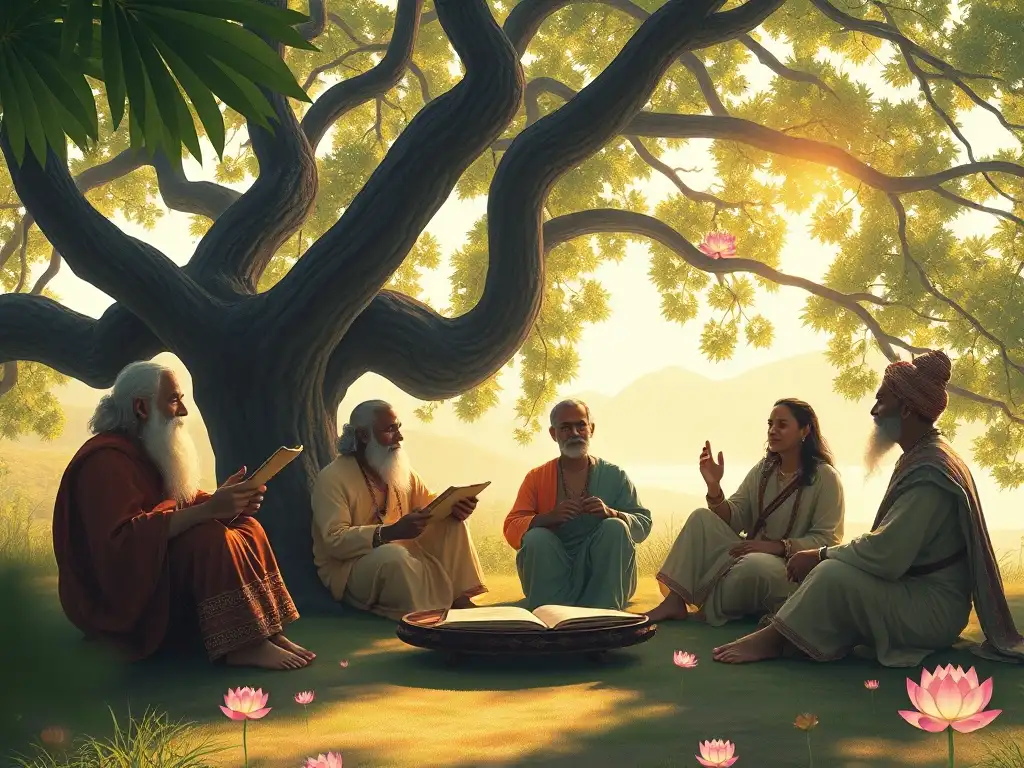
The Role of Mahavira in Ethical Philosophy
Mahavira, the 24th Tirthankara of Jainism, played a pivotal role in shaping ethical philosophy through his teachings on non-violence and truth. His emphasis on ahimsa not only influenced Jain ethics but also had a lasting impact on broader Indian thought, advocating for a lifestyle that minimizes harm to all living beings.
- Key teachings:
- The principle of non-violence extends to thoughts and intentions, not just actions.
- Truthfulness (satya) as an essential virtue in ethical living.
Contributions of Gautama Buddha to Moral Philosophy
Gautama Buddha’s teachings introduced a distinct ethical framework centered around the Four Noble Truths and the Eightfold Path. His focus on compassion and mindfulness highlights the significance of personal experience in ethical decision-making.
- Core ethical principles:
- Compassion (karuna) as a foundation for moral actions.
- The practice of mindfulness to foster ethical awareness in daily life.
Ethical Insights from Adi Shankaracharya
Adi Shankaracharya, a seminal figure in Advaita Vedanta, contributed to ethical discourse by emphasizing the unity of existence and the illusory nature of the material world. His philosophical insights encourage individuals to transcend personal desires to realize a greater ethical truth.
- Ethical implications:
- The realization of Brahman as the ultimate reality calls for ethical behavior aligned with universal principles.
- The concept of selflessness in actions, promoting a broader understanding of duty.
The Influence of Chanakya on Political Ethics
Chanakya, also known as Kautilya, is renowned for his pragmatic approach to governance and ethics, especially articulated in the Arthashastra. He explored the interplay between ethics and politics, emphasizing that ethical leadership is crucial for societal stability.
- Key contributions:
- The necessity of realpolitik in achieving ethical governance.
- The idea that ethical conduct in leadership can foster loyalty and justice in society.
Through the examination of these philosophers and their ethical contributions, it becomes evident that ancient Indian philosophy holds a wealth of wisdom that remains pertinent in contemporary ethical debates.
Core Concepts in Ancient Indian Ethics
Ancient Indian philosophy is deeply rooted in ethical considerations that have shaped not only the civilization but also contemporary moral thought. The core concepts of ancient Indian ethics revolve around three pivotal ideas: Dharma, Karma, and Ahimsa. These principles form a comprehensive framework that guides individual and societal conduct, offering insights that remain relevant in current ethical discussions.
Dharma: The Concept of Duty and Righteousness
Dharma, often translated as "duty" or "righteousness," is a central tenet in ancient Indian philosophy. It encapsulates a complex interplay of moral obligations, social responsibilities, and ethical living. In the context of the Vedas and the Dharma Shastras, Dharma signifies the right path that individuals must follow based on their roles in society, their stage of life, and their personal circumstances.
The notion of Dharma encompasses various dimensions:
- Personal Dharma (Svadharma): This refers to an individual's duty based on their position and responsibilities. It emphasizes the importance of fulfilling one's role in accordance with one's nature and societal expectations.
- Universal Dharma (Sanatana Dharma): This concept reflects the eternal moral laws that govern human behavior, transcending individual circumstances and highlighting universal values such as truth, compassion, and justice.
Dharma serves as a guiding principle in ethical decision-making, urging individuals to consider the broader implications of their actions within the context of their relationships with others and the world.
Karma: The Law of Cause and Effect in Ethics
Karma, often summarized as the law of cause and effect, is a foundational concept in ancient Indian ethics that emphasizes the connection between actions and their consequences. This principle posits that every action, whether good or bad, generates a corresponding effect that influences one's future experiences.
Key aspects of Karma include:
- Intentionality: The ethical weight of an action is significantly influenced by the intention behind it. Actions performed with benevolent intentions yield positive outcomes, while those driven by malice result in detrimental consequences.
- Rebirth and Continuity: The implications of one's actions extend beyond a single lifetime, influencing future rebirths. This perspective encourages individuals to consider the long-term impact of their choices, fostering a sense of moral responsibility.
In contemporary discussions, the concept of Karma invites reflection on accountability and the interconnectedness of actions, resonating with modern ethical theories that emphasize consequences and moral responsibility.
Ahimsa: Non-Violence as a Fundamental Ethical Principle
Ahimsa, or non-violence, is a fundamental ethical principle that has been profoundly influential in ancient Indian philosophy. Rooted in the belief that all living beings possess inherent value, Ahimsa advocates for compassion, tolerance, and respect for life. This principle is not merely the absence of violence; it encompasses a proactive approach to fostering peace and harmony.
The significance of Ahimsa can be seen in several dimensions:
- Moral Imperative: Ahimsa serves as a moral obligation to avoid harm to others, promoting empathy and understanding as essential components of ethical living.
- Social Justice: Ancient Indian thinkers, such as Mahatma Gandhi, transformed Ahimsa into a powerful tool for social and political change, advocating for non-violent resistance against oppression and injustice.
In contemporary ethical debates, Ahimsa raises critical discussions about the ethics of conflict resolution, animal rights, and environmental stewardship, reinforcing its relevance in addressing modern challenges.
Intersection of Ancient Indian Philosophy and Contemporary Ethical Debates
Ancient Indian philosophy offers rich insights into contemporary ethical debates, bridging traditional wisdom with modern moral dilemmas. The core concepts of Dharma, Karma, and Ahimsa provide frameworks for understanding complex issues, encouraging nuanced perspectives that challenge simplistic moral binaries.
Relevance of Ancient Indian Ethics in Modern Moral Dilemmas
The ethical frameworks established by ancient Indian philosophers are increasingly relevant in addressing contemporary moral dilemmas. Issues such as climate change, social inequality, and global conflict require careful consideration of duty, consequences, and non-violence.
For example, the principle of Dharma can guide individuals and organizations in making ethical choices that balance economic interests with social and environmental responsibilities. Similarly, the concept of Karma encourages a long-term view of decision-making, where immediate gains are weighed against potential future repercussions.
Case Studies: Applying Ancient Ethical Principles to Current Issues
Real-world case studies illustrate the application of ancient Indian ethical principles to current issues:
- Environmental Ethics: The concept of Ahimsa can inform sustainable practices, emphasizing the need to minimize harm to the environment and promote ecological balance.
- Social Justice Movements: Activists inspired by the principles of Dharma and Ahimsa have led movements advocating for civil rights, gender equality, and poverty alleviation, illustrating the enduring impact of these philosophies.
These examples highlight how ancient ethical frameworks can contribute to developing holistic solutions for modern challenges.
Comparative Analysis: Ancient Indian Ethics vs. Western Ethical Theories
A comparative analysis of ancient Indian ethics and Western ethical theories reveals both convergences and divergences.
- Consequentialism vs. Dharma: While Western ethics often emphasize consequentialism—evaluating actions based on outcomes—Dharma incorporates a broader view that includes intentions and social responsibilities.
- Deontology vs. Ahimsa: Western deontological ethics focus on adherence to rules and duties, whereas Ahimsa promotes a more flexible approach, prioritizing compassion and non-violence over rigid adherence to rules.
This comparative perspective enriches contemporary ethical discourse, enabling a more comprehensive understanding of moral issues that transcends cultural boundaries.
Challenges in Integrating Ancient Indian Philosophical Ideas

The integration of ancient Indian philosophical ideas into contemporary ethical debates presents several challenges. One significant challenge is the interpretation of texts. Ancient Indian philosophy is rooted in a vast corpus of texts, including the Vedas, Upanishads, and various Sutras. These texts often use metaphors and symbols that can be difficult to translate into modern vernacular. Misinterpretations can lead to a skewed understanding of the original philosophies, which may not align with contemporary ethical issues.
Another challenge lies in the diversity of philosophical schools within ancient Indian thought. From the materialist Charvaka to the idealistic Advaita Vedanta, the variety of perspectives can complicate efforts to find a unified framework for contemporary ethics. Each school has its unique approach to morality, duty, and the nature of reality, making it challenging to distill a singular ethical guideline that resonates universally in today's diverse societal context.
Moreover, there is the issue of cultural relevance. Ancient Indian philosophies were formed in specific historical and cultural contexts that may not directly translate to modern society. The challenge, therefore, lies in reinterpreting these ideas to fit current moral dilemmas, such as environmental ethics, social justice, and human rights, without losing their essence.
Misinterpretations of Ancient Texts in Modern Contexts
Misinterpretations of ancient texts can significantly hinder the application of Indian philosophical ideas to contemporary ethical debates. For instance, the concept of Dharma (duty or righteousness) is often oversimplified in modern discourse. In its original context, Dharma is nuanced and varies according to individual circumstances, societal roles, and cosmic order. However, modern interpretations can reduce it to rigid moral codes that do not account for situational ethics.
Additionally, many ancient texts emphasize contextual morality—the idea that ethical decisions are not absolute but rather contingent upon the circumstances at hand. This is often overlooked in modern discussions, leading to a misunderstanding of key principles like Ahimsa (non-violence) or Samsara (the cycle of life and rebirth). Such oversimplifications can result in ethical frameworks that are either too stringent or too permissive, failing to address the complexities of contemporary moral issues.
Cultural Relevance and Adaptability of Ancient Ethical Principles
The cultural relevance and adaptability of ancient ethical principles are vital in understanding their application to modern contexts. Ancient Indian philosophies are deeply intertwined with the cultural fabric of Indian society, encompassing aspects of spirituality, community, and duty. To be relevant today, these principles must be contextualized within contemporary moral frameworks that address globalization, technological advancements, and evolving social norms.
For example, the principle of Ahimsa, while fundamentally rooted in non-violence, can be adapted to address modern issues such as animal rights, environmental conservation, and conflict resolution. By reinterpreting this principle to fit current ethical debates, ancient Indian philosophy can provide insights into resolving contemporary conflicts in a non-violent manner.
Furthermore, the concept of Vasudhaiva Kutumbakam (the world is one family) promotes global citizenship and environmental stewardship, which resonate with today’s ethical discussions on sustainability and social justice. By drawing connections between ancient wisdom and modern dilemmas, we can cultivate a philosophy that is not only historically rich but also dynamically applicable.
Conclusion: The Enduring Influence of Ancient Indian Philosophy and Ethics
The enduring influence of ancient Indian philosophy and ethics is evident in contemporary discussions surrounding morality and ethics. The rich tapestry of philosophical thought from ancient India continues to provide valuable insights into human behavior, social dynamics, and ethical decision-making.
Summary of Key Takeaways
The integration of ancient Indian philosophical ideas into modern ethical debates presents both challenges and opportunities. Misinterpretations of texts, the diversity of philosophical schools, and the need for cultural relevance are critical factors to consider. However, the adaptability of principles like Dharma and Ahimsa allows for a meaningful dialogue between ancient wisdom and contemporary ethical issues.
The Future of Ancient Indian Ethical Thought in Global Philosophy
Looking ahead, the future of ancient Indian ethical thought in global philosophy appears promising. As the world becomes increasingly interconnected, there is a growing interest in diverse philosophical traditions, including those from ancient India. Engaging with these ideas can enrich global ethical discourse, offering alternative perspectives on pressing issues such as climate change, social justice, and human rights.
The challenge will be to ensure that this integration respects the depth and complexity of ancient thought while making it applicable to modern contexts. By fostering dialogue between ancient and contemporary philosophies, we can develop a more holistic understanding of ethics that acknowledges our shared humanity and the diverse cultural legacies that shape our moral landscapes.
Further Reading and Resources
To delve deeper into the intriguing world of ancient Indian philosophy and its impact on contemporary ethical debates, there are numerous texts and online resources available. This section highlights some recommended readings and digital platforms that can enhance your understanding of these complex concepts.
Recommended Texts on Ancient Indian Philosophy
-
"The Bhagavad Gita"
A pivotal text in Hindu philosophy, the Bhagavad Gita addresses the moral and ethical dilemmas faced by individuals. Its discourse on duty (dharma) and righteousness remains relevant in today's ethical discussions.
-
"The Upanishads"
These ancient texts provide profound insights into spirituality, ethics, and the nature of reality. They explore concepts such as the self (atman) and the ultimate reality (Brahman), influencing ethical thought in both historical and modern contexts.
-
"An Introduction to Indian Philosophy" by Christopher Bartley
This book serves as a comprehensive guide, offering an overview of key philosophical ideas and schools in ancient India, including discussions on ethics, epistemology, and metaphysics.
-
"Indian Ethics: A Philosophical Study" by N. V. Raghuram
Raghuram's work critically examines traditional Indian ethical thought, exploring its implications and relevance in contemporary ethical frameworks.
-
"The Nyaya Sutras"
This foundational text of the Nyaya school of philosophy provides essential insights into logic and epistemology, contributing significantly to discussions about ethical reasoning and justification.
-
"Ethics in Ancient India" by R. P. Kangle
This text explores the various ethical theories and practices in ancient Indian thought, shedding light on the moral frameworks that shaped societal values.
Online Resources for Exploring Ethical Debates in Philosophy
-
Stanford Encyclopedia of Philosophy (SEP)
The SEP offers a comprehensive collection of articles on various philosophical topics, including ancient Indian philosophy and its ethical dimensions. It is a valuable resource for scholars and enthusiasts alike.
-
Internet Encyclopedia of Philosophy (IEP)
This online resource provides accessible entries on ancient Indian philosophical concepts, schools, and figures, making it easier to explore their relevance in modern ethical debates.
-
Academia.edu
A platform where scholars share their research papers, including many on ancient Indian philosophy and ethics. It's a great way to access contemporary interpretations and discussions surrounding these themes.
-
YouTube Channels
- The School of Life: Offers engaging videos on philosophy, including discussions on ethical questions informed by various philosophical traditions.
- Philosophy Tube: A channel that often addresses ethical issues through various philosophical lenses, including insights from ancient Indian thought.
-
Online Courses
Platforms like Coursera and edX often feature courses on philosophy that include modules on ancient Indian ethics, providing structured learning opportunities for those interested.
By exploring these recommended texts and online resources, readers can gain a better understanding of the enduring impact of ancient Indian philosophy on contemporary ethical debates, enriching their philosophical journey.
- Introduction to Ancient Indian Philosophy and Ethics
- Overview of Ancient Indian Philosophy
- Importance of Ethics in Ancient Indian Thought
- Key Ancient Indian Philosophers and Their Ethical Contributions
- Core Concepts in Ancient Indian Ethics
- Intersection of Ancient Indian Philosophy and Contemporary Ethical Debates
- Challenges in Integrating Ancient Indian Philosophical Ideas
- Conclusion: The Enduring Influence of Ancient Indian Philosophy and Ethics
- Further Reading and Resources
- What is the significance of Ancient Indian philosophy in contemporary discussions?
- How did the Indus Valley Civilization contribute to philosophical thought?
- What are the main philosophical schools that emerged in ancient India?
- How does Ancient Indian ethics compare to Western ethical theories?
- In what ways are ancient Indian ethical principles relevant today?
Frequently Asked Questions
What is the significance of Ancient Indian philosophy in contemporary discussions?
Ancient Indian philosophy offers profound insights into ethical frameworks that continue to influence modern debates on morality, justice, and societal values.
How did the Indus Valley Civilization contribute to philosophical thought?
The Indus Valley Civilization laid the groundwork for spiritual and ethical principles that later evolved into more structured philosophical schools, influencing subsequent Indian thought.
What are the main philosophical schools that emerged in ancient India?
Key philosophical schools include Vedanta, Nyaya, Buddhism, and Jainism, each providing unique perspectives on ethics, logic, and the nature of reality.
How does Ancient Indian ethics compare to Western ethical theories?
Ancient Indian ethics often emphasizes dharma (duty) and ahimsa (non-violence), contrasting with Western theories that may prioritize individual rights and consequentialism.
In what ways are ancient Indian ethical principles relevant today?
Ancient Indian ethical principles, such as compassion and non-violence, resonate in contemporary issues like environmental ethics and social justice, encouraging a more holistic approach to moral dilemmas.
Final Reflection: The Enduring Wisdom of Ancient Indian Philosophy in Modern Ethics
The teachings of ancient Indian philosophers resonate deeply in today's ethical discussions, reminding us that the quest for moral clarity is timeless. As we navigate complex societal challenges, the insights from thinkers like Mahavira, Buddha, and Adi Shankaracharya offer profound guidance, urging us to reflect on our values and the implications of our choices. Their philosophies not only shaped the spiritual landscape of their time but continue to illuminate our paths in an increasingly intricate world.
The influence of ancient Indian philosophy on contemporary ethical debates is both profound and pervasive. From discussions on non-violence and compassion to the intricate balance of duty and righteousness, these age-old principles challenge us to reconsider our moral frameworks. As Mahatma Gandhi famously stated, An eye for an eye only ends up making the whole world blind.
This sentiment echoes through the ages, reminding us that the ethical dilemmas we face today are not new; they are part of a larger narrative that has been shaped by centuries of philosophical inquiry and reflection.
As we conclude our exploration of this rich legacy, I invite you to engage with these timeless teachings in your own life. Consider how the principles of ancient Indian philosophy can inform your ethical decisions and interactions with others. Reflect on how these philosophies can inspire you to cultivate a more compassionate and just society. By integrating these insights into our daily lives, we can honor the wisdom of the past while paving the way for a more ethical future.
Unleash the Wisdom of Ancient Philosophers Today!
Thank you for taking the time to explore the profound insights of ancient Indian philosophers and their relevance in today's ethical debates. You've just tapped into a wealth of knowledge that can illuminate our understanding of ethics in the modern world! Now, it's time to transform that knowledge into action.
Here’s how you can engage with this compelling legacy:
- Dive deeper into the teachings of a specific philosopher discussed in this article. Select a relevant text or resource and take some time to reflect on its implications for the challenges we face today.
- Share your thoughts! Start a conversation by discussing your insights or favorite quotes from the article on social media or with friends who are also interested in philosophy and ethics.
- Join a local philosophy group or forum to bring these ideas to life, exploring how ancient wisdom can inform contemporary ethical practices.
Which aspect of ancient Indian philosophy do you believe holds the most promise for shaping our ethical future? Let’s discuss!