
The Life and Teachings of Mahavira: The Last Tirthankara of Jainism

Welcome to Ancient India History, where we embark on a captivating journey through the rich tapestry of ancient civilizations that shaped the Indian subcontinent. In this exploration, we delve into the profound teachings of Mahavira, the last Tirthankara of Jainism, and uncover the intricate threads that connect his philosophy to the broader landscape of Ancient Indian Religions. What wisdom did Mahavira impart that continues to resonate today? Join us as we unravel the history and significance of Jainism, revealing insights that may surprise you and enrich your understanding of this remarkable era. Let the exploration begin!
Introduction to Mahavira and Jainism
The life and teachings of Mahavira, the last Tirthankara of Jainism, represent a significant chapter in the history of ancient Indian religions. Mahavira, whose name translates to "Great Hero," is revered as a pivotal figure who solidified the foundations of Jain philosophy and ethics. Born in the 6th century BCE, he played an instrumental role in shaping the spiritual landscape of his time, advocating for principles that resonate deeply with modern ethical considerations. This article delves into the profound teachings of Mahavira, exploring their historical context and their enduring influence on Jainism and beyond.
Overview of Jainism and Its Historical Context
Jainism is one of the oldest religious traditions in India, characterized by its emphasis on non-violence (ahimsa), truth (satya), and asceticism. Its origins can be traced back to the Indus Valley Civilization, but it was Mahavira who crystallized its teachings into a coherent philosophy around the 6th century BCE.
- Key Principles of Jainism:
- Ahimsa: The fundamental principle of non-violence towards all living beings.
- Aparigraha: Non-possessiveness or detachment from material goods.
- Satya: Commitment to truthfulness.
The historical context of Mahavira's life situates him during a period of significant philosophical inquiry in India, alongside contemporaries like Buddha. This era saw the emergence of various spiritual movements that sought to address the moral and existential dilemmas of society.
Significance of Mahavira in Jainism
Mahavira is often regarded as the reformer of Jainism, refining its doctrines and emphasizing the importance of individual effort in achieving liberation (moksha). He is credited with establishing the core tenets of Jain ethics and laying down the path for followers to attain spiritual enlightenment.
- Key Contributions:
- Tirthankara: As the last Tirthankara, Mahavira is viewed as a spiritual guide who helps souls navigate the cycle of birth and rebirth.
- Philosophical Teachings: His teachings promote self-discipline, asceticism, and the importance of compassion towards all living beings.
The impact of Mahavira's teachings extends beyond Jainism, influencing various aspects of Indian philosophy, ethics, and culture throughout history.
Early Life of Mahavira
Birth and Family Background
Mahavira was born into a royal family in the town of Vaishali, in present-day Bihar, India. His birth name was Vardhamana, meaning "one who grows" or "prosperous." He was the son of King Siddhartha and Queen Trishala, who belonged to the Kshatriya varna (warrior class).
- Key Facts:
- Date of Birth: Circa 599 BCE.
- Family: Raised in a supportive environment that fostered spiritual inquiry.
This royal background provided Mahavira with the resources and education necessary to ponder profound philosophical questions from an early age.
Influences on Mahavira’s Early Years
Mahavira's early life was marked by several influences that shaped his spiritual journey. His mother, Queen Trishala, is said to have had dreams foretelling the significance of his future. Additionally, the cultural and religious milieu of ancient India exposed him to various philosophical ideas, including those of asceticism and renunciation.
- Influential Factors:
- Suffering and Impermanence: Observing the suffering around him instilled a sense of urgency in seeking truth.
- Exposure to Ascetic Practices: Interaction with ascetics and sages ignited his desire to pursue a path of self-discipline and renunciation.
These formative experiences laid the groundwork for Mahavira's later teachings, as he ultimately renounced his royal life at the age of 30 to embark on a profound spiritual quest that would lead him to enlightenment and the establishment of Jainism as a major religious tradition.
Mahavira's Spiritual Journey
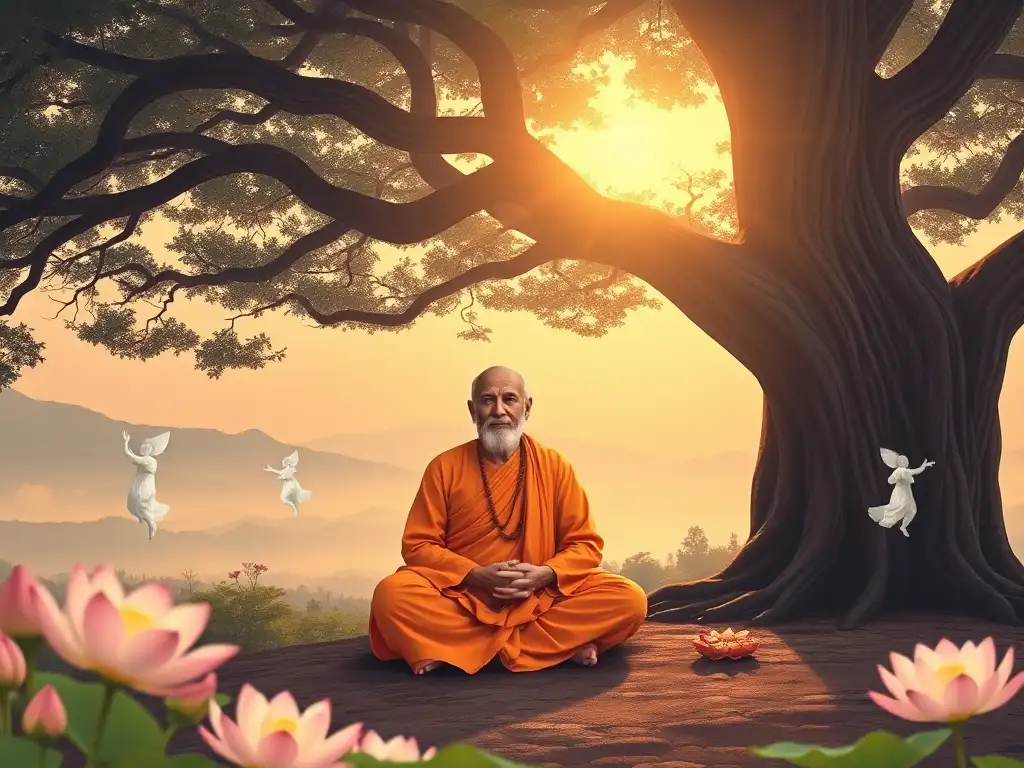
Mahavira, also known as Vardhamana, is revered as the last Tirthankara of Jainism, and his spiritual journey is a profound narrative of renunciation, self-discipline, and enlightenment. Born into a royal family in the 6th century BCE in what is now Bihar, India, Mahavira's life took a pivotal turn when he chose to abandon worldly pleasures in pursuit of spiritual truth. His journey is characterized by a deep commitment to understanding the nature of existence, suffering, and the self.
From an early age, Mahavira exhibited a profound inclination towards spirituality. After the death of his parents, he was deeply affected and began to contemplate the transient nature of life. This introspection led him to renounce his material possessions and embark on a quest for ultimate knowledge. His journey was not merely about personal liberation, but also aimed at guiding others towards the path of righteousness and enlightenment.
Renunciation and Ascetic Life
Mahavira's renunciation marked the beginning of a rigorous ascetic lifestyle that lasted for approximately 12 years. He adopted extreme self-discipline, rejecting all forms of comfort and indulgence. This period was marked by intense meditation, fasting, and contemplation, during which he sought to purify his soul from the bonds of karma and worldly attachments.
During his ascetic life, Mahavira practiced several austere methods:
- Fasting: He often engaged in prolonged fasting, sometimes going without food for days.
- Meditation: Deep meditation was pivotal in his quest for self-realization and understanding the nature of the universe.
- Non-violence (Ahimsa): A cornerstone of his teachings, Mahavira adhered strictly to the principle of non-violence, extending compassion to all living beings.
This period of intense discipline and self-denial ultimately led to profound spiritual insights and culminated in his enlightenment, where he attained Keval Jnana, or absolute knowledge.
Key Events Leading to Enlightenment
Several significant events shaped Mahavira's path to enlightenment. His commitment to non-violence and renunciation was tested multiple times, yet he remained steadfast. Some notable occurrences include:
- Encounters with Other Ascetics: Throughout his journey, Mahavira met various ascetics and philosophers, which influenced his thoughts and teachings.
- Debates and Discussions: Mahavira engaged in philosophical debates, challenging prevailing beliefs and emphasizing the importance of personal experience in spiritual understanding.
- Meditation Under the Tree: It is said that after years of rigorous austerity, Mahavira achieved enlightenment while meditating under a tree, a moment that transformed him into a Tirthankara.
These key events shaped not only his spiritual insights but also laid the groundwork for the principles he would later teach as a leader of the Jain community.
Teachings of Mahavira
Mahavira's teachings are foundational to Jainism and encapsulate a philosophy of non-violence, truth, and asceticism. His insights have influenced countless followers and continue to resonate in contemporary discussions about ethics and spirituality. The core of his teachings can be understood through several fundamental principles.
Fundamental Principles of Mahavira's Teachings
The fundamental principles of Mahavira's teachings are often summarized by the Five Great Vows, known as the "Mahavratas":
- Ahimsa (Non-violence): The most important tenet, emphasizing respect and compassion for all living beings.
- Satya (Truthfulness): Advocating for honesty in thought, word, and action.
- Asteya (Non-stealing): Encouraging respect for others' possessions and rights.
- Brahmacharya (Celibacy): Promoting self-control and restraint in sexual matters.
- Aparigraha (Non-possessiveness): Advocating for detachment from material possessions and desires.
These principles not only guide moral conduct but also serve as a blueprint for spiritual advancement, leading practitioners toward liberation from the cycle of birth and death.
Mahavira’s Philosophy on Karma and Liberation
Mahavira's philosophy regarding karma and liberation is intricately connected to his teachings on ethical living and spiritual discipline. He posited that every action, thought, and intention contributes to the accumulation of karma, which binds the soul to the cycle of birth, death, and rebirth (samsara).
Key aspects of his philosophy include:
- Karma as a Universal Law: Mahavira taught that karma operates universally, affecting every individual based on their actions, thus emphasizing personal responsibility.
- Liberation (Moksha): The ultimate goal of life, according to Mahavira, is to achieve liberation from karmic bonds. This requires rigorous self-discipline, adherence to the Five Great Vows, and the development of spiritual insight.
- Path of Right Conduct: Mahavira emphasized that following a righteous path, characterized by ethical behavior and spiritual practices, is essential for purifying the soul and attaining liberation.
Mahavira’s teachings on karma and liberation remain central to Jain philosophy, guiding practitioners on their spiritual journey toward ultimate freedom.
Mahavira’s Role as the Last Tirthankara
Mahavira, known as Vardhamana, is celebrated as the last Tirthankara in Jainism, a title that signifies a spiritual teacher who has achieved enlightenment and helps others to achieve liberation. His role as the final Tirthankara is pivotal in shaping the doctrines and practices of Jainism. Mahavira lived during the 6th century BCE and is credited with the formal establishment of Jain philosophy as it is known today.
His teachings emphasized non-violence (ahimsa), truthfulness (satya), and asceticism, which became foundational principles of Jainism. Mahavira's life and teachings introduced a more systematic approach to spirituality, fostering a community that valued ethical conduct and individual responsibility in the pursuit of liberation.
His emphasis on personal experience and realization over ritualistic practices distinguished Jainism from other contemporary religions. Mahavira's role as the last Tirthankara also signifies the completion of a cycle in Jain cosmology, wherein he is regarded as the final teacher before the advent of a new cycle, thus marking a significant closure in the history of Tirthankaras. The followers of Mahavira regard him not just as a spiritual leader but as an embodiment of the ultimate truth, and his teachings continue to inspire millions around the globe.
Definition of Tirthankara in Jainism
In Jainism, a Tirthankara, which translates to "ford-maker," is a revered spiritual teacher who has attained omniscience (kevala jnana) and has the ability to guide others across the ocean of worldly existence (samsara) to liberation (moksha). Tirthankaras are considered the highest spiritual beings, and they play a crucial role in establishing the teachings of Jainism during their respective eras. Each Tirthankara is believed to have lived a complete life, embodying the principles of Jain philosophy and demonstrating a path towards liberation through ethical living and self-discipline.
The Jain tradition recognizes a total of 24 Tirthankaras, with Mahavira being the last of them. Each Tirthankara has a unique story, and their teachings contribute to the overarching principles of Jainism, which include non-violence, truthfulness, non-stealing, celibacy, and non-possessiveness. The teachings of Mahavira, in particular, emphasize the importance of personal spiritual effort and the cultivation of virtues necessary for achieving liberation, making his contributions paramount in the history of Jainism.
Differences Between Mahavira and Previous Tirthankaras
While all Tirthankaras share the common goal of guiding souls toward liberation, Mahavira’s teachings and approach introduced several distinctive elements that set him apart from his predecessors. One significant difference lies in his emphasis on ahimsa (non-violence) as an absolute principle, which he believed should extend beyond human interactions to encompass all living beings. This radical interpretation of non-violence influenced the ethical framework of Jainism profoundly.
Additionally, Mahavira advocated for a more stringent monastic discipline compared to previous Tirthankaras. He emphasized ascetic practices, including fasting and renunciation of worldly attachments, as essential for spiritual progress. While earlier Tirthankaras laid the groundwork for Jain teachings, Mahavira's interpretations offered a more structured path for followers, promoting individual responsibility in achieving spiritual goals.
Another notable difference is Mahavira's approach to societal engagement. He was known for engaging with people from various social strata, promoting the idea that spiritual liberation is accessible to all, regardless of caste or status. This inclusive aspect of his teachings marked a significant shift from the more traditional views held in earlier Jainism.
Mahavira’s Contributions to Jainism
Mahavira's contributions to Jainism are vast and profound, influencing its religious practices, philosophy, and cultural expressions. His teachings not only shaped the doctrine of Jainism but also established a framework for community life among Jains. Mahavira’s life exemplifies the importance of ethical living, fostering a strong sense of moral responsibility within the Jain community.
Establishment of Jain Monastic Orders
One of Mahavira's most significant contributions was the establishment of monastic orders, which became vital for the preservation and propagation of Jain teachings. He organized the monastic community into a structured system, providing guidelines for ascetic life and discipline. This structure included the establishment of rules for monks (sadhus) and nuns (sadhvis), emphasizing celibacy, non-attachment, and rigorous adherence to Jain principles.
Mahavira's establishment of these monastic orders allowed for the systematic teaching of Jain philosophy, facilitating the training of future teachers and leaders within the community. The monastic tradition continues to be a cornerstone of Jainism, ensuring that Mahavira’s teachings are preserved and practiced through generations.
Influence on Jain Art and Culture
Mahavira’s influence extends beyond religious teachings into the realms of art and culture. His life and the principles he embodied have been depicted in various forms of Jain art, including sculpture, painting, and architecture. The representation of Mahavira often includes symbolic elements that reflect his teachings on non-violence and compassion, inspiring artistic expressions that resonate with the values of Jainism.
Furthermore, Mahavira's teachings have significantly influenced Jain festivals, rituals, and cultural practices. The celebration of Mahavira Jayanti, which commemorates his birth, exemplifies how his life and teachings continue to inspire devotion and community gatherings among Jains. This cultural heritage, imbued with the principles of Jainism, continues to thrive, reflecting Mahavira's lasting impact on both religion and culture.
Legacy of Mahavira in Ancient India
Mahavira, the last Tirthankara of Jainism, has left an indelible mark on the spiritual and philosophical landscape of ancient India. His teachings, which emphasized non-violence (ahimsa), truthfulness (satya), and asceticism, have significantly shaped Jainism's doctrines and practices. Mahavira’s life, which spanned from approximately 599 to 527 BCE, coincided with a period of profound philosophical exploration in India, with various schools of thought emerging and interacting.
His legacy is particularly evident in the establishment of a well-organized monastic community, which provided structure and support for followers seeking to adhere to his teachings. The Tirthankara tradition, which Mahavira epitomized, became a foundational element of Jainism, influencing not just religious thought but also social practices and ethical standards in ancient Indian society. Additionally, Mahavira's principles extended beyond Jainism, impacting the broader cultural and religious fabric of ancient India.
Mahavira’s Impact on Indian Philosophy
Mahavira's teachings significantly contributed to the evolution of Indian philosophy, particularly through the promotion of concepts such as ahimsa and anekantavada (the doctrine of non-absolutism). Ahimsa, the commitment to non-violence in thought, word, and deed, became a fundamental ethical principle that transcended Jainism, impacting Hinduism and later Buddhism as well. Mahavira advocated for a life of compassion and respect for all living beings, which resonated deeply within the socio-religious context of ancient India.
Anekantavada, which posits that truth is multifaceted and can be perceived differently from various perspectives, encouraged a spirit of dialogue and tolerance within philosophical discourse. This approach fostered an environment of intellectual inquiry and respect for differing views, which was crucial during a time of burgeoning philosophical diversity. Mahavira's emphasis on personal experience and ethical conduct laid the groundwork for later philosophical developments in both Jainism and other Indian religions.
Influence on Other Religious Traditions
The influence of Mahavira extends beyond Jainism into other religious traditions, particularly Hinduism and Buddhism. His principles of non-violence and asceticism were mirrored in the teachings of notable figures like Gautama Buddha, who, while establishing a different religious framework, also emphasized ethical living and compassion. The parallel development of these philosophies illustrates a shared cultural ethos in ancient India, where spiritual leaders often drew inspiration from one another.
Moreover, the concept of ahimsa became a cornerstone of Hindu philosophy, particularly during the Bhakti movement and later in the 20th century, when leaders like Mahatma Gandhi adopted it as a political strategy for social change. This historical continuity highlights Mahavira's teachings' profound and lasting impact on the moral and ethical frameworks of various religious traditions in India.
Conclusion: Mahavira's Enduring Influence on Jainism and Beyond
Mahavira's teachings have not only shaped Jainism but have also significantly influenced the broader spiritual and ethical landscape of ancient India. His commitment to non-violence, truth, and asceticism continues to resonate today, providing a framework for ethical living and spiritual exploration.
Summary of Mahavira's Teachings and Their Relevance Today
Mahavira's teachings provide timeless insights into how individuals can lead lives grounded in ethical conduct and spiritual integrity. The core tenets of Jainism—ahimsa, satya, asteya (non-stealing), brahmacharya (celibacy), and aparigraha (non-possessiveness)—serve as guiding principles for millions. In today's context, these teachings encourage a lifestyle that promotes peace, environmental sustainability, and social responsibility. As contemporary issues such as violence, environmental degradation, and materialism become increasingly prevalent, Mahavira's teachings gain renewed relevance, offering solutions rooted in ancient wisdom.
Final Thoughts on Mahavira's Role in Jainism History
Mahavira stands as a pivotal figure in the history of Jainism, embodying the essence of its teachings and serving as a model for spiritual seekers. His life and philosophy not only defined Jainism but also contributed to the rich tapestry of ancient Indian religions. As the last Tirthankara, Mahavira's legacy continues to inspire and guide individuals on their spiritual journeys, affirming his role as a significant contributor to the history of Jainism and the broader philosophical discourse of ancient India.
References for Further Reading on Mahavira and Jainism
For those interested in delving deeper into the life and teachings of Mahavira as well as the broader context of Jainism, a variety of resources are available. These references span scholarly articles, foundational texts, and insightful interpretations, providing a well-rounded understanding of Jain philosophy and history.
Suggested Books and Articles
-
"The Life of Mahavira" by R. C. Majumdar
This biography explores the life of Mahavira, detailing his early years, spiritual journey, and the establishment of Jainism as a distinct religion. Majumdar's work is a crucial resource for understanding the personal and historical context of Mahavira's teachings.
-
"Jainism: An Introduction" by Jeffery D. Long
This book offers a comprehensive overview of Jain beliefs, practices, and philosophies, including a detailed discussion on the Tirthankaras, with a significant focus on Mahavira. Long's accessible writing makes this a valuable starting point for newcomers to Jain studies.
-
"Mahavira: The Last Tirthankara" by K. M. Ganguly
Ganguly provides an in-depth examination of Mahavira's life and teachings, placing them within the historical framework of ancient India. The book also discusses the social and cultural influences that shaped Jainism during Mahavira's time.
-
"Jainism: A Religion of Non-Violence" by N. P. Jain
This article discusses the fundamental principles of Jainism, particularly the concept of ahimsa (non-violence), which is central to Mahavira’s teachings. It also explores how these teachings have influenced ethical practices within and beyond Jain communities.
-
"The Jain Path: A Comprehensive Guide"
This article serves as a guide to understanding Jain practices, rituals, and the significance of Mahavira’s teachings in contemporary Jain communities. It highlights how Mahavira’s insights continue to shape the spiritual lives of millions today.
Key Historical Texts in Jainism
-
"Tattvartha Sutra" (The Text of Reality)
Authored by Umāsvāti, this foundational text outlines the core tenets of Jain philosophy, including the teachings of Mahavira. It covers topics such as the nature of reality, the soul, and the path to liberation (moksha), making it essential for understanding Jain thought.
-
"Acharanga Sutra"
One of the earliest texts in Jain literature, the Acharanga Sutra discusses the ethical conduct and ascetic practices advocated by Mahavira. It serves as a guide for Jains on how to live a life aligned with the principles of non-violence and truth.
-
"Sutrakritanga"
This text complements the Acharanga Sutra and elaborates on various aspects of Jain philosophy and ethics, including Mahavira's teachings on karma and spiritual liberation. It is essential for those studying the practical applications of Jain beliefs.
-
"Kalpa Sutra"
This important Jain scripture narrates the life stories of the Tirthankaras, including Mahavira. It provides insights into the historical context and the significance of Mahavira’s teachings within the broader development of Jainism.
-
"Samavaya Sutra"
Another key text that discusses the principles of Jain philosophy, the Samavaya Sutra includes discussions on the nature of the universe and the soul, emphasizing Mahavira’s contributions to the understanding of spiritual liberation.
These resources collectively provide a robust foundation for exploring the life and teachings of Mahavira and their profound impact on Jainism and ancient Indian thought.
- Introduction to Mahavira and Jainism
- Overview of Jainism and Its Historical Context
- Significance of Mahavira in Jainism
- Early Life of Mahavira
- Mahavira's Spiritual Journey
- Teachings of Mahavira
- Mahavira’s Role as the Last Tirthankara
- Mahavira’s Contributions to Jainism
- Legacy of Mahavira in Ancient India
- Conclusion: Mahavira's Enduring Influence on Jainism and Beyond
- References for Further Reading on Mahavira and Jainism
Frequently Asked Questions
What is the significance of Mahavira in Jainism?
Mahavira is considered the last Tirthankara of Jainism, whose teachings established the core principles of the faith, emphasizing non-violence, truthfulness, and asceticism.
How did Mahavira's teachings influence Jain practices?
Mahavira's teachings laid the foundation for Jain practices such as ahimsa (non-violence) and aparigraha (non-possessiveness), which continue to guide the ethical and spiritual lives of Jains today.
What are the key teachings of Mahavira?
The key teachings of Mahavira include the Five Great Vows: ahimsa, satya (truth), asteya (non-stealing), brahmacharya (celibacy), and aparigraha, which promote a life of spiritual discipline and moral integrity.
How did Mahavira contribute to Jainism's history?
Mahavira's profound insights and practices played a crucial role in shaping the history of Jainism, transforming it into a significant religion in ancient India and influencing its philosophical development.
What is the historical context of Mahavira's life?
Mahavira lived in the 6th century BCE during a time of social and religious transformation in India, promoting a path of rigorous spirituality and ethical living amidst various competing philosophies.
Final Reflection: Embracing the Teachings of Mahavira in Today's World
The life and teachings of Mahavira resonate profoundly in our contemporary society, reminding us of the timeless values of non-violence, truth, and compassion. In a world often marked by conflict and division, Mahavira's principles offer a guiding light, encouraging us to cultivate peace and understanding in our daily interactions. His teachings are not merely historical artifacts; they are living philosophies that challenge us to reflect on our actions and their impact on the world around us.
Cultural and social landscapes are continually shaped by the teachings of influential figures, and Mahavira is no exception. His emphasis on ahimsa (non-violence) and aparigraha (non-possessiveness) has inspired countless individuals to adopt a more mindful and ethical approach to life. As we navigate the complexities of modern existence, we can draw from Mahavira's wisdom to foster a more harmonious society. The greatest gift is to give people your enlightenment, to share it. It has to be the greatest.
This quote encapsulates the essence of Mahavira's teachings, urging us to share our understanding and compassion with others.
As we conclude our exploration of Mahavira's life and teachings, I invite you to reflect on how these principles can be integrated into your own life. Consider how you can embody the values of non-violence, truthfulness, and compassion in your daily interactions. Whether through small acts of kindness or larger commitments to social justice, each of us has the power to make a difference. Let Mahavira's teachings inspire you to create a ripple effect of positive change in your community and beyond.
Embrace the Wisdom of Mahavira Today!
Thank you for taking the time to explore the profound life and teachings of Mahavira, the last Tirthankara of Jainism. We hope you gained valuable insights into his philosophy and message of non-violence, truth, and spiritual liberation. Now, it’s time to channel that inspiration into actionable steps!
Here are a few ways you can embody Mahavira's wisdom and foster a spirit of compassion in your daily life:
- Practice Ahimsa (Non-Violence): Make a conscious effort to minimize harm in your thoughts, words, and actions. Reflect on how your choices impact others and the environment.
- Engage in Community Discussions: Join or initiate a dialogue group focusing on Jain teachings or broader philosophical topics. Sharing perspectives can deepen your understanding and foster meaningful connections.
- Explore Jain Literature: Delve into sacred texts or books on Jain philosophy. Seek out local events, online courses, or workshops that explore these teachings in greater depth.
What small step will you take today to integrate the teachings of Mahavira into your personal journey?