
Ancient Indian Legal Practices and Their Reflection in Art and Literature


Welcome to Ancient India History, where we embark on a fascinating journey through the rich tapestry of ancient Indian civilizations. Here, we delve into the intriguing world of Ancient Indian legal traditions, exploring how these foundational practices not only shaped societal norms but also found expression in art and literature. What can the intricate codes of law tell us about the values and beliefs of a bygone era?
Join us as we unravel the profound connections between legal systems and the cultural heritage of ancient India, inviting you to discover the legacy that continues to resonate today. Dive deeper into our article on Ancient Indian Legal Practices and Their Reflection in Art and Literature to unlock the secrets of this captivating history!
Introduction to Ancient Indian Legal Traditions
The rich tapestry of ancient Indian legal traditions offers a fascinating glimpse into the intricate systems of justice and governance that shaped one of the world's oldest civilizations. From the meticulously planned urban centers of the Indus Valley Civilization to the sophisticated legal codes of the Gupta Empire, these traditions not only dictated the societal norms and values but also found profound expression in art and literature.
Understanding these legal practices is crucial, as they reflect the philosophical and ethical frameworks that governed human interaction in ancient India. Through this exploration, we will uncover how legal practices were not only mechanisms for justice but also pivotal cultural elements that influenced various art forms and literary expressions throughout history.
Overview of Ancient Indian Legal Systems
Ancient Indian legal systems were diverse and complex, characterized by a blend of customary laws and codified statutes. The foundational texts, such as the Dharmashastras, including the Manusmriti, laid down principles of law that encompassed civil, criminal, and family matters. These texts served as a guide for rulers and citizens alike, outlining the duties and rights of individuals within society.
- Key features of ancient Indian legal systems include:
- Dharma: The moral law that guided individual behavior and societal norms.
- Kshatriya: The ruling class responsible for upholding justice.
- Local customs: Adaptations of legal practices that reflected regional cultures.
The evolution of these systems over centuries highlights the adaptability of law in response to changing social and political landscapes, further enriching the cultural heritage of India.
Importance of Legal Practices in Ancient Indian Society
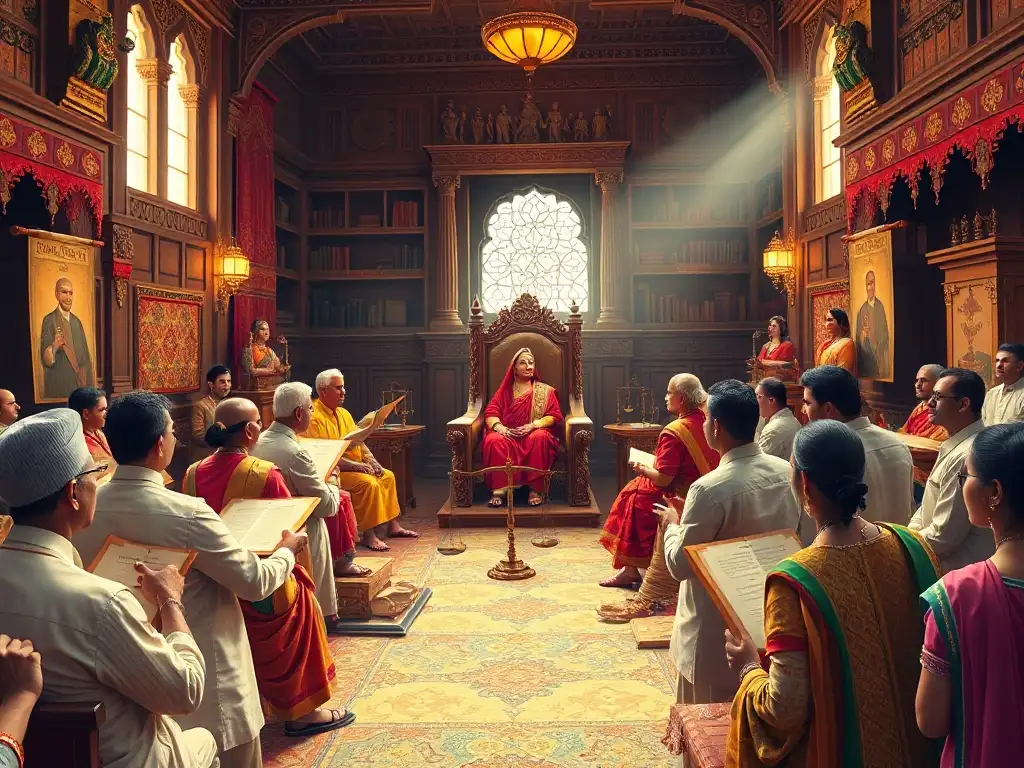
Legal practices in ancient India were not merely a means of conflict resolution; they played a vital role in maintaining social order and cohesion. They provided a framework for governance and established guidelines that promoted justice and fairness. The courts of ancient India, often presided over by wise sages or local rulers, were places where disputes were settled, and justice was administered.
- The significance of these practices can be summarized as follows:
- Social stability: Ensured harmony and order within communities.
- Cultural identity: Reflected the values and beliefs of society.
- Economic transactions: Provided a legal basis for trade and commerce.
Through these practices, ancient Indian society was able to cultivate a sense of morality and responsibility among its citizens, which is echoed in the rich literary and artistic heritage.
Historical Context of Ancient Indian Legal Traditions
Understanding the historical context of ancient Indian legal traditions requires an exploration of the various civilizations that contributed to the development of legal frameworks. Each era brought unique influences that shaped the evolution of law, reflecting the values and needs of the time.
Influence of Early Civilizations on Legal Frameworks
Early civilizations, such as the Indus Valley Civilization, laid the groundwork for legal practices by establishing urban planning and trade regulations. Archaeological evidence suggests that even in these early societies, there were systems in place to resolve disputes and maintain order.
- Key influences from early civilizations include:
- Trade regulations: Established guidelines for commerce and conflict resolution.
- Urban governance: Early forms of administrative law to manage city life.
As these civilizations progressed, their legal traditions evolved, absorbing influences from philosophical schools and neighboring cultures, which further enriched the legal landscape of ancient India.
Key Periods in Ancient Indian Legal History
Ancient Indian legal history can be divided into several key periods, each marked by significant developments in legal thought and practice:
- Vedic Period (1500–500 BCE): The emergence of early texts that laid the philosophical foundations for law.
- Mauryan Empire (322–185 BCE): The codification of laws under Emperor Ashoka, emphasizing ethical governance.
- Gupta Empire (c. 320–550 CE): The refinement of legal codes and the flourishing of legal literature, reflecting advanced judicial practices.
Through these periods, we observe a continuity and transformation of legal traditions that resonate in both art and literature, illustrating the profound connection between law, culture, and society in ancient India.
Primary Sources of Ancient Indian Law
Ancient Indian legal traditions are deeply rooted in a variety of primary sources that shaped the judicial landscape of the time. These sources include ancient texts, scriptures, religious laws, and philosophical doctrines that provided both the framework and the content for legal practices. Understanding these sources is crucial to appreciating how law was interwoven with the cultural and societal norms of ancient India.
The most significant texts that inform us about ancient Indian law include the Dharmashastras, which are moral and legal treatises outlining duties, rights, and the principles of justice. Among these texts, the Manusmriti stands out as one of the oldest and most influential, providing guidelines on various aspects of life, including caste duties, family law, and criminal justice.
Ancient Texts and Scriptures as Legal References
Ancient Indian legal practices heavily relied on foundational texts such as the Vedas, Upanishads, and Smritis. These texts not only served as spiritual guides but also offered legal norms and ethical standards.
- The Vedas: Although primarily religious texts, the Vedas contain references to legal principles, particularly concerning family, property, and social conduct. For instance, the Rigveda includes hymns that touch upon the importance of truth and righteousness, which are essential for judicial fairness.
- The Dharmashastras: Texts like the Manusmriti, Yajnavalkya Smriti, and Narada Smriti outline specific laws and regulations governing personal conduct, social relations, and criminal offenses. They also include provisions for punishment and methods of dispute resolution, reflecting a sophisticated understanding of justice.
- The Arthashastra: Authored by Kautilya (Chanakya), this ancient treatise focuses on statecraft and economic policy but also delves into law enforcement, the role of the judiciary, and the administration of justice. It emphasizes a pragmatic approach to governance and legal matters.
These texts collectively illustrate that ancient Indian legal tradition was not merely about codifying laws but was deeply integrated with the philosophical and ethical dimensions of life.
Role of Religious and Philosophical Texts in Shaping Legal Practices
Religious and philosophical texts played a pivotal role in shaping ancient Indian legal practices by intertwining moral and ethical considerations with legal norms.
- Religious Influence: The concept of Dharma, which denotes duty, righteousness, and law, is central to Hindu philosophy and is intricately linked to legal practices. The interpretation of Dharma varies across texts and contexts, influencing how laws were applied in society.
- Philosophical Dialogues: Works such as the Upanishads and various philosophical schools of thought, including Nyaya and Mimamsa, contributed to the understanding of justice and ethics. These texts encouraged a reasoned approach to law, emphasizing the importance of rational discourse and logical reasoning in legal matters.
- Integration of Norms: The amalgamation of these religious and philosophical insights allowed for a holistic legal framework that addressed not just punitive measures but also restorative justice, reinforcing community harmony.
Thus, the interplay between law, morality, and philosophy fostered a unique legal culture in ancient India, one that sought to balance individual rights with communal responsibilities.
Judicial Practices in Ancient India
Ancient Indian judicial practices were characterized by a well-structured system of courts and a defined set of roles for judges and legal practitioners. This system was crucial for maintaining order and administering justice in various communities.
Structure of Courts in Ancient Indian Society
The structure of courts in ancient India was diverse, reflecting the socio-political landscape of the time.
- Village Courts: At the grassroots level, village assemblies known as panchayats served as the primary judicial authority. These courts were composed of respected elders and community leaders who made decisions based on customary laws and local traditions.
- Royal Courts: In larger kingdoms, the king’s court was the highest judicial authority. The king often acted as the ultimate judge, assisted by a council of advisors and learned Brahmins who provided legal counsel.
- Specialized Courts: Certain courts dealt with specific types of cases, such as family disputes, commercial matters, or criminal offenses. This specialization helped ensure that cases were handled by those with appropriate knowledge and expertise.
The structure of these courts facilitated accessibility to justice while also ensuring that laws were applied consistently within varying contexts.
Roles and Responsibilities of Judges and Legal Practitioners
Judges and legal practitioners in ancient India held significant responsibilities, ensuring the fair administration of justice.
- Judges: Judges, often referred to as dharmadhikrits, were tasked with interpreting the law, listening to cases, and delivering judgments. Their decisions were expected to reflect not only legal statutes but also moral principles, thus embodying the notion of Dharma.
- Legal Practitioners: Advocates and legal advisors played crucial roles in representing parties in court. These practitioners, often well-versed in legal texts and local customs, provided guidance and defense to litigants, ensuring that their rights were upheld.
- Accountability: Judges were held accountable for their decisions, and there were mechanisms in place for appeal and review to prevent misuse of power. This accountability was vital in maintaining public trust in the legal system.
The roles and responsibilities of judges and legal practitioners were fundamental to the effective functioning of ancient Indian legal traditions, reflecting a commitment to justice that was both culturally and ethically grounded.
Art and Literature as Reflections of Legal Traditions
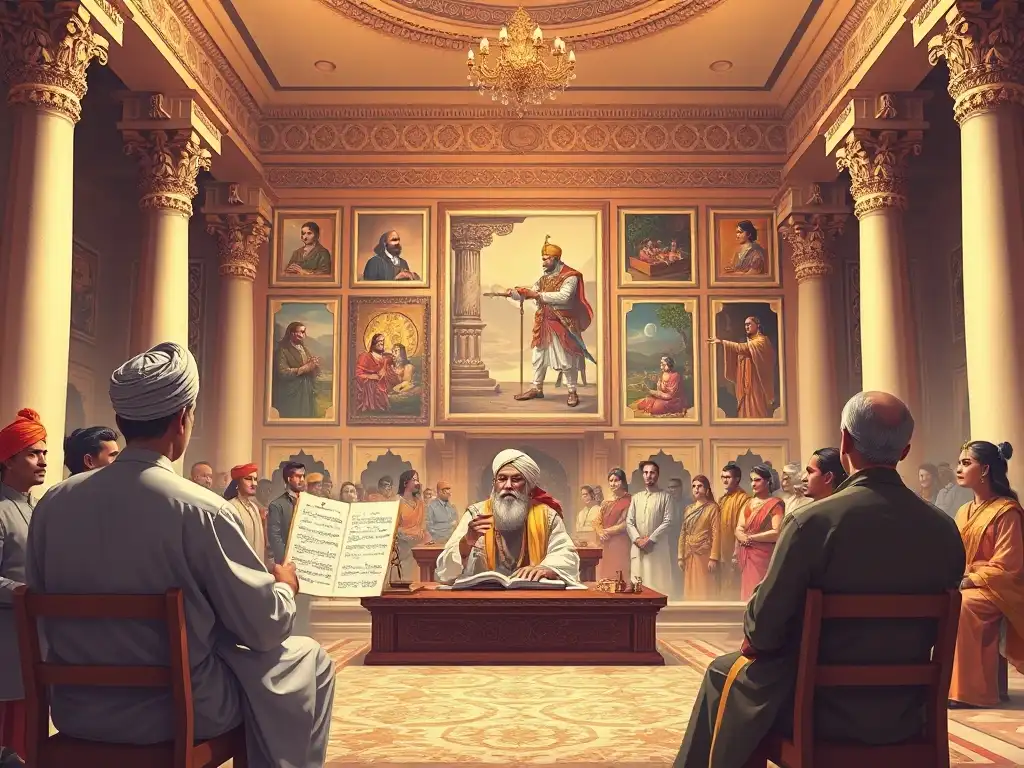
Ancient Indian legal traditions were not only codified in texts but were also vividly illustrated in the art and literature of the time. The interplay between these domains manifests a rich tapestry of society's values, ethics, and legal principles. Art served as a visual documentation of legal practices, while literature provided a narrative framework through which these practices were examined, critiqued, and celebrated. By exploring these reflections, we gain insights into how laws shaped the moral and social fabric of ancient Indian civilizations.
Depictions of Legal Proceedings in Ancient Indian Art
Art in ancient India often depicted scenes of legal proceedings, showcasing the ceremonial aspects of justice. Sculptures and paintings frequently illustrated kings and judges presiding over trials, reflecting the societal reverence for law. For example, the famous sculptures from the Ajanta Caves depict various aspects of daily life, including judicial processes.
In many of these artworks, the dignified posture of judges and the attentive demeanor of the audience highlight the importance of legal proceedings. These images often include symbolic elements such as scales of justice or inscriptions that emphasize fairness and equity in the judicial process. The portrayal of such scenes underscores a communal understanding of justice as a fundamental aspect of governance.
Additionally, temples and public spaces frequently featured reliefs that depicted mythological and historical narratives intertwined with legal themes, further reinforcing the connection between divine authority and judicial practices. These artistic representations served not only as decoration but as a medium for educating the populace about the virtues of justice and the rule of law.
Literary Works Highlighting Legal Concepts and Principles
Ancient Indian literature is replete with texts that illuminate legal concepts and principles. Prominent among these is the "Arthashastra," attributed to Kautilya, which provides a systematic approach to statecraft and legal governance. This treatise covers a wide array of topics, including the administration of justice, the duties of judges, and the importance of adhering to dharma (moral law) in legal matters.
Another significant work is the "Manusmriti," a legal text that outlines social laws and duties, emphasizing the relationship between law and morality. It provides insights into property rights, family law, and penalties for various offenses, offering a glimpse into the societal norms and values of the time.
Moreover, epics like the "Mahabharata" and the "Ramayana" contain narratives that delve into legal dilemmas, ethical conflicts, and the consequences of legal decisions. These stories not only entertain but also serve as moral guides, illustrating the complexities of justice and the human condition. Through these literary works, ancient Indian legal traditions are preserved and communicated, enriching our understanding of their impact on society.
Case Studies of Notable Legal Practices
Examination of Specific Legal Cases in Ancient Texts
Several ancient texts provide detailed accounts of specific legal cases that highlight the functioning of the judicial system in ancient India. The "Arthashastra," for instance, discusses various types of disputes, including those related to property, trade, and family matters. The text outlines procedures for arbitration and the roles of different stakeholders in resolving conflicts.
One notable case mentioned in the "Mahabharata" involves a dispute over the rightful ownership of a kingdom. The resolution of this conflict demonstrates the complexities of dharma and the legal principles governing succession and inheritance. Such case studies not only reflect the legal frameworks in place but also illustrate the societal values and philosophical underpinnings that guided judicial outcomes.
Analysis of Judicial Outcomes and Their Cultural Impact
The outcomes of legal proceedings in ancient India often had profound cultural implications, as they were closely tied to the prevailing social norms and values. For example, the legal decisions made in high-profile cases, such as those involving kings or prominent figures, were seen as reflections of justice and morality in society.
The judgments and their public reception could influence future legal practices and societal attitudes toward justice. In some instances, the resolution of a case might lead to changes in laws or the development of new legal concepts, showcasing the dynamic nature of ancient Indian legal traditions.
Furthermore, the cultural narratives surrounding these judicial outcomes, as captured in literature and art, served to reinforce collective memory and societal ideals. The portrayal of justice in ancient texts and artworks contributed to an understanding of law as a living tradition, adapting to the needs of society while maintaining core ethical principles. This interplay between legal outcomes and cultural expression highlights the essential role of law in shaping ancient Indian civilization.
Comparative Analysis of Ancient Indian Legal Traditions
Ancient Indian legal traditions were intricate systems that governed personal conduct, societal interactions, and state affairs. These systems were deeply rooted in the cultural and religious fabric of the society, drawing heavily from texts like the Manusmriti, Arthashastra, and the Dharmashastras. The legal framework was characterized by a combination of written laws, customary practices, and philosophical underpinnings that emphasized dharma (duty/ethics) as a guiding principle.
In examining these traditions, we can identify key elements such as the role of local customs, the importance of community consensus, and the integration of moral values into legal proceedings. These aspects not only shaped the administration of justice but also reflected the societal norms and values of the time, making them unique in their approach to law and governance.
Comparison with Contemporary Legal Systems in the World
When comparing ancient Indian legal traditions to contemporary legal systems, several distinctions and similarities emerge. Modern legal systems, particularly those based on common law or civil law, tend to prioritize codified laws and formalized procedures. In contrast, ancient Indian systems relied heavily on customary laws and the discretion of local judges, allowing for flexibility and adaptability to local contexts.
Key differences include:
- Codification vs. Custom: Modern systems emphasize written codes, while ancient Indian laws often functioned through oral traditions and local customs.
- Judicial Authority: In contemporary systems, judicial authority is typically centralized with a formal hierarchy, whereas ancient Indian practices allowed for local leaders or elders to adjudicate disputes.
- Role of Morality: While modern laws are increasingly secular, ancient Indian laws were intertwined with religious and moral codes, making compliance a matter of both legal obligation and ethical duty.
Despite these differences, both systems share the goal of maintaining social order and resolving disputes, indicating a common foundation in the pursuit of justice.
Similarities and Differences with Other Ancient Civilizations
Ancient Indian legal traditions exhibit both similarities and differences when compared to those of other civilizations, such as Mesopotamia, Ancient Greece, and Rome. One major similarity lies in the use of written legal codes; for instance, the Code of Hammurabi in Mesopotamia shares the principle of establishing clear rules and consequences, akin to the legal texts of ancient India.
However, key differences also stand out:
- Philosophical Underpinnings: Ancient Indian law was heavily influenced by the concepts of dharma and karma, which shaped not only legal judgments but also societal expectations. In contrast, other civilizations often emphasized retributive justice without the same moral framework.
- Community Involvement: Indian legal traditions frequently involved community mediation and consensus, whereas other ancient systems, like those of Rome, often relied on formal legal institutions and professional judges.
- Gender Roles: Ancient Indian legal practices reflected patriarchal structures but also included provisions for women's rights in certain contexts, such as property ownership, distinguishing them from some other ancient cultures where women had even fewer rights.
These comparisons illustrate the rich tapestry of legal thought across civilizations, highlighting both unique features and shared principles.
The Legacy of Ancient Indian Legal Traditions
The legacy of ancient Indian legal traditions remains significant, influencing various aspects of modern legal frameworks and cultural practices. The principles established in these traditions continue to resonate in contemporary discussions about justice, ethics, and governance.
How Ancient Indian Legal Practices Influence Modern Legal Systems
Modern legal systems in India and beyond have drawn from ancient Indian legal traditions, particularly in areas such as family law, property rights, and dispute resolution. The influence is evident in:
- Personal Laws: Hindu personal laws regarding marriage, inheritance, and adoption are rooted in ancient texts and continue to govern large sections of the population.
- Mediation Practices: The emphasis on mediation and community-based dispute resolution is reflected in contemporary alternative dispute resolution mechanisms, promoting harmony and social cohesion.
- Social Justice Concepts: Ideas of equity and justice derived from ancient texts have inspired modern legal reforms aimed at protecting marginalized communities and ensuring social justice.
These influences underscore the enduring relevance of ancient Indian legal thought in shaping contemporary legal practices.
Preservation of Ancient Legal Knowledge in Contemporary Culture
The preservation of ancient legal knowledge is evident in various facets of contemporary culture, including literature, education, and cultural rituals. Noteworthy aspects include:
- Legal Texts and Commentaries: Many ancient texts, such as the Manusmriti and Arthashastra, are studied in law schools and are referenced in legal discourse, preserving their relevance in modern times.
- Cultural Practices: Traditional practices regarding marriage and family reflect ancient legal principles, often observed in communities across India, thereby keeping these traditions alive.
- Academic Research: Scholars continue to explore ancient Indian legal traditions, contributing to a deeper understanding of their complexities and relevance to current legal debates.
Through these avenues, the rich legacy of ancient Indian legal traditions is not only preserved but also serves as a foundation for ongoing discussions about law, ethics, and society.
Conclusion: The Enduring Impact of Ancient Indian Legal Traditions

The legal traditions of ancient India not only shaped the judicial systems of their time but also left a profound legacy that continues to resonate in contemporary society. The intricate relationship between law, art, and literature in ancient India underscores how legal principles were not merely rules that governed behavior; they were integral to the cultural and spiritual fabric of society. By examining legal texts, artworks, and literary works from this era, we can discern the values and ethics that guided ancient Indian civilization, reflecting a sophisticated understanding of justice, morality, and social order.
Summary of Key Insights on Legal Practices and Cultural Reflection
Ancient Indian legal practices were characterized by a unique blend of customary laws, codified rules, and philosophical underpinnings. Key insights include:
- Diversity of Legal Texts: Texts such as the Manusmriti and the Arthashastra not only provided legal guidelines but also depicted the socio-political landscape of the time, illustrating how law was intertwined with governance.
- Social Justice Framework: Legal traditions emphasized social justice and the protection of marginalized communities, as evidenced by various laws that addressed the rights and duties of different social strata, including women and lower castes.
- Artistic Representations: Sculptures, paintings, and literary works often depicted legal proceedings and moral dilemmas, showcasing the artistic engagement with legal themes and the societal values they embodied.
- Literary Reflections: The narratives in ancient Indian epics, such as the Mahabharata and Ramayana, often explored themes of justice, duty, and righteousness, reflecting the legal and ethical standards of the time.
These insights illustrate that ancient Indian legal traditions were not static; they evolved to reflect the changing dynamics of society while simultaneously influencing cultural expressions.
The Relevance of Ancient Legal Traditions in Today's Society
The principles and philosophies underlying ancient Indian legal traditions continue to hold relevance in modern society. Several aspects highlight their ongoing impact:
- Integration of Ethics in Law: The emphasis on moral values and ethical conduct in ancient legal texts resonates with contemporary discussions on the role of ethics in law, encouraging a holistic approach to justice.
- Social Equity: The ancient focus on social justice informs current legal discourses, particularly in addressing inequalities and advocating for the rights of marginalized groups.
- Cultural Heritage: Understanding ancient legal traditions enriches our cultural heritage, providing a historical context that informs current legal practices and societal norms in India.
- Inspirational Framework: The philosophical foundations laid down by ancient legal thinkers inspire modern legal scholars and practitioners, encouraging them to consider the broader implications of law on human behavior and societal well-being.
The enduring impact of ancient Indian legal traditions is evident in both the legal framework and the cultural narrative of contemporary society, serving as a reminder of the rich historical legacy that continues to inform and inspire present-day practices.
- Introduction to Ancient Indian Legal Traditions
- Historical Context of Ancient Indian Legal Traditions
- Primary Sources of Ancient Indian Law
- Judicial Practices in Ancient India
- Art and Literature as Reflections of Legal Traditions
- Case Studies of Notable Legal Practices
- Comparative Analysis of Ancient Indian Legal Traditions
- The Legacy of Ancient Indian Legal Traditions
- Conclusion: The Enduring Impact of Ancient Indian Legal Traditions
- Summary of Key Insights on Legal Practices and Cultural Reflection
- The Relevance of Ancient Legal Traditions in Today's Society
- What are the key features of ancient Indian legal traditions?
- How did art and literature influence ancient Indian legal practices?
- What role did the Indus Valley Civilization play in shaping legal traditions?
- How did the Gupta Empire contribute to legal advancements?
- Are there any modern impacts of ancient Indian legal traditions?
Frequently Asked Questions
What are the key features of ancient Indian legal traditions?
Ancient Indian legal traditions were characterized by a blend of religious principles and customary laws, focusing on justice, equity, and social order as reflected in texts like the Manusmriti.
How did art and literature influence ancient Indian legal practices?
Art and literature served as a medium to document and reflect legal practices, showcasing court scenes and legal codes in sculptures and texts, thereby influencing societal understanding of justice.
What role did the Indus Valley Civilization play in shaping legal traditions?
The Indus Valley Civilization is notable for its early systems of trade regulation and urban planning, indicating the presence of foundational legal principles that would evolve in later periods.
How did the Gupta Empire contribute to legal advancements?
During the Gupta Empire, there was a significant development of legal texts and judicial practices, emphasizing codification of laws and the establishment of courts, which influenced future legal systems in India.
Are there any modern impacts of ancient Indian legal traditions?
Yes, many modern legal concepts in India are rooted in ancient traditions, emphasizing equity and justice, which continue to shape contemporary legal frameworks in the country.
Final Reflection: The Enduring Legacy of Ancient Indian Legal Traditions
The exploration of ancient Indian legal traditions reveals not only their historical significance but also their profound influence on contemporary society. As we navigate the complexities of modern law and justice, it becomes increasingly clear that the principles established in ancient texts continue to resonate today. The intricate relationship between law, art, and literature in ancient India serves as a testament to the enduring nature of these traditions, reminding us that the foundations of justice are deeply rooted in our cultural heritage.
The impact of ancient Indian legal practices extends far beyond the courtroom; it permeates our cultural and social landscapes. From the poetic verses of Kalidasa to the intricate sculptures adorning temples, these artistic expressions encapsulate the values and principles that governed ancient society. They remind us that law is not merely a set of rules but a reflection of our collective morality and ethics.
As Mahatma Gandhi once said, "> An unjust law is itself a species of violence. Arrest for its breach is more so." This quote underscores the importance of understanding our legal heritage as we strive for a just society.
As we reflect on the lessons of ancient Indian legal traditions, let us carry forward their wisdom into our daily lives. I invite you to consider how these age-old principles can inspire your own understanding of justice and ethics. Engage with the rich tapestry of our cultural history, and let it guide your actions and decisions. By doing so, we not only honor the legacy of those who came before us but also contribute to a more equitable future for generations to come.
Uncover the Legacy of Ancient Indian Law in Art and Literature!
Thank you for diving into the fascinating world of ancient Indian legal practices and their rich reflections in art and literature! Your interest not only highlights the significance of these practices but also opens the door to deeper exploration. Now, it's time to channel that curiosity into action!
Here are a few engaging steps you can take:
- Explore More: Visit our curated collection of ancient texts and artworks that depict legal concepts, and discover the compelling stories behind them.
- Join the Discussion: Share your thoughts in the comments! What aspect of ancient Indian law fascinates you the most, and in what ways do you think it influences modern societies?
- Spread the Knowledge: Share this article with friends or on social media to ignite conversations about the importance of legal history in shaping culture!
What new insights did you gain about the interplay between law and creativity in ancient Indian civilization? Let's discuss!