
The Ancient Indian Calendar: A Mathematical Marvel of Timekeeping


Welcome to Ancient India History, where we embark on a captivating journey through the rich tapestry of ancient Indian civilizations. Prepare to dive deep into the fascinating ancient Indian calendar history, a remarkable testament to the mathematical ingenuity and astronomical prowess of our ancestors. As we unravel the complexities of timekeeping that shaped societies from the Indus Valley to the Gupta Empire, you'll discover how these ancient methods still influence our modern lives.
Join us as we explore this mathematical marvel and uncover the secrets of a timekeeping system that transcended mere numbers—sparking curiosity and inspiring generations. Are you ready to unlock the mysteries of time?

Introduction to Ancient Indian Calendar History
The ancient Indian calendar represents a remarkable convergence of astronomy, mathematics, and cultural significance, reflecting the sophisticated understanding of timekeeping possessed by ancient Indian civilizations. Spanning thousands of years, the evolution of these calendars not only facilitated agricultural practices and religious observances but also influenced trade and social organization across the Indian subcontinent.
The ancient Indian calendar system is unique in its combination of solar and lunar cycles, demonstrating the ingenuity of scholars who meticulously observed celestial phenomena. This system served as a cornerstone of community life, dictating festivals, rituals, and agricultural cycles, while also providing a framework for the historical narrative of the civilization. In this article, we will delve into the intricate history of the ancient Indian calendar, exploring its evolution and the major calendars that shaped its legacy.
Evolution of the Ancient Indian Calendar
The evolution of the ancient Indian calendar is a testament to the ingenuity and adaptability of early Indian societies. Understanding how these calendars developed helps us appreciate their profound impact on the cultural and scientific advancements of the time.
Historical Context of Timekeeping in Ancient India
Timekeeping in ancient India was not merely a practical necessity but also intertwined with philosophical and religious beliefs. Early timekeeping methods were primarily based on natural phenomena, with the following key developments:
- Lunar Calendar: The early Indian calendar was predominantly lunar, relying on the phases of the moon to mark months. This method was crucial for agricultural societies, as it helped in planning sowing and harvesting.
- Solar Calendar: With advancements in astronomical observations, the solar calendar emerged, emphasizing the importance of the sun's position. This calendar was instrumental in aligning agricultural activities with seasonal changes.
- Siddhantic Astronomy: By the time of the Gupta Empire, astronomical texts like the Surya Siddhanta detailed complex mathematical calculations, enabling the precise prediction of eclipses and planetary movements.
These developments highlight how ancient Indians not only measured time but also understood its cosmic significance, blending scientific inquiry with cultural practices.
Major Ancient Indian Calendars
Several significant calendars emerged throughout ancient Indian history, each reflecting the astronomical knowledge and cultural context of its time. Notable examples include:
- Vikram Samvat: Established in 57 BCE, this calendar is widely used in India today. It is a lunisolar calendar that incorporates both lunar months and solar years, marking its significance in Hindu culture.
- Shaka Samvat: Introduced in 78 CE, this calendar is primarily used by Indian astronomers and the government for civil purposes. It also consists of lunar months aligned with solar years.
- Tamil Calendar: Predominantly used in southern India, this calendar is deeply rooted in agricultural cycles, with its months corresponding to seasonal changes, thus facilitating local agricultural practices.
- Buddhist Calendar: Used in many Buddhist countries, this calendar is based on lunar cycles and marks important festivals and religious observances for Buddhist communities.
Each of these calendars not only served practical purposes but also symbolized the rich tapestry of cultural and scientific achievements in ancient India, influencing various aspects of life from agriculture to spirituality.
Mathematical Foundations of the Ancient Indian Calendar
The ancient Indian calendar, a remarkable synthesis of mathematics and astronomy, served as a critical tool for timekeeping in various ancient Indian civilizations. The calendar system was primarily lunisolar, meaning it was based on both the phases of the moon and the solar year. This duality reflects a sophisticated understanding of celestial movements, which were crucial for agricultural cycles, religious observances, and social organization.
At the core of this calendar system were several mathematical principles that governed its structure. The ancient Indians made significant advancements in arithmetic and geometry, which were essential for calculating time intervals accurately. They developed algorithms for predicting eclipses, calculating the positions of celestial bodies, and determining the timing of various festivals and rituals. This mathematical prowess is evident in texts such as the Aryabhatiya by Aryabhata, where he provided methods for calculating the length of the solar year and the lunar month with astounding precision.
Use of Geometry and Astronomy
Geometry played a pivotal role in the formulation of the ancient Indian calendar. Ancient astronomers employed geometric shapes and principles to construct models of celestial movements. They understood the significance of angles, as well as the relationships between different celestial bodies. This knowledge allowed them to create intricate calculations for the solar and lunar cycles, ensuring that the calendar remained aligned with the seasons.
Astronomy was equally crucial, as ancient Indian scholars observed the heavens to track the movements of the sun, moon, and stars. The determination of key astronomical events such as solstices and equinoxes helped to establish the framework of the calendar. Notable texts like Surya Siddhanta provided extensive details on the calculations needed to align the calendar with astronomical observations. The integration of geometry and astronomy in calendar-making exemplifies the advanced scientific thinking of ancient Indian civilizations.
Key Mathematical Concepts in Calendar Calculations
Several key mathematical concepts were integral to the functioning of the ancient Indian calendar. One of the most significant was the concept of the synodic month, which averages about 29.53 days. This figure was essential for determining the lunar months and aligning them with the solar year. The ancient Indians created a system of intercalation, adding an extra month (Adhik Maas) every few years to synchronize the lunar and solar calendars.
Another important concept was the calculation of the solar year, which was approximated to be about 365.25875 days. Ancient mathematicians developed formulas to account for the discrepancies between the lunar months and the solar year, resulting in a highly accurate calendar system. They also utilized the concept of the "Kaliyuga," a time cycle that influenced various aspects of timekeeping and cultural practices.
In addition, the use of algorithms for calendar calculations showcased their mathematical sophistication. These algorithms enabled the prediction of celestial events and the scheduling of festivals, demonstrating how mathematics was intricately woven into the fabric of ancient Indian society.
Cultural Significance of the Ancient Indian Calendar
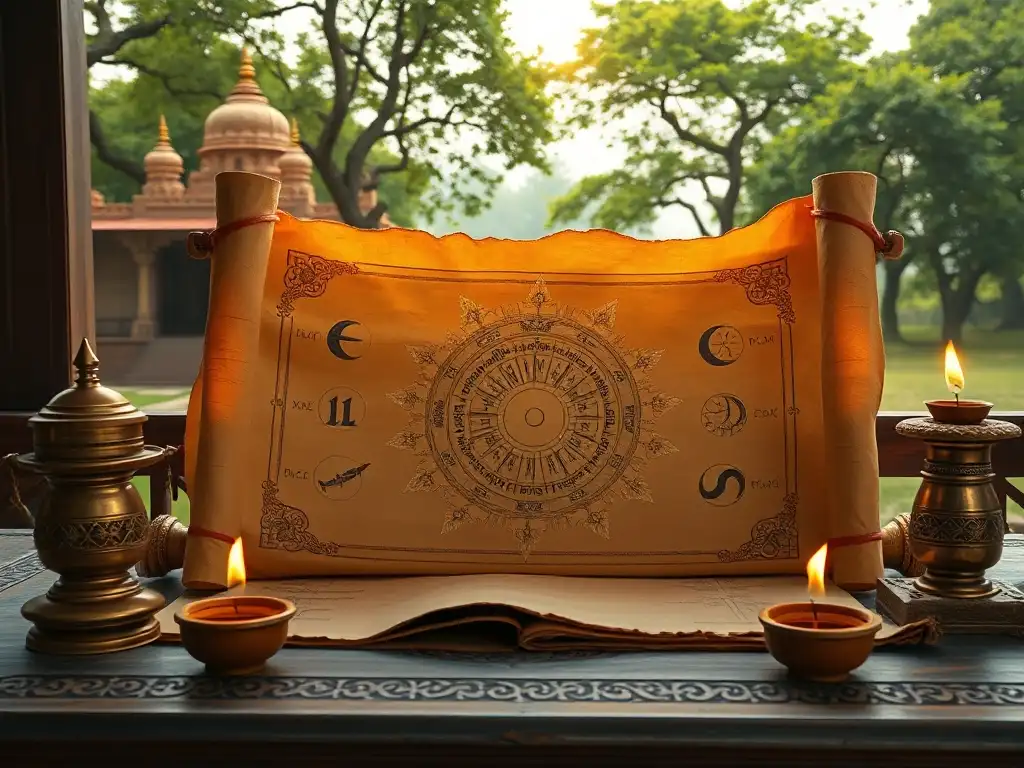
The ancient Indian calendar was not merely a tool for timekeeping; it held profound cultural significance that permeated various aspects of life in ancient Indian civilizations. The calendar dictated agricultural practices, religious observances, and social events, making it a cornerstone of societal organization.
Festivals and Agricultural Practices
The ancient Indian calendar was intrinsically linked to the agricultural cycle, with festivals and rituals often timed to coincide with seasonal changes. Important festivals such as Makar Sankranti, Pongal, and Holi were celebrated during specific times of the year, marking the changing seasons and harvest periods. These festivals not only signified agricultural transitions but also strengthened community bonds and cultural identity.
Farmers relied heavily on the calendar to determine the optimal times for sowing and harvesting crops. The timing of the monsoon, which was crucial for agriculture, was meticulously tracked using the calendar. This connection between the calendar and agricultural practices highlights the practical applications of ancient Indian mathematical knowledge in daily life.
Influence on Society and Religion
The ancient Indian calendar also played a significant role in shaping religious practices and societal norms. Many religious observances were scheduled according to the lunar calendar, with specific days deemed auspicious for rituals and ceremonies. The timing of important events, such as marriages and religious festivals, was often dictated by the calendar, emphasizing its importance in spiritual life.
Moreover, the calendar reflected the philosophical and cosmological beliefs of the time. Concepts such as cyclical time and the interplay between the cosmos and human existence were central to the understanding of the calendar. This integration of mathematics, astronomy, and spirituality in ancient Indian culture underscores the calendar’s role as a mathematical marvel, deeply embedded in the societal fabric.
The ancient Indian calendar exemplifies a sophisticated blend of mathematical precision and cultural significance, demonstrating the advanced understanding of timekeeping in ancient Indian civilizations. Its legacy continues to influence contemporary practices, reflecting the enduring impact of ancient Indian innovations in astronomy and mathematics.
Comparison with Other Ancient Calendars
The ancient Indian calendar is a fascinating study when compared to other ancient calendars from civilizations around the world. Each calendar reflects the astronomical knowledge, cultural practices, and societal needs of its time. Notably, the ancient Indian calendar utilized a lunisolar system, making it distinct from purely lunar or solar calendars.
- Lunisolar System: The ancient Indian calendar calculated months based on lunar cycles while aligning them with the solar year. This dual approach allowed for seasonal adjustments, ensuring agricultural activities were timed accurately.
- Egyptian Calendar: The Egyptian calendar, primarily solar, had a year consisting of 365 days divided into 12 months of 30 days each, with an additional 5 days added at the end. This structure focused on the annual flooding of the Nile, which was crucial for agriculture. In contrast, the Indian calendar’s lunisolar method provides a more complex system that accommodates both lunar phases and solar cycles.
- Mayan Calendar: The Mayan civilization developed a sophisticated calendar system with multiple cycles, including the Tzolk'in (260 days) and the Haab' (365 days). While the Mayan calendar emphasized ritualistic and agricultural cycles, the ancient Indian calendar incorporated a broader range of cultural and religious observances, reflecting a different societal structure.
Ancient Indian Calendar vs. Other Civilizations
When comparing the ancient Indian calendar to other civilizations, several key aspects stand out:
- Mathematical Precision: The ancient Indian calendar demonstrated advanced mathematical capabilities, including concepts of zero and the use of intricate algorithms to predict eclipses and other celestial phenomena. This mathematical sophistication was often unmatched in other ancient systems.
- Cultural Integration: Festivals and rituals in ancient India were intricately linked to the calendar, with significant events timed according to lunar months and solar seasons. This integration of spirituality and timekeeping is a notable element when contrasted with the calendars of other cultures, which sometimes lacked such deep cultural ties.
- Adaptability: The flexibility of the ancient Indian calendar allowed it to adapt to local variations in climate and agricultural practices. This adaptability set it apart from more rigid systems, such as the Roman calendar, which faced challenges in aligning with agricultural cycles.
Legacy of the Ancient Indian Calendar

The ancient Indian calendar's legacy is evident in various aspects of contemporary society, showcasing its enduring influence on timekeeping practices.
Influence on Modern Calendars
The ancient Indian calendar has significantly influenced modern calendars, particularly in South Asia. Elements such as:
- Hindu Calendar: The Vikram Samvat and Shaka Samvat are direct descendants of ancient Indian timekeeping systems, retaining the lunisolar framework. These calendars continue to be used for religious and cultural observances.
- Cultural Festivals: Many festivals, like Diwali and Holi, are still celebrated based on the ancient lunar calendar, emphasizing the lasting impact of ancient timekeeping on modern cultural practices.
- Global Awareness: The mathematical concepts and astronomical observations embedded in the ancient Indian calendar have contributed to the global understanding of timekeeping and astronomy, influencing various contemporary calendars.
Preservation of Ancient Knowledge
The knowledge encapsulated in the ancient Indian calendar has been preserved through various means:
- Historical Texts: Ancient texts such as the Surya Siddhanta and Aryabhata’s works document the principles and calculations of the ancient Indian calendar, ensuring that this knowledge has been passed down through generations.
- Cultural Practices: The ongoing observance of rituals and festivals based on the ancient calendar reflects a living tradition, preserving the historical significance of this timekeeping system in modern society.
- Scholarly Research: Contemporary scholars continue to study and analyze ancient Indian timekeeping methods, contributing to a broader understanding of historical astronomy and mathematics, thus keeping the legacy alive.
The ancient Indian calendar not only serves as a remarkable example of mathematical ingenuity but also continues to influence modern culture and practices, thus reaffirming its importance in the history of timekeeping.
Conclusion: The Importance of Ancient Indian Calendar History
The ancient Indian calendar is more than just a system of timekeeping; it represents a profound understanding of the cosmos and the mathematical principles derived from it. Its intricate calculations and methods for tracking celestial events highlight the sophistication of ancient Indian astronomy and mathematics.
The significance of the ancient Indian calendar history lies in its multifaceted impact on various aspects of life, including agriculture, festivals, and religious observances. By aligning agricultural activities with seasonal changes and astronomical events, ancient Indian societies could optimize farming practices, leading to more sustainable and productive livelihoods. The festivals, often based on lunar cycles, not only served as cultural touchstones but also unified communities under shared temporal milestones.
Furthermore, the calendar's mathematical foundations contributed to advancements in science and technology, influencing subsequent generations. Scholars and mathematicians from ancient India laid the groundwork for future innovations in both timekeeping and astronomy, which have resonated throughout global history.
In essence, the ancient Indian calendar is a testament to the ingenuity of its creators. Understanding its history not only enriches our knowledge of ancient Indian civilization but also illuminates the broader narrative of human progress in the fields of science, mathematics, and cultural development.
References
- Pingree, David. "Indian Astronomy: A Historical Review." Transactions of the American Philosophical Society, vol. 66, no. 6, 1976.
- Joseph, George Gheverghese. "The Crest of the Peacock: Non-European Roots of Mathematics." Princeton University Press, 1992.
- Sastri, K. V. Sarma. "The Indian Calendar: A Concise History." Journal of the Oriental Institute, vol. 57, no. 1-4, 2008.
- Sharma, R. C. "Mathematics in Ancient India." The Mathematical Gazette, vol. 88, no. 509, 2004.
- Varma, K. K. "Calendars and Timekeeping in Ancient India." Indian Journal of History of Science, vol. 54, no. 2, 2019.
- Introduction to Ancient Indian Calendar History
- Evolution of the Ancient Indian Calendar
- Mathematical Foundations of the Ancient Indian Calendar
- Cultural Significance of the Ancient Indian Calendar
- Comparison with Other Ancient Calendars
- Ancient Indian Calendar vs. Other Civilizations
- Legacy of the Ancient Indian Calendar
- Conclusion: The Importance of Ancient Indian Calendar History
- References
- What is the significance of the ancient Indian calendar?
- How did the ancient Indian calendar differ from modern calendars?
- What contributions did ancient Indian civilizations make to calendar systems?
- What are some examples of calendars used in ancient India?
- How does understanding the ancient Indian calendar history enhance our knowledge of Indian culture?
Frequently Asked Questions
What is the significance of the ancient Indian calendar?
The ancient Indian calendar played a crucial role in agriculture, religion, and daily life, helping communities track seasonal changes and important festivals.
How did the ancient Indian calendar differ from modern calendars?
Unlike modern calendars, the ancient Indian calendar was based on lunar and solar cycles, incorporating varying month lengths and intercalation to maintain accuracy over time.
What contributions did ancient Indian civilizations make to calendar systems?
Ancient Indian civilizations, particularly during the Gupta Empire, developed sophisticated astronomical calculations and mathematical formulas that influenced calendar systems across the world.
What are some examples of calendars used in ancient India?
Examples include the Vikram Samvat and Shaka Samvat, which were used for various purposes and reflect the cultural diversity of ancient Indian society.
How does understanding the ancient Indian calendar history enhance our knowledge of Indian culture?
Studying the ancient Indian calendar history allows us to appreciate the interconnectedness of timekeeping, astronomy, and cultural practices, revealing insights into the daily lives of ancient peoples.
Final Reflection: The Timeless Legacy of the Ancient Indian Calendar
The ancient Indian calendar stands as a testament to the brilliance of mathematical ingenuity and cultural richness that has shaped our understanding of timekeeping. In a world that often rushes forward, it is essential to recognize how these ancient systems not only organized daily life but also influenced agricultural practices, religious observances, and social structures. The intricate calculations and astronomical observations embedded in this calendar remind us that time is not merely a linear progression but a complex tapestry woven from the threads of human experience.
The impact of the ancient Indian calendar extends far beyond its historical context; it continues to resonate within our cultural and social landscapes today. As we navigate the complexities of modern life, the wisdom of these ancient practices can guide us in finding balance and harmony. The cyclical nature of the calendar encourages us to reflect on our own rhythms and the importance of aligning ourselves with the natural world. Time is a created thing. To say 'I don't have time,' is like saying, 'I don't want to.'
– Lao Tzu. This quote encapsulates the essence of how we perceive time and underscores the relevance of ancient timekeeping systems in our quest for meaning.
As we conclude this exploration of the ancient Indian calendar, I invite you to reflect on how the lessons of the past can inform your present and future. Consider how you can incorporate the wisdom of these timekeeping traditions into your own life—whether through mindfulness, appreciation of natural cycles, or a deeper understanding of your cultural heritage. Embrace the opportunity to honor the intricate relationship between time and life, and let it inspire you to cultivate a more intentional and connected existence.
Unveil the Secrets of Timekeeping!
Thank you for exploring the intricate beauty of the Ancient Indian Calendar with us. Your journey into this mathematical marvel has provided a glimpse into the rich history of Indian timekeeping and its significance. Now, it’s time to take the next steps in your exploration!
Here’s how you can dive deeper:
- Engage with the wonders of the ancient calendar by attempting to replicate its calculations in your own time management. Choose a day this week to plan your activities using lunar phases as your guide!
- Share your newfound insights with friends or family! Initiate a conversation about the differences between modern and ancient calendars and their influence on cultural practices today.
- Join our community! Subscribe to our newsletter for updates on more fascinating articles about Ancient India, and connect with fellow enthusiasts to discuss your passion for history!
What aspect of the Ancient Indian Calendar inspires you the most, and how will you incorporate its wisdom into your daily life?