
The Astronomical Significance of Ancient Indian Festivals

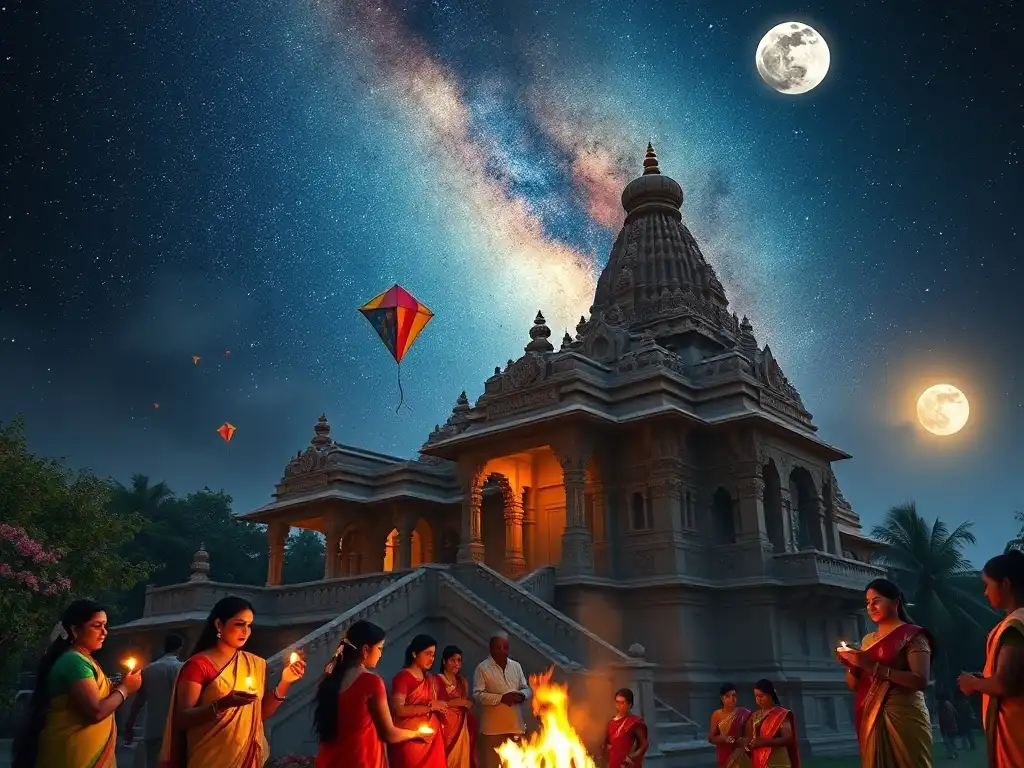
Welcome to Ancient India History, where we embark on a captivating journey through the rich tapestry of ancient Indian civilizations. In our featured article, “The Astronomical Significance of Ancient Indian Festivals,” we delve into how the stars and celestial events shaped the vibrant festivals that still echo through time. Discover the fascinating intersections of culture, science, and tradition as we uncover the astronomical wisdom embedded in these ancient celebrations. What secrets do they hold about our ancestors' understanding of the cosmos? Join us as we explore this intriguing dimension of history and inspire your curiosity about our shared past!
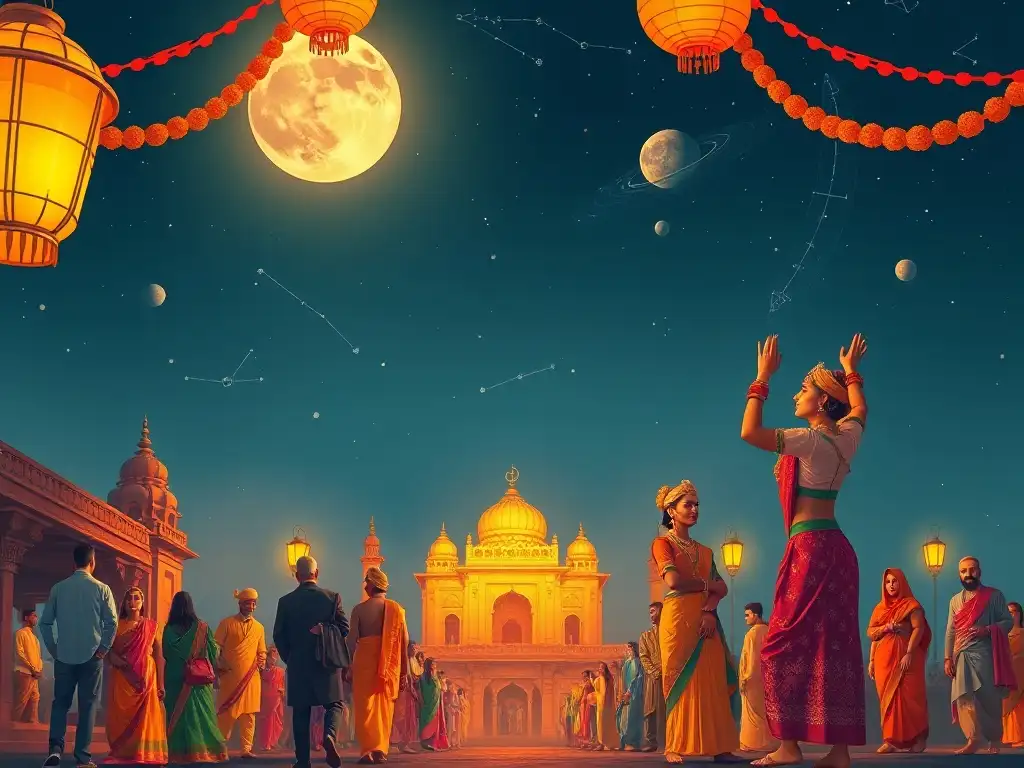
Introduction to Ancient Indian Festivals and Astronomy
Ancient Indian festivals are not only vibrant celebrations filled with rich traditions and cultural significance but also deeply intertwined with astronomical phenomena. These festivals, which have been observed for millennia, reflect the intricate relationship between celestial events and the agricultural, social, and spiritual lives of ancient Indian civilizations. By exploring the astronomical significance of these festivals, we can gain insights into how ancient Indians understood and celebrated the cosmos, showcasing their remarkable achievements in astronomy and mathematics.
Overview of Ancient Indian Festivals
Ancient Indian festivals encompass a wide range of observances, each with unique customs, rituals, and meanings. Some of the most prominent festivals include:
- Diwali: The Festival of Lights, symbolizing the victory of light over darkness.
- Makar Sankranti: Marking the transition of the sun into the zodiac sign of Capricorn.
- Holi: The Festival of Colors, celebrating the arrival of spring.
- Navaratri: A nine-night festival dedicated to the worship of the goddess Durga.
These festivals serve not only as social gatherings but also as a means to align human activities with the cosmic calendar, demonstrating how ancient cultures observed and celebrated celestial events.
Connection Between Festivals and Astronomy in Ancient India
The connection between ancient Indian festivals and astronomy is profound. Many festivals are timed according to specific celestial alignments, such as the phases of the moon, solstices, and equinoxes. This alignment reflects a sophisticated understanding of astronomical cycles, which were crucial for agricultural planning, navigation, and ritual practices.
For instance, agricultural festivals often coincide with harvest times, which are determined by solar and lunar cycles. Similarly, religious observances are frequently linked to astronomical events, emphasizing the belief that the cosmos plays a vital role in human affairs. This integration of astronomy with cultural practices is a testament to the advanced scientific knowledge possessed by ancient Indian civilizations.
Major Ancient Indian Festivals with Astronomical Significance
Diwali: The Festival of Lights and Celestial Events
Diwali, celebrated in October or November, marks the return of Lord Rama to Ayodhya after his victory over the demon king Ravana. This festival is also associated with the new moon, symbolizing the triumph of light over darkness. The alignment of Diwali with the lunar calendar underscores its astronomical significance, as it encourages reflection on the cycles of the moon and the changing seasons.
Makar Sankranti: Solar Transition and Agricultural Timing
Makar Sankranti, occurring in mid-January, celebrates the sun's transition into the zodiac sign of Capricorn. This festival signifies the end of winter and the onset of longer days, which is crucial for agricultural activities. Farmers in ancient India observed this solar event to determine the timing for sowing crops, showcasing their reliance on astronomical knowledge for sustenance.
Holi: The Festival of Colors and Seasonal Changes
Holi, celebrated in March, marks the arrival of spring and the end of winter. The timing of Holi is closely related to the full moon in the month of Phalguna, reflecting the seasonal changes that impact agricultural practices. The vibrant colors of the festival symbolize renewal and the fertility of the earth, further emphasizing the connection between human festivities and cosmic cycles.
Navaratri: Lunar Phases and Cosmic Symbolism
Navaratri is a nine-night festival dedicated to the goddess Durga, celebrated during the lunar month of Ashwin. The festival’s timing aligns with the lunar phases, particularly the waxing moon, symbolizing growth and prosperity. Each night of Navaratri represents different forms of the goddess, mirroring the cosmic rhythms and the cycles of life, death, and rebirth.
The astronomical significance of ancient Indian festivals reveals a profound understanding of the cosmos and its influence on daily life. These celebrations serve as a bridge between the celestial and terrestrial, illustrating how ancient Indians harmonized their cultural practices with the rhythms of nature.
The Role of Astronomy in Shaping Festival Dates
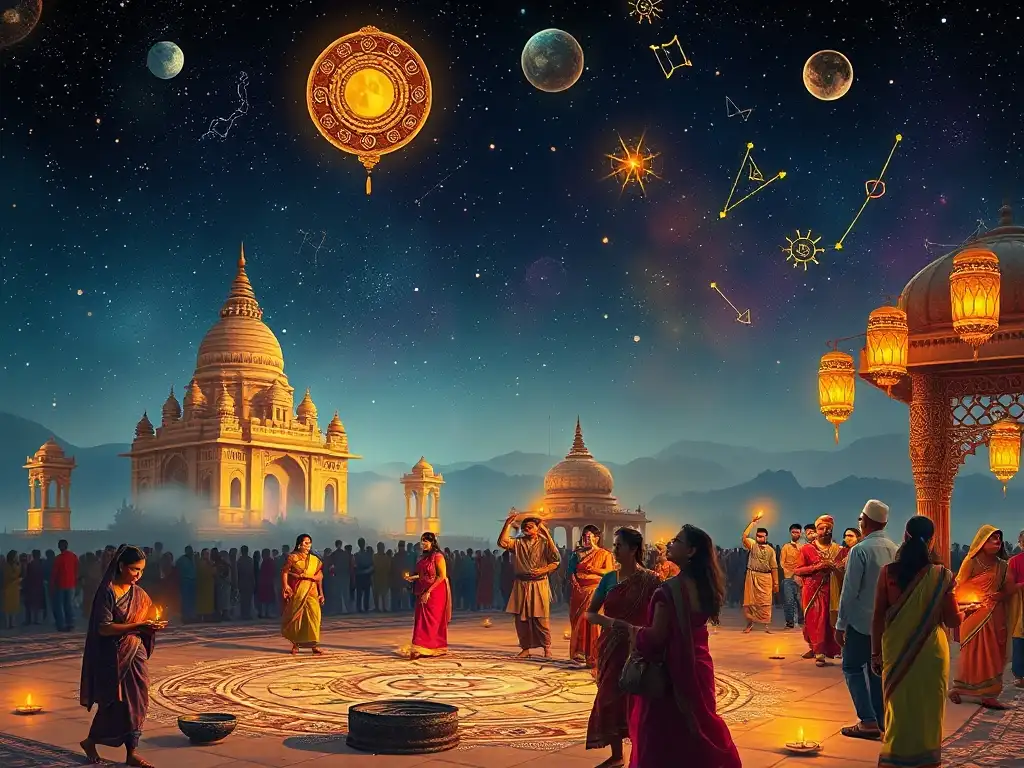
The intricate relationship between astronomy and ancient Indian festivals is a testament to the advanced understanding of celestial movements possessed by ancient civilizations. Festivals were not merely cultural or religious events; they were intricately linked to astronomical phenomena, which determined their timing and significance. The alignment of festivals with celestial events reflects a deep-rooted connection between the cosmos and the terrestrial world, illustrating the belief that the heavens had a direct influence on agricultural cycles, social order, and spiritual well-being.
The ancient Indian calendar systems were meticulously designed to observe the positions of celestial bodies, particularly the sun and moon. This careful observation allowed communities to celebrate festivals during auspicious times, ensuring that rituals aligned with the cosmic order. Such practices underscore the importance of astronomy in ancient Indian society, where celestial rhythms dictated various aspects of daily life, including agriculture, trade, and religious observances.
Lunar Calendars and Their Influence on Festival Timing
Lunar calendars played a pivotal role in shaping the timing of numerous ancient Indian festivals. Based on the lunar cycle, which averages about 29.5 days, these calendars divided the year into months corresponding to the phases of the moon. Festivals such as Diwali, Holi, and Navaratri are celebrated on specific lunar dates, which are believed to hold particular spiritual significance.
For instance, Diwali, the festival of lights, is celebrated on the new moon night of the Hindu month of Kartika. The choice of this date is symbolic, representing the victory of light over darkness. Similarly, Holi, the festival of colors, falls on the full moon day of Phalguna, celebrating the arrival of spring and the triumph of good over evil. The reliance on lunar calendars not only reflects the astronomical knowledge of ancient Indians but also their deep connection to nature and the cycles of life.
Solar Events and Their Importance in Festival Planning
In addition to lunar calendars, solar events also played a crucial role in festival planning. Ancient Indians observed the sun's movement across the sky, leading to the establishment of solar festivals that corresponded with solstices and equinoxes. These solar events marked significant transitions in the agricultural cycle, thus influencing the timing of festivals.
Makar Sankranti, celebrated in January, marks the sun's transition into the zodiac sign of Capricorn (Makar). This festival is significant as it heralds the end of winter and the beginning of longer days, symbolizing the arrival of prosperity and abundance. Similarly, the equinoxes were marked by festivals that celebrated balance and renewal, such as the harvest festivals observed in various regions. The integration of solar events into festival calendars highlights how astronomical phenomena were essential for agricultural communities in ancient India, guiding them through seasonal changes and ensuring successful harvests.
Myths and Realities: Understanding Astronomical Associations
The relationship between festivals and astronomy is often shrouded in myths and misunderstandings. While many festivals have genuine astronomical significance, some associations are based on folklore rather than historical facts. Understanding the realities behind these connections is crucial to appreciating the depth of ancient Indian astronomical practices.
Debunking Common Misconceptions About Festivals and Astronomy
One common misconception is that all festivals are solely based on religious beliefs, disregarding their astronomical underpinnings. While spirituality is indeed a significant aspect of these celebrations, the astronomical significance cannot be overlooked. For example, many people believe that festivals like Makar Sankranti are only about cultural festivities, failing to recognize the astronomical event of the sun's transition, which is the core reason for its celebration.
Additionally, some festival dates are misinterpreted due to regional variations in calendar systems. While the festival of Onam is celebrated in Kerala during the month of Chingam, it is often mistakenly associated with a specific lunar phase, rather than its true astronomical significance related to the harvest season. Clearing these misconceptions allows for a better understanding of the rich tapestry of ancient Indian festivals and their celestial connections.
Historical Context of Astronomical Events in Festival Narratives
The historical context of astronomical events in festival narratives provides insight into the sophisticated understanding of celestial phenomena possessed by ancient Indian scholars. Texts such as the Surya Siddhanta and various Puranas document astronomical observations and calculations, illustrating how these were woven into the fabric of religious narratives and festivals.
For instance, the celebration of Chhath Puja, dedicated to the Sun God, is rooted in ancient practices of solar worship. This festival not only highlights the importance of solar events but also reflects the agricultural significance of these celestial bodies in sustaining life. Furthermore, historical accounts reveal that ancient astronomers meticulously calculated eclipses and planetary alignments, which were then incorporated into festival narratives, thus enriching the cultural significance of these celestial events.
The astronomical significance of ancient Indian festivals is a multifaceted aspect that intertwines spirituality, culture, and scientific understanding. By exploring these connections, one gains a deeper appreciation for the wisdom of ancient Indian civilizations and their profound relationship with the cosmos.
The Impact of Ancient Indian Festivals on Scientific Thought
The ancient Indian festivals were not merely celebrations of culture and tradition; they were also pivotal in shaping scientific thought, particularly in the realm of astronomy. These festivals were deeply interwoven with the celestial events that governed the agricultural calendar, societal rhythms, and religious observances. By aligning their festivals with astronomical phenomena, ancient Indian civilizations encouraged a collective awareness and understanding of the cosmos, fostering a culture that emphasized observation and inquiry.
The festivals acted as a catalyst for the development of early astronomical knowledge. The meticulous observation of celestial bodies and their movements during these celebrations led to the establishment of various astronomical principles. For instance, the alignment of festivals with solstices and equinoxes contributed to an understanding of the solar year and the importance of accurate timekeeping, which was essential for agricultural planning and religious rituals.
Contributions to Early Astronomy Through Festivals
Ancient Indian festivals served as a practical framework for the study and practice of astronomy. Many festivals were timed to coincide with significant celestial events such as the full moon, new moon, and seasonal changes. This synchronization facilitated the tracking of lunar cycles, which were crucial for agricultural societies. Festivals like Diwali, which occurs on the new moon of the month of Kartika, and Makar Sankranti, which marks the transition of the sun into Capricorn, exemplify how cultural practices were rooted in astronomical observations.
The use of festivals as a means to communicate astronomical events also played a key role in disseminating knowledge. For example, the celebration of Chhath Puja involves rituals that pay homage to the sun god and acknowledge the sun's importance in the agricultural cycle. Such practices not only highlighted the significance of solar movements but also reinforced the collective understanding of astronomical concepts among the populace.
Influence on Later Astronomical Practices and Calendrical Systems
The insights gained from ancient festivals laid a foundation for later astronomical practices and the development of calendrical systems in India. The Vedic texts and subsequent astronomical treatises, such as the Aryabhatiya by Aryabhata, were heavily influenced by the astronomical observations made during these festivals. The incorporation of lunar and solar cycles into these texts reflected a sophisticated understanding of timekeeping and celestial mechanics.
Moreover, the festivals led to the establishment of complex calendars that integrated both lunar and solar years, facilitating agricultural planning, religious observances, and societal organization. The Hindu lunisolar calendar, which is still in use today, is a direct descendant of the astronomical traditions rooted in ancient festival practices. This melding of cultural and scientific knowledge underscores the profound impact of these festivals on the evolution of astronomy in ancient India.
Conclusion: The Legacy of Ancient Indian Festivals in Astronomy
The legacy of ancient Indian festivals is a testament to the profound connection between culture and science, particularly in the field of astronomy. These celebrations acted as a bridge, linking celestial phenomena with everyday life, thereby enhancing both communal and scientific understanding of the cosmos.
Summary of Key Astronomical Insights from Festivals
Key astronomical insights derived from ancient Indian festivals include the understanding of the solar year, the significance of lunar cycles, and the establishment of a lunisolar calendar system. Additionally, the incorporation of astronomical observations into cultural practices reflects a sophisticated approach to timekeeping and celestial navigation. These insights not only enriched the cultural fabric of ancient India but also contributed to the global body of astronomical knowledge.
The Continued Relevance of Ancient Indian Astronomy in Modern Celebrations
Today, the astronomical foundations laid by ancient Indian festivals continue to resonate in modern celebrations. Many contemporary festivals still adhere to the traditional lunisolar calendar, demonstrating the enduring relevance of these ancient practices. Furthermore, the principles of ancient Indian astronomy inspire ongoing discourse in the fields of science and culture, revealing how ancient knowledge can inform and enrich our understanding of the universe in the present day. As we celebrate these festivals, we not only honor our heritage but also acknowledge the scientific wisdom that has been passed down through generations.
- Introduction to Ancient Indian Festivals and Astronomy
- Overview of Ancient Indian Festivals
- Connection Between Festivals and Astronomy in Ancient India
- Major Ancient Indian Festivals with Astronomical Significance
- The Role of Astronomy in Shaping Festival Dates
- Myths and Realities: Understanding Astronomical Associations
- The Impact of Ancient Indian Festivals on Scientific Thought
- Conclusion: The Legacy of Ancient Indian Festivals in Astronomy
- What is the connection between ancient Indian festivals and astronomy?
- How did ancient Indians utilize astronomy in their festivals?
- Can you name some festivals that are linked to astronomical events?
- What role did ancient texts play in linking festivals and astronomy?
- How did ancient Indian civilizations influence modern astronomical practices?
Frequently Asked Questions
What is the connection between ancient Indian festivals and astronomy?
Ancient Indian festivals often align with celestial events and seasonal changes. This connection reflects the significance of astronomy in determining auspicious dates for celebrations.
How did ancient Indians utilize astronomy in their festivals?
Ancient Indians employed astronomical observations to create calendars that dictated the timing of festivals. This practice ensured that celebrations coincided with important astronomical phenomena, such as solstices and lunar cycles.
Can you name some festivals that are linked to astronomical events?
Notable festivals include Diwali, which celebrates the new moon, and Makar Sankranti, marking the sun's transition into Capricorn. Both festivals showcase the interrelationship between cultural practices and astronomy.
What role did ancient texts play in linking festivals and astronomy?
Ancient texts, like the Surya Siddhanta, provided guidelines for astronomical calculations and established the timing of festivals. These texts reflect the deep understanding of astronomy within ancient Indian culture.
How did ancient Indian civilizations influence modern astronomical practices?
Ancient Indian civilizations laid the groundwork for modern astronomy through their meticulous observations and calculations. Their contributions continue to influence contemporary practices, particularly in the context of festivals and calendars.
Final Reflection: Embracing the Cosmic Wisdom of Ancient Indian Festivals
The exploration of ancient Indian festivals reveals a profound connection between culture and astronomy that remains strikingly relevant today. As we navigate an increasingly fast-paced and technology-driven world, the wisdom embedded in these festivals serves as a reminder of our intrinsic link to the cosmos and the natural rhythms that govern our existence. The celestial alignments and astronomical significance of these celebrations not only enrich our cultural heritage but also invite us to pause and reflect on our place in the universe.
The influence of ancient Indian festivals extends far beyond their immediate cultural significance; they continue to shape our understanding of time, seasons, and celestial phenomena. These festivals encourage us to look up at the night sky and appreciate the wonders it holds, fostering a sense of unity and reverence for the cosmos. As the renowned astrophysicist Carl Sagan once said, "> The cosmos is within us.
We are made of star-stuff. We are a way for the universe to know itself." This profound observation underscores the importance of recognizing our connection to the universe, a theme that resonates deeply within the context of these ancient celebrations.
As you reflect on the astronomical significance of ancient Indian festivals, I invite you to consider how you can incorporate this cosmic awareness into your own life. Take a moment to observe the night sky, celebrate the cycles of nature, and honor the traditions that connect us to our ancestors. By embracing the lessons of the past, we can cultivate a deeper appreciation for the universe and our role within it, ultimately enriching our lives and fostering a sense of belonging in the grand tapestry of existence.
Embrace the Cosmic Connection of Ancient Festivals!
Thank you for taking the time to explore the fascinating link between ancient Indian festivals and astronomy! By understanding these celestial celebrations, you’ve gained a deeper appreciation for how our ancestors connected with the cosmos. Now, it's time to put that knowledge into action!
- Participate in a local festival or event that reflects the astronomical themes you discovered; immerse yourself in the rich traditions and customs associated with it.
- Share your newfound insights with friends or family—consider hosting a discussion night or creating a social media post to spread the joy of these celestial celebrations.
- Explore further by researching astronomical festivals from other cultures; you might uncover fascinating cosmic connections!
Is there a particular festival or celestial event that has sparked your curiosity? Join the conversation and share your thoughts below!