
The Philosophical Implications of Mathematics in Ancient Indian Thought

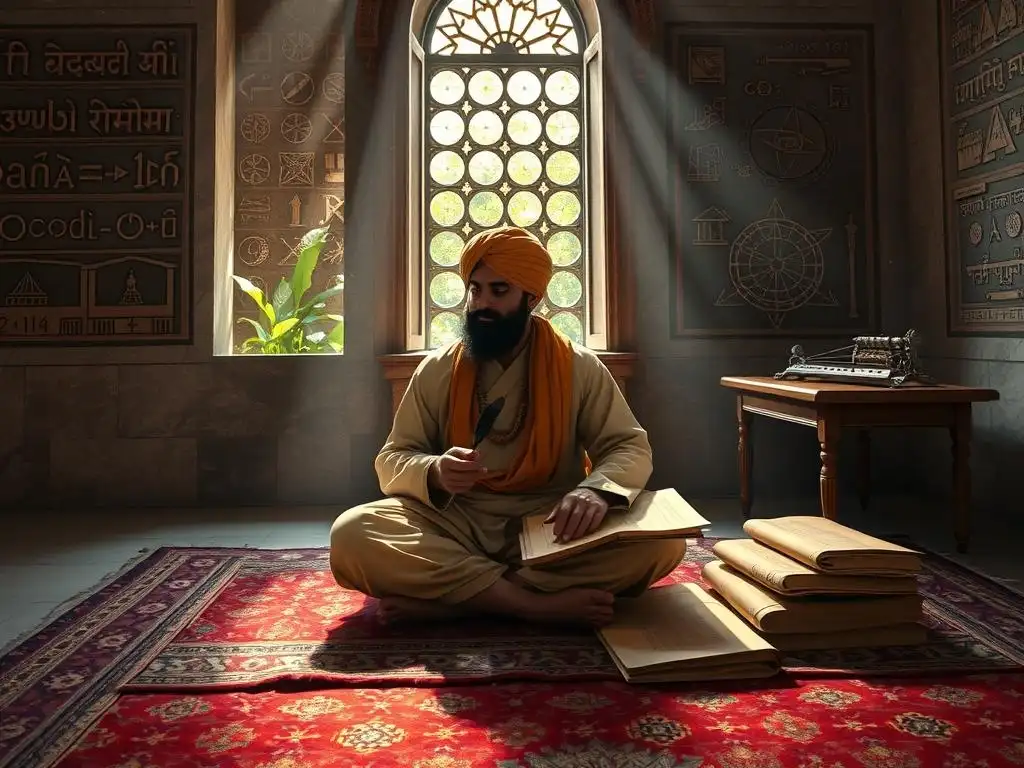
Welcome to Ancient India History, where we embark on a fascinating journey through the rich tapestry of civilizations that shaped the Indian subcontinent. Today, we delve into the profound realm of ancient Indian mathematics philosophy, exploring how these early thinkers harmonized numbers with the cosmos, ethics, and spirituality. Have you ever pondered the implications of mathematics beyond mere calculations?
In our featured article, "The Philosophical Implications of Mathematics in Ancient Indian Thought," we unravel the intricate connections between mathematical concepts and philosophical insights. Prepare to be captivated as we uncover the legacy that continues to influence modern thought. Dive in and discover the wisdom that lies within!
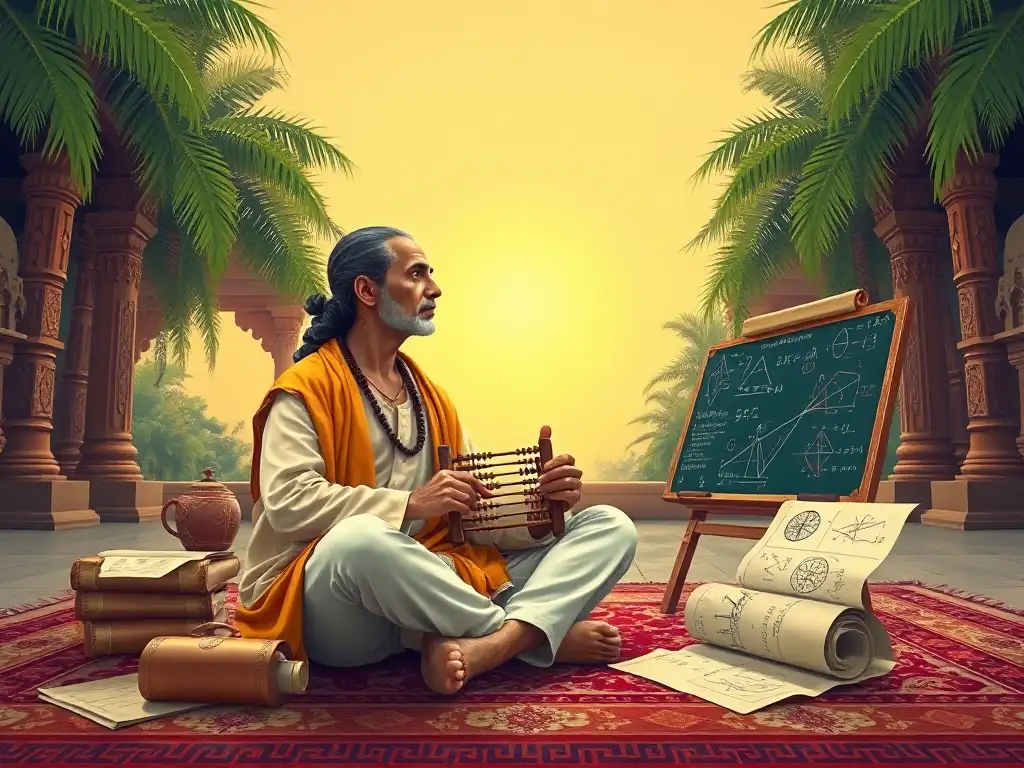
Ancient Indian mathematics philosophy represents a profound and intricate tapestry of thought that intricately weaves together numerical concepts, cosmic understanding, and philosophical inquiry. This article delves into the rich legacy of mathematical thought in ancient India, exploring how it transcended mere computation to embody deeper metaphysical ideas and insights into the nature of reality.
From the sophisticated calculations of the Indus Valley Civilization to the philosophical reflections of great minds during the Vedic and Gupta periods, the evolution of mathematics in ancient India offers a unique perspective on the interplay between numerical systems and philosophical discourse. By examining these historical contexts, we uncover not only the mathematical innovations that emerged but also the underlying philosophical implications that shaped ancient Indian culture and intellectual traditions.
Introduction to Ancient Indian Mathematics Philosophy
Overview of Mathematics in Ancient India
Ancient India boasts a vibrant mathematical heritage, characterized by significant developments in various fields such as arithmetic, geometry, and algebra. Scholars such as Aryabhata and Brahmagupta made groundbreaking contributions that not only advanced mathematical knowledge but also influenced the philosophical underpinnings of mathematics. Concepts like zero, the decimal system, and the concept of infinity are just a few of the remarkable achievements that highlight ancient Indian mathematicians' ingenuity.
- Key Contributions:
- Aryabhata: Introduced the concept of zero and calculated the value of pi.
- Brahmagupta: Developed rules for arithmetic operations involving zero and negative numbers.
- Bhaskara II: Known for his work in algebra and calculus concepts long before their formal introduction in the West.
The Significance of Philosophy in Mathematical Thought
The philosophical implications of mathematics in ancient India extend beyond the mere manipulation of numbers. Mathematics served as a medium through which scholars explored fundamental questions about existence, reality, and the universe. Ancient Indian thinkers perceived mathematics not only as a practical tool but also as a way to comprehend the cosmic order and the underlying principles of nature.
- Philosophical Themes:
- Numerical Symbolism: Numbers were seen as symbols representing cosmic principles.
- Interconnectedness: The belief that all aspects of life, including mathematics, were interconnected with the divine.
Historical Context of Mathematics in Ancient India
The Indus Valley Civilization and Early Mathematical Concepts
The roots of mathematical thought in ancient India can be traced back to the Indus Valley Civilization (circa 3300–1300 BCE), where early forms of measurement, geometry, and possibly even basic arithmetic were evident. Archaeological findings, such as weights and measures used in trade, suggest a sophisticated understanding of mathematics among the people of this civilization.
- Notable Findings:
- Standardized Weights: Indicate knowledge of measurement and trade practices.
- Geometric Patterns: Found in seals and urban planning, showcasing early geometric reasoning.
Contributions of the Vedic Period to Mathematical Philosophy
The Vedic period (circa 1500–500 BCE) marked a significant development in mathematical thought, where rituals and cosmology heavily influenced mathematical practices. The Sulbasutras, ancient texts associated with Vedic mathematics, provide insights into geometry and measurement used in constructing altars and other religious structures.
- Key Elements:
- Sacred Geometry: Mathematical principles were often applied to create sacred spaces, reflecting the importance of geometry in religious practices.
- Philosophical Texts: Included mathematical concepts alongside discussions of metaphysics and cosmology.
The Role of Mathematics in Ancient Indian Astronomy and Architecture
Mathematics played a crucial role in the advancements of astronomy and architecture in ancient India. Astronomers like Aryabhata utilized mathematical techniques to calculate celestial movements, while architects employed mathematical principles in constructing temples and other monumental structures.
- Influential Works:
- Aryabhata's Aryabhatiya: Merged astronomy with mathematics, detailing calculations for celestial events.
- Architectural Innovations: The use of geometric principles in temple designs showcases the integration of mathematics and art.
The philosophical implications of mathematics in ancient Indian thought reveal a rich interplay between numerical systems and deeper metaphysical inquiries, showcasing the profound contributions of ancient Indian civilizations to the global mathematical heritage.
Key Philosophical Concepts in Ancient Indian Mathematics
Ancient Indian mathematics is not merely a collection of numerical methods and computational techniques; it is deeply intertwined with philosophical concepts that shaped the understanding of the universe, reality, and knowledge itself. The mathematicians of ancient India approached mathematics with a worldview that considered numbers as more than just quantities. They viewed them as entities with philosophical significance, reflecting cosmic principles and the nature of existence.
One of the key philosophical concepts is the idea of mathematics as a reflection of cosmic order (Rita). This belief posited that mathematical truths mirrored the underlying structure of the cosmos, suggesting that understanding mathematics was akin to understanding the universe. Additionally, the interconnectedness of mathematics and spirituality was prevalent, where numbers were often used in rituals and religious practices, emphasizing their sacred nature.
Furthermore, ancient Indian mathematicians often employed logical reasoning and deductive methods that foreshadowed modern mathematical proofs. This logical framework laid the foundation for epistemology in Indian philosophy, where knowledge and truth were critically examined through rational discourse, even in the context of mathematics.
Number Systems and Their Philosophical Underpinnings
The number systems developed in ancient India, particularly the decimal system, carried significant philosophical implications. The use of positional notation not only made calculations more efficient but also reflected a deeper understanding of infinity and continuity. The concept of 'Shunya' (zero) was revolutionary, representing both a number and the absence of quantity, which led to profound philosophical inquiries about existence and nothingness.
Moreover, the ancient Indians recognized different types of numbers: natural numbers, whole numbers, rational numbers, and irrational numbers. This classification wasn't just numerical but also philosophical, as it encouraged discussions about the nature of reality, the finite versus the infinite, and the concept of completeness. The philosophical underpinnings of these number systems illustrated an intricate relationship between mathematics and metaphysical thought, emphasizing that numbers were not merely tools but representations of deeper truths.
The Concept of Infinity in Ancient Indian Thought
Infinity in ancient Indian philosophy presents a fascinating aspect of mathematical contemplation. Ancient Indian texts, such as the Siddhanta Shiromani by Bhaskara I, explored the concept of infinity not just as a mathematical idea but as a philosophical one. The term 'Ananta', meaning endless or eternal, was used to describe infinite processes and quantities, which led to discussions about the nature of time, space, and the universe.
This philosophical depth is evident in the way ancient mathematicians approached infinite series and limits, significantly predating similar developments in Western mathematics. The exploration of infinity also involved theological considerations, as it connected to discussions about the divine and the infinite nature of the cosmos. Thus, the concept of infinity in ancient Indian mathematics transcended numerical representation, intertwining with broader existential and cosmological themes.
Mathematical Operations and Their Metaphysical Implications
In ancient India, mathematical operations were often viewed through a metaphysical lens. The basic operations of addition, subtraction, multiplication, and division were not merely mechanical processes but were infused with philosophical significance. For instance, addition symbolized unity and integration, while subtraction represented division and separation, reflecting the dual nature of existence.
The operation of multiplication was considered a form of expansion, suggesting growth and potentiality, whereas division was seen as a form of diminution, indicative of limitation or constraint. These operations were often discussed in the context of Maya (illusion), where the manipulation of numbers could be perceived as a way to understand the illusory nature of reality itself. Thus, the philosophical implications of mathematical operations invited deeper reflection on the nature of existence and the human experience.
Prominent Mathematicians and Their Philosophical Contributions
The contributions of ancient Indian mathematicians go beyond numerical achievements and delve into profound philosophical inquiries. Their works often reflect a synthesis of mathematical rigor and philosophical exploration, providing valuable insights into ancient Indian thought.
Aryabhata: Bridging Mathematics and Philosophy
Aryabhata, one of the earliest and most influential mathematicians of ancient India, made significant contributions that bridged the gap between mathematics and philosophy. His seminal work, the Aryabhatiya, introduced concepts such as the place value system and the approximation of π, but it also included philosophical discussions on the nature of time and the cosmos.
Aryabhata viewed mathematics as a tool for understanding the universe, emphasizing the importance of astronomy in mathematics and its philosophical implications regarding the nature of reality and existence. His integration of mathematics with philosophical inquiry laid the groundwork for future generations of mathematicians and thinkers.
Brahmagupta and the Philosophical Foundations of Zero
Brahmagupta is best known for his work on zero and its mathematical significance, which transcended mere numerical representation and entered the realm of philosophical discourse. In his Brahmasphutasiddhanta, he articulated rules for arithmetic operations involving zero, presenting it not just as a placeholder but as a concept with profound philosophical implications. Brahmagupta’s reflections on zero led to questions about existence and non-existence, creating a rich dialogue surrounding the nature of reality. His ideas significantly influenced the understanding of mathematics as a philosophical discipline, where zero became a symbol of the void and the infinite.
Bhaskara II: Mathematics as a Philosophical Discipline
Bhaskara II, also known as Bhaskara the Great, further developed the philosophical dimensions of mathematics in his works, particularly the Lilavati and Bijaganita. He emphasized that mathematics was not merely an abstract pursuit but a means to reflect upon the world and its phenomena.
His exploration of algebra and calculus included philosophical musings on the nature of truth and proof, advocating for a mathematical approach that was rigorous yet reflective. Bhaskara II’s contributions highlighted the idea that mathematics serves as a gateway to deeper understanding, bridging empirical observation with philosophical inquiry, thus reinforcing the notion of mathematics as a vital component of ancient Indian philosophy.
The Interconnection Between Mathematics and Other Philosophical Schools

Ancient Indian mathematics was not merely a collection of numerical techniques and calculations; it was deeply intertwined with various philosophical schools that shaped its development and application. The integration of mathematical thought with philosophy is evident in the works of significant thinkers who influenced and were influenced by the prevailing philosophical paradigms. This interplay enriched the understanding of mathematical concepts, making them not just tools for computation but pathways to explore deeper metaphysical questions.
The philosophical schools of Jainism, Buddhism, and Hinduism each contributed distinct perspectives on the nature of reality, knowledge, and logic, which in turn informed and shaped mathematical thought. For instance, the Jain emphasis on non-absolutism (anekantavada) encouraged a multi-faceted approach to understanding mathematical truths, while Buddhist logic emphasized rigorous reasoning and the analysis of propositions. These philosophical frameworks provided a rich backdrop against which mathematicians could explore abstract concepts, thus creating a unique mathematical tradition that was both practical and deeply philosophical.
Jainism and Its Influence on Mathematical Thought
Jain philosophy, with its foundational principles of non-violence and multiplicity of viewpoints, significantly influenced ancient Indian mathematics. The concept of anekantavada, or the doctrine of non-absolutism, posits that truth can be perceived from multiple perspectives. This idea resonated with the mathematical practice of considering various approaches to problem-solving and the acknowledgment of different methods yielding valid results.
One notable figure in this context is Bhadrabahu, a Jain mathematician whose works reflect a blend of mathematical rigor and philosophical inquiry. Jain texts often included discussions on the infinite, particularly in the context of space and time, which can be seen as precursors to concepts in calculus and set theory. Additionally, Jain scholars contributed to the development of combinatorics and number theory, emphasizing the importance of counting and classification as metaphysical exercises.
The Buddhist Perspective on Mathematics and Logic
Buddhism introduced a unique lens through which mathematical concepts were examined, particularly through its focus on logic and epistemology. The Buddhist scholar Nagarjuna, for instance, emphasized the importance of logical reasoning as a means to attain enlightenment. This emphasis on logical analysis extended to mathematical reasoning, where the validity of mathematical proofs became a subject of philosophical inquiry.
Buddhist texts often employed mathematical metaphors to illustrate complex philosophical ideas, such as the concept of emptiness (śūnyatā) and the interdependence of phenomena. This philosophical backdrop encouraged a rigorous approach to understanding mathematical truths, leading to the development of precise methods of proof and the exploration of paradoxes. The integration of logic and mathematics in Buddhist thought laid the groundwork for later developments in both fields, influencing scholars across centuries.
The Influence of Hindu Philosophy on Mathematical Concepts
Hindu philosophy, particularly through its texts like the Vedas and Upanishads, contributed significantly to the development of mathematical thought in ancient India. Concepts such as the cyclical nature of time and the idea of the infinite were prevalent in Hindu cosmology and had direct implications for mathematical exploration. The notion of time as an endless cycle influenced the understanding of infinity, which is crucial for various mathematical constructs.
Moreover, the work of mathematicians like Aryabhata and Brahmagupta was deeply rooted in Hindu philosophical concepts. Aryabhata's introduction of the place value system and the concept of zero can be seen as a reflection of the philosophical quest for understanding the nature of nothingness and existence. The philosophical inquiry into the nature of reality and the pursuit of knowledge in Hindu thought fostered an environment where mathematics could flourish not only as a practical discipline but also as a means to explore profound existential questions.
Modern Interpretations of Ancient Indian Mathematics Philosophy
The philosophical implications of ancient Indian mathematics have garnered renewed interest in contemporary discourse, with scholars revisiting the works of ancient mathematicians through modern lenses. This exploration often highlights the relevance of ancient mathematical philosophies in today's educational and philosophical frameworks.
Modern interpretations recognize that the blending of mathematics with philosophical inquiry offers a holistic approach to understanding both fields. For instance, the emphasis on logical reasoning and rigor in ancient Indian mathematics is mirrored in contemporary mathematical practices, suggesting that the philosophical underpinnings of ancient thought continue to influence modern mathematical discourse.
Relevance of Ancient Indian Mathematical Philosophy Today
The relevance of ancient Indian mathematical philosophy today can be seen in various fields, including computer science, engineering, and cognitive science. The ancient emphasis on logic and reasoning has implications for algorithmic thinking and computational theory. Furthermore, the understanding of infinity and continuity found in ancient texts resonates with modern mathematical concepts in calculus and topology.
In education, the philosophical approaches of ancient Indian mathematicians can inform teaching methodologies that emphasize critical thinking and problem-solving. By integrating philosophical inquiry with mathematical education, educators can foster a more comprehensive understanding of mathematics that transcends rote memorization and encourages deeper exploration of concepts.
Comparative Analysis: Ancient Indian Mathematics and Western Philosophy
A comparative analysis of ancient Indian mathematics and Western philosophy reveals both similarities and distinctions in their approaches to mathematical thought. While Western philosophy, particularly during the time of Euclid and later with Descartes, emphasized a more rigid, axiomatic approach to mathematics, ancient Indian thought was characterized by a more fluid integration of philosophy and mathematics.
For instance, the Indian tradition often viewed mathematics as a means of exploring metaphysical questions, while Western thought initially focused more on mathematics as a tool for practical applications in science and engineering. This divergence highlights the richness of both traditions and underscores the potential for cross-pollination of ideas. Modern scholars are increasingly recognizing the value of incorporating insights from ancient Indian philosophy into contemporary mathematical discourse, fostering a more inclusive understanding of mathematics as a global intellectual endeavor.
The Legacy of Ancient Indian Mathematics in Contemporary Thought
The legacy of ancient Indian mathematics is evident in numerous aspects of contemporary thought, particularly in the fields of science, technology, and philosophy. The foundational ideas introduced by ancient Indian mathematicians, such as the concept of zero and the decimal system, have had a profound impact on global mathematics and its applications.
Furthermore, the philosophical inquiries that accompanied mathematical developments continue to influence discussions in epistemology and metaphysics. As modern scholars engage with ancient texts, they uncover insights that not only enhance our understanding of mathematics but also contribute to broader philosophical discussions about knowledge, reality, and existence.
The philosophical implications of mathematics in ancient Indian thought reveal a rich tapestry of interconnections between mathematical practice and philosophical inquiry. The contributions of Jainism, Buddhism, and Hinduism have left an indelible mark on the evolution of mathematics, fostering a tradition that continues to resonate in contemporary thought.
Conclusion: The Enduring Impact of Ancient Indian Mathematics Philosophy
The philosophical implications of mathematics in ancient Indian thought reveal a rich tapestry of intellectual inquiry that extends beyond mere calculation and numerical theory. The interplay between mathematics and philosophy in ancient India has laid the groundwork for various fields, including astronomy, architecture, and even metaphysics.
The concepts developed by ancient Indian mathematicians, such as zero as a number and the decimal system, not only revolutionized mathematics but also influenced philosophical discourse on the nature of reality, time, and space. The legacy of these ideas continues to resonate in modern mathematics and philosophy, demonstrating how ancient Indian mathematics philosophy has shaped contemporary thought.
Summary of Key Philosophical Insights
Several key philosophical insights emerge from the study of ancient Indian mathematics:
- Integrative Approach: Ancient Indian mathematicians often viewed mathematics as interconnected with philosophy, spirituality, and metaphysics. For example, the work of Brahmagupta and Bhaskara II illustrates how mathematical concepts were embedded within broader philosophical frameworks.
- Concept of Infinity: The understanding of infinity in ancient Indian mathematics prompted philosophical discussions on the nature of the universe and the divine. This concept was not merely abstract but was also tied to cosmological views prevalent in texts such as the Aryabhatiya.
- Numerical Symbolism: Numbers were often assigned symbolic meanings, which influenced philosophical thought about existence and knowledge. The digit zero, for instance, became a symbol of emptiness and potential, leading to rich metaphysical interpretations.
- Epistemology: Ancient Indian mathematicians contributed to epistemological discussions regarding the sources and limits of knowledge. Their work encouraged an exploration of how mathematical truths are perceived and validated within a philosophical context.
Future Directions for Research in Ancient Indian Mathematics
Future research in the field of ancient Indian mathematics philosophy can explore several promising directions:
- Interdisciplinary Studies: Incorporating insights from history, philosophy, and mathematics can provide a more holistic understanding of ancient Indian mathematical thought. Collaborative research that bridges these disciplines may uncover new interpretations and applications of ancient texts.
- Comparative Analysis: Studying the similarities and differences between ancient Indian mathematics and those from other civilizations, like Greek or Chinese mathematics, can shed light on the unique contributions of Indian thought to global mathematical practices.
- Digital Humanities: Utilizing digital tools to analyze ancient texts can facilitate the preservation and interpretation of mathematical manuscripts, allowing for deeper engagement with the philosophical implications embedded within them.
- Cultural Context: Further examination of the cultural and religious contexts in which ancient Indian mathematics developed can enhance our understanding of its philosophical dimensions. Investigating how societal values influenced mathematical thought could reveal new insights.
References
- Joseph, George Gheverghese. The Crest of the Peacock: Non-European Roots of Mathematics. Princeton University Press, 2010.
- Seetharam, B. R. "Philosophy of Mathematics in Ancient Indian Thought." International Journal of Mathematics and Mathematical Sciences 2012, Article ID 832913.
- Ramesh, B. "Mathematics and Philosophy in Ancient India." Journal of Indian Philosophy, vol. 41, no. 1, 2013, pp. 1-16.
Recommended Reading on Ancient Indian Mathematics and Philosophy
- The History of Mathematics: A Brief Course by Roger L. Cooke
- Mathematics in India by Kim Plofker
- The Philosophy of Mathematics: An Introduction by James Robert Brown
Notable Scholars in the Field of Ancient Indian Mathematics Philosophy
- B. R. Ambedkar: A prominent scholar who explored the philosophical implications of mathematics within the context of social justice.
- A. K. Ramanujan: Recognized for his contributions to the study of ancient Indian mathematics and its philosophical underpinnings.
- Kim Plofker: A leading academic whose work focuses on the history of mathematics in India, providing insights into its philosophical dimensions.
By delving into these areas, scholars can continue to illuminate the profound impact of ancient Indian mathematics philosophy on both historical and contemporary thought.
- Introduction to Ancient Indian Mathematics Philosophy
- Historical Context of Mathematics in Ancient India
- Key Philosophical Concepts in Ancient Indian Mathematics
- Prominent Mathematicians and Their Philosophical Contributions
- The Interconnection Between Mathematics and Other Philosophical Schools
- Modern Interpretations of Ancient Indian Mathematics Philosophy
- Conclusion: The Enduring Impact of Ancient Indian Mathematics Philosophy
- References
- What is the significance of mathematics in ancient Indian philosophy?
- How did ancient Indian mathematicians contribute to the field?
- What role did geometry play in ancient Indian architecture?
- How does ancient Indian mathematics reflect its cultural values?
- Can you provide examples of mathematical texts from ancient India?
Frequently Asked Questions
What is the significance of mathematics in ancient Indian philosophy?
Ancient Indian philosophy placed a high value on mathematics as a means to understand the universe. It was seen as a tool for spiritual enlightenment and cosmic order.
How did ancient Indian mathematicians contribute to the field?
Ancient Indian mathematicians, such as Aryabhata and Brahmagupta, made significant contributions, including the invention of zero and advancements in algebra and geometry that influenced both Eastern and Western thought.
What role did geometry play in ancient Indian architecture?
Geometry was crucial in ancient Indian architecture, particularly in the construction of temples and public buildings, reflecting a deep understanding of aesthetic principles and mathematical precision.
How does ancient Indian mathematics reflect its cultural values?
Ancient Indian mathematics often intertwines with religious and philosophical beliefs, showcasing how mathematical concepts were used to explore the nature of reality and cosmic principles.
Can you provide examples of mathematical texts from ancient India?
Key texts include the Sulbasutras, which discuss geometric principles for altar construction, and Aryabhatiya, which covers arithmetic, algebra, and astronomy, highlighting the integration of mathematics and philosophy.
Final Reflection: The Enduring Legacy of Ancient Indian Mathematics Philosophy
The exploration of ancient Indian mathematics philosophy reveals a profound connection between numerical concepts and the broader philosophical inquiries of existence, knowledge, and reality. In today’s world, where mathematical principles underpin technology and science, understanding these ancient perspectives offers invaluable insights into how we perceive and engage with the universe. The intricate relationship between mathematics and philosophy in ancient Indian thought challenges us to reconsider the foundations of our modern understanding and encourages a deeper appreciation for the wisdom of the past.
The influence of ancient Indian mathematics philosophy resonates through time, shaping not only mathematical practices but also cultural and spiritual frameworks. As we navigate a world increasingly driven by data and algorithms, the philosophical underpinnings of these ancient teachings remind us that mathematics is not merely a tool but a lens through which we can explore the nature of reality. Mathematics is the language in which God has written the universe.
This quote encapsulates the essence of how ancient Indian thinkers viewed mathematics—not just as a discipline, but as a means to understand the divine and the cosmos.
As we reflect on the lessons of ancient Indian mathematics philosophy, let us embrace the invitation to integrate these timeless insights into our own lives. Consider how the principles of balance, harmony, and interconnectedness found in these teachings can inform your approach to challenges and decision-making. By doing so, we not only honor the legacy of ancient thinkers but also cultivate a richer, more meaningful engagement with the world around us.
Unveil the Secrets of Ancient Indian Mathematics!
Thank you for exploring the fascinating interplay between mathematics and philosophy in ancient Indian thought. Your journey through this unique perspective has hopefully sparked your curiosity and deepened your understanding of this profound subject. Now, it’s time to take the next step!
Here are a few ways you can further engage with this captivating topic:
- Dive deeper: Investigate the contributions of notable mathematicians in ancient India, such as Aryabhata and Brahmagupta, to understand how their groundbreaking ideas have influenced modern mathematics.
- Join a discussion: Share your insights on social media or in forums dedicated to ancient philosophies and mathematics—connect with others who share your interest!
- Experiment: Challenge yourself by solving a historical mathematical problem or creating a model using ancient Indian techniques; you may uncover new insights into familiar concepts.
What aspect of ancient Indian mathematical philosophy do you find most intriguing, and how might it enhance your understanding of mathematics today?