
The Role of Zero in Ancient Indian Rituals and Its Mathematical Significance


Welcome to Ancient India History, where we embark on an enthralling journey through the rich tapestry of India's past. Today, we delve into the fascinating topic of Zero in Ancient Indian Rituals, uncovering how this seemingly simple concept revolutionized mathematics and shaped spiritual practices. What role did zero play in the rituals of ancient civilizations, and how did it lay the foundation for modern mathematical thought?
Join us as we explore these compelling questions and more, inviting you to unearth the profound contributions of ancient Indian scholars and their lasting impact on the world. Your adventure into the depths of history begins now!
Introduction to Zero in Ancient Indian Culture
The concept of zero is not merely a mathematical symbol; it embodies a profound philosophical and cultural significance that resonates through the history of ancient India. Zero, represented as a dot or a small circle, emerged in the ancient Indian subcontinent and has played a pivotal role in various aspects of life, including rituals, philosophy, and mathematics. This innovative idea transcended mere numerical representation and became a cornerstone in the evolution of mathematical thought.
In ancient Indian rituals, zero was not just a placeholder but symbolized the void, the beginning of creation, and the infinite possibilities that lay within emptiness. The philosophical implications of zero can be traced back to Hindu texts, where it is often linked to concepts of nothingness and the universe's cyclical nature. This unique perspective on zero set the stage for its adoption in mathematical systems, influencing not just Indian civilization but also the world.
Understanding the Concept of Zero in Ancient Indian Mathematics
The mathematical significance of zero in ancient India extends beyond its role as a numeral. It is often credited as one of the most transformative inventions in mathematics, facilitating complex calculations and paving the way for advanced mathematical concepts. The earliest known use of zero can be traced back to the Bakhshali Manuscript, dated to the 3rd or 4th century CE, which illustrates its application in arithmetic operations.
In the context of ancient Indian mathematics, zero served several important purposes:
- Placeholder in Positional Notation: Zero allowed for a more efficient method of representing numbers, making calculations significantly simpler. For example, the number 205 becomes clearer and easier to interpret with the presence of zero.
- Facilitating Calculations: The ability to perform arithmetic operations with zero enabled mathematicians to solve equations and perform calculations that were previously cumbersome or impossible.
- Philosophical Reflection: Zero also represented philosophical ideas of absence and existence, reflecting the duality present in many aspects of Indian thought. This duality can be seen in the interplay between creation and destruction, presence and absence.
The profound impact of zero on rituals and mathematics in ancient India not only highlights the ingenuity of Indian scholars but also emphasizes the cultural and philosophical richness of the civilization. As we delve deeper into the rituals incorporating zero and its mathematical significance, we uncover the intricate tapestry that defines ancient Indian thought and its lasting legacy on modern mathematics.
- Introduction to Zero in Ancient Indian Culture
- Understanding the Concept of Zero in Ancient Indian Mathematics
- What is the significance of zero in ancient Indian rituals?
- How did ancient Indian civilizations contribute to the concept of zero?
- In what ways did zero influence other cultures?
- Can you explain the connection between zero and spirituality in ancient India?
- What was the impact of the Gupta Empire on the concept of zero?
Historical Context of Zero in Ancient Indian Rituals

The Emergence of Zero in Ancient Indian Civilization
The concept of zero, though often perceived merely as a numerical placeholder, holds profound significance in ancient Indian civilization, not just mathematically but also ritually. The earliest evidence of zero as a symbol can be traced back to the 5th century CE in the inscriptions of the mathematician Aryabhata, but its conceptual roots can be seen much earlier.
The Bakhshali Manuscript, dating back to the 3rd or 4th century CE, provides one of the earliest known uses of a dot to represent zero. This manuscript, which is a mathematical treatise, demonstrates that ancient Indian scholars not only recognized the importance of zero in calculations but also integrated it into their broader philosophical and spiritual frameworks.
In many ancient Indian texts, particularly in the context of Vedic literature, the concept of nothingness or void (Shunya) was pivotal. This philosophical understanding of zero as a representation of the void paralleled its emerging use in mathematics. The interplay between these realms underscores the cultural significance of zero in ancient Indian rituals, where it transcended mere arithmetic.
Rituals and Practices Incorporating Zero
The incorporation of zero in ancient Indian rituals is multifaceted, reflecting both ceremonial and mathematical dimensions. One notable aspect is its connection to sacred geometry. The design of mandalas, which are intricate geometric patterns used in Hindu and Buddhist rituals, often incorporates the concept of zero as a point of origin or center. This use of zero symbolizes the beginning of creation and the universe, aligning with the philosophical idea that from nothingness (zero), all existence emerges.
- Examples of Rituals:
- Yajnas (sacrificial rituals): In Vedic rituals, numerical precision is critical. The rituals often involved calculations for offerings, and the inclusion of zero allowed priests to convey complex numerical relationships. For instance, the number of offerings might be presented as multiples of zero, emphasizing the infinite nature of divine blessings.
- Astrological Practices: The integration of zero in astrology helped in calculating auspicious times (muhurta) for conducting rituals. The accurate positioning of celestial bodies often required complex calculations, where zero played a vital role in ensuring precision.
The understanding of zero's significance in these practices highlights its dual role as both a mathematical tool and a spiritual symbol. The incorporation of zero into rituals not only reflects an advanced mathematical understanding but also a deep philosophical insight into the nature of existence and the cosmos.
Zero in ancient Indian rituals serves as a bridge between mathematics and spirituality, showcasing how numerical concepts can embody profound cultural meanings. The rich tapestry of rituals and practices that incorporate zero illustrates its centrality to both the mathematical advancements and the vibrant spiritual life of ancient India.
The Mathematical Significance of Zero

Zero holds a profound significance in mathematics, especially within the context of ancient Indian civilizations. Its conceptualization not only revolutionized numerical systems but also facilitated advanced computational methods that were critical to various fields such as astronomy, commerce, and architecture. The emergence of zero in ancient Indian mathematics marked a pivotal moment, enabling complex calculations that were previously unimaginable.
Zero as a Placeholder in the Indian Number System
The Indian numeral system, which evolved around the 5th century CE, introduced zero as a critical placeholder, transforming the way numbers were represented and manipulated. In this system, zero (represented by the symbol "0") serves to indicate the absence of a quantity, allowing for a clear distinction between numbers such as 10 and 100. The use of zero as a placeholder is foundational in positional numeral systems, where the value of a digit is determined by its position relative to zero.
Key Aspects of Zero as a Placeholder:
- Positional Value: In the Indian numeral system, the position of a digit determines its value, making zero essential for clarity. For instance, in the number 205, the zero signifies that there are no tens, thereby distinguishing it from 25.
- Facilitation of Large Numbers: The ability to denote large numbers becomes feasible through the use of zero. For example, numbers like 1,000 or 10,000 leverage zero to convey magnitude effectively.
- Simplification of Arithmetic: Zero allows for simpler arithmetic operations, facilitating addition and subtraction without ambiguity. For instance, subtracting a number from itself results in zero, which is straightforward due to the placeholder's role.
The conceptual innovation of zero as a placeholder was not merely a mathematical advancement; it also played an essential role in the administrative and trade practices of ancient India, allowing for accurate record-keeping and transaction calculations.
The Role of Zero in Calculations and Astronomy
Beyond its function as a placeholder, zero's role in calculations and astronomy exemplifies its mathematical significance in ancient Indian culture. The utilization of zero enabled mathematicians and astronomers to perform complex calculations with unprecedented accuracy.
Influence in Calculations:
- Algebraic Expressions: Ancient Indian mathematicians, such as Brahmagupta, utilized zero in algebraic equations, laying the groundwork for future mathematical theories. Brahmagupta's rules for arithmetic involving zero included operations like addition, subtraction, multiplication, and division, which were groundbreaking for their time.
- Complex Problem Solving: Zero allowed for the formulation of sophisticated mathematical problems and solutions. Mathematical texts from this era demonstrate the use of zero in solving quadratic equations and other higher-order problems.
Contribution to Astronomy:
- Astronomical Calculations: The use of zero was crucial in astronomical calculations, where precision is paramount. Indian astronomers like Aryabhata employed zero in their calculations of planetary positions and eclipses, showcasing its importance in understanding celestial phenomena.
- Calendar Systems: Zero also played a significant role in the development of calendar systems, allowing for accurate tracking of time and seasonal changes, which were vital for agricultural practices.
The role of zero in ancient Indian rituals and its mathematical significance extends far beyond mere numerical representation. Its introduction as a placeholder transformed numerical systems and enabled advanced calculations that had lasting impacts on mathematics and astronomy. The legacy of zero, rooted in ancient Indian tradition, continues to influence modern mathematics, underscoring its monumental importance in the evolution of numerical thought.
Symbolism of Zero in Rituals

The concept of zero, though often regarded as a mere placeholder in mathematics, carried profound symbolic meaning in ancient Indian rituals. In the context of spiritual practices and philosophical beliefs, zero represented the idea of "shunyata," or emptiness, which is central to many Indian religious traditions. This emptiness is not merely a void but an essential state of potential and creation, wherein everything arises and returns.
Zero embodies the idea of the infinite and the cyclical nature of existence, aligning with the Indian worldview that emphasizes the eternal cycles of life, death, and rebirth. In rituals, the use of zero symbolically signifies the space needed for creation and the divine. It is this duality of absence and presence that offers a deeper understanding of existence—everything emerges from nothingness and ultimately returns to it.
Zero and Its Spiritual Significance in Hindu Rituals
In Hindu rituals, zero transcends its mathematical application and becomes a crucial aspect of spiritual symbolism. Rituals often incorporate specific numbers that are believed to have divine significance, with zero playing a vital role in representing the infinite nature of the universe and the divine.
- Sacred Geometry: Many Hindu rituals utilize geometric shapes and patterns that include zero as a foundational element. For example, the mandala, a spiritual symbol representing the universe, often begins with a central point (representing the divine) and expands outward, creating a visual representation of the cosmos where zero symbolizes the origin of all creation.
- Numerology: In Hindu numerology, the number zero is associated with the ultimate reality or Brahman. It signifies the source from which all numbers and forms emerge. In prayers and mantras, the invocation of zero reflects a connection to the divine essence, emphasizing the importance of acknowledging both existence and non-existence in spiritual practice.
- Meditative Practices: The concept of zero is also fundamental in meditation and yoga. The practice of achieving a state of "shunyata" or emptiness in meditation is crucial for attaining higher consciousness. This state is often described as a profound connection to the universe, where the individual self merges with the cosmic whole.
In these ways, zero's spiritual significance in Hindu rituals extends beyond its mathematical implications, inviting practitioners to contemplate the deeper existential questions of life and the universe.
The Use of Zero in Vedic Mathematics and Rituals
Vedic mathematics, an ancient system of calculation, integrates the concept of zero in various mathematical operations and ritualistic practices. This branch of mathematics was not merely about numbers but was deeply intertwined with the spiritual and ritualistic aspects of life in ancient India.
- Calculation Techniques: In Vedic mathematics, zero serves as a crucial component for performing complex calculations efficiently. Techniques such as "sutras" and "upasutaras" often involve operations where zero plays a significant role, allowing practitioners to simplify equations and arrive at solutions with ease. For instance, the concept of "Nikhilam Sutra" (All from 9 and the last from 10) effectively utilizes zero in subtraction and multiplication, showcasing its mathematical utility.
- Ritual Timing: Zero also plays a role in determining auspicious timings for rituals and ceremonies through astrological calculations. The absence of planetary influences at a specific time can represent a "zero point," indicating a moment of potential and new beginnings, which is crucial for conducting successful rituals.
- Symbolic Offerings: In certain ceremonies, offerings made in the form of zero, such as empty bowls or spaces, symbolize the act of surrendering to the divine. This practice emphasizes the belief that by giving up material possessions, one can attain spiritual fulfillment and connect with the infinite.
The integration of zero in Vedic mathematics not only enhanced computational efficiency but also reinforced its symbolic significance in rituals, where it represented both a mathematical tool and a spiritual concept of creation, potential, and the cosmic order.
Comparison of Zero in Ancient Indian and Other Cultures
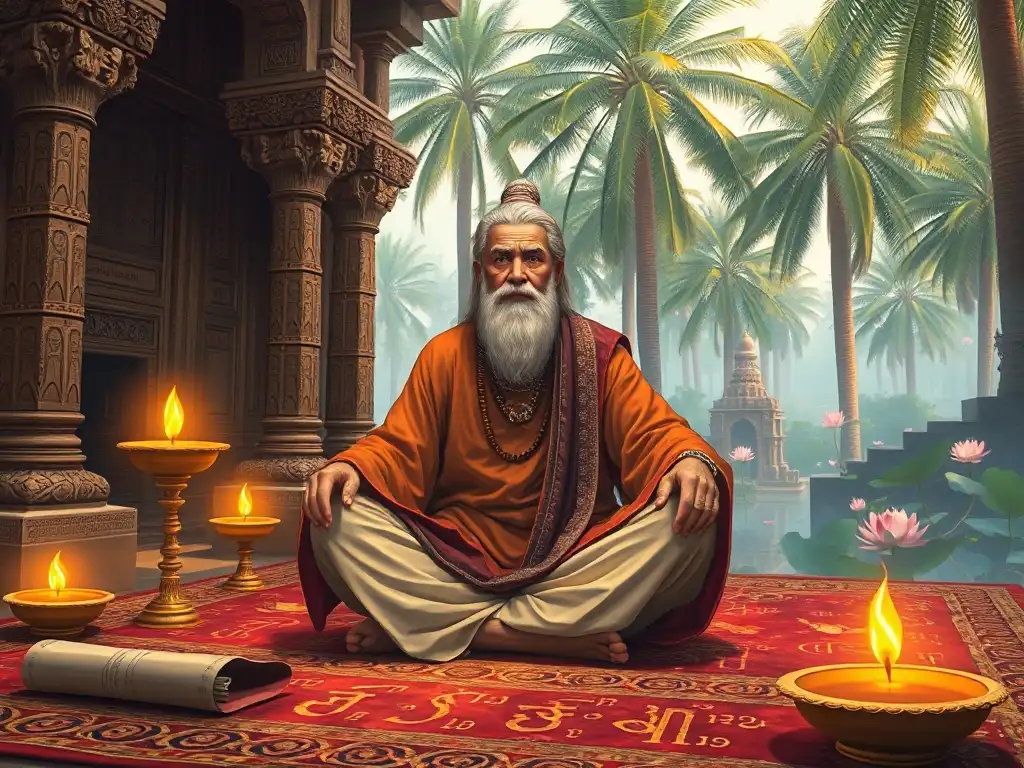
Zero in Indian Mathematics vs. Zero in Babylonian Mathematics
The concept of zero has a multifaceted history, with its origins tracing back to various ancient civilizations. In particular, the distinction between the use of zero in Indian mathematics and its application in Babylonian mathematics is noteworthy.
- Nature of Zero:
- In Indian mathematics, zero was treated as a number in its own right, not merely as a placeholder. This conceptualization was pivotal, as it allowed for operations involving zero, such as addition and subtraction, to be performed seamlessly.
- Conversely, in Babylonian mathematics, zero functioned primarily as a placeholder in their sexagesimal (base-60) number system. For example, it helped distinguish between numbers like 60 and 600. However, it did not possess the independent mathematical significance that it later acquired in Indian thought.
- Symbol Representation:
- The Indian mathematician Brahmagupta (circa 598–668 CE) was one of the first to formalize rules for arithmetic involving zero. He defined zero as a number and provided operations involving it in his seminal text, Brahmasphutasiddhanta.
- In contrast, the Babylonians used a symbol (𒀀) to indicate the absence of a value, but this was not a true representation of zero as a number. Their symbol was more of an indicator than a standalone numeral.
- Mathematical Operations:
- Indian mathematicians developed a comprehensive framework for operations involving zero. For instance, they established rules such as \( a + 0 = a \) and \( a - 0 = a \), recognizing the importance of zero in maintaining the integrity of calculations.
- Babylonian mathematics, however, lacked this depth. They did not explore the implications of zero in operations beyond its role as a placeholder, which limited their mathematical advancements.
The Influence of Ancient Indian Zero on Later Civilizations
The introduction and acceptance of zero in ancient Indian mathematics had profound implications, influencing various subsequent civilizations and mathematical systems around the world.
- Transmission to the Islamic Golden Age:
- The concept of zero traveled from India to the Islamic world through trade and cultural exchanges. Scholars such as Al-Khwarizmi and Al-Kindi adopted and expanded upon Indian numeral systems, including the use of zero.
- This transmission played a crucial role in the development of algebra and facilitated the eventual spread of Arabic numerals across Europe.
- Impact on European Mathematics:
- By the 12th century, the concepts of zero and the decimal system began to permeate European mathematics, largely through translations of Arabic mathematical texts. This transition marked a significant departure from the Roman numeral system, which lacked a symbol for zero.
- The adoption of zero in Europe allowed for more advanced calculations and paved the way for the development of calculus and modern mathematics.
- Legacy in Mathematics:
- The Indian conceptualization of zero as both a number and a mathematical tool laid the groundwork for future mathematical innovations. Its acceptance led to the formulation of new theories and the establishment of a more sophisticated numerical system.
- Modern mathematics, including fields like computer science and engineering, owes much to the foundational principles established by ancient Indian scholars regarding zero.
The role of zero in ancient Indian rituals and its mathematical significance cannot be overstated. It not only transformed mathematical practices in India but also influenced the trajectory of mathematics across cultures, leaving an indelible mark on history.
Case Studies of Zero in Specific Ancient Indian Rituals
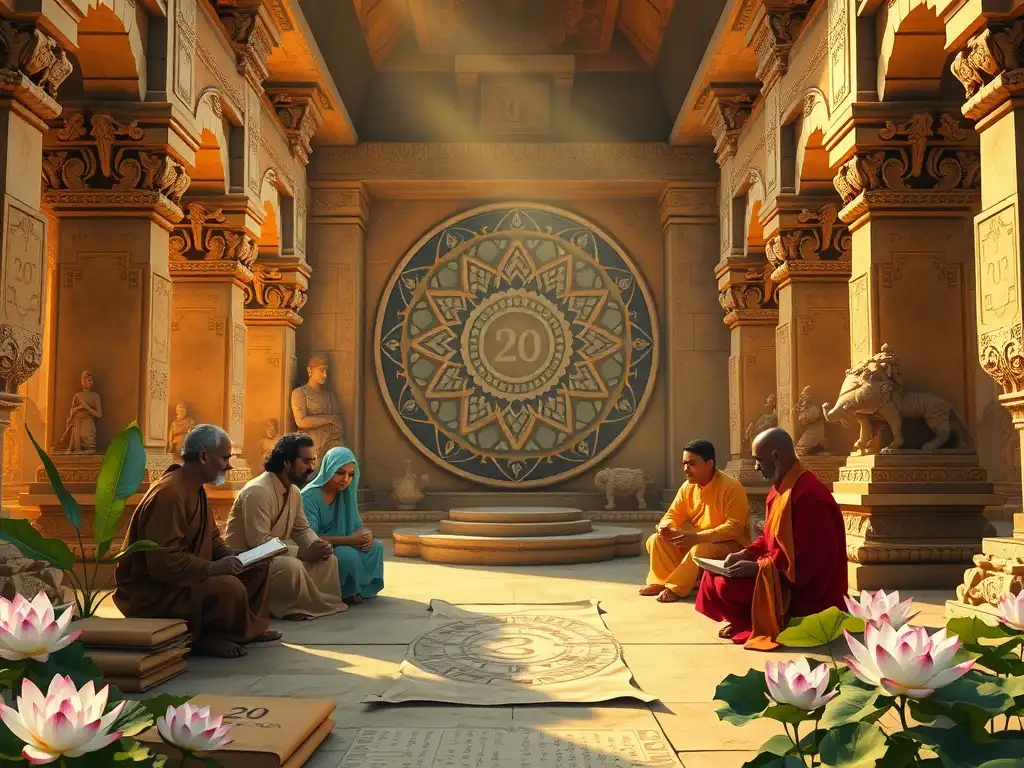
Analysis of Rituals Using Zero in the Indus Valley Civilization
The Indus Valley Civilization, flourishing around 2500 BCE, is renowned for its advanced urban planning and sophisticated cultural practices. Among these practices, the use of zero can be interpreted through the lens of ritualistic and numerical significance found in their archaeological remains.
- Measurements and Architecture: The meticulous layout of cities like Mohenjo-Daro and Harappa showcases a sophisticated understanding of measurement. While direct evidence of zero is not explicitly documented, the precision in urban design implies a numerical system that may have included a concept of zero for denoting absence or void in planning. For example, the use of grid patterns suggests that builders could conceptualize spaces that required no structures.
- Weights and Measures: Archaeological findings indicate that the Indus people utilized weights for trade and commerce. The presence of standardized weights, which may have included a 'null' weight to signify the absence of goods, illustrates an early understanding of zero in practical applications. This practice could extend to ritual contexts where specific quantities were necessary for offerings or sacrifices.
- Symbolic Representation: Although no explicit numeral for zero has been found in the Indus script, some scholars argue that certain symbols may allude to the concept of nothingness. These symbols could have played a role in rituals that required a sophisticated understanding of numerical values, enhancing the spiritual significance of absence in offerings or ceremonies.
The Significance of Zero in Gupta Empire Mathematical Texts
The Gupta Empire, often referred to as a golden age for Indian mathematics, saw the formalization and eloquent use of zero in various mathematical and ritualistic contexts. The emergence of zero during this period not only transformed mathematical practices but also had profound implications for rituals.
- Brahmagupta’s Contributions: One of the key figures during the Gupta period, Brahmagupta, wrote extensively about arithmetic and algebra in his work, "Brahmasphutasiddhanta." He articulated rules for calculations involving zero, treating it as a number in its own right. His work laid the foundation for mathematical operations involving zero, which were crucial in determining accurate measurements for rituals, especially in astronomical calculations for religious festivals.
- Ritualistic Mathematics: The use of zero in calculating auspicious times (muhurtas) for rituals illustrates its significance in religious practice. The ability to calculate the position of celestial bodies required precise mathematical operations, where zero played a pivotal role in denoting absence or transition between different states, enhancing the spiritual dimension of rituals.
- Cultural Integration of Zero: The acceptance of zero in the mathematical lexicon during the Gupta Empire reflects a broader cultural integration of the concept into daily life and religious practices. This integration allowed for complex rituals to be documented and performed with greater accuracy, illustrating the interconnectedness of mathematics and spirituality in ancient Indian culture.
The role of zero in ancient Indian rituals, particularly during the Indus Valley Civilization and the Gupta Empire, showcases its profound significance not just as a mathematical innovation, but as an essential element interwoven with the spiritual and cultural fabric of the time. The understanding and application of zero provided a framework for articulating absence, enhancing both mathematical practices and ritualistic traditions.
Conclusion: The Legacy of Zero in Ancient Indian Rituals and Mathematics
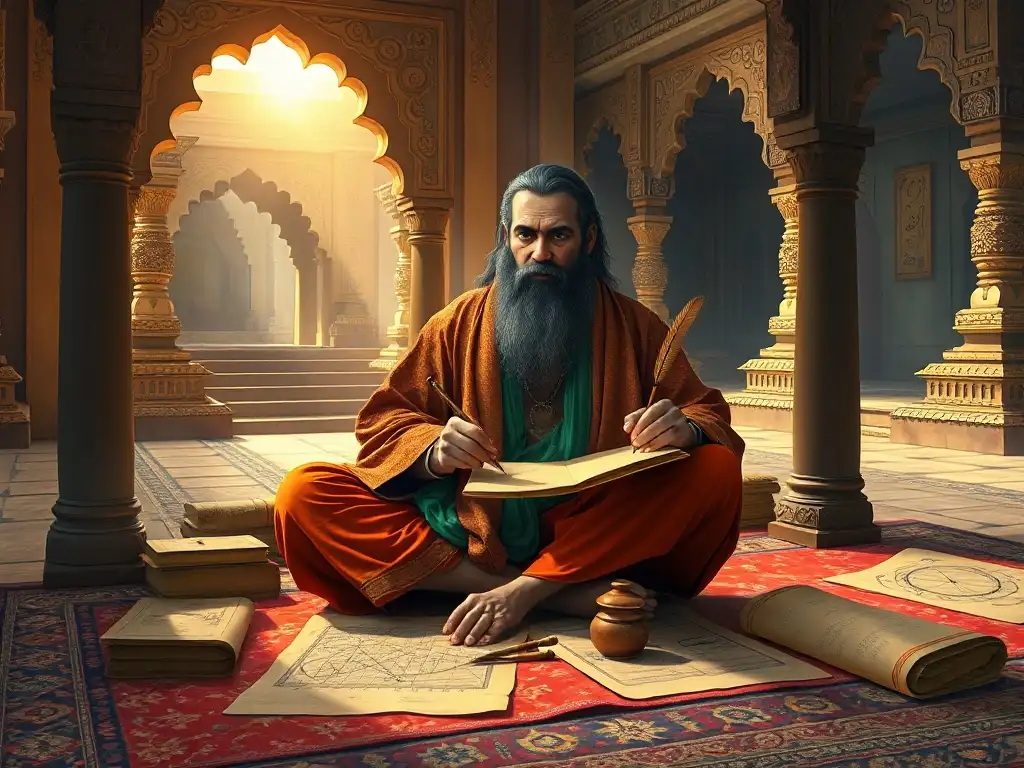
The legacy of zero in ancient Indian rituals and mathematics is profound, intertwining spiritual beliefs, cultural practices, and mathematical advancements. In ancient India, zero was not merely a numerical concept; it held significant ritualistic value, symbolizing the void and the infinite possibilities that arise from it. This duality of zero as both a mathematical and spiritual element reflects the sophisticated understanding of the cosmos that ancient Indian civilizations possessed.
The Impact of Ancient Indian Concepts of Zero on Modern Mathematics
The introduction of zero as a number and its acceptance into the number system fundamentally transformed mathematics. Prior to this, calculations were cumbersome, relying heavily on physical objects or counting methods that lacked efficiency. The concept of zero, as established by ancient Indian mathematicians such as Brahmagupta, enabled a more sophisticated and streamlined approach to arithmetic operations.
Here are a few key impacts of ancient Indian concepts of zero on modern mathematics:
- Place Value System: The positional notation system, which relies on zero to indicate the absence of a value in a given place, revolutionized how numbers are represented and calculated. This system is foundational to modern arithmetic and algebra.
- Algebraic Developments: The use of zero allowed for the formulation of equations and the development of algebra. Ancient texts reveal that mathematicians used zero to describe unknowns and solve equations, paving the way for future algebraic concepts.
- Calculus and Beyond: The philosophical implications of zero laid the groundwork for later developments in calculus and mathematical theories. The integration of zero into mathematical discourse has influenced various fields, including physics and engineering.
The legacy of zero, originating from ancient India, continues to resonate through the corridors of modern mathematics, highlighting its significance in both historical and contemporary contexts.
Final Thoughts on the Cultural and Mathematical Importance of Zero in Ancient India
In summation, the significance of zero in ancient Indian rituals and its mathematical implications cannot be overstated. It served as a bridge between the spiritual and the empirical, embodying concepts of nothingness and potentiality. Rituals involving zero often emphasized the importance of balance, emptiness, and the cyclical nature of existence, which were crucial to the philosophical outlook of the time.
The mathematical advancements stemming from the use of zero have laid the foundation for various modern technologies and methods. As we explore the contributions of ancient Indian civilizations, it becomes clear that the invention of zero was not only a mathematical innovation but also a cultural milestone that shaped the trajectory of human thought and understanding.
In essence, the role of zero in ancient Indian rituals is a testament to the intricate relationship between culture and mathematics, showcasing how ancient practices have influenced contemporary understanding and usage of mathematical concepts. The legacy of zero resonates today, reminding us of the profound insights of our ancestors and their contributions to the tapestry of human knowledge.
Frequently Asked Questions
What is the significance of zero in ancient Indian rituals?
Zero played a crucial role in ancient Indian rituals by enabling precise calculations and measurements, reflecting the culture's emphasis on mathematical accuracy in spiritual practices.
How did ancient Indian civilizations contribute to the concept of zero?
Ancient Indian civilizations were among the first to recognize zero as a number, which was essential for the development of numerical systems and significantly impacted mathematics globally.
In what ways did zero influence other cultures?
The introduction of zero from ancient Indian mathematics to other cultures facilitated advancements in science and commerce, leading to a more sophisticated understanding of mathematics worldwide.
Can you explain the connection between zero and spirituality in ancient India?
In ancient India, zero symbolized the void or nothingness, which is often associated with spiritual concepts of the universe, reflecting the deeper philosophical beliefs of Buddhism and Hinduism.
What was the impact of the Gupta Empire on the concept of zero?
During the Gupta Empire, the formal acceptance and usage of zero in mathematics were established, marking a significant evolution in numerical concepts that influenced both rituals and everyday calculations.
Final Reflection: The Profound Legacy of Zero in Ancient Indian Rituals
The exploration of zero in ancient Indian rituals reveals its dual significance as both a mathematical concept and a spiritual symbol. Today, as we navigate an increasingly complex world, the understanding of zero transcends mere numerical value; it embodies the essence of nothingness and potentiality. This duality invites us to reconsider how we perceive absence and presence in our lives, urging us to recognize that sometimes, the void holds the greatest power.
The influence of zero extends beyond mathematics, shaping cultural and philosophical landscapes across generations. In ancient India, zero was not just a placeholder; it was a profound representation of the infinite possibilities that arise from emptiness. This concept resonates deeply in contemporary society, where the balance between presence and absence is often overlooked. In the midst of movement and chaos, keep stillness inside of you.
— Deepak Chopra. This quote encapsulates the essence of zero, reminding us that stillness and reflection can lead to profound insights and creativity.
As we reflect on the role of zero in our lives, let us embrace the lessons it offers. Consider how the moments of stillness and absence can foster growth and innovation. I invite you to explore the spaces in your life where you can cultivate a deeper understanding of potentiality, just as ancient Indian rituals did. By acknowledging the significance of zero, we can transform our perspectives and inspire a future that values both presence and absence, leading to a more balanced and enlightened existence.
Unveil the Power of Zero in Ancient Wisdom!
Thank you for diving into the intriguing world of ancient Indian rituals and the remarkable role of zero! Your interest has uncovered the profound mathematical and cultural significance that this simple digit holds. Now, let’s take a step further to embrace and share this knowledge.
Here are a few actions you can take to expand your understanding and inspire others:
- Explore more: Delve deeper into the mathematical concepts of zero by investigating its applications in modern technology and science!
- Share the knowledge: Discuss what you learned with friends or family, or share your insights on social media using a relevant hashtag.
- Engage with the community: Join forums or groups focused on ancient history to exchange ideas and perspectives about the fascinating rituals of the past.
As you reflect on these ideas, consider this: How has the concept of zero shaped our understanding of mathematics and the world around us today? We invite you to engage with us in the comments below!