
The Role of Ancient Indian Agriculture in the Development of Science


Welcome to Ancient India History, where we embark on a fascinating journey through the rich tapestry of ancient Indian civilizations. Here, we delve into the remarkable contributions of ancient Indian agriculture—a cornerstone of technological innovation that shaped not only the subcontinent but also the world. Discover how the ingenuity of early farmers laid the groundwork for scientific advancements, transforming society in ways that still resonate today. Are you ready to explore the profound impact of agriculture on the development of science in ancient India? Continue reading to unearth the legacy that continues to inspire!
- Introduction to Ancient Indian Agriculture Contributions
- Key Innovations in Ancient Indian Agriculture
- Ancient Indian Agriculture and Scientific Development
- Cultural Significance of Agriculture in Ancient India
- Case Studies of Agricultural Contributions
- Conclusion: Lasting Impact of Ancient Indian Agriculture on Science
-
Frequently Asked Questions
- What were the main contributions of ancient Indian agriculture to science?
- How did ancient Indian agriculture influence economic development?
- What role did ancient Indian texts play in agricultural practices?
- In what ways did irrigation techniques impact ancient Indian agriculture?
- How did ancient Indian agriculture contribute to cultural development?
- Final Reflection: The Enduring Legacy of Ancient Indian Agriculture
- Uncover the Secrets of Ancient Agriculture!
Introduction to Ancient Indian Agriculture Contributions

Ancient Indian agriculture played a pivotal role in shaping not only the economy and sustenance of its civilizations but also laid the groundwork for significant scientific advancements. From the fertile banks of the Indus Valley to the agrarian landscapes nurtured by the monsoon, the agricultural practices of ancient India were diverse and innovative.
This article aims to delve into the myriad contributions of ancient Indian agriculture, highlighting how these practices influenced various scientific fields, including botany, irrigation engineering, and soil science. By examining the evolution of agriculture in ancient India, we can better appreciate its lasting impact on technology and innovations that continue to resonate in modern times.
Overview of Ancient Indian Agricultural Practices
Ancient Indian agriculture was characterized by a range of sophisticated techniques and practices that evolved over millennia. The key features of these practices include:
- Crop Diversification: Ancient Indian farmers cultivated a variety of crops, including wheat, rice, barley, and pulses. This diversification not only ensured food security but also enhanced soil fertility through crop rotation.
- Irrigation Methods: The development of intricate irrigation systems, such as canals and reservoirs, allowed for the effective management of water resources. Notable examples include the irrigation systems of the Indus Valley Civilization, where evidence of well-planned drainage and water management has been discovered.
- Use of Fertilizers: Farmers utilized organic materials like compost and animal manure to enrich the soil. The understanding of soil health was evident in their practices, which contributed to sustained agricultural output.
- Seed Selection and Preservation: Ancient texts suggest that farmers engaged in selective breeding, choosing seeds from the best crops to ensure higher yields in subsequent planting seasons.
These practices not only demonstrate the ingenuity of ancient Indian farmers but also reflect a deep understanding of the environment and agricultural cycles.
Importance of Agriculture in Ancient Indian Civilization
Agriculture was the backbone of ancient Indian civilization, influencing various aspects of life:
- Economic Foundation: The surplus produced through agriculture led to trade, fostering economic growth and the establishment of urban centers. This created a thriving market economy that connected various regions.
- Cultural Significance: Agriculture was interwoven with cultural and religious practices. Festivals like Makar Sankranti celebrated the harvest, showcasing the importance of agricultural cycles in societal life.
- Scientific Advancements: The need for efficient farming techniques spurred innovations in tools and methods. For instance, the development of the plow significantly improved agricultural productivity, leading to advancements in metallurgy and engineering.
- Societal Structure: The agrarian lifestyle contributed to the social hierarchy, with land ownership becoming a marker of wealth and power. This influenced the political landscape and the rise of dynasties in ancient India.
The contributions of ancient Indian agriculture extend far beyond mere food production. They encompass a rich tapestry of scientific developments, cultural practices, and economic systems that have profoundly shaped the history of India and continue to influence modern agricultural practices today.
Key Innovations in Ancient Indian Agriculture

Ancient Indian agriculture was marked by numerous innovations that not only transformed farming practices but also laid the groundwork for scientific advancements. These innovations played a critical role in enhancing productivity and ensuring food security, which in turn supported the growth of ancient Indian civilizations. Below, we delve into some key innovations that highlight the contributions of ancient Indian agriculture.
Development of Irrigation Techniques
One of the most significant contributions of ancient Indian agriculture was the development of advanced irrigation techniques. The civilizations of the Indus Valley, particularly, showcased remarkable engineering skills in managing water resources.
- Canal Systems: The Indus Valley Civilization (approximately 3300–1300 BCE) is noted for its sophisticated canal systems. Archaeological evidence suggests that these canals were designed to divert water from rivers to fields, significantly enhancing crop yields.
- Wells and Tanks: Additionally, the construction of wells and water tanks allowed farmers to access groundwater during dry periods. This innovation ensured a reliable water supply for crops, particularly in arid regions.
- Flood Control Measures: Farmers also devised methods to control flooding, including levees and embankments, which protected crops from inundation. These irrigation innovations not only increased agricultural productivity but also contributed to the overall stability of society.
The impact of these irrigation techniques on ancient Indian agriculture cannot be overstated, as they facilitated the cultivation of diverse crops and supported larger populations.
Crop Rotation and Its Impact on Yield
Crop rotation emerged as another critical agricultural practice that ancient Indian farmers employed to maintain soil fertility and increase yield.
- Diverse Crop Cultivation: Ancient texts, such as the Arthashastra attributed to Kautilya (Chanakya), outline methods of alternating crops to enhance soil nutrients and prevent depletion. For instance, the rotation of pulses with cereals allowed for nitrogen replenishment in the soil, which was essential for sustainable farming.
- Seasonal Adaptations: Different regions practiced specific crop rotations based on seasonal cycles. For example, in the fertile plains of northern India, the rotation of rice and wheat with legumes not only maximized land use but also improved the overall health of the soil.
- Increased Resilience: This practice contributed to greater resilience against pests and diseases, as alternating crops disrupted the life cycles of harmful organisms. The result was a more stable and productive agricultural system that supported larger populations.
The thoughtful application of crop rotation in ancient Indian agriculture exemplified a sophisticated understanding of ecological balance and resource management.
Use of Fertilizers and Organic Manures
The use of fertilizers and organic manures was integral to ancient Indian agricultural practices, reflecting an early understanding of soil health and nutrient management.
- Organic Fertilizers: Ancient farmers utilized a variety of organic materials, such as cow dung, compost, and green manure, to enrich the soil. These natural fertilizers improved soil texture and fertility, leading to better crop yields.
- Innovative Practices: The practice of mixing different types of organic matter was common, which not only enhanced nutrient content but also promoted beneficial microbial activity in the soil.
- Sustainable Agriculture: By relying on organic inputs rather than chemical fertilizers, ancient Indian agriculture practiced sustainability long before the term became popular. This approach ensured long-term soil health, allowing for continued agricultural productivity across generations.
The strategic use of fertilizers and organic manures in ancient Indian agriculture contributed significantly to the development of a sustainable agricultural system, showcasing the civilization's advanced understanding of agronomy.
These key innovations in ancient Indian agriculture demonstrate the significant contributions of this field to the broader spectrum of science and technology. By employing advanced irrigation techniques, implementing effective crop rotation, and utilizing organic fertilizers, ancient Indian civilizations not only enhanced their agricultural output but also laid the foundation for future agricultural practices.
Ancient Indian Agriculture and Scientific Development
Influence of Agriculture on Early Scientific Thought
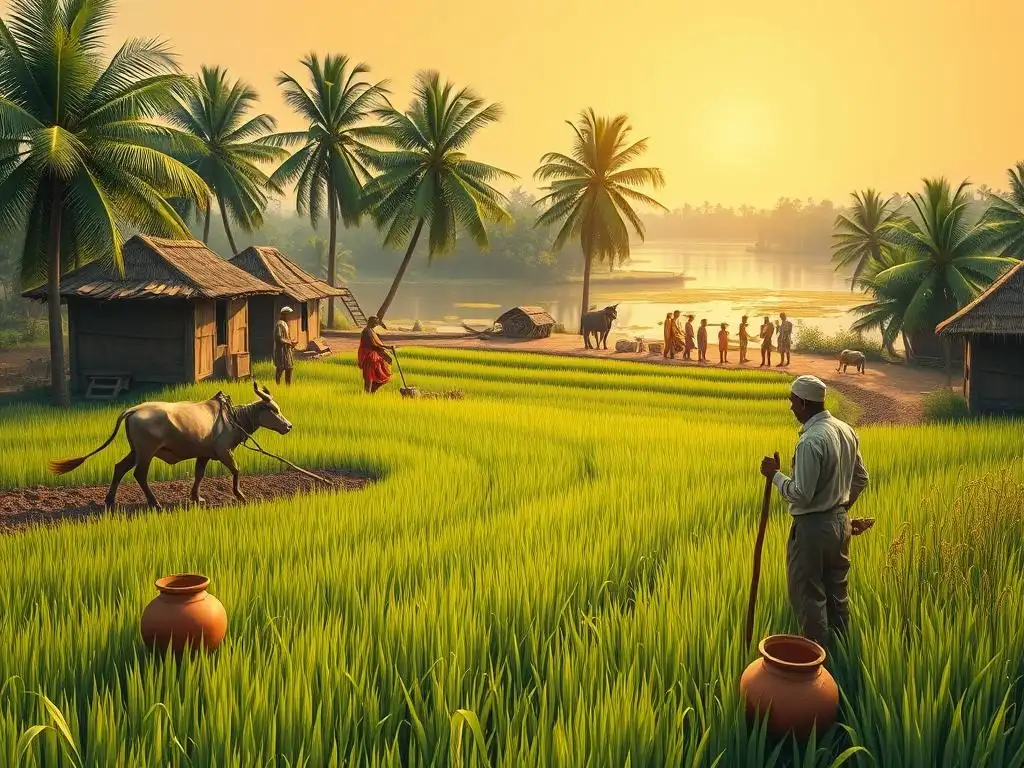
Ancient Indian agriculture was not merely a means of sustenance; it significantly influenced the development of scientific thought in the region. The agrarian lifestyle necessitated an understanding of various natural phenomena, which laid the groundwork for early scientific inquiry. Farmers closely observed seasonal changes, weather patterns, and soil properties, which fostered a culture of empirical observation and experimentation.
- Natural Phenomena: The reliance on monsoon rains for crop cultivation led to systematic studies of meteorology. Ancient texts such as the Arthashastra by Kautilya reflect a deep engagement with seasonal cycles and their effects on agricultural productivity.
- Crop Rotation and Soil Health: Farmers practiced crop rotation and understood the importance of soil fertility. Techniques such as using legumes to enrich soil nitrogen levels showcased an early understanding of ecology and sustainable practices.
This empirical approach to agriculture not only contributed to improved yields but also instilled a scientific mindset that permeated various fields, leading to advancements in astronomy, mathematics, and medicine.
Integration of Astronomy in Agricultural Practices
The integration of astronomy into agricultural practices was a hallmark of ancient Indian agricultural contributions. Farmers depended on celestial observations to determine the optimal times for planting and harvesting.
- Lunar Cycles: Ancient texts like the Surya Siddhanta demonstrate sophisticated knowledge of lunar cycles. Farmers timed their agricultural activities according to lunar phases, believing that certain phases were more favorable for planting specific crops.
- Solar Calendars: The creation of solar calendars was pivotal for agriculture. The Kali Yuga and Vikram Samvat calendars provided frameworks for aligning agricultural activities with seasonal changes, ensuring optimal crop production.
The meticulous observation of the stars and their relation to agricultural cycles exemplified how ancient Indian civilizations merged scientific inquiry with practical needs, enhancing their agricultural output while simultaneously advancing astronomical knowledge.
Role of Agriculture in Advancing Mathematics and Measurements
Mathematics played a crucial role in the agricultural innovations of ancient India. Accurate measurements were essential for land division, crop planning, and irrigation management.
- Land Measurement Techniques: The use of geometric principles for land measurement is evident in texts such as the Sulbasutras. These texts provided methods for calculating areas and volumes, which were essential for effective agricultural planning.
- Irrigation and Water Management: The development of sophisticated irrigation systems necessitated advanced mathematical calculations. The design and construction of canals required knowledge of slopes, volumes, and flow rates, showcasing the application of mathematics in enhancing agricultural efficiency.
Through these practices, ancient Indian agriculture not only contributed to food security but also laid the foundation for mathematical advancements, which would later influence various domains of science and technology in the region.
The contributions of ancient Indian agriculture to the development of science are profound and multifaceted. By nurturing an empirical approach to nature, integrating astronomical knowledge into farming practices, and advancing mathematical concepts, ancient Indian civilizations forged a legacy that significantly shaped their scientific landscape.
Cultural Significance of Agriculture in Ancient India

Agriculture in ancient India was not merely an economic activity; it was deeply intertwined with the cultural, social, and spiritual fabric of society. It laid the foundation for the development of various scientific practices, technologies, and innovations that enriched the lives of the ancient Indian populace. The contributions of ancient Indian agriculture are evident in the way it influenced festivals, religious practices, and daily life, ultimately shaping the civilization's values and traditions.
Agricultural Festivals and Their Scientific Roots
Agricultural festivals in ancient India were significant events that celebrated the cycles of planting and harvest. These festivals, such as Makar Sankranti, Pongal, and Baisakhi, mark the transition of seasons and the agricultural calendar. Each of these festivals not only held cultural importance but also had underlying scientific principles that guided agricultural practices.
- Seasonal Cycles: The timing of these festivals was closely aligned with seasonal changes, reflecting an understanding of climate and weather patterns. For instance, Makar Sankranti celebrates the winter solstice and the commencement of the harvest season, emphasizing the importance of sunlight and its impact on crop growth.
- Soil Fertility Rituals: Many festivals involved rituals aimed at enhancing soil fertility. The practice of using cow dung as fertilizer, widely observed during these celebrations, highlights the ancient understanding of sustainable farming practices. Cow dung was revered not only for its agricultural benefits but also for its role in maintaining ecological balance.
- Crop Diversity Awareness: Festivals also encouraged the cultivation of diverse crops. For example, Pongal celebrates rice harvest in Tamil Nadu, promoting the importance of rice as a staple food. This recognition of different crops played a crucial role in food security and agricultural sustainability.
The scientific roots of these festivals illustrate a profound connection between agriculture and the natural environment, showcasing the innovative practices that were developed by ancient Indian civilizations.
The Relationship Between Agriculture and Religious Practices
Agricultural practices in ancient India were often linked to religious beliefs and rituals, creating a symbiotic relationship that fostered both spiritual and agricultural growth. This connection is evident in several ways:
- Deities and Agriculture: Many agricultural deities were worshipped to ensure bountiful harvests. For instance, Goddess Annapurna, the goddess of food and nourishment, was venerated to bless the crops. This reverence for deities associated with agriculture signifies the integration of spirituality and farming, highlighting the belief in higher powers influencing agricultural outcomes.
- Rituals for Fertility: Various rituals were conducted to promote soil fertility and increase crop yields. These included offerings made to the earth and prayers for favorable weather. Such practices demonstrated an understanding of the agricultural cycle and the factors essential for crop growth.
- Harvesting as a Sacred Duty: The act of harvesting was often seen as a sacred duty, performed with great care and respect. This perspective encouraged communities to engage in sustainable practices, ensuring that the land remained productive for future generations.
- Communal Involvement: Agricultural activities were often communal events, fostering a sense of unity and cooperation among villagers. This social structure supported the sharing of knowledge and techniques, further enhancing agricultural innovations.
Through these religious practices, ancient Indian agriculture not only thrived but also contributed to the broader scientific understanding of farming techniques, crop management, and the natural environment. The intricate relationship between agriculture and spirituality underscores the importance of agriculture in shaping the cultural identity of ancient India.
The contributions of ancient Indian agriculture extend beyond mere cultivation; they encompass a rich tapestry of cultural, scientific, and spiritual dimensions that collectively advanced the civilization's development. The interplay between agricultural festivals and religious practices reveals a profound appreciation for the environment and the innovations that arose from these interactions.
Case Studies of Agricultural Contributions

The Indus Valley Civilization: Agricultural Innovations
The Indus Valley Civilization (IVC), flourishing around 2500 BCE in what is now Pakistan and northwest India, showcased remarkable agricultural innovations that laid the foundations for subsequent developments in ancient Indian agriculture. The civilization is renowned for its sophisticated urban planning, which directly influenced agricultural efficiency.
Key Innovations:
- Irrigation Systems: The IVC developed advanced irrigation techniques, utilizing canals and wells to distribute water from rivers to fields. This not only enhanced crop yields but also allowed for the cultivation of diverse crops in an arid climate.
- Crop Rotation: Evidence suggests that the IVC practiced crop rotation, which improved soil fertility and reduced pest infestations. This technique enabled sustained agricultural productivity over generations.
- Use of Tools: The civilization utilized a variety of agricultural tools, including plows made from wood and metal, which facilitated the tilling of land and the sowing of seeds.
- Agricultural Surplus: The IVC's innovations led to significant agricultural surpluses, supporting urbanization and trade. The cultivation of crops such as wheat, barley, and cotton played a vital role in the economy.
The Vedic Period: Agricultural Techniques and Knowledge
The Vedic Period, spanning from approximately 1500 BCE to 500 BCE, marked a significant evolution in agricultural practices in ancient India. This era, characterized by the composition of the Vedas, also saw the emergence of a more structured approach to farming.
Advances in Agricultural Techniques:
- Manual and Animal Labor: The Vedic texts emphasize the importance of both manual labor and the use of animals, such as oxen, for plowing. The introduction of animal husbandry significantly enhanced farming productivity.
- Seasonal Planting: Farmers began to align their planting schedules with seasonal changes, utilizing the monsoon rains to optimize crop production. This knowledge contributed to the cultivation of staples like rice and pulses.
- Farming Communities: The establishment of agrarian communities led to the sharing of knowledge and techniques among farmers, fostering innovation and collaboration.
- Rituals and Agriculture: The Vedic texts also highlight the connection between agriculture and spirituality, as rituals were performed to ensure bountiful harvests. This intertwining of culture and agriculture laid the groundwork for agricultural practices in later civilizations.
The Gupta Empire: Advancements in Agriculture and Science
The Gupta Empire, which thrived from approximately 320 to 550 CE, is often referred to as a Golden Age of India, particularly in the realms of science and technology. The agricultural advancements during this period were pivotal in enhancing productivity and supporting the burgeoning population.
Notable Developments:
- Scientific Agricultural Practices: The Guptas embraced scientific methods, including the use of fertilizers derived from organic materials. This increased soil fertility and crop resilience, leading to higher yields.
- Textual Contributions: Scholars like Varahamihira and Kautilya contributed to agricultural literature, detailing best practices in farming, irrigation, and pest management. These texts served as crucial references for farmers and contributed to the overall knowledge base of ancient Indian agriculture.
- Crop Diversification: The Gupta period saw an increase in the variety of crops being cultivated, including sugarcane, spices, and fruits. This diversification not only improved diets but also expanded trade opportunities.
- Infrastructure Development: The emphasis on expanding irrigation networks and improving agricultural infrastructure facilitated enhanced productivity. The construction of reservoirs and dams allowed for better water management, which was critical for agriculture in a largely agrarian society.
The contributions of ancient Indian agriculture throughout these key periods laid a robust foundation for the development of science and technology in the region, influencing agricultural practices well into the future. The innovations from the Indus Valley Civilization, the Vedic Period, and the Gupta Empire exemplify the rich legacy of ancient Indian agriculture contributions to the world.
Conclusion: Lasting Impact of Ancient Indian Agriculture on Science

The contributions of ancient Indian agriculture to the development of science are profound and far-reaching. The systematic methods of farming, crop cultivation, and irrigation laid the groundwork for scientific inquiry and innovation. Ancient Indian civilizations not only cultivated a variety of crops but also developed advanced techniques that integrated agriculture with other scientific fields, such as mathematics, astronomy, and ecology.
Summary of Key Contributions
-
Crop Diversity and Genetic Innovation
Ancient India was home to a rich tapestry of agricultural practices, fostering the cultivation of diverse crops such as rice, wheat, barley, and pulses. The domestication of these crops involved selective breeding, which contributed significantly to genetic diversity and agricultural resilience. The knowledge of crop rotation and intercropping practices also emerged during this period, promoting sustainable farming.
-
Irrigation Techniques
The Indus Valley Civilization showcased remarkable engineering feats with its intricate irrigation systems. The construction of canals and reservoirs not only optimized water usage but also demonstrated advanced understanding of hydraulic engineering. These innovations allowed for the expansion of arable land and increased agricultural productivity, setting a precedent for future water management practices.
-
Agricultural Manuals and Scientific Documentation
Texts such as the Krishi Parashara and Vrikshayurveda provided detailed insights into agricultural practices, pest management, and plant biology. These early scientific manuals were foundational in documenting agricultural knowledge, facilitating a systematic approach to farming that combined traditional wisdom with empirical observations.
-
Mathematical Applications in Agriculture
The development of concepts such as geometry and arithmetic was directly tied to agricultural needs. Farmers utilized mathematical principles to measure land, calculate crop yields, and optimize planting patterns. This mathematical ingenuity not only served practical farming purposes but also contributed to the field of mathematics itself.
-
Ecological Awareness and Sustainability
Ancient Indian agricultural practices were characterized by a profound understanding of ecological balance. The emphasis on organic farming techniques, composting, and crop diversity reflects an early awareness of sustainable practices. This holistic approach to agriculture is increasingly relevant in contemporary discussions about environmental conservation and sustainable development.
Reflection on the Legacy of Agricultural Innovations in Ancient India
The legacy of ancient Indian agriculture is still felt today, as many of the principles established during this era continue to inform modern agricultural practices. The intricate relationship between agriculture and science in ancient India illustrates a sophisticated understanding of nature that transcended mere survival. It paved the way for innovations that are essential in addressing contemporary agricultural challenges, such as food security and climate change.
The contributions of ancient Indian agriculture remind us of the interconnectedness of various fields of knowledge. The advancements made in agriculture not only enhanced food production but also stimulated scientific thought and inquiry, creating a ripple effect that influenced various disciplines. As we explore the rich history of ancient Indian agriculture, we can appreciate its role as a catalyst for scientific progress and a testament to human ingenuity in adapting to and understanding the world.
Frequently Asked Questions
What were the main contributions of ancient Indian agriculture to science?
Ancient Indian agriculture made significant contributions to science by introducing innovative farming techniques, crop rotation, and irrigation methods that enhanced crop yields and sustainability.
How did ancient Indian agriculture influence economic development?
The advancements in agriculture led to increased food production, which supported population growth and the establishment of trade networks, ultimately contributing to the economic prosperity of ancient Indian civilizations.
What role did ancient Indian texts play in agricultural practices?
Ancient texts, such as the Arthashastra and Krishi Sutras, documented various agricultural techniques and practices, serving as valuable resources for farmers and influencing agricultural innovation.
In what ways did irrigation techniques impact ancient Indian agriculture?
The development of irrigation systems, like canals and wells, allowed for the cultivation of arid lands, thereby expanding agricultural productivity and enabling year-round farming.
How did ancient Indian agriculture contribute to cultural development?
Agriculture fostered the growth of settled communities, leading to the emergence of crafts, trade, and cultural practices that enriched the social fabric of ancient Indian society.
Final Reflection: The Enduring Legacy of Ancient Indian Agriculture
The contributions of ancient Indian agriculture are not just historical footnotes; they are foundational pillars that continue to shape our understanding of science and sustainability today. As we navigate the complexities of modern agricultural practices and environmental challenges, the wisdom embedded in ancient techniques offers invaluable insights that resonate with contemporary issues. The ingenuity of ancient Indian farmers in crop rotation, irrigation, and soil management exemplifies a profound understanding of ecological balance that is increasingly relevant in our quest for sustainable solutions.
The influence of ancient Indian agriculture extends far beyond its time, weaving itself into the cultural and social fabric of our society. This legacy is a testament to the innovative spirit of our ancestors, who laid the groundwork for agricultural science and environmental stewardship. As we reflect on this rich heritage, we are reminded of the words of Mahatma Gandhi: To forget how to dig the earth and to tend the soil is to forget ourselves.
This quote encapsulates the importance of reconnecting with our agricultural roots and recognizing the lessons that ancient practices can teach us about resilience and sustainability.
As we stand at the crossroads of tradition and modernity, I invite you to reflect on the lessons of ancient Indian agriculture and consider how they can be applied in your own life. What can you learn from the past to inform your choices today?
Whether it’s adopting sustainable practices in your garden or advocating for policies that honor ecological wisdom, each small action contributes to a larger movement towards a more harmonious relationship with our environment. Embrace the legacy of ancient Indian agriculture, and let it inspire you to cultivate a future that honors both our heritage and the planet we inhabit.
Uncover the Secrets of Ancient Agriculture!
Thank you for diving into the fascinating world of ancient Indian agriculture and its profound impact on the development of science! Your journey through this remarkable history not only enriches your knowledge but also inspires a deeper appreciation for the innovations of the past.
Now, it's time to put your newfound insights into action! Here are a few steps you can take to further explore this topic:
- Visit a local farm or historical site to witness agricultural techniques and their evolution firsthand. This experience can deepen your understanding of how ancient practices shaped modern agriculture.
- Share this article with friends and family who are curious about the connections between history and science. Engaging in conversations can spark interest and inspire others to learn more.
- Consider starting a journal to document your thoughts on how traditional methods can influence today's farming practices. This can be an enlightening exercise in recognizing the value of ancient wisdom.
What aspects of ancient Indian agriculture do you find most compelling in today's context? We invite you to share your thoughts or experiences in the comments below!