
Women and the Concept of Dharma in Ancient Indian Philosophy

Welcome to Ancient India History, where we delve into the rich tapestry of civilization that has shaped the very essence of human existence. In this exploration, we invite you to uncover the profound impact of women in ancient Indian society, particularly through the lens of "Women in Ancient Indian Dharma." This article will illuminate the vital roles women played in upholding the principles of Dharma, revealing their contributions to philosophy and culture that have often remained in the shadows.
As you journey through this fascinating narrative, prepare to challenge your understanding of gender roles in ancient times and discover how these remarkable figures influenced the course of history. Ready to dive deeper? Let’s embark on this enlightening adventure together!
- Introduction to Women in Ancient Indian Dharma
- Historical Overview of Women and Dharma in Ancient India
- Key Philosophical Concepts Relating to Women in Dharma
- Influential Women Figures in Ancient Indian Philosophy
- Women in Religious Texts: Insights from Ancient Scriptures
- The Evolution of Women’s Roles in Dharma Through the Ages
- Contemporary Relevance of Women in Ancient Indian Dharma
- Conclusion: The Legacy of Women in Ancient Indian Dharma
- Frequently Asked Questions
- Final Reflection: The Enduring Legacy of Women in Ancient Indian Dharma
- Embrace Your Dharma: Take Action Today!
Introduction to Women in Ancient Indian Dharma
The role of women in ancient India has often been a subject of extensive study and discourse, particularly when examined through the lens of Dharma. Dharma, a multifaceted term that encompasses duty, righteousness, and moral order, holds a significant place in ancient Indian philosophy. It not only defines the ethical framework within which individuals operate but also shapes the societal roles attributed to different genders.
This article will delve into the intricate relationship between women and the concept of Dharma, highlighting how ancient Indian texts and traditions articulated the responsibilities and rights of women, while also reflecting on their contributions to society. By exploring the historical and philosophical dimensions of this theme, we aim to shed light on the vital yet often overlooked roles women played in the evolution of Dharma throughout ancient Indian history.
Definition of Dharma in Ancient Indian Philosophy
Dharma is a central concept in ancient Indian philosophy, encompassing a wide range of meanings that vary depending on the context. It can be understood as:
- Moral Law: Dharma serves as a guiding principle for ethical conduct, emphasizing the importance of righteousness and virtue in one's actions.
- Social Duty: It delineates the roles and responsibilities of individuals within the societal structure, taking into account factors such as class (varna) and stage of life (ashrama).
- Cosmic Order: Beyond individual and societal implications, Dharma is also viewed as a force that upholds the universe's moral and natural order, connecting human actions to the broader cosmos.
In ancient texts such as the Vedas, Upanishads, and Dharmashastras, Dharma is articulated with nuances that reflect the complexities of life. Women, despite often being relegated to subordinate roles, are depicted in various texts as bearers of Dharma, emphasizing their unique responsibilities within the family and society.
Importance of Women in Ancient Indian Cultural Context
Women played a crucial role in the ancient Indian cultural landscape, significantly influencing the interpretation and practice of Dharma. Their contributions can be understood through several key dimensions:
- Family and Household: Women were seen as the primary custodians of family values and traditions. The concept of Stridharma (women's duty) highlights their pivotal role in maintaining household harmony and nurturing future generations.
- Philosophical Contributions: Several ancient texts reference women philosophers and scholars who contributed to philosophical debates. Figures like Gargi and Maitreyi, for instance, are celebrated for their intellectual contributions in texts such as the Brahadaranyaka Upanishad.
- Spiritual Practices: Women were integral to various religious rituals and practices, often serving as the mediators between the divine and the household. Their participation in spiritual life underscores their importance in sustaining cultural and religious continuity.
- Social Reformers: Throughout history, women have also emerged as reformers and advocates for change within the societal framework, challenging existing norms while embodying the principles of Dharma.
Through these lenses, we can see that women were not mere passive recipients of Dharma but active participants who shaped its discourse and practice. As we explore the intersection of women's roles and Dharma further, we will uncover the profound impact they had on the fabric of ancient Indian society.
Historical Overview of Women and Dharma in Ancient India
The concept of Dharma in ancient Indian philosophy is multifaceted, encompassing ethics, duty, law, and righteousness. Within this framework, women held significant yet often overlooked roles that shaped societal norms and spiritual practices. Historically, the portrayal of women in ancient Indian texts reflects a complex interplay of reverence, subservience, and agency, which warrants a closer examination.
Women’s Roles in Vedic Texts and Literature
The Vedic period, spanning approximately 1500 to 500 BCE, is foundational in understanding the role of women in ancient Indian Dharma. Vedic texts, including the Rigveda, are among the earliest sources to document women's positions in society.
- Spiritual and Ritualistic Participation:
- Women, known as "Stri," were integral to Vedic rituals. They participated in various sacred ceremonies, often performing rites that were essential for the well-being of the family and community.
- The concept of Samskara, which refers to rites of passage, included women as key participants, particularly in marriage and childbirth rituals.
- Education and Intellectual Contributions:
- Some texts highlight women scholars and philosophers, such as Gargi and Maitreyi, who engaged in philosophical debates and discussions, showcasing their intellectual prowess.
- The Upanishads, which emerged later in the Vedic period, present dialogues where women challenged traditional views, reflecting their active role in shaping philosophical discourse.
- Literature and Poetry:
- Ancient Indian literature, including works like the Mahabharata and Ramayana, features strong female characters who embody Dharma through their actions and decisions. Figures like Draupadi and Sita exemplify the complexities of women's roles and their adherence to Dharma amidst significant challenges.
Women in the Vedic texts were not merely passive figures; they actively shaped the cultural and spiritual landscape, illustrating their importance in the broader context of Dharma.
Contributions of Women in Early Indian Society
As Indian civilization evolved, so did the roles of women, particularly during the early historical period (circa 500 BCE to 600 CE). This era witnessed significant contributions from women that influenced various aspects of society.
- Social and Economic Roles:
- Women were involved in agricultural practices, contributing to the economy and sustenance of their families. They often managed household affairs, signifying their importance in everyday life.
- Craftsmanship and trade also saw women's participation, particularly in textile production and local markets, indicating their economic agency.
- Patronage of Arts and Culture:
- Wealthy women from royal families played a pivotal role in patronizing art, literature, and religious institutions. Their support helped in the flourishing of cultural practices and the propagation of Dharma.
- Temples and educational institutions often received donations and support from women, showcasing their influence in religious and cultural domains.
- Political Influence:
- Certain women exercised power behind the scenes, influencing political decisions and strategies. Historical accounts reveal instances where queens and noblewomen acted as regents or advisors, underscoring their political significance.
- Women like Rani Durgavati and Chand Bibi emerged as military leaders, challenging traditional gender norms and reinforcing the idea that women could embody Dharma not only in private spheres but also in public life.
The contributions of women in early Indian society were not only vital for the continuity of culture and tradition but also crucial in shaping the philosophical and ethical underpinnings of Dharma. As such, the keyword "Women in Ancient Indian Dharma" encapsulates a rich tapestry of female influence that continues to resonate in contemporary discussions of gender and spirituality in India.
Key Philosophical Concepts Relating to Women in Dharma
The exploration of Women in Ancient Indian Dharma reveals a rich tapestry of philosophical concepts that underscore the integral role women played in shaping and maintaining societal norms. Central to this discourse are two key concepts: Shakti, representing feminine power, and the prescribed roles of women within the family and society as dictated by Dharma. These philosophical foundations not only articulate the significance of women but also highlight their contributions to the broader cultural framework of ancient India.
The Concept of Shakti and Feminine Power
The term Shakti in ancient Indian philosophy embodies the concept of divine feminine energy. It encapsulates the belief that women possess an inherent power that is both creative and transformative. This recognition of feminine power can be traced back to various texts that highlight the importance of women in both spiritual and worldly realms.
- Divine Feminine: In Hinduism, Shakti is often personified as goddesses like Durga and Kali, who embody strength, courage, and the ability to overcome evil. These representations serve to elevate the status of women, positioning them not merely as passive recipients of divine grace but as powerful agents of change.
- Philosophical Interpretations: Philosophers such as Adi Shankaracharya have articulated the significance of Shakti in their works, emphasizing that feminine energy is essential for the maintenance of balance in the universe. This philosophical underpinning encourages a view of women as vital contributors to the cosmic order.
- Cultural Reflections: The reverence for Shakti is reflected in various cultural practices and festivals, such as Navaratri, which celebrates the divine feminine. Such observances highlight the dual role of women as nurturers and powerful entities within society.
The embodiment of Shakti not only challenges the historical constraints imposed on women but also serves as a reminder of their potential to lead and inspire. The philosophical lens of Shakti invites a reevaluation of traditional narratives surrounding women's roles in ancient Indian society.
The Role of Women in Family and Society According to Dharma
In ancient Indian society, the concept of Dharma served as a guiding principle governing the ethical and moral responsibilities of individuals, including women. The sacred texts, including the Manusmriti and the Mahabharata, provide insights into the prescribed roles and duties of women within the familial and societal structures.
- Domestic Sphere: Women were primarily viewed as caretakers of the household, responsible for the well-being of family members. Their roles encompassed nurturing children, managing domestic affairs, and preserving cultural traditions. This emphasis on the domestic domain highlights the importance of women as the backbone of family life.
- Societal Contributions: Despite being confined to domestic roles, women were also recognized for their contributions to society. They participated in religious rituals, upheld social customs, and were often involved in philanthropic activities. This active engagement in societal matters illustrates their influence beyond the household.
- Educational Pursuits: Ancient texts suggest that women were not entirely excluded from education. Figures like Gargi and Maitreyi are notable examples of women who engaged in philosophical discourse and were respected for their intellectual contributions. This indicates that while societal norms often limited women's roles, there were pathways for them to contribute to philosophical thought and discourse.
- Marriage and Dharma: The institution of marriage played a critical role in defining women's lives. The ideal of pativratā (devotion to one’s husband) was emphasized, reflecting the belief that a woman's Dharma was closely tied to her husband. However, this also granted women a significant status within the familial structure, where their adherence to Dharma was seen as essential for the family's prosperity and harmony.
The examination of Women in Ancient Indian Dharma reveals a complex interplay between power and responsibility. The concepts of Shakti and Dharma illustrate how women were integral to the philosophical and cultural fabric of ancient Indian society, shaping their roles as both powerful beings and dutiful caretakers. Understanding these dimensions enriches our perspective on the historical contributions of women and their enduring legacy in the evolution of Indian philosophy and culture.
Influential Women Figures in Ancient Indian Philosophy
Women Philosophers and Scholars
In ancient India, women made significant contributions to philosophy and the understanding of Dharma, even though their roles were often overshadowed by their male counterparts. These women philosophers and scholars not only provided unique perspectives on spiritual and ethical matters but also played a crucial role in shaping the philosophical discourse of their time.
One of the earliest known figures is Gargi Vachaknavi, who lived during the Vedic period. She is celebrated for her profound knowledge of the Upanishads and is famously known for her debates with the sage Yajnavalkya. Gargi's inquiries into the nature of the self and the cosmos exemplified the intellectual rigor expected in philosophical discussions, and her contributions are often cited in discourses on Dharma.
Another prominent figure is Maitreyi, also a Vedic scholar and philosopher. She is known for her dialogue with Yajnavalkya in the Brihadaranyaka Upanishad, where she seeks to understand the nature of the self and the eternal truth. Her questions reflect a deep engagement with philosophical concepts, emphasizing that women were not merely passive recipients of knowledge but active participants in intellectual pursuits.
In later periods, women like Vasavadatta and Vimalaprabha emerged as significant figures in the realms of Buddhist and Jain philosophies, respectively. Their writings and teachings contributed to the understanding of Dharma from a distinctly feminine perspective, advocating for the spiritual and ethical roles of women within their communities.
Notable Historical Women and Their Contributions to Dharma
Ancient Indian history is replete with notable women who played pivotal roles in the promotion and interpretation of Dharma through various means, including literature, social reform, and spiritual leadership. Their contributions have had lasting impacts on the philosophical landscape of India.
One such figure is Savitribai Phule, who, although primarily known for her contributions to education and women's rights in the 19th century, drew upon ancient philosophical concepts to argue for women's empowerment and social equality. Her efforts to establish schools for girls and her advocacy for women's education can be viewed through the lens of Dharma, as they aimed to create a just society where women could thrive.
Additionally, the Sthavira Sangha, a community of female ascetics in Buddhism, played a significant role in the propagation of Dharma. These women not only adhered to the monastic code but also engaged in teaching and guiding lay followers. Their contributions underscore the importance of women's roles in maintaining and disseminating philosophical teachings.
Moreover, texts like The Rigveda and The Arthashastra highlight women’s legal rights and responsibilities, showcasing their involvement in societal norms and ethical practices. Such documentation reflects an acknowledgment of women's roles in upholding Dharma within their families and communities.
The legacy of these influential women in ancient Indian philosophy continues to inspire contemporary discussions on gender, spirituality, and ethics, demonstrating that the concept of Dharma is inherently inclusive and multifaceted. Their lives and contributions emphasize the vital role that women played in shaping the philosophical and moral fabric of ancient Indian society.
Women in Religious Texts: Insights from Ancient Scriptures
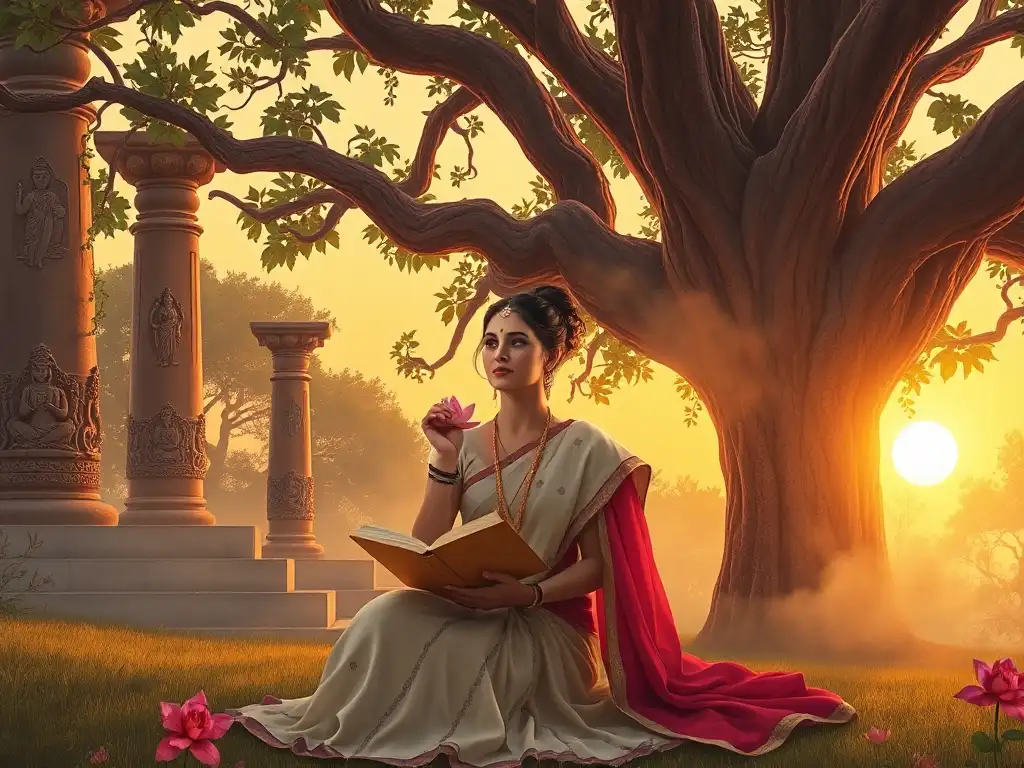
The role of women in ancient Indian philosophy and religious texts is a multifaceted subject that reveals the complexities of their social status, spiritual significance, and contributions to the concept of Dharma. The scriptures of ancient India, including the Vedas, Upanishads, Mahabharata, and Ramayana, offer valuable insights into how women were perceived and how they navigated their roles in society. Through these texts, we can glean an understanding of the cultural and philosophical frameworks that shaped women's lives and responsibilities in the context of Dharma.
Analysis of Women in the Upanishads
The Upanishads, often regarded as the culmination of Vedic thought, emphasize the spiritual quest for knowledge and the nature of reality. Within this philosophical framework, women are depicted as intelligent, capable, and integral to the pursuit of wisdom. Notable figures such as Gargi and Maitreyi emerge as profound thinkers, engaging in dialogues that challenge patriarchal norms.
- Gargi is celebrated for her intellectual prowess, famously questioning the sage Yajnavalkya about the nature of reality and the ultimate source of knowledge. Her contributions highlight that women were not merely passive recipients of knowledge but active participants in philosophical discourse.
- Maitreyi, on the other hand, represents the pursuit of spiritual wisdom over material wealth. Her narrative underscores the idea that the quest for self-realization transcends gender, as she chooses to seek enlightenment rather than conform to societal expectations of marriage and material prosperity.
This portrayal in the Upanishads reinforces the notion that women could embody the principles of Dharma through their pursuit of knowledge and spiritual growth.
The Portrayal of Women in the Mahabharata and Ramayana
The Mahabharata and Ramayana are epic narratives that offer profound insights into the roles of women within the context of Dharma. These texts illustrate both the reverence and the challenges faced by women in ancient Indian society.
- The Mahabharata features complex female characters such as Draupadi, Kunti, and Gandhari, each embodying different aspects of Dharma. Draupadi, for instance, is a central figure who challenges the patriarchal values of her time. Her famous plea for justice in the court of the Kauravas illustrates her strength and resilience, while also raising questions about the treatment of women in a male-dominated society. She represents the struggle for dignity and respect, emphasizing that women's voices are crucial in discussions of justice and morality.
- In the Ramayana, Sita is depicted as the ideal woman, embodying virtues such as fidelity and sacrifice. However, her abduction by Ravana raises critical ethical questions about women's autonomy and agency. Sita's trials and her eventual return to Rama illustrate the societal expectations placed on women, even as she navigates her personal challenges with grace and strength. Her character serves as a touchstone for discussions on virtue and the implications of loyalty and duty within the framework of Dharma.
| Character | Text | Attributes | Significance |
|---|---|---|---|
| Draupadi | Mahabharata | Strong, assertive, seeks justice | Challenges patriarchal norms, embodies resilience |
| Sita | Ramayana | Idealized, loyal, faces adversity | Represents virtue, raises issues of agency |
The narratives of these women reveal the duality of their roles: revered as embodiments of virtue yet bound by societal constraints. The exploration of their stories within the context of Dharma invites reflection on the evolving understanding of women's roles in both ancient and contemporary frameworks.
The insights gained from the Upanishads, Mahabharata, and Ramayana provide a rich tapestry of the complexities surrounding women's lives and their contributions to the concept of Dharma in ancient Indian philosophy. Through these texts, we recognize that women were not only participants in the spiritual realm but also pivotal figures whose experiences and challenges continue to resonate in discussions of gender and philosophy today.
The Evolution of Women’s Roles in Dharma Through the Ages
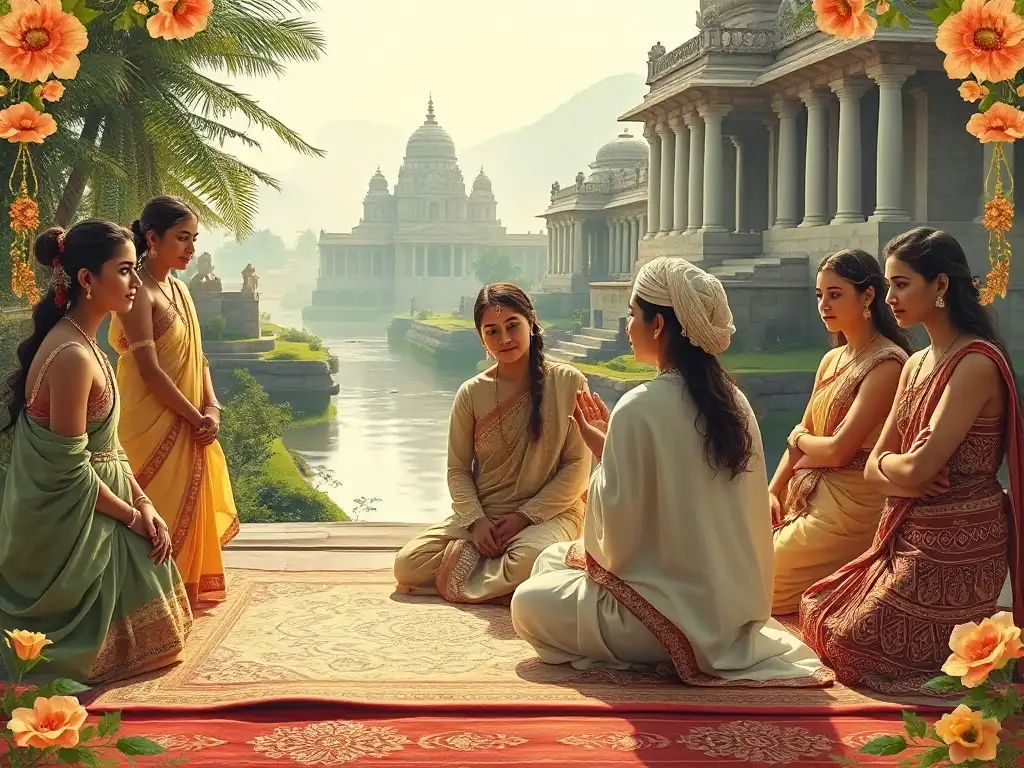
The concept of Dharma in ancient Indian philosophy has undergone significant evolution over the centuries, particularly concerning the roles and status of women. Initially, during the Vedic period, women enjoyed certain privileges, including the right to education and participation in religious rituals. However, as society progressed, the perception of women began to shift, influenced by various socio-political and religious changes.
The post-Vedic period marked a critical juncture in the evolution of women's roles. The introduction of texts like the Manusmriti, which codified social norms, began to delineate strict guidelines for women's behavior, often relegating them to subordinate roles in society. While the early Vedic texts portrayed women as scholars and leaders, later texts emphasized their domestic responsibilities, limiting their opportunities for personal and spiritual growth.
Despite these constraints, women continued to find ways to assert their significance within the framework of Dharma. They engaged in various forms of resistance, including the preservation of their spiritual practices and contributions to family and community life. This complex interplay of tradition and change reflects the dynamic nature of women’s roles in ancient Indian Dharma.
Changes in Perception of Women in Post-Vedic Period
The post-Vedic period, spanning from approximately 600 BCE to 200 CE, witnessed a notable transformation in the perception of women’s roles within the context of Dharma. The emergence of Brahmanical orthodoxy played a pivotal role in redefining gender norms.
-
Codification of Social Norms:
The Manusmriti, often regarded as a seminal text, established rigid codes of conduct for women, prescribing their roles as obedient wives and devoted mothers. Key points include:
- Dependency on Male Figures: Women were often viewed as dependent on their fathers, husbands, or sons for social status and security.
- Limited Rights: Rights to property and inheritance were restricted, effectively diminishing women's autonomy.
-
Religious Practices:
During this period, women's participation in religious practices became increasingly regulated. Rituals and ceremonies were often male-dominated, and women's roles were largely confined to the domestic sphere. However, some women, through their devotion and piety, became important figures in household rituals, sustaining the spiritual fabric of their families.
-
Literary Representations:
Literature from this period, including epics like the Mahabharata, often depicted women in multifaceted roles. Characters like Draupadi and Sita exemplified both strength and resilience, challenging the prevailing narratives of subordination. Their stories provided a lens through which women could navigate their complex identities within the framework of Dharma.
Impact of Buddhism and Jainism on Women’s Status
The rise of Buddhism and Jainism during the 6th century BCE brought about significant changes in the societal perceptions of women, offering alternative views on Dharma. Both religions emphasized ethical conduct and personal spirituality, which had implications for women's roles.
-
Buddhism's Progressive Stance:
Buddhism introduced a more egalitarian approach to gender roles compared to contemporary Brahmanical traditions.
- Monastic Opportunities: Women could become nuns (bhikkhunis), gaining access to spiritual education and the opportunity to attain enlightenment, which was a notable shift from the restrictive norms of the Vedic period.
- Notable Figures: Women like the Buddha's aunt, Mahapajapati Gotami, played crucial roles in establishing monastic rules for women, advocating for their inclusion in spiritual communities.
-
Jainism's Emphasis on Non-Violence:
Jainism, with its strong emphasis on non-violence (ahimsa) and asceticism, also provided women with avenues for spiritual practice.
- Ascetic Life: Women were encouraged to pursue asceticism and were offered the same spiritual opportunities as men, including the potential for liberation (moksha).
- Role in Society: Jain texts often depict women as capable of achieving high spiritual status, challenging the traditional views of their roles.
The evolution of women’s roles in the context of Dharma reflects a complex interplay of cultural, religious, and philosophical shifts throughout ancient Indian history. The influences of both Buddhism and Jainism provided women with alternative pathways to assert their identities and roles within society, ultimately enriching the discourse surrounding Women in Ancient Indian Dharma.
Contemporary Relevance of Women in Ancient Indian Dharma
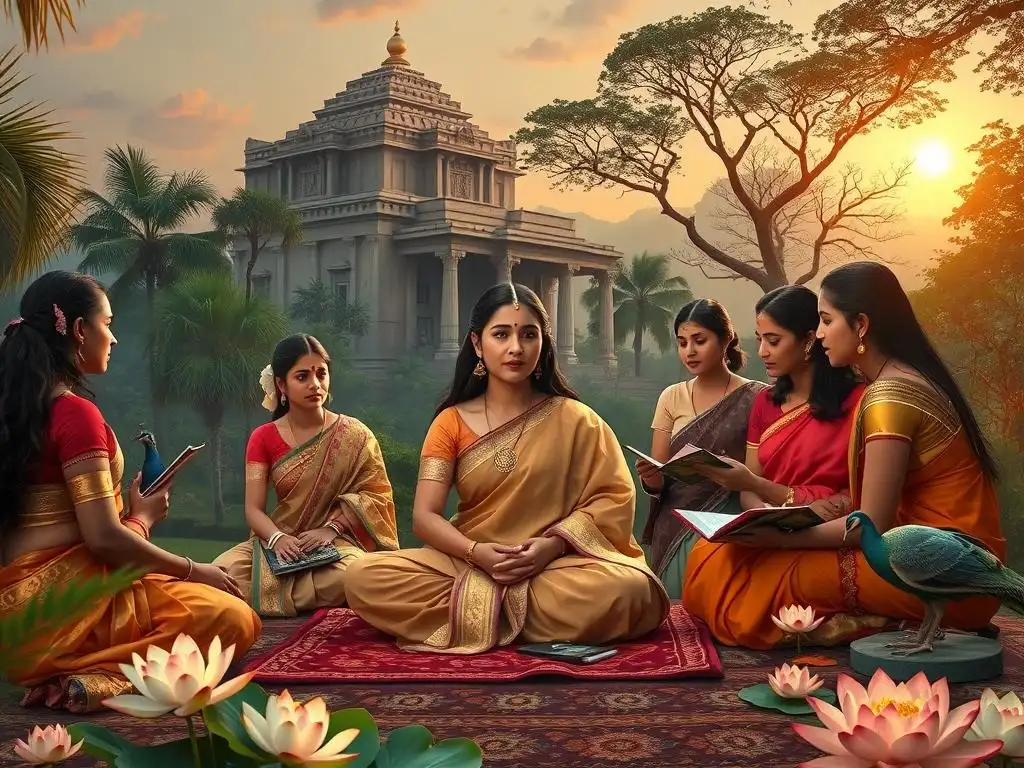
Lessons from Ancient Indian Philosophy for Modern Women
Ancient Indian philosophy offers a wealth of insights that can be invaluable for contemporary women navigating the complexities of modern life. The concept of Dharma, which encompasses duty, morality, and righteousness, provides a framework that can help women understand their roles and responsibilities in society.
- Understanding Dharma:
- Dharma in ancient texts is often portrayed as a guiding principle for ethical living. Women were seen as custodians of family values, responsible for maintaining harmony within the household. This role, while traditional, emphasizes the importance of nurturing relationships and community, which remains relevant today.
- The Mahabharata and Ramayana illustrate strong female figures, such as Draupadi and Sita, who exemplify resilience and moral integrity in the face of adversity. Their stories can inspire modern women to uphold their values while challenging societal norms.
- Balancing Roles:
- The ancient philosophy acknowledges the multifaceted roles of women: as daughters, wives, mothers, and contributors to society. This recognition encourages modern women to embrace their diverse identities and pursue personal growth alongside their familial duties.
- By understanding the balance between personal aspirations and societal expectations, women can cultivate a sense of agency while remaining true to their values.
- Moral and Ethical Framework:
- The teachings of sages such as Gautama Buddha and Adi Shankaracharya provide a moral compass that women can draw upon. These teachings emphasize compassion, non-violence, and the pursuit of knowledge—qualities essential for personal development and social contribution.
- Women today can benefit from these principles by applying them in their professional and personal lives, fostering environments of respect and understanding.
Reviving the Concept of Dharma in Women’s Empowerment Today
The revival of the concept of Dharma can play a crucial role in empowering women in contemporary society. By integrating ancient wisdom with modern practices, women can reclaim their narratives and forge pathways toward equity and justice.
- Promoting Gender Equality:
- Ancient texts often depict women as equally capable of fulfilling Dharma. By harnessing this perspective, modern movements advocating for gender equality can draw parallels to historical precedents that valued women's contributions.
- Initiatives aimed at educating women about their rights, rooted in historical contexts, can empower them to assert their place in society with confidence.
- Creating Supportive Communities:
- The communal aspect of Dharma emphasizes collective welfare over individualism. Women can foster networks of support, inspired by ancient traditions, to uplift each other and share resources.
- By forming alliances that echo the cooperative spirit of ancient societies, women can create safe spaces for dialogue, mentorship, and skill-sharing.
- Integrating Dharma with Modern Issues:
- Addressing contemporary challenges such as environmental sustainability and social justice through the lens of Dharma allows women to engage with pressing global issues while remaining anchored in their cultural heritage.
- This approach encourages women to become leaders in their communities, advocating for solutions that reflect both ethical responsibility and cultural continuity.
The principles of Dharma from ancient Indian philosophy offer a rich tapestry of wisdom that can guide modern women in their pursuit of empowerment, equality, and ethical living. By revisiting these teachings, contemporary society can cultivate a deeper understanding of women's roles and contributions, fostering a more equitable future.
Conclusion: The Legacy of Women in Ancient Indian Dharma
Summary of Key Contributions
The concept of Dharma in ancient Indian philosophy encompasses a broad spectrum of duties, roles, and moral obligations, intricately woven into the fabric of society. Women played a pivotal role in this paradigm, contributing significantly to the understanding and practice of Dharma throughout the ages.
- Philosophical Texts and Literature:
- Women like Gargi and Maitreyi, who are prominent figures in the Brahmanas and Upanishads, exemplified intellectual engagement. They posed profound questions about the nature of existence and the universe, showcasing that women's contributions were not limited to domestic realms but extended into philosophical discourse.
- Female poets and thinkers, such as the authors of the Mahabharata and Ramayana, highlighted the significance of female perspectives and experiences in the narrative of Dharma, influencing both moral and ethical frameworks.
- Ritual Practices and Religious Duties:
- Women were central to various religious rituals and practices, often serving as the custodians of family traditions and rites. Their roles in performing ceremonies cemented their positions as vital contributors to the spiritual fabric of society.
- The concept of Sati and the role of women in Puja have evolved over time, reflecting the dynamic interpretations of Dharma as women navigated their societal roles.
- Legal and Social Frameworks:
- Ancient texts like Manusmriti offer insights into the social standing of women, providing a dual narrative of subjugation and empowerment. While women were often seen through the lens of duty to family, there are instances that acknowledge their rights and agency in inheritance and decision-making.
- The Arthashastra by Kautilya illustrated women's roles as essential in governance and administration, showing that their influence extended beyond the domestic sphere.
The Importance of Recognizing Women’s Roles in Ancient Indian Philosophy
Recognizing the roles of women in ancient Indian Dharma is essential for several reasons:
- Reevaluation of Historical Narratives: Understanding women's contributions allows for a reevaluation of historical narratives that have traditionally marginalized their roles. This recognition leads to a more inclusive and accurate portrayal of ancient Indian society.
- Empowerment and Identity: Acknowledging these contributions empowers contemporary discussions about gender roles in society. It highlights the strength and agency of women in shaping philosophical and cultural discourses, fostering a renewed sense of identity among modern women.
- Lessons for Modern Society: The principles of Dharma as practiced by women in ancient India can provide valuable lessons for today’s sociocultural dynamics. Their ability to balance personal duties with philosophical inquiries can inspire modern interpretations of gender roles and responsibilities.
- Interdisciplinary Insights: By examining the intersection of gender, religion, and philosophy, we gain interdisciplinary insights that enrich our understanding of ancient civilizations. This holistic view can inform various fields, including gender studies, history, and religious studies.
The legacy of women in ancient Indian Dharma is not merely a footnote in history but a vital thread in the tapestry of Indian philosophy. Their contributions deserve recognition, as they continue to resonate in contemporary discussions of gender, ethics, and society.
Frequently Asked Questions
What role did women play in ancient Indian Dharma?
Women in ancient India were often seen as key contributors to social and familial Dharma, embodying values of loyalty, duty, and moral conduct within their households.
How were women's rights perceived in ancient Indian society?
While women's rights varied, many texts suggest they had certain legal rights such as inheritance and property ownership, especially in the context of Dharma.
Did ancient Indian texts address the education of women?
Yes, several ancient texts, including the Vedas and Upanishads, acknowledge the importance of women's education, emphasizing their role in spiritual and moral development.
What is the significance of Dharma for women in ancient India?
Dharma provided a framework for women’s roles, guiding their responsibilities and moral obligations, which were critical in maintaining social harmony and stability.
How did the concept of Dharma evolve regarding women over time?
The interpretation of Dharma concerning women evolved, with later texts often imposing more restrictions, contrasting with earlier periods where women had more freedom and agency.
Final Reflection: The Enduring Legacy of Women in Ancient Indian Dharma
The exploration of women in ancient Indian Dharma reveals a profound connection between gender and philosophy that remains strikingly relevant today. As we navigate contemporary discussions around gender equality and empowerment, understanding the historical context of women's roles in Dharma can illuminate paths toward a more equitable society. The wisdom embedded in ancient texts not only reflects the complexities of gender dynamics but also serves as a reminder that the fight for recognition and respect is deeply rooted in our cultural heritage.
Clearly, the influence of women in ancient Indian philosophy continues to resonate throughout our social and cultural landscapes. The narratives of female philosophers, sages, and leaders challenge the stereotypes that have often overshadowed their contributions. As we reflect on their stories, we are reminded of the words of the philosopher Simone de Beauvoir: One is not born, but rather becomes, a woman.
This notion underscores the importance of recognizing the active role women have played in shaping philosophical thought and societal norms, urging us to re-evaluate our understanding of gender roles in both historical and modern contexts.
As we conclude this exploration, I invite you to reflect on the lessons of ancient Indian Dharma and consider how they can inspire your own journey. Embrace the wisdom of the past as a guiding light for the future, and actively participate in the ongoing conversation about gender equality.
By acknowledging the contributions of women in ancient philosophies, we can foster a deeper appreciation for their roles and advocate for a more inclusive narrative that honors their legacy. Let us carry this knowledge forward, ensuring that the voices of women in ancient Indian Dharma continue to inspire and empower generations to come.
Embrace Your Dharma: Take Action Today!
Thank you for diving into the fascinating world of women and Dharma in ancient Indian philosophy! You've uncovered insights that can inspire personal growth and understanding. Now, let’s turn that inspiration into action!
- Reflect on Your Own Dharma: Take a moment to journal about what Dharma means to you. Consider how the guiding principles in your life shape your choices and actions.
- Share Your Insights: Connect with friends or engage on social media— discuss what you’ve learned about the significant roles women have played in this philosophical context to foster deeper conversations.
- Explore Further: Consider reading a book or attending a lecture that focuses on ancient Indian philosophy and its relevance in today's world.
What does Dharma look like in your life today, and how can you share that journey with others? Let’s spark a meaningful discussion!