
Buddhist Monasticism: The Role of Monks in Preserving Teachings

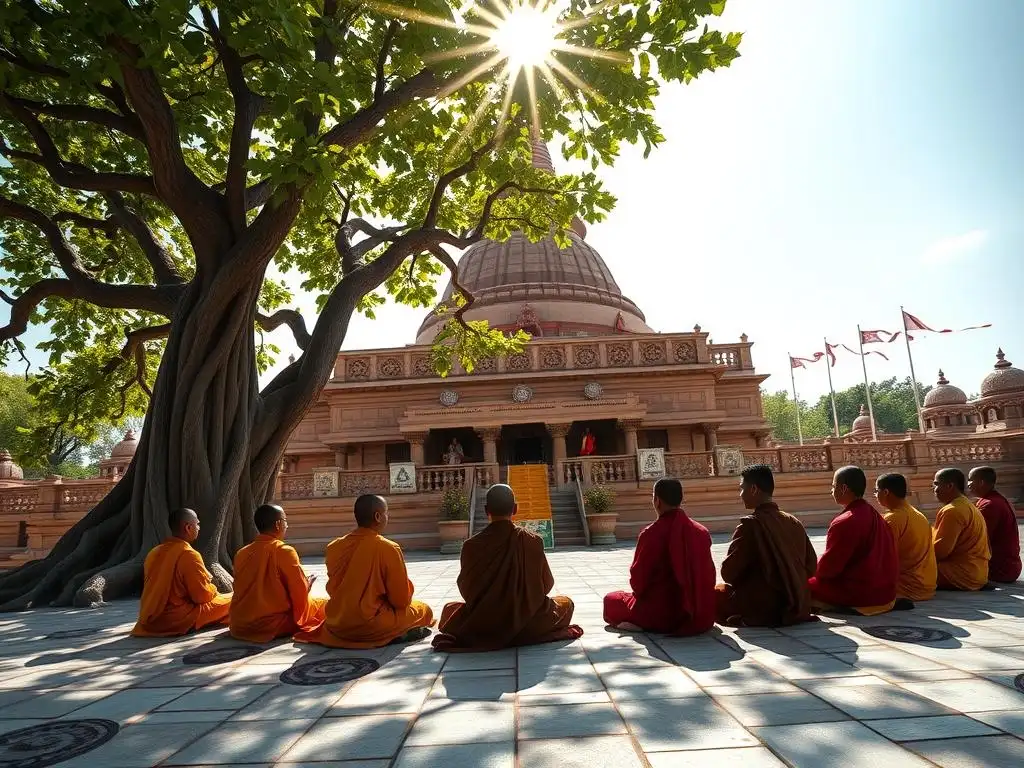
Welcome to Ancient India History, where we embark on an enthralling journey through the tapestry of one of the world's oldest civilizations. Here, we delve into the profound role of Buddhist monks in ancient India, uncovering how these dedicated individuals became the custodians of spiritual wisdom and cultural heritage. Their influence stretched from the serene landscapes of the Indus Valley to the flourishing realms of the Gupta Empire, shaping the very essence of Indian thought.
Are you ready to explore the fascinating world of Buddhist monasticism and its lasting impact on religion and society? Dive in to discover the teachings that have echoed through the ages!
- Introduction to Buddhist Monasticism in Ancient India
- The Role of Buddhist Monks in Ancient India
- Historical Context of Buddhist Monasticism
- Monastic Life and Practices
- Contribution of Buddhist Monks to the Preservation of Teachings
- Influence of Monasteries on Society
- The Spread of Buddhism through Monastic Efforts
- Notable Monastic Figures in Ancient India
- Challenges Faced by Buddhist Monks
- Conclusion: The Enduring Legacy of Buddhist Monks in Ancient India
- Further Reading and Resources on Buddhist Monasticism
- Frequently Asked Questions
- Final Reflection: The Enduring Legacy of Buddhist Monks in Ancient India
- Embrace the Peace: Take Action Today!
Introduction to Buddhist Monasticism in Ancient India
Buddhist monasticism played a pivotal role in the development and preservation of Buddhist teachings during ancient times in India. As Buddhism emerged around the 5th century BCE, it introduced a new religious and philosophical framework that emphasized principles such as compassion, mindfulness, and the pursuit of enlightenment. Central to this movement were the monks, who dedicated their lives to the study, practice, and dissemination of the Buddha's teachings.
Through rigorous training and communal living, these monks not only upheld the doctrines of Buddhism but also served as custodians of culture, morality, and spiritual guidance. In this article, we will explore the origins of Buddhism, the significance of monastic life, and how Buddhist monks in ancient India contributed to the enduring legacy of this influential tradition.
Overview of Buddhism's Origins and Teachings
Buddhism originated with Siddhartha Gautama, known as the Buddha, who attained enlightenment and shared his insights with the world. His teachings, encapsulated in the Four Noble Truths and the Eightfold Path, provided a comprehensive framework for understanding the nature of suffering and the means to transcend it.
- Four Noble Truths:
- The truth of suffering (Dukkha)
- The origin of suffering (Samudaya)
- The cessation of suffering (Nirodha)
- The path leading to the cessation of suffering (Magga)
- Eightfold Path:
- Right Understanding
- Right Intent
- Right Speech
- Right Action
- Right Livelihood
- Right Effort
- Right Mindfulness
- Right Concentration
The teachings emphasized ethical conduct, mental discipline, and wisdom, forming the foundation of the Buddhist philosophy that would attract countless followers and lead to the establishment of monastic communities across ancient India.
Importance of Monasticism in Preserving Buddhist Teachings
Monasticism became the backbone of Buddhism, facilitating the preservation and propagation of its teachings. The monastic community, known as the Sangha, was crucial for several reasons:
- Education and Training: Monks dedicated their lives to studying the scriptures and engaging in meditation, ensuring the teachings were not only preserved but also lived out in daily practice.
- Community and Support: Monasteries served as centers for community life, where monks could support one another in their spiritual journeys while also providing guidance to lay practitioners.
- Cultural Transmission: Monks played a vital role in spreading Buddhism beyond India, reaching regions such as Central Asia, Southeast Asia, and eventually East Asia, adapting their teachings to local cultures while remaining true to core principles.
Through their unwavering commitment and discipline, Buddhist monks in ancient India ensured that the teachings of the Buddha would endure through the ages, profoundly influencing spiritual thought and cultural practices across civilizations.
The Role of Buddhist Monks in Ancient India

Definition and Purpose of Monks in Buddhism
Buddhist monks, known as bhikkhus in Pali, are individuals who have chosen to renounce worldly life to fully dedicate themselves to the teachings of the Buddha. Their primary purpose is to attain enlightenment (nirvana) through rigorous practice, meditation, and adherence to the monastic code (Vinaya). This commitment involves a life of simplicity, discipline, and ethical conduct, which distinguishes them from lay practitioners.
Monasticism serves several crucial functions within the Buddhist community:
- Preservation of Teachings: Monks are responsible for safeguarding the Buddha's teachings (Dharma) and ensuring their transmission to future generations.
- Spiritual Guidance: They provide spiritual mentorship to lay followers, helping them apply Buddhist principles in their daily lives.
- Community Service: Monks often engage in activities that benefit society, such as teaching, providing counsel, and participating in charitable works.
The role of monks in ancient India was pivotal, not only in maintaining the integrity of Buddhist teachings but also in shaping the moral and ethical framework of the society around them.
Key Responsibilities of Buddhist Monks
Buddhist monks in ancient India had a range of responsibilities that were integral to their monastic life and the broader Buddhist community. These responsibilities can be categorized into several key areas:
- Meditation and Study:
- Monks dedicate significant time to meditation practices aimed at achieving insight and tranquility. This includes both samatha (calm abiding) and vipassana (insight) meditation.
- Continuous study of the Tripitaka (the Buddhist scriptures) and various commentaries is essential for deepening their understanding of the Dharma.
- Teaching and Dissemination:
- Monks played a vital role in teaching the Dharma to laypeople and novice monks, often delivering sermons and engaging in discussions about Buddhist principles.
- They would travel to different regions, establishing viharas (monasteries) and spreading Buddhism to diverse communities.
- Community Rituals and Ceremonies:
- Participating in and leading rituals, such as ordination ceremonies, almsgiving, and festivals, was an important aspect of a monk’s duties.
- These ceremonies not only reinforce community bonds but also serve as significant teaching moments for lay followers.
- Discipline and Code of Conduct:
- Adhering to the Vinaya Pitaka, which outlines the ethical and behavioral codes for monks, is crucial. This includes rules regarding celibacy, honesty, and non-possessiveness.
- Regular self-monitoring and communal accountability help maintain the integrity of the monastic community.
- Social Engagement:
- Monks often engaged in social issues, addressing the needs of the community through education, healthcare, and mediation in disputes.
- Their presence in society served as a moral compass, promoting values such as compassion, non-violence, and altruism.
The multifaceted responsibilities of Buddhist monks not only contributed to the preservation and spread of Buddhism in ancient India but also established them as respected figures in their communities, bridging the spiritual and social realms of life.
Historical Context of Buddhist Monasticism
Buddhist monasticism in ancient India emerged as a structured and significant aspect of Buddhist practice, primarily instigated by the teachings of Siddhartha Gautama, known as the Buddha. This system of monastic life was not merely a retreat from the world but a comprehensive framework for spiritual development, community living, and the preservation of the Buddha's teachings. Monks, or bhikkhus, played a crucial role in this context, serving as the primary disseminators of Buddhist philosophy and ethical practices.
Emergence of Monastic Communities in Ancient India
The genesis of monastic communities can be traced back to the time of the Buddha in the 6th century BCE. The Buddha advocated for a life of renunciation, emphasizing the Four Noble Truths and the Eightfold Path as the means to attain enlightenment (nirvana). This doctrine attracted a diverse following, including those disillusioned with the prevailing Vedic traditions.
- Formation of the Sangha: The establishment of the Sangha, or the community of monks, was pivotal. The Sangha provided a supportive environment for practitioners to live according to the Vinaya, the monastic code of ethics. This code not only regulated monastic life but also fostered a sense of discipline and communal responsibility.
- Role of Monks: Buddhist monks in ancient India were tasked with preserving and transmitting the teachings of the Buddha. They engaged in:
- Meditation: Practicing deep meditation to attain insight and enlightenment.
- Teaching: Sharing the Buddha's teachings with lay followers, thereby integrating monasticism into the broader societal context.
- Social Welfare: Providing spiritual and sometimes material support to the local communities, which further entrenched their position within society.
The establishment of monastic centers, such as those at Sarnath and Bodh Gaya, became focal points for Buddhist learning and meditation. These centers not only attracted monks but also served as pilgrimage sites for lay followers.
Influence of the Mauryan Empire on Monastic Growth
The rise of the Mauryan Empire in the 4th century BCE marked a significant turning point for Buddhist monasticism. Emperor Ashoka, known for his patronage of Buddhism, played a crucial role in the expansion and institutionalization of monastic communities.
- Imperial Support: Ashoka's endorsement of Buddhism led to the construction of numerous stupas and monasteries, which provided both physical spaces for monks and a means of promoting the religion across the empire. His edicts, inscribed on pillars throughout the empire, emphasized moral conduct and the importance of dharma, further legitimizing the role of Buddhist monks in society.
- International Influence: The Mauryan Empire facilitated the spread of Buddhism beyond India. Monks were sent on missions to regions such as Southeast Asia and the Hellenistic world, where they established new monastic communities. This international outreach not only spread Buddhist teachings but also enriched the monastic tradition with diverse cultural influences.
- Societal Transformation: The support from the Mauryan Empire resulted in a societal shift where monasteries became centers of learning, art, and culture. They attracted scholars, artists, and patrons, leading to the flourishing of Buddhist literature and art.
Through these developments, Buddhist monks in ancient India became vital custodians of teachings, shaping the trajectory of Buddhism as it spread and evolved across different cultures and regions. Their commitment to preserving the Buddha's message laid the groundwork for future generations, ensuring that the principles of Buddhism continued to resonate throughout history.
Monastic Life and Practices
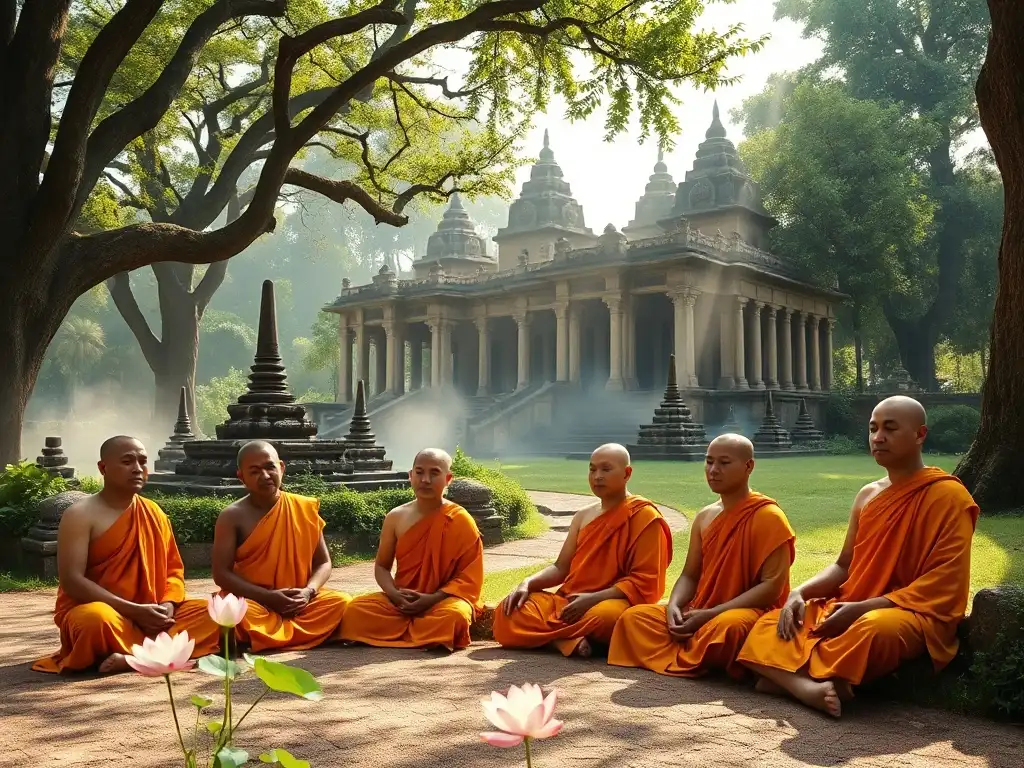
Buddhist monks in ancient India played a crucial role in the preservation and dissemination of Buddhist teachings. Their monastic life was characterized by a strict adherence to rituals, community living, and a deep commitment to spiritual development. This lifestyle not only facilitated personal enlightenment but also ensured the continuity of the Buddha's teachings across generations and geographical boundaries.
Daily Routine and Spiritual Disciplines of Buddhist Monks
The daily routine of Buddhist monks in ancient India was meticulously structured to cultivate mindfulness, discipline, and community. Each day began at dawn with meditation and chanting, which were essential for centering the mind and preparing for the day's activities. Key components of their daily routine included:
- Morning Rituals:
- Meditation: Aimed at deepening concentration and insight.
- Chanting: Reciting of sutras and verses to invoke blessings and reinforce teachings.
- Alms Round:
- Monks often engaged in bhiksha, or alms-seeking, where they would walk through the village to collect food. This practice not only provided sustenance but also reinforced the connection between the monastic community and the laypeople.
- Study and Reflection:
- After returning from alms, monks would engage in the study of texts and teachings, often discussing interpretations and applications with fellow monks. This communal study was vital for reinforcing understanding and teaching.
- Afternoon Activities:
- Monks would typically engage in communal work, such as maintaining the monastery, gardening, or performing tasks that benefited the community. This labor was considered a form of meditation in action.
- Evening Practices:
- The day concluded with further meditation and reflection on the teachings learned throughout the day, preparing the monks for restful sleep and spiritual growth.
This structured routine was designed to support the monks' spiritual disciplines, including right speech, right action, and right livelihood, which are integral to the Eightfold Path.
The Vinaya: Rules Governing Monastic Conduct
Central to the monastic life of Buddhist monks in ancient India was the Vinaya Pitaka, a collection of rules and guidelines that governed monastic conduct. The Vinaya served several important purposes:
- Discipline and Order:
- The rules established a code of conduct that promoted harmony and cooperation within the monastic community. Monks were required to adhere to strict rules concerning behavior, attire, and interactions with laypeople.
- Ethical Standards:
- The Vinaya outlined ethical conduct, including prohibitions against theft, sexual misconduct, and false speech. Observing these rules was essential for maintaining the moral integrity of the monastic order.
- Community Life:
- The Vinaya emphasized the importance of communal living and decision-making. Monks were encouraged to engage in discussions and resolve conflicts collectively, fostering a sense of unity and purpose.
- Training and Development:
- Many of the rules were designed to aid in spiritual training, ensuring that monks remained focused on their practice and personal development. For instance, restrictions on certain forms of entertainment and indulgences helped monks cultivate detachment and mindfulness.
The adherence to the Vinaya not only shaped the individual character of monks but also reinforced the foundations of Buddhism as a community-oriented practice. Through these rules, the monks preserved the teachings of the Buddha and ensured that they were transmitted accurately and respectfully to future generations.
Contribution of Buddhist Monks to the Preservation of Teachings
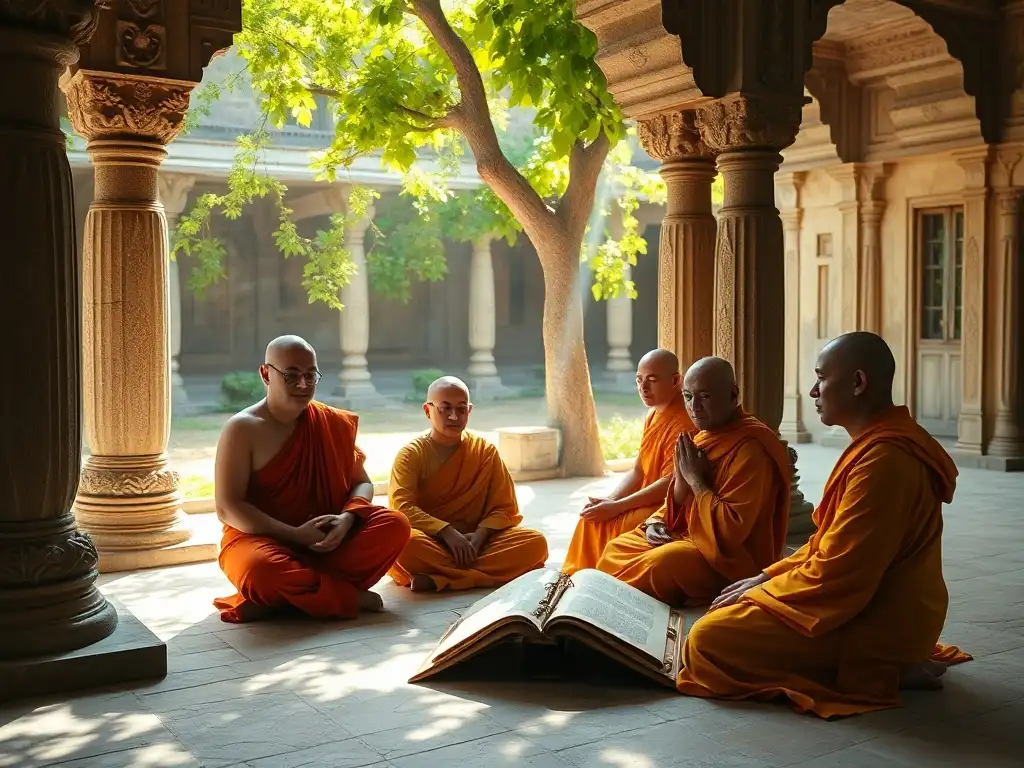
Buddhist monks in ancient India played a pivotal role in the preservation and transmission of Buddhist teachings, ensuring that the core philosophies and practices of Buddhism were maintained and disseminated throughout the centuries. Their commitment to monastic life and scholarly pursuits allowed them to safeguard a wealth of religious texts and teachings, which would go on to influence not only India but also various cultures across Asia.
The establishment of monastic communities, or viharas, served as centers of learning and spiritual practice. Within these spaces, monks dedicated themselves to rigorous study, meditation, and teaching, which was crucial for the survival of Buddhism during periods of political upheaval and social change. This section delves into the specific contributions of Buddhist monks in two key areas: the transmission of Buddhist texts and scriptures, and their role in oral tradition and education.
Transmission of Buddhist Texts and Scriptures
The transmission of Buddhist texts and scriptures is a testament to the diligence of Buddhist monks in ancient India. The early teachings of the Buddha were initially passed down orally, but as Buddhism grew, the necessity for written records became evident. Monks took on the responsibility of compiling, preserving, and copying these texts, ensuring their accessibility for future generations.
- Key Texts: Important scriptures such as the Tripitaka (Pali Canon) and various sutras were meticulously transcribed by monks. The Tripitaka consists of three "baskets": the Vinaya Pitaka (rules for monastic discipline), the Sutta Pitaka (discourses of the Buddha), and the Abhidhamma Pitaka (philosophical and doctrinal analysis). Each of these texts played a crucial role in shaping Buddhist thought and practice.
- Translation Efforts: Monks were also involved in translating texts into different languages as Buddhism spread beyond India. This included translating key scriptures into Chinese, Tibetan, and other regional languages, which facilitated the growth of Buddhism across Asia and preserved its teachings in diverse cultural contexts.
- Scriptural Schools: Various monastic schools emerged, each specializing in different aspects of Buddhist teachings. For example, the Nalanda University, a renowned monastic university, attracted scholars and monks from across Asia who contributed to the vast body of Buddhist literature, thereby enhancing the transmission of knowledge.
Role in Oral Tradition and Education
Oral tradition played a significant role in the preservation of Buddhist teachings, especially in the early years of the religion. Monks acted as custodians of oral teachings, ensuring the accurate transmission of the Buddha's words and philosophies.
- Memorization Practices: Monks engaged in rigorous memorization techniques, which were essential for preserving the teachings before they were committed to writing. This included chanting and reciting texts, a practice that not only reinforced memory but also fostered a deep understanding of the teachings.
- Teaching and Mentorship: The role of monks extended beyond personal study; they were pivotal in educating laypeople and new monks. Through lectures, discussions, and personal guidance, monks disseminated knowledge and encouraged the practice of Buddhist principles among their communities.
- Monastic Education Systems: Monasteries became centers for education, where monks trained in various subjects, including philosophy, ethics, and meditation techniques. This structured approach to education ensured that the teachings of Buddhism were not only preserved but also actively taught and practiced.
The contributions of Buddhist monks in ancient India were instrumental in preserving and transmitting the teachings of Buddhism. Their dedication to the preservation of texts, commitment to oral traditions, and emphasis on education laid the groundwork for the longevity and spread of Buddhist philosophies, making them a cornerstone of ancient Indian history.
Influence of Monasteries on Society
Buddhist monasteries played a crucial role in shaping the social, educational, and spiritual landscapes of ancient India. As centers of learning and reflection, monasteries not only provided a space for monks to study and meditate but also became focal points for the exchange of ideas and cultural practices. Their influence extended beyond monastic walls, impacting local communities and contributing to the broader acceptance and spread of Buddhist teachings.
Monastic Centers as Places of Learning and Reflection
Monastic centers, or vihara, served as significant educational institutions in ancient India. These places attracted scholars, philosophers, and students from diverse backgrounds, contributing to a vibrant intellectual environment. Key features of monastic centers include:
- Curriculum: The curriculum often encompassed a variety of subjects including philosophy, logic, grammar, and medicine. Monks were trained in the Pali language, which was essential for studying the original Buddhist texts.
- Notable Centers: Prominent monasteries such as Nalanda and Vikramashila became renowned for their comprehensive educational systems. Nalanda, for instance, is believed to have housed thousands of students and teachers, making it a leading university in the ancient world.
- Cultural Exchange: These monastic hubs facilitated cultural interactions. Scholars from regions such as China, Tibet, and Central Asia traveled to India to learn from Buddhist masters, leading to a rich exchange of ideas that would later influence Buddhist practices across Asia.
- Reflection and Meditation: In addition to academic pursuits, monasteries provided monks with the necessary tranquility for meditation and spiritual growth. This reflective practice was fundamental in preserving the core teachings of Buddhism, enabling monks to deepen their understanding and practice of the Dharma.
The impact of these centers was profound, as they not only fostered the growth of Buddhism but also contributed to the overall intellectual and cultural development of ancient Indian society.
Interaction Between Monks and Lay Practitioners
The relationship between Buddhist monks and lay practitioners was pivotal in the propagation of Buddhist teachings throughout ancient India. This interaction can be categorized into several key aspects:
- Teaching and Guidance: Monks often served as spiritual guides for lay practitioners, offering teachings on ethics, meditation, and the Four Noble Truths. This mentorship helped lay followers cultivate a deeper understanding of Buddhist principles and integrate them into their daily lives.
- Community Support: Monastic communities relied on lay supporters for material needs such as food, clothing, and shelter. In exchange, lay practitioners sought spiritual benefits, including merit accumulation through almsgiving. This symbiotic relationship strengthened community bonds and reinforced the monks' role as spiritual leaders.
- Festivals and Rituals: Monks participated in various religious festivals and rituals that involved laypeople, creating a vibrant communal atmosphere. Important events such as Uposatha (observance days) and Buddhist holidays provided opportunities for collective practice and celebration of the Dharma.
- Public Discourses: Monks often held public discourses, attracting large audiences eager to learn about Buddhist teachings. These events not only educated laypeople but also served to enhance the visibility and relevance of Buddhism in society.
Overall, the interaction between Buddhist monks and lay practitioners was instrumental in fostering a dynamic Buddhist community that thrived on mutual support and shared spiritual goals. This relationship ensured the continuity of Buddhist teachings and played a significant role in the expansion of Buddhism across ancient India.
The Spread of Buddhism through Monastic Efforts
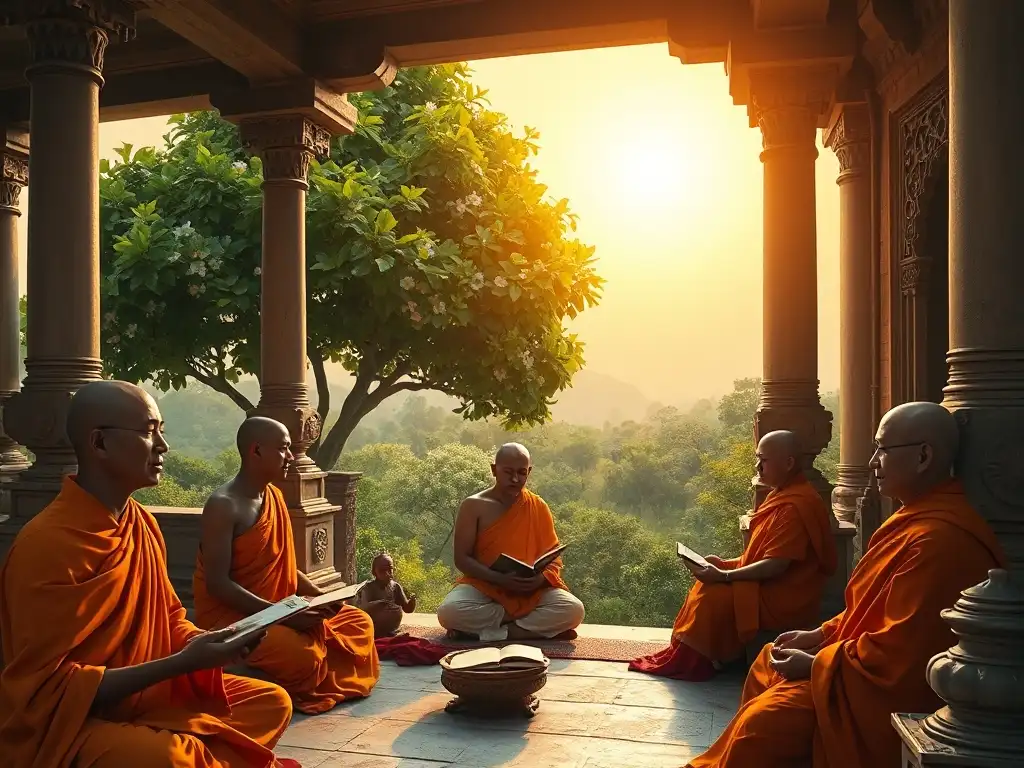
Buddhist monasticism played a pivotal role in the spread of Buddhism throughout ancient India and beyond. Monks, who dedicated their lives to the teachings of the Buddha, acted as both spiritual leaders and guardians of Buddhist philosophy. Their commitment to a monastic lifestyle not only fostered a profound understanding of Buddhist teachings but also provided the means to disseminate these teachings across vast regions.
Buddhist Pilgrimage Routes and Trade Networks
Buddhist monks were instrumental in establishing and maintaining pilgrimage routes that connected significant religious sites throughout India. These routes facilitated the movement of monks and pilgrims, allowing for the exchange of ideas and cultural practices.
- Key Pilgrimage Sites:
- Bodh Gaya: The site of the Buddha's enlightenment, which became a focal point for pilgrims.
- Sarnath: The location of the Buddha's first sermon, attracting monks and followers seeking to deepen their understanding.
- Kushinagar: The place of the Buddha's passing, serving as a destination for those wishing to pay their respects.
The intertwining of pilgrimage routes with trade networks further enhanced the spread of Buddhism. Merchants traveling along the Silk Road and other trade routes often interacted with monks, leading to a mutual exchange of goods, culture, and ideas. This connection is evident in historical records that reveal how Buddhist teachings traveled alongside trade goods, enriching the cultural landscape of regions like Central Asia, Southeast Asia, and even as far as China.
Diplomatic Missions and Cultural Exchange
In addition to pilgrimage and trade, Buddhist monks participated in diplomatic missions and cultural exchanges that significantly contributed to the religion's spread. Kings and rulers often sought the counsel of monks for their wisdom, leading to official endorsements of Buddhism within various kingdoms.
- Notable Examples:
- Emperor Ashoka: A key figure in the promotion of Buddhism, he sent monks as emissaries to regions such as Sri Lanka and Central Asia. His edicts, inscribed on pillars and rocks, emphasized moral values rooted in Buddhist teachings, further encouraging conversion.
- Silk Road Diplomacy: During the height of the Silk Road, monks acted as cultural ambassadors, fostering goodwill and understanding between disparate cultures. This diplomatic role helped establish Buddhism not just as a religion but as a cultural force influencing art, philosophy, and governance.
Through these multifaceted efforts, Buddhist monks in ancient India laid the groundwork for a global movement that transcended geographical boundaries. Their dedication to preserving and sharing the teachings of the Buddha has left an indelible mark on history, shaping the spiritual landscape of many regions and cultures.
Notable Monastic Figures in Ancient India
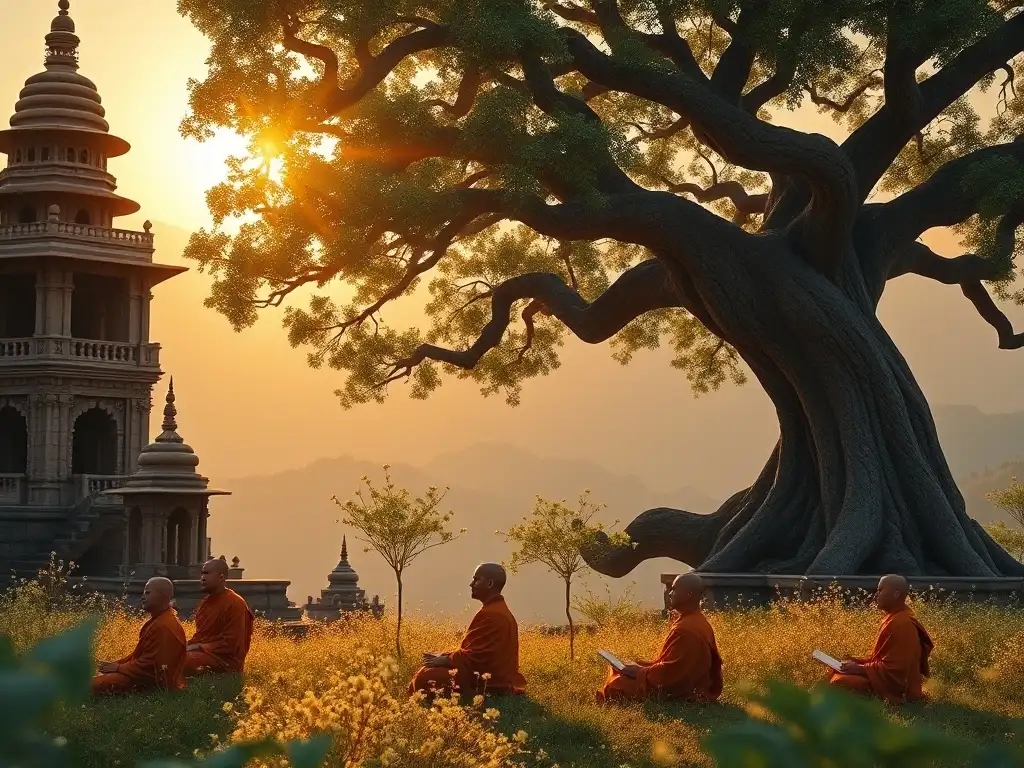
Contributions of Key Figures to Buddhist Teachings
In ancient India, several prominent Buddhist monks played vital roles in shaping and preserving Buddhist teachings. These monks not only contributed to the doctrinal development of Buddhism but also influenced its practices and ethical frameworks. Here are some of the most notable figures:
- Buddhaghosa (c. 5th century CE)
- A renowned Theravada monk and scholar, Buddhaghosa is best known for his comprehensive commentaries on Buddhist texts, particularly the Visuddhimagga (Path of Purification). This work synthesizes earlier teachings and provides a systematic approach to meditation and ethical conduct, making it a crucial text for subsequent Buddhist practice.
- Ashvaghosha (c. 1st century CE)
- Ashvaghosha was a poet and philosopher credited with writing the Buddhacharita, a biography of the Buddha that not only narrates his life but also elucidates core Buddhist principles. His poetic style helped popularize Buddhist teachings and made them accessible to a wider audience.
- Nagarjuna (c. 2nd century CE)
- A pivotal figure in Mahayana Buddhism, Nagarjuna is known for developing the concept of sunyata (emptiness). His philosophical texts, including the Madhyamaka school of thought, challenged existing views and laid the groundwork for later Mahayana doctrines, influencing generations of monks and scholars.
- Atisha (c. 982–1054 CE)
- Atisha was instrumental in the revival of Buddhism in India and its spread to Tibet. His teachings emphasized the importance of compassion and altruism, leading to the establishment of the Bodhicharyavatara, a key text in the Mahayana tradition that focuses on the path of the bodhisattva.
These figures not only preserved the teachings of the Buddha but also adapted them to meet the spiritual needs of their times, ensuring that Buddhism remained a dynamic and evolving tradition.
Legacy of Influential Monks in the Spread of Buddhism
The contributions of ancient Buddhist monks were not limited to doctrinal development; their influence extended far beyond India, facilitating the spread of Buddhism across Asia. Below are key aspects of their legacy:
- Establishment of Monastic Centers
- Monks were instrumental in establishing monastic institutions, such as the famous Nalanda University, which became a hub of learning and attracted students from various regions, including China, Korea, and Tibet. These centers played a crucial role in disseminating Buddhist teachings and practices.
- Translation of Texts
- Monks were responsible for translating Buddhist scriptures into local languages, making the teachings accessible to a broader audience. This translation movement was pivotal in regions such as Central Asia and East Asia, where monks like Kumarajiva translated texts into Chinese, significantly impacting the transmission of Buddhism.
- Cultural Integration
- Influential monks often adapted Buddhist teachings to align with local customs and beliefs, which facilitated the acceptance of Buddhism in diverse cultures. By integrating local traditions, they helped Buddhism to flourish in places like Japan and Southeast Asia, where it became interwoven with indigenous practices.
- Missionary Activities
- Many monks took on the role of missionaries, traveling to remote regions to spread the Buddha's message. Figures like Mahinda, the son of Emperor Ashoka, were crucial in establishing Buddhism in Sri Lanka, where it became the dominant religion and influenced other regions in Southeast Asia.
The legacy of these monks is evident in the rich tapestry of Buddhist traditions that exist today, demonstrating their profound impact on the global landscape of spirituality and philosophy. The role of Buddhist monks in ancient India was not only of preservation but also of proactive engagement in the dissemination and adaptation of teachings, ensuring that the wisdom of the Buddha continued to inspire countless generations.
Challenges Faced by Buddhist Monks
Historical Conflicts and Declines in Monastic Influence
Buddhist monks in ancient India confronted numerous challenges throughout their history, significantly affecting their influence and the preservation of teachings. One of the primary challenges arose from historical conflicts among various religious groups. The rise of Hinduism, particularly during the Gupta Empire (approximately 320-550 CE), saw a resurgence of Brahmanical traditions, which led to the marginalization of Buddhist practices. The competition for royal patronage further strained the resources available to Buddhist monasteries.
- Political Turmoil: The invasions by various foreign powers, including the Huns in the 5th century, disrupted the political landscape. Many monasteries were destroyed, and their wealth was plundered. This not only diminished the number of monks but also hindered the transmission of Buddhist teachings.
- Sectarian Strife: Internal conflicts within Buddhism itself, particularly between the Theravada and Mahayana traditions, sometimes resulted in schisms that weakened the monastic community. The lack of a unified doctrine made it challenging to present a cohesive front against external pressures.
Despite these challenges, many monks adapted by engaging in social welfare activities, which helped to retain some influence within communities. They began to focus on education and the translation of texts, ensuring that Buddhist teachings survived, albeit in a diminished capacity.
Modern-Day Issues Relating to Monastic Practice
Buddhist monks today continue to encounter challenges that echo those faced by their ancient predecessors, albeit in a contemporary context. The globalization of religion has led to a variety of modern-day issues impacting monastic life.
- Cultural Assimilation: As Buddhism spreads globally, there is a risk of cultural dilution. Monks may find themselves struggling to maintain traditional practices while adapting to new cultural environments. This can lead to a loss of historical context and understanding of the teachings.
- Materialism and Consumerism: The rise of materialistic values poses a significant challenge. Monastic communities may face pressures to conform to consumer culture, which can conflict with the fundamental Buddhist principles of simplicity and renunciation.
- Technological Influence: The digital age has transformed communication and information sharing. While this can promote the spread of Buddhist teachings, it also brings challenges related to the authenticity of teachings. Monks must navigate misinformation and the superficial understanding of Buddhism that can arise from the internet.
- Declining Monastic Numbers: In some regions, there has been a noticeable decline in the number of individuals entering monastic life. Factors such as changing societal values, economic pressures, and the allure of lay life contribute to this trend, threatening the continuity of monastic institutions.
While the challenges faced by Buddhist monks in ancient India were significant, the resilience and adaptability exhibited by these communities played a crucial role in the preservation of their teachings. Today, modern monks continue to navigate a complex landscape, drawing on the lessons of their predecessors to maintain the relevance and integrity of Buddhism in a rapidly changing world.
Conclusion: The Enduring Legacy of Buddhist Monks in Ancient India
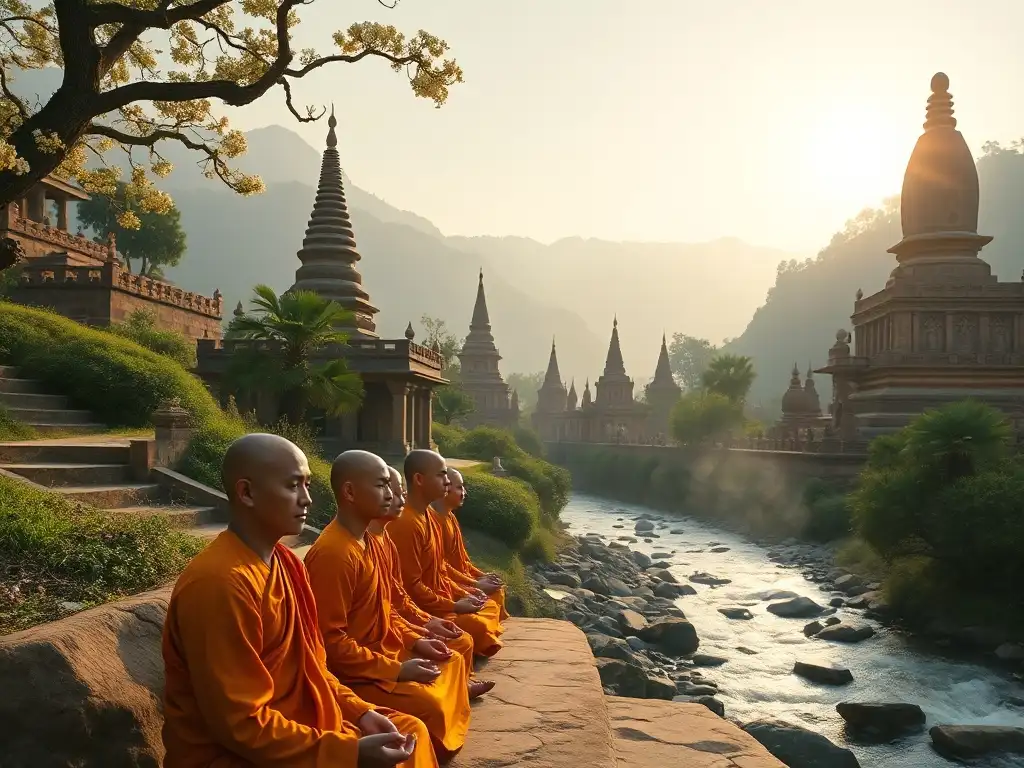
Summary of Their Role in Preserving Teachings
Buddhist monks in ancient India played a pivotal role in safeguarding and disseminating the teachings of the Buddha. Their contributions were multifaceted, encompassing education, textual preservation, and community leadership.
- Education and Training: Monasteries served as centers of learning, where monks educated not only themselves but also laypeople. Key teachings were imparted through rigorous study of texts, meditation practices, and philosophical discourse. This educational framework allowed for the systematic transmission of Buddhist doctrines.
- Textual Preservation: One of the most significant contributions of Buddhist monks was their dedication to preserving sacred texts. Monks meticulously copied manuscripts, ensuring that the teachings of the Buddha were not lost to time. The establishment of the Tipitaka (Pali Canon) stands as a monumental achievement in this regard, as it encapsulated the core teachings of Buddhism.
- Community Leadership: Monks acted as spiritual leaders within communities, guiding lay followers in ethical living and meditation practices. Their role extended beyond the spiritual realm, often involving community service and social welfare, which helped propagate Buddhist values among the populace.
Through these efforts, Buddhist monks not only preserved the teachings of the Buddha but also adapted them to the socio-cultural contexts of their times, ensuring their relevance and accessibility.
Reflection on the Ongoing Influence of Monasticism in Buddhism
The influence of Buddhist monasticism, rooted in ancient India, continues to resonate within contemporary Buddhist practices. This legacy manifests in several key areas:
- Modern Monastic Institutions: Today, numerous monastic institutions around the world trace their origins back to the traditions established by ancient Indian monks. These institutions play a vital role in the ongoing education of monks and the lay community, fostering a deeper understanding of Buddhist teachings.
- Cultural Practices: The rituals and practices developed by ancient monks have been preserved and adapted through generations, influencing local customs and traditions. For instance, meditation techniques and ethical guidelines remain central to many Buddhist communities worldwide.
- Spiritual Guidance: Monks continue to serve as spiritual guides, much like their ancient counterparts. Their teachings on mindfulness, compassion, and ethics resonate with individuals seeking solace and understanding in today’s fast-paced world.
- Global Spread of Buddhism: The foundational work of ancient Buddhist monks laid the groundwork for the global spread of Buddhism. Today, the teachings are practiced across diverse cultures, illustrating the enduring nature of their influence.
The legacy of Buddhist monks in ancient India is not only preserved in historical texts but actively shapes the practice and interpretation of Buddhism today. Their dedication to education, preservation, and community service continues to inspire new generations of practitioners, ensuring that the teachings of the Buddha endure through time.
Further Reading and Resources on Buddhist Monasticism
Recommended Texts and Scholarly Articles
To gain a deeper understanding of the role of Buddhist monks in ancient India, several key texts and scholarly articles offer valuable insights into monastic practices, teachings, and the historical context of Buddhism. Here are some essential readings:
- "The Life of the Buddha" by Bhikkhu Nanamoli
- This comprehensive biography explores the life of Siddhartha Gautama and the early formation of Buddhist monasticism, detailing the principles and practices that shaped the monastic community.
- "Buddhism: A Very Short Introduction" by Damien Keown
- This concise book provides an overview of Buddhist teachings, the significance of monks, and their influence on society and culture in ancient India.
- "The Foundations of Buddhism" by Rupert Gethin
- Gethin's work delves into the origins of Buddhism, emphasizing the role of monastic communities in preserving and transmitting the teachings of the Buddha.
- "Monastic Buddhism in India: The Emergence of the Sangha" by Steven Collins
- This scholarly article examines the historical development of the Sangha, focusing on how Buddhist monks became pivotal figures in the preservation of Buddhist teachings.
- "The Historical Buddha: The Times, Life, and Teachings of the Founder of Buddhism" by Hermann Hesse
- Hesse provides a narrative that not only recounts the life of the Buddha but also highlights the societal impact of monks in ancient India.
Suggested Documentaries and Online Resources
For those interested in visual and interactive learning, several documentaries and online resources provide engaging insights into Buddhist monasticism and the role of monks in ancient India:
- Documentary: "The Buddha: A Documentary" (2010)
- This film by David Grubin presents an in-depth portrayal of the life of the Buddha and the evolution of Buddhism, featuring interviews with prominent scholars and practitioners.
- Documentary: "The Dhamma Brothers" (2007)
- A thought-provoking documentary that follows a group of inmates in an Alabama prison who participate in a Vipassana meditation retreat, linking modern practices to ancient teachings.
- Website: Access to Insight
- A rich online resource that provides a collection of texts, articles, and teachings from the Theravada Buddhist tradition, emphasizing the role of monks and the monastic code (Vinaya).
- Website: Buddhist Geeks
- An interactive platform that offers podcasts, articles, and discussions about contemporary Buddhism, including the relevance of monastic practices in today's world.
- Online Course: "Introduction to Buddhism" (Coursera)
- This free course offers lectures and materials covering the foundational aspects of Buddhism, including the significance of monastic life and the teachings of Buddhist monks in ancient India.
By exploring these resources, readers can gain a comprehensive understanding of Buddhist monks in ancient India and their enduring impact on the preservation and dissemination of Buddhist teachings.
Frequently Asked Questions
What was the role of Buddhist monks in ancient India?
Buddhist monks played a crucial role in the preservation and dissemination of Buddhist teachings and philosophy, acting as both spiritual leaders and educators in ancient Indian society.
How did Buddhist monasticism influence Indian culture?
Buddhist monasticism significantly influenced Indian culture by promoting values of compassion, non-violence, and community living, which shaped social norms and practices across various regions.
What were the main contributions of Buddhist monks?
Buddhist monks contributed to the spread of Buddhist texts, the establishment of monastic universities, and the promotion of art and architecture, particularly in creating stupas and sculptures.
How did the Gupta Empire support Buddhism?
The Gupta Empire provided substantial support to Buddhism through patronage, which led to the flourishing of Buddhist art and architecture, as well as the establishment of monasteries and learning centers.
What is the significance of monastic communities in ancient India?
Monastic communities served as centers of learning and culture, preserving ancient texts, engaging in philosophical debates, and fostering a sense of community among practitioners, ensuring the survival of Buddhist traditions.
Final Reflection: The Enduring Legacy of Buddhist Monks in Ancient India
The role of Buddhist monks in ancient India remains profoundly relevant today, as their dedication to preserving teachings and fostering spiritual growth continues to inspire countless individuals across the globe. In an era marked by rapid change and uncertainty, the timeless wisdom of these monastic figures serves as a beacon of hope and guidance. Their commitment to mindfulness, compassion, and community not only shaped the spiritual landscape of ancient India but also offers a roadmap for navigating the complexities of modern life.
The influence of Buddhist monks transcends time, echoing through the corridors of history and into contemporary society. Their teachings have not only survived the test of time but have also adapted to meet the needs of diverse cultures and communities. As we reflect on their legacy, we recognize that their practices of meditation, ethical living, and communal harmony are more crucial than ever. The mind is everything. What you think you become.
This quote encapsulates the essence of their teachings, reminding us that our thoughts and intentions shape our reality.
As we conclude this exploration of Buddhist monasticism, I invite you to reflect on the lessons imparted by these ancient sages. Consider how you can incorporate mindfulness and compassion into your daily life, fostering a sense of community and understanding in your interactions. Let the teachings of Buddhist monks inspire you to cultivate a deeper awareness of your thoughts and actions, ultimately contributing to a more harmonious world. Embrace the wisdom of the past as a guiding light for the future, and carry forward the legacy of these remarkable individuals in your own journey.
Embrace the Peace: Take Action Today!
Thank you for taking the time to explore the fascinating world of Buddhist monasticism and the vital role that monks have played in preserving centuries of profound teachings. Your interest in this topic not only enhances your understanding but also connects you to a timeless tradition. Now, let’s transform that newfound knowledge into meaningful action!
- Explore a Local Temple: Visit a nearby Buddhist temple to witness the teachings in practice and engage with the community.
- Join a Meditation Group: Find a local meditation class or an online group to experience the tranquility and mindfulness that monks embody.
- Share Your Insights: Discuss what you've learned with friends or on social media to inspire others to appreciate these teachings and the dedication of monks.
How will you incorporate these timeless teachings into your daily life?