
Women in the Upanishads: Philosophical Contributions of Ancient Indian Women

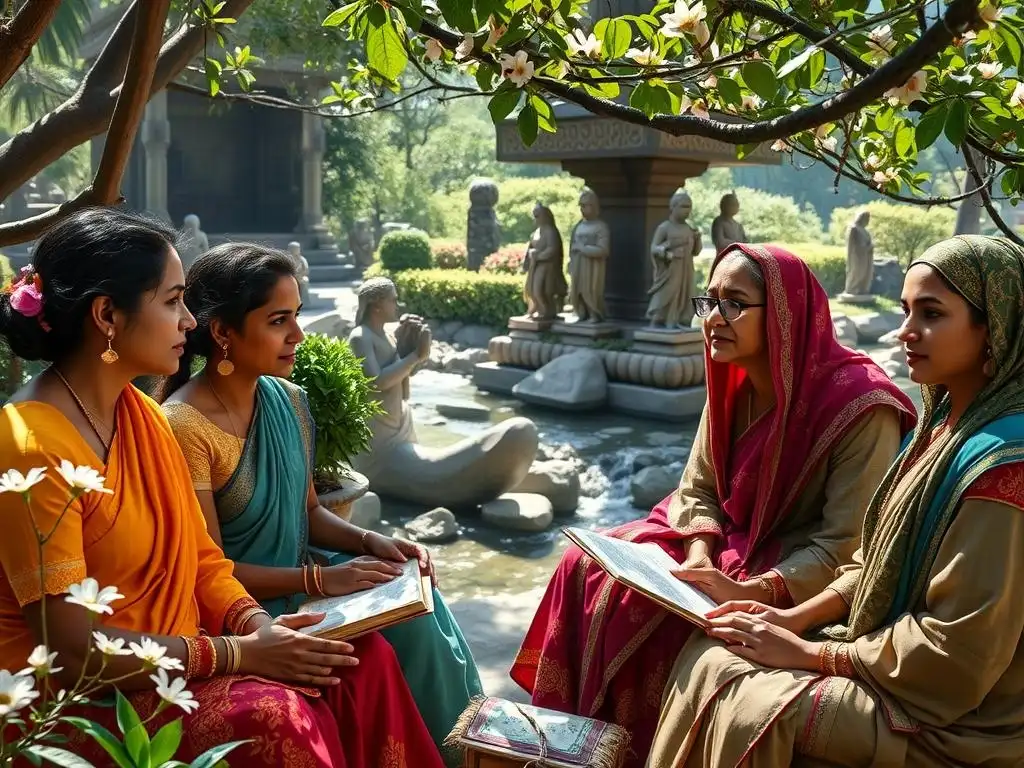
Welcome to Ancient India History, where we embark on a fascinating journey through the rich tapestry of ancient Indian civilizations. Today, we delve into the remarkable philosophical contributions of ancient Indian women, exploring their profound impact on the spiritual and intellectual landscape of their time. In our featured article, "Women in the Upanishads: Philosophical Contributions of Ancient Indian Women," we shine a light on the often-overlooked voices of these pioneering thinkers.
Prepare to uncover the wisdom and insights that these incredible women brought to the philosophical discourse, and join us as we celebrate their enduring legacy. Your exploration of this captivating era begins here—read on to discover more!
Introduction to Ancient Indian Women Philosophers
The contributions of ancient Indian women philosophers remain a largely untold story, overshadowed by their male counterparts in the vast tapestry of Indian philosophy. However, the Upanishads, as significant texts of spiritual and philosophical inquiry, provide a glimpse into the roles and thoughts of these remarkable women.
Delving into the depths of the Upanishads allows us to unearth insights and perspectives that challenge traditional narratives, highlighting the intellectual and spiritual contributions of women in ancient India. By examining the philosophical frameworks within these texts, we can appreciate how ancient Indian women philosophers shaped the discourse on ethics, spirituality, and the nature of reality.
Overview of Women’s Roles in Ancient Indian Philosophy
The role of women in ancient Indian philosophy was multifaceted, encompassing not only philosophical thought but also spiritual leadership and participation in intellectual debates. Women were not merely passive recipients of philosophical ideas; they actively engaged in discussions that influenced religious and philosophical paradigms.
- Key Contributions:
- Women like Gargi and Maitreyi are often cited as prominent figures in the Upanishadic texts, demonstrating their active involvement in philosophical discourse.
- Gargi is known for her probing questions regarding the nature of the universe and the principle of the Brahman, while Maitreyi's dialogues reflect a deep understanding of metaphysics and ethics.
The acknowledgment of these women’s contributions is essential for a comprehensive understanding of ancient Indian philosophy, as their insights serve as a bridge connecting various strands of thought and tradition.
Importance of the Upanishads in Indian Thought
The Upanishads are revered as the culmination of Vedic thought, encapsulating profound philosophical ideas and spiritual insights. They represent a turning point in Indian philosophy, transitioning from ritualistic practices to a more introspective inquiry into the nature of existence.
- Philosophical Significance:
- The texts explore the concepts of Atman (the self) and Brahman (the ultimate reality), offering a framework for understanding the relationship between the individual and the cosmos.
- They encourage a quest for knowledge and self-realization, emphasizing the importance of personal experience and introspection.
In this context, the contributions of ancient Indian women philosophers within the Upanishads enhance the richness of these philosophical discussions, providing diverse perspectives on fundamental questions.
Historical Context of the Upanishads
To appreciate the contributions of ancient Indian women philosophers fully, it is crucial to understand the historical context in which the Upanishads were composed. This era was characterized by significant philosophical development and social transformation.
The Era of the Upanishads: Timeline and Significance
The Upanishads were composed during a period known as the late Vedic age, approximately between 800 and 200 BCE. This era witnessed a shift from the ritualistic traditions of the Vedic texts to a focus on philosophical inquiry.
- Key Milestones:
- The emergence of various schools of thought, including Vedanta and Samkhya.
- The growth of asceticism and the questioning of established norms, which opened avenues for women to engage in philosophical discussions.
Understanding this timeline allows us to contextualize the roles of women in these philosophical developments, highlighting their contributions as both thinkers and spiritual leaders.
Philosophical Foundations of the Upanishadic Texts
The Upanishadic texts are rooted in a rich tradition of philosophical inquiry that emphasizes experiential knowledge over dogma. They encourage questioning and rational discourse, which were pivotal for women philosophers.
- Core Philosophical Themes:
- The exploration of ultimate reality ( Brahman) and the nature of the self ( Atman).
- The significance of knowledge ( jnana) and meditation ( dhyana) as pathways to liberation ( moksha).
These themes provided a fertile ground for women philosophers to articulate their thoughts, challenge societal norms, and contribute meaningfully to the philosophical landscape of ancient India. By examining these foundations, we can better appreciate the profound impact of ancient Indian women philosophers on the evolution of religious and philosophical thought.
Key Contributions of Ancient Indian Women Philosophers
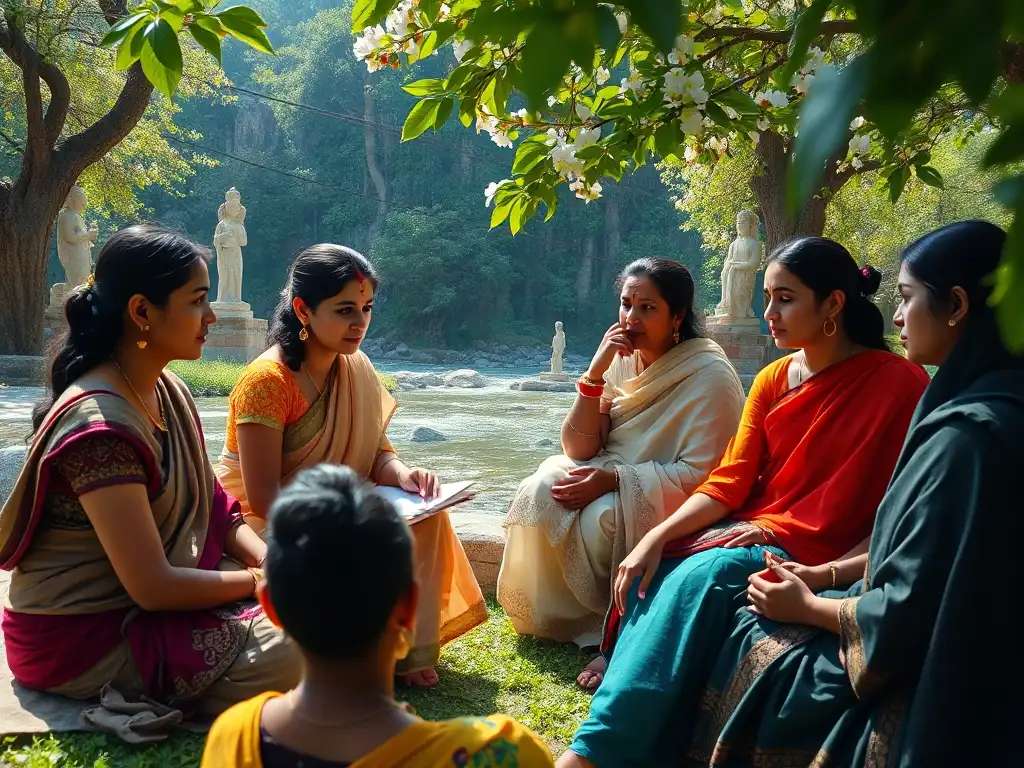
Ancient Indian women philosophers played a significant role in shaping the philosophical landscape of the Upanishads. Their contributions often revolved around deep spiritual insights, ethical considerations, and metaphysical inquiries. While historical records predominantly highlight male philosophers, the voices and thoughts of women such as Gargi and Maitreyi have left an indelible mark on Indian philosophy.
- Metaphysical Insights: Women philosophers contributed to discussions on the nature of the self (Atman) and its relationship to the universe (Brahman). Their inquiries often led to profound realizations about the interconnectedness of all beings.
- Ethical Dimensions: Many female thinkers emphasized virtues such as compassion, non-violence, and truthfulness, advocating for a moral framework that transcended societal norms. Their thoughts resonate with modern ethical discussions, showcasing the timeless relevance of their ideas.
- Dialogical Engagement: The Upanishads include dialogues where women philosophers challenge prevailing notions, showcasing their intellectual agency. This engagement not only reflects their philosophical acumen but also their role in broadening the discourse.
- Spiritual Practices: Women contributed to the understanding of meditation, yoga, and other spiritual practices. Their insights into personal experiences with the divine enriched the philosophical and spiritual traditions of the time.
Prominent Female Figures in the Upanishads
Among the most notable female philosophers in the Upanishads are Gargi and Maitreyi.
- Gargi Vachaknavi: Renowned for her sharp intellect and courage, Gargi is often celebrated for her philosophical debates with sages. She posed challenging questions about the nature of the ultimate reality and the cosmos, which illustrated her deep understanding of metaphysical concepts.
- Maitreyi: Maitreyi is best known for her dialogue with her husband, the sage Yajnavalkya, where she expresses profound insights about the self. Her philosophical inquiry into the nature of existence and the pursuit of knowledge highlights her significant role in the Upanishadic tradition.
These women not only contributed to philosophical discourse but also served as role models, inspiring future generations of thinkers.
Philosophical Themes Explored by Women in the Upanishads
Women in the Upanishads explored various philosophical themes that resonate with contemporary issues:
- Nature of Reality: They delved into questions about the essence of reality, often contemplating the unity of the Atman and Brahman, and questioning the illusory nature of the material world (Maya).
- Self-Knowledge: The pursuit of self-knowledge and the understanding of one's true nature were central themes in their philosophy. They emphasized that true wisdom comes from within and is essential for spiritual liberation (Moksha).
- Interpersonal Relationships: Women philosophers often addressed the dynamics of relationships, highlighting the importance of love, duty, and ethical conduct. Their explorations paved the way for a more nuanced understanding of human connections in a philosophical context.
- Spiritual Liberation: Many women articulated paths to spiritual liberation that emphasized personal experience and introspection, challenging rigid societal structures that limited women's spiritual roles.
Comparative Analysis of Female and Male Philosophers
Analyzing the contributions of female and male philosophers in the Upanishads reveals both similarities and distinctions in their philosophical outlooks.
Differences in Philosophical Perspectives
The perspectives of female philosophers often diverged from their male counterparts, emphasizing relational and experiential knowledge.
- Relational Knowledge: Women philosophers tended to focus more on the interconnectedness of human experiences, advocating for a philosophy that embraced compassion and empathy. This contrasts with the more abstract and analytical approaches typically associated with male philosophers.
- Experiential Insights: Female thinkers often grounded their philosophical inquiries in personal experiences and emotional intelligence, offering a more holistic view of knowledge that includes intuition and feeling, aspects sometimes overshadowed by male-dominated discourse.
Contributions of Men vs. Women in Upanishadic Philosophy
While both male and female philosophers contributed to the philosophical fabric of the Upanishads, their contributions can be seen through distinct lenses:
| Aspect | Male Philosophers | Female Philosophers |
|---|---|---|
| Focus of Inquiry | Abstract concepts, metaphysics | Interpersonal dynamics, ethics |
| Methodology | Dialectical reasoning | Dialogues based on personal experiences |
| Themes Emphasized | Brahman, cosmic order | Self-knowledge, relational ethics |
| Legacy | Prominence in texts and traditions | Subtle influence, often overlooked |
The comparison illustrates that while male philosophers often dominated the narrative, the contributions of ancient Indian women philosophers were equally vital, enriching the philosophical dialogue of the time and providing a more comprehensive view of ancient Indian thought.
Impact of Ancient Indian Women Philosophers on Later Philosophical Thought
Ancient Indian women philosophers played a pivotal role in shaping the philosophical landscape of their time, and their contributions have had a lasting impact on later philosophical thought. Their insights into metaphysics, ethics, and spirituality not only enriched the debate within the Upanishads but also laid the groundwork for future philosophical explorations in India and beyond. Figures like Gargi and Maitreyi challenged prevailing norms and questioned the nature of reality and self, stimulating discourse that would resonate through subsequent generations.
The dialogues from the Upanishads illustrate how these women engaged with complex ideas, often directly challenging male philosophers. This engagement fostered an intellectual environment that encouraged more inclusive discussions, thereby influencing schools of thought such as Vedanta and Yoga. As a result, the philosophical contributions of these women are seen as foundational in the evolution of Indian philosophy.
Influence on Subsequent Philosophical Traditions
The philosophical insights of ancient Indian women can be traced through various subsequent traditions, particularly in the realms of Vedanta and Bhakti. For instance, Gargi’s inquiries into the nature of the self and the universe influenced metaphysical discussions in later texts. Her famous dialogue with Yajnavalkya in the Brihadaranyaka Upanishad not only highlighted her intellectual prowess but also set a precedent for questioning and challenging established norms in philosophical discourse.
Moreover, the Bhakti movement, which arose centuries later, drew inspiration from these early philosophical contributions. The emphasis on personal devotion and the pursuit of self-knowledge echo the themes explored by women like Maitreyi who articulated the importance of inner experience and personal realization. Thus, ancient Indian women philosophers provided a framework that later thinkers would build upon, fostering a rich tradition of philosophical inquiry that emphasized inclusivity and the quest for truth.
Recognition in Modern Scholarship
In recent years, there has been a renewed interest in the contributions of ancient Indian women philosophers, with scholars striving to bring their voices and ideas to the forefront of philosophical discourse. Modern scholarship has begun to recognize the critical roles these women played, not only in philosophical discussions but also in the shaping of religious and cultural narratives of their time.
Researchers are increasingly analyzing texts from the Upanishads to highlight the intellectual contributions of figures like Gargi and Maitreyi. Academic works and conferences focusing on gender studies and philosophy have begun to explore how these women’s insights can inform contemporary discussions on gender, spirituality, and ethics. This growing recognition is essential for a more comprehensive understanding of ancient Indian philosophy and its diverse contributors, ensuring that the legacy of ancient Indian women philosophers is preserved and celebrated.
Challenges Faced by Women Philosophers in Ancient India
Despite their significant contributions, ancient Indian women philosophers faced numerous challenges that hindered their full participation in philosophical discourse. Societal norms and gender roles often dictated the boundaries of women’s intellectual engagement, leading to their marginalization in historical narratives.
Societal Norms and Gender Roles
The patriarchal structure of ancient Indian society imposed strict limitations on women’s roles, often relegating them to domestic spheres. While some women managed to transcend these boundaries and engage in philosophical inquiry, many others were discouraged from pursuing such paths. The Upanishads, while containing voices of women philosophers, also reflect the societal norms of the time that often prioritized male perspectives.
The cultural expectations surrounding marriage and motherhood frequently conflicted with the pursuit of intellectual endeavors. Women like Gargi and Maitreyi are exceptional cases, but their stories also underscore the struggles faced by women thinkers who sought to carve a space for themselves in a predominantly male-dominated field.
Preservation of Women’s Philosophical Works
Another significant challenge lies in the preservation of women’s philosophical works. Many texts authored by women were likely lost over time, either through neglect or deliberate exclusion from the canon. The oral tradition, while powerful, often resulted in the erasure of women’s contributions, as their ideas were less frequently documented or transmitted compared to their male counterparts.
The lack of written records has made it difficult for modern scholars to fully appreciate and analyze the breadth of philosophical thought contributed by women in ancient India. Efforts to recover, document, and analyze these lost works are ongoing, with scholars advocating for a more inclusive approach to understanding the historical landscape of Indian philosophy. By addressing these challenges, the contributions of ancient Indian women philosophers can be more accurately represented and recognized in the broader context of philosophical thought.
Conclusion: The Legacy of Ancient Indian Women Philosophers
The legacy of ancient Indian women philosophers is profound and enduring, with their contributions significantly shaping the philosophical discourse within the Upanishads and beyond. These women, often overshadowed by their male counterparts, not only engaged with the spiritual and metaphysical inquiries of their time but also challenged societal norms and expectations regarding gender roles. Their insights into concepts such as the nature of reality (Brahman), the self (Atman), and ethical living continue to resonate in contemporary discussions on philosophy and spirituality.
The philosophical ideas articulated by these women have paved the way for future generations, fostering an inclusive approach to philosophy that recognizes the value of diverse voices. Their legacy invites us to reconsider the historical narrative surrounding philosophy in ancient India, urging us to acknowledge and celebrate the significant roles that women played in shaping spiritual thought.
Summary of Contributions to Indian Philosophy
Ancient Indian women philosophers contributed to various philosophical domains, including metaphysics, ethics, and epistemology, as reflected in the Upanishads. Notable figures such as Gargi and Maitreyi engaged in profound dialogues that not only addressed the nature of existence and consciousness but also emphasized the importance of knowledge and wisdom.
- Gargi Vachaknavi: Known for her debates with sages, Gargi questioned the nature of the ultimate reality and the universe, asserting that true knowledge transcends gender and social status.
- Maitreyi: In her discussions with her husband, she explored the relationship between the self and the universe, advocating for the pursuit of knowledge as a path to liberation.
These contributions illustrate that women were not merely passive recipients of philosophical thought but active participants who shaped the intellectual landscape of their time. Their ideas contributed to a more nuanced understanding of human existence and the cosmos, laying the groundwork for future philosophical inquiries.
The Relevance of Their Teachings Today
The teachings of ancient Indian women philosophers remain remarkably relevant in today's context. As modern society grapples with issues of gender equality, identity, and the quest for knowledge, the philosophical insights provided by these women offer valuable perspectives. Their emphasis on self-realization and the interconnectedness of all beings resonates with contemporary discussions in philosophy, psychology, and spirituality.
Moreover, their teachings encourage a re-examination of gender dynamics within philosophical discourse, advocating for a more inclusive approach that honors the contributions of all individuals, regardless of gender. By recognizing the philosophical contributions of ancient Indian women, we can enrich our understanding of Indian philosophy and promote a more holistic view of its history.
References and Further Reading
Key Texts on Women in the Upanishads
- Upanishads: The foundational texts of Indian philosophy, where many discussions involving women philosophers can be found, particularly in the dialogues of Gargi and Maitreyi.
- “Women in Ancient India” by Kumkum Roy: This book provides insights into the societal roles and contributions of women, including those in philosophical texts.
- “Philosophical Traditions in the Upanishads” by R. C. Sharma: A study that elaborates on the philosophical themes present in the Upanishads, highlighting the contributions of women.
Suggested Academic Resources on Ancient Indian Women Philosophers
- “The Role of Women in the Upanishadic Philosophy”: A journal article exploring the significance of women philosophers in the Upanishads and their impact on philosophical thought.
- “Gargi and Maitreyi: Philosophical Explorations”: An academic paper focusing on the philosophical dialogues of Gargi and Maitreyi, offering insights into their contributions and relevance.
- “Gender and Philosophy in Ancient India”: A comprehensive resource that discusses the intersection of gender and philosophy, highlighting the contributions of women philosophers in ancient India.
- Introduction to Ancient Indian Women Philosophers
- Overview of Women’s Roles in Ancient Indian Philosophy
- Importance of the Upanishads in Indian Thought
- Historical Context of the Upanishads
- Key Contributions of Ancient Indian Women Philosophers
- Comparative Analysis of Female and Male Philosophers
- Impact of Ancient Indian Women Philosophers on Later Philosophical Thought
- Influence on Subsequent Philosophical Traditions
- Recognition in Modern Scholarship
- Challenges Faced by Women Philosophers in Ancient India
- Conclusion: The Legacy of Ancient Indian Women Philosophers
- References and Further Reading
- What role did ancient Indian women play in philosophy?
- Who are some notable ancient Indian women philosophers?
- How were women's contributions to philosophy perceived in ancient India?
- What is the significance of the Upanishads in relation to women philosophers?
- How can we learn more about ancient Indian women philosophers today?
Frequently Asked Questions
What role did ancient Indian women play in philosophy?
Ancient Indian women contributed significantly to philosophical discourse, particularly in texts like the Upanishads, where they explored essential concepts of existence, ethics, and spirituality.
Who are some notable ancient Indian women philosophers?
Women such as Gargi and Maitreyi are recognized for their intellectual contributions in the Upanishads, engaging in profound discussions on knowledge and reality.
How were women's contributions to philosophy perceived in ancient India?
While some ancient texts highlighted women's philosophical insights, societal norms often limited their recognition and participation in broader philosophical debates.
What is the significance of the Upanishads in relation to women philosophers?
The Upanishads serve as a critical source that showcases the philosophical contributions of women, emphasizing their roles as thinkers and teachers in ancient Indian thought.
How can we learn more about ancient Indian women philosophers today?
Exploring texts like the Upanishads and engaging with modern scholarship can provide deeper insights into the philosophical contributions of ancient Indian women and their impact on Indian philosophy.
Final Reflection: The Enduring Legacy of Ancient Indian Women Philosophers
The contributions of ancient Indian women philosophers, as explored in this article, resonate profoundly in today's discourse on gender equality and intellectual heritage. Their insights and philosophies not only shaped the spiritual landscape of their time but also laid the groundwork for contemporary discussions about women's roles in philosophy and society. The recognition of these thinkers serves as a powerful reminder that the pursuit of knowledge and wisdom transcends gender, challenging us to reevaluate the narratives that have historically marginalized women's voices.
The influence of these ancient philosophers continues to echo through the ages, inspiring modern thinkers and activists alike. Their philosophies encourage us to embrace a more inclusive understanding of wisdom, one that recognizes the diverse contributions of all individuals, regardless of gender. As noted by philosopher and activist bell hooks, Life-transforming ideas have always come to me from women.
This sentiment underscores the importance of acknowledging and celebrating the intellectual legacies of women throughout history, particularly those from the Upanishadic tradition, whose thoughts remain relevant in our quest for equality and enlightenment.
As we reflect on the teachings and philosophies of these remarkable women, let us commit to amplifying their voices in our own lives. Consider how you can integrate their wisdom into your daily practices, challenge gender biases in your communities, and advocate for a more equitable representation of women in philosophical discourse. By doing so, we honor their legacy and contribute to a future where the contributions of all thinkers are recognized and celebrated, paving the way for a more inclusive and enlightened society.
Unveil the Wisdom of Ancient Women!
Thank you for exploring the profound philosophical contributions of women in the Upanishads. By delving into this rich tapestry of thought, you’ve uncovered valuable insights that challenge conventional narratives and celebrate the voices of women in ancient India. Now, it's time to take these lessons to heart and share them with others!
Here are some **inspiring actions** you can take today:
- Join a discussion group or online community focused on ancient philosophies, where you can share your newfound knowledge and learn from others.
- Organize a book club centered around texts on the Upanishads, encouraging friends to explore the often-overlooked roles of women in ancient thought.
- Share this article on social media to inspire others to discover the wisdom of these remarkable women in history.
How do you plan to incorporate the insights from the Upanishads into your own life or community?