
The Intersection of Science and Spirituality in Ancient Eastern India


Welcome to Ancient India History, where we embark on a fascinating journey through the rich tapestry of ancient Indian civilizations. Delve into the profound intersection of science and spirituality that flourished in Eastern India, revealing how these two realms coexisted and enriched each other in ways that continue to inspire today. From the innovative marvels of the Indus Valley to the philosophical advancements during the Gupta Empire, each story beckons you to explore deeper. Are you ready to uncover the secrets of how ancient minds bridged the worlds of the tangible and the transcendent? Your adventure begins here!

Introduction to Science and Spirituality in Ancient India
The intersection of science and spirituality in ancient India presents a fascinating tapestry woven from the threads of inquiry, philosophy, and belief. In a region that has long been a cradle of civilization, Eastern India stands out for its unique contributions to both scientific thought and spiritual practices.
From the early days of the Indus Valley Civilization to the flourishing Gupta Empire, the integration of these two domains shaped not only the intellectual landscape but also the cultural ethos of the area. This article aims to delve into how ancient Indian thinkers harmonized empirical observation with metaphysical exploration, leading to advancements that resonate even today.
Overview of Ancient Indian Civilization
Ancient Indian civilization is characterized by its remarkable diversity and complexity. It spanned several millennia, with significant developments occurring in various regions, particularly in the east. Key features include:
- Urban Planning: The Indus Valley Civilization (circa 2500-1900 BCE) showcased advanced urban planning, evident in cities like Mohenjo-Daro and Harappa, with sophisticated drainage systems and grid layouts.
- Philosophical Schools: Various schools of thought emerged, such as Vedanta, Buddhism, and Jainism, each contributing to the dialogue between science and spirituality.
- Cultural Richness: The region was a melting pot of languages, religions, and artistic expressions, facilitating the exchange of ideas that shaped its trajectory.
Importance of the Intersection of Science and Spirituality
The blending of science and spirituality in ancient India is crucial for several reasons:
- Holistic Understanding: Ancient Indian scholars approached knowledge as a unified whole, where scientific inquiry was often driven by spiritual questions and vice versa.
- Innovative Discoveries: This intersection led to significant advancements in fields such as mathematics, astronomy, and medicine, deeply influenced by spiritual practices and philosophies.
- Cultural Legacy: The ideas stemming from this synthesis have had a lasting impact on not only Indian culture but also on global thought, influencing areas like metaphysics and ethics.
Historical Context of Eastern India
The Rise of Ancient Eastern Indian Civilizations
Eastern India, particularly during the early centuries CE, witnessed the emergence of powerful kingdoms that contributed significantly to the region's cultural and intellectual heritage. Notable civilizations include:
- The Maurya Empire: Founded by Chandragupta Maurya, this empire promoted the spread of Buddhism, which emphasized the integration of science and spirituality.
- The Gupta Empire: Often referred to as the Golden Age of India, it was during this period that remarkable advancements in science, mathematics, and philosophy flourished, supported by a strong spiritual framework.
Key Contributions of Eastern India to Science and Spirituality
Eastern India made several key contributions that reflect the synergy of science and spirituality:
- Ayurveda: This ancient system of medicine roots itself in spiritual principles, emphasizing holistic health and well-being.
- Mathematics and Astronomy: Scholars like Aryabhata and Brahmagupta made groundbreaking contributions to mathematics and astronomy, often reflecting spiritual themes in their work.
- Philosophical Texts: Texts such as the Upanishads and Brahmanas explored metaphysical concepts, laying a foundation for the relationship between the material and spiritual worlds.
As we explore the intricate relationship between science and spirituality in ancient Eastern India, it becomes evident that these realms were not seen as opposing forces but rather as complementary aspects of a profound quest for knowledge and understanding.
Philosophical Foundations of Science and Spirituality
The philosophical landscape of ancient Eastern India is deeply intertwined with the concepts of science and spirituality. At its core lies the idea that the universe is a manifestation of both physical laws and spiritual principles. Ancient Indian thinkers sought to understand the nature of reality through a dual lens: the empirical observation of the natural world and the introspective exploration of the self. This intersection is characterized by a holistic view, where the pursuit of knowledge is seen as a path to spiritual enlightenment.
The philosophical doctrines emerging from this synthesis include a variety of schools, each contributing unique perspectives on the relationship between the material and the spiritual. Notably, the concepts of Brahman (the ultimate reality) and Atman (the individual soul) serve as foundational elements, suggesting that understanding the universe is intrinsically linked to understanding oneself. These principles not only guided spiritual practices but also influenced scientific inquiry, leading to a quest for knowledge that encompassed both observable phenomena and metaphysical truths.
Major Philosophical Schools in Ancient India
Several philosophical schools emerged in ancient India, each addressing the relationship between science and spirituality in distinct ways. Among the most influential were:
- Vedanta: This school emphasizes the non-duality of Brahman and Atman, positing that realizing this unity leads to spiritual liberation. Its teachings encourage a scientific inquiry into the nature of consciousness and reality.
- Samkhya: Characterized by its dualistic approach, Samkhya classifies the universe into Purusha (consciousness) and Prakriti (matter). This framework laid the groundwork for understanding biological processes and the laws of nature.
- Yoga: Beyond its physical practices, Yoga represents a comprehensive system for attaining higher states of consciousness. It incorporates elements of psychology and physiology, emphasizing the importance of mental discipline in achieving spiritual and scientific understanding.
- Buddhism: With its emphasis on empirical observation and experiential knowledge, Buddhism offered a different perspective, promoting scientific inquiry into the nature of suffering, the mind, and existence.
These schools collectively contributed to a rich philosophical tradition that embraced both scientific exploration and spiritual practice, fostering a culture of inquiry that continues to influence contemporary thought.
Concepts of Dharma, Karma, and Their Scientific Implications
Central to the philosophical discourse in ancient Eastern India are the concepts of Dharma (cosmic law and order) and Karma (the law of cause and effect). These principles not only informed ethical and moral behavior but also ignited a scientific approach to understanding the universe.
- Dharma represents the natural order that governs both the cosmos and human conduct. It implies that every action has consequences, leading to a systematic exploration of cause-and-effect relationships in nature, which resonates with scientific methodologies.
- Karma, on the other hand, emphasizes the interconnectedness of all actions. The belief that every deed influences future outcomes encourages individuals to observe and analyze behaviors and their impacts, fostering a scientific mindset toward personal and societal progress.
Together, these concepts advocate for a harmonious existence that balances scientific inquiry with spiritual responsibility. This interplay highlights how ancient Indian civilizations viewed the universe as a complex web of interactions, prompting both philosophical contemplation and empirical investigation.
Scientific Advancements in Ancient Eastern India
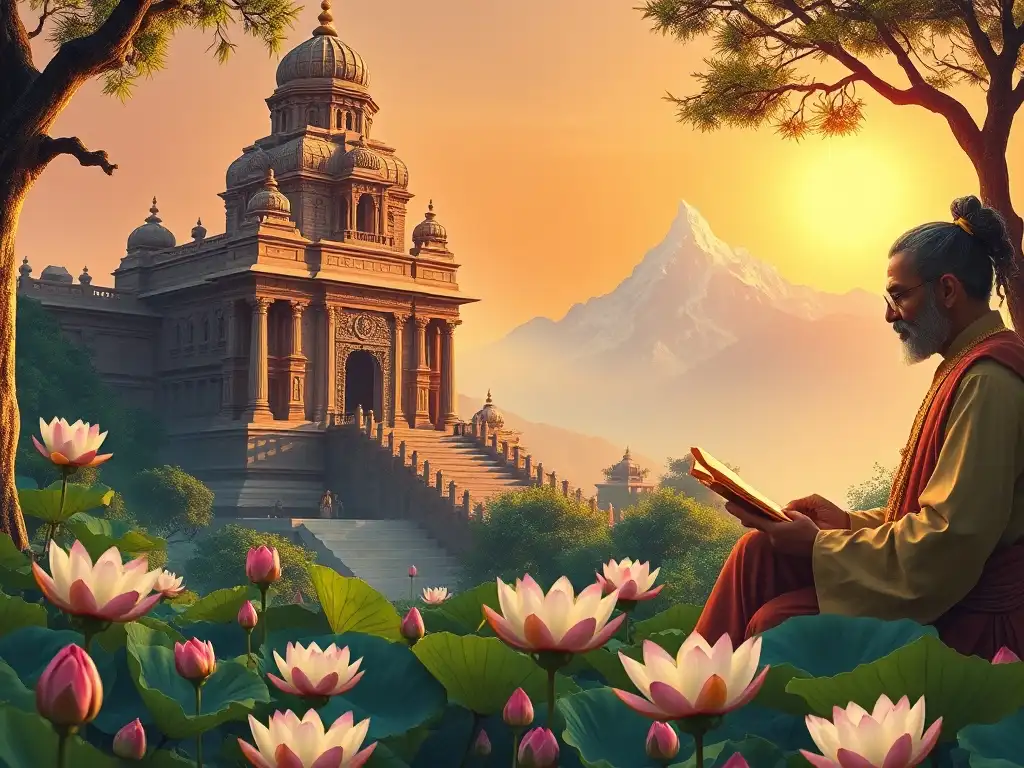
Ancient Eastern India was a cradle of scientific advancements that seamlessly integrated with spiritual beliefs. Scholars and practitioners made significant contributions to various fields, demonstrating a profound understanding of the natural world while maintaining a spiritual perspective.
Astronomy and Astrology: The Celestial Connection
The ancient Indian approach to astronomy and astrology reflects a deep connection between celestial phenomena and human existence. Astronomers like Aryabhata and Brahmagupta made remarkable strides in understanding planetary motions and celestial cycles. They developed sophisticated calculations to predict eclipses and the positions of celestial bodies.
Astrology, or Jyotisha, was viewed not merely as a mystical practice but as a science that could provide insights into human behavior and destiny. The belief that cosmic events influence individual lives led to the systematic study of celestial bodies, reinforcing the connection between the universe and spirituality. This dual approach fostered a culture where scientific inquiry into the cosmos was seen as a means to understand the divine order.
Mathematics and Geometry: The Foundations of Knowledge
Ancient Eastern India is renowned for its groundbreaking contributions to mathematics and geometry. The invention of the decimal system and the concept of zero, attributed to mathematicians such as Brahmagupta, revolutionized mathematical thought. The use of algorithms and sophisticated methods for solving equations demonstrated a high level of analytical skill.
Geometry played a crucial role in various disciplines, including architecture and astronomy. The precise measurements required for constructing temples and observatories reflect a keen understanding of mathematical principles. This blending of mathematics with spiritual practices underscores the belief that numerical patterns and geometrical shapes are manifestations of the underlying order of the universe.
Medicine and Health: Ayurveda and Spiritual Healing
Ayurveda, the ancient Indian system of medicine, exemplifies the intersection of science and spirituality in health practices. Rooted in the principles of balance and harmony, Ayurveda emphasizes the connection between the body, mind, and spirit. Treatments are tailored to individual constitution ( Prakriti), drawing upon an understanding of the natural elements and their influence on health.
The holistic approach of Ayurveda includes herbal remedies, dietary guidelines, and lifestyle practices designed to promote well-being. This system acknowledges the importance of spiritual health, recognizing that mental and emotional states significantly impact physical health. Thus, Ayurvedic practices not only aim to heal the body but also to cultivate spiritual growth, reflecting a profound understanding of the interconnectedness of life.
The advancements in medicine during ancient Eastern India reveal a sophisticated blend of empirical knowledge and spiritual wisdom, highlighting the enduring legacy of this unique intersection of science and spirituality.
Spiritual Practices and Their Scientific Correlations
The spiritual practices of ancient Eastern India were deeply intertwined with an understanding of the natural world, leading to significant correlations between spiritual beliefs and scientific inquiry. This intersection is evident in various forms of spirituality, such as meditation, yoga, and ritualistic practices, which were not just seen as religious duties but also as methods to enhance mental and physical health. Ancient texts frequently emphasize the importance of understanding the self and the universe, reflecting a holistic approach that resonates with modern scientific principles.
By examining these practices, we find that many were founded on empirical observations and aimed at achieving specific outcomes, both physical and mental. For instance, the practice of meditation is now supported by scientific studies that demonstrate its ability to reduce stress, improve concentration, and enhance overall well-being. This synergy between science and spirituality in ancient Eastern India showcases a profound wisdom that continues to influence contemporary thought.
Meditation and Mindfulness: The Science Behind Spiritual Practices
Meditation, a cornerstone of spiritual practice in ancient Eastern India, involves techniques aimed at training the mind and fostering a sense of inner peace. Historically, it was believed that meditation not only connected individuals with the divine but also facilitated deeper understanding of consciousness. Contemporary research has corroborated these ancient beliefs by revealing numerous psychological and physiological benefits.
Studies indicate that regular meditation can lead to changes in brain structure, particularly in areas related to attention, emotional regulation, and self-awareness. For example, the practice has been shown to increase gray matter density in the hippocampus, which is associated with memory and emotional regulation. Furthermore, mindfulness meditation has been linked to reduced levels of cortisol, the stress hormone, thus promoting a healthier mind and body. This scientific validation of meditation practices illustrates the profound connection between ancient spiritual techniques and modern psychological understanding.
Yoga: Physical and Spiritual Integration
Yoga, another significant aspect of ancient Eastern spirituality, embodies the integration of physical and spiritual practices. The ancient texts, such as the Yoga Sutras of Patanjali, emphasize the importance of physical postures (asanas) as a means to prepare the body for deeper spiritual pursuits. This holistic approach posits that physical health is intrinsically linked to spiritual well-being.
Recent scientific research supports the benefits of yoga, demonstrating its role in improving flexibility, strength, and balance, as well as its capacity to alleviate anxiety and depression. By engaging in yoga, practitioners not only enhance their physical condition but also cultivate a sense of mindfulness and emotional resilience. Through these practices, ancient Eastern India laid the groundwork for a comprehensive understanding of health that encompasses both body and spirit, which is now being recognized and celebrated in modern wellness paradigms.
Rituals and Their Psychological Effects
Rituals in ancient Eastern Indian spirituality served multifaceted purposes, from reinforcing community bonds to facilitating individual psychological well-being. They were often employed to mark significant life events, enhance spiritual connection, and invoke a sense of purpose. The repetitive nature of rituals can produce a calming effect, akin to the benefits of meditation.
Psychological research has shown that engaging in rituals can help individuals cope with stress and anxiety. Rituals provide structure and predictability, which can be particularly comforting during times of uncertainty. Furthermore, the communal aspect of rituals fosters a sense of belonging, enhancing social bonds and emotional support. Thus, the rituals of ancient Eastern India not only served spiritual purposes but also contributed to mental health, illustrating the powerful intersection of spirituality and psychology.
Case Studies of Prominent Figures
Aryabhata: Bridging Science and Spirituality
Aryabhata, one of the most renowned mathematicians and astronomers of ancient India, exemplifies the synthesis of science and spirituality. Born in the 5th century CE, his work laid the foundation for various scientific principles, particularly in the field of astronomy. Aryabhata's treatise, the Aryabhatiya, showcases his mathematical prowess and introduces concepts such as zero and the decimal system.
Moreover, Aryabhata's scientific inquiries were deeply influenced by his spiritual beliefs. He approached the study of the cosmos not merely as an intellectual pursuit but as a means to understand the divine order of the universe. His belief in the interconnectedness of all things reflects a spiritual perspective that sees science as a path to deeper truths. This integration of scientific thought and spirituality positions Aryabhata as a pivotal figure in the history of ancient Indian intellectual tradition.
Charaka: The Spiritual Roots of Medical Science
Charaka, a preeminent figure in the field of Ayurveda, represents the spiritual roots of medical science in ancient India. His seminal work, the Charaka Samhita, is a comprehensive text that outlines the principles of Ayurvedic medicine, emphasizing the balance of body, mind, and spirit. Charaka's approach to health was holistic, focusing not just on physical ailments but also on the emotional and spiritual well-being of individuals.
Charaka's teachings advocate for a lifestyle that harmonizes with nature and encourages self-awareness, reflecting the spiritual ethos of ancient Eastern India. His work demonstrates how medical practices were intertwined with spiritual beliefs, promoting a comprehensive understanding of health that resonates with modern holistic approaches. The legacy of Charaka continues to influence contemporary medical practices, underscoring the enduring connection between science and spirituality in ancient Indian history.
Challenges and Conflicts Between Science and Spirituality
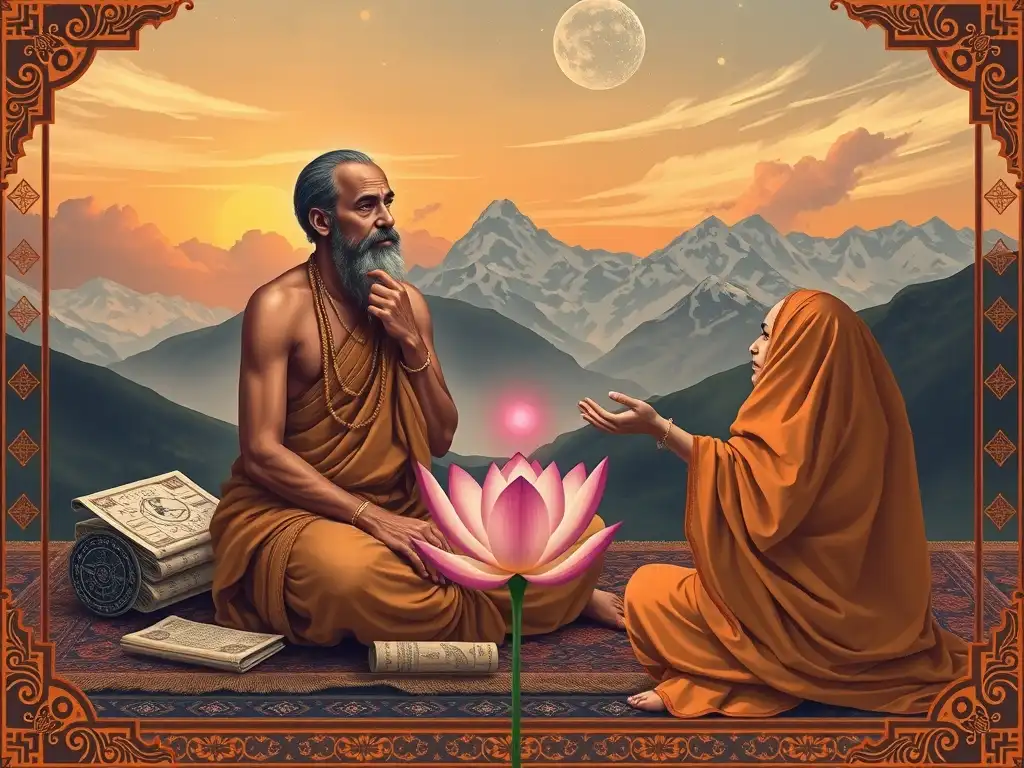
The relationship between science and spirituality in ancient Eastern India was complex and often fraught with challenges. Despite the profound advancements made in various scientific fields, such as mathematics, astronomy, and medicine, these achievements did not always align with spiritual beliefs and practices. The quest for empirical understanding often clashed with the metaphysical perspectives that defined much of Eastern Indian spirituality.
One notable challenge was the interpretation of natural phenomena. For instance, while the Vedic texts provided spiritual explanations for events such as eclipses or the changing seasons, scientists sought to understand these occurrences through observation and rationality. This dichotomy sometimes led to conflicts between scholars who adhered strictly to spiritual doctrines and those who promoted scientific inquiry.
Moreover, the societal structure in ancient India, influenced by caste and religious affiliations, often dictated the acceptance or rejection of new scientific ideas. Individuals advocating for empirical evidence faced resistance from traditionalists, who viewed scientific challenges as threats to established spiritual and cultural norms. This tension created an environment where the integration of science and spirituality was not always smooth, leading to periods of stagnation in scientific advancement due to spiritual dogmatism.
Historical Tensions in Eastern Indian Thought
Historical tensions between science and spirituality in Eastern Indian thought can be traced back to the earliest philosophical systems. Vedic philosophy, with its emphasis on ritual and metaphysics, often prioritized spiritual understanding over empirical observation. Philosophers like Kapila, who founded the Samkhya school, proposed a dualistic approach that distinguished between the material (prakriti) and the spiritual (purusha), creating a framework that sometimes sidelined scientific inquiry.
As the centuries progressed, the rise of Buddhism introduced a new perspective that encouraged empirical observation and reasoning. Figures such as Nagarjuna emphasized the need for a practical understanding of the world, which laid the groundwork for a more scientific approach within certain spiritual contexts. However, the prevailing influence of Brahmanical traditions often led to a resurgence of tensions, as spiritual authorities sought to maintain control over knowledge and interpretation.
The conflicts were not merely philosophical; they extended to practical applications as well. For example, advancements in medicine and mathematics faced scrutiny and resistance from spiritual leaders who feared that these developments could undermine their authority and the traditional ways of life. This ongoing struggle shaped the intellectual landscape of ancient Eastern India, leading to a rich but contentious history of thought.
The Role of Colonial Influence on Perceptions of Science and Spirituality
The colonial period significantly impacted the perceptions of science and spirituality in Eastern India. British colonial rule introduced Western scientific paradigms that often clashed with indigenous spiritual beliefs. This cultural encounter prompted a reevaluation of the relationship between science and spirituality, as colonial authorities promoted the idea that Western science was superior and more credible than traditional knowledge systems.
Indian intellectuals and reformers responded to this dichotomy in various ways. Figures like Raja Ram Mohan Roy and Swami Vivekananda sought to reconcile Eastern spiritual traditions with Western scientific thought. They argued that ancient Indian wisdom contained valuable insights that could coexist with modern science, advocating for a synthesis of the two. Their efforts highlighted the potential for dialogue between science and spirituality, suggesting that each could enrich the other.
However, the colonial narrative often marginalized indigenous knowledge systems, framing them as superstitious or irrational. This perception led to a decline in the confidence of native scholars and practitioners in their own traditions, resulting in a fragmented understanding of science and spirituality. The legacy of colonialism continues to influence contemporary views, often creating a divide between perceived traditional beliefs and modern scientific practices.
The Legacy of Science and Spirituality in Modern Eastern India
The legacy of science and spirituality in modern Eastern India is notable for its attempts at integration and mutual enhancement. While the historical challenges between these domains still linger, contemporary thinkers and practitioners are increasingly working to harmonize scientific inquiry with spiritual wisdom. This integration reflects a broader recognition that both science and spirituality can contribute to a holistic understanding of existence.
Contemporary Relevance of Ancient Practices
In recent years, there has been a resurgence of interest in ancient practices that blend science and spirituality. Techniques such as yoga, meditation, and Ayurveda, rooted in ancient Indian traditions, are now embraced globally for their health benefits and spiritual significance. These practices highlight the relevance of ancient wisdom in addressing contemporary issues, such as stress, mental health, and holistic well-being.
Moreover, many modern scientists and researchers are exploring the intersections of consciousness, quantum physics, and spirituality. This growing field of study seeks to understand how ancient spiritual insights can inform scientific inquiry, leading to new perspectives on the nature of reality and human experience. As a result, ancient practices are being re-evaluated not merely as relics of the past but as valuable resources for modern life.
Integration of Science and Spirituality in Modern Indian Culture
The integration of science and spirituality in modern Indian culture is evident in various sectors, including education, healthcare, and environmental sustainability. Educational institutions are increasingly incorporating holistic approaches that emphasize the interdependence of scientific knowledge and spiritual development. This shift reflects a desire to cultivate well-rounded individuals who appreciate both empirical understanding and spiritual insight.
In healthcare, practices such as integrative medicine are gaining traction, combining traditional healing methods with modern medical practices. This approach recognizes the importance of addressing both physical and spiritual health, promoting a more comprehensive understanding of well-being.
Furthermore, environmental movements in India often draw from spiritual teachings that emphasize respect for nature. These initiatives advocate for sustainable practices rooted in a spiritual sense of interconnectedness with the environment, showcasing how ancient wisdom can inform contemporary ecological challenges.
The legacy of science and spirituality in modern Eastern India presents a dynamic landscape where ancient insights continue to inform and enrich contemporary practices, fostering a dialogue that transcends historical conflicts.
Conclusion: The Enduring Connection of Science and Spirituality in Ancient India
The relationship between science and spirituality in ancient India reflects a profound understanding of the universe and human existence. Eastern Indian civilizations, particularly during the Vedic and post-Vedic periods, showcased an intricate interplay between empirical observation and metaphysical inquiry. Thinkers like Aryabhata and Charaka did not merely seek to explain the physical world but also integrated their findings with philosophical and spiritual insights. This duality allowed for a holistic approach to knowledge, where the pursuit of scientific understanding was not seen as separate from spiritual awakening.
This enduring connection is evident in various texts, such as the Upanishads and the Yoga Sutras, where scientific principles are often interwoven with spiritual concepts. For instance, the idea of the cosmos, time, and the human body is treated with equal reverence in both scientific and spiritual contexts. As such, ancient Indian scholars often perceived their work as a means to understand the divine order of the universe, leading to advancements in mathematics, astronomy, medicine, and philosophy.
Ultimately, the legacy of this intersection serves as a reminder of the importance of unity in knowledge. It encourages contemporary scholars to explore how science and spirituality can coexist, fostering a richer understanding of both domains.
Reflection on the Importance of Understanding This Intersection
Understanding the intersection of science and spirituality in ancient India is crucial for several reasons. Firstly, it highlights the innovative capacities of ancient civilizations in Eastern India, showcasing their ability to blend rigorous inquiry with spiritual practice. Recognizing this can inspire modern scholars and practitioners to adopt a more integrative approach to education, where scientific inquiry is complemented by ethical and spiritual dimensions.
Moreover, this intersection invites a reevaluation of contemporary perspectives that often segregate science and spirituality. In a world facing complex challenges—be they environmental, social, or technological—drawing lessons from ancient approaches can offer valuable insights. For instance, the emphasis on interconnectedness in both scientific and spiritual contexts can inform sustainable practices and promote holistic well-being.
Furthermore, understanding this historical relationship enriches cultural identity and pride. It underscores the contributions of Eastern India to the global knowledge landscape, fostering appreciation for the rich intellectual traditions that have shaped human thought.
Future Directions for Research on Science and Spirituality in Ancient India
Future research on the intersection of science and spirituality in ancient India should focus on several key areas to deepen our understanding and appreciation of this complex relationship.
- Interdisciplinary Studies: Encouraging collaborative research among historians, scientists, and spiritual scholars can yield new insights into how ancient practices informed scientific discoveries and vice versa.
- Textual Analysis: A detailed examination of ancient texts, including commentaries on scientific works and spiritual philosophies, can illuminate the ways in which ancient thinkers synthesized empirical knowledge with spiritual wisdom.
- Comparative Studies: Investigating similarities and differences between the Indian approach to science and spirituality and those from other cultures—such as Chinese or Greco-Roman traditions—can provide a broader context and reveal universal themes in human thought.
- Application to Modern Issues: Researchers could explore how ancient insights into the relationship between science and spirituality can address contemporary challenges, such as mental health, environmental sustainability, and ethical considerations in technological advancement.
- Field Studies: Engaging with traditional practices in Eastern India today, such as Ayurveda or yoga, can highlight the ongoing relevance of ancient knowledge systems and their integration of scientific and spiritual elements.
By pursuing these avenues, scholars can foster a deeper appreciation for the contributions of ancient Indian civilizations to our understanding of the world, encouraging a revival of the integrative approach that characterized their knowledge systems.
- Introduction to Science and Spirituality in Ancient India
- Historical Context of Eastern India
- Philosophical Foundations of Science and Spirituality
- Scientific Advancements in Ancient Eastern India
- Spiritual Practices and Their Scientific Correlations
- Case Studies of Prominent Figures
- Challenges and Conflicts Between Science and Spirituality
- The Legacy of Science and Spirituality in Modern Eastern India
- Conclusion: The Enduring Connection of Science and Spirituality in Ancient India
- What is the main focus of the article "The Intersection of Science and Spirituality in Ancient Eastern India"?
- How did ancient Indian civilizations contribute to science?
- What role did spirituality play in the scientific advancements of ancient India?
- Can you name some prominent figures from ancient India who influenced both science and spirituality?
- How does the article suggest that modern society can learn from ancient India's approach to science and spirituality?
Frequently Asked Questions
What is the main focus of the article "The Intersection of Science and Spirituality in Ancient Eastern India"?
The article explores the deep connections between science and spirituality in ancient Indian civilizations, highlighting their contributions to both fields.
How did ancient Indian civilizations contribute to science?
Ancient Indian civilizations made significant strides in mathematics, astronomy, and medicine, showcasing a holistic approach where spirituality and scientific inquiry coexisted and enriched each other.
What role did spirituality play in the scientific advancements of ancient India?
Spirituality provided a framework for understanding the universe, leading to a philosophical approach to science that emphasized observation and meditative practices as tools for discovery.
Can you name some prominent figures from ancient India who influenced both science and spirituality?
Figures like Aryabhata in astronomy and Charaka in medicine exemplify the blend of scientific thought and spiritual philosophy in ancient India, making lasting contributions to both disciplines.
How does the article suggest that modern society can learn from ancient India's approach to science and spirituality?
The article suggests that modern society can benefit from adopting a holistic perspective that integrates scientific exploration with spiritual wisdom, fostering innovation and well-being.
Final Reflection: Embracing the Harmony of Science and Spirituality in Ancient India
The exploration of the intersection between science and spirituality in ancient India reveals a profound truth: these two realms are not mutually exclusive but rather intricately woven together. Today, as we navigate a world often divided by the dichotomy of empirical evidence and spiritual belief, the wisdom of ancient Eastern India serves as a powerful reminder that both can coexist and enrich our understanding of existence. This harmonious blend invites us to reconsider our modern perspectives on knowledge and faith, urging us to seek a more integrated approach to life's mysteries.
The legacy of ancient Indian thinkers continues to shape our cultural and social landscape, inspiring a resurgence of interest in holistic philosophies that bridge the gap between the material and the metaphysical. The teachings of sages and scientists alike remind us that inquiry into the nature of reality can be both a scientific endeavor and a spiritual journey. As Albert Einstein once said, Science without religion is lame, religion without science is blind.
This quote encapsulates the essence of our exploration, highlighting the necessity of both realms in the pursuit of truth and understanding.
As we reflect on the lessons from ancient India, let us embrace the call to integrate science and spirituality in our own lives. Consider how you can cultivate a deeper awareness of the interconnectedness of all things, fostering a sense of wonder and inquiry that transcends traditional boundaries. Whether through meditation, scientific exploration, or philosophical contemplation, take the time to honor both the empirical and the ethereal. In doing so, we not only enrich our own lives but also contribute to a more harmonious and enlightened world.
Unveil the Mysteries: Merge Science and Spirituality!
Thank you for journeying through the intriguing intersection of science and spirituality in ancient Eastern India! Your curiosity about this rich history not only deepens your understanding but also inspires newfound perspectives. Now, let’s take that inspiration further and transform knowledge into action.
Here are some practical steps you can take:
- Explore ancient texts or documentaries that delve into the philosophies of ancient Indian wisdom. Consider starting with “The Upanishads” or contemporary interpretations that connect ancient thought with modern scientific understanding!
- Participate in community discussions or online forums where you can share insights and learn from others who are passionate about the intersection of science and spirituality.
- Consider starting a blog or journal to reflect on how these ancient teachings can influence modern life — you might be surprised by the revelations that surface!
What new connections between science and spirituality do you find most eye-opening? Let’s discuss in the comments below!