
The Paradox of Zero: How Ancient Indian Mathematicians Resolved Its Dilemmas


Welcome to Ancient India History, where we embark on an enthralling journey through the rich tapestry of India's ancient civilizations. In this exploration, we delve into the fascinating realm of mathematics, uncovering how ancient Indian mathematicians grappled with the profound paradox of zero. What dilemmas did they face, and how did their innovative solutions shape the world of mathematics as we know it today? Prepare to be intrigued as we unravel the complexities and contributions of these brilliant minds, inviting you to dive deeper into the legacy of ancient Indian mathematics history. Your adventure into the past begins now!
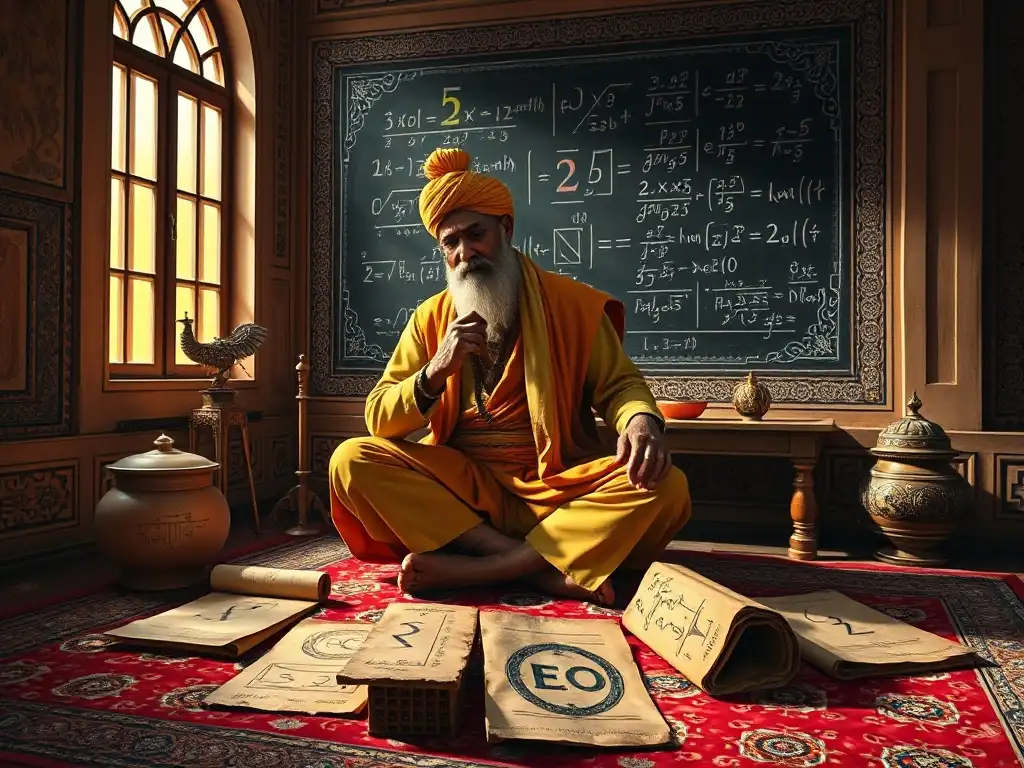
Introduction to Ancient Indian Mathematics History
The history of mathematics is often viewed as a linear progression of ideas and inventions, yet it is also marked by profound paradoxes and challenges that have shaped our understanding of numbers and their applications. One such paradox is the concept of zero, a seemingly simple idea that revolutionized mathematics and made complex calculations possible.
Ancient Indian mathematicians played a pivotal role in resolving the dilemmas associated with zero, thus laying the groundwork for modern mathematics. This article delves into the rich tapestry of ancient Indian mathematics history, exploring how the invention and conceptualization of zero transformed mathematical thought and practice.
Overview of Ancient Indian Contributions to Mathematics
Ancient India was home to some of the most significant mathematical advancements, with scholars such as Aryabhata, Brahmagupta, and Bhaskara making remarkable contributions. The Indian numeral system, which includes the concept of place value, enabled more sophisticated calculations and laid the foundation for arithmetic and algebra. Key achievements include:
- The development of algorithms for arithmetic operations.
- The introduction of negative numbers and their usage in calculations.
- The formulation of rules for solving quadratic equations.
These contributions not only influenced mathematics in India but also had a lasting impact on the global mathematical landscape, especially through interactions with other cultures.
Importance of Zero in Mathematical Development
Zero is more than just a placeholder; it represents the absence of quantity and enables the expression of concepts that would otherwise be impossible. Its introduction into mathematics marked a turning point in the discipline, allowing for:
- More efficient calculations: The use of zero simplified complex arithmetic operations.
- The development of algebra: With zero, mathematicians could solve equations that involve unknowns, significantly advancing the field.
- The conceptualization of infinity: Zero has a unique relationship with infinity, leading to profound philosophical and mathematical discussions.
The journey of zero from an abstract concept to a fundamental element of mathematics showcases the brilliance of ancient Indian scholars and their ability to tackle mathematical paradoxes head-on.
The Concept of Zero in Ancient India
Definition and Significance of Zero in Mathematics
In ancient Indian mathematics, zero was defined not merely as a number but as an essential concept that facilitated the understanding of numerical systems. Known as "shunya," which translates to "void" or "empty," zero served several critical functions:
- As a placeholder: It allowed for the differentiation between numbers like 10 and 100, enhancing the efficiency of the number system.
- As a number in its own right: Zero enabled mathematicians to perform operations involving both positive and negative numbers, expanding the scope of mathematical inquiry.
The significance of zero cannot be overstated; it acted as a gateway to more complex mathematical theories and practices, ultimately influencing various branches of mathematics.
Historical Context: Before Zero in Number Systems
Prior to the conceptualization of zero, various number systems struggled with the representation of nothingness. Ancient civilizations, such as the Greeks and Romans, relied heavily on counting systems that lacked a symbol for zero. This limitation posed several challenges, including:
- Complex calculations: Without zero, performing operations such as addition or multiplication was cumbersome and prone to error.
- Ambiguities in notation: The absence of a placeholder led to confusion in distinguishing between numbers, particularly in large calculations.
The introduction of zero by ancient Indian mathematicians addressed these issues, paving the way for a more coherent and functional numerical system that would eventually be adopted worldwide.
The Development of Zero by Ancient Indian Mathematicians
The concept of zero as a number rather than merely a placeholder emerged significantly in ancient India, revolutionizing mathematics. The earliest recorded use of zero can be traced back to the 5th century CE, particularly in the work of mathematician Aryabhata. He used a symbol for zero, indicating its role in calculations, particularly in positional value systems. This development paved the way for more complex mathematical concepts and calculations.
By the 7th century, the mathematician Brahmagupta further advanced the understanding of zero. He defined zero in his seminal text, the Brahmasphutasiddhanta, where he described operations involving zero, including addition and subtraction. Brahmagupta’s work not only formalized the rules of zero but also highlighted its significance in arithmetic operations, allowing for more sophisticated mathematical reasoning.
The Indian numeral system, which included zero, was eventually transmitted to the Arab world and beyond, influencing mathematics globally. The adoption of zero into the number system facilitated advancements in algebra and calculus, underscoring the pivotal role of ancient Indian mathematicians in shaping mathematical thought.
Key Figures in Ancient Indian Mathematics
Several key figures stand out in the history of ancient Indian mathematics, particularly concerning the development of zero:
- Aryabhata (476–550 CE): Credited with introducing zero as a numeral, Aryabhata's works laid the groundwork for future mathematicians. His contributions included the establishment of a positional number system that incorporated zero, which was crucial for calculations.
- Brahmagupta (598–668 CE): In his text, Brahmasphutasiddhanta, Brahmagupta systematized arithmetic operations involving zero and articulated rules that governed its use. His insights into the mathematical implications of zero were revolutionary for the time.
- Bhaskara I (c. 600–680 CE): A follower of Aryabhata, Bhaskara I further explored the implications of zero in mathematical operations, particularly in his translations and commentaries on Aryabhata’s work.
- Bhaskara II (1114–1185 CE): Also known as Bhaskaracharya, he built upon the foundational work of his predecessors. His seminal work, Lilavati, included practical applications of mathematics, showcasing the utility of zero in solving real-world problems.
These mathematicians not only contributed to the understanding of zero but also significantly influenced the progression of mathematics through their innovative ideas and methods.
The Dilemmas Surrounding Zero in Ancient Mathematics

Despite its pivotal role, zero presented various dilemmas in ancient mathematics that mathematicians had to navigate. One of the primary challenges was the conceptualization of zero itself. Ancient cultures often struggled to reconcile the idea of 'nothingness' with the necessity of a numerical value. This philosophical challenge raised questions about existence, void, and the nature of numbers.
Moreover, the operational use of zero posed further complications. The rules governing arithmetic operations involving zero, such as division by zero, were not well understood. Early mathematicians grappled with the implications of zero in equations, leading to debates about its validity and application in mathematical reasoning.
The transition from zero as a mere placeholder to a fully-fledged number required a shift in mathematical thought. This evolution was not merely technical; it involved profound philosophical inquiries that shaped the trajectory of mathematics in ancient India and beyond.
Philosophical Implications of Zero
The introduction of zero into mathematics had far-reaching philosophical implications. It challenged existing notions of quantity and existence, prompting scholars to explore the concept of 'nothingness.' In various philosophical traditions, including Buddhism and Jainism, the idea of void or emptiness held significant meaning, influencing the way mathematicians approached the concept of zero.
Zero's role in the number system also led to discussions about infinity and the limits of human understanding. Mathematicians and philosophers pondered questions such as: What does it mean for something to be 'nothing'? How can nothingness have value? These inquiries contributed to a deeper understanding of mathematical concepts and their connection to existential philosophy.
Additionally, the philosophical debates surrounding zero laid the groundwork for later explorations in both mathematics and metaphysics, influencing thinkers across cultures and eras.
Mathematical Challenges Posed by Zero
The mathematical challenges posed by zero were multifaceted and complex. One of the most significant issues was the operation of division by zero. Early mathematicians recognized that dividing by zero led to undefined results, creating confusion and controversy in mathematical discourse. This challenge required a thorough examination of the properties of numbers and operations.
Moreover, the concept of zero affected calculations in arithmetic and algebra. For instance, determining the outcome of adding or subtracting zero from other numbers seemed straightforward, but using zero in multiplication and division required careful consideration of its properties.
Another challenge was the representation of zero in mathematical notation. While Indian mathematicians developed a symbol for zero, conveying its significance in various contexts proved difficult. This necessitated clear definitions and rules to avoid misinterpretation.
These mathematical challenges were instrumental in advancing the understanding of zero and its implications, ultimately contributing to a more robust mathematical framework that could support increasingly complex calculations and theories.
Resolving the Paradoxes: Ancient Indian Solutions
The concept of zero has long been a subject of intrigue, particularly in how ancient Indian mathematicians approached its paradoxes. In a world where numbers were essential for trade, astronomy, and accounting, the introduction of zero was revolutionary yet fraught with complexities. Ancient scholars sought to address these dilemmas through innovative frameworks and mathematical principles that laid the groundwork for future advancements.
One of the key methods employed was the abstraction of zero as both a placeholder and a concept representing 'nothingness'. This duality allowed mathematicians to navigate the challenges presented by calculations involving absence and the need for a numerical representation of voids. By integrating zero into their number system, they established a more sophisticated understanding of mathematics that transcended basic counting.
Moreover, ancient Indian mathematicians, such as Brahmagupta, provided solutions to the paradoxes surrounding operations involving zero. For instance, Brahmagupta’s rules articulated how to handle equations where zero was a factor, offering clarity in cases that would otherwise lead to contradictions. This foundational work exemplified an early recognition of zero's unique properties and its necessity in mathematical logic.
The Role of Place Value in Understanding Zero
The place value system was instrumental in the incorporation of zero into ancient Indian mathematics. By assigning different values to numerals based on their positions, mathematicians created a framework that made calculations more efficient and logical. In this system, zero served as a crucial placeholder, enabling the distinction between numbers like 10 and 100, which would otherwise be ambiguous.
This positional notation allowed for more complex arithmetic operations, as it facilitated the representation of large numbers without lengthy enumerations. The significance of zero as a placeholder thus became evident, as it prevented miscalculations and misunderstandings in mathematical expressions. The introduction of this system not only simplified computations but also enhanced the clarity of mathematical communication.
Additionally, the place value system paved the way for the development of more advanced mathematical concepts, such as decimals and fractions. The ability to denote values accurately and systematically contributed to a deeper understanding of mathematical relationships and operations, marking a significant evolution in the field.
Innovations in Arithmetic and Algebra
Ancient Indian mathematicians made notable strides in both arithmetic and algebra, significantly influenced by the inclusion of zero. In arithmetic, operations such as addition, subtraction, multiplication, and division were refined through the application of zero, allowing for more sophisticated problem-solving techniques. For example, zero's role in subtraction was critical, as it helped define the outcome of reducing numbers to zero, further clarifying mathematical operations.
In algebra, the use of zero enabled the formulation of equations that could express relationships between quantities more effectively. Notable mathematicians, like Aryabhata, explored algebraic equations that included zero as a variable, demonstrating an early understanding of its functional capabilities. This exploration laid the groundwork for future algebraic practices and inspired subsequent generations of mathematicians to delve deeper into the complexities of numbers and their relationships.
Moreover, ancient texts, such as the "Bakhshali Manuscript", showcase the application of zero in solving quadratic equations, illustrating the innovative spirit of Indian mathematicians. Their ability to manipulate zero in various mathematical contexts not only resolved existing dilemmas but also expanded the horizons of mathematical inquiry.
The Legacy of Zero in Ancient Indian Mathematics History
The legacy of zero in ancient Indian mathematics is profound, serving as a cornerstone for future developments in the field. The principles established by ancient scholars provided a framework that would influence successive generations of mathematicians across cultures. This legacy is evident in the widespread adoption of the decimal system, which owes its very existence to the innovations surrounding zero.
As ancient Indian mathematicians documented their findings, they laid the groundwork for mathematical texts that would be studied and revered for centuries. The clarity and sophistication of their work inspired scholars in the Islamic Golden Age and beyond, who built upon these concepts, creating a rich tapestry of mathematical evolution that transcended geographical boundaries.
Impact on Future Mathematical Developments
The introduction of zero had a ripple effect on subsequent mathematical developments. As the concept spread across cultures, it revolutionized mathematical notation and computation. The ability to express complex equations and perform advanced calculations became increasingly accessible, fostering an environment of innovation and exploration.
In Europe, the adoption of the Hindu-Arabic numeral system, which included zero, marked a turning point in mathematics during the Renaissance. The simplification of arithmetic operations made possible by zero facilitated advancements in science, engineering, and commerce. This transformation underscores the importance of ancient Indian contributions to the broader historical narrative of mathematics.
The foundational principles surrounding zero also influenced fields beyond pure mathematics, including physics and computer science. The concept of representing absence or null values has proven essential in various modern applications, illustrating the enduring relevance of ancient Indian mathematicians' insights.
Influence on Global Mathematics
The influence of zero in ancient Indian mathematics extended far beyond its geographical origins. As the concept traveled through trade routes and cultural exchanges, it significantly shaped the mathematical practices of diverse civilizations. The introduction of zero into the Islamic world, for instance, led to significant advancements in algebra and computation.
In the context of global mathematics, zero became a symbol of intellectual achievement, representing a milestone in human understanding of numerical systems. The Indian numeral system, with zero at its core, became the standard for mathematical notation worldwide, establishing a universal language for calculations and problem-solving.
Moreover, the philosophical implications of zero—representing void and potential—have inspired thinkers across disciplines, from mathematics to theology. This multifaceted legacy highlights the profound impact of ancient Indian contributions on the evolution of mathematics and its role in shaping human thought.
The journey of zero through ancient Indian mathematics is a testament to the ingenuity and foresight of its early mathematicians. Their ability to resolve paradoxes and innovate in arithmetic and algebra not only transformed their own civilization but also laid the groundwork for a legacy that continues to influence the world today.
Conclusion: The Enduring Importance of Zero
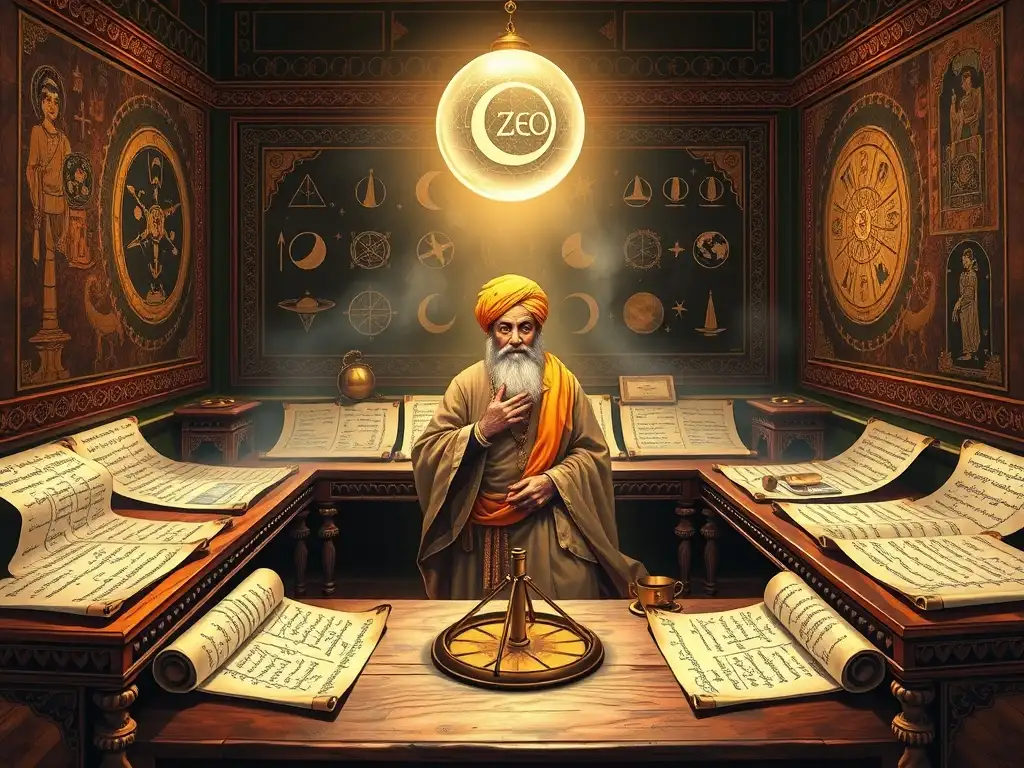
The invention of zero by ancient Indian mathematicians marks a pivotal moment in the history of mathematics, transcending cultural and geographical boundaries. This numeral, often viewed as a mere placeholder, serves as the bedrock of modern arithmetic and computational systems. The significance of zero extends beyond its mathematical utility; it symbolizes the profound intellectual achievements of ancient Indian scholars who grappled with complex concepts that would lay the groundwork for future advancements.
Zero’s introduction into the numerical system revolutionized calculations, enabling advancements in algebra and calculus, and fostering innovations in various fields, including astronomy and engineering. The ability to represent nothingness mathematically opened doors to more abstract and innovative thought processes, significantly influencing the development of mathematics across civilizations. As we delve deeper into the significance of zero, it becomes apparent that its legacy continues to shape contemporary mathematical practices and theories.
Reflections on Ancient Indian Mathematics History and Its Relevance Today
Looking back at the rich tapestry of ancient Indian mathematics, we find a tradition that not only embraced but also celebrated the complexity of mathematical ideas. Scholars like Brahmagupta and Aryabhata not only formulated rules for arithmetic but also contributed significantly to the understanding of geometrical concepts and astronomical calculations. Their works exemplify the collaborative spirit of inquiry that characterized ancient Indian academic circles, emphasizing the importance of observation, proof, and logical deduction.
In today's digital era, the principles rooted in ancient Indian mathematics resonate through our everyday lives, from basic arithmetic operations to advanced programming algorithms. The concept of zero, integral to the binary system that powers modern computing, serves as a reminder of the timelessness of these ancient innovations. Furthermore, the philosophical underpinnings of mathematics—such as the exploration of infinity and the nature of nothingness—continue to inspire mathematicians and scientists alike, bridging the gap between ancient knowledge and contemporary inquiry.
Final Thoughts on the Paradox of Zero in Mathematics
The paradox of zero, encapsulating the duality of representing both a quantity and the absence of quantity, presents a fascinating subject of study within mathematics. Ancient Indian mathematicians adeptly navigated this complexity, establishing a framework that would not only resolve the dilemmas surrounding zero but also enrich the mathematical discourse. Their ability to conceptualize and manipulate zero as a number in its own right was revolutionary, providing a foundation upon which modern mathematics stands.
As we contemplate the paradox of zero, we recognize that it embodies more than just a numeric symbol; it reflects the broader human endeavor to understand and articulate the universe. The philosophical implications of zero challenge our perceptions of existence and absence, pushing the boundaries of mathematical thought. Thus, the legacy of ancient Indian mathematicians in addressing the paradox of zero remains a pivotal aspect of mathematics history, inviting ongoing exploration and appreciation for their contributions that continue to influence the discipline.
- Introduction to Ancient Indian Mathematics History
- The Concept of Zero in Ancient India
- The Development of Zero by Ancient Indian Mathematicians
- The Dilemmas Surrounding Zero in Ancient Mathematics
- Resolving the Paradoxes: Ancient Indian Solutions
- The Legacy of Zero in Ancient Indian Mathematics History
- Conclusion: The Enduring Importance of Zero
- Reflections on Ancient Indian Mathematics History and Its Relevance Today
- Final Thoughts on the Paradox of Zero in Mathematics
- What is the significance of zero in ancient Indian mathematics?
- Who were the key mathematicians in ancient India associated with zero?
- How did ancient Indian mathematicians resolve the dilemmas related to zero?
- What impact did ancient Indian mathematics have on the world?
- How does the history of ancient Indian mathematics compare to other civilizations?
Frequently Asked Questions
What is the significance of zero in ancient Indian mathematics?
The concept of zero was revolutionary in ancient Indian mathematics, allowing for more complex calculations and the development of the decimal system.
Who were the key mathematicians in ancient India associated with zero?
Brahmagupta and Aryabhata are among the most notable figures, making significant contributions to the understanding and application of zero in calculations.
They established rules for arithmetic operations involving zero, addressing its use in equations and division, which was crucial in the evolution of mathematical thought.
What impact did ancient Indian mathematics have on the world?
The innovations in mathematics, especially the concept of zero, greatly influenced Arabic mathematicians and subsequently spread to Europe, shaping modern mathematics.
How does the history of ancient Indian mathematics compare to other civilizations?
Ancient India's approach to mathematics was unique, particularly in its acceptance and formalization of zero, contrasting with other civilizations that struggled with its implications for many years.
Final Reflection: Embracing the Wisdom of Ancient Indian Mathematics
The exploration of ancient Indian mathematics reveals a profound understanding of concepts that resonate with our modern dilemmas, showcasing how the paradox of zero is not just a mathematical curiosity but a philosophical inquiry into existence itself. Today, as we navigate a world increasingly defined by complexity and ambiguity, the insights of ancient Indian mathematicians offer us a lens through which to view our own challenges, reminding us that the journey of understanding is as significant as the solutions we seek.
The legacy of ancient Indian mathematics continues to shape our cultural and intellectual landscape, influencing not only mathematics but also philosophy, science, and art. This rich heritage encourages us to appreciate the interconnectedness of knowledge across disciplines. As we reflect on the wisdom of these ancient thinkers, we are reminded of the words of the mathematician Bhaskara II: Mathematics is the language of the universe.
This quote encapsulates the enduring relevance of mathematical concepts, urging us to recognize the beauty and complexity inherent in both numbers and life itself.
As we conclude this exploration, I invite you to reflect on how the lessons from ancient Indian mathematics can inspire your own journey. Consider the paradoxes in your life and how embracing uncertainty can lead to greater understanding and innovation. Let the wisdom of the past guide you as you navigate the complexities of the present, and remember that every dilemma holds the potential for enlightenment and growth.
Unveil the Mysteries of Zero and Become a Math Pioneer!
Thank you for diving into the remarkable world of ancient Indian mathematics with us! You've discovered how the ingenious minds of the past tackled the complexities of zero, and now it's your turn to embrace this knowledge and let it inspire your journey.
Take a moment to reflect on your own relationship with mathematics—then let’s put that newfound insight into action! Here are some exciting steps you can take:
- Explore the concept of zero in your everyday life: Challenge yourself to find examples of how this mathematical marvel influences modern technology and calculations.
- Share your insights! Start a lively conversation with friends or family about the importance of zero—whether it's in science, programming, or daily calculations.
- Deepen your understanding: Dive into additional resources, such as documentaries or books, that focus on ancient mathematics. You might be surprised by the profound impact these concepts have on contemporary math.
What do you think would have happened to modern mathematics if the concept of zero hadn't been discovered? We’d love to hear your thoughts!