
Zero: The Mathematical Symbol that Redefined Quantity and Value


Welcome to Ancient India History, where we embark on a fascinating journey through the rich tapestry of India's past! Today, we delve into a remarkable topic that transformed mathematics forever: the History of Zero in India. Discover how this profound mathematical symbol redefined quantity and value, paving the way for innovations that resonate even in our modern world.
As you explore the myriad contributions of ancient Indian civilizations, let your curiosity guide you through the intricate connections between culture, mathematics, and the legacy that continues to shape our understanding today. Join us as we uncover the secrets behind this iconic numeral and its pivotal role in the evolution of mathematics!
- Introduction to the History of Zero in India
- The Origins of Zero in Ancient India
- The Concept of Zero: A Cultural Perspective
- The Development of the Zero Symbol
- Zero and Its Mathematical Applications
- The Global Impact of India's Zero
- Conclusion: The Enduring Legacy of Zero
- Frequently Asked Questions
- Final Reflection: The Enduring Legacy of Zero in Shaping Our World
- Unveil the Power of Zero in Your Life!
Introduction to the History of Zero in India
The concept of zero is not merely a numeral but a profound philosophical and mathematical idea that has significantly shaped human thought and civilization. In the context of ancient India, the history of zero is a remarkable narrative that illustrates the innovative spirit of its scholars and mathematicians.
This article delves into the origins and evolution of zero within ancient Indian civilization, exploring how it transcended its role as a placeholder to become a fundamental element of mathematics. By examining the rich tapestry of contributions from the Indus Valley to the Gupta Empire, we will uncover how the history of zero in India is not just a story of numbers, but one of intellectual advancement that has influenced cultures worldwide.
The Importance of Zero in Mathematics
Zero serves as a cornerstone in the realm of mathematics, influencing various domains such as arithmetic, algebra, and calculus. Its introduction revolutionized how we understand quantities, facilitating calculations and enabling the development of advanced mathematical theories. Here are some key points highlighting its importance:
- Placeholder Value: The advent of zero allowed for the representation of large numbers and the simplification of calculations by acting as a placeholder in positional numeral systems.
- Arithmetic Operations: Zero is essential in performing arithmetic operations, particularly in defining identities such as \( a + 0 = a \) and \( a \times 0 = 0 \).
- Mathematical Theorems: The inclusion of zero has paved the way for the formulation of significant mathematical theorems and concepts, including limits and derivatives in calculus.
Overview of Ancient Indian Contributions to Mathematics
Ancient India was a cradle of mathematical innovation, where scholars made groundbreaking contributions that laid the foundation for modern mathematics. The history of zero in India is intertwined with these advancements, reflecting a rich intellectual tradition. Notable contributions include:
- The Concept of Zero: Ancient Indian mathematicians, particularly Brahmagupta in the 7th century CE, articulated rules for arithmetic with zero, defining it as a number in its own right.
- The Place Value System: Indian mathematicians developed the place value system, which uses zero to enhance numerical representation and calculation efficiency.
- Astronomical Calculations: The use of zero was integral in astronomical computations, allowing for more precise calculations of celestial movements and timekeeping.
In essence, the contributions of ancient Indian civilization to mathematics, particularly with the concept of zero, not only transformed their own culture but also had far-reaching impacts on the world.
The Origins of Zero in Ancient India
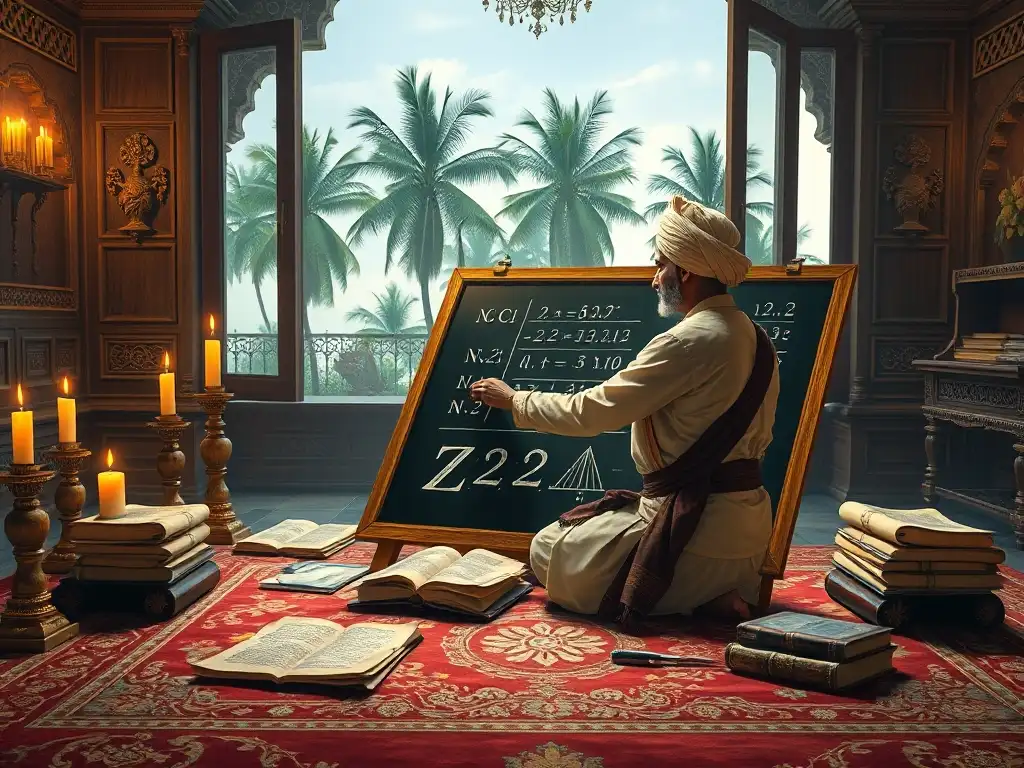
Early Numerical Systems and Their Limitations
Before the concept of zero was fully developed, ancient civilizations relied on various numerical systems to represent quantities. For instance:
- Mesopotamian System: The Sumerians utilized a base-60 numeral system that lacked a symbol for zero, which led to ambiguities in representing numbers.
- Egyptian Hieroglyphs: Similarly, ancient Egyptians employed a base-10 system but faced challenges in calculations due to the absence of a placeholder or a zero symbol.
- Chinese Numerals: While the Chinese developed a sophisticated counting system, they also did not have a symbol for zero, which hindered their ability to perform certain mathematical operations efficiently.
These early numerical systems had significant limitations, particularly in complex calculations and record-keeping. The lack of a zero symbol meant that numbers could not be clearly distinguished, leading to potential misinterpretations. The need for a more robust numerical representation became increasingly apparent as trade and commerce flourished in ancient societies.
The Role of Ancient Indian Scholars in Mathematical Innovations
Ancient India played a pivotal role in the evolution of mathematics, particularly with the introduction of zero as a mathematical concept. Key figures and texts contributed significantly to this development:
- Brahmagupta (598-668 CE):
- A prominent mathematician from the Gupta period, Brahmagupta's work "Brahmasphutasiddhanta" is one of the earliest texts to define zero explicitly as a number. He provided rules for arithmetic operations involving zero, which marked a revolutionary shift in mathematical thought.
- He stated that "a number multiplied by zero is zero," a fundamental principle that remains vital in modern mathematics.
- Aryabhata (476-550 CE):
- Aryabhata's influential treatise, the "Aryabhatiya," introduced the idea of using a placeholder for zero in positional notation, which allowed for more complex calculations and the representation of large numbers.
- His work laid the groundwork for further mathematical advancements in India and beyond, emphasizing the importance of zero in calculations.
- Subsequent Scholars:
- Following Brahmagupta and Aryabhata, scholars such as Bhaskara I and II expanded upon their ideas, incorporating zero into their mathematical frameworks and establishing it as an essential component of arithmetic and algebra.
The integration of zero into the Indian numeral system not only transformed mathematics in India but also influenced mathematical practices in other cultures. The concept of zero eventually reached the Islamic world and Europe, reshaping the global landscape of mathematics. The history of zero in India is thus a testament to the ingenuity of ancient Indian scholars and their lasting impact on the development of mathematical thought.
The Concept of Zero: A Cultural Perspective

The concept of zero is not merely a mathematical symbol; it embodies profound cultural and philosophical significance, particularly within the context of ancient Indian civilization. The evolution of zero represents a pivotal moment in human thought, reflecting a transition from tangible quantities to abstract representations.
In ancient India, zero emerged from the need to express the absence of quantity, which is fundamental in various daily transactions and philosophical inquiries. The cultural acceptance of zero as a legitimate number was revolutionary, paving the way for advancements in mathematics, astronomy, and commerce. This acceptance is deeply interwoven with India's philosophical discourse, where concepts of void and nothingness are explored extensively.
Zero as a Symbol of Nothingness
Zero is often regarded as the symbol of nothingness, a concept that was both challenging and liberating for thinkers in ancient India. The ability to denote an absence of value or quantity allowed for more complex calculations and the development of a positional numeral system.
- Historical Context: The earliest recorded use of zero can be traced back to the 5th century CE in Indian mathematics. The mathematician Brahmagupta was pivotal in formalizing the rules and operations involving zero, particularly in his work "Brahmasphutasiddhanta."
- Mathematical Representation: In the decimal system, zero plays a crucial role as a placeholder. For instance, the difference between the numbers 10 and 100 is not just a change in value but also a representation of zero in a positional context. Without zero, our numerical system would revert to a less efficient form.
The acceptance of zero as a number was not merely an arithmetic advancement; it also represented a cultural shift.
Zero is a profound concept that signifies the potential of the void, inviting contemplation on existence and non-existence.
— Ancient Indian Philosophy
Philosophical Implications of Zero in Indian Thought
The philosophical implications of zero transcend its mathematical utility, engaging deeply with the metaphysical inquiries prevalent in ancient Indian thought. Different schools of Indian philosophy, such as Buddhism and Jainism, explored the notion of voidness and the impermanence of existence, which resonates with the nature of zero.
- Buddhism and the Concept of Sunyata: In Buddhist philosophy, the concept of "Sunyata" (emptiness) reflects the idea that all things are devoid of intrinsic essence. This parallels the mathematical zero, which signifies the absence of quantity yet holds immense potential when combined with other numbers.
- Jainism and the Notion of Anekantavada: Jain philosophy's principle of "Anekantavada," or the multiplicity of viewpoints, can be likened to the versatility of zero. Just as zero can represent various values depending on its position, so too can truth be perceived from multiple perspectives.
The philosophical exploration of zero has led to rich discussions around existence, reality, and the nature of knowledge in ancient Indian culture.
- Cultural Significance: The symbolic representation of nothingness through zero invites reflection on human existence and the universe, mirroring the ancient Indian quest for understanding the cosmos and our place within it.
The history of zero in India is not just a tale of mathematical innovation; it is a journey through culture, philosophy, and the very essence of existence itself. The integration of zero into the numeral system marked a significant turning point, influencing not only mathematics but also the broader philosophical landscape of ancient Indian civilization.
The Development of the Zero Symbol

The history of zero is a fascinating journey that showcases the evolution of mathematical thought in ancient India. The concept of zero is more than just a symbol; it represents a revolutionary idea that transformed how quantities and values are understood. This section delves into the historical context and development of the zero symbol, emphasizing its significance in the realm of mathematics and beyond.
The Evolution of the Zero Symbol from Brahmi to Modern Times
The journey of zero begins with ancient scripts, notably the Brahmi script, which dates back to the 3rd century BCE. Brahmi utilized a placeholder symbol that indicated the absence of a quantity, though it did not represent zero as an independent number. Over time, this placeholder evolved into a more defined concept.
- Brahmi and Placeholder: The earliest known use of a zero-like symbol appears in the Brahmi script, where it functioned similarly to modern placeholders in positional notation. However, it lacked the conceptual weight of zero as a number.
- The Bakhshali Manuscript: Dating around the 7th century CE, this ancient Indian document offers some of the earliest evidence of a symbol for zero (often represented as a dot). The manuscript illustrates the practical applications of zero in calculations, marking a significant step toward formalizing the concept.
- From Dots to Circles: By the 9th century, the dot began to evolve into a circular shape, leading to the symbol we recognize today. This transformation is attributed to mathematicians in the Indian subcontinent who recognized the need for a distinct representation of zero in arithmetic operations.
- Influence on Other Cultures: The introduction of zero to Islamic mathematicians and subsequently to Europe was crucial. The Persian mathematician Al-Khwarizmi, in the 9th century, played an instrumental role in propagating the concept of zero through his influential works. The symbol's journey across borders laid the groundwork for its acceptance and integration into global mathematical systems.
Key Figures in the Invention of Zero
Several key figures in ancient India contributed significantly to the development and acceptance of zero, shaping its role in mathematics.
- Aryabhata (476–550 CE): One of the earliest known mathematicians and astronomers, Aryabhata's work laid a foundation for using zero in calculations. His treatise, Aryabhatiya, suggested a positional number system that effectively utilized zero, although it was not yet fully conceptualized as a number.
- Brahmagupta (598–668 CE): Often recognized as a pivotal figure in the history of mathematics, Brahmagupta's contributions in his text Brahmasphutasiddhanta included clear rules for arithmetic operations involving zero. He defined zero as a number and established operations like addition and subtraction with zero, marking a significant advancement in mathematical thought.
- Bhaskara II (1114–1185 CE): His work, Siddhanta Shiromani, further expanded on the principles laid out by Brahmagupta and integrated zero into more complex mathematical theories. Bhaskara’s contributions helped solidify the role of zero in both arithmetic and algebra.
- Mahavira (9th century CE): Mahavira’s texts explored the implications of zero in various mathematical contexts, including fractions and negative numbers. His work demonstrated a deeper understanding of zero's role in mathematics, contributing to its acceptance in broader mathematical discourse.
The contributions of these mathematicians not only advanced the concept of zero but also facilitated its eventual global acceptance, paving the way for the mathematical innovations that followed. The history of zero in India is a testament to the ingenuity and intellectual prowess of ancient Indian scholars, whose ideas continue to shape our understanding of mathematics today.
Zero and Its Mathematical Applications

Zero, as a mathematical symbol, plays a pivotal role in various arithmetic operations and algebraic equations. Its invention and subsequent adoption in mathematical practices significantly transformed the way calculations were performed, allowing for greater precision and efficiency. The history of zero in India is particularly fascinating, as it highlights the intellectual advancements of ancient Indian mathematicians.
The Use of Zero in Arithmetic Operations
The introduction of zero revolutionized arithmetic operations. Prior to its adoption, calculations were cumbersome, often relying on physical objects or complex methods. The existence of zero allowed for:
- Simplified Addition and Subtraction:
- With zero, the process of adding or subtracting numbers became more straightforward. For instance, \( 5 + 0 = 5 \) and \( 5 - 5 = 0 \) demonstrate how zero serves as a neutral element in arithmetic operations.
- Enhanced Multiplication and Division:
- Zero also facilitated multiplication and division. Multiplying any number by zero yields zero (\( n \times 0 = 0 \)), while division by zero, although undefined, highlights the importance of zero in determining mathematical limits.
- Place Value System:
- The concept of zero enabled the development of the place value system, where the position of a digit determines its value. For example, in the number 205, the zero signifies that there are no tens, allowing for clearer representation of quantities.
In ancient India, mathematicians like Brahmagupta in the 7th century CE formalized the rules of arithmetic involving zero, providing a foundation for future mathematical developments.
Zero in Algebra: Transforming Mathematical Equations
The impact of zero extends into the realm of algebra, where it plays a crucial role in formulating and solving equations. The introduction of zero led to several significant transformations in algebraic practices:
- Solving Linear Equations:
- Zero is central in solving linear equations. For instance, the equation \( ax + b = 0 \) can be manipulated to find the value of \( x \) by isolating it, showcasing how zero acts as a balance point in algebraic expressions.
- Quadratic Equations and Roots:
- In quadratic equations, the concept of zero is pivotal in determining the roots. The solutions of the equation \( ax^2 + bx + c = 0 \) are derived using the quadratic formula, where finding the values of \( x \) that satisfy the equation involves setting the expression equal to zero.
- Function and Graph Analysis:
- Zero serves as a critical reference point on the Cartesian plane. The x-axis and y-axis intersect at the origin (0,0), enabling the analysis of functions and their behaviors, such as determining intercepts and asymptotes.
The contributions of ancient Indian scholars to the understanding of zero's role in algebra have had a lasting impact on mathematics, shaping the approaches used in modern-day algebraic problem solving.
Zero is not merely a number but a fundamental element that has reshaped mathematical thought and practices. Its history in India marks a significant milestone in the evolution of mathematics, influencing countless applications and paving the way for future advancements.
The Global Impact of India's Zero

The invention of zero, marked by the early mathematical developments in ancient India, is often regarded as one of the most significant contributions to mathematics. Zero not only revolutionized mathematical operations but also transformed the way humans understand and represent numbers. The history of zero in India is deeply intertwined with the evolution of mathematics, impacting various cultures and civilizations throughout the globe.
How the Concept of Zero Influenced Mathematics Worldwide
The introduction of zero as a numerical value allowed for the development of a positional number system, which is foundational to modern mathematics. The implications of this invention were profound:
- Positional Notation: Zero acts as a placeholder, enabling the representation of large numbers efficiently. For instance, in the number 205, the zero indicates the absence of tens, which clarifies its value.
- Arithmetic Operations: The ability to perform arithmetic operations with zero led to the establishment of rules that dictate how numbers interact. For example, any number added to zero remains unchanged (e.g., \( n + 0 = n \)), which simplifies calculations.
- Negative Numbers and Calculus: The acceptance of zero paved the way for the eventual exploration of negative numbers and the development of calculus. This expansion of numerical concepts allowed mathematicians to explore functions and limits, which are essential in higher-level mathematics.
The influence of zero on mathematics can be illustrated through its adoption in various civilizations:
| Civilization | Contribution to Zero | Impact on Mathematics |
|---|---|---|
| Ancient India | Conceptualization and Symbol | Foundation for positional notation |
| Islamic Golden Age | Translation and Expansion | Further development of algebra |
| Europe | Adoption and Integration | Growth of modern arithmetic |
The Transmission of Zero to the Islamic World and Beyond
The journey of zero from ancient India to other parts of the world is a fascinating tale of cultural exchange and intellectual growth. The process unfolded in several key stages:
- Translation Movement: During the 7th to 9th centuries, as Islamic scholars began translating Indian mathematical texts, they encountered the concept of zero. This period saw the translation of works like Aryabhata's Aryabhatiya and Brahmagupta's Brahmasphutasiddhanta, which introduced zero to the Islamic world.
- Integration into Islamic Mathematics: Islamic mathematicians such as Al-Khwarizmi and Al-Kindi recognized the potential of zero. They expanded upon Indian concepts and integrated them into their mathematical frameworks, which led to significant advances in algebra and arithmetic.
- Spread to Europe: The knowledge of zero eventually made its way to Europe through translations of Arabic texts into Latin during the 10th century. Notably, the works of Fibonacci in the 13th century, particularly his book Liber Abaci, introduced the Hindu-Arabic numeral system, including zero, to a broader European audience. This marked a turning point in European mathematics, facilitating further advancements in commerce, science, and engineering.
The history of zero in India is not just a tale of mathematical innovation; it is a story of how a single concept transcended borders, influencing cultures and laying the groundwork for modern mathematics. The global impact of zero continues to be felt today, as it remains fundamental to various fields such as technology, finance, and science.
Conclusion: The Enduring Legacy of Zero

The invention of zero stands as one of the most transformative contributions to mathematics, not only in ancient India but across the world. This symbol, which represents the concept of 'nothingness', has redefined the way we understand quantity and value. Its integration into mathematical systems has enabled complex calculations and has paved the way for advancements in science, engineering, and technology.
The legacy of zero is evident in various modern applications, such as computer programming, where binary systems rely on the concept of zero and one. Additionally, zero's role in calculus and algebra has made it a fundamental component of mathematical theories used in numerous fields, including economics, physics, and statistics. The profound impact of zero illustrates how a simple symbol can transcend time and geography, influencing thinkers and innovators across centuries.
The Significance of Zero in Modern Mathematics
Zero's significance extends far beyond its numerical value; it serves as a critical placeholder that enables the positional numeral system to function effectively. Here are some key points highlighting its importance in modern mathematics:
- Place Value System: Zero acts as a placeholder in the base-10 system, allowing for the differentiation between numbers such as 10 and 100. This system facilitates easier computation and understanding of large numbers.
- Arithmetic Operations: In arithmetic, zero plays a vital role in operations such as addition and subtraction. It is the additive identity, meaning that any number added to zero remains unchanged (e.g., \(x + 0 = x\)).
- Algebraic Functions: Zero is essential in algebra, where it is used to define various functions and equations. For instance, the solutions to an equation \(f(x) = 0\) are known as the roots, which are critical in understanding the behavior of polynomials.
- Calculus and Limits: In calculus, the concept of limits often involves approaching zero, which is fundamental to understanding continuity and the behavior of functions.
- Computer Science: In the realm of computer science, zero is crucial in binary code, where it represents the 'off' state. This binary system underpins all modern computing systems, illustrating zero's role in technological advancement.
Reflections on the Historical Journey of Zero in India
The historical journey of zero in India is a fascinating narrative that encapsulates the evolution of mathematical thought. The concept of zero as a number emerged around the 5th century CE, primarily credited to Indian mathematicians like Brahmagupta. Here are some reflections on this journey:
- Brahmagupta's Contributions: In his seminal work, "Brahmasphutasiddhanta," Brahmagupta documented rules for arithmetic operations involving zero, providing foundational principles that shaped future mathematical practices.
- Cultural Context: The acceptance of zero was not merely a mathematical innovation; it was deeply rooted in the cultural and philosophical context of ancient India. The idea of 'shunya' (void or emptiness) in Indian philosophy paralleled the mathematical concept of zero, facilitating its adoption.
- Transmission to the West: The knowledge of zero spread from India to the Islamic world and eventually to Europe, altering the landscape of mathematics globally. The translations of Indian mathematical texts played a crucial role in this transmission, showcasing the interconnectedness of civilizations.
- Legacy in Education: The historical journey of zero also highlights the emphasis on education and scholarship in ancient Indian society, where mathematics was considered an essential discipline for understanding the universe.
The history of zero in India is not just a narrative of a mathematical symbol; it is a testament to the intellectual richness and cultural depth of ancient Indian civilization. The enduring legacy of zero continues to influence various fields, reminding us of its pivotal role in shaping modern mathematics and science.
Frequently Asked Questions
What is the history of zero in India?
The history of zero in India dates back to ancient times, where it was first conceptualized by Indian mathematicians. It was later recorded in manuscripts, marking a significant breakthrough in mathematics.
Who were the key figures in the development of zero in ancient India?
Notable mathematicians like Brahmagupta and Aryabhata made significant contributions to the understanding and use of zero. Their work laid the foundation for modern mathematics.
How did zero influence mathematics and science?
The introduction of zero allowed for the development of the place-value system, which simplified calculations and enabled more complex mathematical operations. This was a crucial advancement for both mathematics and science.
What cultural significance does zero hold in ancient Indian civilization?
Zero was not just a mathematical symbol; it represented the concept of nothingness and the philosophical ideas associated with it. This dual significance showcases the rich cultural heritage of ancient India.
How did zero spread from India to the rest of the world?
The concept of zero traveled through trade routes and was introduced to the Arab world, where it was further developed. Eventually, it made its way to Europe, significantly impacting global mathematics.
Final Reflection: The Enduring Legacy of Zero in Shaping Our World
The journey of zero, from its humble beginnings in ancient India to its pivotal role in modern mathematics, underscores the profound impact of this seemingly simple symbol on our understanding of quantity and value. Today, as we navigate an increasingly complex world driven by data and technology, the significance of zero resonates more than ever, reminding us that even the smallest concepts can lead to monumental shifts in thought and practice.
Zero has not only transformed mathematical theory but has also woven itself into the very fabric of our cultural and social landscape. Its introduction allowed for advancements in science, economics, and philosophy, influencing countless generations. As we reflect on this journey, we can appreciate the words of the mathematician Carl Friedrich Gauss: Mathematics is the queen of the sciences and number theory is the queen of mathematics.
This highlights how foundational concepts like zero are essential to the broader tapestry of human knowledge and progress.
As we contemplate the legacy of zero, I invite you to consider how this symbol of nothingness can inspire a deeper understanding of your own life and values. Reflect on the power of absence and presence in your experiences, and recognize that sometimes, it is the void that allows us to appreciate what truly matters. Embrace the lessons of zero as you move forward, knowing that every small step can lead to significant change, and that in the grand equation of life, every element—no matter how small—holds value.
Unveil the Power of Zero in Your Life!
Thank you for diving into the fascinating world of zero and its monumental impact on mathematics and society! You've uncovered the incredible journey of this seemingly simple symbol that transformed how we understand quantity and value. Now, it's time to take the next step and harness that inspiration.
Here's how you can explore further:
- Embrace an inspired mindset: Reflect on how the concept of zero can influence your daily life decisions. What new beginnings can you create by redefining your sense of value?
- Share the knowledge: Discuss this groundbreaking concept with friends or family. How does understanding zero change the way you approach challenges?
- Engage with our community: Join our forum dedicated to the exploration of mathematical achievements! Share your insights about zero and connect with fellow enthusiasts who appreciate its historical significance.
Now, here’s a question to ponder: In what areas of your life could you apply the lesson of starting from zero to create something extraordinary? 🌟