
Zero as a Placeholder: The Key Role of Ancient India in Modern Numeration Systems

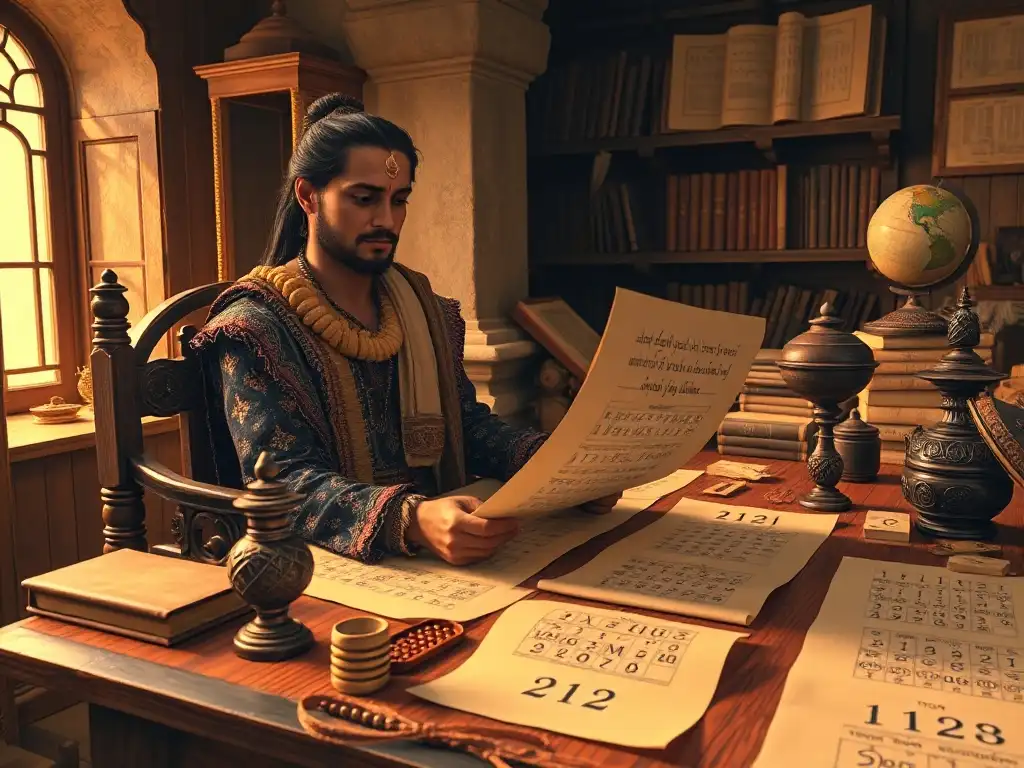
Welcome to Ancient India History, where we embark on a fascinating journey through the rich tapestry of India's past. Here, we delve into the profound contributions of ancient Indian civilizations, exploring their culture, innovations, and legacies that shaped the world. In our featured article, "Zero as a Placeholder: The Key Role of Ancient India in Modern Numeration Systems," we unravel the intriguing story of ancient Indian numeration systems and their pivotal influence on mathematics today.
Prepare to be captivated as we unveil the secrets of a civilization that not only introduced the concept of zero but revolutionized how we understand numbers. Join us as we explore this remarkable legacy and its enduring impact on our lives!
- Introduction to Ancient Indian Numeration Systems
- Historical Context of Ancient Indian Mathematics
- The Invention of Zero: A Pivotal Moment
- The Development of Numeration Systems in Ancient India
- The Spread of Ancient Indian Numeration Systems
- Legacy of Ancient Indian Numeration Systems
- Conclusion: The Lasting Impact of Ancient Indian Contributions
-
Frequently Asked Questions
- What is the significance of zero in ancient Indian numeration systems?
- How did ancient Indian cultures contribute to mathematics?
- What was the role of the Indus Valley Civilization in numeration?
- How did ancient Indian numeration systems influence the modern world?
- Are there any other key contributions from ancient India to science and mathematics?
- Final Reflection: The Timeless Legacy of Ancient Indian Numeration Systems
- Embrace the Legacy: Transform Your Understanding of Numbers!
Introduction to Ancient Indian Numeration Systems
Ancient Indian numeration systems stand as a monumental achievement in the history of mathematics, reflecting the ingenuity and intellectual prowess of early Indian civilizations. These systems not only facilitated trade and commerce but also played a crucial role in the development of mathematical concepts that have influenced societies worldwide. Among these contributions, the concept of zero emerged as a revolutionary idea, transforming how numbers are understood and utilized.
As we delve into the intricacies of ancient Indian numeration systems, we will uncover their significance in the broader context of mathematics and explore the pivotal role of zero as a placeholder. This journey will illuminate how ancient Indian thinkers laid the groundwork for modern numeration systems, shaping mathematical thought across cultures and eras.
Overview of Numeration Systems
Numeration systems are foundational to understanding mathematics, as they provide the framework for counting, measuring, and expressing quantities. Ancient Indian civilization contributed significantly to the evolution of numeration systems, particularly through the development of the decimal system.
- The Decimal System: The ancient Indians are credited with formulating a base-10 numeral system, which is still in use today. This system allowed for the representation of numbers using ten symbols (0-9), making calculations more efficient and accessible.
- Distinct Features:
- Positional Value: Unlike earlier systems, the Indian numeral system assigns value to a digit based on its position. For instance, in the number 245, the digit 4 represents 40 due to its position.
- Use of Symbols: The ancient Indians developed distinct symbols for each number, which simplified the representation of large values and facilitated mathematical operations.
- Influence on Other Cultures: The Indian numeration system did not remain confined to the subcontinent. It traveled along trade routes and was integrated into various cultures, particularly through translations of mathematical texts into Arabic and then into Latin, profoundly impacting the development of mathematics in Europe and beyond.
Importance of Zero in Mathematics
The concept of zero is arguably one of the most significant contributions of ancient Indian mathematicians to the field of mathematics.
- Revolutionary Concept: Zero serves as a placeholder in the decimal system, enabling the representation of large numbers and simplifying arithmetic operations. For example, the distinction between 205 and 25 is made possible by the presence of zero, which indicates the absence of tens.
- Historical Context: The earliest recorded use of zero as a numeral dates back to the 5th century CE in Indian texts. The mathematician Brahmagupta is often credited with formalizing its use, outlining rules for arithmetic operations involving zero.
- Mathematical Implications:
- Calculus Development: The introduction of zero laid the groundwork for advancements in calculus and algebra, allowing for the formulation of concepts like limits and derivatives.
- Computational Efficiency: Zero simplifies calculations, enabling easier addition, subtraction, multiplication, and division, which is essential in modern mathematics and everyday calculations.
The ancient Indian numeration systems, particularly through the introduction of zero, have had an enduring impact on mathematics. They not only revolutionized numerical representation but also paved the way for future mathematical innovations, highlighting the rich legacy of ancient Indian civilization in the realm of mathematics.
Historical Context of Ancient Indian Mathematics

Early Civilizations and Their Mathematical Practices
The evolution of mathematics in ancient India can be traced back to its earliest civilizations, where practical needs drove mathematical development. Early Indian societies primarily engaged in agriculture, trade, and construction, which necessitated a system of accounting and measurement.
- Agricultural Practices: The agrarian lifestyle led to the need for calculating land areas, crop yields, and resource management. This required basic arithmetic and geometry, which were likely practiced informally.
- Trade and Commerce: As trade flourished, the necessity for a reliable system of numeration became evident. Merchants needed to keep track of transactions, which encouraged the development of more sophisticated counting techniques.
- Construction Projects: The architectural endeavors of these early societies required measurements and planning, fostering the use of geometry to create precise structures.
These early mathematical practices laid the groundwork for more formalized systems that would emerge in subsequent periods, notably during the Indus Valley Civilization.
The Indus Valley Civilization's Contributions
The Indus Valley Civilization (circa 2600–1900 BCE) is one of the earliest urban cultures in the world and made significant contributions to the foundations of mathematics. Archaeological findings indicate a sophisticated understanding of measurement and numeration:
- Weights and Measures: Standardized weights made of stone were discovered, suggesting a system of measurement that was likely used for trade and construction. This indicates an early form of quantification and standardization.
- Decimal System: Evidence suggests that the Indus Valley people used a decimal system for trade and administration. This system was crucial for the development of future mathematical concepts in India.
- Urban Planning: The layout of cities like Mohenjo-Daro and Harappa reflects an understanding of geometry and spatial organization, showcasing the practical application of mathematical principles.
These contributions hint at the advanced mathematical knowledge of the Indus Valley Civilization, setting the stage for the intellectual advancements that followed in ancient India.
The Role of the Vedic Period in Mathematical Development
Following the decline of the Indus Valley Civilization, the Vedic period (circa 1500–500 BCE) marked a significant transformation in Indian mathematics. The Vedic texts not only encompassed spiritual knowledge but also mathematical principles that influenced subsequent generations.
- Vedic Mathematics: The Vedic texts contain various mathematical concepts, including arithmetic, algebra, and geometry. Techniques for rapid calculation and problem-solving, often referred to as "Vedic Mathematics," emerged during this time.
- Concept of Zero: Although the explicit symbol for zero as we know it today was not fully developed during the Vedic period, the philosophical ideas surrounding 'shunya' (void) indicate an early recognition of the concept. This philosophical backdrop would lead to the later formalization of zero in numeration systems.
- Astronomy and Mathematics: The Vedic scholars made significant strides in astronomy, which required precise calculations. The need for accurate astronomical predictions led to the refinement of mathematical techniques, including the use of fractions and the beginnings of trigonometry.
Overall, the Vedic period was pivotal in shaping ancient Indian numeration systems, fostering innovations that would significantly impact mathematics in later civilizations, including the Gupta Empire.
The Invention of Zero: A Pivotal Moment

The invention of zero is often regarded as one of the most significant developments in mathematics, particularly in the context of ancient Indian numeration systems. This concept emerged during a time when mathematical thought was profoundly influenced by the need for more sophisticated calculations and the representation of numbers.
The roots of zero can be traced back to the early number systems of the Indus Valley Civilization (circa 2600-1900 BCE), where rudimentary forms of counting and record-keeping were established. However, it was in the later centuries, particularly during the Gupta Empire (circa 320-550 CE), that zero was formally recognized not just as a numeral but as a concept that transformed arithmetic and mathematics as a whole.
The introduction of zero as a placeholder allowed for the development of a positional numeral system, which significantly simplified calculations and paved the way for advanced mathematical concepts. This pivotal moment in the history of mathematics is not just a testament to the ingenuity of ancient Indian scholars but also highlights the cultural and intellectual environment that fostered such breakthroughs.
The Concept of Zero in Ancient India
The concept of zero in ancient Indian numeration systems went beyond mere representation; it was imbued with philosophical significance. Indian mathematicians like Brahmagupta (circa 598-668 CE) were instrumental in articulating the properties of zero, discussing its mathematical operations, and formalizing its use in calculations. In his seminal work, "Brahmasphutasiddhanta," Brahmagupta defined zero as the result of subtracting a number from itself, establishing a foundational understanding of zero as both a number and a concept.
Moreover, the significance of zero was reflected in ancient Indian texts and inscriptions, where it was often represented by a dot or a small circle. This visual representation was crucial for distinguishing between numbers and facilitating calculations. The acceptance of zero into the number system marked a departure from earlier numerical systems that did not accommodate the absence of value, thereby allowing for a more comprehensive representation of numbers.
How Zero Functioned as a Placeholder
In the context of ancient Indian numeration systems, zero served a critical role as a placeholder, which was essential for distinguishing between numbers in a positional system. For instance, in the numeral system that evolved from Brahmi and later contributed to the development of the modern decimal system, the placement of zero enabled the representation of different values.
Consider the following example:
| Number | Representation |
|---|---|
| 1 | 1 |
| 10 | 10 |
| 100 | 100 |
| 101 | 101 |
In this table, the zero in "10" and "100" indicates the absence of certain values, effectively allowing for the accurate interpretation of numbers based on their positions. This innovation streamlined mathematical operations, such as addition and subtraction, by simplifying the process of carrying over and borrowing.
The ability to use zero as a placeholder not only enhanced computational efficiency but also facilitated the notation of larger numbers, which was vital for commerce, astronomy, and engineering in ancient Indian society. As such, the introduction of zero was a transformative development that had lasting impacts on mathematics and science.
Comparison with Other Ancient Civilizations' Concepts of Zero
While ancient Indian numeration systems were pivotal in the development of zero, it is essential to compare this concept with its counterparts in other ancient civilizations. For example, the ancient Greeks and Romans had no specific symbol for zero; their numeral systems were additive, relying heavily on letters and symbols without a positional component. This limitation made complex calculations cumbersome and less efficient.
In contrast, the Mayans independently developed a concept of zero around 300 CE, using a shell glyph to denote the absence of a number. However, their numeral system was vigesimal (base-20), which differed significantly from the decimal system that evolved in India. The Mayan system also employed zero as a placeholder, but its application was distinct from the Indian context.
Moreover, the Chinese did have a concept of zero, represented by the character "零" (líng), but it did not gain the same level of mathematical significance as in ancient Indian systems. The Chinese numeration system remained largely additive and did not adopt a positional system until influenced by Indian mathematics.
While various ancient civilizations recognized the absence of value, the conceptualization and formalization of zero as a number and a placeholder were uniquely advanced in ancient Indian numeration systems. This development laid the groundwork for modern mathematics, influencing numeration systems worldwide and highlighting the profound contributions of ancient Indian scholars to the field.
The Development of Numeration Systems in Ancient India

The numeration systems of ancient India represent a remarkable evolution in the understanding and representation of numbers. Emerging from a rich tapestry of cultural and intellectual achievements, these systems laid the groundwork for modern mathematical concepts, including the pivotal role of zero as a placeholder. Ancient Indian numeration systems were characterized by their innovative approach to numerical representation, facilitating advanced calculations and scientific endeavors.
The Brahmi Numerals and Their Significance
The Brahmi numerals, dating back to the 3rd century BCE, are among the earliest known systems of writing numbers in India. This numeral system consists of a set of symbols that represent numbers from 1 to 9, along with a symbol for zero, which was a groundbreaking concept at the time.
- Structure of Brahmi Numerals:
- 1: 𑀑
- 2: 𑀒
- 3: 𑀓
- 4: 𑀔
- 5: 𑀕
- 6: 𑀖
- 7: 𑀗
- 8: 𑀘
- 9: 𑀙
- 0: 𑀚
The significance of Brahmi numerals extends beyond mere representation. They introduced the concept of positional value, where the position of a numeral affects its value. For example, the number '21' is distinguished from '12' by the position of the digits. This positional system was essential for the development of more complex calculations and laid the foundation for the decimal system.
The Brahmi numerals also influenced other numeral systems across Asia and beyond, notably the development of the modern numeral system used globally today. The transition from Brahmi to later numeral systems, such as the Gupta numerals, demonstrated the adaptability and evolution of numerical representation in ancient India.
The Influence of the Gupta Empire on Mathematics
The Gupta Empire (approximately 320 to 550 CE) marked a golden age for mathematics and science in ancient India. During this period, significant advancements were made in numeration systems, primarily due to the patronage of scholars and a flourishing intellectual environment.
- Key Contributions:
- Advancement of the Decimal System: The Gupta mathematicians refined the positional decimal system, which included the use of zero. This innovation simplified calculations and made it easier to represent large numbers.
- Aryabhata's Influence: One of the most notable mathematicians of this era, Aryabhata, contributed to the understanding of arithmetic operations, algebra, and the properties of numbers. His works emphasized the importance of zero in calculations, making it an integral part of the numeration system.
- Mathematical Texts: The period saw the composition of important mathematical texts, such as the "Aryabhatiya," which discussed the role of zero and its applications in calculations, establishing a framework that future mathematicians would build upon.
The influence of the Gupta Empire extended beyond its borders, impacting the development of mathematics in other cultures. The principles of the decimal system and the use of zero were adopted by Islamic scholars and later transmitted to Europe, demonstrating the global significance of ancient Indian numeration systems.
Key Texts and Scholars in Ancient Indian Mathematics
The contributions of ancient Indian scholars to mathematics are well-documented in various texts that have survived the passage of time. These texts not only reflect the mathematical prowess of their authors but also serve as a testament to the rich intellectual tradition of ancient India.
- Notable Texts:
- Aryabhatiya: Written by Aryabhata, this foundational text covers topics such as arithmetic, algebra, and the calculation of areas and volumes. It outlines the use of zero and positional notation, making it a pivotal work in the history of mathematics.
- Bakhshali Manuscript: This ancient manuscript, dating from the 7th century CE, is a significant source of knowledge on early Indian mathematics. It contains examples of arithmetic and algebraic problems, showcasing the practical applications of numeration systems.
- Prominent Scholars:
- Brahmagupta: A mathematician and astronomer, Brahmagupta's work in his text "Brahmasphutasiddhanta" is critical for understanding zero's role in arithmetic operations, including addition and subtraction.
- Bhaskara I and II: These mathematicians expanded on earlier works, providing insights into algebra and the approximation of astronomical calculations. Their contributions continued to refine the use of zero and positional notation in mathematics.
The collective works of these scholars and texts not only advanced the understanding of numeration systems in ancient India but also provided a framework that would influence mathematical thought for centuries to come. The legacy of ancient Indian numeration systems remains a cornerstone in the history of mathematics, illustrating the profound impact of these early innovations on modern numeration systems.
The Spread of Ancient Indian Numeration Systems

Transmission of Knowledge to Other Cultures
The ancient Indian numeration systems, particularly the introduction of zero as a placeholder, profoundly impacted various civilizations across the globe. The transmission of this mathematical knowledge primarily occurred through trade routes, scholarly exchanges, and conquests, especially during the medieval period.
- Silk Road Influence: The Silk Road, a network of trade routes connecting the East and West, played a pivotal role in disseminating ancient Indian numeration systems. Merchants and travelers carried mathematical texts and concepts, which were integrated into the cultures they encountered. For instance, the translation of the Indian numeral system into Arabic script in the 7th century significantly shaped Islamic mathematics.
- Scholarly Collaborations: Indian mathematicians like Brahmagupta and Aryabhata wrote extensively on mathematics, including the use of zero. Their works were later translated into Arabic and Latin, influencing scholars such as Al-Khwarizmi, who is often referred to as the "father of algebra." This scholarly collaboration facilitated the adoption of Indian mathematics in the Islamic Golden Age, which then spread to Europe.
- Conquests and Cultural Exchange: The expansion of empires, particularly during the Gupta Empire, allowed for the exchange of ideas and knowledge. Indian numeration systems were introduced to neighboring regions, such as Southeast Asia, where they adapted and evolved. The spread of these concepts was not merely limited to trade but was also a crucial element of cultural diplomacy.
The Impact on Global Mathematics
Ancient Indian numeration systems, especially with the inclusion of zero, had a transformative impact on global mathematics. This influence is evident in several key areas:
- Mathematical Notation: The introduction of a positional numeral system allowed for more complex calculations and greater efficiency in mathematical notation. The concept of zero as a number rather than just a placeholder enabled mathematicians to perform operations that were previously impossible.
- Advancements in Algebra: The incorporation of Indian numeration systems into Arabic mathematics led to significant advancements in algebra. The systematic approach to solving equations, influenced by Indian mathematicians, laid the groundwork for modern algebraic methods. The use of symbols and variables can be traced back to these early innovations.
- Calculus and Beyond: The foundations established by ancient Indian mathematicians eventually contributed to the development of calculus and other advanced mathematical fields. The work of mathematicians like Bhaskara II in the 12th century, who utilized concepts of infinitesimals, demonstrates the far-reaching implications of the ancient Indian numeration systems.
Adoption of the Decimal System
The widespread adoption of the decimal system, which originated in ancient India, marks a significant milestone in the history of mathematics. This system, characterized by its base-10 structure, revolutionized numerical representation and calculation.
- Simplicity and Efficiency: One of the primary reasons for the adoption of the decimal system was its simplicity and efficiency for calculations. The hierarchical structure, where each digit's position represents a power of ten, allows for easier addition, subtraction, multiplication, and division compared to other systems, such as Roman numerals.
- Integration into Western Mathematics: The decimal system was gradually adopted in Europe during the Renaissance, primarily due to translations of Arabic mathematical texts. The introduction of the printing press further facilitated the spread of this system, as new mathematical books became widely available.
- Enduring Legacy: Today, the decimal system remains the standard for numerical representation globally. Its integration into various fields, from commerce to science, showcases the lasting impact of ancient Indian numeration systems on modern mathematics. The legacy of zero and the decimal system continues to shape our understanding of numerical concepts and calculations.
The spread of ancient Indian numeration systems through various channels significantly influenced global mathematics and the adoption of the decimal system. The contributions of ancient Indian mathematicians have laid a foundational framework that endures in contemporary mathematical practices, highlighting the importance of these systems in both historical and modern contexts.
Legacy of Ancient Indian Numeration Systems

Influence on Modern Mathematics
Ancient Indian numeration systems have profoundly influenced the development of modern mathematics, particularly through the introduction and formalization of the concept of zero as a placeholder. This innovation allowed for a more efficient way of representing numbers, leading to the establishment of positional notation. The significance of this system is illustrated by the following points:
- Positional Value: In ancient Indian numeration, the value of a digit depends on its position within the number. For example, in the number 205, the '2' represents two hundred due to its position.
- Simplification of Calculations: The use of zero as a placeholder simplifies arithmetic operations, enabling easier addition, subtraction, and multiplication of large numbers. Without zero, calculations would be cumbersome and prone to error.
- Spread of Ideas: As ancient Indian numeration systems spread along trade routes and through scholarly exchanges, they influenced the development of mathematics in various cultures, including the Arab world, where the system was later adopted and adapted.
This seamless blend of cultural exchange and mathematical innovation laid the groundwork for the numeral systems we use today.
The Role of Ancient Indian Scholars in Advancing Numerical Concepts
Ancient Indian scholars played a critical role in the evolution of numerical concepts and systems. Key figures and their contributions include:
- Brahmagupta (598–668 CE): Known for his work "Brahmasphutasiddhanta," he made significant strides in arithmetic, including rules for calculating with zero and negative numbers. His insights laid the foundation for future mathematical explorations.
- Aryabhata (476–550 CE): Aryabhata's treatise, "Aryabhatiya," introduced the importance of zero and positional notation. His work presented a systematic approach to mathematics and astronomy, demonstrating how these concepts could be applied practically.
- Bhaskara II (1114–1185 CE): Often regarded as one of the greatest mathematicians of ancient India, Bhaskara II expanded on previous works and introduced concepts such as calculus long before it was formally recognized in Europe.
The cumulative knowledge and innovations from these scholars not only shaped ancient Indian numeration systems but also significantly impacted global mathematical practices.
Continued Relevance of Zero in Today's Mathematical Practices
Zero remains a fundamental element in contemporary mathematics, reflecting its enduring legacy from ancient Indian numeration systems. Its relevance can be observed in various domains:
- Computer Science: In binary code, which is the foundation of computer programming, zero and one are the only digits used. Zero plays a critical role in data representation and processing.
- Mathematical Operations: Zero serves as the identity element in addition, and its properties are essential in algebraic structures, such as groups and rings.
- Statistical Analysis: Many statistical methods rely on the concept of zero to indicate absence or baseline conditions, facilitating comparisons and analyses.
The impact of ancient Indian numeration systems, particularly the role of zero, is woven into the fabric of modern mathematics, showcasing the remarkable journey of this concept from ancient civilizations to contemporary practices.
Conclusion: The Lasting Impact of Ancient Indian Contributions

Reflection on the Importance of Zero and Numeration Systems
The advent of zero as a placeholder in ancient Indian numeration systems marked a revolutionary development in mathematics. Before the acceptance of zero, mathematical calculations were often cumbersome and required various symbols to represent different values. Ancient Indian scholars recognized the necessity of having a symbol for 'nothingness', which not only simplified calculations but also led to the establishment of a positional value system.
This innovation allowed numbers to be represented efficiently, making arithmetic operations more straightforward. For instance, the difference between the numbers 203 and 23 became starkly clear with the inclusion of zero. The use of zero enabled the representation of large numbers and made complex calculations feasible, paving the way for advancements in mathematics and science.
The concepts established by ancient Indian numeration systems significantly influenced neighboring cultures, including the Islamic world, where these ideas were further disseminated. The translation of texts from Sanskrit to Arabic during the medieval period played a crucial role in this proliferation, highlighting the global impact of Indian mathematical innovations.
Final Thoughts on the Legacy of Ancient Indian Mathematics
The legacy of ancient Indian mathematics extends far beyond the introduction of zero. The intellectual contributions of Indian mathematicians, such as Aryabhata and Brahmagupta, laid the groundwork for concepts such as algebra and trigonometry, which continue to be fundamental in modern mathematics.
The numeration systems developed in ancient India fostered a culture of mathematical inquiry and innovation, influencing not only mathematics but also fields such as astronomy and engineering. The precision and elegance of these systems demonstrate the advanced understanding of mathematics that existed in ancient Indian civilization.
As we reflect on the significance of these contributions, it becomes evident that the innovations of ancient Indian mathematicians are not merely historical footnotes but rather foundational elements of contemporary mathematical practices. The principles established by these early scholars continue to resonate in today's numerical systems, reminding us of the profound impact of ancient Indian numeration systems on the world.
Frequently Asked Questions
What is the significance of zero in ancient Indian numeration systems?
The concept of zero as a placeholder was revolutionary in ancient Indian mathematics, allowing for more complex calculations and the development of the decimal system.
How did ancient Indian cultures contribute to mathematics?
Ancient Indian civilizations, particularly during the Gupta Empire, made significant advancements in mathematics, including the introduction of the numeration systems that incorporated zero and positional value.
What was the role of the Indus Valley Civilization in numeration?
The Indus Valley Civilization is known for its early use of symbols that may represent numerical values, laying the groundwork for more sophisticated number systems in later Indian cultures.
How did ancient Indian numeration systems influence the modern world?
Ancient Indian numeration systems, especially the concept of zero, were transmitted to the Islamic world and later to Europe, significantly shaping modern mathematics and arithmetic.
Are there any other key contributions from ancient India to science and mathematics?
Yes, ancient Indian scholars also made contributions in fields such as astronomy, geometry, and trigonometry, further establishing India's role as a vital hub of scientific knowledge in history.
Final Reflection: The Timeless Legacy of Ancient Indian Numeration Systems
The significance of ancient Indian numeration systems resonates profoundly in our modern world, illustrating how a simple concept like zero can transform mathematics and beyond. Today, as we navigate an increasingly complex digital landscape, the foundational principles established by ancient Indian scholars serve as a reminder of the power of innovation and intellectual curiosity. The introduction of zero not only revolutionized mathematics but also paved the way for advancements in science, technology, and commerce, making it a cornerstone of contemporary society.
The influence of ancient Indian numeration systems extends far beyond the realm of mathematics; it has shaped our cultural and social landscapes in ways that are often overlooked. From the intricate algorithms that power our digital devices to the way we conceptualize value and quantity, the legacy of these early mathematicians is woven into the fabric of our daily lives.
As the renowned mathematician Carl Friedrich Gauss once said, "> Mathematics is the queen of the sciences and number theory is its crown jewel." This quote encapsulates the enduring importance of numerical systems, particularly those developed in ancient India, which continue to inspire and inform modern mathematical thought.
As we reflect on the profound impact of ancient Indian numeration systems, I invite you to consider how these lessons can be applied in your own life. Embrace the spirit of inquiry and innovation that characterized these early thinkers; challenge yourself to explore new ideas and perspectives. Whether in your personal endeavors or professional pursuits, let the legacy of zero and its role as a placeholder inspire you to push boundaries and seek out the transformative power of knowledge. Together, we can honor this rich heritage by fostering a culture of curiosity and creativity in our own journeys.
Embrace the Legacy: Transform Your Understanding of Numbers!
Thank you for diving into the fascinating role of ancient India in shaping modern numeration systems. You've uncovered the extraordinary contribution of zero as a placeholder—an idea that revolutionized mathematics! Now, it's time to put that knowledge into action and truly appreciate our numerical heritage.
Here are a few ways to further engage with this topic and explore its significance:
- Dive Deeper: Explore additional resources on ancient Indian mathematics by checking out academic articles or books that highlight its evolution and impact.
- Share the Knowledge: Discuss with friends or family—start a conversation about how this ancient concept influences today's technology and calculations.
- Get Creative: Challenge yourself by practicing mental math using techniques inspired by ancient methodologies, and see how they can change your approach to problem-solving.
Which new insight about ancient numeration systems will inspire you to rethink how we use numbers today? Share your thoughts and join the conversation!