
The Political Role of the Mauryan Capital: Pataliputra as a Center of Power


Welcome to Ancient India History, where we embark on a fascinating journey through the rich tapestry of ancient Indian civilizations. Dive deep into the intriguing history of the Mauryan capital, Pataliputra, a vibrant center of power that shaped the political landscape of its time. As we unravel the stories of its monumental architecture, strategic significance, and cultural contributions, prepare to be captivated by the legacy of this remarkable city.
Join us as we explore how Pataliputra played a pivotal role in the rise of one of India’s greatest empires, and discover the secrets that lie within its ancient walls. Read on to uncover the essence of Pataliputra and its enduring influence on our world today!
- Introduction to the Mauryan Capital Pataliputra History
- Historical Context of Pataliputra as a Political Center
- Political Structure of the Mauryan Capital
- Pataliputra as a Center of Power During the Mauryan Empire
- Key Figures Associated with Pataliputra's Political Role
- Pataliputra's Role in Diplomacy and International Relations
- Decline of Pataliputra as a Political Power
- Conclusion: Legacy of Pataliputra in Ancient Indian History
- Frequently Asked Questions
- Final Reflection: The Enduring Legacy of Pataliputra in Political History
- Uncover the Legacy of Pataliputra: Take Action Now!
Introduction to the Mauryan Capital Pataliputra History
The Mauryan capital of Pataliputra, modern-day Patna, stands as a monumental testament to the political sophistication and cultural richness of ancient Indian civilizations. Established in the 5th century BCE, Pataliputra was not just a city but a vibrant center of power that played a pivotal role in the administration and governance of the Maurya Empire. Its strategic location at the confluence of the Ganges and Son rivers made it an essential hub for trade, culture, and military expeditions.
This article delves into the historical significance of Pataliputra, exploring how it served as the political heart of the Maurya Empire, the architectural wonders it housed, and its influence on subsequent Indian history. By examining the Mauryan capital Pataliputra history, we gain deeper insights into the political structures and cultural achievements that defined one of the most powerful empires of ancient India.
Overview of Pataliputra's Significance in Ancient India
Pataliputra emerged as a key political and cultural center during a transformative period in Indian history. Its significance can be understood through several key dimensions:
- Political Hub: As the capital of the Maurya Empire, Pataliputra was the heart of governance, where major decisions and policies were formulated. The city's layout included grand palaces and administrative buildings that facilitated the functioning of the empire's bureaucracy.
- Cultural Melting Pot: Pataliputra was not only a political center but also a vibrant hub for art, literature, and philosophy. The city attracted scholars, artists, and thinkers, fostering a rich cultural environment that contributed to the intellectual advancements of the time.
- Strategic Location: Situated at a crucial junction for trade routes, Pataliputra facilitated commerce and interaction between diverse cultures. This strategic positioning enhanced its influence and power within the region.
The Maurya Empire: A Brief Background
The Maurya Empire, founded by Chandragupta Maurya in 322 BCE, marked a significant turning point in Indian history. Its expansion under notable rulers such as Ashoka the Great transformed it into one of the largest empires of ancient India. Key aspects of the Maurya Empire include:
- Territorial Expansion: At its zenith, the Maurya Empire extended across much of the Indian subcontinent, from present-day Afghanistan in the west to Bengal in the east.
- Centralized Administration: The empire was characterized by a highly organized bureaucratic system that enabled effective governance across vast territories. This centralization was crucial for maintaining order and implementing policies.
- Cultural Flourishing: The Mauryan period is often considered a golden age for Indian culture, marked by advancements in art, architecture, and literature, as well as the spread of Buddhism under Ashoka's patronage.
Through this exploration of Pataliputra and the Maurya Empire, we can appreciate the intricate tapestry of political, cultural, and social dynamics that shaped ancient India.
Historical Context of Pataliputra as a Political Center
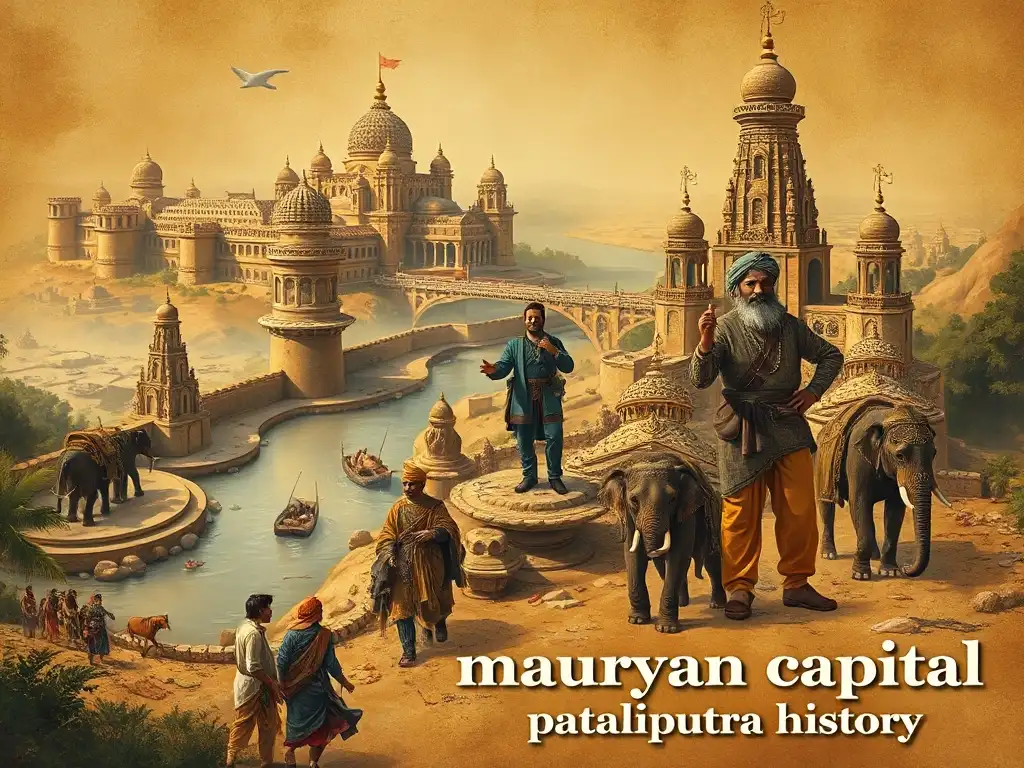
The historical significance of Pataliputra as the capital of the Mauryan Empire cannot be overstated. Established during the 5th century BCE, it served as a pivotal political hub that facilitated governance, trade, and cultural exchanges. The city’s development into a major center of power was closely linked to the rise of the Mauryan Empire, which unified a vast region of India under a centralized authority.
Pataliputra’s transformation from an inconspicuous village to a grand capital epitomizes the ambitions and strategies of the Mauryan rulers, particularly Chandragupta Maurya and his grandson Ashoka. The city not only served as the administrative heart of the empire but also as a melting pot of diverse cultures, contributing significantly to the political landscape of ancient India.
Origins of Pataliputra: From Village to Capital
Pataliputra's origins can be traced back to a small settlement known as Pataligrama. Its strategic position at the confluence of major rivers, particularly the Ganges and the Son, played a crucial role in its evolution. The site was ideal for trade and agriculture, allowing it to flourish economically.
- Historical Development:
- Pre-Mauryan Era: Before becoming the Mauryan capital, Pataliputra was under the influence of the Magadha kingdom. The city's location provided the Magadhan rulers with a tactical advantage over rival states.
- Chandragupta Maurya's Vision: Following the establishment of the Mauryan Empire, Chandragupta recognized the potential of Pataliputra as a capital. He fortified the city, constructed palatial buildings, and established administrative offices, transforming it into a thriving urban center.
- Architectural Significance:
- The capital was marked by impressive structures, including grand palaces, public halls, and fortified walls.
- Notable mention goes to the Mauryan Pillars, which were intricately carved and served both functional and ornamental purposes, symbolizing the strength of the Mauryan administration.
The Strategic Location of Pataliputra in Ancient India
The geographical positioning of Pataliputra was a significant factor in its prominence as the Mauryan capital. Nestled at the crossroads of important trade routes, it enabled the Mauryan Empire to exert control over vast territories while facilitating economic prosperity.
- Geographical Advantages:
- River Confluence: The meeting point of the Ganges and Son rivers facilitated transportation and trade, which were vital for the economic health of the empire.
- Accessibility: Pataliputra's proximity to the northwestern frontier allowed for effective military mobilization against invaders, making it a strategic military base.
- Cultural Melting Pot:
- The city attracted merchants, scholars, and diplomats from various regions, fostering a rich cultural exchange that contributed to the intellectual and artistic achievements of the time.
- The confluence of diverse cultures was evident in the architecture, language, and administrative practices adopted in Pataliputra.
The Mauryan capital Pataliputra played a crucial role in shaping the political landscape of ancient India. Its origins as a village, strategic location, and transformation into a powerful center under the Mauryan Empire highlight its historical significance in the broader context of Indian civilization.
Political Structure of the Mauryan Capital

The political structure of the Mauryan capital, Pataliputra, was a sophisticated and well-organized system that facilitated governance over one of the largest empires in ancient India. Established in the 3rd century BCE, Pataliputra served as the nerve center of the Mauryan Empire, where the administrative, military, and economic activities converged. The capital's strategic location at the confluence of major rivers allowed for effective trade and communication, further enhancing its political significance.
The Mauryan political structure was characterized by a hierarchical organization, where power was centralized around the emperor, supported by a council of ministers and various administrative officials. This structure not only ensured efficient governance but also maintained the stability and unity of the vast empire.
Administrative Organization of Pataliputra
The administrative organization of Pataliputra was meticulously designed to manage the diverse and extensive territories of the Mauryan Empire. At the apex of this system was the emperor, who wielded absolute power and was considered the ultimate authority in political and military matters. Below him was a council of ministers, known as the Mantriparishad, composed of trusted advisors and experienced officials who assisted in decision-making and governance.
Key Administrative Divisions
- Provincial Administration: The empire was divided into several provinces (Mahajanapadas), each governed by a viceroy or governor (Uparika) appointed by the emperor. These governors held significant authority and were responsible for maintaining law and order, collecting taxes, and overseeing local officials.
- District Administration: Each province was further divided into districts (Janapadas), which were administered by officials called Pradesikas. They managed the day-to-day affairs, including revenue collection and local justice.
- Village Administration: The smallest administrative unit was the village, where local headmen (Gramikas) played a crucial role in community governance. They were responsible for implementing the policies of the central authority and maintaining local order.
Bureaucratic Efficiency
The Mauryan capital's bureaucracy was known for its efficiency and effectiveness. The use of written records and official seals facilitated communication and the flow of information across different levels of administration. This bureaucratic framework allowed for the implementation of policies and laws throughout the empire, ensuring that the emperor's directives were followed.
Role of the Mauryan Rulers in Shaping Pataliputra's Governance
The Mauryan rulers played a pivotal role in shaping the governance of Pataliputra, leaving a lasting impact on its political landscape. Under the reign of Chandragupta Maurya, the empire saw the establishment of a strong centralized government that laid the groundwork for future rulers.
Chandragupta Maurya's Contributions
- Centralization of Power: Chandragupta's leadership marked the transition from a fragmented political landscape to a unified empire. He effectively centralized power, which allowed for consistent governance across the vast territories.
- Legal Reforms: The introduction of a codified legal system under Chandragupta helped standardize laws and regulations, which were crucial for maintaining order and justice in Pataliputra and beyond.
Ashoka's Influence
- Promoting Dharma: Ashoka, Chandragupta's grandson, further transformed governance by integrating the principles of Dharma into the political framework. His emphasis on ethical governance and moral principles shaped the administrative policies of Pataliputra, fostering a sense of justice and welfare among the citizens.
- Decentralization Initiatives: While Ashoka maintained the central authority, he also recognized the importance of local governance. He empowered local officials to make decisions that aligned with the needs of their communities, which in turn strengthened loyalty to the Mauryan administration.
Legacy of the Mauryan Governance
The political structure established in Pataliputra under the Mauryan rulers set a precedent for future empires in India. The innovations in administration, law, and governance not only contributed to the stability of the Mauryan Empire but also influenced subsequent political systems throughout ancient Indian history.
The Mauryan capital Pataliputra history is emblematic of an advanced political structure that combined central authority with local governance, showcasing the administrative prowess of its rulers. The legacy of this governance model continues to be studied and admired for its effectiveness and influence on later civilizations.
Pataliputra as a Center of Power During the Mauryan Empire

Pataliputra, the capital of the Mauryan Empire, emerged as a pivotal center of power during one of ancient India's most influential dynasties. Its strategic location at the confluence of major rivers not only facilitated trade but also enabled efficient governance and military operations. The city's prominence was solidified under the rule of Chandragupta Maurya and later, his grandson Ashoka, who transformed Pataliputra into a thriving metropolis.
The planning and architecture of Pataliputra reflected its status as the capital. The city was fortified with massive walls and gates, showcasing its defensive capabilities. The layout included residential areas, administrative buildings, and marketplaces, all contributing to its reputation as a bustling urban center. Historians estimate that at its zenith, Pataliputra housed over 150,000 inhabitants, making it one of the largest cities of its time.
Economic Significance of Pataliputra in the Mauryan Period
The economic landscape of Pataliputra was marked by its role as a trade hub. Positioned along key trade routes, the city facilitated the exchange of goods, ideas, and cultures between various regions of India and beyond.
- Trade Routes: Pataliputra served as a focal point for trade between the eastern and western parts of India. The city connected the northern regions to the south, enhancing the flow of commodities such as textiles, spices, and precious metals.
- Marketplaces: The bustling markets of Pataliputra were renowned for their diversity of goods. Artisans, traders, and merchants flocked to the city, fostering economic activity. Historical accounts suggest that the city had specialized markets for various goods, contributing to its wealth and prosperity.
- Taxation and Revenue: The Mauryan administration implemented an efficient tax system, which generated significant revenue for the empire. This economic foundation enabled the Mauryan rulers to fund military campaigns and extensive public works, further solidifying Pataliputra's status as a center of power.
Overall, the economic significance of Pataliputra during the Mauryan period played a crucial role in the empire's expansion and governance.
Cultural Influence: Pataliputra as a Hub of Art and Learning
Pataliputra was not only an economic powerhouse but also a vibrant center of culture and education. The city's atmosphere fostered creativity and intellectual pursuits, making it a beacon of learning in ancient India.
- Centers of Learning: The city housed several renowned educational institutions, attracting scholars, philosophers, and students from various regions. Notable figures, including Chanakya, also known as Kautilya, were associated with Pataliputra, contributing to its intellectual legacy.
- Art and Architecture: The artistic achievements of Pataliputra are evident in the remnants of stupas, monasteries, and sculptures. The city was known for its intricate carvings and architectural innovations that reflected the artistic prowess of the Mauryan period. The Ashoka Pillars, with their inscriptions and lion capitals, are prime examples of the artistic excellence achieved during this time.
- Religious Diversity: Pataliputra was a melting pot of religions, including Buddhism, Jainism, and Hinduism. This religious diversity contributed to a culture of tolerance and dialogue, enriching the spiritual landscape of the city. Ashoka's promotion of Buddhism further solidified the city's role as a key center for the dissemination of Buddhist teachings.
Pataliputra's cultural influence during the Mauryan Empire was profound, establishing it as a significant hub of art, learning, and religious exchange. The legacy of this vibrant capital continues to resonate in the annals of ancient Indian history.
Key Figures Associated with Pataliputra's Political Role

Chandragupta Maurya: Founder of the Mauryan Empire
Chandragupta Maurya stands as a pivotal figure in the history of ancient India, primarily recognized as the founder of the Mauryan Empire and the architect of Pataliputra's political significance. His strategic vision and military prowess transformed this city into a powerful capital that would influence the entire Indian subcontinent.
Chandragupta ascended to power around 322 BCE, with Pataliputra as his chosen capital. This location was not incidental; Pataliputra's strategic position along the confluence of significant trade routes allowed for both economic prosperity and military advantage. By establishing the Mauryan capital in Pataliputra, Chandragupta ensured easy access to resources and a robust defense system against rival states.
- Military Conquests:
- Chandragupta's initial rise involved the overthrow of the Nanda dynasty, which required not only military acumen but also a solid administrative framework. His use of innovative warfare tactics, including the employment of elephants in battle, was instrumental in his victories.
- His reign marked the expansion of the empire westward, culminating in the confrontation with Alexander the Great's successor, Seleucus I Nicator. This encounter solidified Pataliputra's status as a center of power, necessitating diplomatic relations that contributed to the empire's stability.
- Administrative Innovations:
- Chandragupta employed a centralized administrative system that facilitated governance over vast territories. His council of ministers, as documented in Kautilya's Arthashastra, was critical in implementing policies that stabilized and expanded the empire.
- The establishment of a network of spies and intelligence services ensured that Pataliputra maintained control over distant provinces, making it a model for subsequent Indian states.
Chandragupta Maurya's legacy is indelibly tied to the political evolution of Pataliputra, setting the groundwork for future rulers and exemplifying the potential of this ancient capital.
Ashoka the Great: The Legacy of a Benevolent Ruler
Ashoka the Great, Chandragupta's grandson, further elevated Pataliputra's stature, transforming it into a beacon of governance and moral authority during his reign (268-232 BCE). His contributions not only solidified the Mauryan Empire's power but also established Pataliputra as a center of cultural and ethical development.
- Promotion of Buddhism:
- Ashoka’s conversion to Buddhism marked a significant shift in the empire's governance. He utilized Pataliputra as the nucleus for spreading Buddhist teachings, commissioning the construction of stupas and monasteries. This not only strengthened religious ties but also attracted pilgrims and scholars, enhancing the city's cultural richness.
- The Edicts of Ashoka, inscribed on pillars and rock faces across the empire, reflect his commitment to dharma (moral law) and non-violence. These edicts, originating from Pataliputra, communicated his policies on ethics, social welfare, and governance, thus reinforcing Pataliputra’s status as the epicenter of political and moral authority.
- Social Welfare Initiatives:
- Ashoka implemented numerous welfare programs, including hospitals, irrigation systems, and planting of trees along roads for travelers. These initiatives showcased Pataliputra not only as a political hub but also as a compassionate center, setting a precedent for future rulers regarding the importance of benevolent governance.
- His diplomatic outreach and efforts to promote peace among different kingdoms further solidified Pataliputra’s role as a leading political entity in ancient India, fostering an era of prosperity and cultural exchange.
The legacies of Chandragupta Maurya and Ashoka the Great are instrumental in understanding the Mauryan capital Pataliputra's history as a center of power. Their leadership not only shaped the political landscape of ancient India but also left enduring influences on governance and culture that resonate to this day.
Pataliputra's Role in Diplomacy and International Relations

Pataliputra, the illustrious Mauryan capital, served as a pivotal hub for diplomacy and international relations during the Maurya Empire. Its strategic location at the confluence of major trade routes made it not only a center of political power but also a focal point for diplomatic negotiations and cultural exchanges. The city's significance can be attributed to its role in fostering relationships with neighboring kingdoms and facilitating trade across the Indian subcontinent.
Foreign Relations: Pataliputra's Interaction with Neighboring Kingdoms
The Mauryan Empire, under the leadership of notable emperors such as Chandragupta Maurya and Ashoka, actively engaged in diplomacy with various neighboring kingdoms. Pataliputra emerged as the nerve center for these interactions, where envoys and diplomats congregated to negotiate treaties, alliances, and trade agreements.
- Diplomatic Envoys: The Mauryan rulers dispatched ambassadors to foreign courts, particularly to regions like the Hellenistic kingdoms in the west. Notably, Ashoka sent emissaries to spread Buddhism and establish peaceful relations, emphasizing non-violence and tolerance as fundamental diplomatic principles.
- Treaties and Alliances: Pataliputra was instrumental in the formulation of treaties that ensured peace and security between the Mauryans and their neighbors. These agreements often involved marriage alliances, trade pacts, and mutual defense clauses.
- Cultural Exchanges: Diplomatic relations facilitated cultural exchanges, where art, philosophy, and religious beliefs were shared. This exchange contributed to the syncretism seen in the region, influencing local customs and practices.
The interactions initiated from Pataliputra not only solidified the Mauryan Empire's influence but also played a crucial role in shaping the political landscape of ancient India.
The Impact of Pataliputra on Trade Networks in Ancient India
Pataliputra's geographic positioning significantly impacted trade networks across ancient India. The city served as a crucial junction that connected various regions, enabling commerce between the north, south, east, and west.
- Trade Routes: Key trade routes passed through Pataliputra, facilitating the exchange of goods such as spices, textiles, and precious stones. The city's marketplaces thrived, attracting merchants from distant lands.
- Economic Prosperity: The flourishing trade contributed to economic prosperity, which in turn supported the Mauryan administration and military endeavors. As trade expanded, so did the wealth of the empire, allowing for the construction of monumental architecture and infrastructure.
- Cultural Interactions: The influx of traders and travelers from diverse backgrounds enriched Pataliputra's cultural fabric. This melting pot of ideas played a role in the dissemination of knowledge, technologies, and innovations, further enhancing the city's significance as a center of cultural exchange.
The Mauryan capital Pataliputra was not merely a political center but also a dynamic hub for diplomacy and trade. Its interactions with neighboring kingdoms and crucial role in trade networks underscore its importance in the broader context of ancient Indian history. The legacy of Pataliputra continues to be a subject of interest, illustrating how ancient cities can shape political and economic landscapes long after their decline.
Decline of Pataliputra as a Political Power

The decline of Pataliputra as a political power marks a significant transition in the history of ancient Indian civilizations. Once the thriving capital of the Mauryan Empire, the city faced multifaceted challenges that contributed to its waning influence. Understanding these factors provides insight into the broader shifts occurring in ancient India during the post-Mauryan period.
Factors Leading to the Decline of the Mauryan Capital
- Political Fragmentation: Following the death of Emperor Ashoka in 232 BCE, the Mauryan Empire experienced a gradual fragmentation. The central authority weakened, leading to the rise of regional powers and local rulers, which diminished Pataliputra's political significance. The lack of a strong successor to Ashoka resulted in internal strife and instability.
- Economic Decline: The vast Mauryan Empire relied heavily on a robust economy, including trade and agriculture. However, as central control weakened, trade routes became less secure, and agricultural productivity declined due to neglect and potential invasions. This economic downturn adversely affected the resources available to maintain Pataliputra’s splendor and power.
- Cultural and Religious Shifts: Ashoka's promotion of Buddhism and non-violence led to a cultural shift within the empire. However, after his reign, there was a resurgence of Hinduism and the rise of various sects. This shift contributed to the fragmentation of the empire, as different regions began to align with differing cultural and religious values, leading to a decline in Pataliputra's unifying role.
- Military Challenges: The Mauryan Empire faced numerous military challenges, including invasions from external forces and internal uprisings. The inability to effectively manage these threats weakened the centralized military power that had once protected Pataliputra. As military resources became stretched, the capital's defenses and political influence diminished.
- Administrative Overreach: The vastness of the Mauryan Empire required a highly organized administrative structure. However, as the empire expanded, the complexity of governance increased, leading to inefficiencies and corruption. The administrative challenges faced by the Mauryan rulers further eroded the authority of Pataliputra, making it difficult to govern effectively.
The Transition of Power: After the Mauryan Empire
The aftermath of the Mauryan Empire saw a significant transformation in the political landscape of ancient India. Pataliputra's transition from a central hub of power to a more peripheral role can be outlined as follows:
- Emergence of Regional Kingdoms: As the Mauryan Empire fragmented, various regional kingdoms began to emerge. Notable successors like the Shunga and Kanva dynasties established their rule, often at the expense of Pataliputra’s influence. These new powers often centered their capitals in different locations, marking a shift away from Pataliputra.
- Cultural and Political Revival: The decline of Pataliputra did not signify the end of political activity in the region. Instead, it paved the way for new cultural and political movements. The rise of the Shunga dynasty in the 2nd century BCE saw a revival of Hindu culture and art, which, while different from the Mauryan ethos, contributed to the rich tapestry of Indian history.
- Historical Legacy: Despite its decline, Pataliputra remained a symbol of the grandeur of the Mauryan Empire. The remnants of its architecture, governance systems, and urban planning continued to influence subsequent Indian civilizations. The city was often referenced in later texts, signifying its lasting impact on the cultural memory of India.
- Transition to New Centers of Power: The decline of Pataliputra coincided with the rise of new centers of power in ancient India, such as Ujjain and Taxila. These cities became focal points for trade, culture, and politics, ultimately reshaping the dynamics of power in the region.
- Legacy of Governance: The administrative practices established during the Mauryan period continued to influence later regimes. The bureaucratic systems and governance models were adapted and evolved, laying the foundation for future empires, including the Gupta Empire.
The decline of Pataliputra as a political power was influenced by a combination of internal fragmentation, economic decline, cultural shifts, military challenges, and administrative inefficiencies. The transition of power after the Mauryan Empire highlights the resilience and adaptability of ancient Indian civilizations, as they navigated through periods of change and renewal.
Conclusion: Legacy of Pataliputra in Ancient Indian History
The legacy of Pataliputra, the Mauryan capital, is deeply embedded in the political narrative of ancient Indian history. As a center of power, it not only served as the administrative heart of the Maurya Empire but also influenced the political landscapes that followed.
Its strategic location at the confluence of major trade routes facilitated economic prosperity and allowed for the flourishing of culture, art, and philosophy. Pataliputra's architectural marvels, such as the grand palaces and the famed Ashoka Pillars, stand as testaments to the sophistication of Mauryan engineering and urban planning, contributing to its legacy as a vibrant political and cultural hub.
Reflection on the Political Role of Pataliputra
Pataliputra was more than just a capital; it was a symbol of the Mauryan political ideology. Under the reign of Chandragupta Maurya and later his grandson Ashoka, the city became an embodiment of centralized governance and administrative efficiency. The political structure established in Pataliputra, characterized by a hierarchical bureaucracy, facilitated the effective management of a vast empire.
- The city was divided into distinct districts, each overseen by officials who reported directly to the emperor, ensuring a seamless flow of information and resources.
- The Mauryan capital also housed various councils and assemblies that engaged in deliberations on governance, policy-making, and law, reflecting a form of early democratic engagement within the empire.
Moreover, Pataliputra's significance extended beyond mere governance; it was a melting pot of cultures and ideologies. The confluence of diverse populations encouraged the exchange of ideas, leading to advancements in fields such as science, mathematics, and philosophy, which were pivotal in shaping Indian thought.
Continuing Influence of Pataliputra in Modern Historical Discourse
The historical significance of Pataliputra continues to resonate in contemporary discussions of ancient Indian political structures. Modern historians and scholars frequently cite its governance model as a precursor to later Indian states, illustrating how ancient practices have influenced contemporary political thought.
Key aspects of Pataliputra's legacy include:
- Centralized Administration: The Mauryan system of governance, centered in Pataliputra, is often regarded as an early example of efficient bureaucratic management, which has inspired various governmental frameworks in later Indian empires.
- Cultural Exchange: The cosmopolitan nature of Pataliputra has led to discussions on the importance of cultural diversity and tolerance in governance, themes that remain relevant in today's globalized world.
- Historical Scholarship: The city has become a focal point for archaeological research, with ongoing excavations revealing insights into urban planning, trade, and daily life during the Mauryan period. This research not only enriches our understanding of Pataliputra but also sparks interest in the broader context of ancient Indian civilizations.
The political role of the Mauryan capital, Pataliputra, significantly shaped the administrative and cultural landscape of ancient India, leaving a profound legacy that continues to influence historical studies today. Its contributions to governance, culture, and society are integral to understanding the evolution of political thought in the subcontinent.
Frequently Asked Questions
What was the significance of Pataliputra in Mauryan history?
Pataliputra served as the political capital of the Mauryan Empire, making it a critical center of governance and administration during its peak.
How did Pataliputra contribute to trade and economy?
As a thriving urban center, Pataliputra facilitated trade routes and economic exchanges, enhancing its role as a commercial hub in ancient India.
What architectural features characterized Pataliputra?
Pataliputra was known for its impressive architecture, including fortifications, palaces, and monuments that reflected the grandeur of the Mauryan Empire.
Who were some notable rulers associated with Pataliputra?
Chandragupta Maurya and his grandson Ashoka are among the most significant rulers who made Pataliputra their capital, leaving a lasting legacy on its political and cultural landscape.
How did Pataliputra influence later Indian civilizations?
The administrative practices and cultural developments initiated in Pataliputra set precedents for future Indian dynasties, significantly shaping the subcontinent's history.
Final Reflection: The Enduring Legacy of Pataliputra in Political History
The history of the Mauryan capital Pataliputra is not just a tale of ancient governance; it serves as a profound reminder of how centers of power shape societies and influence political dynamics. Today, as we navigate complex political landscapes, the lessons from Pataliputra's strategic significance and its role in unifying a vast empire resonate more than ever. The ability of a city to become a hub of administration, culture, and power is a testament to its lasting impact on civilization.
The influence of Pataliputra extends beyond its geographical boundaries, echoing through time as a symbol of political ingenuity and cultural synthesis. The Mauryan capital was not merely a seat of power; it was a melting pot of ideas, cultures, and philosophies that contributed to the rich tapestry of Indian history. As Mahatma Gandhi once said, "> The best way to find yourself is to lose yourself in the service of others." This sentiment reflects the essence of Pataliputra, where leadership was intertwined with the welfare of the populace, setting a precedent for future governance.
As we reflect on the significance of Pataliputra, let us consider how we can apply its lessons in our own lives and communities. In a world where political engagement is crucial, we are called to be active participants in shaping our societies. Embrace the spirit of Pataliputra by fostering dialogue, understanding diverse perspectives, and contributing to the common good. The legacy of this ancient capital challenges us to think critically about our roles in our communities and inspires us to build a future where power is wielded responsibly and inclusively.
Uncover the Legacy of Pataliputra: Take Action Now!
Thank you for diving into the fascinating world of the Mauryan Empire and exploring Pataliputra's vital role as a center of power. Your interest in this rich historical narrative not only broadens your understanding of ancient Indian politics but also inspires deeper connections with our shared past. Ready to delve deeper? Here’s what you can do next:
- Join our community: Subscribe to our newsletter for exclusive insights on ancient Indian history, including upcoming articles and resources focused on influential figures and significant events.
- Explore further: Visit our resources page to access documentaries, books, and articles that bring historical sites like Pataliputra to life.
- Share your thoughts: Engage with your friends on social media about what you've learned today and spark discussions about the importance of historical capitals.
How do you think the innovations in governance during the Mauryan period continue to influence modern political systems?