
The Divine Feminine: The Role of Women in Ancient Indian Religious Texts

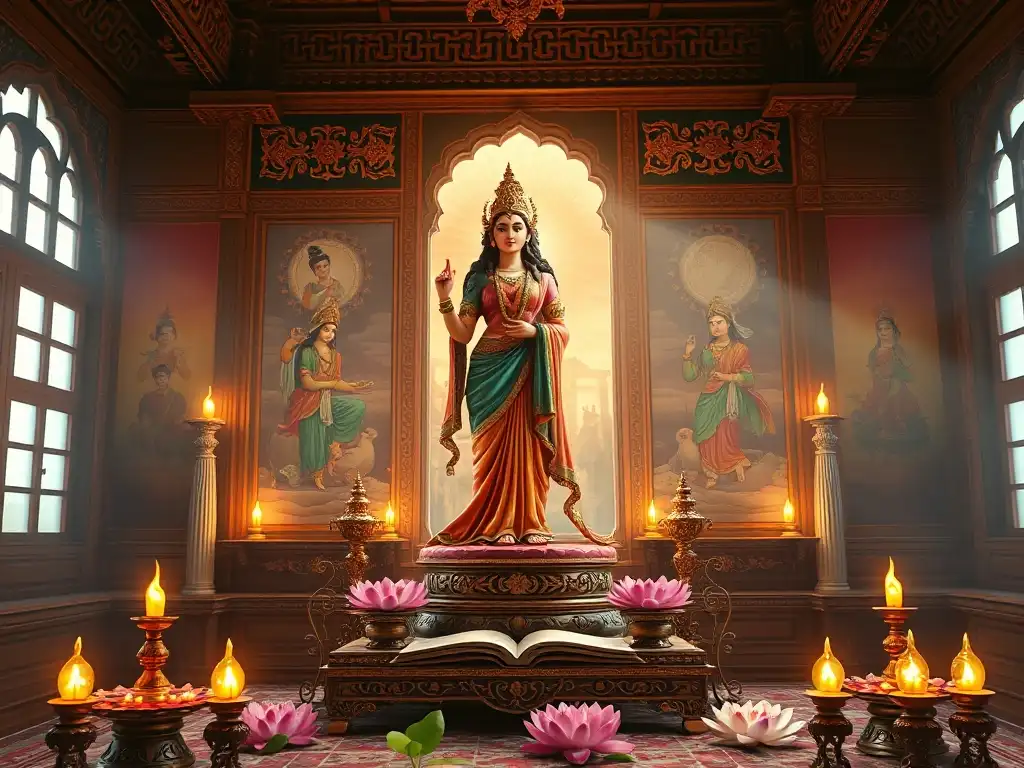
Welcome to Ancient India History, where we embark on a fascinating journey through the rich tapestry of ancient Indian civilizations. Here, we delve into the profound cultural heritage and historical contributions that have shaped our understanding of the past. In our featured article, "The Divine Feminine: The Role of Women in Ancient Indian Religious Texts," we explore the powerful and often overlooked roles women played in shaping spiritual narratives and societal norms.
What insights do these texts reveal about the feminine presence in a time long past? Join us as we uncover the layers of history that celebrate the strength and influence of women in ancient India, sparking your curiosity to learn more about this captivating subject!
- Introduction to the Divine Feminine in Ancient Indian Texts
- Historical Context of Women in Ancient Indian Society
- Women Represented in Ancient Indian Religious Texts
- Philosophical Perspectives on Women in Ancient Indian Texts
- Contributions of Women in Ancient Indian Culture
- The Evolution of Women's Roles in Religious Texts Over Time
- Conclusion: The Lasting Legacy of Women in Ancient Indian Texts
- References and Further Reading
-
Frequently Asked Questions
- What is the significance of women in ancient Indian religious texts?
- How did ancient Indian texts portray women's roles in society?
- Were women in ancient India given any rights or freedoms?
- How do ancient Indian texts reflect the concept of the Divine Feminine?
- What contributions did women make to ancient Indian civilization?
- Final Reflection: Embracing the Divine Feminine in Ancient Indian Texts
- Embrace the Divine: Ignite Your Connection with Ancient Wisdom
Introduction to the Divine Feminine in Ancient Indian Texts
The exploration of women's roles in ancient Indian religious texts unveils a profound narrative woven into the fabric of Indian civilization. The concept of the Divine Feminine represents a multifaceted portrayal of women, illustrating their significance not only as nurturers and caretakers but also as powerful spiritual entities and deities. From the Indus Valley Civilization to the era of the Gupta Empire, women have played a crucial role in shaping religious thought, cultural practices, and societal norms.
In ancient Indian texts, women are depicted in diverse roles, serving as goddesses, sages, and philosophical thinkers, each contributing to a rich tapestry of spiritual wisdom and cultural heritage. This article delves into the intricate portrayal of women in these texts, highlighting their contributions and the reverence afforded to the feminine aspect of divinity. By examining this theme, we can gain deeper insights into how ancient Indian civilizations honored and revered women, thus providing a nuanced understanding of their place in religious and philosophical discourse.
Understanding the Concept of Divine Feminine
The Divine Feminine in ancient Indian texts embodies the principles of creation, preservation, and destruction, often personified by goddesses such as Durga, Lakshmi, and Saraswati. These deities are not only worshipped but also symbolize various aspects of life:
- Durga: Represents strength, protection, and the warrior spirit.
- Lakshmi: Embodies wealth, prosperity, and auspiciousness.
- Saraswati: Symbolizes knowledge, music, and the arts.
The multifaceted nature of these goddesses illustrates the respect and reverence for feminine energy in spiritual practices. Additionally, texts such as the Vedas and Puranas highlight the importance of female figures in mythology, portraying them as integral to the cosmic order and human existence.
Importance of Women in Ancient Indian Religious Texts
Women in ancient Indian religious texts are depicted not only as divine figures but also as influential characters who shaped religious practices and philosophies. Their contributions are evident in various ways:
- Mythological Narratives: Women often play pivotal roles in epics like the Mahabharata and Ramayana, where characters like Draupadi and Sita are central to the unfolding of the narratives, embodying virtues of courage and fidelity.
- Philosophical Insights: Female sages and scholars, such as Maitreyi and Gargi, are celebrated for their intellectual prowess, engaging in profound philosophical debates that challenge societal norms and elevate the status of women in spiritual discussions.
- Cultural Significance: Rituals and practices often emphasize the roles of women as keepers of tradition, ensuring the transmission of knowledge and customs through generations.
The portrayal of women in ancient Indian texts not only reflects their societal roles but also underscores their significance in the spiritual and philosophical realms. The divine feminine continues to inspire contemporary discussions on gender, spirituality, and the evolving role of women in society, making it a vital area of study in understanding ancient Indian history.
Historical Context of Women in Ancient Indian Society
Understanding the historical context of women in ancient Indian society provides a necessary foundation for exploring their roles in religious texts. Ancient India was characterized by a complex social structure influenced by religion, geography, and the evolution of various civilizations. Women were integral to family life and social organization, but their roles varied significantly across different periods and regions.
The Role of Women in Early Civilizations
In the early civilizations of the Indus Valley (circa 3300–1300 BCE), archaeological evidence suggests that women participated actively in economic and social life. Artifacts such as pottery and figurines depict women in various roles, indicating their significance in domestic and possibly religious spheres. The presence of female figurines, often interpreted as fertility symbols, suggests that women were revered for their roles in procreation and agriculture.
- Social Standing: In many instances, women in the Indus Valley civilization appeared to enjoy relatively high status. They likely had rights to property and could partake in trade, as evidenced by the presence of jewelry and tools designed for women found at archaeological sites.
- Religious Significance: The worship of mother goddesses indicates that women held a vital role in early religious practices, embodying fertility and nurturing. This reverence for femininity laid groundwork for later religious texts.
- Cultural Practices: The existence of various seals and inscriptions represents a sophisticated understanding of women's roles in societal and religious contexts, suggesting a recognition of their contributions to both family and community life.
Women in the Vedic Period
The Vedic period (circa 1500–500 BCE) marked a significant transformation in the status and roles of women, as reflected in the Vedas, the oldest sacred texts of Hinduism. The Vedic texts provide insights into the spiritual and social positioning of women during this era.
- Education and Knowledge: Women in the Vedic period had access to education, and several texts mention learned women, known as Brahmavadinis. They were encouraged to study the Vedas and were respected for their intellectual contributions. Notable figures like Gargi and Maitreyi are examples of scholarly women whose philosophical debates are recorded in the Brahmanas.
- Marriage and Family: The institution of marriage was highly esteemed, and women were expected to fulfill domestic roles as wives and mothers. However, texts also reflect a degree of autonomy in marital choices, with practices such as Swayamvara allowing women to choose their husbands from among assembled suitors.
- Religious Rituals: Women participated in various religious ceremonies and rituals, both as practitioners and as recipients of blessings. Their involvement underscores the acknowledgment of their spiritual significance, as they were believed to embody divine qualities.
- Divergence in Status: While some texts celebrate women's roles, others indicate a shift towards more patriarchal structures, particularly in later texts. This duality reflects the complexity of women's experiences in Vedic society, where they were valued yet also constrained by evolving social norms.
The historical context of women in ancient Indian society highlights their dynamic roles and contributions across different civilizations. From the revered figures of the Indus Valley to the educated women of the Vedic period, the evidence illustrates a nuanced understanding of femininity within the religious and cultural landscapes that shaped ancient India. The exploration of these themes in ancient texts provides valuable insights into the divine feminine and the integral role women played in shaping religious traditions.
Women Represented in Ancient Indian Religious Texts
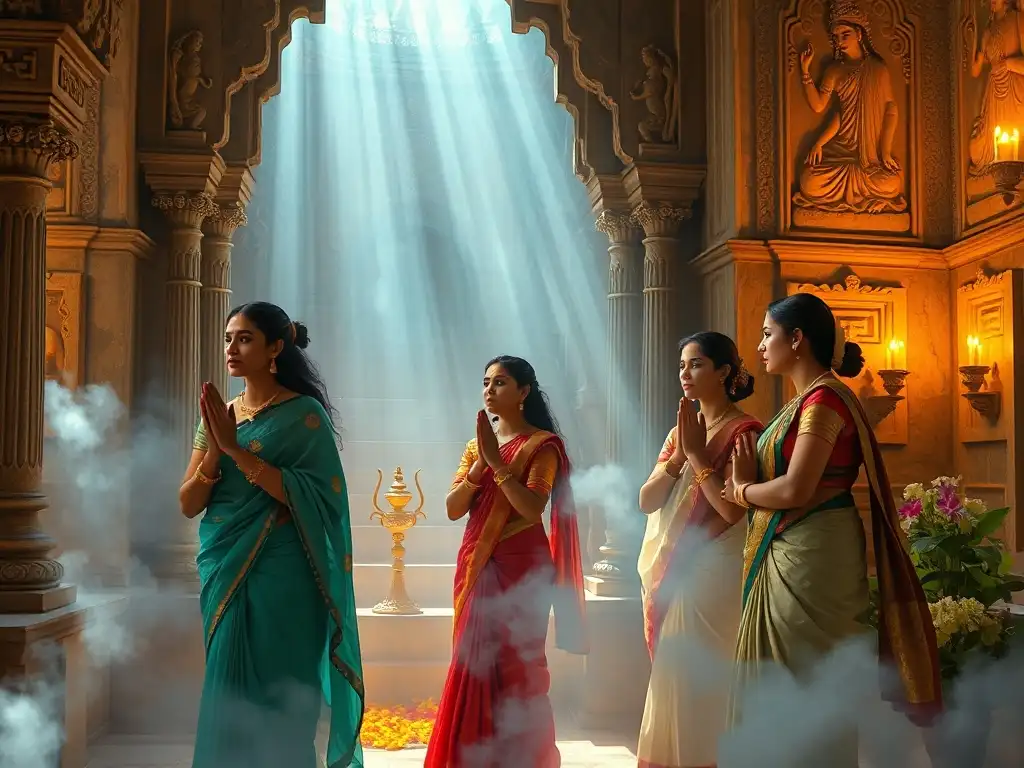
Key Figures of the Divine Feminine
The representation of women in ancient Indian texts is profoundly rich and multifaceted, with several female deities embodying various aspects of life, spirituality, and morality. These divine figures not only highlight the reverence for femininity but also showcase the essential roles women played in the spiritual and cultural landscape of ancient India. Here, we explore some of the most significant goddesses revered in ancient Indian religious texts.
The Goddess Durga: Strength and Protection
Durga is one of the most celebrated goddesses in Hinduism, symbolizing strength, courage, and the power to overcome evil. She is often depicted riding a lion or tiger, wielding weapons in her many arms, each representing a different power.
- Mythological Origins: According to the Devi Mahatmya, Durga was created by the gods to combat the buffalo demon Mahishasura, who could not be defeated by any man. This narrative underscores the concept of female empowerment, as Durga embodies the ultimate warrior spirit.
- Cultural Significance: Durga's annual celebration, Durga Puja, reflects her importance in contemporary culture, where she is worshipped as a mother figure and protector. This festival brings communities together, emphasizing her role as a unifying force.
The Goddess Saraswati: Wisdom and Knowledge
Saraswati, the goddess of knowledge, music, art, and wisdom, holds a unique position in ancient Indian texts. She is often depicted playing the veena, symbolizing the importance of arts and education.
- Philosophical Implications: Saraswati represents the pursuit of knowledge and enlightenment. She encourages individuals to seek wisdom and understanding, reflecting the reverence for education in ancient Indian society.
- Symbols of Saraswati: Traditionally, she is portrayed with a swan, which symbolizes discernment and the ability to separate good from evil, further emphasizing her association with wisdom and clarity.
The Goddess Lakshmi: Prosperity and Abundance
Lakshmi, the goddess of wealth, fortune, and prosperity, is another crucial figure in ancient Indian religious texts. She is often associated with the festival of Diwali, which celebrates the triumph of light over darkness.
- Attributes and Iconography: Lakshmi is depicted seated on a lotus flower, symbolizing purity and spiritual power. She holds gold coins, signifying material wealth, and is often flanked by elephants, representing strength and royalty.
- Cultural Practices: Worshipping Lakshmi is an integral part of various rituals and festivals, reflecting the community's aspirations for prosperity and well-being.
Mythological Narratives Featuring Women
Ancient Indian texts are replete with narratives that highlight the roles of women, not just as passive figures but as active participants in the unfolding of significant events. The epics Ramayana and Mahabharata serve as prime examples of how women are portrayed in complex and impactful roles.
The Role of Women in the Ramayana
The Ramayana intricately weaves the stories of several women, with Sita being the most prominent.
- Sita's Strength and Resilience: Sita, the wife of Lord Rama, is often viewed as the epitome of virtue and fidelity. Her abduction by Ravana and subsequent trials symbolize the struggle between good and evil. Despite her suffering, Sita's resilience showcases the strength of women in facing adversity.
- Other Female Figures: Women like Surpanakha and Kaikeyi also play crucial roles, demonstrating the diverse representations of women's emotions and motivations in the narrative. Surpanakha's desire and Kaikeyi's ambition lead to pivotal events that shape the storyline.
The Role of Women in the Mahabharata
The Mahabharata offers a more nuanced view of women, with characters like Draupadi and Kunti illustrating the complexities of female experiences in ancient society.
- Draupadi's Dilemma: Draupadi, the wife of the Pandavas, is a central figure whose honor is challenged in the court of Hastinapura. Her public humiliation and subsequent defiance highlight the themes of justice and respect for women in a patriarchal society.
- Kunti's Wisdom and Sacrifice: Kunti, the mother of the Pandavas, showcases the multifaceted roles women played—she is a figure of wisdom, strength, and sacrifice, navigating the challenges of motherhood and political intrigue.
The exploration of women in ancient Indian texts reveals a profound understanding of the divine feminine. Through goddesses and mythological narratives, these texts offer insights into the roles, strengths, and complexities of women, contributing significantly to the cultural and spiritual heritage of ancient India.
Philosophical Perspectives on Women in Ancient Indian Texts
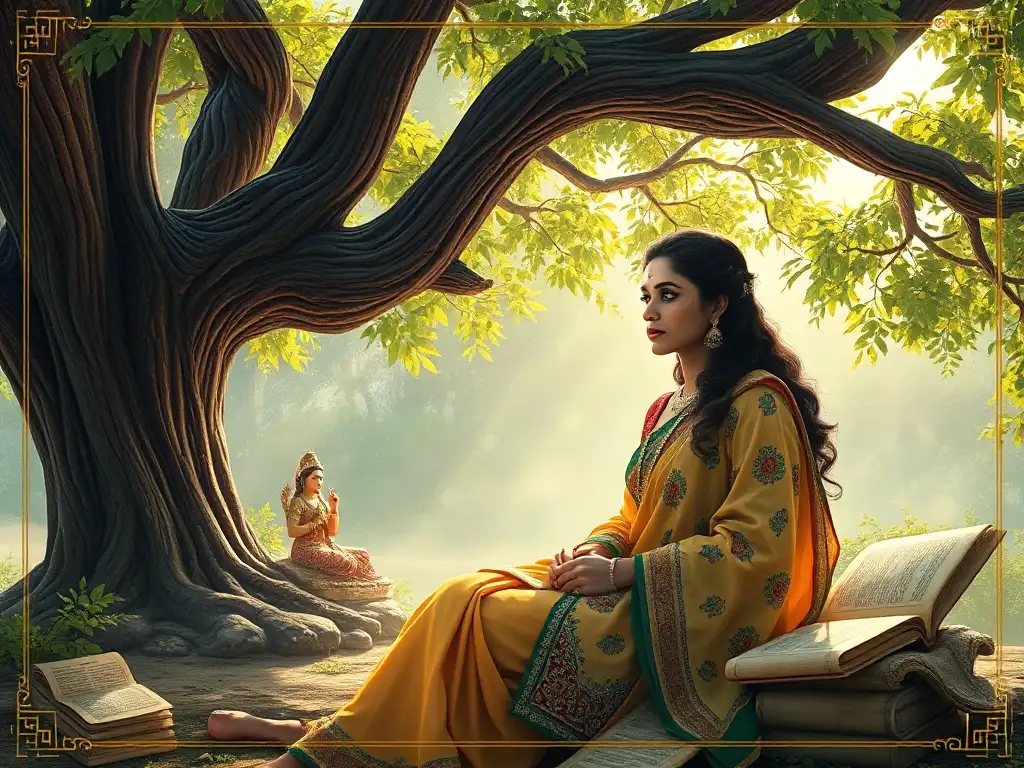
The philosophical perspectives on women in ancient Indian texts reveal a rich tapestry of beliefs and practices that shaped the roles and status of women in various religious traditions. These perspectives are often complex and multifaceted, intertwining with the cultural, social, and spiritual fabric of the time.
Gender Roles in Hindu Philosophy
In Hindu philosophy, the role of women has been a subject of considerable exploration and varied interpretations. Texts such as the Vedas, Upanishads, and the Dharmashastras present a nuanced view of gender roles that reflect both reverence and restrictions.
- Vedic Literature: The Vedas, composed around 1500 BCE to 500 BCE, showcase women in prominent roles, particularly in the context of rituals. Women like Gargi and Maitreyi are noted for their intellectual prowess and participation in philosophical debates.
- Epics and Puranas: The Mahabharata and Ramayana highlight the divine feminine through characters like Draupadi and Sita, who embody virtues of strength, devotion, and resilience. These figures serve as models of ideal womanhood, albeit within the confines of societal expectations.
- Dharmashastras: The Dharmashastras provide a more prescriptive approach to gender roles, often emphasizing the duties of women as wives and mothers. The Manusmriti, for instance, delineates a woman's primary role within the household but also acknowledges her spiritual capabilities.
- Contradictions and Debates: Scholars debate the implications of these texts, noting that while some passages advocate for women's rights and spiritual equality, others reinforce patriarchal norms. This duality reflects the evolving nature of women's roles in Hindu society.
Feminine Principles in Jain and Buddhist Texts
The Jain and Buddhist traditions offer alternative perspectives on the role of women, often emphasizing egalitarian principles and the potential for spiritual advancement regardless of gender.
- Jain Texts: Jain scriptures, such as the Tattvartha Sutra, advocate for a compassionate and non-violent lifestyle that applies equally to all beings, including women. Notable female figures like Mallinath, the first Tirthankara, are celebrated for their spiritual achievements, highlighting the potential for women to attain liberation (moksha).
- Buddhist Teachings: Buddhism promotes the concept of "anatta" or non-self, which extends to all individuals, challenging gender hierarchies. The Therigatha, a collection of verses by early Buddhist nuns, showcases the spiritual journeys and insights of women, reflecting their roles as enlightened beings.
- Monastic Life: Both Jainism and Buddhism allowed women to enter monastic communities, which provided them with opportunities for education and spiritual practice. This inclusion indicates a recognition of women's capabilities in pursuing higher knowledge and attainment.
- Philosophical Implications: The embrace of feminine principles in these texts underscores a broader philosophical stance that values compassion, wisdom, and equality, standing in contrast to more restrictive views found in some Hindu texts.
The philosophical perspectives on women in ancient Indian texts reveal a dynamic interplay between reverence, restriction, and spiritual equality. By examining these texts, we gain insights into the complex role of women and their contributions to the religious and philosophical landscape of ancient India.
Contributions of Women in Ancient Indian Culture
Women as Spiritual Leaders and Gurus
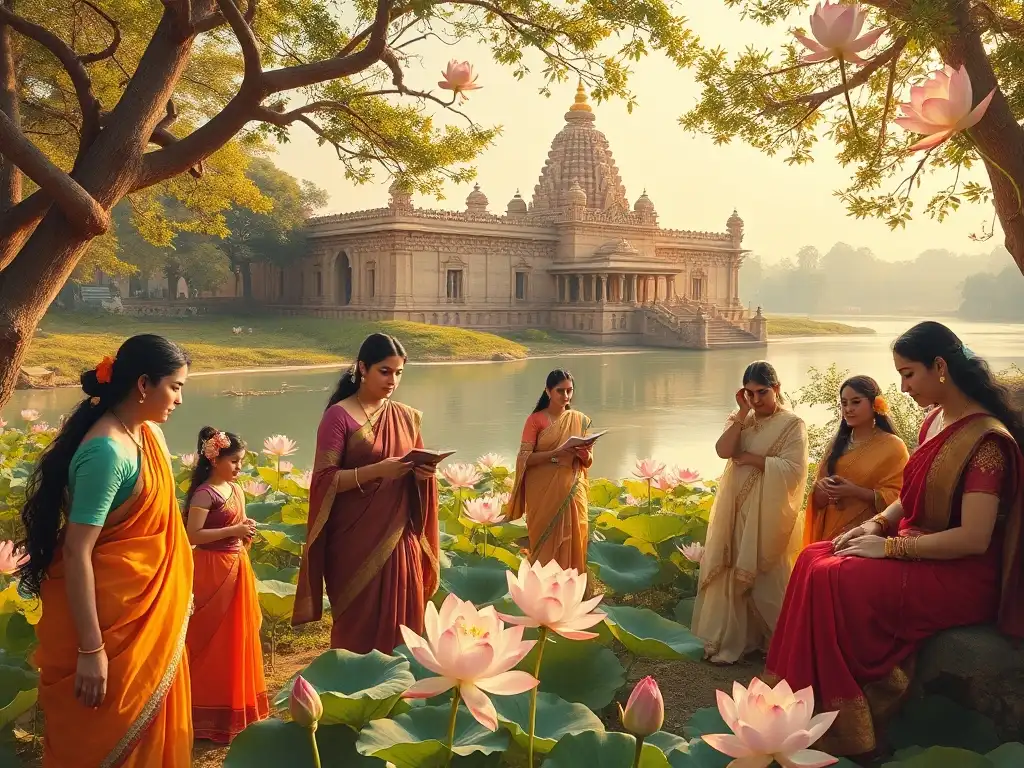
In ancient Indian society, women played a significant role as spiritual leaders and gurus, often shaping the religious and philosophical landscape of the time. Historical texts reveal that women were not only practitioners of spirituality but also influential figures who guided others in their spiritual journeys.
- The Role of Female Gurus: Female gurus, known as sadhikas or sannyasinis, emerged as prominent spiritual teachers. Figures such as Vasavadatta, the disciple of Gautama Buddha, and Maitreyi, who engaged in philosophical dialogues with her husband, Yajnavalkya, exemplify the intellectual depth and spiritual authority women held. These women were revered for their insights into complex spiritual matters, demonstrating that their contributions were crucial to the evolution of religious thought.
- Sacred Texts and Spiritual Teachings: The Vedic texts and later Upanishads include references to women who contributed to spiritual discourses. For instance, the Rigveda mentions several female sages ( rishikas), such as Lopamudra and Gargi, who were known for their wisdom and philosophical acumen. Their teachings often challenged patriarchal norms and provided alternative perspectives on spirituality and ethics.
- Devotional Practices: Additionally, women actively participated in devotional practices, cultivating a personal connection with the divine. The Bhakti movement saw the rise of female saints like Mirabai, who composed devotional poetry and songs, emphasizing personal devotion over ritualistic practices. These contributions not only enriched the spiritual environment but also empowered women by providing a platform for their voices to be heard.
Women in Arts and Literature
The artistic and literary contributions of women in ancient India are a testament to their creativity and intellect. Women were not merely passive observers of culture; they were active creators and innovators within various art forms.
- Literary Contributions: Women like Chandrabati and Kamalapathi made notable contributions to literature, often using poetry as a medium to express their experiences, emotions, and societal observations. Their works not only reflect the artistic sensibilities of the time but also highlight the struggles and aspirations of women in a predominantly male-dominated literary space.
- Poetic Themes: The themes explored in their poetry often revolved around love, spirituality, and social issues, emphasizing the multifaceted nature of women's experiences. They utilized metaphors and allegories to navigate complex narratives, showcasing their literary prowess.
- Artistic Endeavors: In the realm of visual arts, women were involved in creating intricate sculptures and paintings, often depicting divine feminine figures. The representation of goddesses like Durga, Saraswati, and Lakshmi in various art forms illustrates the reverence for the feminine divine, which in turn empowered women by aligning them with these powerful figures.
- Cultural Preservation: Women also played a vital role in preserving traditional crafts and performing arts. Through storytelling, dance, and music, they passed down cultural narratives that reinforced community values and spiritual beliefs. This transmission of culture ensured the continuity of ancient Indian traditions, highlighting women's contributions to the cultural fabric of society.
Women in ancient Indian texts were not just passive figures; they were influential spiritual leaders and gifted artists whose contributions shaped the religious, philosophical, and cultural landscapes of their time. Their legacies continue to inspire and resonate in contemporary discussions about gender and spirituality.
The Evolution of Women's Roles in Religious Texts Over Time
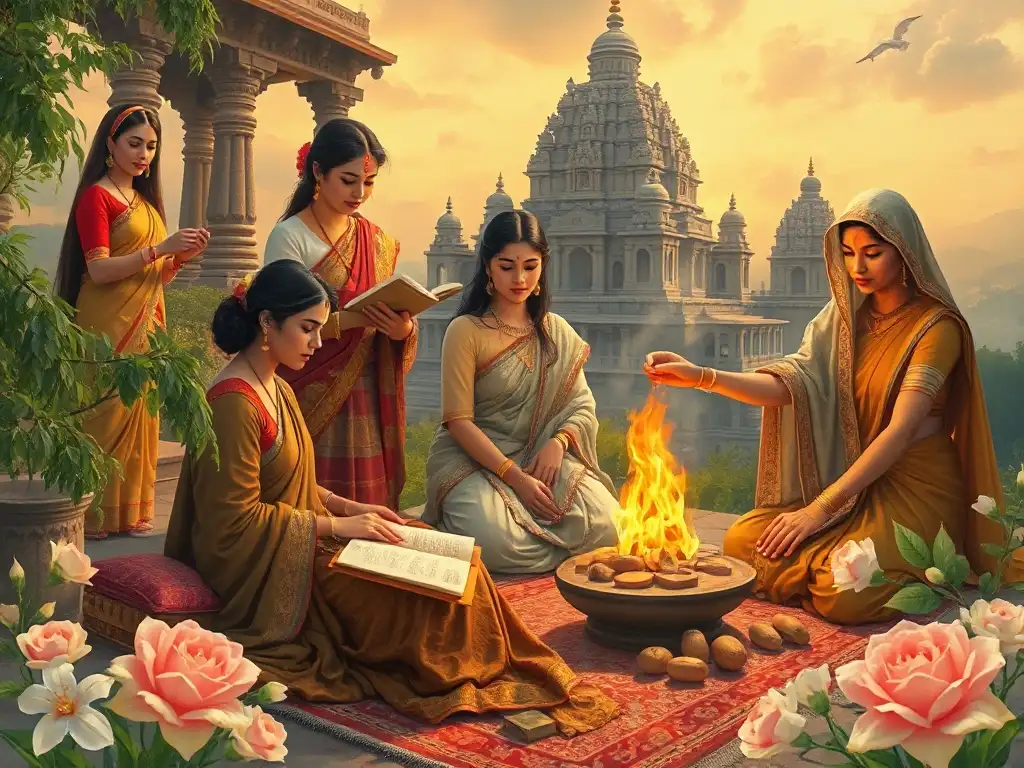
The portrayal and roles of women in ancient Indian religious texts have undergone significant transformations over the centuries. This evolution is marked by various cultural, social, and religious influences that shaped the perception of women's contributions and their spiritual stature within society.
Ancient texts such as the Vedas, Upanishads, and epics like the Mahabharata and Ramayana provide insights into the roles women played in religious and spiritual life. Initially, women were depicted as powerful figures with agency, often associated with fertility, wisdom, and spiritual knowledge.
Transition from Ancient to Medieval Periods
The transition from ancient to medieval periods saw a notable shift in the representation of women in religious texts.
- Early Depictions (Vedic Period):
- In the Vedic texts (1500-500 BCE), women such as Savitri and Gargi are celebrated for their intellect and spiritual prowess.
- The Vedas also mention women performing rituals and participating in religious ceremonies, reflecting a relatively egalitarian spiritual landscape.
- Epics and Puranic Texts:
- The Mahabharata and Ramayana, composed later, introduce complex female characters like Draupadi and Sita, who embody virtues yet also face societal constraints.
- While these epics highlight women's strength and moral dilemmas, they also begin to reflect a more patriarchal society where women's roles become increasingly defined by their relationships to men.
- Medieval Texts and Bhakti Movement:
- During the medieval period, religious texts began to emphasize devotion and Bhakti, allowing women to express their spirituality outside traditional roles.
- Figures like Mirabai emerged, challenging patriarchal norms through their poetry and devotion, showcasing women's agency within spirituality.
- Societal Influence:
- The changing socio-political landscape, including invasions and the establishment of new kingdoms, further influenced the portrayal of women in texts.
- Women's roles became more confined, often aligning with the ideals of chastity and domesticity, leading to a decline in their visibility in religious practices.
Through these transitions, it is evident that while ancient texts celebrated women's contributions, the subsequent periods often restricted their roles, reflecting broader societal changes and attitudes towards gender.
Impact of Historical Events on Women's Representation
Historical events have profoundly impacted the representation of women in ancient Indian texts, shaping their roles and narratives over time.
- Invasions and Cultural Exchanges:
- The invasions of various dynasties, such as the Mughals, introduced new cultural norms that affected gender roles. Women's representation in texts began to reflect the values of these new ruling classes.
- The interaction between different cultures led to a fusion of ideas, sometimes empowering women through new religious movements, yet also reinforcing existing patriarchal structures.
- Rise of Feudalism:
- The establishment of feudal systems often relegated women to domestic spheres. Texts from this period frequently depicted them in subservient roles, focusing on their duties as wives and mothers.
- This shift is evident in texts like the Manusmriti, which codified laws that restricted women's rights and emphasized their dependence on male relatives.
- Social Reform Movements:
- The 19th and early 20th centuries saw the rise of social reform movements advocating for women's rights and education.
- These movements sparked a revival of interest in ancient texts, leading to reinterpretations that highlighted women's strengths and contributions, such as in the writings of reformers like Raja Ram Mohan Roy.
- Modern Interpretations:
- Today, scholars are revisiting ancient texts to uncover the nuanced roles women played in society. This has led to a reassessment of historical narratives and a more inclusive understanding of women's contributions to spirituality and culture.
The representation of women in ancient Indian texts is a dynamic interplay of historical events, social changes, and cultural exchanges. While early texts often presented women as powerful spiritual figures, later periods saw a constriction of their roles, influenced by various historical contexts. Understanding these patterns is crucial for appreciating the complex narrative of women in ancient Indian religious texts.
Conclusion: The Lasting Legacy of Women in Ancient Indian Texts
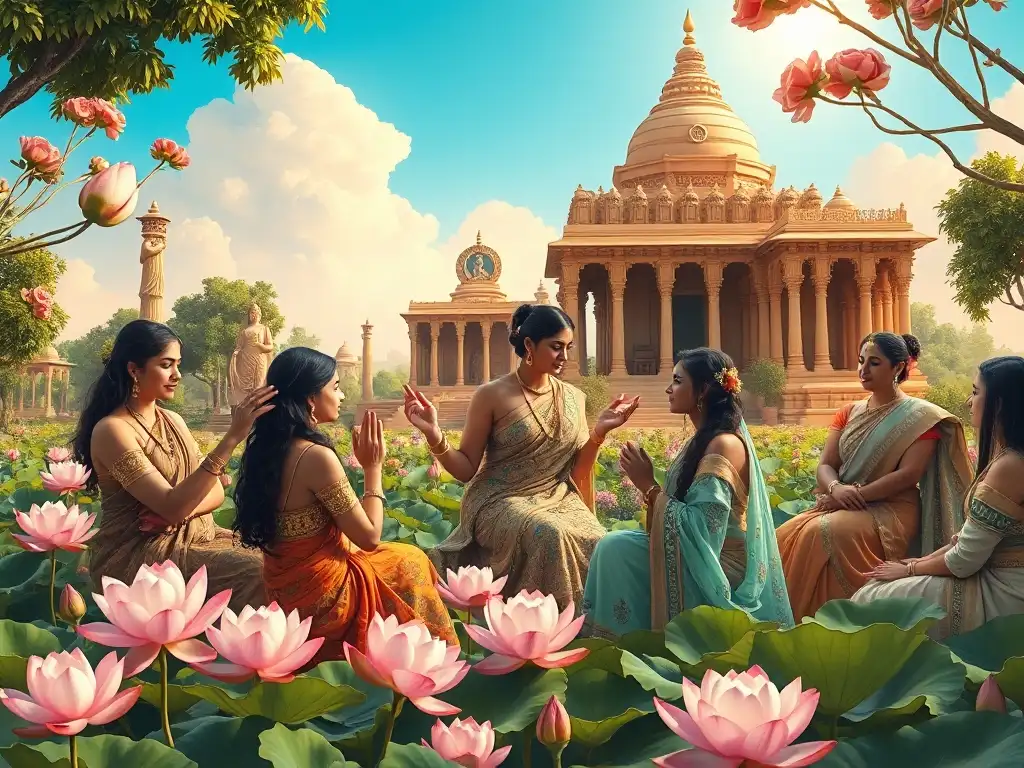
The exploration of women in ancient Indian texts reveals a profound and complex legacy that has shaped the spiritual and cultural fabric of Indian civilization. Women, often depicted as embodiments of divine qualities, played pivotal roles in religious narratives, philosophies, and rituals. Their presence in texts such as the Vedas, Upanishads, and Puranas illustrates a multifaceted representation—ranging from revered goddesses to wise sages, and influential figures in mythological stories.
The goddess archetypes, including Durga, Saraswati, and Lakshmi, not only symbolize power and knowledge but also embody the ideals of devotion, creativity, and prosperity. These representations highlight the integral role women held in promoting spiritual values and religious practices, thereby influencing generations. Moreover, historical figures like Gargi and Maitreyi, who engaged in philosophical discourses, underscore the intellectual contributions of women in ancient Indian thought.
Reflection on the Role of Women in Shaping Indian Spirituality
Women in ancient Indian texts were not mere secondary characters; they were pivotal in shaping the spiritual narrative. The portrayal of women in these texts often reflects broader societal values regarding femininity, divinity, and morality. For instance, the concept of Shakti, or divine feminine energy, is central to many Hindu philosophies, emphasizing the power and agency of women. This perspective is evident in various texts that elevate the status of women as not only caretakers but also as spiritual leaders.
Furthermore, the inclusion of women in sacred rituals and their depictions as priestesses and devotees illustrate their active participation in religious life. In many cases, women were seen as mediators between the human and the divine, reinforcing their significance in spiritual practices. This active involvement challenges the often-held notion of women's passivity in ancient societies, revealing a more nuanced understanding of their roles.
Implications for Contemporary Understanding of Gender in Religion
The examination of women's roles in ancient Indian texts bears significant implications for contemporary discussions on gender in religion. By recognizing the historical contributions of women, modern interpretations can challenge patriarchal narratives that have dominated religious discourses for centuries. This reevaluation encourages a more inclusive understanding of spirituality that honors the diverse experiences and contributions of women.
Moreover, the legacy of women in ancient Indian texts serves as a source of inspiration for contemporary movements advocating for gender equality within religious contexts. Their representations as powerful deities and respected sages can empower current generations to reclaim and celebrate feminine spirituality, fostering a more balanced view of gender in religious practices.
The study of women in ancient Indian texts not only enriches our understanding of historical spiritual practices but also provides a critical lens through which to view contemporary gender dynamics in religion. The lasting legacy of these women continues to inspire and challenge societal norms, emphasizing the importance of recognizing and honoring their contributions to both ancient and modern spiritual landscapes.
References and Further Reading
Suggested Texts on Women in Ancient Indian Religious Literature
- "The Rigveda: A Historical Analysis" by W. Norman Brown
- This comprehensive text delves into the Rigveda, one of the oldest religious texts in the world. It discusses the portrayal of women in the hymns, exploring their roles and the significance of female deities in Vedic society.
- "Women and the Hindu Tradition" by Susan S. Wadley
- Wadley provides an in-depth exploration of women's roles through various Hindu texts, including the Mahabharata and Ramayana. This book sheds light on the complexities of gender dynamics and the representation of women in these epic narratives.
- "The Goddess in India: The Five Faces of the Divine" by David Kinsley
- This significant work examines the various forms and representations of the divine feminine in Indian culture, emphasizing the importance of goddesses in religious texts and their impact on societal views of women.
- "Women in Ancient India" by R. S. Sharma
- Sharma's scholarly approach offers insights into the lives of women across different ancient Indian civilizations, supported by textual evidence and archaeological findings that illustrate their status and contributions.
- "The Mahabharata: A Modern Rendering" by Ramesh Menon
- This contemporary retelling of the Mahabharata emphasizes female characters such as Draupadi and their pivotal roles within the narrative, highlighting the complexities of their identities and experiences.
Recommended Resources for Further Exploration of the Divine Feminine
- Online Archives and Databases
- Digital Library of India: An extensive collection of texts, manuscripts, and research papers that provide access to ancient scriptures and commentaries on women in religious contexts.
- Internet Archive: A vast repository of books and documents, including ancient Indian texts that explore the themes of femininity and the divine.
- Documentaries and Lectures
- "The Divine Feminine: Goddesses of India": A documentary exploring the various goddesses worshipped in India, their mythological significance, and the cultural narratives surrounding them.
- YouTube Lectures by Scholars: Various lectures by historians and religious studies scholars discussing the role of women in ancient texts, particularly focusing on the Vedas, Upanishads, and epics.
- Academic Journals
- Journal of Hindu Studies: This publication often features articles analyzing the portrayal of women in ancient texts, offering scholarly interpretations and insights.
- International Journal of Hindu Studies: A resource for research papers and articles that delve into gender studies within the context of Hindu scriptures.
- Conferences and Workshops
- Participate in workshops and conferences focused on gender studies in South Asian contexts, which often cover the roles of women in ancient texts and provide opportunities for discussion and networking with scholars in the field.
These resources will offer a deeper understanding of the role of women in ancient Indian texts and the broader context of the divine feminine within Indian religious traditions.
Frequently Asked Questions
What is the significance of women in ancient Indian religious texts?
Women in ancient Indian religious texts are often depicted as powerful figures with significant roles, emphasizing their spiritual and social importance in various narratives.
How did ancient Indian texts portray women's roles in society?
Ancient texts often highlighted women's roles as mothers, wives, and goddesses, reflecting their central position in family and society while also acknowledging their wisdom and strength.
Were women in ancient India given any rights or freedoms?
Yes, women in ancient India had certain rights and freedoms, which varied by region and era, including the ability to own property and engage in spiritual practices.
How do ancient Indian texts reflect the concept of the Divine Feminine?
The concept of the Divine Feminine is prevalent in texts where women are associated with goddesses, symbolizing fertility, power, and wisdom, thus influencing cultural and spiritual practices.
What contributions did women make to ancient Indian civilization?
Women contributed to art, literature, and spirituality, often serving as patrons and influencers in their communities, thereby shaping the cultural landscape of ancient India.
Final Reflection: Embracing the Divine Feminine in Ancient Indian Texts
The exploration of women's roles in ancient Indian religious texts reveals a profound connection to contemporary discussions on gender equality and empowerment. As we delve into the narratives that celebrate the divine feminine, we uncover the timeless wisdom that these texts offer, reminding us that the strength and resilience of women have always been integral to the fabric of society. The recognition of women's contributions in these ancient stories is not merely historical; it is a powerful call to honor and uplift the voices of women today.
Clearly, the influence of the divine feminine resonates deeply within our cultural and social landscape. The stories of goddesses and revered women in ancient texts serve as a foundation for understanding the complexities of femininity and the sacredness of women's experiences. As we reflect on these narratives, we are reminded of the words of the poet Rumi: The wound is the place where the Light enters you.
This quote encapsulates the journey of women throughout history, highlighting how their struggles and triumphs illuminate the path toward a more equitable future.
As we conclude this exploration, I invite you to reflect on the lessons embedded in these ancient texts and consider how they can inspire your own life. Embrace the divine feminine within you and recognize the power of your voice. Whether through advocacy, creativity, or simply by sharing stories, let us honor the legacy of women in ancient Indian texts and work together to create a world where every woman is celebrated and empowered. The future is bright when we uplift one another, drawing strength from the wisdom of the past.
Embrace the Divine: Ignite Your Connection with Ancient Wisdom
Thank you for exploring the fascinating role of women in ancient Indian religious texts with us! Your interest highlights the integral place of the Divine Feminine in history, one that continues to inspire and empower today. Now it’s time to deepen that connection and explore how you can embrace these insights in your own life.
Here are some actionable steps for you to consider:
- Dive into the Texts: Read translations or commentaries on key ancient texts such as the Rigveda or the Upanishads to uncover more about feminine archetypes and their significance.
- Join a Community: Participate in a local or online group dedicated to discussing the Divine Feminine, where you can share insights and learn from others.
- Share Your Journey: Create a blog post or a social media entry about your personal exploration; inspire others to reflect on the vital role women have played in shaping spiritual narratives.
How do you see the influence of the Divine Feminine in modern society today? We’d love to hear your thoughts!