
Rani Durgavati: The Warrior Queen Who Defied Invaders

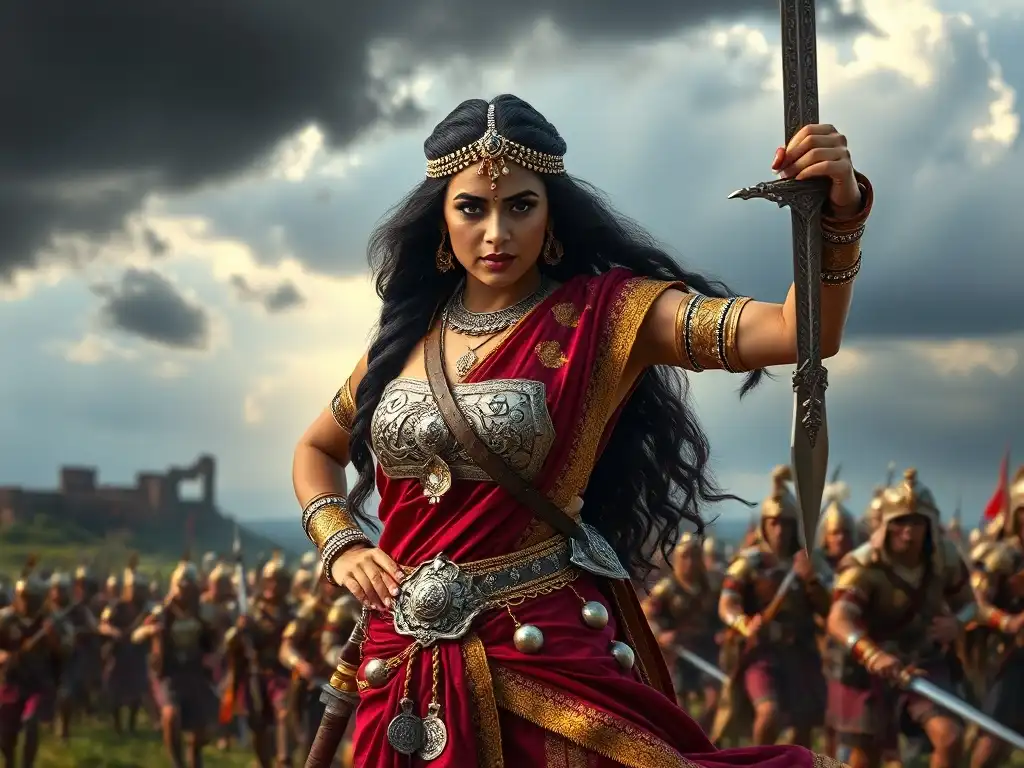
Welcome to Ancient India History, where we embark on a captivating journey through the rich tapestry of India's past. This week, we shine a spotlight on the remarkable story of Rani Durgavati, the warrior queen who fiercely defended her kingdom against invaders. As we delve into her extraordinary life and the pivotal role she played in shaping women's contributions in ancient times, you'll uncover the resilience and courage that defined her legacy.
Get ready to explore the depth of her story and the broader implications of her reign, inviting you to discover the powerful narratives that have shaped our history. Join us as we unravel the threads of Rani Durgavati's warrior queen history and inspire a deeper understanding of the women who shaped ancient civilizations!
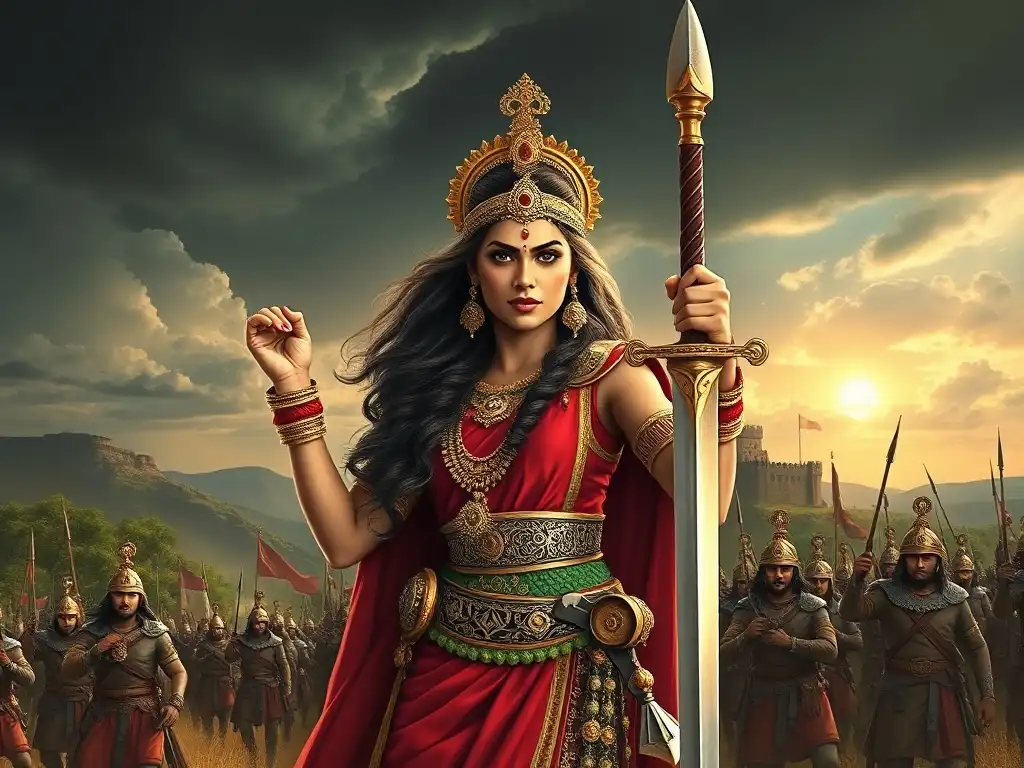
Rani Durgavati stands as a towering figure in the rich tapestry of ancient Indian history, embodying the spirit of resistance and valor during tumultuous times. As a formidable warrior queen, she ruled the Gondwana region in the 16th century and is celebrated for her unwavering courage against the Mughal invaders. Her legacy not only highlights the contributions of women in leadership roles but also the complexities of regional politics in ancient India.
This article delves into the life and achievements of Rani Durgavati, exploring her early life, the challenges she faced, and the indelible mark she left on the pages of history. As we navigate through her story, we will uncover how her strength and determination have inspired generations, making her a symbol of resilience and patriotism.
Introduction to Rani Durgavati
Rani Durgavati's life is a testament to the strength and valor that women have exhibited throughout history, particularly in the face of adversity. Her reign marked a significant period of resistance against the encroachment of more powerful empires, showcasing her strategic prowess and military acumen. Durgavati’s story resonates not only in the annals of warrior queens but also in the broader narrative of women's roles in ancient Indian society, where they often defied conventional expectations to protect their kingdoms and uphold their honor.
Overview of Rani Durgavati's Legacy
Rani Durgavati is often remembered for her remarkable bravery and tactical skills in battle. Her legacy is characterized by her efforts to preserve her kingdom against the Mughal Empire under Emperor Akbar. Despite facing overwhelming odds, she led her troops into battle and fought valiantly to defend her realm. Her ultimate sacrifice during the battle against the Mughal forces is a poignant reminder of her commitment to her people and her land. The tales of her valor continue to be celebrated in folklore and historical accounts, inspiring countless individuals to recognize the strength of women in leadership.
Importance of Rani Durgavati in Ancient Indian History
The significance of Rani Durgavati in ancient Indian history extends beyond her military achievements. She symbolizes the resilience of indigenous rulers against the dominance of larger empires. Her story serves as a powerful narrative of female empowerment, illustrating the critical roles women played in governance and warfare during ancient times. Durgavati's defiance against the Mughal invaders not only highlights her personal courage but also reflects the broader struggles faced by regional rulers during a period of upheaval. As a figure of resistance, she has become an enduring icon for subsequent generations, emblematic of the fight for sovereignty and justice.
Early Life of Rani Durgavati
Rani Durgavati's early life laid the foundation for her future as a warrior queen. Born in 1524 to the royal family of the Gond dynasty, she was imbued with a sense of duty and honor from a young age. Her upbringing in a noble family provided her with the education and training necessary to assume leadership roles, which was uncommon for women of her time.
Birth and Background
The exact details of Rani Durgavati's birth and lineage are often celebrated in regional folklore, emphasizing her noble heritage. She was born into the family of King Sangram Shah of the Gond dynasty, a lineage known for its valor and commitment to their kingdom. Being a princess, she received rigorous training in martial arts, archery, and statecraft, distinguishing her from other women of her era. This preparation was pivotal, as it equipped her with the skills she would later employ in her fierce resistance against invaders.
Influences of Her Family and Culture
Rani Durgavati was deeply influenced by the cultural and political ethos of her family and the Gondwana region. The values instilled in her by her parents emphasized courage, leadership, and the importance of defending one's homeland. Additionally, the rich cultural heritage of the Gond dynasty, which celebrated bravery and honor, played a significant role in shaping her identity as a warrior queen. Growing up in such an environment, she developed a profound sense of loyalty to her kingdom, which fueled her determination to fight for her people against external threats.
Rani Durgavati's Rise to Power
Rani Durgavati's ascent to power is a remarkable tale of strength and resilience in a time when women were often relegated to the background of historical narratives. Born into the illustrious Chandela dynasty around 1524 CE, she was the daughter of King Keerat, the ruler of the Gondwana region. From a young age, Durgavati was trained in the arts of warfare and administration, which later equipped her with the necessary skills to lead her kingdom effectively.
Her rise to power began when she married the Gondwana ruler, Dalpat Shah, further strengthening her political ties. Following the untimely death of her husband in 1550 CE, Rani Durgavati took the reins of the kingdom, becoming the regent for her young son. However, she quickly demonstrated that she was not merely a caretaker but a formidable leader capable of defending her realm against external threats.
Ascension as Queen of Gondwana
Upon her husband's death, Durgavati faced the daunting challenge of ruling in a patriarchal society. Despite the expectations to step aside for her son, she asserted her authority and became the de facto queen of Gondwana. Embracing her responsibilities, she focused on strengthening her kingdom's defenses and fostering economic stability. Durgavati's governance was marked by a commitment to her subjects, earning her respect and loyalty from her people.
Her ability to navigate the complexities of leadership during a tumultuous period is a testament to her strategic acumen and dedication. Rani Durgavati established herself as a role model for women in leadership, proving that a queen could wield power effectively and command respect in her own right. This period laid the groundwork for her later military endeavors against the Mughal Empire.
Key Events Leading to Her Reign
Several key events shaped the landscape leading to Rani Durgavati's reign. The Gondwana region, rich in resources and strategically located, attracted the attention of various invading forces. The decline of the local Rajput states opened the door for more aggressive maneuvers from the expanding Mughal Empire under Emperor Akbar.
In the years leading up to her ascension, Durgavati witnessed the increasing incursions into her territory. The need for a strong leader became apparent as various factions, including the Mughals, sought to exploit the power vacuum. This context of instability not only motivated her to assert her leadership but also highlighted the urgent need for a unifying figure to rally the Gondwana people against external threats.
The Warrior Queen: Rani Durgavati in Battle
Rani Durgavati's reputation as a warrior queen is firmly established in the annals of history due to her valiant efforts in defending her kingdom against formidable invaders. Known for her courage and strategic brilliance, she embodied the spirit of resistance against oppression. Her military campaigns demonstrated her ability to inspire her troops and engage in tactical warfare, solidifying her legacy as a formidable warrior.
Military Strategies Employed by Rani Durgavati
To effectively combat the threats posed by the Mughals, Rani Durgavati employed a range of innovative military strategies. Recognizing the importance of terrain, she utilized the dense forests and hilly landscapes of Gondwana to her advantage. This not only provided her troops with cover but also hindered the enemy's movements.
Durgavati's army was characterized by a mix of traditional infantry and cavalry units, which she adeptly coordinated to launch surprise attacks. She prioritized mobility and the element of surprise, often engaging in guerrilla tactics that capitalized on her knowledge of the local geography. Her commitment to arming and training women soldiers also set her apart as a progressive leader, challenging the norms of her time.
Major Battles and Victories
Rani Durgavati faced several significant battles during her reign, most notably against the Mughal forces led by Asaf Khan in 1564 CE. Despite being outnumbered, her strategic planning and fierce determination led to notable initial successes, demonstrating her prowess on the battlefield. The Battle of Narrai became a defining moment, showcasing her courage as she fought valiantly to defend her kingdom.
Although ultimately the Mughals were able to breach her defenses, Rani Durgavati's resistance inspired her people and left an indelible mark on history. Her legacy as a warrior queen who stood her ground against invaders continues to resonate, symbolizing the strength and resilience of women in positions of power throughout history. Her story serves as a reminder of the vital roles women played in shaping the histories of their civilizations.
Rani Durgavati's Resistance Against Invaders
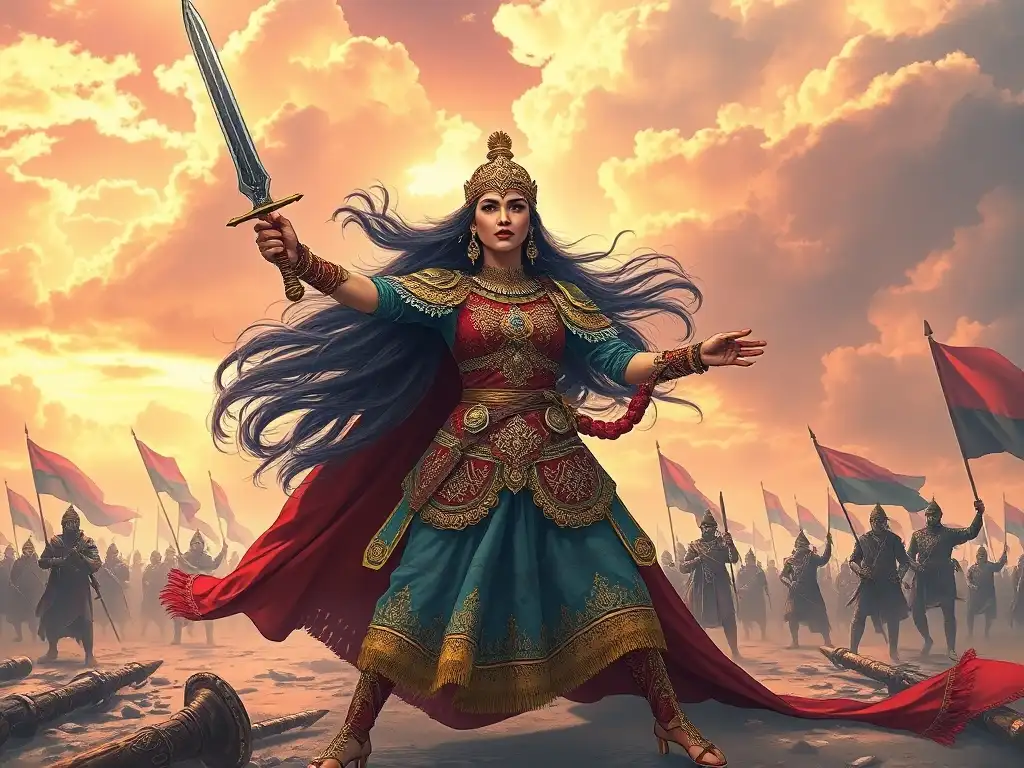
Rani Durgavati, the warrior queen of Gondwana, is celebrated for her staunch resistance against foreign invaders during the 16th century. Ascending to the throne after the demise of her husband, she ruled with a fierce commitment to protect her kingdom from external threats.
Her leadership was characterized by strategic military campaigns and a determination to defend her territory against the Mughal Empire, which sought to expand its dominion over India. Durgavati's resistance was not merely a battle for land but a fight for the dignity and autonomy of her people, showcasing her as a symbol of courage and resilience in the face of overwhelming odds.
Rani Durgavati's notable confrontation with Mughal forces in 1564, led by the ambitious emperor Akbar, underscored her tactical prowess. With a relatively smaller army, she employed guerrilla warfare tactics, exploiting the rugged terrain of her kingdom to her advantage. Durgavati's bravery inspired her soldiers and rallied them to persist against the superior numbers of the enemy. Despite her eventual defeat, her fierce resistance left a lasting mark on the history of Indian warfare and the role of women in leadership.
Defiance Against Mughal Forces
The Mughal Empire, known for its military strength and political ambition, posed a significant threat to many regional kingdoms in India, including Gondwana. Rani Durgavati's defiance against the Mughal forces epitomized her unwavering commitment to her people's sovereignty. In 1564, faced with an invasion led by the Mughal general Asaf Khan, Durgavati prepared for battle, rallying her troops to defend their homeland.
She employed strategic maneuvers, utilizing the natural landscape to launch surprise attacks and ambushes on enemy forces. Her valiant efforts, however, met with fierce opposition, and despite her tactical genius, the numerical superiority of the Mughal army ultimately overwhelmed her forces. In a last stand of unparalleled bravery, Durgavati chose to end her life rather than succumb to capture, a testament to her indomitable spirit. Her defiance became a rallying point for future generations, inspiring resistance against foreign rule.
The Significance of Her Resistance in Indian History
Rani Durgavati's resistance against the Mughals holds significant importance in Indian history as it represents the struggle of regional powers against imperial expansion. Her actions symbolized a broader theme of resistance prevalent in various Indian states during the Mughal era. Durgavati’s legacy is not just about military confrontation; it is a powerful narrative of a woman who rose to prominence in a male-dominated society and led her people with valor.
The courage displayed by Durgavati has been a source of inspiration for many, highlighting the role of women in shaping historical narratives. Her fight against the Mughals also contributed to the consciousness of Indian identity, emphasizing the need for unity among regional leaders to combat external threats. The significance of her resistance continues to resonate, reminding contemporary society of the struggles faced by women and the crucial roles they played in history.
Legacy of Rani Durgavati
Rani Durgavati's legacy is multifaceted, encompassing her contributions to the socio-political landscape of her time and her enduring influence on culture and literature. She is revered not only as a warrior queen but also as a symbol of resistance and empowerment for women throughout history. Her story serves as an inspiration for those who challenge oppression and strive for justice.
Cultural Impact of Rani Durgavati's Leadership
The cultural impact of Rani Durgavati's leadership is profound, as her life and battles have been celebrated in various forms of art, including folk songs, plays, and paintings. Her valor has been immortalized in the collective memory of her people, symbolizing strength and resilience. Traditional narratives often depict her as a goddess-like figure, illustrating her revered status in the cultural fabric of India.
Moreover, Rani Durgavati's legacy is reflected in the festivals and rituals celebrated in her honor, particularly in the region of Gondwana. These cultural practices serve as a reminder of her contributions and continue to inspire new generations about the importance of courage and leadership. Her story has also found a place in the discussions surrounding women's empowerment, highlighting the essential roles women have played in shaping history.
Rani Durgavati in Folklore and Literature
Rani Durgavati's life has been richly portrayed in Indian folklore and literature, where her story transcends time and continues to inspire. Numerous ballads and folklore recount her bravery, valor, and the emotional depth of her struggles, ensuring that her legacy remains alive in the hearts of people. These narratives often blend historical facts with mythical elements, enhancing her image as a larger-than-life figure.
In contemporary literature, Rani Durgavati's tale serves as a powerful example of female empowerment, challenging societal norms of her time. Authors and poets draw upon her story to inspire narratives that celebrate women's strength and resilience. Her legacy is not only a testament to her own life but also a source of motivation for ongoing discussions about gender equality and women's roles in history. Rani Durgavati's enduring presence in folklore and literature ensures that her contributions are recognized and celebrated in modern society.
Conclusion: The Enduring Spirit of Rani Durgavati
Rani Durgavati stands as an emblem of courage, resilience, and unwavering determination in the face of adversity. Her leadership during the turbulent times of the 16th century exemplifies the remarkable capabilities of women in positions of power and influence. Durgavati's legacy is not just one of military prowess but also of her deep commitment to her people and her kingdom, which she defended against formidable foes. Through her indomitable spirit, she has left an indelible mark on the history of India, inspiring generations to come.
Summary of Her Contributions as a Warrior Queen
Rani Durgavati's contributions as a warrior queen are multifaceted. She ascended to the throne of Gondwana after the death of her husband and proved herself as a capable ruler. Her most notable achievement was her fierce resistance against the Mughal Empire, particularly during the battle against the forces of Akbar in 1564.
Utilizing her strategic acumen, she rallied her troops, demonstrating exceptional leadership and valor on the battlefield. Additionally, Durgavati's commitment to her subjects, her efforts to promote welfare, and her patronage of arts and culture further solidified her legacy as a significant figure in Indian history. Her life story serves as a testament to the strength and agency of women in ancient India, breaking the stereotypical barriers of gender roles in leadership.
The Continuing Relevance of Rani Durgavati in Modern Times
In contemporary society, Rani Durgavati's legacy resonates deeply, symbolizing the fight against oppression and the empowerment of women. Her story has become a source of inspiration for women’s rights movements, emphasizing the importance of female leadership in various spheres of life. Modern reinterpretations of her life in literature, films, and educational curricula serve to highlight not only her historical significance but also the enduring qualities of courage and resilience that she embodies. By celebrating figures like Rani Durgavati, society acknowledges the vital roles women have played throughout history, encouraging future generations to aspire toward leadership and advocacy.
Reflection on Women's Roles in Ancient India
The history of ancient India is replete with examples of strong, influential women who played pivotal roles in shaping society, culture, and politics. Women like Rani Durgavati exemplify the diverse contributions made by females in various capacities, including governance, warfare, and spiritual leadership. The acknowledgment of these roles challenges the conventional narratives often dominated by male figures, providing a more nuanced understanding of historical dynamics.
Broader Context of Influential Women in Ancient Indian History
Throughout ancient Indian history, numerous women made significant impacts across various domains. Figures such as Raziyya Sultana, the first female ruler of the Delhi Sultanate, and the poet-saint Mirabai, who defied societal norms to express her devotion, reflect the rich tapestry of women's contributions. These women, alongside Rani Durgavati, showcase the diverse ways in which women navigated and influenced the socio-political landscapes of their time. Their legacies serve as reminders of the potential for women to lead and inspire, regardless of the societal constraints they faced.
The Role of Women in Warfare and Leadership
Women in ancient India were not only passive figures but often took on active roles in warfare and leadership. Rani Durgavati's military strategies and her direct involvement in battles illustrate that women could command armies and protect their realms. Historical accounts reveal that women from various regions, including the Rajputs and Mughals, participated in battles, either as leaders or warriors.
The portrayal of women such as Rani Durgavati in the context of warfare challenges traditional perceptions, asserting that leadership and martial prowess were not confined to men. This recognition of women's roles in warfare is crucial in understanding the complexities of power dynamics in ancient Indian society, promoting a more balanced narrative of history.
- Introduction to Rani Durgavati
- Early Life of Rani Durgavati
- Rani Durgavati's Rise to Power
- The Warrior Queen: Rani Durgavati in Battle
- Rani Durgavati's Resistance Against Invaders
- Legacy of Rani Durgavati
- Conclusion: The Enduring Spirit of Rani Durgavati
- Reflection on Women's Roles in Ancient India
Frequently Asked Questions
What is the significance of Rani Durgavati in Indian history?
Rani Durgavati is celebrated as a brave warrior queen who defended her kingdom against Mughal invasions in the 16th century, symbolizing female empowerment in ancient India.
How did Rani Durgavati rise to power?
Rani Durgavati ascended to the throne after the death of her husband, becoming the ruler of Gondwana. Her leadership skills and military strategies were crucial in maintaining her kingdom's independence.
What battles did Rani Durgavati fight?
She is best known for her fierce resistance during the battle against Akbar's forces, showcasing her strategic acumen and bravery, which left a lasting legacy in Indian history.
How is Rani Durgavati remembered today?
Rani Durgavati is commemorated as a symbol of valor and resilience. Her story continues to inspire many, with statues, memorials, and literature celebrating her legacy.
What impact did Rani Durgavati have on women's roles in history?
Her reign challenged traditional gender roles, demonstrating that women could be powerful leaders and warriors, thus paving the way for future generations of women in India.
Final Reflection: The Legacy of Rani Durgavati, A Timeless Inspiration
Rani Durgavati's story is not just a tale of bravery; it serves as a powerful reminder of the strength and resilience women have exhibited throughout history. In a time when female figures were often relegated to the background, Rani Durgavati emerged as a formidable warrior queen who defied invaders and fought valiantly for her kingdom. Her legacy resonates today, as we continue to grapple with issues of gender equality and empowerment. The courage she displayed in the face of adversity is a striking testament to the enduring spirit of women who challenge societal norms.
The influence of Rani Durgavati extends beyond her historical context, shaping the cultural and social landscape of modern India. Her story inspires countless individuals to embrace their inner strength and challenge the status quo. As we reflect on her life, we recognize that her fight against oppression is echoed in the struggles of many today. The most common way people give up their power is by thinking they don’t have any.
This quote serves as a poignant reminder that, like Rani Durgavati, we must acknowledge our power and use it to effect change in our lives and communities.
As we conclude our exploration of Rani Durgavati's remarkable journey, I invite you to reflect on her legacy and consider how her story can inspire your own life. What battles are you willing to fight for your beliefs? Embrace the warrior spirit within you, and let Rani Durgavati's courage guide you in your endeavors. The world needs more voices like hers—strong, fearless, and unyielding. Stand tall, and remember that you too can be a champion for change.
Embrace the Legacy: Stand Up Like Rani Durgavati!
Thank you for diving into the incredible story of Rani Durgavati, a fierce warrior queen who resolutely defended her kingdom against powerful invaders. Her courage and resilience inspire us to reflect on our own battles, both significant and minor. Now that you've explored her remarkable legacy, it's time to take action!
Here are a few impactful steps you can take to honor her memory and channel your inner warrior:
- Join a local or online historical discussion group to share insights about inspiring figures like Rani Durgavati and deepen your understanding of India's rich heritage.
- Organize a community event or workshop that emphasizes the significance of female leaders in history—transform knowledge into action and create a platform for voices that deserve to be heard.
- Share Rani Durgavati’s story on your social media or with friends and family to raise awareness about the remarkable contributions of women throughout history and motivate others.
What challenges does Rani Durgavati’s bravery inspire you to confront in your own life? We would love to hear your thoughts in the comments below!