
Exploring the Life of Gargi: The Philosopher Who Challenged Male Dominance

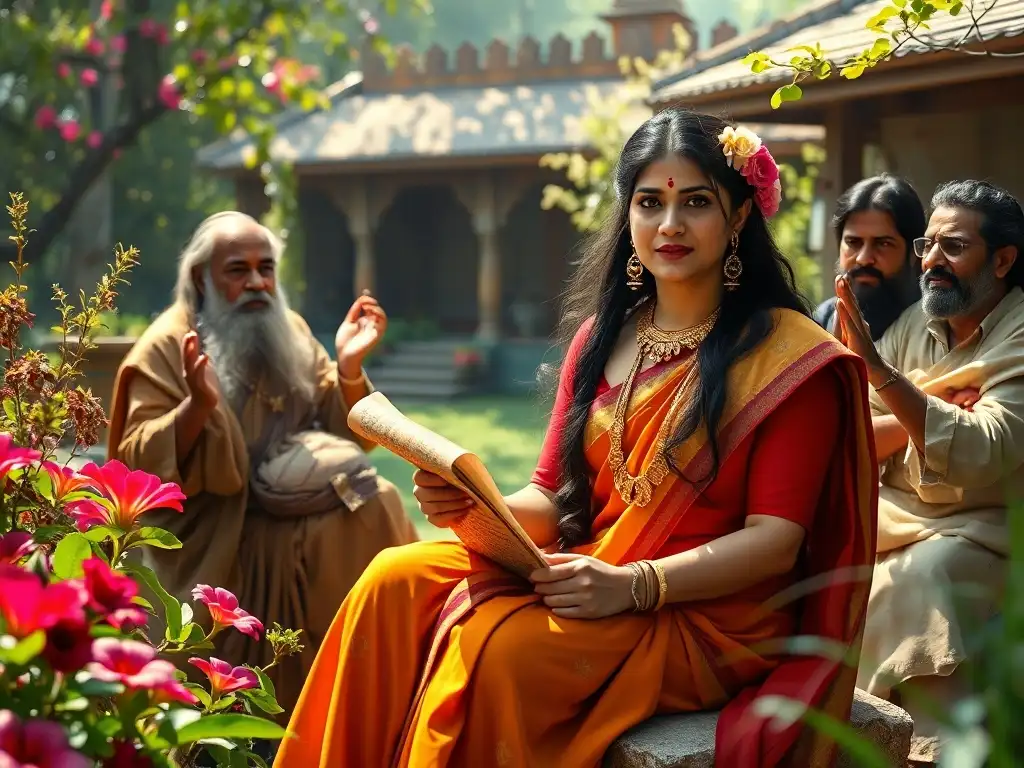
Welcome to Ancient India History, where we embark on a captivating journey through the rich tapestry of India's past. In this exploration, we delve into the remarkable life of Gargi, a philosopher whose intellect and courage boldly challenged the male-dominated philosophies of ancient India. As we unravel her story, you'll discover how her contributions not only shaped the intellectual landscape of her time but also continue to inspire discussions about women's roles in history.
Join us as we uncover the layers of Gargi's legacy and explore the profound impact of women in ancient civilizations. Your adventure into the stories of our past begins here!
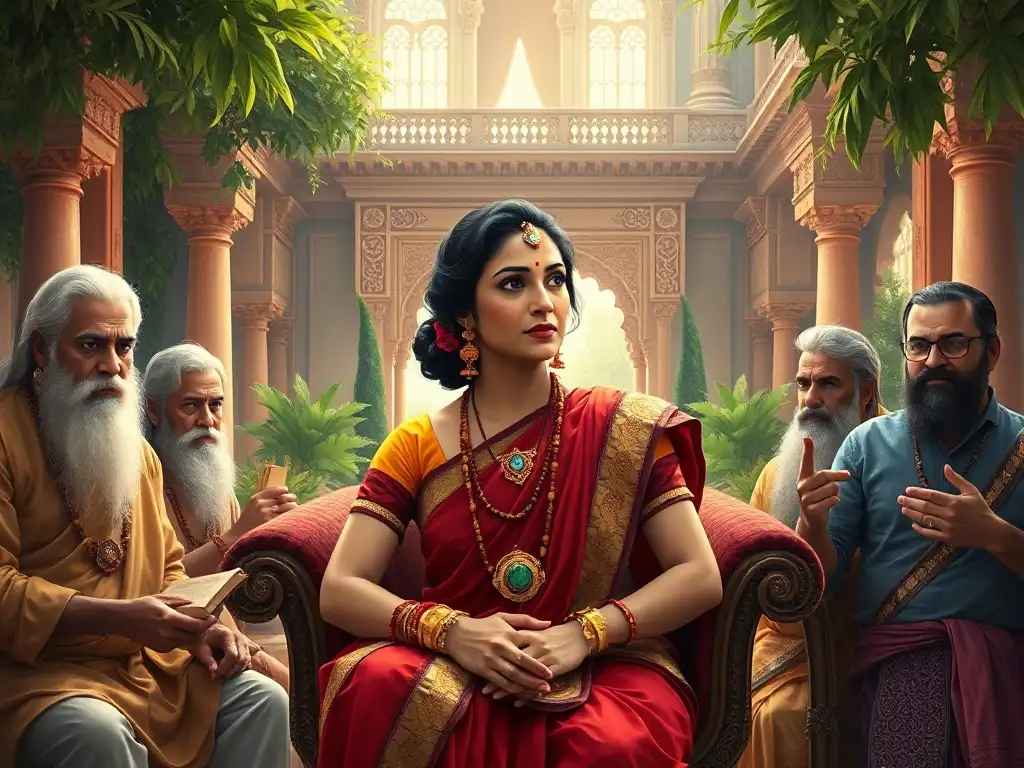
Gargi, a luminary in the realm of ancient Indian philosophy, stands as a symbol of intellectual prowess and resilience in a time when women's voices were often marginalized. Her contributions are not merely historical footnotes but serve as powerful reminders of the potential that women have always possessed, even in patriarchal societies.
This article delves into the life of Gargi, exploring her philosophical ideas, the societal norms of her era, and her enduring legacy as a trailblazer who dared to question the male-dominated discourse of her time. By examining Gargi's life and the context in which she flourished, we can gain a deeper appreciation for her impact on ancient Indian thought and feminism.
Introduction to Gargi: A Pioneer Philosopher in Ancient India
Gargi is often celebrated as one of the foremost female philosophers in ancient India, renowned for her intellect and philosophical inquiry. She is best known for her participation in the philosophical dialogues found in the Brahadaranyaka Upanishad, where she engaged with eminent thinkers of her time, including the sage Yajnavalkya. Her probing questions and challenging arguments reflect not only her depth of understanding but also her courage in confronting the patriarchal structures of her society.
Notably, Gargi's most famous contribution is her challenge to Yajnavalkya, where she questions the nature of reality and the essence of the self. This moment underscores her role as a formidable thinker who was unafraid to assert her intellectual capabilities in a male-dominated arena. Gargi's legacy is a testament to the rich philosophical traditions of ancient India, illustrating that women played an integral part in shaping the intellectual landscape of their time.
The Historical Context of Gargi's Era
Understanding the life of Gargi requires a closer look at the historical context of her era, a time characterized by significant philosophical exploration and the evolution of social norms.
Overview of Ancient Indian Philosophy
Ancient Indian philosophy flourished around the 6th century BCE, marked by the emergence of various schools of thought, including Vedanta, Samkhya, and Buddhism. This period was instrumental in shaping metaphysical and epistemological inquiries that sought to understand the nature of existence, consciousness, and the cosmos. Philosophers engaged in rigorous debates, often within the framework of religious texts and oral traditions.
Key philosophical texts, such as the Upanishads, provided a platform for thinkers like Gargi to explore profound questions about reality and the self. The Upanishads emphasized inquiry and dialogue, allowing for diverse perspectives, including those of women philosophers, to emerge.
The Role of Women in Ancient Indian Society
The role of women in ancient Indian society was complex and varied across different regions and periods. While many women were relegated to domestic spheres, others, like Gargi, broke through societal constraints to engage in intellectual pursuits.
In some texts, women are depicted as scholars and philosophers, participating in discussions on ethics, spirituality, and metaphysics. However, these instances were often exceptions rather than the rule. The prevailing cultural norms typically emphasized women's roles in family and household management, limiting their opportunities for education and public discourse. Gargi's existence and contributions highlight the tension between these societal norms and the potential for female empowerment through intellectual engagement.
In exploring Gargi's life and the historical context in which she lived, we gain valuable insights into the dynamic interplay between gender, philosophy, and society in ancient India. This examination not only honors Gargi's legacy but also invites reflection on the broader narratives of women's roles in shaping philosophical thought throughout history.
Gargi's Life and Background
Gargi Vachaknavi, one of the most prominent figures in ancient Indian philosophy, lived during the Vedic period, around the 7th century BCE. She is often celebrated as a philosopher and a scholar who challenged the patriarchal norms of her time. Born into a family of scholars, Gargi's upbringing was steeped in the rich traditions of Vedic knowledge and spirituality. Her contributions to philosophy and her role in the Brahmanical debates positioned her as a significant figure in ancient Indian intellectual history.
Gargi is primarily known through her mentions in the Brihadaranyaka Upanishad, where she engages in profound philosophical discussions. Her works and thoughts reflect a deep understanding of metaphysics and epistemology, making her one of the earliest known female philosophers in India. She is often depicted as an embodiment of wisdom and courage, standing against the male-dominated discourse of her time, thereby paving the way for future generations of women in philosophy.
Early Life and Education of Gargi
Gargi’s early life is not extensively documented, but it is widely believed that she was born into a learned family, which played a crucial role in shaping her intellectual capabilities. Her father, Vachaknu, was a sage, and it is said that she received rigorous training in the Vedic texts from a young age. This education provided her with a strong foundation in philosophy, astronomy, and mathematics, which were essential subjects during the Vedic period.
Gargi’s dedication to learning led her to study under various renowned sages and philosophers, contributing to her vast knowledge of the Upanishads and other sacred texts. Her inquisitive nature and analytical mindset helped her cultivate a unique philosophical perspective that would later challenge the established norms of society. It is evident that her education and upbringing were pivotal in developing her confidence and ability to engage in intellectual debates, particularly in male-dominated circles.
Influences on Gargi’s Philosophical Thought
Gargi’s philosophical thought was significantly influenced by the Vedic texts, especially the Upanishads, which delve into questions of existence, the nature of the self, and the ultimate reality (Brahman). The teachings of her contemporaries, such as Yajnavalkya, also shaped her ideas. Their dialogues often explored deep metaphysical issues, and Gargi’s participation in such discussions showcased her intellectual prowess.
Additionally, the socio-political environment of ancient India during her time influenced her philosophical outlook. The rise of Brahmanical traditions and the subsequent emphasis on hierarchical structures based on varna (social classes) and gender created a backdrop against which Gargi's ideas emerged. Her critiques of these structures, especially regarding the role of women in society, reflect a significant departure from traditional norms, making her contributions relevant even in contemporary discussions around gender and philosophy.
The Contributions of Gargi as a Philosopher
Gargi’s contributions to philosophy are multifaceted, encompassing her dialogues, her challenges to male scholars, and her exploration of complex metaphysical concepts. As a philosopher, she not only sought knowledge but also engaged in discussions that questioned the nature of reality and the self, positioning her as a formidable thinker in ancient India.
Key Philosophical Ideas of Gargi
One of Gargi's most notable philosophical ideas revolves around the concept of Brahman, the ultimate reality. She famously questioned the nature of Brahman, asserting that it is beyond human comprehension and cannot be confined to any particular form or attribute. This perspective reflects a profound understanding of the metaphysical discourse prevalent in the Upanishadic tradition.
Gargi also emphasized the importance of knowledge and inquiry, advocating for a rational approach to understanding the universe. Her dialogues often showcased her ability to synthesize various philosophical ideas, demonstrating her unique perspective on existence, the self, and the cosmos. This approach not only enriched the philosophical landscape of her time but also laid the groundwork for future philosophical inquiries.
Gargi's Role in the Brahmanical Debates
Gargi is perhaps best known for her participation in the Brahmanical debates, where she challenged some of the most esteemed male scholars of her time. One of her most famous confrontations was with Yajnavalkya, a prominent philosopher and sage. During this debate, she posed challenging questions regarding the nature of the self and the universe, earning admiration for her intellect and courage.
Her ability to hold her ground in such high-stakes discussions was groundbreaking for a woman of her era. Gargi's role in these debates not only highlighted her philosophical capabilities but also served to inspire other women to engage in intellectual pursuits, thereby challenging the prevailing notions of gender roles in ancient India.
The Significance of Gargi's Dialogues in Ancient Texts
The dialogues featuring Gargi in the Upanishads are significant not only for their philosophical content but also for their representation of women's voices in ancient Indian literature. These texts serve as a testament to Gargi's intellectual legacy and her role in shaping philosophical discourse.
Her dialogues often addressed fundamental questions about existence, consciousness, and the nature of reality, reflecting the spirit of inquiry that characterized the Upanishadic tradition. The preservation of her thoughts in these ancient texts underscores the importance of recognizing women’s contributions to philosophy and the broader intellectual heritage of ancient India.
Gargi's life and work exemplify the rich intellectual tradition of ancient India while challenging the societal norms of her time. Her contributions continue to resonate, making her a pivotal figure in the discourse on gender and philosophy in ancient Indian history.
Challenging Male Dominance: Gargi's Legacy
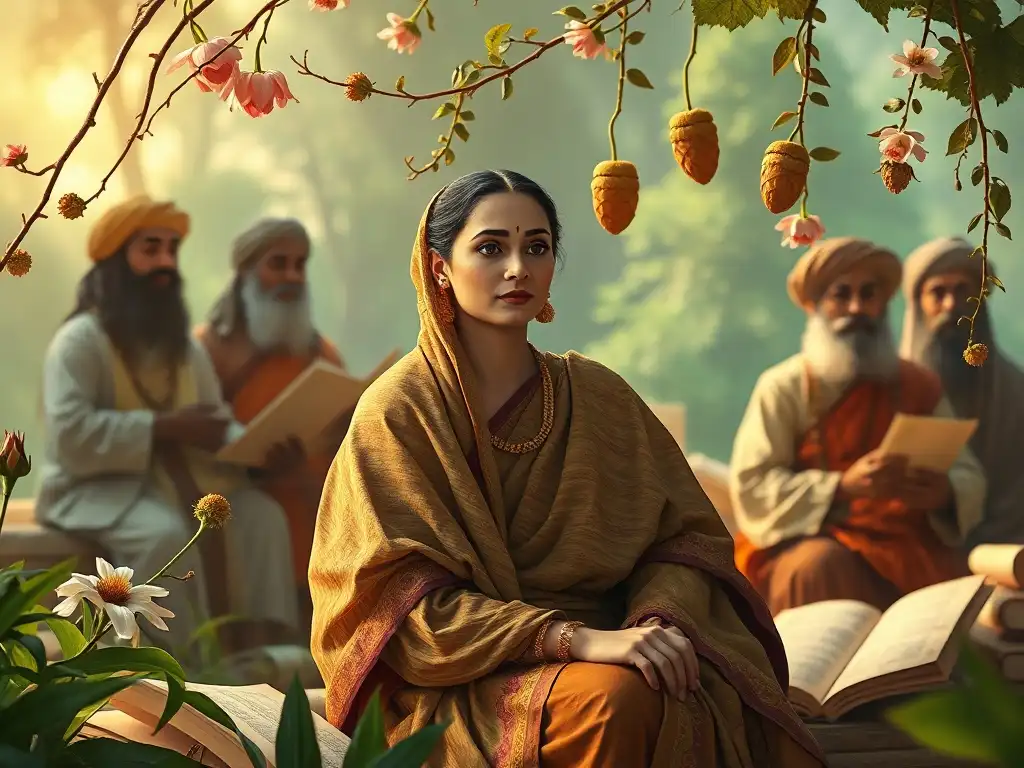
Gargi, a prominent philosopher from ancient India, is celebrated for her unwavering commitment to intellectual discourse and her courageous challenge to the patriarchal norms of her time. Living during the Vedic period, she emerged as a beacon of knowledge and wisdom in a society predominantly dominated by male scholars.
Gargi's legacy is encapsulated in her ability to engage in philosophical debates and her insistence on the value of women's intellectual contributions. She questioned the established norms and argued for the importance of women's voices in philosophical discussions, paving the way for future generations of women to pursue education and intellectual freedom.
Her legacy is not merely limited to her immediate contributions; it resonates through centuries as she becomes a symbol of female empowerment in the philosophical realm. Gargi's intellectual pursuits were not just personal achievements but acted as a catalyst for social change, influencing how future generations perceived the role of women in society. Her legacy is reflected in the way she inspired women to challenge societal boundaries and assert their identities as thinkers and philosophers.
How Gargi Defied Gender Norms
Gargi's defiance of gender norms is evident in her participation in scholarly debates, where she often challenged male philosophers on complex metaphysical topics. One of the most famous instances of her defiance is found in the dialogues recorded in the Brahadaranyaka Upanishad, where she engages the sage Yajnavalkya in a profound discussion about the nature of the self and the ultimate reality. Gargi's questions were not only intellectually rigorous but also defied the expectations of a woman’s role in ancient society, which often relegated women to domestic responsibilities and silence in academic discussions.
In her philosophical inquiries, Gargi consistently advocated for the pursuit of knowledge, regardless of gender. Her inquiries into existential questions and her refusal to accept male authority without question exemplify her revolutionary spirit. By asserting her intellectual agency, she challenged the prevailing views that confined women to subordinate roles, thus setting a precedent for future female philosophers and scholars.
The Impact of Gargi's Philosophy on Future Generations
The impact of Gargi's philosophy extends beyond her lifetime, influencing countless women who would come after her. Her insistence on the importance of knowledge and critical thinking became a foundation for feminist thought in India. Gargi’s legacy inspired future generations to seek education and engage with philosophical debates, fostering a culture where women's intellectual contributions are recognized and valued.
Moreover, the philosophical frameworks she introduced encouraged women to explore metaphysical and ethical questions, contributing to a broader discourse on gender equality. Her example has been cited in various feminist movements throughout Indian history, highlighting the need for women's voices in all spheres of life. Gargi’s philosophy serves as a reminder of the importance of questioning societal norms and advocating for one's right to think, learn, and contribute to the collective knowledge.
Gargi in Ancient Texts and Literature
Gargi’s presence in ancient texts signifies her esteemed position in the philosophical landscape of ancient India. The references to her in key scriptures and texts underscore her role as a formidable thinker and a pioneer for women in intellectual pursuits. She is often portrayed not just as a figure of the past but as an enduring symbol of women's resilience and capability in philosophy.
References to Gargi in the Upanishads
The Upanishads, particularly the Brahadaranyaka Upanishad, provide some of the earliest and most significant references to Gargi. In this text, she is depicted as a learned woman who fearlessly poses challenging questions to male philosophers, notably to Yajnavalkya. Her inquiries delve into profound concepts such as the nature of the universe and the self, demonstrating her deep understanding of Vedic philosophy.
These texts not only highlight her intellectual prowess but also serve to elevate the status of women in philosophical discourse during a period when their voices were often silenced. Gargi's dialogues in the Upanishads have been celebrated as exemplary interactions that showcase the capability of women to engage in high-level philosophical debates.
Interpretation of Gargi’s Contributions in Later Texts
Gargi’s contributions have been interpreted and referenced in various later texts, where her philosophical inquiries are discussed and her legacy is acknowledged. Scholars and philosophers have often cited her as a pivotal figure when discussing the evolution of philosophical thought in ancient India.
In later interpretations, Gargi is viewed as a precursor to feminist thought, representing the struggle for intellectual freedom among women. Her portrayal in texts throughout history reflects the ongoing importance of her contributions and the necessity of remembering her role in shaping the discourse around gender and philosophy. These later references not only preserve her legacy but also serve as an inspiration for contemporary discussions on women's rights and intellectual equality.
Conclusion: The Enduring Influence of Gargi the Philosopher
Gargi, a remarkable philosopher of ancient India, stands as a beacon of intellectual strength and resilience. Her contributions to philosophical discourse, particularly in the realm of metaphysics and inquiry into the nature of existence, challenge the long-standing male dominance in philosophical thought. Through her participation in the famous philosophical debates of the Vedic period, particularly in the Brahmodya (the contest of knowledge), Gargi not only showcased her profound understanding of complex subjects but also paved the way for future generations of female thinkers.
Gargi's legacy is a testament to the power of inquiry and the importance of questioning societal norms. Her dialogues, often characterized by sharp wit and profound insight, encourage a critical examination of established beliefs. Today, as we strive for gender equality in various fields, her life and work inspire a re-evaluation of historical narratives that have often overlooked or marginalized women's contributions. Gargi's influence is enduring, resonating with contemporary discussions about women's roles in philosophy and leadership.
Reflection on Gargi's Legacy in Modern Philosophy
Gargi's philosophical inquiries resonate deeply within modern philosophical discussions, especially concerning epistemology and ontology. Her willingness to engage in debates with prominent male philosophers of her time exemplifies the spirit of inquiry that is foundational to philosophy itself. This courage not only challenges the gender norms of her era but also serves as an inspiration for women in contemporary philosophy.
Modern philosophers and scholars reflect upon Gargi's contributions as they seek to bridge ancient wisdom with current philosophical challenges. Her approach to understanding the nature of the self, the universe, and the divine invites a re-examination of metaphysical frameworks that continue to dominate philosophical thought today. As feminist philosophy gains traction, Gargi's legacy serves as a critical reference point, emphasizing the need to include diverse voices in the philosophical canon.
The Importance of Recognizing Women Philosophers in Ancient India
Recognizing women philosophers like Gargi is crucial in understanding the full scope of philosophical development in ancient India. Historically, women's voices have often been marginalized, leading to a skewed perception of the contributions made by female thinkers. Acknowledging figures such as Gargi not only enriches the narrative of Indian philosophy but also highlights the intellectual capabilities of women in ancient societies.
By bringing attention to these contributions, we foster a more inclusive historical perspective. This recognition encourages future generations to explore the rich tapestry of diverse philosophical ideas and to appreciate the role of women in shaping thought. Moreover, it challenges the prevailing narratives that often erase or diminish women's contributions, fostering a more equitable view of history that acknowledges all voices.
Additional Resources for Further Exploration
For those interested in delving deeper into the life and contributions of Gargi, as well as the broader context of ancient Indian philosophy, several resources are available. These materials provide a comprehensive understanding of her work and the philosophical landscape of her time.
Suggested Readings on Gargi and Ancient Indian Philosophy
- "Women in Ancient India: A Historical Perspective": by [Author Name]: This book explores the roles and contributions of women in ancient Indian society, including philosophers like Gargi.
- "The Vedic Age: A Study of Ancient Indian Philosophy": by [Author Name]: A comprehensive analysis of the Vedic period, highlighting significant figures and philosophical thought.
- "Gargi: The Philosopher Who Challenged the Norms": by [Author Name]: A focused study on Gargi's life and her philosophical contributions within the context of ancient Indian thought.
Online Archives and Documentaries on Influential Women in Ancient India
- Women in Ancient India Archive: A digital repository containing texts, articles, and research papers on influential women, including Gargi.
- Documentary: "Voices of Women in Ancient India": This documentary features discussions on the contributions of women in philosophy and arts, shedding light on figures like Gargi.
- Podcasts on Ancient Indian Philosophy: Several platforms host discussions and interviews with scholars who specialize in ancient Indian thought, often featuring episodes dedicated to women philosophers.
These resources serve as a gateway for further exploration into the philosophical contributions of Gargi and the critical examination of women's roles in ancient Indian history.
- Introduction to Gargi: A Pioneer Philosopher in Ancient India
- The Historical Context of Gargi's Era
- Gargi's Life and Background
- The Contributions of Gargi as a Philosopher
- Challenging Male Dominance: Gargi's Legacy
- Gargi in Ancient Texts and Literature
- Conclusion: The Enduring Influence of Gargi the Philosopher
- Additional Resources for Further Exploration
Frequently Asked Questions
What is the significance of Gargi in ancient Indian philosophy?
Gargi is notable for being a prominent female philosopher in ancient India, known for her intellectual prowess and contributions to the Brahmanical debates during the Vedic period.
How did Gargi challenge male dominance in her time?
Gargi challenged male dominance by participating in philosophical discussions and asserting her views, demonstrating that women could be equal thinkers in a male-dominated society.
What contributions did Gargi make to Indian philosophy?
Gargi contributed to the concept of knowledge and existence through her questions and dialogues, particularly in the Brahmanas, where she explored the nature of the ultimate reality (Brahman).
In which texts is Gargi mentioned?
Gargi is primarily mentioned in the Brahmanas, specifically the Brihadaranyaka Upanishad, where her debates with male sages highlight her intellectual capabilities.
How is Gargi viewed in modern interpretations of ancient Indian history?
In modern interpretations, Gargi is celebrated as a symbol of women’s empowerment and intellectual independence, inspiring contemporary discussions around gender equality in philosophy and education.
Final Reflection: Embracing the Legacy of Gargi, the Trailblazing Philosopher
Gargi's life and philosophy resonate profoundly in today's world, where the struggle for gender equality continues to unfold. Her unwavering challenge against male dominance in ancient India serves as a powerful reminder of the timeless fight for women's rights and intellectual recognition. As we navigate contemporary issues of gender disparity, Gargi's legacy encourages us to question societal norms and advocate for a more inclusive future.
The influence of Gargi's philosophy extends beyond her time, shaping cultural narratives and inspiring generations of thinkers. Her courage to engage in philosophical discourse in a patriarchal society has paved the way for women to assert their voices in various fields. As we reflect on her contributions, we are reminded of the words of Maya Angelou: I am a woman phenomenally. Phenomenal woman, that's me.
This sentiment echoes Gargi's spirit, illustrating the ongoing journey toward empowerment and recognition for women everywhere.
As you contemplate the lessons from Gargi's life, consider how you can embody her spirit of inquiry and resilience in your own journey. Embrace the challenge of questioning the status quo and strive to uplift those around you. Let Gargi's story inspire you to become an advocate for change, fostering an environment where all voices are valued and heard. The legacy of Gargi, the philosopher of ancient India, is not just a tale of the past; it is a call to action for the present and future.
Embrace Wisdom: Dive Deeper into Gargi’s Legacy!
Thank you for joining us on this enlightening journey through the life of Gargi, a remarkable philosopher who defied societal norms. We hope you gained a deeper appreciation for her contributions and the vital role she played in advocating for women's voices in ancient India. Now, it's time to take action and further explore her inspiring legacy.
- Engage with her teachings: Explore primary texts and scholarly commentaries to gain insight into Gargi’s philosophy and its relevance to contemporary discussions.
- Share the knowledge: Discuss your insights with friends or participate in an online forum focused on ancient philosophies to enrich the conversation.
- Organize a community event: Start a book club or discussion group dedicated to women philosophers throughout history, beginning with Gargi.
What impact do you think Gargi’s philosophy could have on the current dialogue about gender equality? We invite you to share your thoughts below!