
The Role of Agriculture in the Rise of the Indus Valley Civilization

Welcome to Ancient India History, where we embark on a fascinating journey through the rich tapestry of ancient Indian civilizations. In this exploration, we’ll delve into the significance of Indus Valley agriculture, a pivotal factor that fueled the rise of one of the world's earliest urban cultures. Have you ever wondered how agriculture shaped the social and economic structures of the Indus Valley?
Prepare to uncover the intricate links between farming practices and the flourishing of this remarkable civilization. Join us as we unfold the layers of history and reveal the profound impact agriculture had on the vibrant life of ancient India!
Introduction to the Indus Valley Civilization
The Indus Valley Civilization (IVC), flourishing around 3300 to 1300 BCE in what is now modern-day Pakistan and northwest India, stands as one of the earliest urban cultures in human history. Renowned for its advanced city planning, sophisticated drainage systems, and remarkable craftsmanship, the IVC is a testament to the ingenuity of ancient societies.
However, at the core of its development and sustainability lies a fundamental factor: agriculture. The significance of agriculture in the Indus Valley is not merely a background detail but a pivotal element that facilitated economic stability, social organization, and ultimately, the rise of a vibrant civilization.
Overview of the Indus Valley Civilization
The Indus Valley Civilization encompassed a vast area of approximately 1.25 million square kilometers, stretching from the banks of the Indus River to the Arabian Sea. Major urban centers such as Harappa and Mohenjo-Daro showcased advanced architectural designs, including grid patterns, public baths, and granaries. The civilization's success can largely be attributed to its strategic location, which allowed for effective irrigation and fertile land.
Key features of the IVC include:
- Urban Planning: Cities were meticulously planned with sophisticated drainage systems.
- Trade Networks: The civilization engaged in trade with distant regions, including Mesopotamia, facilitating the exchange of goods and ideas.
- Cultural Achievements: The IVC is noted for its unique script, seals, and pottery, reflecting a rich cultural tapestry.
Importance of Agriculture in Ancient Societies
Agriculture has long been recognized as the backbone of ancient societies, providing the necessary sustenance for populations to thrive. In the context of the Indus Valley Civilization, agriculture facilitated not only food security but also the development of social structures and economic systems. With the advent of settled farming, communities transitioned from nomadic lifestyles to more complex societal frameworks.
The benefits of agriculture in ancient societies include:
- Food Security: Reliable crop production ensured a stable food supply.
- Population Growth: Increased food availability supported larger populations.
- Trade Opportunities: Surplus production enabled trade, enhancing economic relationships.
The Significance of Indus Valley Agriculture
Understanding the significance of agriculture within the Indus Valley Civilization provides insight into how it shaped the trajectory of one of history's earliest urban societies.
Defining Indus Valley Agriculture Significance
Indus Valley agriculture was characterized by the cultivation of various crops, including wheat, barley, peas, and cotton. The significance of this agricultural practice lies in its ability to support large urban populations and foster economic interdependence. The efficient irrigation systems, often attributed to the region's rivers, allowed for the cultivation of crops in a semi-arid climate, creating a surplus that facilitated trade and social stratification.
Key points of significance include:
- Economic Foundation: Agriculture served as the cornerstone of the IVC economy, providing resources for trade and sustenance.
- Cultural Development: Agricultural practices influenced social customs, religious beliefs, and community organization.
- Technological Advancements: Innovations in farming techniques and tools emerged, enhancing productivity.
Key Agricultural Practices in the Indus Valley
The agricultural practices of the Indus Valley Civilization were sophisticated and well-adapted to the region's climatic conditions. Farmers employed various methods to maximize yield and efficiency, which included:
- Irrigation Techniques: Utilizing river systems for irrigation and managing water resources effectively.
- Crop Rotation: Practicing crop rotation to maintain soil fertility and prevent depletion.
- Animal Husbandry: Integrating livestock into agricultural practices for labor and as a food source.
The role of agriculture was not only significant but essential in the rise and sustained success of the Indus Valley Civilization. By providing food security, fostering economic interdependence, and enabling cultural evolution, agriculture laid the groundwork for one of the most remarkable civilizations in ancient history.
Agricultural Innovations and Techniques
Agriculture in the Indus Valley Civilization was marked by a series of innovations and techniques that significantly contributed to its growth and sustainability. The civilization, thriving between 3300 BCE and 1300 BCE, developed a sophisticated agricultural system that was crucial for supporting its burgeoning population and urban centers.
One of the most notable innovations was the development of advanced irrigation techniques. The Indus Valley inhabitants harnessed the natural water resources from rivers, primarily the Indus River and its tributaries, to create an efficient irrigation network. This included the construction of canals and the use of reservoirs to store water, allowing for agricultural expansion even during dry seasons.
Additionally, the cultivation of diverse crops was a hallmark of Indus Valley agriculture. Farmers grew various staples, including wheat, barley, peas, and cotton, which were essential not only for sustenance but also for trade. The use of plows, made from wood and later metal, enhanced farming efficiency and productivity, allowing for larger areas of land to be cultivated.
Irrigation Systems and Their Impact
The irrigation systems of the Indus Valley Civilization were pivotal in transforming the arid landscape into fertile agricultural land. The inhabitants constructed a vast network of canals that directed water from rivers to fields, which facilitated consistent crop production.
Archaeological findings suggest that these irrigation systems were meticulously planned, indicating an advanced understanding of hydrology. For example, the cities of Mohenjo-Daro and Harappa showcased evidence of sophisticated drainage systems that not only managed water flow but also minimized the risks associated with flooding.
The impact of these irrigation systems was profound. They allowed for the growth of surplus crops, which was essential for sustaining a large population and supporting urban centers. Moreover, the ability to control water resources helped mitigate the effects of seasonal variations and contributed to the stability of the civilization's agricultural output.
Crop Rotation and Sustainability Practices
The Indus Valley farmers practiced crop rotation and other sustainability methods, which were crucial for maintaining soil fertility and agricultural productivity. By alternating the types of crops grown in specific fields, they could prevent soil exhaustion and reduce the prevalence of pests and diseases.
This practice not only optimized yields but also ensured a diverse diet for the population, as different crops were harvested throughout the year. Evidence from archaeological sites indicates that legumes, such as lentils and chickpeas, were cultivated alongside cereals, contributing to a balanced diet rich in protein and essential nutrients.
Additionally, the use of organic fertilizers, such as animal manure, was likely a common practice, enhancing soil health and promoting sustainable farming practices. This holistic approach to agriculture ensured that the Indus Valley Civilization could support its population over centuries, showcasing an early understanding of ecological balance.
Domestication of Plants and Animals
The domestication of plants and animals played a critical role in the agricultural success of the Indus Valley Civilization. Archaeological evidence indicates that the inhabitants cultivated various crops, including wheat, barley, and cotton, as early as 7000 BCE, marking the beginnings of agriculture in the region.
Simultaneously, the domestication of animals, such as cattle, sheep, and goats, provided labor for farming and a source of food through milk and meat. The integration of animal husbandry with crop production created a symbiotic relationship that enhanced agricultural productivity and supported the growing urban populations.
The domestication practices of the Indus Valley were characterized by a deep understanding of breeding and animal care, which ensured a stable supply of livestock. This not only contributed to food security but also played a significant role in the economy, as animals were essential for trade and transport.
The Economic Impact of Agriculture on the Indus Valley Civilization
Agriculture was the cornerstone of the Indus Valley Civilization's economy, influencing various aspects of daily life, trade, and urbanization. The agricultural practices established during this period laid the foundation for economic stability and growth.
Agriculture as the Backbone of the Economy
The agricultural sector in the Indus Valley was the backbone of the economy, providing sustenance for its inhabitants and surplus for trade. The abundance of crops enabled the civilization to maintain a stable food supply, which was essential for the growth of cities like Harappa and Mohenjo-Daro.
The surplus generated from agricultural production allowed for specialization of labor, as not everyone needed to engage in farming. This led to the development of various crafts and trades, including pottery, metallurgy, and textiles, which contributed to the overall economic complexity of the civilization.
Furthermore, the agricultural wealth fostered social stratification, as surplus production could be accumulated and controlled by elite members of society. This economic foundation was crucial for the development of political structures and governance in the Indus Valley.
Trade and Agricultural Surplus
The agricultural surplus produced in the Indus Valley not only supported the local population but also facilitated extensive trade networks with neighboring regions. The surplus of crops, particularly grains and textiles, became key trade commodities, exchanged for resources that were not locally available.
The Indus Valley's strategic location allowed it to engage in commerce with distant civilizations, including Mesopotamia and Persia. Evidence of trade routes and goods exchanged has been uncovered, indicating a vibrant economy that relied heavily on agricultural output.
Trade not only bolstered the economy but also encouraged cultural exchanges, leading to the diffusion of ideas, technologies, and agricultural practices among different civilizations. This interaction further enriched the agricultural landscape of the Indus Valley.
Role of Agriculture in Urbanization
The development of agriculture played a fundamental role in the urbanization of the Indus Valley Civilization. As agricultural practices became more efficient, they supported larger populations, leading to the growth of urban centers.
Cities like Harappa and Mohenjo-Daro emerged as hubs of trade and culture, relying on the agricultural surplus to sustain their inhabitants. The ability to produce food in excess allowed these urban centers to thrive, attracting people from rural areas seeking opportunities in trade, craftsmanship, and administration.
Moreover, the organization of agricultural production contributed to the establishment of complex societal structures. With a reliable food supply, the civilization could focus on urban planning, infrastructure development, and governance, further solidifying the role of agriculture in advancing the Indus Valley Civilization's societal evolution.
Societal Structures Influenced by Agriculture
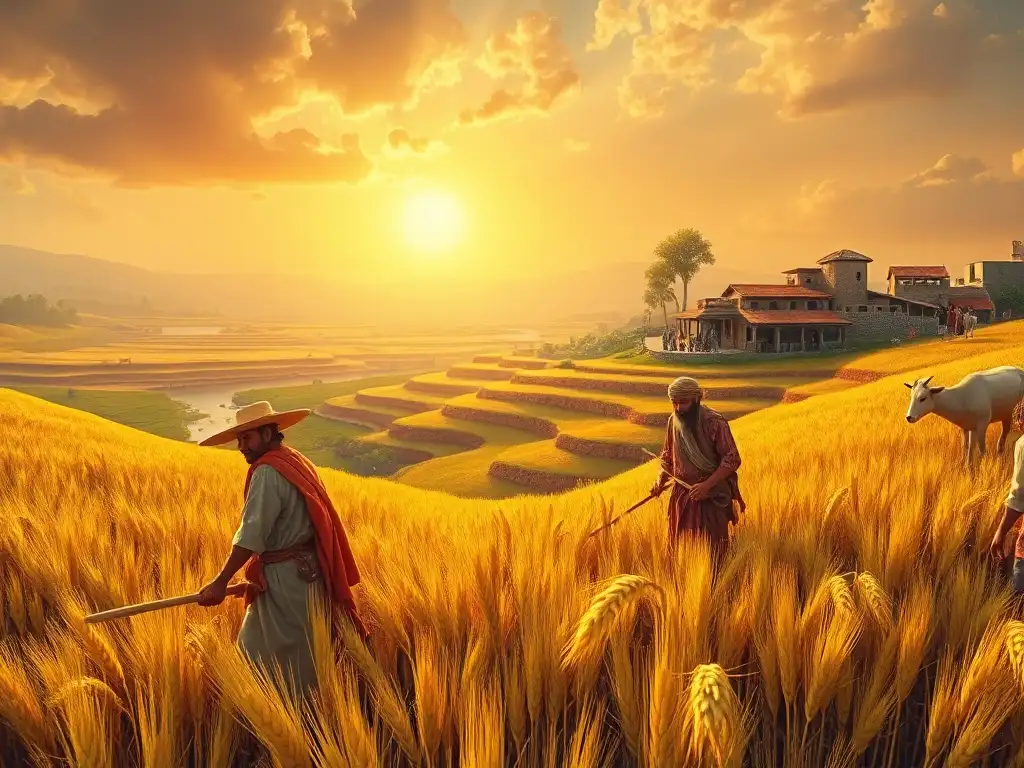
Agriculture played a fundamental role in shaping the societal structures of the Indus Valley Civilization. The development of farming practices allowed for a surplus of food, which was crucial in supporting a growing population. This surplus not only enabled the establishment of permanent settlements but also led to the rise of complex societal hierarchies. Towns such as Harappa and Mohenjo-Daro emerged as centers of trade, governance, and cultural exchange, largely due to their agricultural productivity.
The reliance on agriculture also fostered specialization within the society. As food production increased, not everyone needed to be involved in farming. This allowed individuals to pursue other occupations such as artisans, traders, and administrators, leading to a more diverse and stratified society. Consequently, the social fabric of the Indus Valley was intricately linked to its agricultural practices, influencing everything from governance to cultural traditions.
Social Hierarchy and Land Ownership
In the context of the Indus Valley Civilization, land ownership played a critical role in establishing social hierarchies. Wealthy landowners likely accumulated resources and power, influencing local governance and trade practices. This concentration of wealth may have led to a system where individuals were categorized based on their agricultural holdings, with larger landowners occupying higher social statuses.
Archaeological evidence suggests that the distribution of land was not uniform, with some areas displaying signs of more intensive agricultural practices, indicating that certain families or clans held more influence. The presence of granaries and storage facilities further underscores the importance of agriculture in the economic and social stratification of the society. Land ownership thus became a key marker of status and power, shaping interpersonal relationships and community dynamics.
The Role of Farmers and Laborers
Farmers and laborers were the backbone of the Indus Valley agricultural economy. They were responsible for cultivating the fertile land along the riverbanks, employing advanced techniques such as irrigation and crop rotation. This labor-intensive work not only provided food for the population but also ensured the sustainability of the civilization.
Farmers likely formed a distinct community within the societal structure, with their roles respected due to their contributions to food security. However, laborers who worked the fields and performed manual tasks often had less social standing, reflecting a division of labor that was common in ancient societies. This dynamic contributed to the overall economic stability of the civilization but also highlighted the inequalities that existed within the social hierarchy.
Agricultural Festivals and Cultural Practices
The significance of agriculture in the Indus Valley Civilization extended beyond economic factors; it was also deeply woven into the cultural and religious practices of the people. Agricultural festivals were likely celebrated to honor the deities associated with fertility, harvests, and the changing seasons. These gatherings would have included feasting, rituals, and communal activities, reinforcing social bonds and shared cultural identities.
Cultural practices related to agriculture also included the worship of specific plants and animals that were integral to farming. The reverence for nature and agricultural cycles can be inferred from the symbolic artifacts found in archaeological sites, suggesting that the people of the Indus Valley celebrated their connection to the land. Such practices not only promoted agricultural productivity but also fostered a sense of community and continuity among the inhabitants.
Challenges Faced by Indus Valley Agriculture
Despite its advancements, agriculture in the Indus Valley Civilization was not without challenges. The reliance on specific crops and farming techniques made the civilization vulnerable to various environmental and socio-economic factors. Understanding these challenges provides insight into the eventual decline of this remarkable civilization.
Environmental Factors Affecting Agriculture
Several environmental factors significantly impacted agriculture in the Indus Valley. The civilization relied heavily on the monsoon rains for irrigation, and fluctuations in rainfall could lead to crop failures. Periods of drought or excessive flooding disrupted agricultural cycles, threatening food security and the stability of the society.
Additionally, soil salinity posed a long-term challenge to agricultural sustainability. As irrigation practices intensified, the accumulation of salts in the soil could diminish crop yields over time. The dependence on a limited range of crops also made the agricultural system susceptible to pests and diseases, further jeopardizing food production.
Decline of Agricultural Practices and Its Consequences
The decline of agricultural practices in the Indus Valley Civilization had profound consequences for its society. As environmental challenges intensified, food shortages likely led to social unrest, migration, and a breakdown of trade networks. The resulting economic instability would have weakened the societal structures that had been built upon agricultural surplus.
Furthermore, the decline of agriculture may have contributed to the eventual abandonment of major urban centers such as Harappa and Mohenjo-Daro. As farming became increasingly unsustainable, the population likely dispersed to seek more fertile lands elsewhere, leading to the fragmentation of the once-cohesive civilization. This decline underscores the integral role that agriculture played in the rise and fall of the Indus Valley Civilization, highlighting its significance in ancient Indian history.
Conclusion
The Indus Valley Civilization stands as one of the most remarkable achievements in ancient history, primarily due to its innovative agricultural practices. The agricultural advancements not only supported a burgeoning population but also fostered urbanization, trade, and the development of complex societal structures. The significance of agriculture in this civilization is evident in its ability to sustain large communities, promote economic growth, and contribute to cultural advancements. By understanding the critical role of agriculture in the Indus Valley, we can gain insights into how this civilization laid the groundwork for future societies in the Indian subcontinent.
Summary of Indus Valley Agriculture Significance
The significance of agriculture in the Indus Valley Civilization can be encapsulated in several key points:
- Sustainable Practices: The inhabitants utilized advanced techniques such as irrigation, crop rotation, and the domestication of animals, which ensured a stable food supply.
- Diverse Crops: Key crops included wheat, barley, peas, and cotton, which not only provided nutrition but also contributed to the economy through trade.
- Urban Development: The surplus produced by agriculture facilitated the growth of cities like Harappa and Mohenjo-Daro, which became hubs of trade and culture.
- Social Complexity: An agricultural economy allowed for the specialization of labor, leading to the emergence of various professions and a more structured society.
- Cultural Flourishing: The stability provided by agriculture enabled artistic and technological advancements, enriching the culture of the Indus Valley Civilization.
Lasting Legacy of Agriculture in Ancient Indian Civilizations
The agricultural practices developed during the Indus Valley Civilization had a profound and lasting impact on subsequent Indian civilizations. This legacy can be observed in several ways:
- Foundation for Future Agriculture: The techniques and crops established during this era became the cornerstone for agricultural practices in later civilizations, influencing farming methods for centuries.
- Cultural Integration: Agricultural festivals and rituals that originated in the Indus Valley have persisted throughout Indian history, showcasing the integral relationship between agriculture and cultural identity.
- Economic Influence: The economic models based on agricultural surplus established during the Indus Valley laid the groundwork for future trade networks and economic systems in ancient India.
- Environmental Adaptation: The ability to adapt agriculture to varying climatic conditions set a precedent for resource management that would benefit future generations.
The significance of Indus Valley agriculture extends beyond mere sustenance; it played a crucial role in shaping the societal, economic, and cultural frameworks of ancient Indian civilizations, leaving an indelible mark that continues to influence the region to this day.
- Introduction to the Indus Valley Civilization
- The Significance of Indus Valley Agriculture
- Agricultural Innovations and Techniques
- The Economic Impact of Agriculture on the Indus Valley Civilization
- Societal Structures Influenced by Agriculture
- Challenges Faced by Indus Valley Agriculture
- Conclusion
- What was the significance of agriculture in the Indus Valley Civilization?
- How did the geography of the Indus Valley influence agriculture?
- What crops were primarily cultivated in the Indus Valley?
- How did agricultural practices evolve during the Indus Valley Civilization?
- What role did agriculture play in the social structure of the Indus Valley Civilization?
Frequently Asked Questions
What was the significance of agriculture in the Indus Valley Civilization?
Agriculture was fundamental to the economic stability of the Indus Valley Civilization, enabling the growth of urban centers and trade networks.
How did the geography of the Indus Valley influence agriculture?
The fertile plains of the Indus River, along with the monsoon rains, provided ideal conditions for farming, which supported sustainable agricultural practices.
What crops were primarily cultivated in the Indus Valley?
Farmers primarily grew wheat, barley, and pulses, which formed the backbone of their diet and economy, facilitating trade with surrounding regions.
How did agricultural practices evolve during the Indus Valley Civilization?
Agricultural practices became increasingly sophisticated, with the development of irrigation systems and crop rotation techniques that improved yields and sustainability.
Agriculture created a surplus of resources, which led to the development of a hierarchical society, with specialized roles and the emergence of trade and craft industries.
Final Reflection: The Enduring Significance of Indus Valley Agriculture
The role of agriculture in the rise of the Indus Valley Civilization is not merely a historical footnote; it is a testament to the profound impact that agricultural practices have on societal development. Today, as we grapple with issues of food security, climate change, and sustainable practices, the lessons from the agricultural innovations of the Indus Valley resonate more than ever. The ingenuity of these ancient farmers laid the groundwork for complex societies, illustrating that agriculture is not just about sustenance, but about the very fabric of civilization itself.
Culture and society are inextricably linked to the agricultural practices that sustain them. The advancements made by the Indus Valley inhabitants in irrigation, crop rotation, and urban planning continue to influence modern agricultural techniques and urban development. Their ability to adapt to their environment and optimize resources speaks to a timeless human endeavor.
As historian David Christian aptly noted, "> Agriculture was the foundation of the first civilizations, enabling people to settle and thrive." This observation underscores the ongoing relevance of agricultural practices in shaping our world, reminding us that the roots of our current societal structures can be traced back to these ancient innovations.
As we reflect on the significance of Indus Valley agriculture, let us consider our own relationship with the land and the food we consume. How can we apply the lessons learned from this ancient civilization to foster sustainable practices in our own lives? I invite you to explore ways to support local agriculture, embrace sustainable farming methods, and advocate for policies that prioritize food security. By doing so, we honor the legacy of the Indus Valley and contribute to a future where agriculture continues to nurture not just our bodies, but our communities and civilizations as a whole.
Unleash the Power of Agriculture: Step into the World of the Indus Valley!
Thank you for exploring the fascinating role of agriculture in the rise of the Indus Valley Civilization! Your curiosity not only enhances your knowledge but also pays tribute to the ingenuity of ancient societies. Now, it’s time to transform that knowledge into action!
Here are a few practical ways to connect with this incredible historical narrative:
- Explore Further: Dive into local agricultural practices that resonate with the techniques used by the farmers of the Indus Valley. Consider researching and experimenting with heirloom seeds to experience these methods firsthand!
- Share Your Insights: Discuss your newfound understanding with friends or on social media. Use your voice to ignite conversations about the impact of agriculture on societal development.
- Join a Community: Seek out online forums or local history groups dedicated to ancient civilizations. Engaging with others can deepen your perspective and lead to exciting discoveries.
What insights have you gathered about the connections between agriculture and civilization from the Indus Valley? Share your thoughts below; we can learn together!