
The Role of Mathematics in Gupta Military Strategy and Tactics

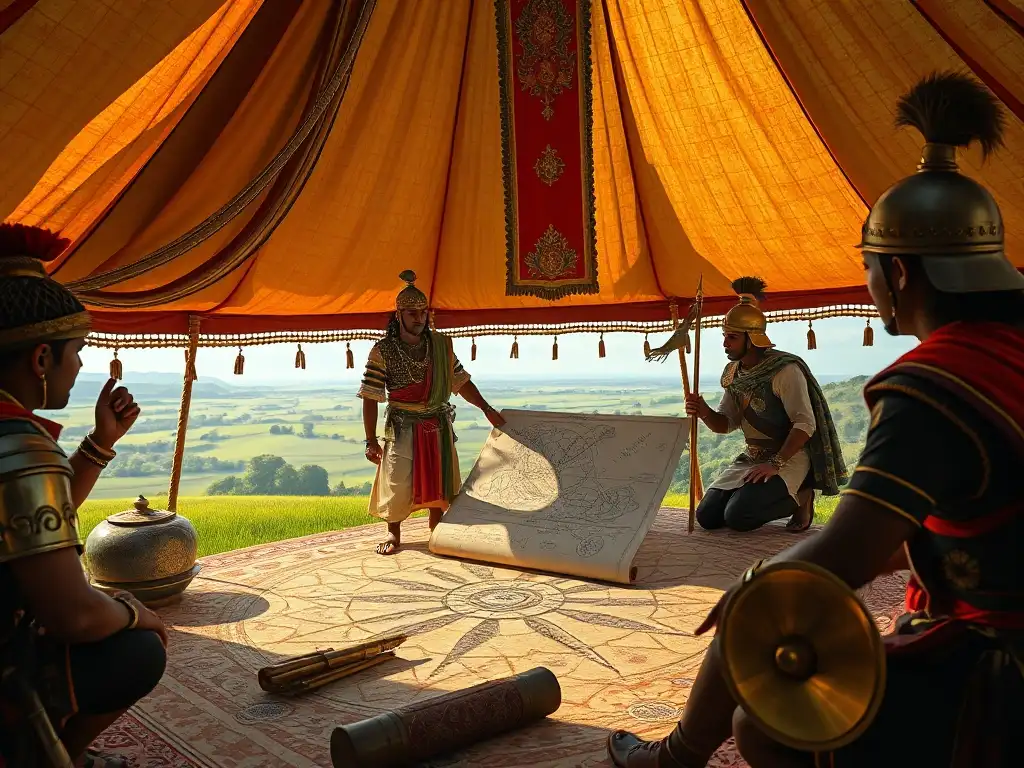
Welcome to Ancient India History, where we embark on a captivating journey through the rich tapestry of ancient Indian civilizations. Delve into the fascinating role of mathematics in Gupta military strategy and tactics, a topic that reveals how numerical precision shaped the battlefield and influenced the course of history.
As we uncover the innovative techniques and intellectual prowess of the Gupta Empire, you'll discover not only the strategic brilliance of ancient warriors but also the profound legacy of mathematical thought that continues to resonate today. Join us as we explore the intricate connections between mathematics and military success, and prepare to be inspired by the remarkable contributions of this extraordinary era!
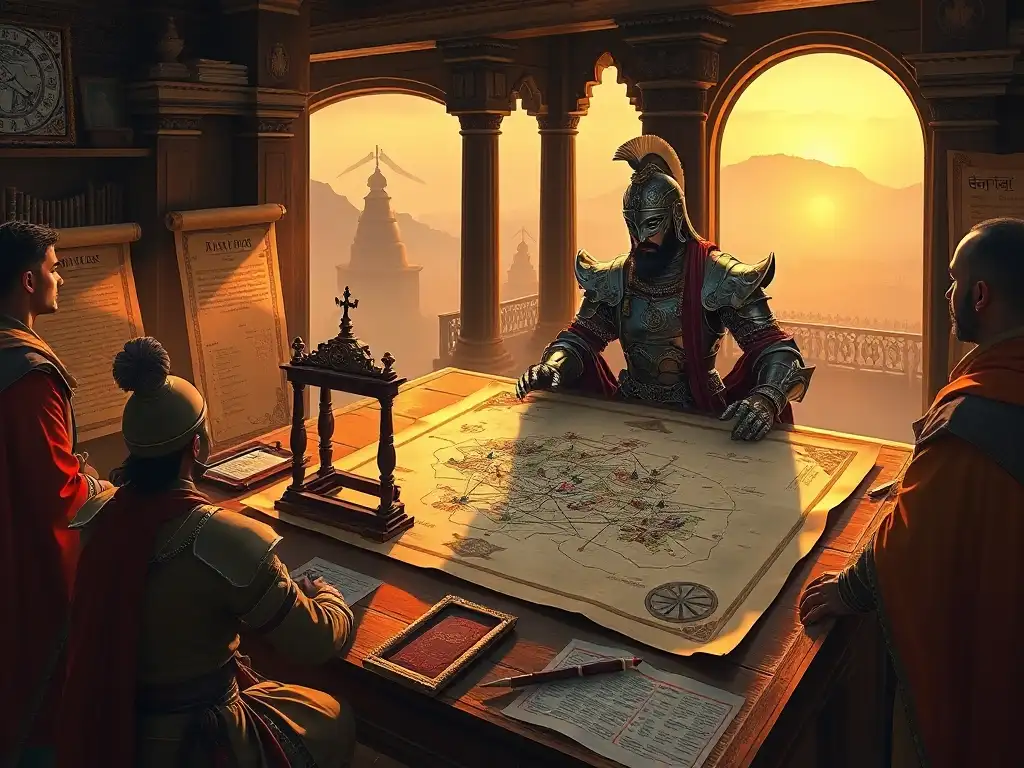
The Gupta Empire, known for its remarkable advancements in various fields, including science and mathematics, also showcased a sophisticated military strategy that was instrumental in its expansion and defense. This article explores the critical role of mathematics in shaping the military tactics of Gupta generals, highlighting how their understanding of mathematical principles contributed to their battlefield successes. By delving into the intricate relationship between mathematical concepts and military strategies, we gain insight into the intellectual foundation that underpinned one of ancient India's most powerful empires.
Introduction to Gupta Military Tactics
The Gupta Empire, which flourished from approximately 320 to 550 CE, is often referred to as the "Golden Age" of India. During this period, the Gupta military was highly organized, utilizing innovative tactics and strategies that were pivotal in their conquests and defense. Their military structure was characterized by a well-trained army, effective logistics, and strategic planning, all of which were profoundly influenced by mathematical principles.
Overview of the Gupta Empire's Military Structure
The military of the Gupta Empire was composed of various units, including infantry, cavalry, and war elephants. The hierarchical structure allowed for efficient command and control, enabling rapid mobilization and deployment. Key features of the military structure included:
- Infantry: The backbone of the army, consisting of foot soldiers equipped with bows, swords, and shields.
- Cavalry: Mounted troops that provided mobility and speed, essential for flanking maneuvers.
- War Elephants: Used not only for their strength but also for psychological warfare, creating fear among enemy ranks.
Mathematical calculations were essential for logistics, troop movements, and the allocation of resources, ensuring that the Gupta military operated effectively.
Importance of Strategy in Ancient Indian Warfare
In ancient Indian warfare, strategy played a vital role in determining the outcome of battles. Gupta generals employed a blend of tactical maneuvers and strategic foresight, which were often guided by mathematical reasoning. Key strategic concepts included:
- Terrain Analysis: Understanding the battlefield terrain was crucial for positioning troops and planning movements.
- Resource Management: Efficient allocation and management of resources, including food and ammunition, relied on mathematical calculations.
- Timing and Coordination: Synchronizing troop movements and attacks required precise timing, often determined through mathematical planning.
The integration of these strategies allowed Gupta generals to maximize their military effectiveness and achieve significant victories.
The Intersection of Mathematics and Military Strategy
Mathematics served as a foundational element in the strategic planning of Gupta military operations. The application of mathematical principles enabled generals to analyze and predict outcomes in various scenarios, enhancing their tactical decision-making.
Understanding Mathematics in Ancient Warfare
Ancient Indian mathematicians contributed to the development of various mathematical concepts, including geometry, algebra, and arithmetic. These concepts were not only theoretical but were also applied practically in military contexts. For instance, geometry was used to calculate distances for troop movements, while arithmetic helped in assessing the strength and capabilities of enemy forces.
Key Mathematical Concepts Used by Gupta Generals
Several mathematical concepts were particularly influential in shaping Gupta military tactics:
- Geometry: Used for planning formations and understanding angles of attack.
- Arithmetic: Essential for calculating troop numbers, resources, and logistics.
- Statistics: Employed to analyze data regarding past battles, enemy strengths, and troop effectiveness.
By harnessing these mathematical tools, Gupta generals could devise effective strategies that significantly enhanced their military capabilities and contributed to the empire's success.
This exploration of the role of mathematics in Gupta military strategy and tactics reveals a complex interplay between intellectual achievement and practical application, underscoring the significance of mathematics in the broader narrative of ancient Indian civilization.
Tactical Applications of Mathematics in Gupta Warfare
Mathematics played a pivotal role in the military tactics of the Gupta Empire, enhancing both strategy and execution on the battlefield. The Gupta military leaders understood that mathematical principles could be harnessed to improve formations, optimize logistics, and predict enemy movements. This approach not only allowed for more effective troop deployment but also facilitated better decision-making during campaigns. The application of mathematics in warfare was a reflection of the broader intellectual climate of the Gupta period, which emphasized knowledge and learning across various disciplines, including science, mathematics, and military strategy.
Formation and Maneuvering: The Use of Geometry
Geometry was fundamental to the organization and maneuvering of troops during Gupta military operations. Commanders employed geometric principles to devise formations that maximized their defensive and offensive capabilities. For instance, the use of triangular formations allowed for concentrated firepower, enabling soldiers to engage the enemy while minimizing exposure.
In addition to forming shapes that optimized battle readiness, geometry was also essential for planning the battlefield layout. Gupta strategists would calculate distances and angles to ensure that their troops could effectively flank the enemy or retreat to advantageous positions. This geometric approach not only streamlined troop movement but also ensured that formations could adapt quickly to changing battle conditions, enhancing the overall effectiveness of their military tactics.
Logistics and Supply Chain Management in Military Campaigns
Effective logistics were crucial to the success of Gupta military campaigns, and mathematics played a key role in managing supply chains. Accurate calculations regarding troop numbers, supplies, and provisioning routes were essential for maintaining the army's operational readiness.
Mathematicians in the Gupta Empire applied arithmetic and geometry to determine the quantities of food, weapons, and other supplies required for various military engagements. They meticulously planned supply routes, calculating distances and travel times to ensure that troops would receive necessary provisions without delay. This logistical foresight allowed the Gupta military to sustain prolonged campaigns and maintain morale among soldiers, as they were assured of adequate resources during their operations.
Predictive Analysis: Estimating Enemy Movements and Resources
The Gupta military utilized predictive analysis, grounded in mathematical principles, to estimate enemy movements and resource availability. By analyzing previous battle outcomes and troop movements, strategists could develop models that forecasted potential enemy actions. This statistical approach enabled Gupta commanders to anticipate the direction of enemy advances, allowing them to counteract effectively.
Moreover, the use of data analysis allowed for better intelligence gathering regarding enemy supplies and reinforcements. By employing mathematical calculations, Gupta military leaders could assess the strength of their adversaries and make informed decisions about when to engage or retreat. This emphasis on prediction through mathematics provided a significant strategic advantage in the ever-changing dynamics of warfare.
Case Studies: Successful Military Campaigns Utilizing Mathematics
The Gupta Empire's military successes can be attributed in part to their innovative use of mathematics in strategy and tactics. Two notable campaigns illustrate how mathematical principles were effectively integrated into military operations: the Conquest of Malwa and the Defense of Pataliputra.
The Conquest of Malwa
During the Conquest of Malwa, Gupta commanders demonstrated their adeptness at applying mathematical tactics to overcome a well-fortified enemy. Utilizing geometry, they devised a series of flanking maneuvers that exploited the terrain to their advantage. By calculating the optimal angles of attack, they were able to surround the Malwa forces, leading to a decisive victory.
Logistical planning was equally critical during this campaign. The Gupta strategists calculated supply needs and ensured that their troops were well-provisioned throughout the engagement. This careful management of resources not only sustained the army but also instilled confidence among the soldiers, contributing to the success of the campaign.
The Defense of Pataliputra
The Defense of Pataliputra is another exemplary case where mathematics played a significant role. Faced with an invading force, Gupta military leaders implemented geometric defensive formations that maximized their fortification's effectiveness. By strategically positioning troops at calculated intervals, they created a formidable barrier against the attackers.
In addition, predictive analysis was employed to anticipate the enemy's next moves. By analyzing patterns from previous skirmishes and utilizing mathematical models, Gupta commanders could predict potential breaches and respond swiftly. This combination of defensive geometry and predictive analysis ultimately secured Pataliputra's safety, showcasing the critical role of mathematics in Gupta military tactics.
The Influence of Mathematics on Gupta Military Innovations
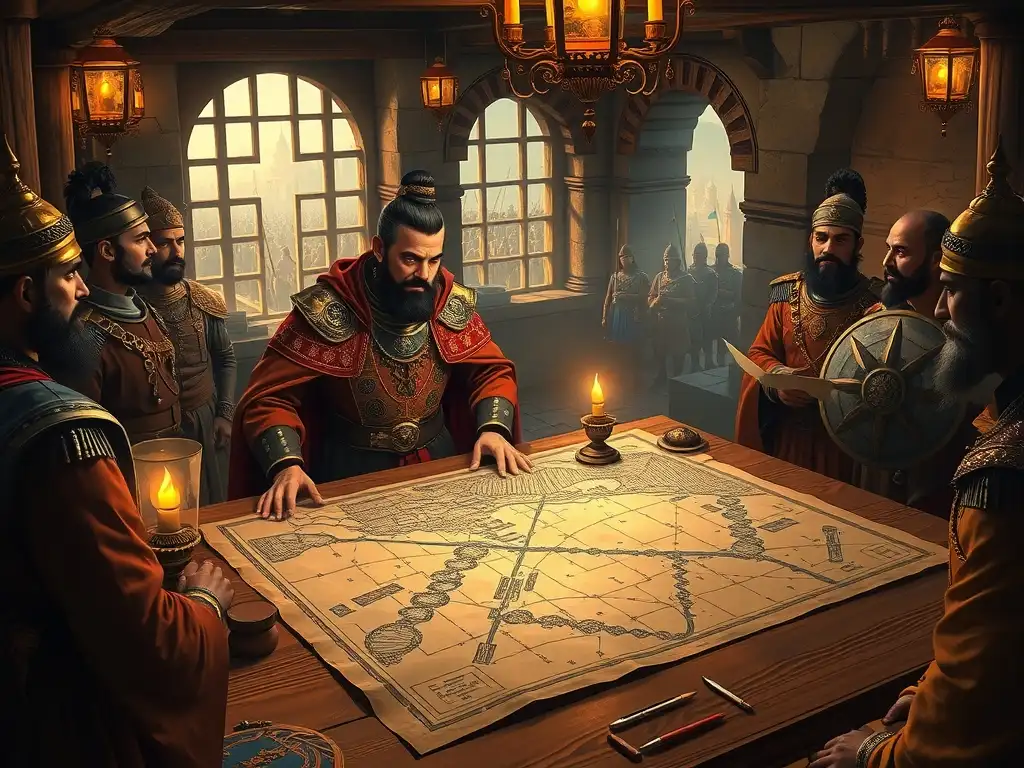
The Gupta Empire, which flourished from approximately 320 to 550 CE, is often recognized for its remarkable advancements in various fields, including mathematics. This mathematical prowess significantly influenced military innovations, shaping the strategies and tactics employed by Gupta generals. The integration of mathematical concepts allowed for enhanced planning, precision in logistics, and effective battlefield strategies, ultimately contributing to the empire's military successes.
Mathematics played a crucial role in the development of various military technologies during the Gupta period. For instance, the use of geometry facilitated the construction of fortifications and battle formations. The Gupta architects and engineers applied geometric principles to design strongholds that maximized defensive capabilities while also considering the layout of the surrounding terrain. Moreover, mathematical calculations were essential in determining the optimal placement of troops and artillery, enabling effective utilization of resources during warfare.
Development of Military Technologies through Mathematical Principles
One of the most significant areas where mathematics influenced military technology was in the design and use of siege engines. The Gupta military is known to have employed advanced siege techniques, which included the use of catapults and battering rams. The construction of these devices relied heavily on principles of physics and mathematics, particularly in calculating angles, trajectories, and the necessary force required to breach fortified walls.
Additionally, the Gupta Empire saw the advancement of naval strategies that were similarly supported by mathematical principles. The design of ships and their navigation relied on an understanding of geometry and trigonometry, enabling commanders to effectively maneuver fleets during naval encounters. The accurate measurement of distances and navigation routes was vital for maintaining supply lines and troop movements, further highlighting the importance of mathematics in military technology.
Impact of Mathematical Knowledge on Training and Strategy Formulation
Mathematical education was integral to the training of Gupta military personnel. Generals and commanders were required to possess a solid understanding of mathematical principles to devise effective strategies. This knowledge allowed them to analyze battlefield scenarios critically and make informed decisions based on various factors such as troop strength, terrain, and enemy formations.
The use of mathematical models in strategy formulation revolutionized the way battles were planned. For example, commanders utilized calculations to determine the optimal time for an attack, considering variables such as enemy movements and supply availability. Moreover, the analysis of past battles through mathematical frameworks allowed for the identification of patterns and the development of predictive tactics, further enhancing the Gupta military's effectiveness.
Conclusion: Legacy of Mathematics in Gupta Military Tactics
The legacy of mathematics in Gupta military tactics is profound, serving as a foundation for many military strategies employed in later periods. The Gupta Empire not only advanced mathematical concepts but also applied them in practical military contexts, demonstrating a sophisticated understanding of their significance in warfare.
Reflection on the Integration of Mathematics in Warfare
The integration of mathematics into military strategy during the Gupta Empire reflects a broader understanding of the relationship between science and warfare. The ability to apply mathematical reasoning to military tactics allowed Gupta commanders to outmaneuver their opponents and achieve strategic advantages. This approach laid the groundwork for future military innovations, illustrating the timeless relevance of mathematics in the art of war.
Lasting Influence of Gupta Military Strategies on Future Generations
The military strategies developed during the Gupta period influenced subsequent Indian dynasties and military leaders. The emphasis on mathematics in warfare set a precedent for future military tactics, encouraging a systematic approach to battle planning and execution. This legacy is evident in the way that many later military leaders incorporated mathematical analysis into their strategies, ensuring that the Gupta contributions to military tactics endured through the ages. The Gupta Empire's innovative use of mathematics not only shaped its own military success but also left an indelible mark on the history of military strategy.
Further Reading on Mathematics in Ancient Indian Civilizations
Exploring the intricate relationship between mathematics and military strategies in ancient India, particularly during the Gupta Empire, opens up an array of fascinating resources. Delving into these works not only enhances understanding of Gupta military tactics but also offers insights into the broader context of ancient Indian mathematics. Here are some recommended readings that provide a wealth of knowledge on this subject.
Suggested Books and Articles on Gupta Empire Military Strategies
-
"The Gupta Empire: A Study in Indian History" by R.S. Sharma
This comprehensive book examines the political and military structures of the Gupta Empire, highlighting the role of mathematics in strategizing military campaigns.
-
"Mathematics in Ancient India" by C. V. Rajagopalachari
This book presents an overview of mathematical developments in ancient India, including how these concepts were applied in military contexts during the Gupta period.
-
"Warfare in Ancient India" by A. K. Sharma
A deep dive into the tactics and strategies employed in ancient Indian warfare, this text discusses how mathematical principles influenced battlefield decisions.
-
"The Art of War in Ancient India" by B. R. Ambedkar
Focusing on strategic methodologies, this work integrates mathematical concepts with historical military strategies from the Gupta era.
-
Journal of Indian History and Culture
Numerous articles within this journal discuss the impact of mathematics on military tactics, featuring case studies from the Gupta Empire.
Related Topics in Ancient Indian Mathematics and Warfare
-
Geometry and Fortification
The application of geometric principles in the construction of forts, which played a critical role in Gupta military defense strategies.
-
Astronomy and Navigation
Understanding celestial navigation, which was crucial for military campaigns, relying on mathematical calculations to determine positions and routes.
-
Logistics and Supply Chain Management
The strategic planning of resource allocation and troop movements, which depended heavily on mathematical models for efficiency and effectiveness.
-
Ballistics and Projectile Calculations
The use of mathematics in the design and usage of weapons, such as bows and catapults, to maximize their effectiveness in warfare.
-
Tactical Warfare and Battlefield Geometry
Examining how formations and troop placements were influenced by mathematical concepts to gain a strategic advantage during battles.
By engaging with these texts and topics, readers can gain a nuanced appreciation of the profound impact that mathematics had on Gupta military strategy and tactics, further enriching their understanding of ancient Indian civilizations.
- Introduction to Gupta Military Tactics
- The Intersection of Mathematics and Military Strategy
- Tactical Applications of Mathematics in Gupta Warfare
- Case Studies: Successful Military Campaigns Utilizing Mathematics
- The Influence of Mathematics on Gupta Military Innovations
- Conclusion: Legacy of Mathematics in Gupta Military Tactics
- Further Reading on Mathematics in Ancient Indian Civilizations
- What was the significance of mathematics in Gupta military tactics?
- How did the Gupta Empire utilize geometry in their military strategy?
- Did the Gupta military focus on any specific mathematical concepts?
- How did the advancements in mathematics during the Gupta period influence military efficiency?
- Were there any mathematicians from the Gupta period who contributed to military tactics?
Frequently Asked Questions
What was the significance of mathematics in Gupta military tactics?
Mathematics played a crucial role in strategizing and planning military operations, allowing generals to calculate distances, troop movements, and resource allocation effectively.
How did the Gupta Empire utilize geometry in their military strategy?
The Gupta military employed geometric principles to design formations and optimize battlefield layouts, enhancing their tactical advantage against enemies.
Did the Gupta military focus on any specific mathematical concepts?
Yes, they emphasized concepts like arithmetic for logistics and geometry for positioning troops, which were essential for executing effective military maneuvers.
How did the advancements in mathematics during the Gupta period influence military efficiency?
The advancements in mathematics allowed for better planning and coordination, leading to more efficient logistics and improved overall performance in military campaigns.
Were there any mathematicians from the Gupta period who contributed to military tactics?
Yes, notable mathematicians like Aryabhata and Brahmagupta made contributions that influenced not just astronomy but also tactical calculations essential for military success.
Final Reflection: The Enduring Legacy of Mathematics in Gupta Military Tactics
The intricate relationship between mathematics and military strategy during the Gupta Empire remains profoundly relevant today, as it highlights the importance of analytical thinking in decision-making. The Gupta military tactics, underpinned by mathematical principles, not only shaped the outcomes of battles but also laid the groundwork for strategic planning in various fields. This historical perspective serves as a reminder that the application of mathematics transcends mere numbers; it is a vital tool for understanding and navigating complex challenges.
Clearly, the influence of mathematics in military strategy has permeated various aspects of our cultural and social landscape, from modern warfare to business strategies. The lessons learned from the Gupta Empire illustrate how a systematic approach can lead to success in seemingly insurmountable situations. As Sun Tzu once said, In the midst of chaos, there is also opportunity.
This quote resonates deeply with the idea that mathematical reasoning can uncover opportunities in the most challenging scenarios, reinforcing the notion that strategic thinking is essential in any competitive environment.
As we reflect on the profound impact of mathematics in Gupta military tactics, I invite you to consider how you can apply these lessons in your own life. Whether in personal endeavors or professional pursuits, embracing a mathematical mindset can empower you to analyze situations critically and devise effective strategies. Let the legacy of the Gupta Empire inspire you to harness the power of mathematics, transforming challenges into opportunities for growth and success.
Unleash Your Inner Strategist: Dive Deeper into Gupta Military Tactics!
Thank you for exploring the fascinating intersection of mathematics and military strategy during the Gupta Empire. Your interest in how ancient techniques can still inspire us today is invaluable! Now, let's harness that curiosity and take actionable steps to deepen your knowledge.
- Explore other historical military strategies and their mathematical foundations. Researching the tactics employed by various civilizations will allow you to compare and contrast their approaches.
- Share your insights with friends or on social media! Engaging in discussions about the role of mathematics in history can reveal new perspectives and foster deeper understanding.
- Join a local or online history group to discuss ancient strategies and their relevance to contemporary challenges.
What ancient strategy or mathematical principle has inspired you the most, and how would you apply it to a modern challenge?