
Reconstructing the Courtroom Experience of Ancient India: Insights from History

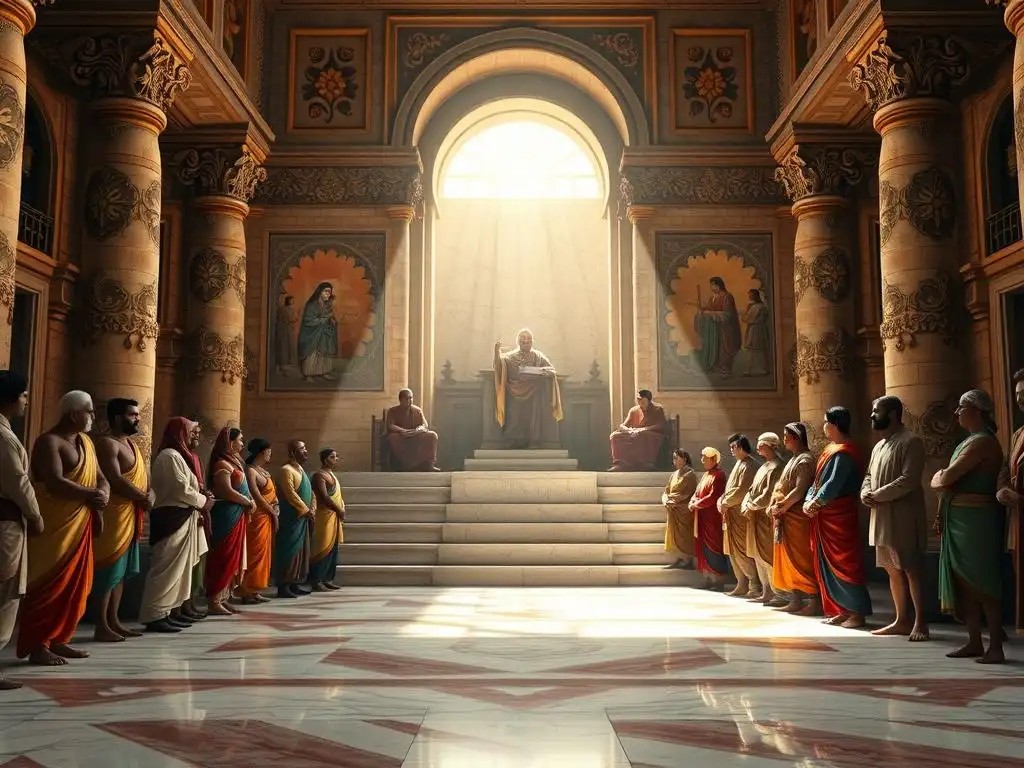
Welcome to Ancient India History, where we embark on a captivating journey through the rich tapestry of India's past. In our featured article, "Reconstructing the Courtroom Experience of Ancient India: Insights from History," we delve into the intriguing world of ancient Indian courtroom history. Discover how legal systems and law codes shaped the lives of civilizations from the Indus Valley to the Gupta Empire.
As we peel back the layers of time, prepare to be fascinated by the complexities of justice in ancient India and the profound impact it still has today. Join us as we explore these remarkable insights that promise to leave you eager for more!
- Introduction to Ancient Indian Courtroom History
- The Evolution of Courtroom Practices in Ancient India
- Key Features of Ancient Indian Courtrooms
- Notable Legal Texts Influencing Courtroom Practices
- Case Studies of Prominent Trials in Ancient India
- Comparative Analysis of Ancient Indian Courtroom Practices
- Legacy of Ancient Indian Courtroom History
- Conclusion
-
Frequently Asked Questions
- What is the significance of ancient Indian courtroom history?
- How did the Indus Valley Civilization influence courtroom practices?
- What contributions did the Gupta Empire make to legal systems?
- What types of evidence were used in ancient Indian courtrooms?
- How did cultural practices influence courtroom procedures in ancient India?
- Final Reflection: Revisiting Ancient Indian Courtroom History for Modern Insights
- Unveil the Fascinating World of Ancient Indian Justice!
Introduction to Ancient Indian Courtroom History
The courtroom experience in ancient India is a fascinating subject that sheds light on the legal systems, cultural practices, and societal norms of one of the world's oldest civilizations. From the sophisticated urban planning of the Indus Valley Civilization to the philosophical and legal advancements during the Gupta Empire, ancient India’s judicial practices reflect a rich tapestry of history and evolution.
By examining the courtroom dynamics, we can uncover how justice was administered, the roles of various legal actors, and the societal implications of these practices. This exploration not only enhances our understanding of ancient Indian civilization but also provides valuable insights into contemporary legal frameworks and practices.
Overview of Judicial Practices in Ancient India
Judicial practices in ancient India were deeply intertwined with the social, political, and religious fabric of the time. Various sources, including texts like the Manusmriti and the Arthashastra, outline the legal frameworks and court procedures that governed society. Here are some key aspects:
- Types of Courts: Ancient India had different levels of courts, from village panchayats to royal courts, each serving specific communities and types of disputes. These courts were often presided over by local leaders or appointed judges.
- Legal Codes: The legal codes established the principles of justice, outlining the duties and rights of individuals. The Manusmriti, for example, provided guidelines on moral conduct and legal procedures, emphasizing dharma (duty/righteousness) as a cornerstone of justice.
- Role of Evidence: Evidence played a crucial role in courtroom proceedings. Witness testimony, physical evidence, and oaths were integral to determining the outcome of cases. The reliance on oral tradition meant that the credibility of witnesses was paramount.
- Punishments and Penalties: The ancient Indian legal system prescribed various forms of punishment, which ranged from fines to corporal punishment. The severity often depended on the nature of the crime and the social status of the individuals involved.
The diversity and sophistication of these judicial practices reveal a complex legal system that was adaptive and reflective of the changing societal values.
Importance of Studying Courtroom Experiences
Understanding the courtroom experiences of ancient India holds significant importance for several reasons:
- Cultural Insights: The study of courtroom practices offers a lens through which we can examine the cultural values and social hierarchies of ancient Indian society. It reveals how law was used as a tool for maintaining order and addressing social grievances.
- Legal Evolution: By tracing the evolution of judicial practices, scholars can better understand how ancient Indian law has influenced modern legal systems. Many principles established in ancient times continue to resonate in contemporary legal frameworks.
- Historical Context: The courtroom acted as a microcosm of ancient society, reflecting broader historical trends. Analyzing courtroom experiences helps historians piece together the complexities of governance, power dynamics, and societal changes.
- Preservation of Knowledge: Documenting and studying courtroom experiences contributes to the preservation of ancient knowledge and practices, ensuring that valuable insights are not lost to time.
The reconstruction of the courtroom experience in ancient India is essential for appreciating the depth and breadth of its judicial history. By exploring these themes, we not only honor the legacy of ancient civilizations but also enrich our understanding of legal practices today.
The Evolution of Courtroom Practices in Ancient India
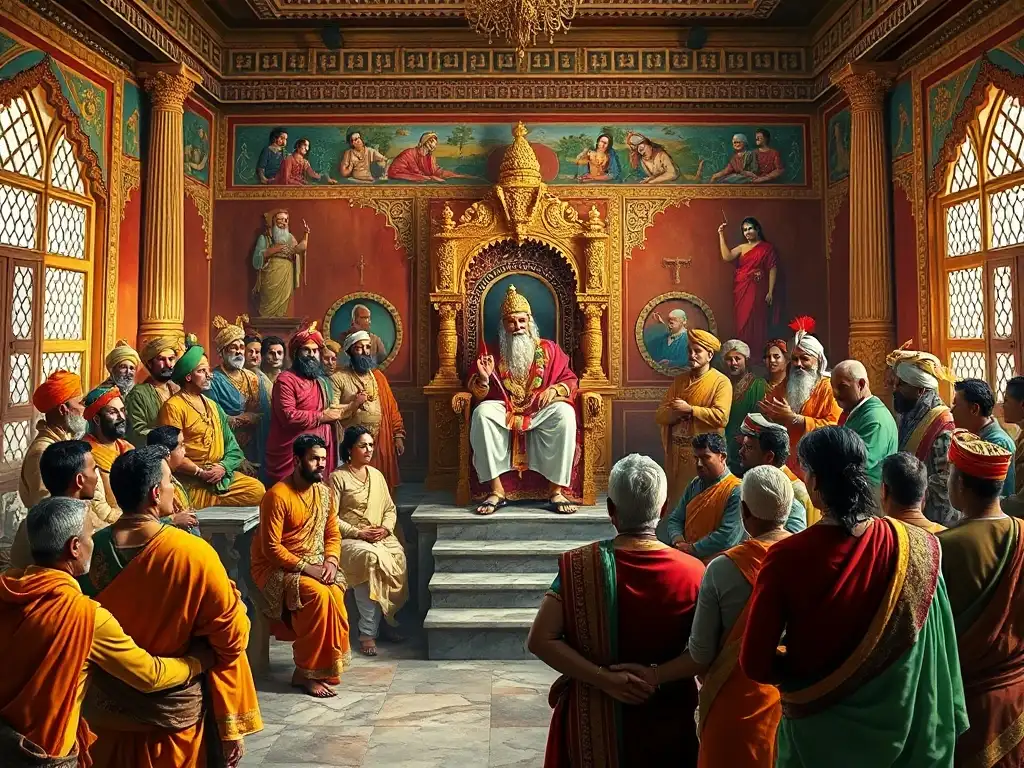
Early Legal Systems in the Indus Valley Civilization
The Indus Valley Civilization (circa 3300–1300 BCE) is renowned for its advanced urban planning and societal organization, which laid the groundwork for early legal systems in ancient India. Archaeological evidence suggests that this civilization had established a rudimentary form of governance that likely included judicial practices.
- Urban Planning and Governance: The cities of Harappa and Mohenjo-Daro exhibited sophisticated urban layouts, which imply a level of administrative authority. The existence of large public baths and granaries indicates communal regulations, hinting that some form of legal norms governed these societies.
- Seals and Script: The use of seals, often inscribed with symbols and possibly a form of script, suggests the importance of record-keeping. While the exact meanings of these inscriptions remain undeciphered, they likely served legal purposes, possibly documenting transactions or legal agreements.
- Social Hierarchy: The stratification of society, evidenced by varying house sizes and burial practices, implies that legal systems may have evolved to address disputes among different societal classes. This early form of courtroom experience, though not formally structured, would have involved community elders or leaders mediating conflicts.
The Vedic Period (circa 1500–500 BCE) marked a significant evolution in courtroom practices, laying the foundations for judicial authority in ancient India. The Vedas, particularly the Yajurveda and Atharvaveda, contain references that illuminate the legal and judicial frameworks of this era.
- Dharma and Justice: The concept of dharma (righteousness or duty) became central to the legal philosophy of the Vedic Period. It dictated moral conduct and social responsibilities, influencing the resolution of disputes. The Manusmriti, a key legal text from this period, outlines various offenses and corresponding punishments, illustrating an early codification of laws.
- Role of Kings and Assemblies: Kings were seen as upholders of dharma, responsible for ensuring justice within their realms. Additionally, sabhas (assemblies) and samitis (committees) played crucial roles in adjudicating disputes, where community members participated in decision-making, reflecting a collective approach to justice.
- Rituals and Legal Proceedings: Legal proceedings often intertwined with religious rituals, where oaths and rituals were employed to ascertain truth. The incorporation of prayaschitta (atonement) for wrongdoings highlights the moral dimension of justice during this period.
Mauryan and Post-Mauryan Developments in Court Procedures
The Mauryan Empire (circa 322–185 BCE) and subsequent post-Mauryan developments ushered in a more systematic approach to courtroom practices, reflecting the complexities of a vast and diverse empire.
- Kautilya's Arthashastra: A seminal text from this period, Kautilya's Arthashastra, offers insights into administration and law. It emphasizes the role of the king as a supreme judge and outlines various legal procedures, including the appointment of judges and the conduct of trials, thereby formalizing courtroom experiences.
- Judicial Hierarchies: The Mauryan Empire introduced a structured hierarchy of courts, with different levels addressing distinct types of cases. Local village assemblies continued to function, but the establishment of higher courts allowed for more sophisticated legal deliberations.
- Legal Codes and Punishments: The codification of laws during this period became increasingly detailed, addressing a broad spectrum of civil and criminal offenses. The punishment system also saw enhancements, focusing on rehabilitation and restitution, reflecting a shift towards a more humane approach to justice.
The evolution of courtroom practices in ancient India illustrates a rich tapestry of legal traditions, evolving from informal community-based resolutions to sophisticated judicial systems governed by codified laws and moral principles. These developments not only reflect the complexities of ancient Indian societies but also their enduring influence on contemporary legal frameworks.
Key Features of Ancient Indian Courtrooms
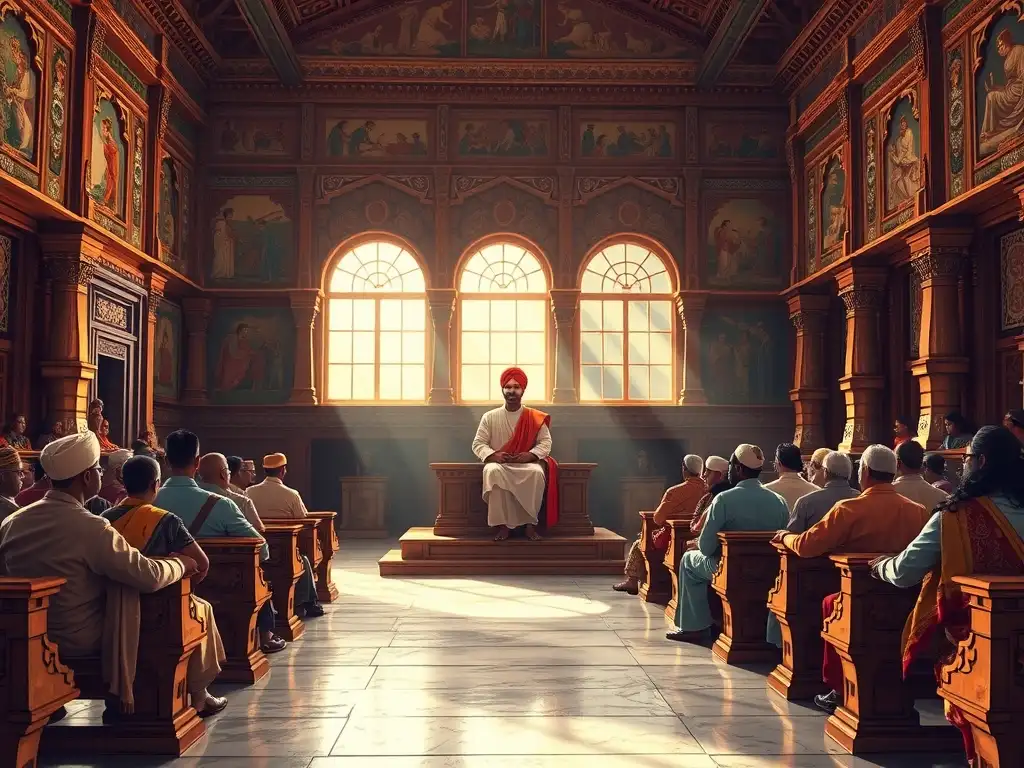
The ancient Indian courtroom was a unique space that reflected the intricate legal practices and societal norms of the time. Understanding its key features provides valuable insights into the judicial systems that governed ancient Indian civilizations. This section explores the architecture and layout of these courtrooms, the roles and responsibilities of legal practitioners, and the types of cases that were commonly heard.
Architecture and Layout of Ancient Indian Courts
The architecture of ancient Indian courtrooms varied significantly depending on the region and the time period, but several elements were consistently present:
- Open Spaces: Many courts were situated in open spaces, often under large trees, which served as natural gathering points. This not only facilitated ventilation but also symbolized the openness of justice.
- Raised Platforms: The presiding judge or king would often sit on a raised platform, signifying authority. This elevated position allowed the judge to command attention and assert dominance over the proceedings.
- Seating Arrangements: Witnesses and litigants typically sat in a semi-circular arrangement facing the judge, promoting visibility and a sense of equality among participants.
- Decorative Elements: Courtrooms were often adorned with intricate carvings and sculptures that depicted mythological stories or legal principles, emphasizing the importance of justice within the cultural context.
- Materials Used: The construction materials ranged from wood and clay to stone, with more prominent courts built using durable materials, reflecting the significance of legal proceedings in society.
The design of these courtrooms not only facilitated the administration of justice but also reinforced the cultural values associated with law and order in ancient India.
Roles and Responsibilities of Legal Practitioners
Legal practitioners in ancient Indian courtrooms held significant roles that were essential for the functioning of justice. Their responsibilities included:
- Judges (Dharma Adhikaran): The judge was responsible for presiding over cases, interpreting laws, and ensuring that justice was served. Judges were often well-versed in religious texts and local customs, which guided their decisions.
- Advocates (Vakil): Advocates represented the parties involved in legal disputes. They were skilled orators and knowledgeable in the law, often employing persuasive techniques to present their clients' cases effectively.
- Witnesses (Saksi): Witnesses played a crucial role by providing evidence based on personal observations. Their testimonies were vital for establishing the facts of a case.
- Clerks (Lekhak): Clerks assisted in documenting proceedings, maintaining records, and ensuring that all paperwork was properly filed. They were essential for maintaining the integrity of the legal process.
- Enforcers (Pratihara): In some cases, enforcers were present to maintain order within the courtroom and ensure that the proceedings were conducted smoothly.
The interactions among these roles created a complex judicial environment where the principles of fairness and equity were upheld, reflecting the cultural ethos of ancient Indian society.
Types of Cases Heard in Ancient Indian Courts
Ancient Indian courts dealt with a diverse range of cases, reflecting the complexity of societal issues. Some common types of cases included:
- Civil Cases: Disputes over property, marriage, and inheritance were prevalent. These cases often required mediation to reach amicable solutions.
- Criminal Cases: Offenses such as theft, assault, and murder were prosecuted in court. The severity of the punishment often depended on the social status of the individuals involved.
- Religious Disputes: Cases involving religious practices, rituals, and disputes among different sects were also common. The resolution often involved interpretations of sacred texts.
- Commercial Disputes: Trade-related conflicts, including issues of contracts and debts, were frequently heard, reflecting the economic activities of the time.
- Family Law Cases: Matters concerning marriage, divorce, and child custody were significant, with courts often mediating family disputes.
The diversity of cases heard in ancient Indian courts illustrates the multifaceted nature of ancient Indian society and the importance of legal structures in maintaining social order.
By examining these key features, we gain a deeper understanding of ancient Indian courtroom history and the sophisticated legal systems that shaped the lives of millions.
Notable Legal Texts Influencing Courtroom Practices
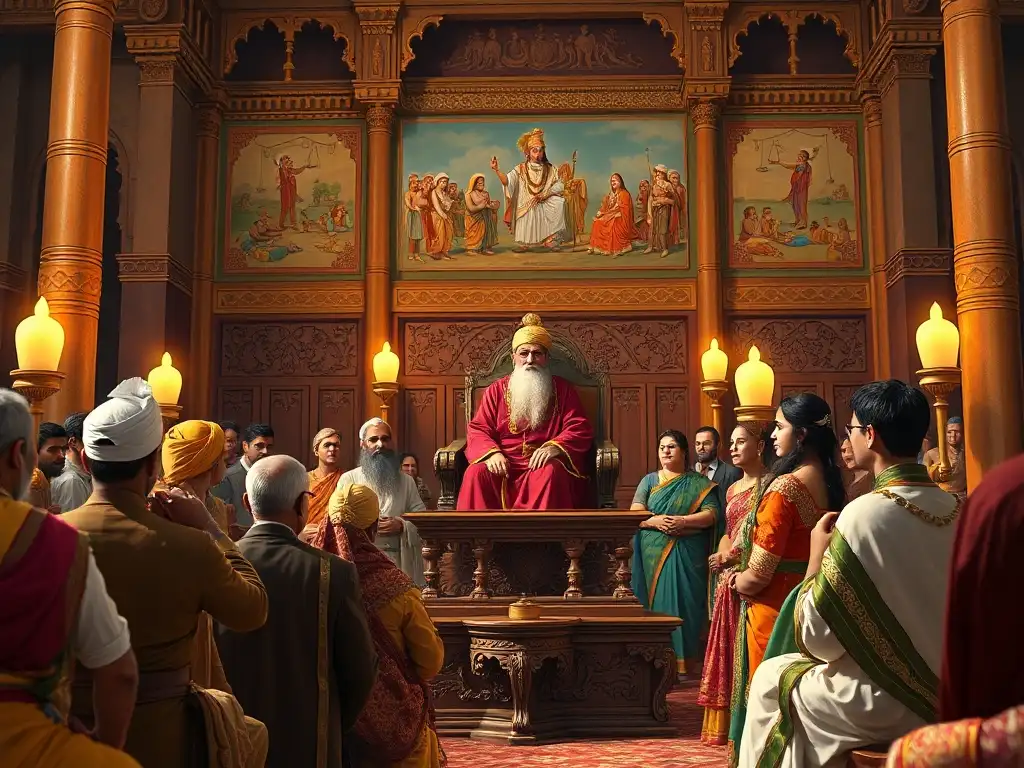
The courtroom practices of ancient India were significantly shaped by several key legal texts that provided guidelines on judicial procedures, moral ethics, and administrative frameworks. Understanding these texts is crucial for reconstructing the courtroom experience of ancient India, as they not only influenced legal practices but also reflected the societal values of the time.
Manusmriti and Its Impact on Judicial Procedures
The Manusmriti, also known as the Manava Dharmasastra, is one of the most influential texts in ancient Indian legal tradition. Compiled around 200 BCE to 200 CE, it serves as a comprehensive code of conduct and legal regulations that governed various aspects of life, including judicial procedures.
- Legal Framework: The Manusmriti outlines different categories of law, including civil, criminal, and family law. It describes the roles of judges, the process of adjudication, and the importance of evidence in trials.
- Judicial Roles: The text specifies that judges should possess qualities such as wisdom, integrity, and impartiality. It emphasizes the need for a fair trial and the judge's responsibility to deliver justice without bias.
- Punishments and Penalties: The Manusmriti also details various forms of punishment, which were often proportional to the crime committed. This principle of retributive justice aimed to maintain societal order and uphold dharma (moral law).
The law of the land must be upheld by those who are entrusted with the power to judge, for justice is the foundation of a stable society.
- Manusmriti
Through the Manusmriti, we gain insights into the ethical and moral considerations that underpinned judicial practices in ancient India, marking it as a cornerstone of ancient Indian courtroom history.
Arthashastra: Insights into Legal Administration
The Arthashastra, authored by Kautilya (Chanakya) in the 4th century BCE, provides a pragmatic approach to governance and legal administration that complements the moralistic tone of the Manusmriti. This text emphasizes the importance of law as a tool for statecraft and order.
- Strategic Legal Governance: The Arthashastra presents a detailed analysis of how laws can be applied strategically to maintain the stability of the state. It discusses the relationship between law, power, and governance, showcasing how legal structures can be leveraged to uphold authority.
- Court Procedures: This text outlines the procedural aspects of trials and legal disputes, including the roles of various officials such as the king, judges, and legal advisors. It stresses the importance of evidence and witness testimonies in judicial proceedings.
- Conflict Resolution: The Arthashastra also delves into alternative dispute resolution mechanisms, encouraging negotiation and arbitration as means to settle conflicts, which reflects a sophisticated understanding of legal practices.
| Aspect | Manusmriti | Arthashastra |
|---|---|---|
| Focus | Moral and ethical law | Practical governance and administration |
| Judicial Roles | Judges as moral arbiters | Judges as strategic implementers |
| Trial Procedures | Detailed processes and evidence | Emphasis on efficiency and statecraft |
The insights from the Arthashastra reveal a more utilitarian and realistic approach to ancient Indian courtroom practices, highlighting the interplay between law and the mechanics of governance.
Other Ancient Texts Contributing to Courtroom Norms
In addition to the Manusmriti and the Arthashastra, other ancient texts contributed to the understanding and evolution of courtroom practices in ancient India. These texts provided various perspectives on legal norms and judicial processes.
- Dharmashastra: This genre of texts includes various other legal treatises that elaborated on the principles of dharma, offering guidelines for personal conduct and legal obligations. They served as vital references for judges in making decisions aligned with societal norms.
- Niti Shastra: These texts focused on ethics and morality in governance, outlining the responsibilities of rulers and officials, including judges. They emphasized the importance of justice as a fundamental principle for effective leadership.
- Puranas and Epics: Works like the Mahabharata and Ramayana often featured judicial dilemmas and moral quandaries faced by characters, providing narratives that influenced societal perceptions of justice and law.
This rich tapestry of texts illustrates the various dimensions of ancient Indian courtroom history, showcasing how legal practices were informed by a combination of ethical considerations, pragmatic governance, and societal norms.
By examining these notable legal texts, we gain a comprehensive understanding of the foundational principles that shaped the courtroom experience in ancient India, which remains a significant area of study within the broader context of legal systems and law codes.
Case Studies of Prominent Trials in Ancient India
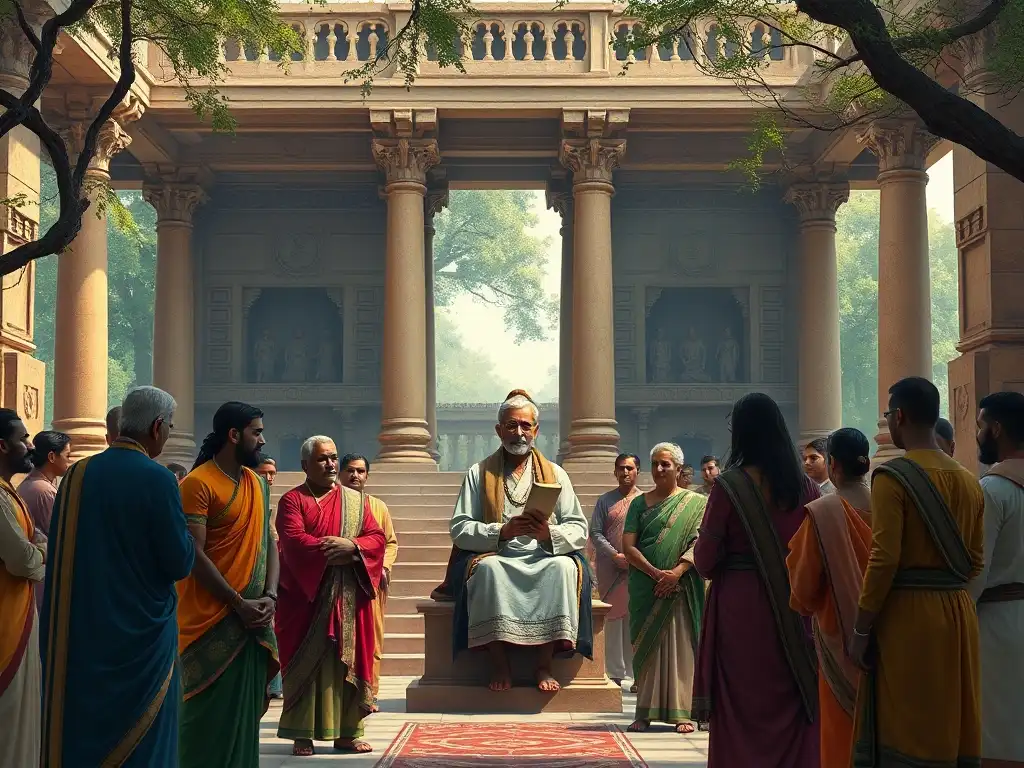
The exploration of ancient Indian courtroom history reveals a tapestry of legal proceedings that not only highlight the judicial practices of the time but also reflect the moral and ethical frameworks of ancient Indian society. Prominent trials in various kingdoms provide insights into the complexities of legal proceedings and their implications on societal norms.
Famous Trials and their Historical Significance
Several trials stand out in ancient Indian history due to their historical significance, often influencing contemporary legal thought and practices. Here are a few notable cases:
- The Trial of King Harsha: This trial is often discussed in the context of Dharmashastra, where the king was accused of neglecting his duties toward his subjects. The case emphasized the role of a just ruler and established precedents regarding the responsibility of kings in ensuring the welfare of their people.
- The Case of Raja Vikramaditya: A legendary figure, Vikramaditya's courtroom was renowned for its wisdom and fairness. One notable trial involved a merchant accused of theft. Vikramaditya's approach to justice, which emphasized truth and fairness, set a benchmark for future judicial practices.
| Trial | Accused | Outcome | Significance |
|---|---|---|---|
| King Harsha's Trial | King Harsha | Acquitted; reforms initiated | Highlighted royal duties and obligations |
| Raja Vikramaditya's Case | Accused Merchant | Acquitted; proof of honesty | Established fairness in legal proceedings |
| Trial of Vatsyayana | Scholar Vatsyayana | Exonerated; praised for wisdom | Influenced the perception of scholars in legal matters |
| Trial of a Village Elder | Village Elder | Punished for injustice | Emphasized community accountability in judicial matters |
The outcomes of these trials often led to significant reforms and set precedents that shaped the legal landscape of ancient India. They demonstrate how courtroom decisions were not merely about justice for individuals but also about maintaining social harmony and reinforcing moral values within the community.
Influence of Religion and Culture on Court Decisions
Religion and culture played a pivotal role in shaping the decisions made within ancient Indian courtrooms. The interplay between legal codes, religious texts, and cultural practices provided a framework for justice that was unique to each region and period.
- Role of Manusmriti: This ancient legal text, often referred to as the Laws of Manu, served as a key reference for judges and rulers. The principles outlined in the Manusmriti, which integrated religious beliefs with legal norms, influenced many court decisions, particularly concerning caste and gender roles. For instance, the treatment of women in legal matters was heavily influenced by prevailing religious doctrines.
- Caste System Implications: The caste system significantly affected courtroom dynamics. Trials often reflected the societal hierarchy, where higher caste individuals might receive more lenient treatment compared to lower caste individuals. This bias can be seen in the judgments pertaining to land disputes and inheritance cases.
- Cultural Norms and Values: Decisions in ancient Indian courts were often swayed by prevailing cultural norms. For example, the concept of Dharma (duty/righteousness) was integral in determining the outcomes of trials. Judges would often weigh the moral implications of a case against societal expectations, illustrating the fusion of legal and ethical considerations.
The ancient Indian courtroom was a complex arena where legal, religious, and cultural elements coalesced to form a distinctive approach to justice. The influences of religion and culture not only shaped the outcomes of individual trials but also contributed to the overarching narrative of ancient Indian courtroom history, illustrating a rich heritage of legal thought and practice that continues to resonate today.
Comparative Analysis of Ancient Indian Courtroom Practices
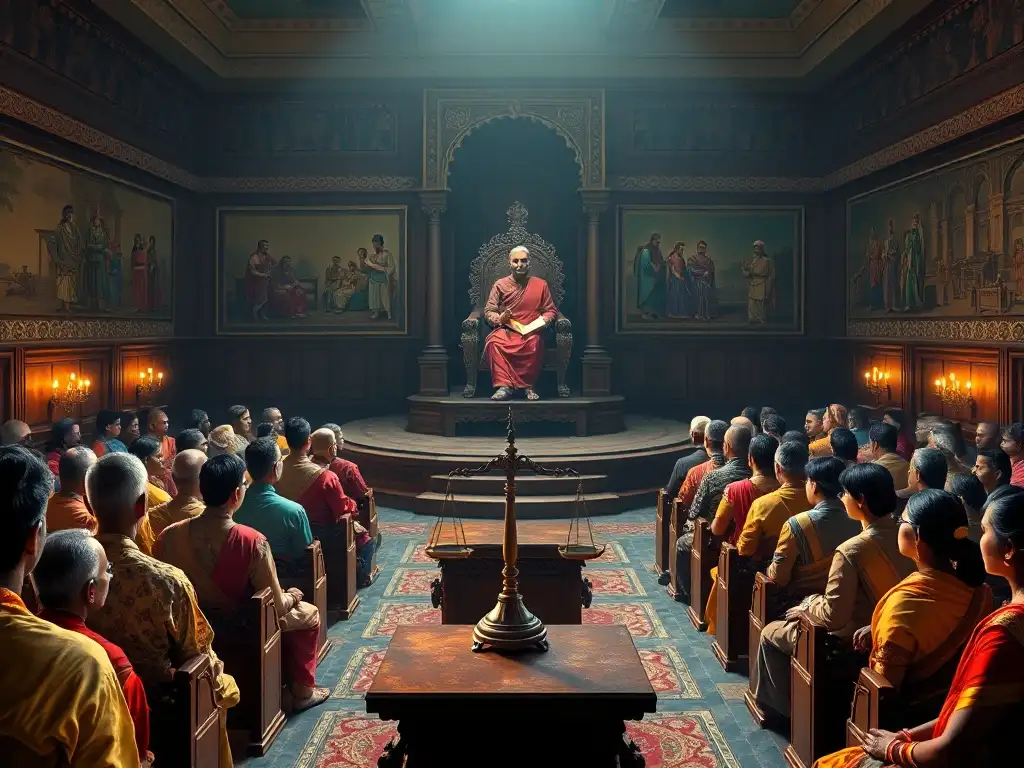
Contrasts with Ancient Legal Systems of Other Civilizations
Ancient Indian courtroom history reveals distinct features that set it apart from the legal systems of other civilizations, such as those in Mesopotamia, Egypt, and Greece. One of the most notable contrasts lies in the underlying philosophies guiding legal practices. Ancient Indian law, primarily derived from texts like the Manusmriti and Arthashastra, intertwined legal principles with religious and moral codes, emphasizing Dharma (righteousness) as a central tenet. This contrasts sharply with the more secular and punitive approaches observed in civilizations such as Babylon, where the Code of Hammurabi focused on strict retribution rather than moral obligation.
Another significant difference is the role of the judge or arbiter. In ancient India, the judge was often seen as a wise figure responsible for upholding Dharma and ensuring fairness. This role was not merely administrative; judges were expected to possess deep knowledge of scriptures and local customs. In contrast, judges in other ancient cultures, like those in Roman courts, often had less emphasis on moral guidance and more on the application of codified laws.
Key Contrasts:
- Philosophical Underpinnings: Ancient Indian law emphasized Dharma, while other civilizations like Babylon focused on retribution.
- Role of the Judge: Indian judges were moral guides, whereas judges in other cultures were often more bureaucratic.
Similarities with Contemporary Judicial Practices
Despite the considerable time gap, there are remarkable similarities between ancient Indian courtroom practices and modern judicial systems. One notable aspect is the use of evidence and witness testimonies. Ancient Indian courts valued firsthand accounts, and witnesses were crucial in establishing the truth, a practice that continues to be a cornerstone of contemporary legal proceedings.
Moreover, the concept of legal representation has its roots in ancient Indian practices. Advocates, known as "Vakils," played a significant role in court proceedings, akin to modern lawyers. These Vakils were responsible for presenting cases and negotiating on behalf of clients, demonstrating an early form of legal advocacy that mirrors today's legal profession.
Key Similarities:
- Importance of Evidence: Both ancient and modern courts rely heavily on witness testimonies to establish facts.
- Legal Representation: The role of Vakils in ancient India parallels the function of lawyers in contemporary courts.
The comparative analysis of ancient Indian courtroom practices with those of other civilizations highlights unique philosophical and operational differences, while also revealing surprising continuities with modern judicial systems. Understanding these aspects not only enriches our knowledge of ancient Indian courtroom history but also provides insights into the evolution of legal practices over time.
Legacy of Ancient Indian Courtroom History
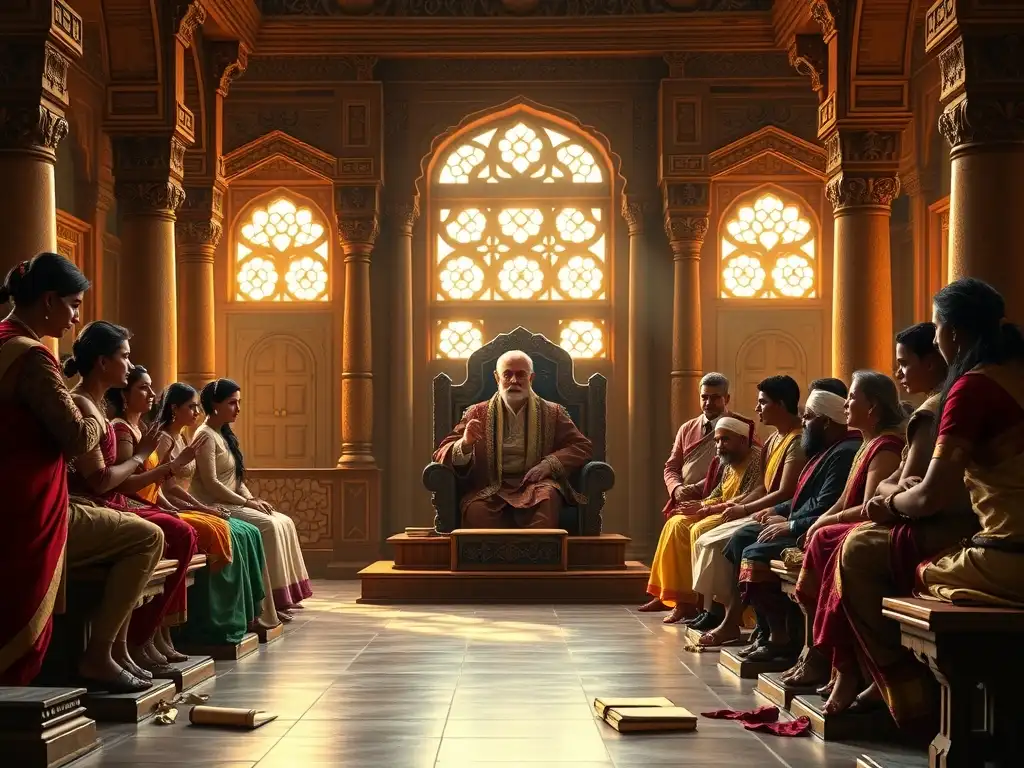
The legacy of ancient Indian courtroom history is significant, as it laid the groundwork for legal systems that have evolved over millennia. Ancient Indian courts served not only as venues for dispute resolution but also as institutions that reflected the socio-political and cultural dynamics of their time.
Influence on Modern Indian Legal Framework
The influence of ancient Indian courtroom practices can be traced through various elements of the modern legal framework. Key features such as the principle of natural justice, the role of evidence, and the concept of fair trial find their roots in ancient judicial customs. For instance:
- Natural Justice: Ancient texts, like the Manusmriti, emphasized fairness and impartiality in trials, principles that resonate in contemporary legal systems.
- Evidence and Testimony: The use of witnesses and documents in court proceedings was well-established in ancient times. Courts in ancient India often relied on the testimony of Brahmins and local elders, similar to how modern courts evaluate witness credibility.
- Judicial Hierarchies: The structure of ancient courts, which included various levels such as village assemblies ( panchayats) and higher courts ( rajadhikrits), influenced the tiers of today's judiciary.
Moreover, the ancient practice of mediation and arbitration in resolving disputes is echoed in present-day alternative dispute resolution mechanisms. This historical continuity illustrates how ancient Indian courtroom history has shaped and informed the principles and practices of modern Indian law.
Preservation of Traditional Judicial Practices
Despite the passage of time and the introduction of colonial legal systems, many traditional judicial practices from ancient India have been preserved and continue to influence local legal traditions. Notable aspects include:
- Panchayat System: The village panchayat remains a crucial form of local governance and conflict resolution, providing a community-based approach to justice.
- Jury Trials: The concept of involving community members in the judicial process can be traced back to ancient practices where local assemblies would deliberate on matters of law and justice.
- Oral Traditions: Oral transmission of laws and customs has persisted in many rural areas, showcasing how traditional methods of law dissemination remain influential.
The resilience of these practices highlights the adaptive nature of ancient Indian courtroom history, where traditional systems have not only survived but also thrived alongside modern legal frameworks.
The legacy of ancient Indian courtroom history offers invaluable insights into the evolution of legal practices, emphasizing the intersection of tradition and modernity in the Indian legal landscape. Understanding these connections enriches our appreciation for the complexities and nuances of ancient Indian judicial systems while demonstrating their enduring relevance.
Conclusion
Summary of Insights from Ancient Indian Courtroom History
The reconstruction of courtroom experiences in ancient India reveals a complex interplay of legal practices, social norms, and cultural influences that defined the judicial landscape. Ancient Indian courtroom history showcases a sophisticated system of law and order that was not merely punitive but also restorative in nature. Key insights include:
- Legal Codes and Texts: The existence of texts such as the Manusmriti and Arthashastra provides a foundational understanding of legal principles and judicial procedures. These texts outlined various offenses, prescribed punishments, and established the role of judges (often referred to as "Dharmadhikaran") in ensuring justice.
- Courtroom Structure and Roles: The courtroom was a formal space where justice was administered. It typically included a judge, witnesses, and the parties involved in the dispute. Hierarchical structures were evident, with the king or local ruler often presiding over significant cases, reflecting the intertwining of governance and justice.
- Evidence and Testimony: Ancient Indian judicial practices emphasized the importance of testimony and evidence. The use of witnesses was critical; their credibility was scrutinized based on social standing and character. This aspect highlights the community's role in the judicial process, reinforcing the notion that justice was a collective responsibility.
- Restorative Justice: Unlike contemporary punitive systems, ancient Indian courts often aimed at restoring harmony within the community. Mediators and elders frequently facilitated settlements, promoting reconciliation over retribution. This practice underscored the cultural value placed on social cohesion and moral rectitude.
The Relevance of Studying Ancient Judicial Practices Today
Understanding ancient Indian courtroom history is not merely an academic pursuit; it bears significant relevance for contemporary legal systems and societal norms. Here are a few reasons why this study holds value today:
- Cultural Heritage: Ancient judicial practices reflect the cultural heritage of India, offering insights into the ethical frameworks and societal values of past civilizations. By studying these practices, modern societies can appreciate the evolution of legal thought and cultural norms over millennia.
- Alternative Dispute Resolution: The emphasis on mediation and restorative justice found in ancient practices can inform contemporary approaches to conflict resolution. As societies increasingly turn to alternative dispute resolution mechanisms, the wisdom embedded in ancient practices can provide valuable lessons.
- Legal Pluralism: Ancient Indian legal systems were characterized by a pluralistic approach, accommodating various customs and traditions. This aspect is particularly relevant in today's globalized world, where diverse legal systems coexist. Understanding these historical contexts can foster dialogue and cooperation among different legal traditions.
- Inspiration for Modern Law: The principles of fairness, equity, and justice that underpinned ancient legal practices can inspire modern lawmakers and practitioners. Analyzing how these principles were applied historically can lead to a more nuanced understanding of justice that resonates with contemporary societal needs.
The study of ancient Indian courtroom history not only enriches our understanding of past judicial systems but also provides pertinent insights that can enhance current legal practices and foster a deeper appreciation for the interconnectedness of law and culture in society.
Frequently Asked Questions
What is the significance of ancient Indian courtroom history?
The ancient Indian courtroom history is significant as it reveals the legal practices, judicial systems, and cultural values of ancient civilizations, showcasing how justice was administered.
How did the Indus Valley Civilization influence courtroom practices?
The Indus Valley Civilization laid the foundation for early legal frameworks and trade regulations, influencing later judicial systems in ancient India with its emphasis on order and governance.
What contributions did the Gupta Empire make to legal systems?
The Gupta Empire contributed to legal literature and the codification of laws, enhancing the courtroom experience by ensuring fair trials and the establishment of legal precedents.
What types of evidence were used in ancient Indian courtrooms?
Ancient Indian courtrooms utilized various forms of evidence, including witness testimonies, documents, and physical proof, reflecting a sophisticated understanding of justice and truth.
How did cultural practices influence courtroom procedures in ancient India?
Cultural practices significantly influenced courtroom procedures, as they often intertwined religious beliefs, social norms, and ethical standards, shaping the way justice was perceived and administered.
Final Reflection: Revisiting Ancient Indian Courtroom History for Modern Insights
In an age where justice systems worldwide are under scrutiny, the reconstruction of ancient Indian courtroom history offers profound insights that resonate with contemporary legal practices. The intricate balance of fairness, authority, and societal norms depicted in ancient Indian courts is not merely a relic of the past; it serves as a mirror reflecting our ongoing quest for justice and equity. As we delve into these historical narratives, we uncover timeless principles that can guide us in addressing current challenges within our legal frameworks.
The influence of ancient Indian courtroom practices extends far beyond their historical context, shaping the cultural and social landscape of modern India and beyond. These ancient systems emphasized the importance of moral integrity and community involvement in the pursuit of justice. As we navigate today's complex legal issues, we can draw inspiration from the wisdom of the past. Justice is the foundation of a society, and its roots can be traced back to the values instilled in our ancient systems.
This perspective reminds us that the essence of justice is not merely about punishment but about restoring balance and harmony within the community.
As we reflect on the lessons gleaned from ancient Indian courtroom history, I invite you to consider how these insights can be applied in your own life. What principles of justice and fairness can you embody in your daily interactions? Whether in personal relationships, professional environments, or community engagements, let us strive to uphold the values of integrity, empathy, and accountability that have stood the test of time. By doing so, we not only honor our rich heritage but also contribute to a more just and equitable future for all.
Unveil the Fascinating World of Ancient Indian Justice!
Thank you for diving deep into the intriguing realm of ancient Indian courtroom practices! Your exploration of history not only enriches your understanding but also connects you to our cultural heritage. Now, it's time to take what you've learned and put it into action.
Here are some concrete steps you can take next:
- Explore further: Dig into more articles on ancientindiahistory.com to uncover related topics that pique your interest, such as the evolution of legal systems or significant cases from ancient India.
- Share your thoughts: Discuss your insights with friends and family, or express your reflections on social media to spark engaging conversations about our rich history!
- Join the community: Connect with fellow history enthusiasts by sharing your thoughts in the comments below or participating in forums dedicated to ancient Indian history.
What aspect of the ancient Indian legal system surprised you the most, and how do you think it influences our understanding of justice today?