
Rituals or Rights? The Intricacies of Law in Ancient Indian Society


Welcome to Ancient India History, where we embark on a captivating journey through the rich tapestry of ancient Indian civilizations. As we delve into the fascinating world of ancient Indian law and rituals, you'll uncover the intricate legal systems and profound cultural practices that shaped society from the Indus Valley to the Gupta Empire. In our featured article, "Rituals or Rights?
The Intricacies of Law in Ancient Indian Society," we explore how these ancient laws not only governed daily life but also influenced the very essence of Indian culture. Prepare to be intrigued as we unravel the complexities that lie at the heart of this remarkable historical narrative. Read on to discover the profound connections between law, ritual, and the enduring legacy of ancient India!
- Introduction to Ancient Indian Law and Rituals
- The Concept of Law in Ancient Indian Culture
- Rituals as Legal Instruments in Ancient India
- The Relationship Between Law and Rituals in Ancient Indian Texts
- Rights and Duties in Ancient Indian Law
- The Evolution of Legal Practices and Rituals
- Conclusion: The Legacy of Ancient Indian Law and Rituals
- References
-
Frequently Asked Questions
- What were the primary rituals in ancient Indian society?
- How did law function in ancient Indian civilizations?
- What role did religion play in shaping ancient Indian laws?
- Can you explain the significance of rituals in the legal context of ancient India?
- How did ancient Indian law differ from modern legal systems?
- Final Reflection: The Enduring Legacy of Ancient Indian Law and Rituals
- Unveil the Wisdom of Ancient Indian Law
Introduction to Ancient Indian Law and Rituals
Ancient Indian society, with its profound cultural and spiritual heritage, presents a fascinating tapestry of legal principles and rituals that governed daily life. The intricate relationship between law and rituals in this civilization reflects not only the socio-political structures of the time but also the philosophical underpinnings that shaped their worldview.
The keyword ancient Indian law and rituals encapsulates this duality, as legal texts like the Manu Smriti provide insights into how laws were intertwined with religious practices and societal norms. This article delves into the complexities of ancient Indian law, exploring how rituals served as both a legal framework and a means of social cohesion, thus illuminating the rich historical context of ancient Indian civilization.
Overview of Ancient Indian Society and Its Legal Framework
Ancient Indian society was characterized by a hierarchical structure, where various classes and castes played distinct roles in the socio-economic fabric. At the core of this society were the Vedas, which not only served as religious texts but also laid the foundation for legal principles. The Dharma Shastras, particularly the Manu Smriti, emerged as significant legal texts that articulated the duties, rights, and obligations of individuals within this societal framework.
Key features of the legal framework included:
- Varna System: This stratification influenced legal rights and responsibilities, delineating roles for Brahmins (priests), Kshatriyas (warriors), Vaishyas (traders), and Shudras (laborers).
- Dharma: This concept represented moral and ethical duties, where adherence to dharma was seen as essential for societal harmony.
- Rituals and Laws: Laws were often validated through rituals, establishing a divine sanction that reinforced their authority and acceptance within society.
The legal framework was not static; it evolved through interpretations and commentaries by scholars, adapting to changing societal norms while retaining a core of traditional values.
Significance of Rituals in the Context of Ancient Indian Law
Rituals in ancient India transcended mere ceremonial practices; they were deeply embedded within the legal system, serving multiple purposes that were crucial for maintaining order and social cohesion.
- Validation of Law: Rituals acted as a means of legitimizing laws, often invoking divine approval. For instance, legal decisions were frequently accompanied by rituals that sought blessings from deities, thereby reinforcing the sanctity of the law.
- Social Cohesion: Communal rituals fostered a sense of belonging and collective responsibility, binding individuals to their duties and to each other. This communal aspect was essential in a society where adherence to law was often seen as a reflection of one’s faith and moral standing.
- Moral Education: Rituals also served an educational purpose, instilling values and norms through participation in ceremonial practices. This helped in shaping individuals' understanding of their roles and responsibilities within the legal framework.
The interplay between rituals and laws in ancient Indian society reveals a complex system where legal norms were not merely rules but were deeply ingrained within the cultural and spiritual practices of the time. Understanding this relationship is crucial for a comprehensive view of ancient Indian law and its enduring legacy in contemporary legal systems.
The Concept of Law in Ancient Indian Culture

Ancient Indian law was deeply intertwined with the cultural, religious, and social fabric of the society. Law in this context was not merely a set of rules or regulations; it was a comprehensive framework that governed the ethical, moral, and social conduct of individuals. The concept of law encompassed a vast array of practices, rituals, and customs that were often codified in legal texts, reflecting a society that viewed law through a spiritual and moral lens.
Definition and Nature of Ancient Indian Law
Ancient Indian law, often referred to as Dharma, represents a complex system of legal principles that includes not only legal codes but also ethical guidelines. The term Dharma itself signifies righteousness, moral duty, and law, indicating that law was seen as a means to achieve social harmony and personal righteousness.
Key characteristics of ancient Indian law include:
- Religious Foundation: Ancient Indian law had its roots in religious beliefs and practices. The laws were often seen as divine commandments, with adherence to them viewed as a duty towards both society and the divine.
- Customary Practices: Many legal principles were derived from customary practices that evolved over centuries. These customs were orally transmitted and later documented, illustrating how traditions shaped legal norms.
- Social Hierarchies: The legal system was influenced by the varna (social class) system, where laws and rights could vary significantly based on one’s caste. This stratification meant that justice was not uniformly applied, often favoring higher castes.
- Flexibility and Adaptation: Ancient Indian law was not static; it evolved with changing social norms and values. Legal texts like the Manu Smriti provided guidelines that were meant to be interpreted in light of contemporary circumstances.
Ancient Indian law was a dynamic interplay of ethics, traditions, and religious beliefs, creating a legal framework unique to its cultural context.
Role of Religious Texts in Shaping Legal Principles
Religious texts played a pivotal role in the formulation and codification of ancient Indian law. Scriptures such as the Vedas, Upanishads, and Manu Smriti not only provided spiritual guidance but also laid down the legal principles that governed everyday life. The influence of these texts can be categorized into several key aspects:
- Codification of Laws: Texts like the Manu Smriti served as one of the earliest codifications of laws, outlining duties, rights, and responsibilities across different strata of society. They offered a comprehensive view of societal norms, including penalties for various transgressions.
- Moral and Ethical Guidelines: These texts emphasized moral conduct and ethical behavior, suggesting that adherence to law was as much about personal virtue as it was about societal order. For instance, the Manu Smriti provides detailed accounts of duties ( Dharma) that individuals must uphold, thus intertwining law with ethics.
- Rituals and Legal Procedures: Many legal principles were closely linked with religious rituals. For example, certain rites were required to legitimize marriages or property transactions, illustrating how law and ritual were often inseparable. The performance of rituals was believed to purify and sanctify legal acts, ensuring divine approval.
- Interpretation and Adaptation: Scholars and legal practitioners often interpreted these religious texts in light of contemporary issues. This interpretative flexibility allowed the legal framework to adapt to changing societal norms while still remaining rooted in tradition.
- Social Welfare and Justice: The texts also aimed at promoting social welfare and justice. They provided guidelines on how to resolve disputes and maintain social order, illustrating the legal system’s function as a tool for conflict resolution.
Religious texts were not merely spiritual documents; they were foundational in establishing the principles of ancient Indian law, shaping the legal landscape and influencing the social fabric of ancient Indian civilization. The intertwining of law and rituals highlights the holistic approach to governance and societal conduct prevalent in ancient Indian culture.
Rituals as Legal Instruments in Ancient India
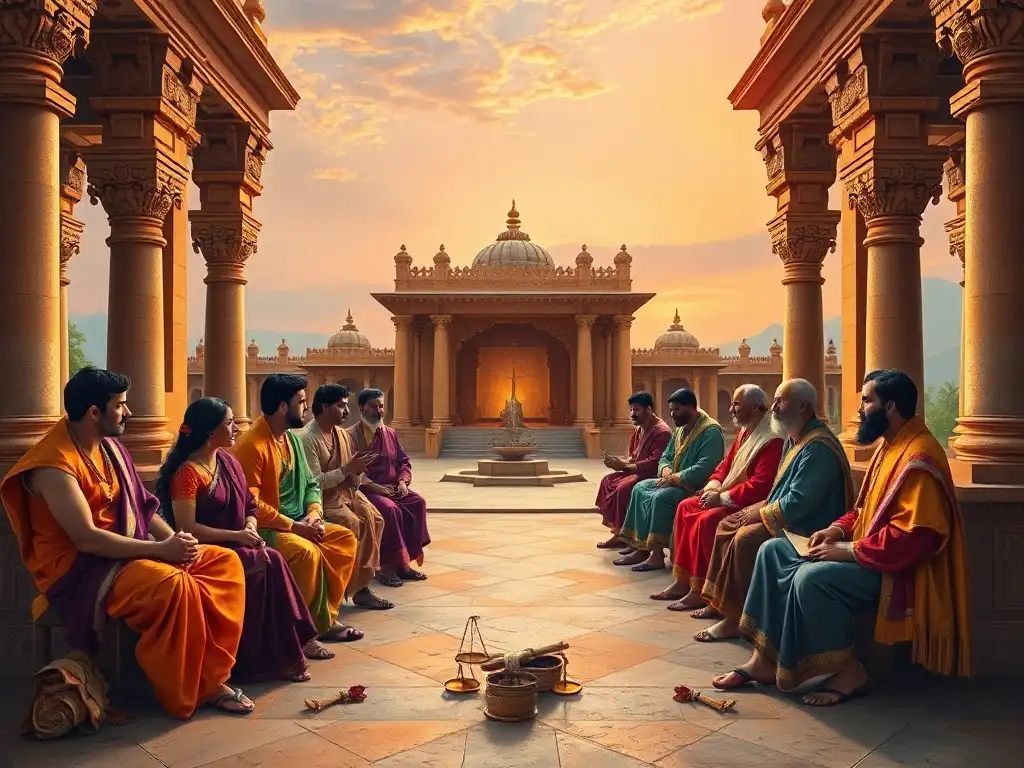
Rituals in ancient Indian society were not merely ceremonial acts; they served as fundamental components of the legal system, intertwining the spiritual and temporal realms. This intersection of law and ritual can be traced back to the Vedic period, where the adherence to rituals was believed to ensure cosmic order (Rita) and social harmony. The perception of law in ancient India was heavily influenced by religious beliefs, and rituals often acted as formal legal instruments, establishing norms and procedures that governed the conduct of individuals and the community.
The integration of rituals into legal frameworks was evident in various ancient texts, such as the Manu Smriti, which outlines the duties of individuals and the consequences for failing to uphold these responsibilities. Rituals were not merely prescribed actions; they held legal weight and were critical for the resolution of disputes, the establishment of rights, and the enforcement of social norms.
Types of Rituals in Ancient Indian Society
Ancient Indian society was rich in diverse rituals, each serving specific purposes and functions. Key categories include:
- Sacrificial Rituals: These were performed to appease deities and ensure prosperity. They often had legal implications, as failure to perform these could result in social ostracism or legal penalties.
- Purification Rituals: These rituals, such as the Prayaschitta, were meant to cleanse individuals of sins or wrongful acts. They played a critical role in the reinstatement of social status and legal rights.
- Marriage Rituals: The Saptapadi (seven steps) taken during marriage not only solidified the union but also established legal rights concerning property and inheritance between spouses.
- Funeral Rituals: These were crucial for ensuring the deceased's rights in the afterlife and had implications for the living, particularly regarding inheritance and family duties.
- Public Rituals: Ceremonies involving the community, such as village assemblies, where decisions were made regarding disputes and governance, often reflected the legal ethos of the society.
Understanding these types of rituals allows us to appreciate their multifaceted roles in shaping the legal landscape of ancient India, going beyond mere religious observance to functioning as integral parts of the legal system.
The Function of Rituals in Legal Proceedings
Rituals performed in legal contexts served multiple functions within ancient Indian society. They were not just ceremonial but held significant implications for justice and societal order. The following outlines their primary functions:
- Validation of Agreements: Rituals often marked the formalization of contracts, ensuring that all parties involved recognized and respected the terms. For example, the Homa (fire ritual) could seal an agreement, binding individuals to their commitments.
- Dispute Resolution: Rituals acted as mediators in conflicts, with community leaders or elders often presiding over such ceremonies. The performance of specific rituals could signify the resolution of disputes, restoring harmony within the community.
- Establishment of Authority: The performance of rituals by ruling authorities, such as kings, legitimized their power and decisions. The Rajasuya Yajna, for instance, was a royal consecration ritual that established a king's sovereignty.
- Moral and Ethical Reinforcement: Rituals served to reinforce societal norms and values, reminding individuals of their duties and responsibilities within the community. This was crucial for maintaining social order and preventing chaos.
By understanding the functional aspects of rituals in legal proceedings, we can see how they shaped the societal structure and legal norms of ancient India, reinforcing a sense of duty and collective responsibility.
Case Studies of Rituals Influencing Legal Outcomes
Examining specific instances in history where rituals influenced legal outcomes provides insight into their practical implications. Here are some notable case studies:
- The Case of Kautilya's Arthashastra: In this ancient treatise, rituals were prescribed for the king to perform before making significant decisions. For instance, consulting with the Brahmins through rituals before undertaking military campaigns ensured divine approval and legitimized the ensuing actions. This demonstrated how rituals influenced state decisions and legal authority.
- Rituals in Inheritance Disputes: In many instances, families engaged in Shraddha (funeral rites) to settle inheritance disputes. The performance of these rites often determined the rightful heir, as it was believed that the deceased's spirit would guide the living in resolving such matters.
- Public Assemblies and Rituals: Historical accounts reveal that village assemblies often incorporated rituals to adjudicate disputes. For example, the panchayat system relied on community-led rituals to mediate conflicts, emphasizing the collective decision-making process.
- Royal Decrees and Rituals: The performance of rituals during the announcement of royal edicts was common. For instance, when a king issued a new law, it was customary to perform a Yajna to ensure the law’s acceptance and adherence among the populace, thus reinforcing the king's authority and the law's legitimacy.
These case studies illustrate the profound impact of rituals on legal outcomes in ancient Indian society, highlighting their role as instruments of justice, authority, and societal cohesion.
The Relationship Between Law and Rituals in Ancient Indian Texts

The intricate relationship between law and rituals in ancient Indian society is woven deeply into the fabric of its legal texts, particularly the Manu Smriti. This ancient legal code not only outlines the principles of justice and social order but also emphasizes the significance of rituals in the legal framework. In ancient India, law was not merely a set of rules but was intertwined with the spiritual and ritualistic aspects of life, reflecting the belief that adherence to law was essential for maintaining cosmic order (Rita).
Analysis of Key Legal Texts (e.g., Manu Smriti)
The Manu Smriti, one of the most influential legal texts in ancient India, provides a comprehensive view of the societal norms and laws of the time. It delineates duties (dharma) for different social classes (varnas) and includes extensive discussions on various aspects of life, including morality, ethics, and legal responsibilities.
- Dharma and Social Order:
- The concept of dharma is central to the Manu Smriti. It encompasses moral duties, legal obligations, and rituals, creating a holistic framework for societal conduct.
- Each varna had specific dharmic duties that aligned with their societal roles, thus reinforcing social hierarchy and stability.
- Legal Procedures:
- The text outlines legal procedures for resolving disputes, which often incorporated ritual elements. For instance, oaths taken before deities were common, emphasizing the divine authority behind legal decisions.
- Punishments for transgressions were not only punitive but also served as ritual purification processes, reflecting the belief that societal order was maintained through both law and spiritual adherence.
- Case Studies and Interpretations:
- Various commentaries on the Manu Smriti illustrate differing interpretations of dharma, showcasing how ancient Indian law adapted to changing contexts while retaining its ritualistic core.
- Scholars have noted that the text’s emphasis on rituals signifies a dual approach to law—one that balances earthly justice with spiritual significance.
How Rituals are Incorporated in Legal Codes
Rituals play a crucial role in the legal codes of ancient India, acting as a bridge between the divine and the mundane. These rituals served multiple purposes within the legal system:
- Legal Validity: Many legal transactions required ritual acts, such as the homa (fire sacrifice) during property transfer, which invoked divine witnesses to the agreement.
- Mediation and Conflict Resolution:
- Rituals facilitated mediation processes, where parties involved in disputes would engage in rituals to seek divine intervention for resolution.
- For example, the prayaschitta (atonement rituals) were prescribed for those who committed wrongful acts, providing a pathway to restore societal harmony.
- Symbolic Representation of Justice:
- Rituals symbolized the moral and ethical underpinnings of laws. The performance of rituals before a court session was believed to invite divine presence, ensuring fair judgment and reinforcing the sanctity of the legal process.
Comparative Study of Rituals and Rights in Legal Contexts
In examining the comparative dynamics of rituals and rights within ancient Indian legal contexts, it becomes evident that these elements were not mutually exclusive but rather complementary.
- Rituals as Rights:
- In many cases, the performance of rituals was considered a right of individuals within their societal roles. For instance, a king's right to rule was legitimized through coronation rituals, which affirmed his divine mandate.
- Rights Enforced through Ritualistic Means:
- The enforcement of rights often required the observance of rituals. For example, the right to inheritance was contingent upon performing specific rituals that acknowledged the deceased's blessings.
- Case Comparisons:
- Comparing ancient Indian legal practices with those of other civilizations, such as the Roman legal system, reveals distinct approaches. While Roman law focused on codified rights, ancient Indian law emphasized a ritualistic framework that intertwined rights with spiritual obligations.
The relationship between ancient Indian law and rituals is a complex interplay that reflects the values and beliefs of the time. The Manu Smriti and other legal texts illustrate how rituals were not simply ceremonial acts but integral components of a broader legal and ethical system, shaping the societal landscape of ancient India.
Rights and Duties in Ancient Indian Law
Individual Rights and Collective Duties
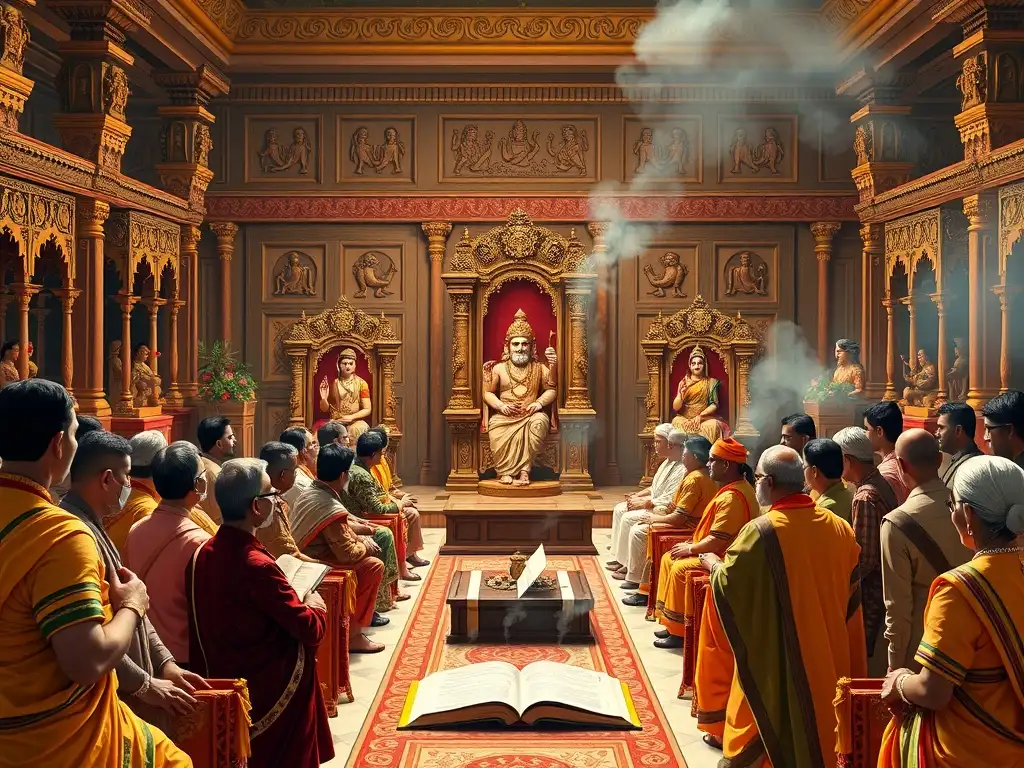
In ancient Indian society, the framework of law was deeply intertwined with both individual rights and collective duties. The concept of rights was not solely centered on personal freedoms; rather, it was balanced with the responsibilities each individual held towards their community and society at large. This duality is evident in legal texts such as the Manu Smriti, which outlines the rights of individuals while simultaneously emphasizing their obligations.
- Individual Rights: The rights granted to individuals were often linked to their social status and varna (class) system. For instance:
- Brahmins enjoyed certain rights, including the right to teach and lead religious rituals.
- Kshatriyas had the right to protect and govern.
- Vaishyas were entitled to engage in trade and agriculture.
- Shudras, while having fewer rights, were still granted protections under the law, such as the right to fair treatment by their superiors.
- Collective Duties: Alongside individual rights, ancient Indian law stressed the importance of collective duties:
- Dharma: The moral law that governed individual behavior and societal norms, requiring individuals to act in accordance with the welfare of the community.
- Rituals and Sacrifices: Participation in communal rituals was not just a personal choice but a duty that reinforced social cohesion and collective identity.
This intricate balance ensured that individual liberties were exercised within a framework that prioritized the welfare of the community. As a result, ancient Indian law provided a holistic approach to governance and societal functioning.
The Interplay Between Personal Conduct and Legal Responsibilities
The interplay between personal conduct and legal responsibilities in ancient Indian law was governed by a series of established principles that sought to maintain social order and harmony. The legal texts emphasize that personal behavior directly impacts one’s legal standing and societal well-being.
- Codes of Conduct: The Manu Smriti and other texts detail specific codes of conduct that individuals were expected to follow, which included:
- Ahimsa (non-violence): A fundamental principle that shaped personal and collective actions.
- Satya (truthfulness): Encouraged honesty in all dealings, which was essential for maintaining trust within society.
- Legal Responsibilities: Individuals were held accountable for their actions, and legal repercussions were often tied to personal conduct:
- Criminal Offenses: Violations such as theft or violence not only affected the victim but also disrupted societal harmony, leading to specific punishments outlined in legal codes.
- Restorative Justice: Many ancient Indian laws emphasized restoration and reconciliation rather than mere punishment, reflecting the belief that personal conduct had broader implications for community welfare.
This dynamic relationship between personal behavior and legal obligations illustrates how ancient Indian law was not merely a set of rules but rather a comprehensive system that sought to cultivate ethical conduct, ensuring both individual rights and societal stability were upheld.
The concept of ancient Indian law and rituals is intricately linked to the understanding of rights and duties, showcasing an advanced legal and ethical framework that contributed to the rich tapestry of ancient Indian civilization.
The Evolution of Legal Practices and Rituals
Historical Context of Legal Changes in Ancient India
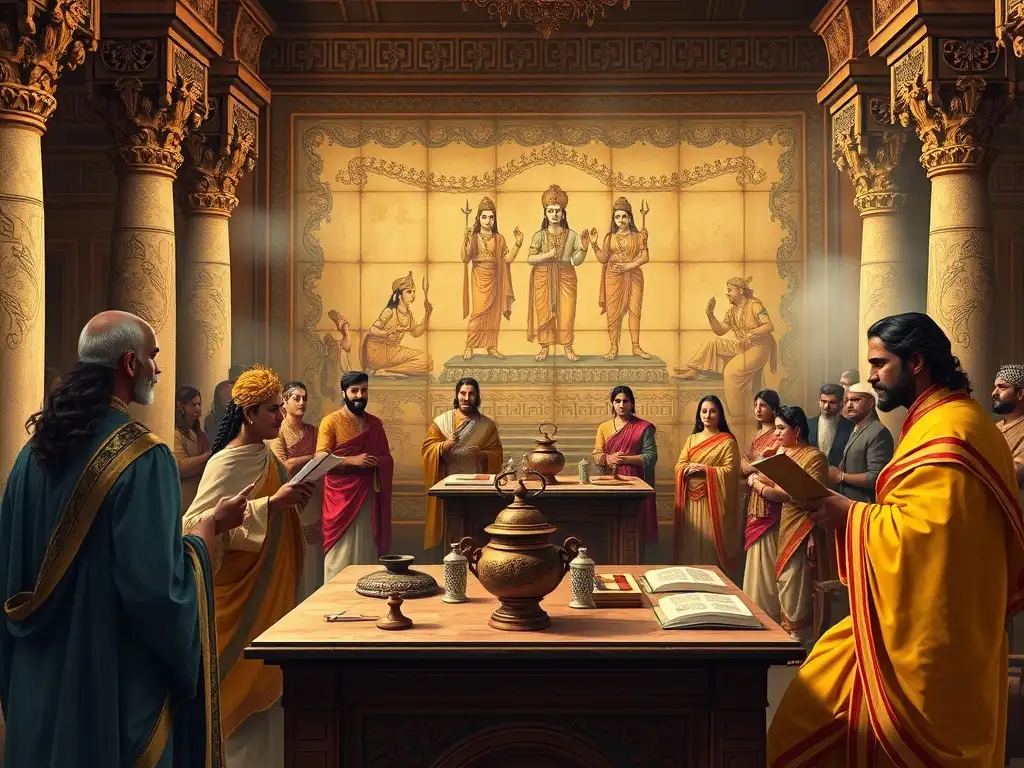
The development of legal practices in ancient India is deeply intertwined with the socio-political and cultural transformations that occurred over millennia. The earliest evidence of legal practices can be traced back to the Indus Valley Civilization (circa 3300–1300 BCE), where evidence suggests a sophisticated society with regulations governing trade, property, and community welfare. Archaeological findings, such as seals and weights, indicate that the Indus people had established systems that might have included aspects of law, although specific texts remain elusive.
As time progressed, the Vedic period (circa 1500–500 BCE) introduced a more complex interplay of law and ritual. Vedic texts, including the Rgveda and the Yajurveda, emphasized the importance of rituals (yajnas) and their connection to cosmic order (ṛta). Legal principles during this period were often derived from religious duties, where adherence to dharma (moral law) was considered essential for social harmony.
With the emergence of Mahajanapadas (around 600 BCE), regional kingdoms began to form, leading to a diversification of legal practices. The Arthashastra, attributed to Kautilya (Chanakya), provided insights into statecraft and law, suggesting a shift towards more pragmatic legal frameworks. This era saw the codification of various legal norms, balancing ritualistic practices with the needs of governance.
Influence of Philosophical Schools on Law and Rituals
The philosophical schools of thought that flourished in ancient India significantly shaped the understanding and implementation of law and rituals. The six orthodox schools of philosophy (Astika) contributed to the discourse on dharma and ethics, leading to nuanced interpretations of legal principles.
- Nyaya: This school emphasized logic and epistemology, influencing legal reasoning. The Nyaya Sutras provided frameworks for argumentation, which were essential for judicial processes.
- Vaisheshika: Focused on categorization and classification of objects and phenomena, this school contributed to the understanding of property rights and ownership, elements crucial to legal practices.
- Samkhya: With its dualistic approach, Samkhya philosophically influenced notions of justice and retribution, linking moral conduct to societal well-being.
- Yoga: This school emphasized discipline and ethics, reinforcing the idea that personal conduct impacts societal order, thus intertwining individual behavior with legal expectations.
- Mimamsa: Primarily concerned with the performance of rituals, Mimamsa established the authority of Vedic texts as sources of law, intertwining legal obligations with religious duties.
- Vedanta: This school introduced metaphysical perspectives that influenced the interpretation of dharma, emphasizing the ultimate goals of law beyond mere societal order.
The interplay between these philosophical schools and legal practices illustrates a dynamic relationship where ritualistic elements were often embedded within legal frameworks, emphasizing the moral and ethical dimensions of law in ancient Indian society.
Transition from Ritualistic to Codified Law
The transition from ritualistic to codified law in ancient India marked a significant evolution in the legal landscape, reflecting broader societal changes. Initially, law was predominantly based on rituals and religious texts. The Manu Smriti, one of the most significant legal texts, epitomizes this phase by intertwining legal norms with ritualistic duties, prescribing laws that governed both personal and communal conduct.
As the socio-political environment evolved, especially during the Maurya and Gupta empires, the need for a more structured legal system became apparent. The codification of laws allowed for greater consistency and accessibility, addressing the complexities of governance in expanding empires.
Key developments in this transition included:
- Legal Codes: The compilation of legal codes, such as the Yajnavalkya Smriti, began to systematize laws, moving away from purely ritualistic interpretations towards more pragmatic solutions addressing contemporary issues.
- Judicial Authority: The establishment of formal judicial systems enabled the adjudication of disputes based on written laws rather than ritualistic interpretations, allowing for greater accountability and transparency.
- Integration of Customs: While codified laws gained prominence, local customs and traditions continued to play a vital role, leading to a hybrid legal system that respected both written law and customary practices.
- Philosophical Underpinnings: The philosophical discourse continued to influence law, with scholars debating the relevance of rituals in the legal process, ultimately advocating for a balance between codified law and ethical conduct.
The evolution towards codified law illustrates the adaptability of ancient Indian legal practices in response to changing societal needs, reflecting a complex interplay between tradition and innovation in the realm of ancient Indian law and rituals.
Conclusion: The Legacy of Ancient Indian Law and Rituals

The legacy of ancient Indian law and rituals is profound, leaving a lasting imprint on the cultural and legal frameworks of contemporary society. The intricate relationship between law and rituals in ancient India, particularly as articulated in texts like the Manu Smriti, illustrates how legal principles were interwoven with religious beliefs and practices. These foundational elements not only governed social conduct but also shaped the moral and ethical dimensions of Indian civilization.
Lasting Impact on Modern Legal Systems
The principles of ancient Indian law have significantly influenced modern legal systems, particularly in South Asia. Many contemporary laws can trace their roots back to ancient texts, where concepts such as justice, equity, and social responsibility were emphasized. For instance:
- Restorative Justice: Ancient texts advocated for restoring harmony within communities, a principle that resonates in modern restorative justice practices.
- Rights and Duties: The notion of duties accompanying rights, as highlighted in the Manu Smriti, continues to inform discussions around citizenship and civil responsibilities today.
- Social Hierarchies: The caste system, codified in ancient laws, still affects social dynamics, although modern laws strive to promote equality.
| Ancient Principle | Modern Equivalent |
|---|---|
| Restorative Justice | Mediation and Conciliation |
| Duties with Rights | Civic Responsibility |
| Caste Regulations | Anti-Discrimination Laws |
The influence of ancient Indian legal principles extends beyond the Indian subcontinent, impacting the legal traditions of countries influenced by Indian culture and philosophy, such as Indonesia and Thailand.
Reflections on the Integration of Law and Rituals in Contemporary Society
In contemporary society, the integration of law and rituals continues to evoke interest and debate. The interplay between secular laws and cultural rituals often raises questions about identity, tradition, and modernity. Examples include:
- Marriage Ceremonies: While legal frameworks govern marriage, traditional rituals still play a vital role in how these unions are celebrated and understood.
- Religious Practices: Legal considerations around religious practices, such as festivals and rites of passage, highlight the ongoing relevance of ancient rituals in modern law.
The challenge lies in balancing respect for cultural traditions with the need for legal equality and justice.
This delicate balance often leads to discussions about cultural pluralism, where the law must accommodate diverse practices while upholding universal principles of justice. As society evolves, the legacy of ancient Indian law and rituals remains a crucial point of reference, reminding us of the complex tapestry that forms our legal and cultural identity today.
In exploring the intricacies of law in ancient Indian society, we uncover not just historical practices but also lessons that remain relevant in addressing contemporary legal and ethical dilemmas, ensuring that the legacy of ancient Indian law and rituals continues to inform our understanding of justice and morality in the modern world.
References
Ancient Indian law and rituals were intricately woven into the fabric of society, reflecting the moral, ethical, and social values of the time. The understanding of these legal frameworks primarily comes from several key texts, inscriptions, and archaeological findings that provide insight into the practices and beliefs of ancient Indian civilizations. The following sources are essential for anyone looking to delve deeper into the subject of ancient Indian law and rituals:
- Manu Smriti: Often regarded as one of the foundational texts of ancient Indian law, it outlines the duties, rights, and responsibilities of individuals within society, emphasizing the role of rituals in legal proceedings.
- Yajnavalkya Smriti: This text offers an alternative perspective to the laws laid out in the Manu Smriti, focusing on the evolution of legal practices and the importance of dharma (duty) in the context of law.
- Arthashastra by Kautilya: A comprehensive treatise on statecraft and economics that also includes insights into legal practices, governance, and the role of rituals in maintaining social order.
- Niti Shastras: These texts delve into the ethical dimensions of law and governance. They often highlight the intersection between law and moral conduct in society.
- Inscriptions and Archaeological Findings: Numerous inscriptions discovered across ancient Indian sites provide evidence of legal practices and ritualistic observances, shedding light on the socio-political landscape of the time.
Suggested Readings on Ancient Indian Law and Rituals
To gain a deeper understanding of ancient Indian law and rituals, the following readings are recommended:
- "The Laws of Manu": A modern translation and commentary on the Manu Smriti that contextualizes its teachings in contemporary society.
- "Rituals and Legal Practices in Ancient India": This book explores the connection between ritual practices and legal frameworks, offering case studies from various regions in ancient India.
- "Kautilya's Arthashastra: A Study in Ancient Indian Political Thought": A thorough analysis of Kautilya’s contributions to law and governance, including his views on the role of rituals in legal proceedings.
- "Dharma and Law in Ancient India": This academic paper discusses the philosophical underpinnings of law in ancient Indian society and its interrelation with religious rituals.
- "Ancient Indian Inscriptions: Insights into Law and Society": A compilation of translations and interpretations of inscriptions that reflect the legal practices and societal norms of various ancient Indian civilizations.
Key Legal Texts and Their Interpretations
Understanding ancient Indian law and rituals requires a close examination of key legal texts and their interpretations. Here are some notable texts along with their significance:
- Manu Smriti
- Overview: A foundational legal text that outlines the varna system (social classes) and prescribes specific duties and rights for each class.
- Interpretation: Scholars interpret this text as not only a legal code but also a reflection of the socio-religious norms of ancient India, where rituals play a crucial role in validating laws.
- Yajnavalkya Smriti
- Overview: This text revises and expands upon the principles found in the Manu Smriti, providing a more pragmatic approach to law.
- Interpretation: It emphasizes the importance of context in legal matters and the integration of ritual practices in legal proceedings, showcasing a dynamic legal culture.
- Arthashastra
- Overview: A strategic manual for rulers, it encompasses various aspects of governance, including legal frameworks and the administration of justice.
- Interpretation: The text illustrates how rituals were employed to legitimize authority and resolve disputes, indicating a blend of political and religious elements in law.
- Dharmashastras
- Overview: A genre of texts that encompass a wide range of ethical and legal principles.
- Interpretation: These texts are often analyzed for their treatment of social justice and individual rights, linking legal obligations with ritualistic practices.
- Historical Inscriptions
- Overview: Inscriptions from temples and royal decrees provide direct evidence of legal practices and societal norms.
- Interpretation: These inscriptions often detail the rituals associated with legal judgments, reflecting the societal interplay between law and spirituality.
By exploring these texts and their interpretations, one can gain a comprehensive understanding of how ancient Indian law and rituals influenced each other, shaping the legal landscape of the time.
Frequently Asked Questions
What were the primary rituals in ancient Indian society?
Ancient Indian society performed various rituals such as sacrifices, ceremonies, and festivals that were integral to their cultural and spiritual lives.
How did law function in ancient Indian civilizations?
Law in ancient India was influenced by religious texts and customary practices, often codified in texts like the Manusmriti and aimed at maintaining social order.
What role did religion play in shaping ancient Indian laws?
Religion was deeply intertwined with law in ancient India, as many laws were derived from scriptural mandates, emphasizing moral and ethical conduct.
Can you explain the significance of rituals in the legal context of ancient India?
Rituals served as a means to sanctify legal processes, reinforcing the social norms and moral obligations of individuals within the community.
How did ancient Indian law differ from modern legal systems?
Ancient Indian law was often based on customs and religious texts, whereas modern legal systems rely more on codified statutes and secular principles, reflecting changes in society and values.
Final Reflection: The Enduring Legacy of Ancient Indian Law and Rituals
The exploration of ancient Indian law and rituals reveals a profound connection between legal frameworks and cultural practices that remains relevant today. As we navigate the complexities of modern legal systems, understanding the intricate relationship between law and ritual in ancient Indian society offers valuable insights into how cultural values shape governance. The legacy of these practices continues to resonate, reminding us that law is not merely a set of rules but a reflection of the society from which it emerges.
The influence of ancient Indian law and rituals extends far beyond historical interest; it continues to shape contemporary discussions on justice, ethics, and community values. The principles embedded in these ancient practices encourage us to consider how our own legal systems can benefit from a deeper understanding of cultural context. As Mahatma Gandhi once said, "> An unjust law is itself a species of violence. Arrest for its breach is more so." This quote encapsulates the ongoing dialogue about the moral underpinnings of law, urging us to reflect on how ancient wisdom can inform our modern legal challenges.
As we conclude this exploration, I invite you to reflect on the lessons drawn from ancient Indian law and rituals and consider how they can inspire your own understanding of justice and community. How can we integrate the wisdom of the past into our present legal and ethical frameworks? By engaging with these ancient traditions, we can foster a more compassionate and culturally aware approach to law that honors both our heritage and our collective future.
Unveil the Wisdom of Ancient Indian Law
Thank you for diving into the fascinating world of ancient Indian society! You’ve gained invaluable insights into how rituals and rights shaped the legal landscape. Now, let’s take these learnings further and explore how ancient wisdom can enrich our modern lives.
- Engage with the past: Visit your local library or online archives to discover ancient legal texts and reflect on their relevance today.
- Join the conversation: Share your thoughts on social media to connect with others interested in this captivating subject.
- Deepen your understanding: Participate in workshops or online courses about ancient civilizations to broaden your perspective.
What aspect of ancient Indian law do you find most intriguing, and how do you think it influences contemporary legal practices?