
Legal Wisdom of the Ages: Exploring the Arthashastra by Kautilya


Welcome to Ancient India History, where we embark on a captivating journey through the rich tapestry of ancient Indian civilizations. Here, we delve deep into the remarkable contributions that shaped cultures, philosophies, and legal frameworks, from the enigmatic Indus Valley to the illustrious Gupta Empire. In today’s exploration, we invite you to uncover the legal insights of Kautilya's Arthashastra, a timeless treatise that offers profound wisdom on governance and law.
What secrets lie within its pages? Join us as we unravel the intricacies of this ancient text, igniting your curiosity and inspiring a deeper understanding of India's legal heritage. Dive in and let the exploration begin!
- Introduction to Kautilya's Arthashastra
- Historical Context of the Arthashastra
- Key Themes in the Kautilya Arthashastra
- Legal Insights from Kautilya's Arthashastra
- Comparison with Other Ancient Legal Texts
- Influence of the Arthashastra on Subsequent Legal Systems
- Conclusion: Legacy of Kautilya's Arthashastra
- Further Reading and Resources
- Frequently Asked Questions
- Final Reflection: Timeless Legal Insights from Kautilya's Arthashastra
- Unlock the Secrets of Ancient Strategy!
Introduction to Kautilya's Arthashastra
The Arthashastra, authored by the ancient Indian philosopher and statesman Kautilya, also known as Chanakya, serves as a seminal text in the realm of political science, economics, and legal philosophy. Composed in the 4th century BCE, this treatise provides profound insights into governance, statecraft, and law, reflecting the complex and sophisticated nature of ancient Indian civilization.
Kautilya's work is not merely a manual for rulers; it encapsulates a comprehensive legal philosophy that resonates with contemporary legal thought. By exploring the Kautilya Arthashastra's legal insights, we delve into a rich tapestry of wisdom that has influenced legal systems and political ideologies across centuries.
Overview of Ancient Indian Legal Texts
Ancient India boasts a plethora of legal texts that have shaped its legal landscape. Among them, the Manu Smriti, Yajnavalkya Smriti, and Arthashastra stand out for their contributions to the understanding of law and governance. These texts, while distinct in their focus and approach, collectively illustrate the evolution of legal thought in India.
- Manu Smriti: Often regarded as a foundational text of Hindu law, it outlines codes of conduct, moral principles, and social norms that govern individual and communal behavior.
- Yajnavalkya Smriti: This text introduces a more nuanced understanding of law, emphasizing personal rights and duties while addressing various aspects of family, property, and criminal law.
- Arthashastra: Kautilya’s work is unique in its pragmatic approach to governance and law, focusing on the role of the state in maintaining order and promoting welfare.
These texts not only reflect the legal practices of their time but also provide insights into the moral and ethical frameworks that guided ancient Indian society. The interplay between these legal codes reveals a complex legal tradition that has significantly influenced modern Indian law.
Significance of Kautilya's Work in Legal History
Kautilya's Arthashastra holds a pivotal position in legal history for several reasons. It is one of the earliest comprehensive treatises that systematically addresses the intricacies of law, politics, and economics. The text offers a pragmatic view of law as a tool for governance, emphasizing the importance of justice, order, and the welfare of the state.
- Pragmatic Legal Insights: Kautilya's legal insights are grounded in realism, advocating for a flexible approach to law that adapts to the changing dynamics of society.
- State-Centric Legal Framework: Unlike earlier texts that focused primarily on individual conduct, Arthashastra emphasizes the role of the state as the enforcer of law and protector of citizens' rights.
- Strategic Governance: The text outlines strategies for effective governance, including the use of intelligence, diplomacy, and military power to maintain law and order.
Overall, Kautilya's Arthashastra not only contributes to our understanding of ancient Indian legal principles but also provides timeless wisdom that continues to resonate in contemporary legal and political discourses. The exploration of Kautilya's legal insights enriches our appreciation of ancient India's intellectual legacy and its enduring influence on modern legal systems.
Historical Context of the Arthashastra
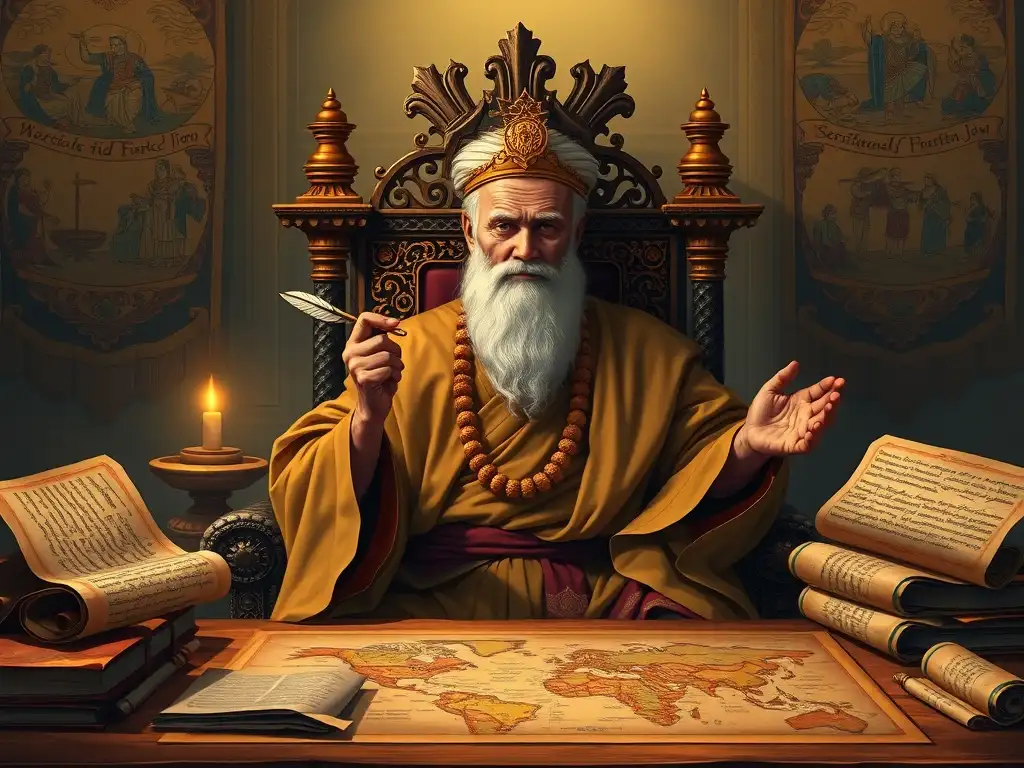
The Arthashastra, attributed to Kautilya (also known as Chanakya), stands as one of the most significant ancient texts on statecraft and economics. To fully appreciate its legal insights, it is vital to understand the historical context in which Kautilya wrote this treatise. The Arthashastra emerges from a period of political turbulence and transformation in ancient India, particularly during the 4th century BCE. This was a time marked by the decline of the Nanda Empire and the rise of the Maurya Empire, which would become one of the largest empires in Indian history.
The Life and Times of Kautilya
Kautilya was born in a Brahmin family in the region of present-day Bihar. His early life is shrouded in myth, but historical accounts suggest he was a learned scholar with a deep understanding of philosophy, economics, and politics. After being humiliated by the Nanda ruler, he dedicated his life to overthrowing the dynasty. His strategic acumen and political expertise led him to become the chief advisor to Chandragupta Maurya, the founder of the Maurya Empire.
Kautilya's experiences in the royal courts and his observations of political machinations significantly influenced his writing. The Arthashastra is not just a manual for rulers; it reflects Kautilya’s own experiences and insights into human nature, governance, and the intricacies of power dynamics. He emphasized realpolitik, advocating for pragmatic approaches over idealistic notions, which was revolutionary for its time.
The political landscape of ancient India during Kautilya's lifetime was characterized by fragmentation and competition among various regional powers. The Nanda Empire, once dominant, had begun to weaken, allowing emerging leaders like Chandragupta to challenge established authority. This era was marked by:
- Frequent Wars: The struggle for power among local rulers resulted in continuous conflicts, which Kautilya addressed in his treatise.
- Economic Challenges: Trade routes were often disrupted, impacting the economy. Kautilya’s insights into economics within the Arthashastra provide guidance on resource management and wealth generation.
- Social Stratification: Society was divided into various classes, with Brahmins, Kshatriyas, Vaishyas, and Shudras playing distinct roles. Kautilya’s legal insights also touch upon the duties and responsibilities of these classes.
Kautilya’s Arthashastra serves as a response to this complex political and social milieu, offering a comprehensive framework for governance, legal principles, and administrative practices. By analyzing the text through the lens of its historical context, one can appreciate the depth of Kautilya’s legal insights, which have influenced political thought and legal systems well beyond ancient India.
The Arthashastra embodies the legal wisdom of Kautilya, reflecting his life experiences and the dynamic political environment of his time, making it a cornerstone of ancient Indian legal texts and an enduring source of legal insights.
Key Themes in the Kautilya Arthashastra
Governance and Political Philosophy
The Kautilya Arthashastra, authored by the ancient Indian philosopher Kautilya (also known as Chanakya), is a foundational text in the realm of political science and governance. One of its central themes is the intricate relationship between governance and political philosophy. Kautilya emphasizes that a ruler must possess wisdom and strategic insight to maintain stability and prosperity within the state.
Kautilya advocates for a pragmatic approach to governance, prioritizing statecraft and realpolitik over idealism. He outlines several key principles that underpin effective governance:
- The Mandate of the Ruler: Kautilya asserts that a ruler's primary duty is to ensure the welfare of the state and its citizens. This involves not only the protection of the realm but also the promotion of economic and social well-being.
- The Role of Advisors: Kautilya stresses the importance of having a council of ministers and wise advisors. The ruler should select individuals based on their expertise and loyalty, fostering a collaborative environment for decision-making.
- Use of Intelligence: A significant aspect of Kautilya's governance philosophy is the emphasis on intelligence gathering. He advocates for a well-organized espionage system to acquire vital information about enemies and allies alike, which is crucial for making informed political decisions.
Through these themes, Kautilya presents a comprehensive view of governance that blends morality with practical considerations, making the Kautilya Arthashastra an invaluable resource for modern political leaders.
Economic Strategies and Resource Management
In addition to governance, the Kautilya Arthashastra elaborates extensively on economic strategies and resource management, highlighting the importance of a well-structured economy for the stability of the state. Kautilya's economic insights are notable for their relevance and applicability even in contemporary contexts. Key economic themes include:
- Agricultural Policies: Kautilya emphasizes the significance of agriculture as the backbone of the economy. He advocates for policies that enhance agricultural productivity, including irrigation projects and land management practices.
- Trade and Commerce: The text outlines the importance of fostering trade relations with neighboring states. Kautilya proposes the establishment of trade routes and the regulation of markets to ensure fair trade practices and economic growth.
- Taxation: Kautilya provides a detailed analysis of taxation, arguing for a balanced approach that avoids overburdening citizens while ensuring sufficient state revenue. He categorizes taxes based on their nature—land tax, trade tax, and income tax—ensuring that each sector contributes fairly to the state's coffers.
- Resource Allocation: Efficient resource management is a recurring theme. Kautilya stresses the importance of utilizing natural resources judiciously, advocating for sustainable practices that prevent resource depletion.
Kautilya's insights into economic strategies demonstrate his understanding of the interconnectedness of governance and economics, underscoring the need for a holistic approach to statecraft.
Legal Framework and Justice System
The Kautilya Arthashastra also serves as a significant legal text, providing a detailed legal framework and insights into the justice system of ancient India. Kautilya's legal philosophy is grounded in the principles of fairness, deterrence, and social order. Some pivotal aspects of his legal insights include:
- Law as a Tool for Governance: Kautilya posits that laws should serve as instruments for maintaining order and justice within society. He emphasizes that the ruler must enforce laws consistently to uphold the integrity of the state.
- Judiciary and Legal Procedures: Kautilya outlines the structure of the judiciary, including various courts and legal officers responsible for adjudicating disputes. He advocates for a clear legal process, ensuring that justice is accessible to all citizens.
- Punishments and Deterrence: The text addresses the necessity of punishments as a means to deter crime. Kautilya categorizes offenses and prescribes appropriate penalties, emphasizing the importance of proportionality in punishment to maintain social order.
- Role of Ethics in Law: While Kautilya is pragmatic, he acknowledges the role of ethics in the legal system. He argues that a just society is built on ethical foundations, and rulers must exemplify ethical behavior to inspire their subjects.
Through these legal insights, the Kautilya Arthashastra provides a comprehensive understanding of the legal principles that governed ancient Indian society, showcasing Kautilya's profound contributions to legal theory and practice.
Legal Insights from Kautilya's Arthashastra
Principles of Law and Justice
Kautilya's Arthashastra is not merely a treatise on governance; it is also a profound source of legal insights that reflect the principles of law and justice in ancient India. At its core, Kautilya emphasizes that law is the backbone of a stable society. He articulates that justice must be rooted in the welfare of the state and its citizens. This principle is encapsulated in the famous aphorism:
“The welfare of the people is the ultimate aim of law.”
Kautilya's approach to law is pragmatic, focusing on the need for laws to adapt to the changing circumstances of society. He advocates for a legal system that is both flexible and robust, with laws that serve the interests of the state while ensuring fairness. Key principles include:
- Equity and Fairness: Kautilya insists that laws should be applied equally to all, regardless of their status. This principle aligns with the notion of dharma, or moral duty, which was integral to ancient Indian philosophy.
- Preventive Justice: Rather than solely punishing wrongdoers, Kautilya highlights the importance of preventing crime through effective governance and social order.
- Utilitarian Approach: The laws are designed to promote the greater good, balancing individual rights with societal needs.
These principles point to a sophisticated understanding of law as a dynamic tool for governance rather than a static set of rules.
Role of the King in Upholding Law
In the Arthashastra, Kautilya delineates the pivotal role of the king as the protector and enforcer of law. The king is not merely a ruler but a custodian of justice, responsible for maintaining order and safeguarding the welfare of the state. Kautilya posits that:
- Moral Authority: The king must embody the principles of justice and equity, setting a moral example for his subjects. This moral authority is crucial for the legitimacy of his rule.
- Implementation of Law: Kautilya outlines that the king is tasked with the establishment of a legal framework and the appointment of judges to administer justice. He emphasizes the need for trained officials who can interpret and apply the law impartially.
- Judicial Oversight: The king has the right to intervene in judicial matters to ensure that justice is served. This oversight is meant to prevent corruption and abuse of power within the legal system.
Kautilya's perspective underscores the interconnectedness of governance and law, asserting that a ruler's effectiveness is measured by his ability to uphold justice.
Punishments and Legal Procedures
Kautilya's Arthashastra provides detailed insights into punishments and legal procedures, reflecting a comprehensive understanding of criminology and deterrence. The text categorizes offenses and prescribes corresponding penalties, which serve as a deterrent against wrongdoing. Key aspects include:
- Categorization of Offenses: Kautilya classifies crimes into various categories, ranging from minor infractions to major offenses, each with specific legal repercussions. This classification allows for proportionality in punishment.
- Types of Punishments: Punishments in the Arthashastra range from fines and restitution to corporal punishment and death penalties. Kautilya argues that the severity of the punishment should correspond to the gravity of the crime, following the principle of retaliation:
- Fines: Common for minor offenses, promoting restitution.
- Corporal Punishment: Used for serious offenses where deterrence is necessary.
- Capital Punishment: Reserved for the gravest crimes, reflecting the utmost societal condemnation.
- Legal Procedures: Kautilya emphasizes the importance of clear legal procedures to ensure fair trials. He advocates for the collection of evidence, examination of witnesses, and the right for the accused to defend themselves. This procedural fairness is essential for maintaining public trust in the legal system.
Kautilya’s Arthashastra offers a rich tapestry of legal insights that not only reflect the values of ancient Indian society but also provide foundational concepts that resonate with modern legal principles. Through his work, Kautilya has left an indelible mark on the understanding of law, governance, and justice.
Comparison with Other Ancient Legal Texts

Kautilya's Arthashastra vs. Manu Smriti
Kautilya's Arthashastra and the Manu Smriti are two cornerstone texts in the examination of ancient Indian legal and political philosophy. While both texts provide valuable insights into governance, law, and societal norms, their approaches and emphases differ significantly.
- Authorship and Context
- The Arthashastra, attributed to Kautilya (or Chanakya), was composed in the 4th century BCE, primarily focused on statecraft, economics, and military strategy.
- In contrast, the Manu Smriti, attributed to Manu, dates back to around 200 BCE to 200 CE and serves as a dharmashastra, outlining laws and moral codes for individuals and society.
- Scope and Focus
- Arthashastra: The primary focus is on the pragmatic aspects of governance, including administration, diplomacy, and economic management. It presents a realistic view of power and the often harsh realities of political life.
- Manu Smriti: This text emphasizes moral and ethical guidelines, societal duties, and the ideal conduct of individuals within various social classes (varna). It is more prescriptive, outlining the duties and responsibilities of individuals based on their caste.
- Legal Framework
- Kautilya's approach is utilitarian, where laws are tools for achieving state objectives. He advocates for flexibility and adaptability in legal matters, emphasizing results over rigid adherence to laws.
- Conversely, the Manu Smriti establishes fixed laws and moral codes that are expected to be followed, thus promoting a strong sense of justice based on dharma.
- Influence on Society
- The Arthashastra has been influential in shaping the strategies of rulers and political leaders, emphasizing the importance of realpolitik.
- The Manu Smriti, on the other hand, has had a lasting impact on Hindu legal and social practices, influencing personal law and societal structures in India for centuries.
Legal Insights from Arthashastra and Their Modern Relevance
The legal insights derived from Kautilya's Arthashastra continue to resonate in modern governance and legal frameworks. Here are some key insights and their relevance today:
- Pragmatism in Law and Governance:
- Kautilya advocates for a pragmatic approach to law, suggesting that the ends often justify the means. This perspective encourages modern leaders to consider the broader implications of laws rather than adhering strictly to tradition.
- Adaptability of Laws:
- The Arthashastra emphasizes the need for laws to evolve with changing societal dynamics. In contemporary legal systems, this insight underscores the importance of reforming laws to reflect current realities and needs.
- Strategic Use of Law:
- Kautilya's insights into the strategic use of law for governance can be applied in modern contexts, where legal frameworks are often leveraged for political advantage or social order.
- Economic Considerations:
- The text's focus on the economic implications of legal decisions highlights the necessity for modern lawmakers to consider the economic impact of their legislation on society as a whole.
- Balance of Power:
- Kautilya discusses the balance of power among various entities within the state. This principle is relevant today in discussions on checks and balances within government systems to prevent the abuse of power.
Kautilya's Arthashastra provides profound legal insights that are not only pivotal for understanding ancient Indian governance but also remain applicable in contemporary legal and political discourses. The blend of realism and strategic analysis found in the Arthashastra continues to inform modern approaches to law and governance, making it a timeless resource in the study of legal systems.
Influence of the Arthashastra on Subsequent Legal Systems
The Arthashastra, authored by Kautilya (or Chanakya), is a seminal text in ancient Indian political and legal philosophy. Its profound insights not only shaped the governance of its time but also left a lasting imprint on subsequent legal systems in India and beyond. The text is structured as a manual for rulers, emphasizing the importance of law, ethics, and statecraft.
Impact on Later Indian Legal Codes
The influence of the Kautilya Arthashastra on later Indian legal codes is evident in several ways:
- Integration of Law and Politics: Kautilya emphasized the interdependence of law and governance. This perspective was echoed in later legal texts, where laws were not seen in isolation but as tools to strengthen the state. For instance, the Manu Smriti, which emerged later, incorporated elements of statecraft that resonate with Kautilya's teachings.
- Practical Governance: The Arthashastra's pragmatic approach to governance laid the groundwork for subsequent legal frameworks. Its focus on realpolitik and the necessity of adapting laws to changing circumstances can be seen in later codes that prioritized practicality over rigid adherence to rules.
- Economic Regulation: Kautilya's discussions on economic policies, taxation, and trade provided a foundation for later legal frameworks that governed economic activities. The synthesis of economic principles with legal norms in texts such as the Yajnavalkya Smriti reflects this influence.
- Judicial Procedures: The Arthashastra outlines various judicial procedures, including the roles of judges and the administration of justice. These concepts were further refined in subsequent texts, ensuring a more structured approach to legal adjudication in ancient Indian society.
- Ethical Governance: Kautilya’s insistence on ethical governance and the moral responsibilities of rulers influenced later legal codes, which emphasized dharma (righteousness) in governance. This ethical dimension became a hallmark of Indian legal philosophy.
As a result, the legal insights found in the Kautilya Arthashastra permeated through the layers of Indian jurisprudence, shaping not only the laws themselves but also the underlying principles that guided their application.
Global Influence of Kautilya's Legal Insights
The reach of Kautilya's legal insights extends beyond the borders of India, influencing various global legal and political thought systems:
- Comparison with Western Political Treatises: The Arthashastra is often compared with Machiavelli's The Prince due to their shared focus on statecraft and power dynamics. Both texts provide a candid analysis of political maneuvers, emphasizing the importance of shrewdness and strategy in governance.
- Colonial and Post-Colonial Studies: Scholars during the colonial period examined the Arthashastra to understand the governance models in India. This interest continued post-independence, with modern political theorists drawing upon Kautilya's insights to address contemporary issues in governance, diplomacy, and legal frameworks.
- International Relations: Kautilya's principles of diplomacy, warfare, and alliances have been referenced in modern international relations theory. His views on realpolitik resonate with contemporary political strategists, further extending the relevance of his ideas.
- Cross-Cultural Legal Studies: The Arthashastra's emphasis on law as a governing principle has attracted the attention of legal scholars worldwide. Its discussions on justice, governance, and economics are found in comparative legal studies that seek to understand the evolution of law across cultures.
- Adaptation in Modern Governance: Elements of Kautilya's legal philosophy are reflected in modern governance systems, particularly in countries that value strategic statecraft and economic regulation. His insights on the balance between authority and ethics remain pertinent to contemporary legal discourse.
The Kautilya Arthashastra serves as a foundational text that continues to inspire and inform legal thought and practice, both in India and across the globe. Its enduring legacy underscores the relevance of ancient wisdom in addressing modern challenges within legal systems.
Conclusion: Legacy of Kautilya's Arthashastra

Kautilya's Arthashastra stands as a monumental text in the landscape of ancient Indian legal thought, encapsulating a wealth of knowledge that extends beyond mere governance and administration. Its legacy is profound, influencing not only the legal frameworks of its time but also shaping the political and ethical considerations in governance long after its inception. The Arthashastra offers insights into the intricate balance between law, morality, and politics, illustrating how these elements intertwine to create a stable society.
The text emphasizes the importance of pragmatism in governance, advocating for laws that are adaptable to the changing dynamics of society. Its multifaceted approach to statecraft, economics, and military strategy demonstrates Kautilya's understanding of the complexities of human behavior and societal needs. By addressing issues such as justice, property rights, and the duties of rulers and citizens, the Arthashastra provides a comprehensive legal framework that resonates through the ages.
Reflection on Ancient Indian Legal Wisdom
The Arthashastra is not merely a political treatise; it is a reflection of the sophisticated legal wisdom that characterized ancient Indian civilizations. Kautilya's work integrates philosophical insights with practical governance, revealing the depth of legal thought during his time.
- Ethics and Governance: Kautilya advocated for a ruler to embody ethical principles while simultaneously employing shrewd strategies to maintain power. His perspective posits that ethical governance is essential for the stability of a kingdom, yet it should not compromise the efficacy of rule.
- Legal Frameworks: The text presents a structured approach to law, detailing the roles and responsibilities of various stakeholders within society. It examines the rights and obligations of citizens, the mechanisms for dispute resolution, and the importance of a codified legal system for societal order.
- Social Order: Kautilya's insights into social hierarchies and roles illustrate the importance of maintaining order within a diverse society. His recognition of the complexities of human relationships underlines the necessity for laws that are just and equitable.
This rich tapestry of ideas highlights how ancient Indian legal wisdom remains relevant, providing a philosophical foundation that can inform modern legal systems.
Continuing Relevance of Kautilya's Teachings in Contemporary Legal Thought
The teachings of Kautilya in the Arthashastra continue to resonate in today’s legal discourse, offering valuable insights that can be applied across various contemporary contexts.
- Pragmatism in Law: Kautilya’s emphasis on practical solutions to legal and governance challenges mirrors modern legal realism, which prioritizes the application of law in real-world scenarios rather than strict adherence to theoretical frameworks.
- Ethics in Leadership: In an era where ethical governance is paramount, Kautilya's principles serve as a guide for leaders to navigate the complexities of power dynamics while upholding justice and integrity.
- Legal Flexibility: The adaptability of Kautilya’s legal insights speaks to the necessity for contemporary legal systems to evolve in response to societal changes. His recognition that laws must reflect the values and realities of the time is a crucial principle for modern legal scholars and practitioners.
- Interdisciplinary Approach: Kautilya’s integration of economics, politics, and ethics into legal discussions encourages a holistic view of law that is increasingly favored in today’s interdisciplinary legal studies.
Kautilya’s Arthashastra not only stands as a testament to the advanced legal thought of ancient India but also continues to inspire and inform contemporary legal frameworks. Its teachings on governance, ethics, and law endure, underscoring the timeless nature of Kautilya's legal insights.
Further Reading and Resources
Recommended Texts on Kautilya and the Arthashastra
The Arthashastra, attributed to Kautilya (also known as Chanakya), is a critical text in understanding ancient Indian legal and political thought. For those interested in delving deeper into Kautilya's legal insights, the following texts are highly recommended:
- Kautilya's Arthashastra (translated by R. Shamasastry): This seminal translation provides a comprehensive view of the text, retaining its original essence while making it accessible to modern readers.
- The Arthashastra: A New Translation: (by L.N. Rangarajan): This version offers annotations and interpretations that highlight the relevance of Kautilya's thoughts in contemporary contexts.
- Kautilya's Arthashastra: An Ancient Indian Treatise on Statecraft: (by N. Jayapalan): This book contextualizes Kautilya's work within the broader spectrum of ancient Indian governance and law.
- The Arthashastra: A Treatise on Statecraft and Economic Policy: (edited by K. Ganesh): This compilation includes essays by various scholars that explore different facets of the Arthashastra, from economic strategies to legal implications.
These texts not only provide insights into Kautilya's perspectives but also foster a deeper understanding of the intricate legal landscape of ancient India.
Online Resources for Exploring Ancient Indian Legal Texts
In addition to traditional texts, several online resources can enhance your exploration of Kautilya's Arthashastra and other ancient Indian legal texts:
- Digital Library of India: A vast repository of ancient texts, including various translations and interpretations of the Arthashastra, accessible for free.
- Internet Archive: This platform offers scanned versions of several editions of the Arthashastra, allowing readers to compare different translations and commentaries.
- Academia.edu: A network where scholars publish papers; searching for "Kautilya" or "Arthashastra" yields numerous academic articles that analyze the text from various perspectives, including legal, economic, and philosophical viewpoints.
- YouTube: Various educational channels discuss Kautilya's legal insights, providing summaries, interpretations, and discussions about the relevance of the Arthashastra in modern times.
By utilizing these resources, readers can gain a multifaceted understanding of Kautilya's contributions to legal thought and the broader implications of ancient Indian legal texts.
Frequently Asked Questions
What is the Arthashastra?
The Arthashastra is an ancient Indian treatise attributed to Kautilya, also known as Chanakya, that discusses various aspects of governance, economics, and military strategy.
How does the Arthashastra provide legal insights?
The Arthashastra offers legal insights by detailing laws and regulations governing statecraft, including the administration of justice and the role of the king in enforcing laws.
Who was Kautilya and what was his significance?
Kautilya, a key figure in ancient Indian history, was a philosopher, economist, and statesman known for authoring the Arthashastra, which significantly influenced political theory and practice in India.
What are the core themes present in the Arthashastra?
The core themes of the Arthashastra include political strategy, law, economics, and the importance of diplomacy in governance, reflecting the complexities of ruling a state.
How does the Arthashastra compare to modern legal systems?
The Arthashastra provides a comprehensive framework for governance and law that can be compared to modern legal systems, emphasizing the balance between justice and pragmatism in state affairs.
Final Reflection: Timeless Legal Insights from Kautilya's Arthashastra
The teachings of Kautilya's Arthashastra resonate profoundly in today's complex legal landscape, reminding us that wisdom transcends time and culture. As we navigate the intricacies of modern governance, the principles laid out in this ancient text provide invaluable insights into the art of statecraft and legal strategy. The relevance of Kautilya's work is not merely historical; it challenges us to rethink our approach to law and leadership in an ever-evolving world.
The influence of Kautilya's legal insights extends far beyond the realm of academia; they permeate our social and cultural fabric, shaping our understanding of justice and governance. As we witness the ongoing struggles for effective leadership and ethical governance, it becomes clear that the lessons from the Arthashastra are more pertinent than ever. The greatest warrior is not the one who wins battles, but the one who wins without fighting.
This quote encapsulates the essence of Kautilya's philosophy, urging us to consider the power of strategy and wisdom in resolving conflicts and achieving justice.
As you reflect on the teachings of the Arthashastra, I invite you to embrace the timeless wisdom of Kautilya in your own life and endeavors. Consider how these legal insights can inform your decisions, whether in personal relationships, professional settings, or civic engagement. Let the principles of strategy, ethics, and governance inspire you to become a more thoughtful leader and a conscientious citizen, fostering a society where wisdom prevails over conflict.
Unlock the Secrets of Ancient Strategy!
Thank you for diving into the profound insights of the Arthashastra by Kautilya. We hope this exploration has illuminated the timeless wisdom of governance, strategy, and economics that continues to resonate today. Now, it's time to take action and deepen your understanding of this invaluable text!
Here are some steps you can take to further enrich your journey:
- Immerse Yourself in Kautilya's Teachings: Obtain a copy of the Arthashastra and reflect on its principles. Challenge yourself to apply one strategy from the text in your daily decision-making.
- Join the Conversation: Share your thoughts on social media using the hashtag #KautilyaWisdom. Engage with others who are exploring this ancient text and exchange insights.
- Delve Deeper into Ancient Philosophies: Explore other influential works from ancient India or related texts on governance from different cultures to gain broader perspectives.
What aspect of Kautilya’s Arthashastra intrigues you the most, and how do you plan to apply it in your own life?