
The Artistic Fusion of Form and Content in Classical Indian Poetry

Welcome to Ancient India History, where we embark on a captivating journey through the rich tapestry of ancient Indian civilizations. In this exploration, we delve into the intricate world of Classical Indian poetry analysis, uncovering the profound artistic fusion of form and content that defines this remarkable literary tradition. As you navigate through the layers of history, culture, and creativity, prepare to be intrigued by the voices that have shaped India's literary landscape.
Join us in unraveling the beauty and depth of poetic expression, and discover the timeless relevance of these masterpieces that extend far beyond mere epics. Let the adventure begin!
Introduction to Classical Indian Poetry Analysis
Classical Indian poetry is a profound and multifaceted realm that reflects the rich tapestry of ancient Indian civilization. This poetic tradition encompasses a wide array of themes, styles, and forms, showcasing the deep cultural, spiritual, and intellectual heritage of India.
The analysis of classical Indian poetry reveals not only the aesthetic qualities inherent in the verses but also the intricate relationship between form and content that defines this literary genre. Poets such as Kalidasa, Bhavabhuti, and Bhasa have left an indelible mark on this tradition, employing various techniques to convey complex emotions and ideas, thus offering a unique lens through which we can understand the ethos of their times.
Overview of Classical Indian Poetry
Classical Indian poetry spans several centuries and is characterized by its diverse forms, including lyric, epic, and dramatic poetry. The Sanskrit poetic tradition, primarily flourishing from the 1st century BCE to the 12th century CE, is notable for its sophisticated use of meter, rhythm, and figurative language. Key features of classical Indian poetry include:
- Alankara (figurative embellishment)
- Rasa (emotional flavor)
- Dhvani (suggestion)
These elements work together to create a rich aesthetic experience, allowing poets to articulate their thoughts and feelings with remarkable depth and nuance. Furthermore, the integration of mythology and philosophy into poetry serves to elevate its significance, connecting the personal with the universal.
Importance of Form and Content in Poetry
The relationship between form and content in classical Indian poetry is crucial for its overall impact. Form refers to the structure and style of the poem, while content encompasses the themes and messages conveyed. The interplay between these aspects can be observed in various ways:
- Metrical Patterns: Different metrical forms, such as the Shloka or Gatha, shape the rhythm and flow of the poetry, enhancing its musicality.
- Imagery and Symbolism: Poets often utilize vivid imagery and symbolic language to evoke emotions and provoke thought, demonstrating how content can be enriched through careful structuring.
- Cultural Context: The historical and social context of the time significantly influences both the form and content, reflecting the values, beliefs, and artistic sensibilities of the era.
By analyzing these dimensions, we gain insights into the artistic genius of classical Indian poets who navigated the complexities of expression, effectively merging form and content to create timeless works of art.
Historical Context of Classical Indian Poetry
Understanding classical Indian poetry necessitates an exploration of its historical context, which encompasses its origins and the various influences that shaped its evolution.
Origins of Indian Poetic Traditions
The roots of Indian poetry can be traced back to ancient texts such as the Vedas and Upanishads, where hymns and philosophical verses laid the groundwork for later poetic forms. The Sanskrit drama and Mahakavya (epic poetry) that emerged during the Gupta period further refined these traditions, establishing a rich literary culture. The Natya Shastra, attributed to Bharata Muni, is a seminal work that delineates the principles of dramatic art, which also influenced poetic composition by emphasizing the significance of rasa and bhava (emotional states).
Influences on Classical Poetry from Various Periods
Throughout its history, classical Indian poetry has absorbed influences from various cultural and linguistic traditions. Notable periods include:
- The Gupta Empire (c. 320-550 CE): This era is often referred to as the "Golden Age" of India, marked by advancements in arts and literature.
- The Bhakti Movement (c. 7th-17th century CE): This movement introduced devotional poetry that emphasized personal connection with the divine.
- The Mughal Influence (c. 16th-18th century CE): Persian and Urdu poetry began to interweave with classical forms, leading to a fusion of styles and themes.
The artistic fusion of form and content in classical Indian poetry is not only a hallmark of its beauty but also a reflection of the rich cultural heritage that has shaped its evolution through the ages. The following sections will delve deeper into specific aspects of this intriguing tradition, providing a comprehensive analysis of classical Indian poetry.
Key Elements of Form in Classical Indian Poetry
Classical Indian poetry is a rich tapestry woven with intricate forms and structures that create a unique aesthetic experience. Understanding the key elements of form is essential for appreciating the depth of meaning in these works. The interplay of structure, meter, rhyme, and literary devices not only enhances the beauty of the poetry but also serves to convey complex themes and emotions.
Structure and Meter in Classical Indian Poems
The structure of classical Indian poetry is often defined by specific forms that dictate the arrangement of lines and stanzas. One of the most notable forms is the Shloka, which typically consists of four lines and follows a syllabic count that varies according to the specific style. The Anushtubh meter, consisting of 32 syllables per verse, is the most prevalent in classical texts, including the Mahabharata and Ramayana.
In addition to syllable count, the rhythm and cadence of poetry are crucial. The use of matras (short and long syllables) creates a musical quality, guiding the recitation and enhancing the emotive power of the verses. This rhythmic structure serves to not only please the ear but also to reinforce the thematic elements, offering a deeper engagement for the reader or listener.
Rhyme Schemes and Their Significance
Rhyme schemes in classical Indian poetry are often less rigid compared to Western traditions, focusing more on the overall sound and flow rather than strict end rhymes. Many poems employ internal rhymes or assonance, creating a harmonious sound that enhances the lyrical quality.
The significance of these rhyme schemes lies in their ability to evoke emotions and create connections between lines and ideas. For instance, the use of repetition and varied rhyme patterns can emphasize key themes or sentiments, drawing attention to the poet's intended message. This artistic choice reflects the interconnectedness of sound and meaning, a hallmark of classical Indian poetic tradition.
Use of Literary Devices: Metaphor, Simile, and Symbolism
Classical Indian poetry is rich in literary devices that deepen the reader's understanding and emotional response. Metaphors and similes are frequently employed to draw vivid comparisons and create imaginative landscapes. For example, the use of natural imagery, such as the moon or rivers, often symbolizes love, longing, or the passage of time.
Symbolism plays a crucial role as well, with common symbols representing broader philosophical concepts. The lotus, for instance, is a recurring symbol of purity and divine beauty, frequently appearing in various contexts throughout the poetry. This layered use of literary devices invites readers to explore multiple interpretations, enriching their engagement with the text.
Exploring Content in Classical Indian Poetry
Beyond the formal aspects, the content of classical Indian poetry reflects the socio-cultural landscape of its time. Analyzing the themes and subjects provides insights into the values, beliefs, and experiences that shaped these literary works.
Themes and Subjects in Classical Indian Poetry
Classical Indian poetry covers a vast array of themes, ranging from devotion and love to nature and philosophy. The Bhakti movement, for example, emphasized personal devotion to deities, resulting in poetry that expresses deep emotional connections with the divine.
Themes of heroism and valor are also significant, often depicted in poetic narratives that celebrate historical figures and their deeds. Additionally, nature serves as a recurrent subject, representing not only beauty but also existential reflections on life and mortality. This multifaceted approach to themes allows poets to engage with universal human experiences, making their works timeless.
Cultural and Social Reflections in Poetry
Classical Indian poetry is a mirror reflecting the cultural and social dynamics of its era. Many poems critique societal norms, explore the complexities of human relationships, and address moral dilemmas. For instance, the Sanskrit poets often highlighted the roles and expectations of women in society, providing commentary on gender dynamics and social justice.
Furthermore, the poetry often incorporates elements of spirituality and philosophy, revealing the interconnectedness of life, art, and the cosmos. By delving into these cultural and social reflections, readers gain a deeper understanding of the historical context and the lasting impact of classical Indian poetry on Indian civilization.
The Interplay of Form and Content in Notable Works
In classical Indian poetry, the relationship between form and content is intricate and deeply significant. Poets skillfully employed various metrics, such as shlokas and verses, to enhance the thematic depth of their works. The structure often dictated the rhythm and flow, allowing the content to resonate more profoundly with the audience. This fusion is evident in numerous classical texts, where the aesthetic appeal of the form complements the philosophical and emotional layers of the content.
For instance, the Mahabharata and Ramayana are not merely narrative poems; they are crafted with specific meters that reflect the mood and tone of the storytelling. The use of chhandas (metre) in these epics serves a dual purpose: it provides a musical quality and reinforces the moral and ethical teachings embedded within the narratives. Moreover, poets like Kalidasa exemplified this interplay through their works, where the beauty of nature described in Raghuvamsha is mirrored by the lyrical elegance of the verse.
Analysis of Key Classical Indian Poets
Classical Indian poetry showcases a variety of voices, each contributing to the rich tapestry of literary expression. Key poets include:
- Kalidasa: Often regarded as one of the greatest Sanskrit poets, Kalidasa’s works, such as Shakuntala, highlight the fusion of lyrical beauty and emotional depth. His mastery over shlokas evokes a vivid imagery that often reflects the natural world and human emotions.
- Bhartrihari: Known for his Subhashitas (wise sayings), Bhartrihari focused on the philosophical aspects of life. His poems are structured with precision, conveying profound insights through concise and impactful language.
- Meghaduta (Cloud Messenger): In this poem, Kalidasa employs a unique narrative style, intertwining the form of a dialogue with a rich emotional content. The cloud becomes a messenger, highlighting themes of love and longing, effectively showcasing the interplay of form and thematic substance.
Case Studies of Influential Poems
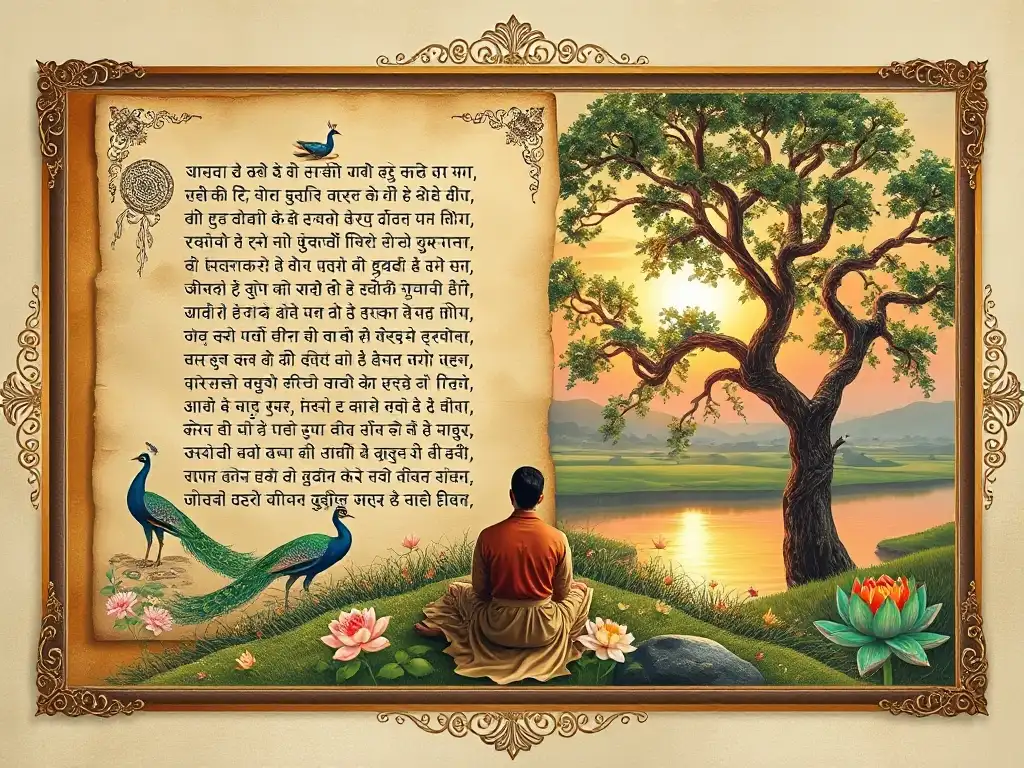
One of the most celebrated works in classical Indian poetry is Kalidasa's Meghaduta. This poem exemplifies the artistic fusion of form and content through its use of uttarakanda (the second part) structure, where the cloud serves as a metaphor for longing and communication. The vivid descriptions of the landscape create a sensory experience for the reader, enhancing the emotional weight of the protagonist's message.
Another notable poem is Bhartrihari's Niti Shataka, which consists of 100 verses that impart wisdom on ethical conduct and society. The concise structure of each verse allows for a direct transmission of thought, making the philosophical content more accessible and memorable.
The Impact of Classical Indian Poetry on Future Literary Traditions
The legacy of classical Indian poetry extends far beyond its time, influencing various literary movements and cultural expressions across generations. The thematic richness and formal intricacies laid the groundwork for future poets and writers.
Influence on Subsequent Poetic Movements
Classical Indian poetry has significantly impacted later literary traditions, particularly in the use of metaphor and imagery. The Bhakti movement in medieval India drew inspiration from the devotional and emotional aspects of earlier poets. Figures like Kabir and Mirabai adopted similar lyrical styles while infusing their works with personal devotion and socio-religious commentary.
Additionally, the Riti tradition, which emerged in the later centuries, reflected the influence of classical poetry's aesthetic principles. Poets like Bihari and Ghalib incorporated intricate metaphors and stylistic elements that can be traced back to their classical predecessors, creating a continuum of poetic expression.
Preservation of Cultural Heritage through Poetry
Classical Indian poetry serves as a vital repository of cultural heritage, encapsulating historical narratives, philosophical thoughts, and societal norms. Through oral traditions and later written texts, poets preserved the essence of ancient Indian civilization. Works such as The Ramayana and The Mahabharata not only provided entertainment but also acted as moral compasses, guiding generations with their teachings.
Moreover, the poetic forms and techniques developed during this era continue to be celebrated in modern literature, illustrating the lasting impact of classical Indian poetry. The thematic concerns of love, nature, and spirituality resonate universally, ensuring that the artistic fusion of form and content remains relevant in contemporary literary discourse.
Conclusion: The Enduring Legacy of Classical Indian Poetry
Classical Indian poetry stands as a testament to the rich literary traditions of ancient India, showcasing a remarkable fusion of form and content that continues to resonate through the ages. This legacy is not merely an echo of the past; it influences contemporary literature, art, and cultural expressions. The intricate structures, such as prosody and meter, combined with profound thematic explorations of love, nature, spirituality, and philosophy, create a timeless appeal that invites ongoing analysis and appreciation.
The depth of emotion and intellectual rigor present in classical Indian poetry serves as a bridge connecting past and present, offering insights into the human experience. As we delve into the nuances of these poetic forms, we uncover layers of meaning that enrich our understanding of not only the texts themselves but also the cultural and historical contexts in which they were produced. This enduring legacy encourages readers and scholars alike to explore and reinterpret these works, ensuring that classical Indian poetry remains a vibrant part of the literary landscape.
Summary of Key Insights on Form and Content
In examining classical Indian poetry, several key insights emerge regarding the intricate relationship between form and content:
- Structural Complexity: The use of various meters and rhyme schemes, such as shlokas, prabandhas, and sargams, showcases the meticulous craftsmanship of poets. Each structure serves a purpose, enhancing the thematic expression and emotional resonance of the work.
- Thematic Depth: Poets utilized vivid imagery, symbolism, and allegory to convey complex ideas, often intertwining philosophical and spiritual themes with everyday experiences. This blending of the mundane and the sublime invites readers to engage on multiple levels.
- Cultural Context: The socio-political landscapes of the time significantly influenced poetic content. For instance, the exploration of courtly life, love, and devotion reflected the values and norms of ancient Indian society, providing a window into the lives of its people.
- Intertextuality: Many classical works reference or respond to earlier texts, creating a rich tapestry of dialogue across generations. This intertextuality not only enhances the depth of individual poems but also situates them within a broader literary tradition.
These insights underline the importance of both form and content in understanding classical Indian poetry, revealing how they work in harmony to convey profound truths and cultural narratives.
The Relevance of Classical Poetry Analysis in Modern Times
The analysis of classical Indian poetry remains highly relevant in contemporary society for several reasons:
- Cultural Heritage: Studying these poetic forms allows for a deeper appreciation of India's cultural heritage. As globalization continues to influence contemporary literature, understanding classical texts can provide grounding and a sense of identity.
- Literary Innovation: Modern poets and writers often draw inspiration from classical forms and themes. By analyzing classical poetry, contemporary artists can innovate and reimagine traditional structures, infusing them with new meaning and relevance.
- Emotional and Intellectual Engagement: The exploration of themes such as love, loss, and spirituality in classical poetry resonates with modern audiences. Such themes encourage emotional engagement and reflection, fostering a connection between past and present experiences.
- Interdisciplinary Connections: Classical poetry analysis intersects with various disciplines, including history, philosophy, and religious studies. This interdisciplinary approach enriches our understanding of not just the texts, but also the broader cultural and historical contexts in which they exist.
The study of classical Indian poetry analysis enriches our understanding of literature, culture, and humanity itself. By engaging with these ancient texts, we not only honor their legacy but also explore the timeless themes that continue to shape human thought and expression.
- Introduction to Classical Indian Poetry Analysis
- Overview of Classical Indian Poetry
- Importance of Form and Content in Poetry
- Historical Context of Classical Indian Poetry
- Key Elements of Form in Classical Indian Poetry
- Exploring Content in Classical Indian Poetry
- The Interplay of Form and Content in Notable Works
- Analysis of Key Classical Indian Poets
- Case Studies of Influential Poems
- The Impact of Classical Indian Poetry on Future Literary Traditions
- Conclusion: The Enduring Legacy of Classical Indian Poetry
- What is the significance of Classical Indian poetry in ancient literature?
- How did the Indus Valley civilization contribute to poetry?
- What are some key features of Classical Indian poetry?
- How did the Gupta Empire influence poetry?
- What role does cultural context play in the analysis of Classical Indian poetry?
Frequently Asked Questions
What is the significance of Classical Indian poetry in ancient literature?
Classical Indian poetry is a reflection of cultural values and philosophical beliefs of ancient societies, showcasing the richness of linguistic expression and artistic creativity.
How did the Indus Valley civilization contribute to poetry?
The Indus Valley civilization laid the groundwork for early literary traditions, with its symbols and seals indicating the beginnings of written expression, which influenced later poetic forms.
What are some key features of Classical Indian poetry?
Classical Indian poetry is characterized by its meticulous structure, use of metaphors, and themes that explore love, nature, and spirituality, often blending form and content seamlessly.
How did the Gupta Empire influence poetry?
The Gupta Empire is known as a golden age for arts and literature, where poets like Kalidasa flourished, contributing significantly to the development of poetic forms and themes that resonate today.
What role does cultural context play in the analysis of Classical Indian poetry?
Understanding the cultural context is crucial for analysis, as it provides insight into the historical influences and social norms that shaped the themes and styles of Classical Indian poetry.
Final Reflection: The Timeless Dance of Form and Content in Classical Indian Poetry
The intricate relationship between form and content in classical Indian poetry remains profoundly relevant today, as it reflects the universal human experience of seeking beauty and meaning in our lives. In a world that often prioritizes speed and efficiency, the deliberate craftsmanship of classical Indian poetry serves as a reminder of the power of patience and reflection in artistic expression. This art form invites us to slow down, engage deeply, and appreciate the layers of meaning that can be woven through language.
Classical Indian poetry has not only shaped literary traditions but has also influenced contemporary cultural narratives and social dialogues. The fusion of form and content in these poetic works continues to resonate, inspiring modern poets and artists to explore the depths of their own creative expressions. As poet A.K. Ramanujan once said, Poetry is a way of remembering what it would impoverish us to forget.
This sentiment encapsulates the enduring legacy of classical Indian poetry, urging us to remember the beauty and complexity of our shared human experience.
As you reflect on the insights gleaned from this exploration of classical Indian poetry, consider how you can incorporate these lessons into your own life and creative endeavors. Embrace the art of balance between form and content in your expressions, whether through writing, art, or any other medium. Let the elegance of classical Indian poetry inspire you to find your unique voice and contribute to the rich tapestry of human creativity.
Unleash Your Creativity through Poetry!
Thank you for diving into the rich world of classical Indian poetry with us! You've explored its beautiful fusion of form and content, discovering how these elements come together to create timeless art. Now, it’s time to take your inspiration further.
Here are some powerful steps you can take:
- Write Your Own Poem: Tap into your creativity and express your feelings using the elements you've learned. Don't be afraid to experiment with different styles!
- Join a Poetry Workshop: Connect with fellow poetry enthusiasts to share your work and gain valuable feedback. Look for local listings or consider exploring online platforms.
- Share Your Favorite Poem: Spread the joy of classical Indian poetry by posting your favorite piece on social media and initiating a conversation about its significance to you.
What unique perspective or theme are you inspired to explore in your own poetry after learning about classical Indian forms? **Your voice matters—let's hear it! **