
The Gupta Empire's Contributions to Hinduism and Buddhism


Welcome to Ancient India History, where we embark on a captivating journey through the rich tapestry of ancient Indian civilizations. In this exploration, we delve into the Gupta Empire, a remarkable era that significantly shaped the landscape of religion in India. Prepare to uncover the profound contributions to Hinduism and Buddhism that emerged during this golden age, as we reveal how these ancient beliefs continue to influence modern spirituality.
Join us as we unravel the mysteries of the past and ignite your curiosity about the enduring legacies of the Gupta Empire. Dive deeper to discover how this pivotal period transformed religious thought in ways that resonate even today!
- Introduction to the Gupta Empire and Its Religious Impact
- The Gupta Empire Contributions to Religion: An Overview
- Contributions to Hinduism During the Gupta Empire
- Contributions to Buddhism in the Gupta Empire
- Interactions Between Hinduism and Buddhism under the Gupta Empire
- The Legacy of Gupta Empire Contributions to Religion
- Conclusion: The Gupta Empire's Enduring Influence on Religion in Ancient India
-
Frequently Asked Questions
- What were the main contributions of the Gupta Empire to Hinduism?
- How did the Gupta Empire impact Buddhism?
- What role did art and architecture play in the religious contributions of the Gupta Empire?
- How did the Gupta Empire contribute to the philosophical development of religion?
- What legacy did the Gupta Empire leave regarding religion in India?
- Final Reflection: The Enduring Legacy of the Gupta Empire's Contributions to Religion
- Embrace the Legacy: Elevate Your Knowledge!
Introduction to the Gupta Empire and Its Religious Impact
The Gupta Empire, often hailed as the "Golden Age" of ancient India, was a period marked by remarkable advancements in various fields, particularly religion. Spanning from approximately 320 to 550 CE, this era witnessed a flourishing of culture, science, and philosophy, alongside significant developments in Hinduism and Buddhism.
The empire's contributions to religion not only shaped the spiritual landscape of India but also influenced neighboring regions and cultures. By examining the Gupta Empire's impact on these two major faiths, we can gain a deeper understanding of how it helped to consolidate and transform religious practices and beliefs during this pivotal time in Indian history.
Overview of the Gupta Empire
The Gupta Empire emerged in northern India, founded by Maharaja Sri Gupta. It was characterized by a decentralized structure, allowing local rulers significant autonomy while maintaining a strong central authority. Under rulers like Chandragupta I, Samudragupta, and Chandragupta II, the empire expanded its territory and influence, reaching its zenith in the 5th century CE.
Key features of the Gupta Empire include:
- Political Unity: The Gupta rulers established a relatively peaceful and stable environment, which fostered economic growth and cultural exchanges.
- Cultural Flourishing: This period saw significant advancements in the arts, literature, and sciences, with notable figures such as Kalidasa and Aryabhata emerging.
- Religious Diversity: Although Hinduism was the predominant religion, Buddhism continued to thrive, and the empire was marked by a spirit of tolerance towards various faiths.
The Gupta Empire's unique blend of political stability and cultural flourishing laid the groundwork for its significant contributions to religion, particularly in the realms of Hinduism and Buddhism.
Significance of the Gupta Empire in Ancient Indian History
The Gupta Empire's significance in ancient Indian history extends beyond its political achievements; it played a crucial role in shaping the religious landscape of the subcontinent. During this period, Hinduism underwent a renaissance, with the revival of Vedic traditions and the emergence of important philosophical schools. Key aspects include:
- Promotion of Hinduism: The Gupta rulers actively supported Hindu temples and rituals, leading to a resurgence of Hindu practices and beliefs.
- Buddhism's Flourishing: While Hinduism thrived, Buddhism also experienced a renaissance, with the construction of stupas and monasteries, such as those at Sanchi and Nalanda.
- Integration of Religious Thought: The period saw the synthesis of various religious ideas, blending elements of Hinduism and Buddhism, which contributed to a more inclusive spiritual environment.
The Gupta Empire's contributions to religion not only enriched the spiritual lives of individuals but also laid the foundation for the enduring traditions and practices that continue to influence Hinduism and Buddhism today. Understanding this rich tapestry of religious development is essential to appreciating the broader context of ancient Indian civilization.
The Gupta Empire Contributions to Religion: An Overview

The Gupta Empire, often referred to as the Golden Age of India, played a pivotal role in the development and propagation of religious beliefs, particularly Hinduism and Buddhism. This era, spanning from approximately 320 to 550 CE, was marked by significant advancements in art, literature, science, and philosophy, with religion serving as a cornerstone of Gupta society. The Gupta rulers not only embraced religious diversity but also facilitated a cultural renaissance that fostered the growth of religious practices and institutions.
The contributions of the Gupta Empire to religion can be seen through various avenues, including the patronage of religious institutions, the synthesis of religious thought, and the establishment of significant texts that shaped the spiritual landscape of the time. This section will explore the essential role of religion in Gupta society and the major religions that flourished during this period.
The Role of Religion in Gupta Society
Religion during the Gupta Empire was not merely a set of beliefs but a fundamental aspect of daily life and governance. The Gupta rulers, particularly Chandragupta I and his successors, recognized the importance of religion in legitimizing their rule and unifying their diverse empire.
- State Patronage: The Gupta emperors actively supported both Hinduism and Buddhism, providing grants and resources for the construction of temples and monasteries. This state patronage ensured that religious institutions thrived, fostering a sense of community and belonging among the populace.
- Cultural Integration: Religious festivals and rituals were integral to Gupta culture, promoting social cohesion and cultural identity. Temples often served as centers of education and community gatherings, where people could engage in spiritual and intellectual pursuits.
- Philosophical Development: The Gupta period was marked by a flourishing of philosophical thought, particularly in Hinduism. Thinkers like Adi Shankaracharya emerged, promoting Advaita Vedanta, which sought to reconcile the various schools of Hindu philosophy and emphasized the concept of non-duality.
- Religious Tolerance: The Gupta Empire is noted for its relative religious tolerance. While Hinduism was the dominant faith, Buddhism and Jainism were also respected and allowed to flourish. This pluralism contributed to a rich tapestry of spiritual life that was characteristic of the period.
Major Religions during the Gupta Period: Hinduism and Buddhism
The Gupta Empire is celebrated for its significant contributions to both Hinduism and Buddhism, which were the two predominant religions of the time.
Hinduism
- Temple Architecture: The Gupta period witnessed the construction of numerous temples, which are architectural marvels that reflect the intricate craftsmanship of the time. Notable examples include the Dashavatara Temple in Deogarh and the temples at Khajuraho, characterized by elaborate carvings and sculptures depicting deities and mythological scenes.
- Literary Contributions: The period saw the creation of important texts, such as the Puranas and the Mahabharata, which played a crucial role in shaping Hindu mythology and theology. These texts not only preserved ancient traditions but also adapted to the changing socio-political landscape.
- Revival of Vedic Practices: The Gupta rulers promoted the revival of Vedic rituals and practices, reinforcing the importance of dharma (duty) and the caste system within Hindu society. This revival contributed to the consolidation of Hindu identity and the establishment of a structured religious framework.
Buddhism
- Monastic Institutions: The Gupta Empire provided patronage to Buddhist monasteries, which became centers of learning and spiritual practice. The Nalanda University, one of the world’s first residential universities, emerged during this period, attracting scholars from across Asia.
- Art and Iconography: The Gupta period is noted for its distinctive Buddhist art, which included intricate sculptures and stupas. The depiction of the Buddha in various mudras (hand gestures) and the evolution of iconography during this time greatly influenced Buddhist art in subsequent centuries.
- Spread of Mahayana Buddhism: During the Gupta period, Mahayana Buddhism gained prominence, emphasizing the role of the Bodhisattva—a being who seeks enlightenment for the benefit of all sentient beings. This shift contributed to the global spread of Buddhism as Mahayana texts and ideas traveled along trade routes to Central Asia and beyond.
The Gupta Empire's contributions to religion were profound and far-reaching, shaping the spiritual landscape of ancient India and leaving a lasting legacy that continues to influence Hinduism and Buddhism today. The integration of religious practices with statecraft, along with significant artistic and literary advancements, underscores the importance of this period in the history of religion in India.
Contributions to Hinduism During the Gupta Empire
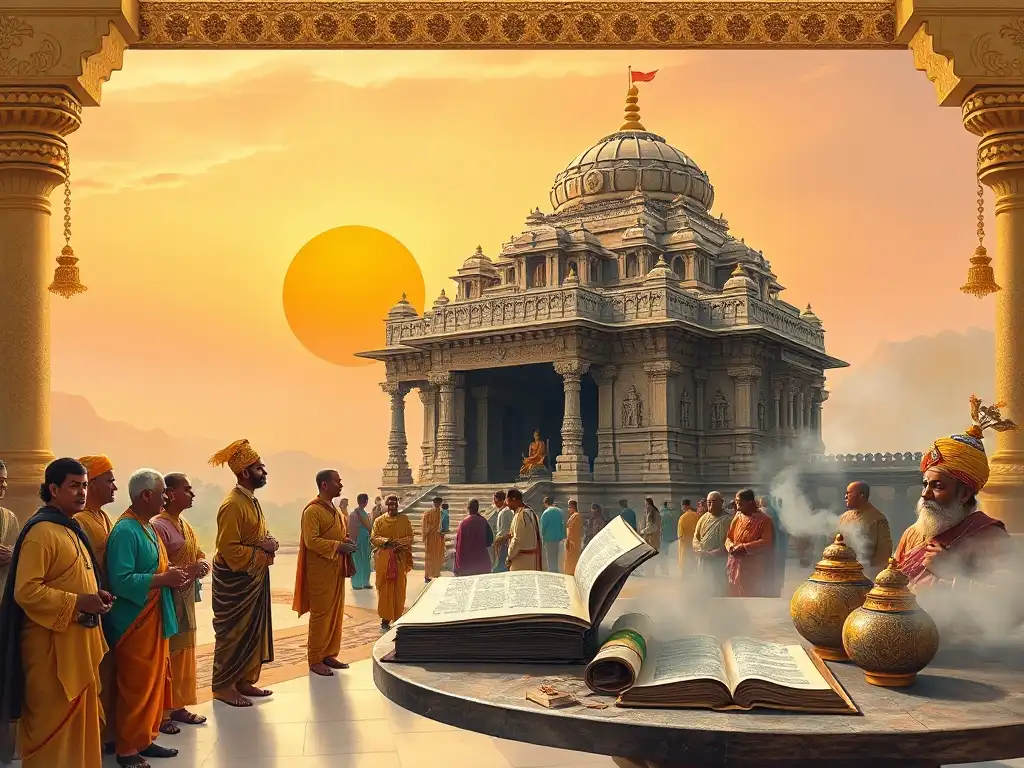
The Gupta Empire, often heralded as the Golden Age of India, significantly shaped the development of Hinduism through philosophical advancements, textual contributions, and artistic expressions. This period, spanning from approximately 320 to 550 CE, was characterized by a revival and transformation of Hindu beliefs, practices, and artistic representations, which would resonate throughout subsequent centuries.
Development of Hindu Philosophy and Texts
The Gupta period witnessed a remarkable flourishing of Hindu philosophy, which laid the groundwork for many of the religious and spiritual ideas that define Hinduism today. This era saw the emergence of several schools of thought, including Vedanta, Mimamsa, and Nyaya, each contributing unique interpretations of Hindu scriptures and philosophy.
Key Texts and Their Authors
Among the notable contributions to Hindu philosophy during the Gupta Empire were several key texts authored by prominent scholars. Here are a few significant works:
- Brahma Sutras: Attributed to Badarayana, this text consolidated various philosophical ideas and provided a framework for understanding the Upanishads.
- Bhagavad Gita Commentary: Scholars such as Adi Shankaracharya later provided profound commentaries on the Gita, which gained prominence during the Gupta era.
- Nyaya Sutras: Authored by Gautama, this foundational text of the Nyaya school emphasized logic and epistemology, influencing subsequent philosophical discourse.
The synthesis of these philosophies not only reinforced Hindu doctrines but also engaged with emerging Buddhist ideas, fostering a rich intellectual environment.
Promotion of Hindu Art and Architecture
The Gupta Empire is renowned for its artistic and architectural advancements, which played a crucial role in promoting Hinduism. Temples constructed during this period were not merely places of worship but also served as cultural hubs that reflected the religious fervor of the time.
Temples and Sculptures of the Gupta Era
The temples built during the Gupta Empire are some of the finest examples of Indian architecture, showcasing intricate designs and spiritual symbolism. Notable features include:
- Temple Architecture: The emergence of the shikhara (tower) style, prominently seen in temples like the Dashavatara Temple in Deogarh, exemplified the architectural innovation of the era.
- Sculptural Art: The period is famous for its sculptures, which represented deities such as Vishnu, Shiva, and Durga in dynamic poses. The sculptures from the Gupta period, such as those found in the Ajanta and Ellora caves, exhibit exquisite craftsmanship and convey deep spiritual narratives.
- Iconography: The use of iconography became more pronounced, allowing devotees to connect with the divine through visual representation. This era saw the establishment of standard forms for deities, which would endure in Hindu worship practices.
The Gupta Empire's contributions to Hinduism, through philosophical developments and artistic expressions, not only reinforced existing beliefs but also inspired new interpretations and practices. This foundation significantly influenced the trajectory of Hinduism, ensuring its enduring legacy in Indian culture and spirituality.
Influence on Hindu Rituals and Practices
The Gupta Empire, often referred to as the Golden Age of India, significantly influenced Hindu rituals and practices, leading to the establishment of various traditions that are still observed today. Under the patronage of Gupta rulers, Hinduism experienced a renaissance that emphasized the importance of ritualistic worship, temple construction, and the integration of local customs into mainstream practices.
One of the key aspects of this influence was the formalization of rituals associated with daily worship and life events. The period saw the codification of various rites that were essential in connecting devotees with the divine. Texts such as the Puranas and the Dharmashastras were compiled and edited during this time, providing detailed guidelines on various rituals, ethical conduct, and the responsibilities of individuals in their spiritual lives. These texts not only enriched the religious landscape but also contributed to the standardization of practices across different regions.
Moreover, the Gupta period saw a rise in the construction of temples, which became the focal points for religious activities. Temples were designed not just as places of worship but as vibrant centers for community gatherings, festivals, and cultural events. This architectural boom facilitated the performance of elaborate rituals, which included not only daily offerings but also seasonal and life-cycle ceremonies, thereby deepening the connection of the community with their faith.
Evolution of Festivals and Worship
During the Gupta Empire, the evolution of festivals and worship marked a significant transformation in the religious life of Hindus. The period witnessed the proliferation of various festivals, many of which were celebrated with grandeur and elaboration. These festivals not only served as moments of spiritual significance but also played crucial roles in the social and cultural fabric of society.
One notable festival that gained prominence during this era was Diwali, the festival of lights, which celebrated the victory of light over darkness. Its rituals, which include the lighting of lamps and firecrackers, were formalized and spread widely throughout the Gupta Empire. Additionally, Maha Shivaratri, dedicated to Lord Shiva, saw an increase in its observance, marked by night-long vigils and prayers, reflecting the growing devotion towards Shiva worship during this period.
The Gupta period also facilitated the blending of local traditions with established practices, leading to the emergence of unique regional festivals. For instance, the celebration of Holi, with its vibrant colors and communal participation, began to take a more structured form, incorporating rituals that emphasized community bonding and joyous interaction.
Furthermore, the emphasis on pilgrimages to sacred sites became more pronounced during this time. Pilgrim routes were established, and temples at key locations became centers of worship and community gatherings. This movement not only reinforced the significance of particular deities but also enhanced the socio-economic status of these regions by encouraging trade and interaction among diverse populations.
The Gupta Empire's contributions to Hinduism were profound, leading to a dynamic evolution of rituals and festivals that enriched the spiritual lives of its people and laid the groundwork for practices that continue to resonate in contemporary Hinduism.
Contributions to Buddhism in the Gupta Empire

The Gupta Empire, often referred to as the Golden Age of India, played a pivotal role in the revival and growth of Buddhism. This period, spanning from approximately 320 to 550 CE, witnessed significant advancements in Buddhist philosophy, art, and architecture, which collectively enhanced the practice and dissemination of Buddhism throughout the Indian subcontinent.
Revival and Growth of Buddhism
During the Gupta period, Buddhism experienced a notable revival, particularly following a period of decline during the late Mauryan Empire. This resurgence can be attributed to several factors:
- Royal Patronage: Gupta emperors, particularly Samudragupta and Chandragupta II, were known for their support of Buddhism. They provided financial backing for monasteries and stupas, which facilitated the establishment of Buddhist centers of learning.
- Cultural Exchange: The Gupta Empire was a melting pot of cultures, attracting scholars and monks from various regions, including Central Asia and Southeast Asia. This interaction enriched Buddhist thought and practice, encouraging the spread of Mahayana Buddhism.
- Educational Institutions: The establishment of prominent monasteries, such as Nalanda, became centers for Buddhist learning. These institutions attracted students from across Asia, fostering intellectual discourse and the proliferation of Buddhist texts.
Key Figures in Buddhist Philosophy
Several influential Buddhist philosophers emerged during the Gupta period, contributing to the evolution of Buddhist thought:
- Vasubandhu: A prominent figure in Mahayana Buddhism, Vasubandhu was instrumental in developing the Yogachara school of thought. His works, including "Abhidharmakosa," laid the groundwork for Buddhist epistemology and metaphysics.
- Asanga: Brother of Vasubandhu, Asanga was known for his teachings on compassion and the Bodhisattva ideal. His texts, such as "Yogacarabhumi," emphasized the importance of meditation and ethical conduct in achieving enlightenment.
- Buddhaghosa: An influential commentator, Buddhaghosa's writings in the 5th century CE synthesized earlier Buddhist texts and philosophies, making them accessible to a broader audience.
The contributions of these philosophers not only enriched the intellectual landscape of the Gupta Empire but also solidified Buddhism's relevance in religious and philosophical discourse.
Buddhist Art and Architecture during the Gupta Period
Art and architecture flourished during the Gupta Empire, reflecting the religious and cultural ethos of the time. Buddhist art from this era is characterized by its intricate detail and spiritual significance.
Stupas and Cave Temples
The Gupta period saw the construction of remarkable stupas and cave temples that stand as a testament to the empire's architectural ingenuity:
- Stupas: The Great Stupa at Sanchi, which was originally built during the Mauryan period, was expanded and embellished during the Gupta era. This stupa features finely carved gateways (toranas) depicting scenes from the life of the Buddha, showcasing the artistic skills of the time.
- Cave Temples: The Ajanta and Ellora caves serve as prime examples of Gupta architecture. The Ajanta caves, adorned with exquisite frescoes and sculptures, narrate the Jataka tales and depict various Buddhist themes. The Ellora caves, on the other hand, showcase a harmonious blend of Buddhist, Hindu, and Jain architecture, reflecting the religious tolerance prevalent during the Gupta Empire.
The artistic endeavors during this period not only enhanced the aesthetic appeal of Buddhist sites but also played a crucial role in attracting devotees and pilgrims, further solidifying the Gupta Empire's contributions to Buddhism.
The Gupta Empire's contributions to religion, particularly Buddhism, were profound and multifaceted. The revival of Buddhist thought, the emergence of key philosophical figures, and the remarkable advancements in art and architecture collectively created an enduring legacy that continues to influence Buddhist practice and culture today.
The Spread of Buddhism beyond India
The Gupta Empire, often referred to as the Golden Age of India, played a pivotal role in the dissemination of Buddhism beyond the subcontinent. During this period, from approximately the 4th to the 6th century CE, Buddhist monks and traders traveled extensively, promoting the teachings of the Buddha across Asia. The Gupta rulers, particularly under the patronage of Emperor Samudragupta and later Chandragupta II, provided significant support for Buddhist institutions, which facilitated this expansion.
Buddhism's spread was not merely limited to geographical boundaries; it influenced various cultures and societies. The establishment of monastic institutions, such as Nalanda University, served as centers of learning and attracted students from various regions, including China, Tibet, and Southeast Asia. These institutions became crucial in disseminating Buddhist texts and philosophies, leading to the establishment of vibrant Buddhist communities beyond India.
Moreover, the art and architecture of the Gupta Empire, characterized by intricate sculptures and stupas, also played a crucial role in attracting followers. The visual representation of Buddhist themes in art helped in communicating complex ideas in a more accessible manner, thus fostering a greater understanding of Buddhist principles in foreign lands. The legacy of this cultural exchange can still be observed today in the various forms of Buddhism practiced across Asia.
Trade Routes and Cultural Exchange
The Gupta Empire thrived on an extensive network of trade routes that connected India with Central Asia, the Middle East, and Southeast Asia. These trade routes were vital for the exchange of goods, ideas, and religious beliefs. Merchants, who often doubled as cultural ambassadors, played a significant role in introducing Buddhism to new regions. Key trade routes, such as the Silk Road, facilitated not only the movement of silk and spices but also Buddhist texts and artifacts.
The flourishing trade also led to increased interactions between diverse cultures. As traders traveled, they established links with various communities, often sharing their beliefs and practices. This resulted in the establishment of trade centers that became melting pots of cultural exchange. Cities like Taxila and Pataliputra emerged as bustling hubs where merchants, scholars, and monks congregated, further promoting the spread of Buddhism.
In addition to material goods, the Gupta Empire's economic prosperity allowed for the patronage of Buddhist art and architecture, which served as focal points for communal gatherings. The construction of stupas, monasteries, and other religious structures along trade routes provided not only places for worship but also centers for learning and community engagement. This integration of trade and religion significantly contributed to the establishment of Buddhism as a major religion in regions outside of India.
The interplay between trade routes and cultural exchange during the Gupta Empire was instrumental in shaping the religious landscape of Asia, making the Gupta contributions to Buddhism a significant chapter in the history of religion.
Interactions Between Hinduism and Buddhism under the Gupta Empire

Syncretism of Beliefs and Practices
The Gupta Empire, often referred to as the Golden Age of India, was marked by a remarkable interaction between Hinduism and Buddhism. This period saw the emergence of a syncretic culture where elements of both religions began to intertwine, leading to a rich tapestry of shared beliefs and practices.
- Philosophical Exchanges: The Gupta period was notable for its philosophical dialogues that integrated ideas from both Hindu and Buddhist traditions. Thinkers such as Nagarjuna contributed to Buddhist philosophy while engaging with concepts from Vedanta, creating a fusion that enriched both schools of thought.
- Cultural Practices: Festivals and rituals became increasingly inclusive, often merging Hindu and Buddhist elements. For instance, the worship of deities like Avalokiteshvara in Buddhism began to incorporate aspects of Hindu devotion, showcasing a blend of practices that appealed to followers of both religions.
- Art and Iconography: The artistic expressions of the Gupta Empire reflect this syncretism. Temples and sculptures often depicted figures from both traditions, illustrating a shared cultural heritage. For example, the famous sculptures at Ajanta and Ellora reveal how Buddhist and Hindu iconography coexisted and influenced one another.
This syncretism not only highlights the interdependence of Hinduism and Buddhism during the Gupta Empire but also paved the way for a more harmonious society where diverse religious practices could flourish.
The Impact of Religious Tolerance on Society
The Gupta Empire is renowned for its policy of religious tolerance, which played a critical role in fostering a peaceful coexistence between Hindus and Buddhists. This tolerance manifested in various aspects:
- Political Patronage: Gupta rulers, particularly Chandragupta II and his successors, actively supported both Hindu and Buddhist institutions. This patronage included the construction of temples and monasteries, which facilitated the growth of both religions. Such support not only legitimized multiple faiths but also encouraged dialogue and collaboration between communities.
- Social Cohesion: The atmosphere of acceptance contributed to social harmony. Religious leaders from both traditions often participated in interfaith dialogues, which promoted understanding and reduced sectarian tensions. This cooperation was crucial for maintaining stability within the empire, allowing for a vibrant exchange of ideas and cultural practices.
- Economic Prosperity: The flourishing of trade routes during the Gupta period also benefited from religious tolerance. Merchants and travelers from various regions, including foreign lands, found a welcoming environment, leading to increased economic interactions. The shared religious landscape made it easier for individuals of different faiths to conduct trade and commerce, ultimately contributing to the empire's wealth.
The Gupta Empire's contributions to religion, particularly through the interactions between Hinduism and Buddhism, created a legacy of syncretism and tolerance that significantly shaped the spiritual and cultural landscape of ancient India. This period not only advanced religious thought but also established a blueprint for coexistence that would influence future generations.
The Legacy of Gupta Empire Contributions to Religion

Lasting Influence on Modern Hinduism and Buddhism
The Gupta Empire, often heralded as the Golden Age of India, made significant contributions to the development of both Hinduism and Buddhism, which continue to influence contemporary practices and beliefs.
- Philosophical Texts and Literature:
- The period saw the emergence of crucial texts that shaped religious ideologies. Works such as the Puranas and Mahabharata were compiled or significantly revised during this time, embedding moral and philosophical teachings that resonate in modern Hindu thought. The Bhagavad Gita, a vital scripture, was further interpreted and commented upon, emphasizing concepts like dharma (duty) and karma (action), which remain central to Hindu philosophy today.
- Art and Iconography:
- Gupta art, characterized by its intricate sculptures and temple architecture, played a critical role in the visual representation of religious themes. The depictions of deities in stone and bronze, particularly those of Vishnu, Shiva, and the Buddha, established aesthetic standards that influenced religious art for centuries. The iconic Ajanta and Ellora caves, with their exquisite frescoes and carvings, serve as a testament to this period's artistic prowess and continue to inspire both Hindu and Buddhist practices.
- Religious Practices:
- During the Gupta period, the integration of local traditions with established religious practices led to a more inclusive approach to worship. This syncretism allowed for the evolution of rituals and festivals that are still celebrated today, such as Diwali and various Buddhist observances. The establishment of temples as centers for community gathering and worship was also solidified during this era, shaping the architectural landscape of India.
The Role of Gupta Contributions in Shaping Religious Thought
The contributions of the Gupta Empire were pivotal in shaping the religious landscape of ancient India, influencing the philosophical discourse and the communal aspects of both Hinduism and Buddhism.
- Philosophical Schools:
- The Gupta period was marked by the rise of various philosophical schools, particularly in Hinduism. Thinkers like Adi Shankaracharya laid the groundwork for Advaita Vedanta, which emphasized non-dualism and influenced Hindu thought profoundly. Meanwhile, Buddhist scholars contributed to the development of Mahayana Buddhism, expanding its reach and deepening its philosophical complexities.
- Educational Institutions:
- The establishment of renowned universities such as Nalanda fostered an environment of learning where scholars from various backgrounds engaged in theological discourse. This exchange of ideas not only enriched Hindu and Buddhist philosophies but also facilitated the transmission of knowledge across Asia, influencing religious thought in neighboring regions.
- Political Patronage:
- The Gupta rulers were known for their support of both religions, which helped in the flourishing of religious institutions. This patronage allowed for the construction of magnificent temples and monasteries that served as hubs for spiritual and intellectual activities. The endorsement of religious practices by the state legitimized and popularized various beliefs, leading to a more structured religious society.
The Gupta Empire's contributions to religion were not merely historical events; they laid the foundation for enduring beliefs and practices that have shaped the spiritual landscape of India and beyond. The legacy of this era continues to resonate in the religious traditions of millions today.
Conclusion: The Gupta Empire's Enduring Influence on Religion in Ancient India

Summary of Key Contributions
The Gupta Empire, often referred to as the Golden Age of India, made profound contributions to both Hinduism and Buddhism, shaping the religious landscape of the region. Some of the most significant contributions include:
- Promotion of Hindu Philosophy: The Gupta emperors actively supported Hinduism, leading to a resurgence of Hindu philosophy and practices. Notable texts like the Puranas and the Smriti literature were compiled during this period, which codified religious practices and beliefs.
- Development of Temples: Architectural advancements led to the construction of numerous temples, such as the famous Vishnu temple at Deogarh, which showcased intricate sculptures and carvings. These temples served as centers of cultural and religious life, fostering community engagement and devotion.
- Art and Iconography: The Gupta period saw the creation of exquisite art, particularly in sculpture and painting, which depicted deities and scenes from Hindu mythology. The use of vibrant colors and detailed representations in cave paintings, like those found in Ajanta, exemplifies this artistic flourish.
- Buddhist Revival: While Hinduism flourished, Buddhism also saw significant support during the Gupta Empire. The establishment of monasteries and stupas, such as those at Sanchi, facilitated the spread of Buddhist teachings and practices. This period marked the synthesis of Buddhist and Hindu thought, enriching both traditions.
Reflection on the Gupta Empire’s Role in Religious Development
The Gupta Empire's impact on religion cannot be understated. By fostering an environment of tolerance and intellectual pursuit, it became a crucible for religious thought and practice. The interactions between Hinduism and Buddhism during this time led to the evolution of new philosophies and ideas, which continue to influence the religions today.
The consolidation of religious texts and the promotion of temple culture reinforced the role of religion in daily life, making it more accessible to the masses. Furthermore, the Gupta rulers' patronage of both religions exemplified a unique harmony that allowed diverse beliefs to coexist and thrive.
This era also laid the groundwork for future developments in Indian spirituality, as the philosophical inquiries and artistic expressions initiated during the Gupta period inspired subsequent generations. The legacy of the Gupta Empire’s contributions to religion is a testament to its role as a pivotal chapter in ancient Indian history, underscoring the enduring significance of its cultural and spiritual innovations.
Frequently Asked Questions
What were the main contributions of the Gupta Empire to Hinduism?
The Gupta Empire significantly influenced Hinduism by promoting the development of religious literature, including texts like the Puranas and the Mahabharata, which solidified Hindu beliefs and practices.
How did the Gupta Empire impact Buddhism?
During the Gupta period, Buddhism flourished through the establishment of monasteries and the creation of important texts, which helped in the spread and integration of Buddhist philosophy across India.
What role did art and architecture play in the religious contributions of the Gupta Empire?
The Gupta Empire is known for its intricate temple architecture and sculpture, which depicted deities and mythological stories, enriching both Hinduism and Buddhism.
How did the Gupta Empire contribute to the philosophical development of religion?
The Gupta scholars made significant advancements in philosophy, contributing to discussions on ethics, metaphysics, and theology, which influenced both Hindu and Buddhist thought.
What legacy did the Gupta Empire leave regarding religion in India?
The legacy of the Gupta Empire includes the establishment of cultural norms and religious practices that continue to influence Hinduism and Buddhism in modern India, showcasing its lasting impact on the religious landscape.
Final Reflection: The Enduring Legacy of the Gupta Empire's Contributions to Religion
The Gupta Empire's contributions to Hinduism and Buddhism are not merely historical footnotes; they are foundational pillars that continue to shape spiritual practices and beliefs today. As we navigate a world that often feels fragmented, the rich tapestry of ideas and philosophies woven during the Gupta period serves as a reminder of the profound interconnectedness of religious traditions. The legacy of this era invites us to explore how ancient insights can inform our modern understanding of faith and community.
The influence of the Gupta Empire on the cultural and social landscape of religion is undeniable. From the intricate sculptures that adorn temples to the philosophical texts that provoke thought and reflection, the contributions of this era resonate deeply within our contemporary spiritual practices. The teachings and artistic expressions birthed during this time continue to inspire countless individuals seeking meaning and connection. As the philosopher Alan Watts once said, The menu is not the meal.
This highlights the importance of engaging with the essence of these teachings rather than merely observing them from a distance.
As we reflect on the Gupta Empire's rich contributions to religion, I invite you to consider how these ancient teachings can be integrated into your own life. What lessons can we draw from their philosophies to foster understanding and compassion in our diverse world? Let us embrace the wisdom of the past as we strive to create a more harmonious future, recognizing that the spiritual journeys of Hinduism and Buddhism are not just historical narratives but living traditions that continue to guide us today.
Embrace the Legacy: Elevate Your Knowledge!
Thank you for diving into the fascinating world of the Gupta Empire and its profound contributions to Hinduism and Buddhism! We hope you've uncovered valuable insights that inspire you to explore this rich cultural heritage further. Now is the perfect time to take the next step on your journey of historical discovery.
Here’s how you can deepen your understanding and share your knowledge:
- Explore more: Investigate other influential empires in ancient India to understand their impact on spiritual practices and cultural expressions.
- Join the conversation: Share this article with friends and family, and discuss how these contributions have resonated throughout history and continue to influence modern society.
- Engage with the community: Participate in our discussion forum on Ancient Indian History; your insights could inspire new ideas and perspectives!
What aspect of the Gupta Empire’s contributions intrigues you the most, and in what ways do you think they have shaped contemporary spiritual practices?