
The Power Dynamics in Ancient Indian Courts: Who Really Ruled Justice?


Welcome to Ancient India History, where we embark on a captivating journey through the rich tapestry of ancient Indian civilizations. In this exploration, we delve into the intriguing world of power dynamics within ancient Indian courts, uncovering the complex interplay of justice and authority that shaped legal systems and law codes. Have you ever wondered who truly held the reins of power in these ancient courts? Join us as we peel back the layers of history to reveal the fascinating truths that lie beneath. Let your curiosity guide you as we dive deeper into this compelling narrative!
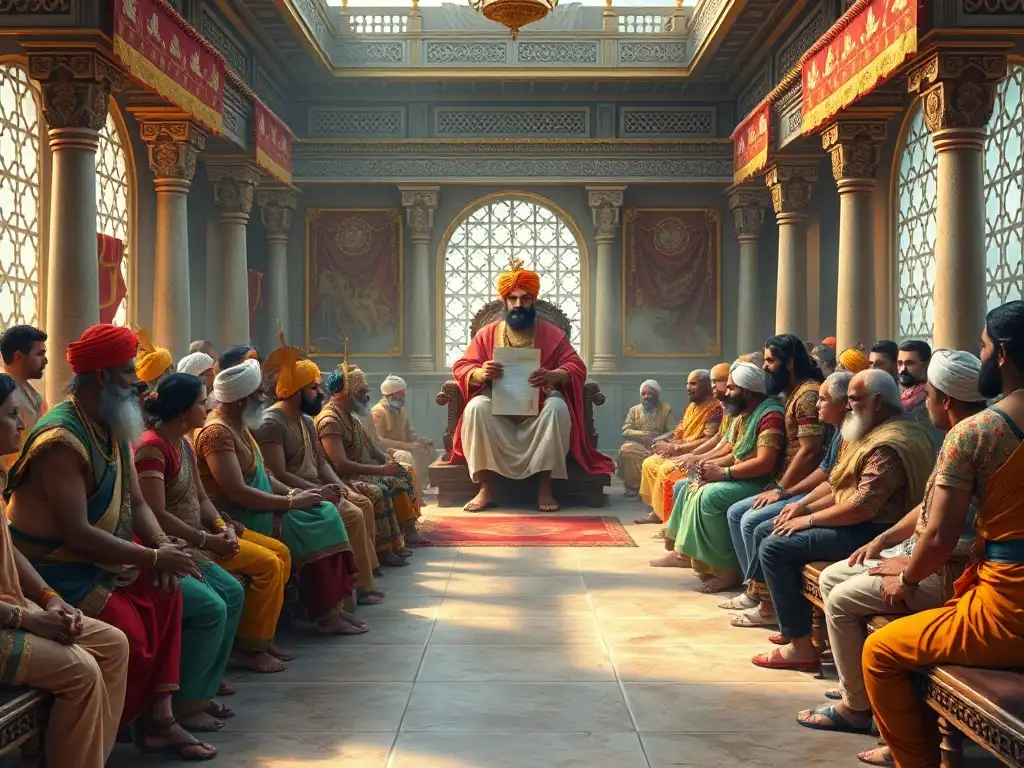
Introduction to Ancient Indian Court Power Dynamics
The ancient Indian judicial system was a complex tapestry woven from the threads of diverse cultures, philosophies, and legal traditions. At the heart of this system were the courts, which served not only as venues for resolving disputes but also as reflections of the broader socio-political structures of their time.
Understanding the power dynamics in ancient Indian courts is crucial for comprehending how justice was administered and perceived in various civilizations, from the sophisticated urban planning of the Indus Valley to the philosophical debates of the Gupta Empire. This exploration reveals the intricate balance between authority, legitimacy, and the role of various stakeholders in shaping judicial outcomes.
Overview of Judicial Practices in Ancient India
Judicial practices in ancient India encompassed a variety of methods and institutions. Courts were not merely places where judges presided over cases; they were arenas where social norms, religious beliefs, and political power intersected. Key features of these practices included:
- Vedic and Dharmashastra Influence: Legal principles were often derived from sacred texts, which emphasized moral duties and social obligations.
- Local Councils and Assemblies: Community-based systems, such as panchayats, played a significant role in adjudication, allowing local customs to influence legal outcomes.
- Role of the King: Monarchs often acted as the supreme arbiters of justice, with their decrees reflecting their power and authority.
These elements collectively shaped the unique character of justice in ancient India, making it a blend of law, morality, and governance.
Importance of Understanding Power Dynamics in Justice
Analyzing the power dynamics within ancient Indian courts provides valuable insights into the mechanisms of control and influence that governed society. The following points illustrate its significance:
- Social Hierarchy: Understanding who held power in courts reveals much about the social stratification and class relations of the time.
- Legal Authority: The interplay between religious texts and royal decrees highlights how legal authority was claimed and contested.
- Conflict Resolution: Insights into court practices shed light on how conflicts were resolved, reflecting broader societal values and priorities.
By delving into these dynamics, scholars and enthusiasts can better appreciate the evolution of legal systems and the underlying philosophies that guided justice in ancient India.
Historical Context of Ancient Indian Courts
The historical context of ancient Indian courts is pivotal in tracing the evolution of judicial authority and practices. This section examines how various historical factors contributed to shaping court power dynamics.
Evolution of Legal Systems in Ancient India
The legal systems in ancient India evolved significantly over centuries, influenced by various cultural and political transformations. Key milestones include:
- Indus Valley Civilization: Early evidence of legal practices suggests organized governance and dispute resolution mechanisms.
- Vedic Period: The emergence of Dharma as a guiding principle laid the foundation for legal codes and ethical conduct.
- Maurya and Gupta Empires: The codification of laws and establishment of formal courts marked a shift towards centralized judicial authority.
These developments illustrate a gradual transition from informal local systems to more structured legal frameworks, reflecting the changing needs of society.
Major Dynasties Influencing Court Power Dynamics
Several dynasties played crucial roles in shaping the power dynamics of ancient Indian courts. Notable examples include:
- Mauryan Empire: Under Ashoka, the integration of Buddhist principles into governance emphasized justice and moral responsibility.
- Gupta Empire: Known for its cultural flourishing, this period saw the formalization of legal codes, impacting the authority of courts.
- Regional Kingdoms: Local rulers often adapted legal practices to fit their unique contexts, resulting in diverse interpretations of justice.
These dynasties not only influenced legal systems but also reflected broader socio-political contexts, illustrating the intricate relationship between power and justice in ancient India.
Key Figures in Ancient Indian Courts
The power dynamics within ancient Indian courts were shaped by various key figures who wielded considerable influence over judicial practices and decisions. The most prominent among these were the kings, rulers, Brahmins, and scholars, each playing distinct roles that contributed to the overall structure and functioning of the legal system. Understanding their contributions provides insight into how justice was administered and the socio-political context of ancient India.
Role of Kings and Rulers in Judicial Authority
In ancient India, the king was often considered the ultimate authority in matters of justice. Rulers were expected to uphold Dharma, or moral law, and ensure that justice was served fairly. They were not only administrative leaders but also legal arbiters who could preside over court cases, especially those involving significant disputes or issues of state.
Kings often appointed local judges, who were responsible for handling disputes at lower levels. However, the king's involvement was crucial in high-stakes cases, such as those involving land disputes, crime against the state, or cases involving prominent citizens. The authority of the king was legitimized by religious beliefs, where the monarch was seen as a divine representative on earth, further amplifying their judicial powers.
Influence of Brahmins and Scholars on Legal Decisions
Brahmins, as the priestly class, held significant sway in ancient Indian courts. Their extensive knowledge of scriptures, rituals, and law codes positioned them as key advisors to kings and rulers. Brahmins were often tasked with interpreting the law, providing counsel on legal matters, and even acting as judges in certain situations. Their education and status allowed them to influence judicial outcomes, as they were perceived as custodians of Dharma.
In addition to Brahmins, scholars and learned individuals contributed to the judicial discourse by drafting legal texts and commentaries that informed court proceedings. Their writings helped shape the understanding of justice and morality within the society, influencing not only legal practices but also the cultural values surrounding justice.
The Position of Common People in Court Dynamics
The common people in ancient Indian society had a complex relationship with the courts. While the judicial system was primarily dominated by kings and Brahmins, the voices of ordinary citizens were not entirely absent. Common people could bring their grievances to court, but their success often depended on their social standing and the influence of powerful allies.
In many cases, local leaders or influential individuals could represent the interests of the common people, advocating for their rights and concerns. However, systemic biases often favored the elite, making it challenging for the marginalized to seek justice. Despite these barriers, there are instances recorded in ancient texts where common individuals successfully challenged injustices, highlighting a nuanced dynamic within the court system.
Structure of Ancient Indian Courts

The structure of ancient Indian courts was multifaceted, comprising various levels and types of judicial bodies that addressed different aspects of legal disputes. This hierarchical system allowed for a broad range of issues to be adjudicated while maintaining a balance of power among the ruling elite and the populace.
Types of Courts in Ancient India
Ancient India featured several types of courts, each designed to handle specific matters. These included:
- Royal Courts (Raja Sabha): Presided over by the king, dealing with significant state matters, high-profile cases, and disputes involving nobility.
- Local Courts (Panchayats): Made up of a council of elders or local leaders, these courts addressed community disputes, family issues, and minor criminal cases.
- Specialized Courts: In some regions, specialized courts existed for particular fields such as trade, where merchants could resolve commercial disputes.
Each court type functioned with its own set of rules and procedures, reflecting the diverse needs of ancient Indian society.
Functioning and Composition of Courts
The functioning of ancient Indian courts was characterized by a blend of formal procedures and customary practices. Courts typically operated with a panel of judges, which could include the king, Brahmins, or local elders, depending on the court's level.
The composition of courts often included:
- Judges (Nyayadhikrit): Individuals with legal knowledge and experience, responsible for interpreting law and delivering judgments.
- Witnesses (Sakshi): Individuals who provided testimony in legal proceedings, playing a crucial role in establishing facts.
- Advocates (Vakil): In some instances, individuals could represent parties in court, though this was more common among the elite.
Court sessions were often public, allowing community members to observe proceedings, which fostered a sense of transparency and accountability, albeit limited by social hierarchies. The judges would consider testimonies, legal texts, and the societal norms of the time before reaching a verdict, intertwining legal principles with moral considerations.
Power Dynamics and Justice Delivery
In ancient Indian courts, the power dynamics played a crucial role in the delivery of justice. The structure of these courts was not merely judicial; it was deeply entwined with the political, social, and economic hierarchies of the time. Rulers, often seen as divine or semi-divine figures, wielded significant influence over judicial decisions, which were frequently used to reinforce their power and authority.
The administration of justice was a reflection of the broader societal norms and the prevailing philosophies of governance. Courts were often presided over by kings or high-ranking officials who had the ultimate say in legal matters, thereby intertwining the concepts of justice with the ruler’s will. This integration of power and justice created a system where legal decisions could be swayed by the ruler's interests, leading to a complex interplay between law and governance.
Furthermore, the role of local chieftains and village heads in the judicial process cannot be understated. They acted as intermediaries between the people and the king, resolving disputes at the grassroots level. This decentralized approach to justice delivery highlighted the variation in how justice was perceived and administered across different regions, showcasing a mosaic of legal practices shaped by local customs and the particular power dynamics at play.
The Interplay of Power and Justice in Ancient Courts
The relationship between power and justice in ancient Indian courts was characterized by a blend of authority, tradition, and sometimes, manipulation. Rulers often used their judicial power to legitimize their reign and suppress dissent. For instance, the concept of Dharma, or moral order, was a guiding principle that influenced judicial outcomes. However, interpretations of Dharma could vary, allowing rulers to justify their actions based on their political needs.
Additionally, the concept of Rajdharma (kingly duty) necessitated that the king uphold justice, but this was frequently at odds with personal or political ambitions. The king's advisors, often from the Brahmin class, played a significant role in shaping judicial policies, further complicating the relationship between justice and power. These advisors interpreted sacred texts and traditional laws, which could be manipulated to serve the interests of the ruling elite.
The courts also served as a stage for public display, where the king’s capacity to dispense justice was often paraded. This public aspect reinforced the king's authority and demonstrated his role as a protector of the people, even while the underlying motivations might have been self-serving. The dynamics of power in these courts thus reflected broader societal hierarchies and the intricate relationships between various stakeholders involved in the administration of justice.
Case Studies of Notable Trials in Ancient India
Several notable trials in ancient India exemplify the intricate power dynamics at play in judicial proceedings. One such case is the trial of Karna from the Mahabharata, where his actions and decisions were scrutinized within the context of loyalty to family versus adherence to justice. This trial highlighted the moral dilemmas faced by individuals within the rigid social structures of ancient Indian society.
Another significant example is the trial of Ramayana's Ravana, where the king of Lanka was judged not only for his abduction of Sita but also for his role as a ruler who defied dharma. The outcome of this trial was predetermined by the narrative, showcasing how justice could be portrayed to serve larger ideological purposes and reinforce the moral narratives of the time.
These cases illustrate that trials were often less about impartial justice and more about the reinforcement of power structures, moral lessons, and the societal values of the era. They provide insight into how ancient Indian courts functioned, revealing the complexities and contradictions inherent in their judicial practices.
Gender and Power in Ancient Indian Courts
The role of gender in the power dynamics of ancient Indian courts reveals a multifaceted landscape where women’s influence could be both subtle and overt. While patriarchal norms dominated the social structure, there were instances where women played significant roles in legal matters, either as litigants or as part of the judicial process.
Understanding the role of women in these systems necessitates a closer examination of how societal attitudes towards gender influenced judicial practices. Women were often subject to the same legal frameworks as men, but their ability to navigate these systems varied widely based on class, caste, and regional customs.
The Role of Women in Judicial Processes
Women in ancient Indian courts had limited access to legal rights compared to their male counterparts; however, their presence in judicial processes was not entirely absent. Historical texts indicate that women could initiate legal proceedings, especially in cases involving inheritance or marital disputes. Some legal texts, such as the Manusmriti, articulated rights for women, albeit within a largely patriarchal framework.
In some instances, women served as witnesses or were involved in mediating disputes, showcasing a level of agency within the legal system. Moreover, the emergence of female sages and scholars contributed to a broader understanding of legal principles, although their contributions were often overshadowed by their male counterparts.
This suggests that while women were often marginalized in formal judicial roles, their presence and participation were still significant in shaping the discourse around justice and legal norms.
Notable Women Figures in Ancient Indian Legal History
Several notable women figures emerged in ancient Indian legal history, challenging the conventional perceptions of gender roles. One such figure is Vasanti, a scholar who authored texts on Dharma and legal principles, influencing the understanding of justice in her time. Her works highlighted women's rights and provided a counter-narrative to the predominantly male interpretations of law.
Another influential figure was Maitreyi, a philosopher known for her contributions to discussions around ethics and morality in relation to justice. Her dialogues, as recorded in ancient texts, reflect a deep understanding of the power dynamics within society and advocate for a more equitable approach to justice.
These women, among others, contributed to the discourse surrounding legal systems, illustrating that despite the constraints of their time, women could and did influence the evolution of judicial practices in ancient India. Their legacies continue to inspire discussions on gender and power in contemporary legal frameworks.
Comparison of Ancient Indian Court Power Dynamics with Other Civilizations
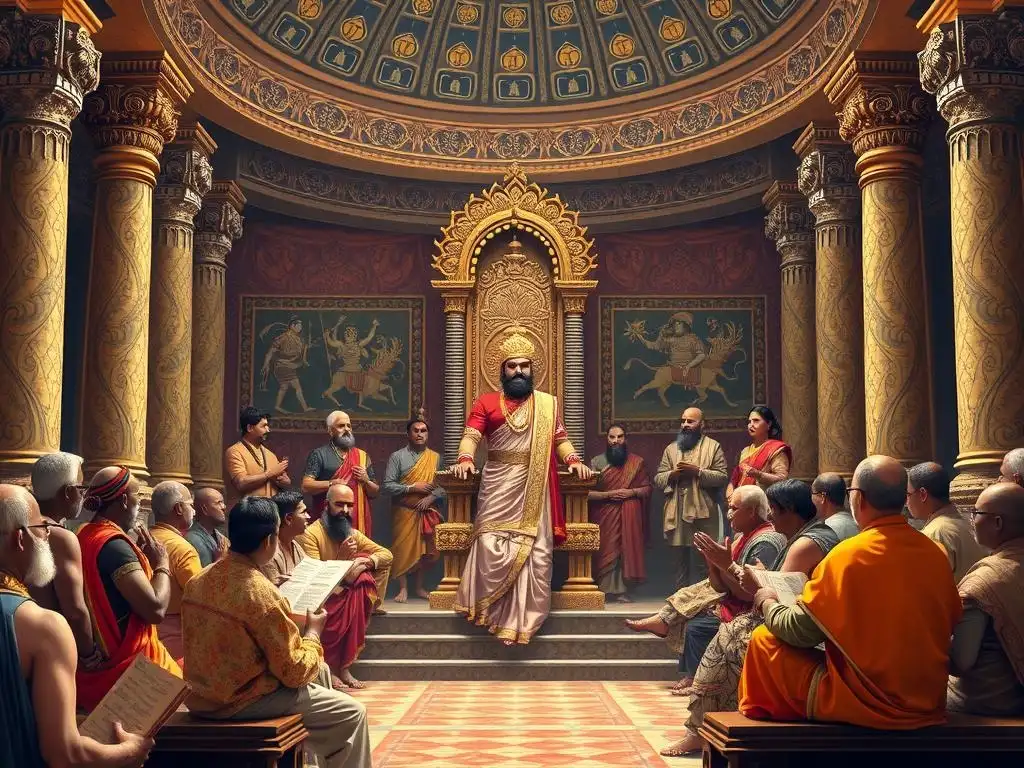
The power dynamics within ancient Indian courts present a fascinating study when compared to other contemporary civilizations, such as Rome and China. Each of these societies had unique approaches to justice and governance, shaped by their cultural, social, and political contexts. By examining these differences and similarities, we can gain a deeper understanding of how justice was perceived and administered across ancient civilizations.
Ancient Indian Courts vs. Ancient Roman Courts
Ancient Indian courts were characterized by a blend of religious and secular authority, where rulers often derived their legitimacy from divine sanction. In contrast, ancient Roman courts were predominantly state-run, emphasizing law as a tool of governance separate from religious influence.
- Judicial Authority: In India, local rulers and village headmen played significant roles in adjudicating disputes, often guided by dharma (moral law) and local customs. Roman courts, on the other hand, operated under a codified legal system, with magistrates and jurists interpreting laws that were primarily secular.
- Legal Representation: In ancient India, the concept of legal representation was less formalized, with individuals often presenting their cases personally. Roman courts, however, allowed for professional advocates, creating a more structured legal process.
- Penalties and Justice: The focus in Indian courts was often on reconciliation and restoring social harmony, reflecting the community's values. In contrast, Roman courts were known for their punitive measures, emphasizing deterrence and retribution as core principles of justice.
Ancient Indian Courts vs. Ancient Chinese Courts
Ancient Chinese courts, much like their Indian counterparts, were deeply intertwined with the philosophical and ethical underpinnings of society. Confucian ideals played a significant role in shaping Chinese judicial practices, emphasizing morality and social order.
- Philosophical Foundations: While ancient Indian courts were influenced by a range of philosophies, including Buddhism and Jainism, which encouraged compassion and non-violence, Chinese courts were predominantly rooted in Confucianism, focusing on hierarchy and filial piety.
- Court Procedures: Indian courts often utilized local customs and oral traditions in their proceedings, reflecting a more flexible approach to justice. In contrast, Chinese courts operated under a more rigid bureaucratic system, where officials were expected to follow established legal codes and procedures strictly.
- Role of the Emperor: In ancient China, the emperor was seen as the ultimate source of justice, embodying the state’s moral authority. In India, while kings held significant power, they were also subject to dharma and public opinion, which could challenge their authority in matters of justice.
Conclusion: The Legacy of Ancient Indian Court Power Dynamics
The power dynamics within ancient Indian courts have left a lasting impact on the evolution of legal systems not only in India but also in broader contexts. The blend of authority, morality, and community involvement in justice has shaped contemporary legal practices and societal values.
Impact on Modern Indian Legal Systems
Modern Indian legal systems still reflect the influence of ancient practices, particularly in their emphasis on restorative justice and community-based dispute resolution. The principles of dharma continue to resonate, as contemporary laws often aim to balance justice with social welfare. Moreover, the historical role of local governance in legal matters has influenced the structure of panchayati raj institutions, promoting grassroots participation in justice delivery.
Reflection on Justice and Power in Contemporary Society
The examination of ancient Indian court power dynamics prompts reflection on the nature of justice and authority today. Issues of power imbalance, access to justice, and the role of community in legal processes remain relevant. As modern societies strive for equitable justice systems, the lessons from ancient Indian courts can inspire a more holistic approach to governance and legal practices, emphasizing the need for compassion, community engagement, and moral responsibility in the pursuit of justice.
References
In exploring the power dynamics within ancient Indian courts, it is essential to reference a variety of sources that provide insight into the legal systems, judicial practices, and the societal structure of the time. Below are categorized resources that can deepen understanding of this complex subject.
Academic Sources on Ancient Indian Judicial Practices
- "The History of Indian Legal System" by N. R. Madhava Menon
- This comprehensive text delves into the evolution of legal practices in India, providing a thorough examination of ancient judicial systems and their societal implications.
- "Courts and Their Politics in Ancient India" by R. S. Sharma
- Sharma's work focuses on the intersection of power and law, analyzing how court procedures and rulings reflected the broader political landscape of ancient Indian civilizations.
- "The Arthashastra" by Kautilya (Chanakya)
- This ancient treatise on statecraft and military strategy includes significant insights into legal practices, governance, and the role of justice in maintaining order within society.
- "Judicial Administration in Ancient India" by K. S. Sharma
- This book examines the structure and function of ancient Indian courts, detailing how justice was administered and the power dynamics at play within these institutions.
- "The Concept of Dharma in Ancient Indian Law" by S. P. Singh
- Singh explores the philosophical underpinnings of law in ancient India, focusing on the concept of Dharma and its role in shaping legal practices and court decisions.
Recommended Reading on Legal Systems and Power Dynamics
- "Power and Justice in Ancient India" by A. K. Bhattacharya
- This book investigates the relationship between power and justice in ancient Indian societies, offering case studies that illustrate the complexities of legal authority and social hierarchy.
- "The Role of Women in Ancient Indian Judiciary" by Usha Tiwari
- Tiwari's research sheds light on the often-overlooked role of women in the judicial system of ancient India, challenging prevailing narratives about gender roles within legal contexts.
- "Law and Society in Ancient India" by R. C. Gupta
- This work provides an analysis of how legal systems were intertwined with social norms and practices, highlighting the cultural framework that influenced judicial power dynamics.
- "Political Power and Judicial Independence in Ancient India" by Meena Kumari
- Kumari explores the independence of judicial systems from political influence, analyzing how power struggles impacted the administration of justice in various ancient Indian states.
- "From Dharma to Law: Evolution of Legal Systems in Ancient India" by S. N. Roy
- This book traces the evolution of legal thought in ancient India, discussing how the transition from religious to secular law affected the power dynamics of the courts.
These references serve as foundational texts for anyone interested in the intricate relationship between law, power, and justice in ancient Indian courts, providing a comprehensive understanding of the historical context and its implications for modern legal thought.
- Introduction to Ancient Indian Court Power Dynamics
- Historical Context of Ancient Indian Courts
- Key Figures in Ancient Indian Courts
- Structure of Ancient Indian Courts
- Power Dynamics and Justice Delivery
- Gender and Power in Ancient Indian Courts
- Comparison of Ancient Indian Court Power Dynamics with Other Civilizations
- Conclusion: The Legacy of Ancient Indian Court Power Dynamics
- References
- What were the key power dynamics in ancient Indian courts?
- How did religion impact the justice system in ancient India?
- Who were the main players in the ancient Indian court systems?
- What role did social hierarchy play in the court's power dynamics?
- How did the Gupta Empire shape the evolution of court power dynamics?
Frequently Asked Questions
What were the key power dynamics in ancient Indian courts?
The power dynamics in ancient Indian courts were influenced by various factors, including royal authority, religious institutions, and noble families, which all played crucial roles in shaping governance and justice.
How did religion impact the justice system in ancient India?
Religion significantly impacted the justice system as it provided a moral framework and influenced the decisions of judges. Many laws were derived from religious texts, ensuring that spiritual beliefs aligned with judicial practices.
Who were the main players in the ancient Indian court systems?
The main players included kings, ministers, judges, and advisors. Each had distinct roles, with kings holding ultimate authority, while judges interpreted laws and ensured justice was served.
The social hierarchy deeply influenced the court's power dynamics, as the caste system determined an individual's position and influence, affecting their ability to seek justice and access judicial processes.
How did the Gupta Empire shape the evolution of court power dynamics?
The Gupta Empire marked a significant evolution in court power dynamics by introducing more structured administration and promoting legal codification, which helped standardize justice across the empire.
Final Reflection: Understanding the Power Dynamics of Ancient Indian Courts
The exploration of power dynamics in ancient Indian courts reveals a complex interplay of authority, justice, and societal norms that resonates profoundly in today's world. As we navigate our own systems of governance and justice, it is crucial to recognize how historical precedents shape contemporary power structures. The intricate relationships between rulers, advisors, and the ruled in ancient India serve as a reminder that justice is often a reflection of those who wield power, rather than an impartial ideal.
The influence of these ancient power dynamics is still palpable in modern society, where the echoes of historical injustices can be felt in our legal systems and cultural narratives. The way power was negotiated and contested in ancient courts continues to inform our understanding of justice today. As noted by historian Romila Thapar, History is not just a record of what happened; it is a lens through which we can understand the present.
This perspective encourages us to critically examine how the legacies of the past inform our current social and political landscapes, urging us to confront the inequalities that persist.
As we reflect on the lessons from ancient Indian court power dynamics, I invite you to consider your role in the ongoing quest for justice and equity. How can you apply the insights gained from this historical analysis to challenge existing power structures in your own community? By engaging with the past, we can empower ourselves to advocate for a more just and equitable future, ensuring that the lessons of history are not forgotten but rather serve as a catalyst for positive change.
Unveil the Layers of Ancient Justice!
Thank you for diving into the fascinating world of power dynamics in ancient Indian courts! We hope you're inspired by the intricate and nuanced nature of justice during this era. Now it's time to take the next step in your journey of exploration!
- Explore further: Discover key figures who shaped ancient Indian law and their lasting impacts on contemporary justice systems.
- Share your insights: We encourage you to discuss your thoughts on the themes presented in this article in the comments below—your perspective is invaluable!
- Join a community: Connect with fellow history enthusiasts on our forums to delve deeper into the rich tapestry of ancient Indian civilization.
What aspect of ancient justice intrigues you the most? Was it the influence of rulers, the role of common people, or the legal proceedings themselves?